CGPSC Syllabus 2026: Prelims, Mains Pattern + PDF Download
Complete CGPSC syllabus 2026 — Prelims & Mains subject-wise topics, exam pattern, marks distribution, negative marking, Chhattisgarh GK, a Hindi summary and a free PDF download.

The cgpsc syllabus for 2026 covers a three-stage State Service Examination conducted by the Chhattisgarh Public Service Commission: a Preliminary exam of two objective papers (400 marks), a Mains exam of seven descriptive papers (1400 marks), and a Personality Test/Interview of 150 marks. Prelims tests General Studies plus an Aptitude (CSAT) paper, while Mains goes deeper into History, Polity, Geography, Economics, Science, Mathematics and a compulsory Language and Essay paper — with heavy weightage on Chhattisgarh-specific static GK. This guide gives you the complete, subject-wise CGPSC syllabus 2026, the exam pattern, marks distribution, negative-marking rules, a Hindi overview, a recommended booklist and a one-click PDF download.
Last updated: October 2026. All marks, papers and topic heads below reflect the current CGPSC State Service notification pattern. The Commission publishes the binding master syllabus with each advertisement on its official portal (psc.cg.gov.in), so always cross-check the exact advertisement for your recruitment cycle before finalising your plan — this page is structured to match that official pattern so you can prepare without second-guessing an outdated source.
CGPSC 2026 Exam at a Glance: The 3-Stage Process
The CGPSC State Service Examination (SSE) selects candidates for Deputy Collector, DSP, Naib Tehsildar, State Tax Officer, BDO and other Class-1/Class-2 posts in Chhattisgarh. Before you memorise the syllabus, understand how the three stages connect — Prelims is only a screening filter, Mains + Interview decide your final rank.
| Stage | Type | Papers | Total Marks | Counted in Final Merit? |
|---|---|---|---|---|
| Prelims | Objective (MCQ) | 2 | 400 | No — qualifying/screening only |
| Mains | Descriptive (written) | 7 | 1400 | Yes |
| Interview | Personality Test | — | 150 | Yes |
| Final Merit | Mains + Interview | — | 1550 | — |
Key takeaway: Prelims marks are not added to your final score, so treat it as a gate. Your rank is decided out of 1550 (Mains 1400 + Interview 150). This is why serious aspirants front-load Mains-oriented study even while clearing Prelims — the topics overlap heavily, so deep Mains preparation quietly builds your Prelims accuracy too.
CGPSC Exam Pattern 2026 (Prelims + Mains Summary)
Here is the full CGPSC exam pattern 2026 in one view before we break each stage down subject by subject. Both Prelims papers are objective and held on the same day; all seven Mains papers are descriptive and spread across the Mains schedule.
| Stage | No. of Papers | Format | Marks per Paper | Total | Negative Marking |
|---|---|---|---|---|---|
| Prelims | 2 | Objective / MCQ | 200 | 400 | Yes (1/3) |
| Mains | 7 | Descriptive / written | 200 | 1400 | No |
| Interview | — | Personality Test | — | 150 | No |
CGPSC Prelims Syllabus and Exam Pattern 2026
The CGPSC prelims syllabus is delivered through two papers held on the same day. Both are objective, two hours each, and carry equal weight. Paper 1 (General Studies) and Paper 2 (Aptitude/CSAT) each have 100 questions and 200 marks.
| Paper | Subject | Questions | Marks | Duration | Negative Marking |
|---|---|---|---|---|---|
| Paper 1 | General Studies | 100 | 200 | 2 hours | 1/3 (0.66 per wrong) |
| Paper 2 | Aptitude Test (CSAT) | 100 | 200 | 2 hours | 1/3 (0.66 per wrong) |
| Total | 200 | 400 | 4 hours | — | |
Each question carries 2 marks. For every wrong answer, one-third of the marks assigned to that question (0.66 marks) is deducted — yes, there is negative marking in CGPSC Prelims, in both Paper 1 and Paper 2. Unanswered questions carry no penalty, so guess only when you can confidently eliminate options. Unlike UPSC, the CGPSC CSAT (Paper 2) is generally counted toward the cut-off rather than being purely qualifying, so you cannot afford to ignore it.
Prelims Paper 1 — General Studies (Part A: National)
Paper 1 is split into Part A (national/general topics) and Part B (Chhattisgarh-specific). Part A mirrors a standard civil-services GS paper.
| Unit | Topics Covered |
|---|---|
| History & National Movement | Ancient, Medieval & Modern India; Indian freedom struggle and national movement |
| Geography | Physical, Social & Economic Geography of India and the World |
| Constitution & Polity | Indian Constitution, political system, Panchayati Raj, governance, public policy |
| Indian Economy | Economic development, planning, budgeting, inclusive growth, current economy |
| General Science & Technology | Everyday science, biology, physics, chemistry, IT, space & defence tech |
| Art & Culture | Indian philosophy, art, literature and culture |
| Current Affairs & Sports | National & international current events, major sports events |
| Environment | Ecology, biodiversity, climate change, environmental issues |
Prelims Paper 1 — General Studies (Part B: Chhattisgarh)
This is the single most important differentiator in the entire cgpsc syllabus. A large share of Paper 1 marks comes from Chhattisgarh-specific static GK, and this is where local aspirants beat outsiders. Master it thoroughly.
| Unit | Topics Covered |
|---|---|
| History of Chhattisgarh | Contribution of CG to the freedom movement, princely states, dynasties, formation of the state (2000) |
| Geography of Chhattisgarh | Physical features, rivers (Mahanadi, Indravati, Shivnath), climate, forests, minerals, agriculture |
| Tribes & Culture | Major tribes (Gond, Halba, Oraon, Baiga, Kanwar), dialects, folk dance & music (Panthi, Raut Nacha, Karma), fairs & festivals |
| Administration & Polity | State administrative setup, Panchayati Raj in CG, local self-government |
| Economy of Chhattisgarh | Industries, minerals, power, agriculture, state government schemes & welfare programmes |
| Current Affairs (CG) | Recent state-level events, policies, appointments, awards, sports |
Prelims Paper 2 — Aptitude Test / CSAT
Paper 2 tests reasoning, comprehension and basic numeracy at roughly Class X level, plus language skills unique to CGPSC.
| Component | What It Covers |
|---|---|
| Interpersonal & Communication Skills | Communication ability, interpersonal understanding |
| Logical Reasoning & Analytical Ability | Reasoning puzzles, analytical questions |
| Decision Making & Problem Solving | Situational decision-making scenarios |
| General Mental Ability | Mental aptitude questions |
| Basic Numeracy & Data Interpretation | Numbers, magnitudes, tables, graphs, charts (Class X level) |
| Hindi & Chhattisgarhi Language | Comprehension and language proficiency in Hindi and Chhattisgarhi |
The inclusion of a Chhattisgarhi language component in CSAT is unique to CGPSC and catches outsiders off guard — budget dedicated practice for it.
CGPSC Mains Syllabus and Exam Pattern 2026
The CGPSC mains syllabus is where ranks are made. Mains has seven descriptive papers, each 200 marks and three hours, for a total of 1400 marks. There is no optional subject in CGPSC Mains — all seven papers are compulsory and merit-counting, and the Language paper carries a minimum qualifying threshold you must clear for your other papers to be evaluated.
| Paper | Title | Marks | Duration |
|---|---|---|---|
| Paper 1 | Language (Hindi, English & Chhattisgarhi) | 200 | 3 hours |
| Paper 2 | Essay (Nibandh) | 200 | 3 hours |
| Paper 3 | History, Constitution & Public Administration | 200 | 3 hours |
| Paper 4 | Science, Environment & Technology | 200 | 3 hours |
| Paper 5 | Economics & Geography | 200 | 3 hours |
| Paper 6 | Mathematics & Logical Ability (Reasoning) | 200 | 3 hours |
| Paper 7 | Philosophy & Sociology | 200 | 3 hours |
| Total | 1400 | — | |
Mains Paper 1 — Language
A qualifying-plus-scoring paper split across Hindi, English and Chhattisgarhi. Expect grammar, precis writing, comprehension, letter/report writing, translation and idioms in each language section. Because this paper carries a minimum qualifying cut-off, weak candidates lose selections here despite strong GS scores — do not leave it to the last month.
Mains Paper 2 — Essay
Multiple essays across national, state, socio-economic, political and philosophical themes, usually with word-limit constraints. Chhattisgarh-centric essay topics appear regularly. Structured writing and balanced argument fetch marks. Build a bank of intro-body-conclusion frameworks and CG data points you can adapt to any theme.
Mains Paper 3 — History, Constitution & Public Administration
| Section | Units |
|---|---|
| History | Indian history & culture, national movement, history of Chhattisgarh and its contribution to freedom struggle |
| Constitution | Indian Constitution, fundamental rights & duties, DPSP, constitutional bodies, amendments, Centre-State relations |
| Public Administration | Concepts of administration, governance, accountability, administrative structure of Chhattisgarh |
Mains Paper 4 — Science, Environment & Technology
| Section | Units |
|---|---|
| General Science | Physics, chemistry, biology fundamentals; human body; nutrition & health |
| Technology | Information technology, space, defence, biotechnology, nanotechnology |
| Environment | Ecology, biodiversity, pollution, climate change, conservation, CG forests & wildlife |
Mains Paper 5 — Economics & Geography
| Section | Units |
|---|---|
| Economics | Indian economy, planning, banking, budget, agriculture, industry; Chhattisgarh economy & schemes |
| Geography | Physical, human & economic geography of India & world; geography of Chhattisgarh — rivers, minerals, soils, crops |
Mains Paper 6 — Mathematics & Logical Ability
Covers arithmetic, algebra, geometry, trigonometry, statistics and data interpretation alongside logical reasoning and analytical ability — broadly up to secondary/higher-secondary level but applied at Mains difficulty. This is a high-scoring paper for disciplined candidates because answers are objective and definite; regular timed practice can push your total meaningfully.
Mains Paper 7 — Philosophy & Sociology
| Section | Units |
|---|---|
| Philosophy | Indian & Western philosophical thought, ethics, values, contribution of thinkers |
| Sociology | Basic sociological concepts, social institutions, social change, tribal society of Chhattisgarh, social issues |
CGPSC Interview / Personality Test (150 Marks)
Candidates who clear Mains are called for the Personality Test, carrying 150 marks. The board assesses mental alertness, clarity of thought, balance of judgement, leadership, and depth of interest in Chhattisgarh’s society, culture and administration. Since final merit is out of 1550, the interview can swing your rank significantly — a 20-30 mark gap here is common and decisive. Expect questions built around your Detailed Application Form (DAF): your home district, graduation subject, hobbies, and current CG affairs.
CGPSC Marks Distribution & Weightage Analysis
Understanding where the marks sit helps you prioritise. Here is how the final 1550 marks break down, and the practical weightage of Chhattisgarh-specific content.
| Component | Marks | Share of Final Merit |
|---|---|---|
| Mains — 7 papers | 1400 | 90.3% |
| Interview | 150 | 9.7% |
| Total | 1550 | 100% |
Across both Prelims and Mains, Chhattisgarh-specific static GK — history, geography, tribes, culture, economy and schemes — consistently forms the highest-yield, most-repeated portion. Previous-year trends show that candidates who nail CG static GK and current affairs clear Prelims cut-offs comfortably and score better in Mains Papers 3 and 5. If you have limited time, this is where marginal hours pay the most.
Is the CGPSC Syllabus Similar to UPSC?
Yes and no. The national/general portion of the CGPSC syllabus overlaps heavily with UPSC — History, Polity, Geography, Economy, Science, Environment and Current Affairs are common, so standard UPSC GS material covers a big chunk. The differences that matter:
- Chhattisgarh-specific content — a large, exam-defining segment with no UPSC equivalent.
- No optional subject in Mains — CGPSC has 7 fixed compulsory papers; UPSC lets you choose an optional.
- Language & Chhattisgarhi — Hindi and Chhattisgarhi feature in both Prelims CSAT and Mains.
- CSAT counts toward the cut-off in CGPSC, unlike UPSC where it is merely qualifying.
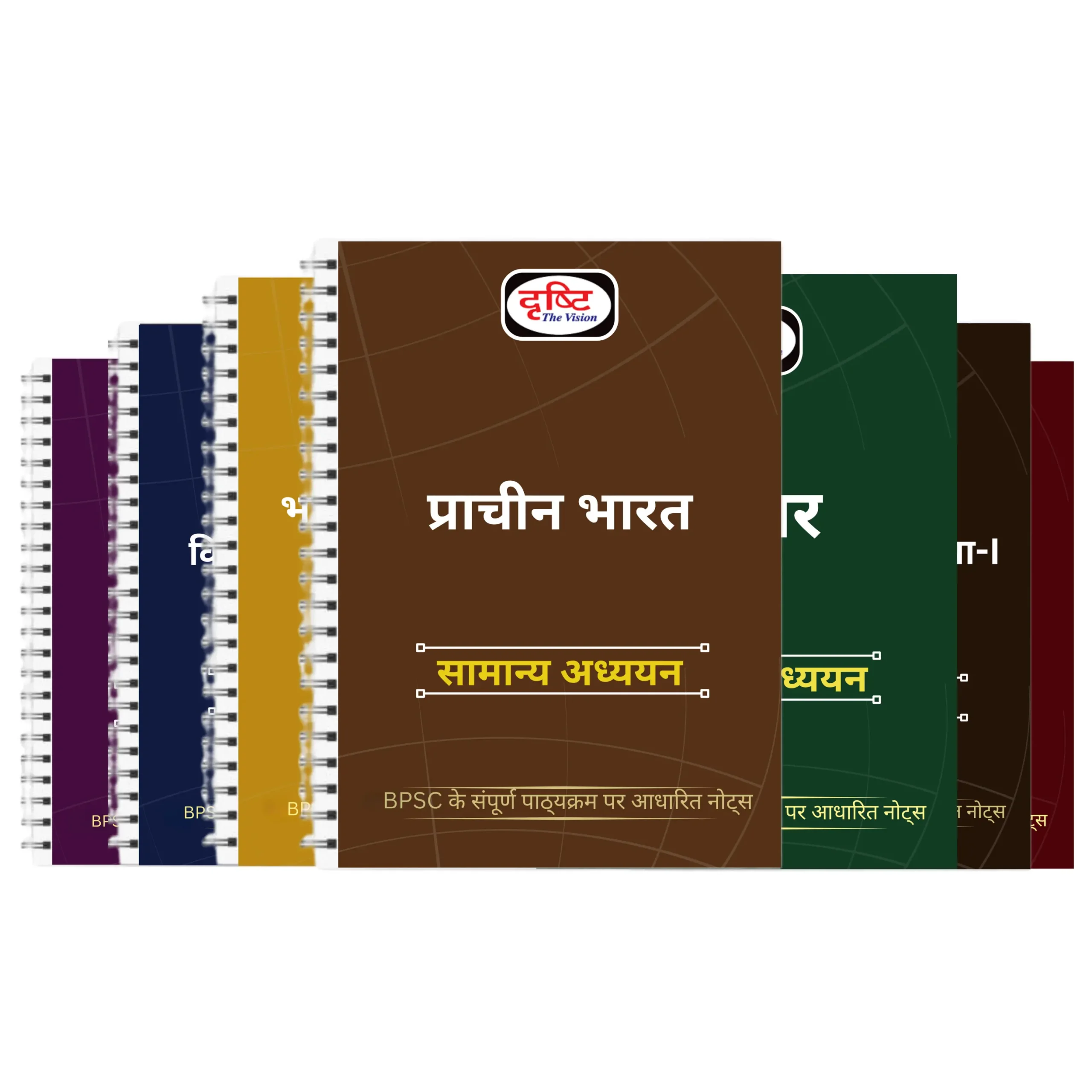
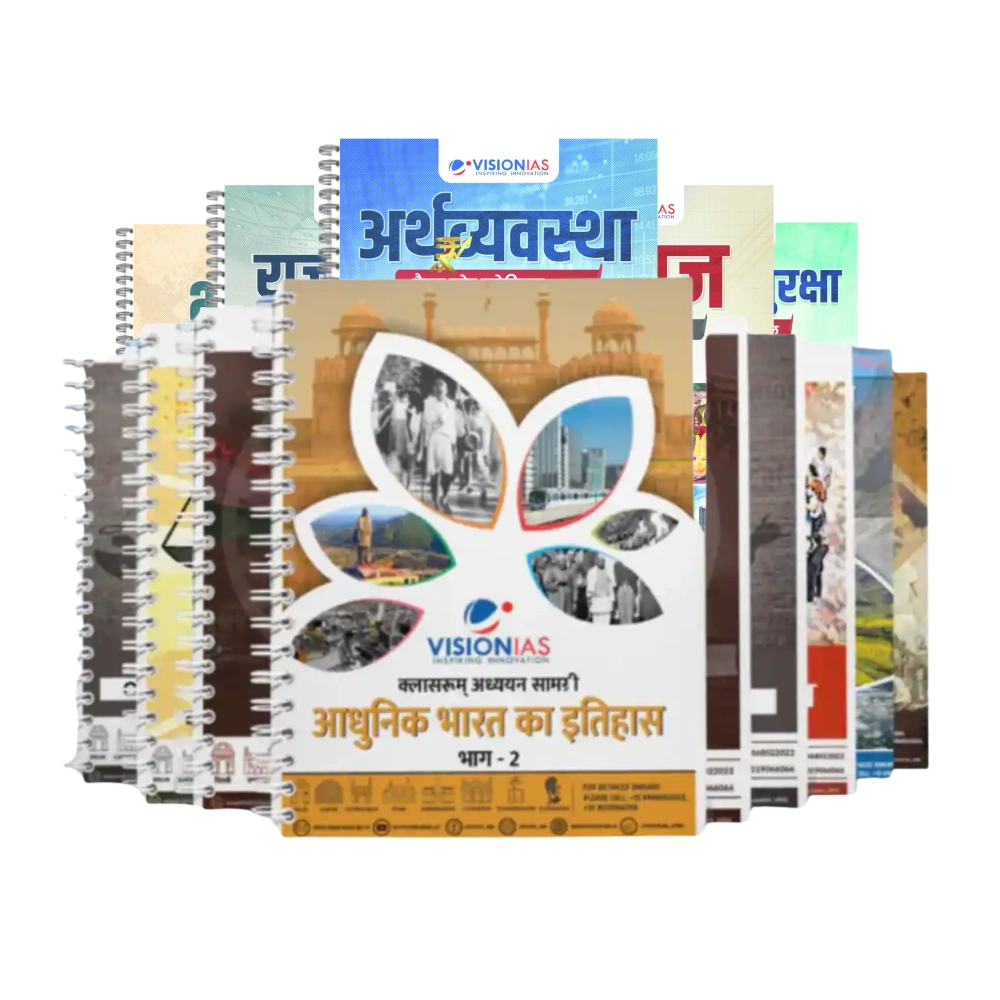
This is why quality UPSC GS notes work as your national-syllabus backbone, but you must add a dedicated Chhattisgarh GK layer on top. General-studies booklet sets such as Vision IAS GS Notes in Hindi 2026-27 or the Hindi-medium Drishti IAS Hindi Study Material give Hindi-medium CGPSC aspirants a ready foundation for the overlapping GS units.
Recommended Study Material Mapped to the CGPSC Syllabus
Competer prints and delivers exam-prep booklets. Here is a practical mapping of syllabus sections to study material you can order and start with immediately.
| Syllabus Area | Recommended Material | Why |
|---|---|---|
| National GS (History, Polity, Geography, Economy, Science) | Vision IAS Hindi GS Notes 2026-27 | Complete Hindi-medium GS coverage for Prelims Part A & Mains |
| State PCS pattern & Hindi-medium prep base | Drishti BPSC / State Civil Services Books (Hindi) | State-PCS-oriented content and answer-writing style close to CGPSC |
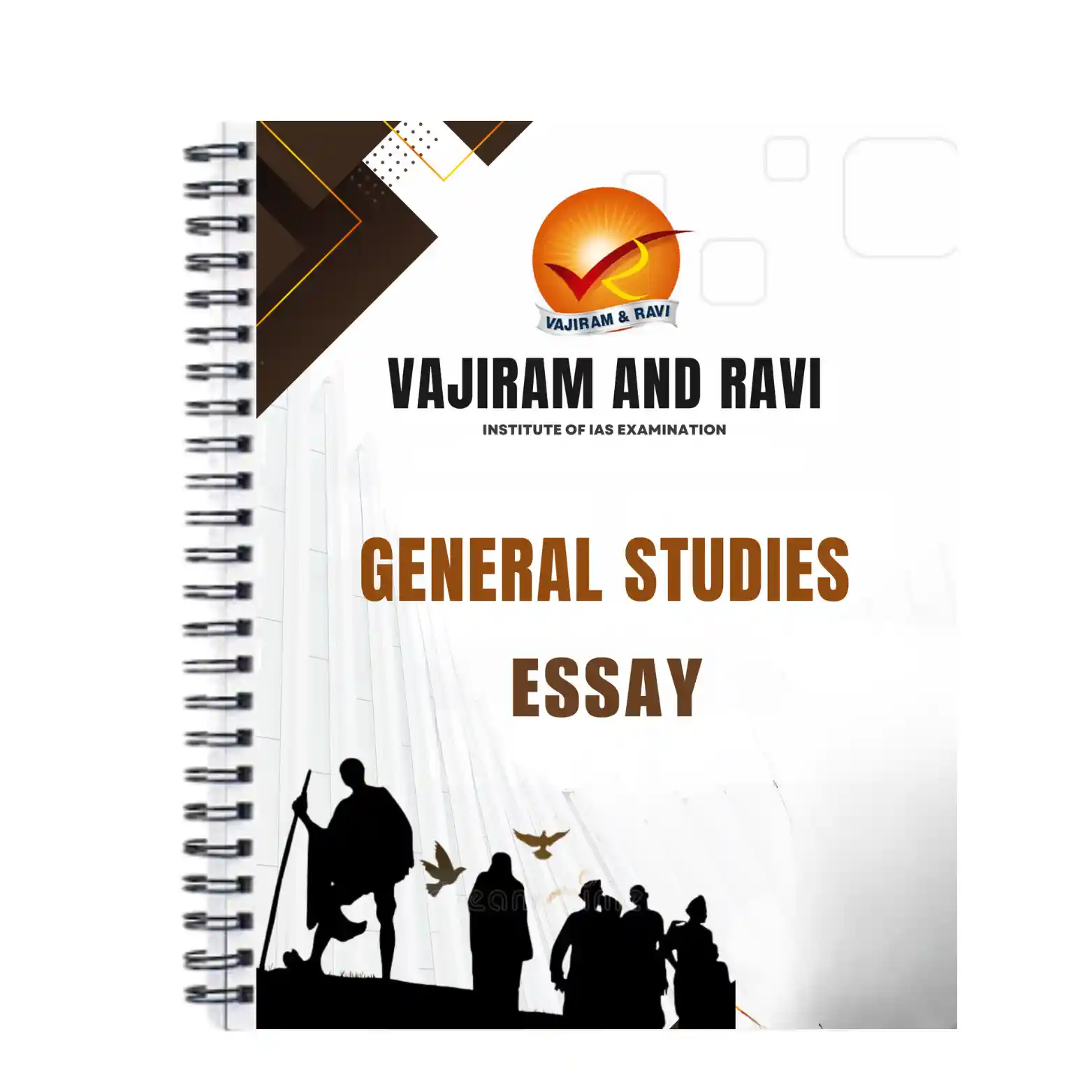
| Mains Essay Paper | Vajiram Essay Notes | Essay structures, themes and model content for Paper 2 |
| Prelims MCQ practice & PYQ | Forum IAS Prelims PYQ Toolkit | Topic-wise previous-year questions to drill objective accuracy |
| Current Affairs (national) | Vision IAS Current Affairs Magazine (Hindi) | Monthly CA coverage for both Prelims & Mains |
Pair these with a dedicated Chhattisgarh GK/CG current affairs source (state-specific yearbook) for the Part B and CG-heavy Mains units — that combination covers the full syllabus.
CGPSC Syllabus PDF Download (Prelims + Mains)
You can create the complete CGPSC syllabus 2026 PDF — covering both Prelims papers and all seven Mains papers plus the exam pattern table — directly, with no sign-up gate. To make your own clean, print-ready copy in one click: open this page, press Ctrl + P (or Cmd + P on Mac), and choose Save as PDF. Every table above (exam pattern, subject-wise topics, weightage) is print-optimised, so you get a ready-to-file syllabus and one-page pattern sheet for your study wall. The official master CGPSC syllabus PDF is also published on the CGPSC portal (psc.cg.gov.in) under the relevant advertisement — download that as the final authority for your recruitment cycle and use this page for a readable, exam-ready working copy.
CGPSC Syllabus in Hindi (हिंदी सारांश)
Since most CGPSC aspirants prepare in Hindi/Chhattisgarhi, here is a quick CGPSC syllabus in Hindi overview: CGPSC राज्य सेवा परीक्षा तीन चरणों में होती है — प्रारंभिक परीक्षा (2 वस्तुनिष्ठ प्रश्नपत्र, 400 अंक, प्रत्येक में 100 प्रश्न व 200 अंक, 1/3 ऋणात्मक अंकन), मुख्य परीक्षा (7 वर्णनात्मक प्रश्नपत्र, प्रत्येक 200 अंक, कुल 1400 अंक) और साक्षात्कार (150 अंक)। प्रारंभिक में सामान्य अध्ययन (राष्ट्रीय + छत्तीसगढ़) तथा योग्यता परीक्षा (CSAT) शामिल है। मुख्य परीक्षा में भाषा, निबंध, इतिहास-संविधान-लोक प्रशासन, विज्ञान-पर्यावरण-प्रौद्योगिकी, अर्थशास्त्र-भूगोल, गणित-तर्कशक्ति तथा दर्शनशास्त्र-समाजशास्त्र आते हैं। अंतिम मेरिट 1550 अंकों (मुख्य 1400 + साक्षात्कार 150) पर बनती है, जबकि प्रारंभिक केवल स्क्रीनिंग के लिए है। छत्तीसगढ़ से संबंधित स्थैतिक सामान्य ज्ञान सबसे अधिक अंक-भार वाला भाग है।
Suggested CGPSC 2026 Preparation Timeline
A realistic 9-12 month plan for working aspirants and full-timers alike:
| Phase | Duration | Focus |
|---|---|---|
| Foundation | Months 1-4 | Build national GS (NCERTs + standard notes) and start Chhattisgarh static GK in parallel |
| Chhattisgarh Deep-Dive | Months 4-6 | Master CG history, geography, tribes, culture, economy, schemes & current affairs |
| Prelims Sprint | Months 6-8 | MCQ practice, PYQs, full-length mock tests, CSAT & Chhattisgarhi language drills |
| Mains Answer Writing | Months 8-11 | Descriptive practice for all 7 papers, essay writing, language paper revision |
| Interview Prep | Post-Mains | DAF-based mock interviews, CG current affairs, personality development |
Common Mistakes CGPSC Aspirants Make
- Ignoring CSAT (Paper 2) — it counts toward the cut-off in CGPSC; treat it seriously, especially the Chhattisgarhi language section.
- Under-preparing Chhattisgarh static GK — the highest-weightage, highest-differentiating part is often studied last. Start it early.
- Skipping answer-writing practice — with 1400 Mains marks and no optional to hide behind, structured descriptive writing is non-negotiable.
- Neglecting the Language paper — it has a qualifying threshold; a poor score here can sink an otherwise strong candidate.
- Relying only on UPSC material — great for the national portion, but you must layer CG-specific content on top.
Frequently Asked Questions
What is the syllabus of CGPSC?
The CGPSC syllabus covers a three-stage State Service Exam: Prelims (General Studies with national + Chhattisgarh topics, and an Aptitude/CSAT paper), Mains (seven descriptive papers spanning Language, Essay, History-Polity-Public Administration, Science-Environment-Technology, Economics-Geography, Maths-Reasoning and Philosophy-Sociology), and a 150-mark Interview. Chhattisgarh-specific static GK carries the highest weightage.
How many papers are there in CGPSC Prelims and Mains?
CGPSC Prelims has 2 objective papers (General Studies and Aptitude/CSAT), each of 100 questions and 200 marks, totalling 400 marks. CGPSC Mains has 7 descriptive papers, each of 200 marks, totalling 1400 marks.
What is the CGPSC Mains syllabus?
The CGPSC Mains syllabus has seven compulsory descriptive papers of 200 marks each (1400 total): Paper 1 Language (Hindi, English & Chhattisgarhi), Paper 2 Essay, Paper 3 History-Constitution-Public Administration, Paper 4 Science-Environment-Technology, Paper 5 Economics-Geography, Paper 6 Mathematics-Logical Ability, and Paper 7 Philosophy-Sociology. There is no optional subject, and the Language paper carries a qualifying threshold. Chhattisgarh-specific content runs through the History, Geography, Economics and Sociology sections.
What is the exam pattern for CGPSC 2026?
The CGPSC 2026 exam pattern has three stages: Prelims (2 objective papers, 400 marks, with 1/3 negative marking, screening only), Mains (7 descriptive papers, 1400 marks), and a Personality Test/Interview of 150 marks. Final merit is prepared out of 1550 marks (Mains + Interview); Prelims marks are not added to the final score.
Is there negative marking in CGPSC Prelims?
Yes. In CGPSC Prelims, one-third of the marks allotted to a question (about 0.66 marks per question) is deducted for every wrong answer in both Paper 1 and Paper 2. Unanswered questions carry no penalty, so guess only when you can eliminate options.
How many marks does the CGPSC interview carry?
The CGPSC Personality Test/Interview carries 150 marks. Final merit is calculated out of 1550 marks (Mains 1400 + Interview 150), while Prelims marks are used only for screening and are not added to the final score.
Is the CGPSC syllabus similar to UPSC?
The national GS portion overlaps significantly with UPSC, so standard UPSC GS notes cover much of it. However, CGPSC adds a large Chhattisgarh-specific segment, has no optional subject in Mains (seven fixed papers), includes Hindi and Chhattisgarhi language components, and counts CSAT toward the cut-off — so it is similar but not identical.
How can I download the CGPSC syllabus PDF for 2026?
Open this page and press Ctrl + P (or Cmd + P on Mac), then choose “Save as PDF” to get a clean, print-ready copy of the full Prelims + Mains syllabus and exam-pattern tables with no sign-up required. The official master syllabus PDF is also available on the CGPSC website (psc.cg.gov.in) under the relevant recruitment advertisement.
Recommended Study Material

Continue Reading
Best Study Material for NEET 2026: Aakash, Allen, Bansal & More Compared
What is the best study material for NEET? Choosing the best study material for NEET often feels harder…
UGC NET History Syllabus 2026: Unit-Wise + PDF Download
The ugc net history syllabus has two papers set by the NTA: Paper 1 (Teaching & Research Aptitude…
RRB ALP Syllabus 2026: CBT 1, CBT 2, CBAT + PDF
The RRB ALP syllabus covers four assessment stages — CBT 1 (Mathematics, General Intelligence & Reasoning, and General…