KPSC Syllabus 2026: KAS Prelims, Mains Pattern + PDF
Complete KPSC syllabus 2026 for KAS Prelims & Mains with full exam pattern, marks, weightage, Kannada notes and the official syllabus PDF download steps.

The KPSC syllabus for the 2026 KAS (Gazetted Probationer) examination runs across three stages: a two-paper objective Prelims (200 marks each, 0.25 negative marking), a descriptive Mains with two qualifying language papers, one Essay paper and four General Studies papers, and finally a Personality Test (Interview). Importantly, there are no optional subjects in the current KAS Mains, and the complete syllabus is published officially in both English and Kannada on kpsc.kar.nic.in.
This 2026-updated guide covers the entire subject-wise KPSC KAS syllabus, the full exam pattern with marks and duration, paper-by-paper breakdowns, topic weightage, a detailed KPSC-vs-UPSC comparison, a mapped booklist, and step-by-step instructions to download the official syllabus PDF. We have also added a quick disambiguation for readers searching “KPSC” expecting Kerala, so you land on the right exam from the start.
How to use this page: the marks, paper counts and pattern below reflect the current KAS structure as notified by the Commission. Exam rules can be revised between recruitment cycles, so treat this as a study-ready reference and always cross-verify the specific numbers against the latest official KPSC notification PDF before finalising your strategy — we show you exactly how to find it in the download section.
Karnataka or Kerala? Clearing Up the KPSC Confusion
Before you begin, make sure you are preparing for the correct exam. The abbreviation “KPSC” is used by two different state commissions, and conflating their syllabi is one of the most common early mistakes aspirants make.
- Karnataka Public Service Commission (KPSC) — conducts the KAS (Gazetted Probationers) examination for Group A and Group B posts. Official portal: kpsc.kar.nic.in. This is the exam the present article covers in full.
- Kerala Public Service Commission (Kerala PSC) — a separate body conducting recruitment for hundreds of Kerala state posts through its own notifications. Official portal: keralapsc.gov.in.
If you are a Karnataka KAS or Gazetted Probationer aspirant, read on — everything below is built strictly around the Karnataka KPSC KAS syllabus 2026. If you were searching for Kerala, head to the Kerala PSC portal instead, as the pattern and papers differ entirely.
KPSC KAS 2026 Exam at a Glance (Highlights Table)
The KAS examination selects candidates for Karnataka’s premier administrative, revenue and gazetted services. Here is a quick summary of the KPSC exam pattern and syllabus structure before we go deep.
| Particular | Details |
|---|---|
| Conducting Body | Karnataka Public Service Commission (KPSC) |
| Exam Name | Gazetted Probationers (KAS) Examination |
| Selection Stages | Prelims → Mains → Personality Test (Interview) |
| Prelims Papers | 2 papers (objective, 200 marks each) |
| Mains Papers | 2 language (qualifying) + Essay + 4 GS papers |
| Negative Marking (Prelims) | 0.25 marks per wrong answer |
| Optional Subject | Removed — no optional in current KAS Mains |
| Medium | English and Kannada (bilingual) |
| Interview Marks | 200 marks (Personality Test) |
| Official Website | kpsc.kar.nic.in |
KPSC KAS Selection Process: Three Stages Explained
The KAS recruitment follows the classic civil-services funnel, closely mirroring UPSC in structure but with a strong Karnataka-specific emphasis.
Stage 1 — Preliminary Examination
Two objective (MCQ) papers acting purely as a screening test. Prelims marks are not counted in the final merit; they only decide who qualifies for Mains. Each paper carries 200 marks with negative marking.
Stage 2 — Main Examination
A descriptive, written examination of qualifying language papers plus an Essay and four General Studies papers. The marks scored in the counted Mains papers form the core of your merit.
Stage 3 — Personality Test (Interview)
Shortlisted candidates face an interview board of 200 marks that assesses personality, awareness, leadership and suitability for administrative service. The final merit = Mains marks + Interview marks.
KPSC KAS Prelims Syllabus and Exam Pattern 2026
The KPSC KAS prelims syllabus is spread over two papers. Both are objective type, two hours each, and carry 200 marks for 100 questions apiece. A wrong answer costs you 0.25 marks, so intelligent, calibrated guessing matters.
| Paper | Questions | Marks | Duration | Type |
|---|---|---|---|---|
| Paper 1 — General Studies I | 100 MCQs | 200 | 2 hours | Objective |
| Paper 2 — General Studies II | 100 MCQs | 200 | 2 hours | Objective |
| Negative Marking | 0.25 marks deducted per wrong answer | |||
Prelims Paper 1 Syllabus (General Studies I)
Paper 1 is a wide current-affairs and core-subjects paper with a clear Karnataka flavour layered on national coverage.
- Current events of national and international importance.
- History of India — ancient, medieval and modern, with emphasis on the Indian National Movement and the contribution of Karnataka.
- Geography — physical, social and economic geography of India and Karnataka.
- Indian Polity and Governance — Constitution, political system, Panchayati Raj, public policy and rights issues.
- Economic and social development — sustainable development, poverty, inclusion, demographics and social-sector initiatives.
Prelims Paper 2 Syllabus (General Studies II)
Paper 2 leans toward state-level awareness, science, environment and aptitude at SSLC (10th standard) level.
- Current events of Karnataka and state government programmes and schemes.
- General Science and Technology — everyday science and contemporary developments.
- Environment, Ecology, Biodiversity and Climate Change — general awareness not requiring subject specialisation.
- Mental ability and aptitude — general mental ability, logical reasoning and basic numeracy at SSLC (10th) standard.
KPSC KAS Mains Syllabus and Exam Pattern 2026
The KPSC KAS mains syllabus is where merit is actually built. The Mains comprises two qualifying language papers, an Essay paper, and four General Studies papers — and, crucially, no optional subject. The qualifying papers must be cleared with a minimum 35% but their marks are not added to the merit.
| Paper | Subject | Marks | Counted in Merit? |
|---|---|---|---|
| Qualifying 1 | Kannada (language) | 150 | No (min 35% to qualify) |
| Qualifying 2 | English (language) | 150 | No (min 35% to qualify) |
| Essay | Essay Paper | 250 | Yes |
| GS Paper I | General Studies I | 250 | Yes |
| GS Paper II | General Studies II | 250 | Yes |
| GS Paper III | General Studies III | 250 | Yes |
| GS Paper IV | General Studies IV | 250 | Yes |
Qualifying Language Papers (Kannada & English)
Both language papers test comprehension, precis writing, translation, grammar and composition. You must secure at least 35% in each; failing a qualifying paper disqualifies the entire candidature regardless of GS performance. These marks do not enter the merit list.
Essay Paper (250 Marks)
Candidates write on a choice of topics spanning socio-economic, political, administrative and contemporary themes. Structure, balance, clarity of argument and a Karnataka-aware perspective score well.
General Studies Paper-wise Breakdown
The four counted GS papers map broadly to distinct domains. The table below summarises what each paper covers.
| GS Paper | Core Coverage |
|---|---|
| GS Paper I | Indian and Karnataka culture, history and heritage; Indian National Movement; social issues and diversity |
| GS Paper II | Geography (India & Karnataka); Constitution, polity, governance, administration, social justice and public policy |
| GS Paper III | Economy, agriculture, science & technology, environment, biodiversity, disaster management and security |
| GS Paper IV | Ethics, integrity and aptitude; emotional intelligence; public service values; case studies |
If you have ever reviewed the UPSC Mains structure, this four-way GS split (G1 history/culture, G2 polity/geography, G3 economy/science/environment, G4 ethics) will feel immediately familiar.
Full KPSC KAS Exam Pattern Recap (Prelims + Mains + Interview)
Aspirants frequently search for the KPSC exam pattern and syllabus in one consolidated view. This single table maps every stage, its papers, marks and whether they count toward the final merit, so you can see the entire mark economy of the exam at a glance.
| Stage | Paper(s) | Marks | Nature | Counts in Merit? |
|---|---|---|---|---|
| Prelims | GS Paper 1 + GS Paper 2 | 200 + 200 | Objective (screening) | No — qualifying for Mains only |
| Mains — Language | Kannada + English | 150 + 150 | Descriptive (qualifying) | No — min 35% each required |
| Mains — Essay | Essay | 250 | Descriptive | Yes |
| Mains — GS | GS I, II, III, IV | 250 each (1,000) | Descriptive | Yes |
| Interview | Personality Test | 200 | Oral | Yes |
In short: Prelims only unlocks the door, the language papers are a 35% gate, and your rank is built from the Essay, four GS papers and the interview. Plan your effort budget accordingly — every hour on a merit-counting paper is worth more than an hour chasing marginal prelims trivia once you are safely past the cut-off.
Is the KPSC Syllabus Same as UPSC? A Detailed Comparison
A frequent query is whether the KPSC exam pattern and syllabus mirrors UPSC. The thematic backbone is very similar — which is why UPSC-oriented GS material transfers beautifully — but there are real differences in structure, optional subjects and the Karnataka-specific content.
| Feature | KPSC KAS | UPSC CSE |
|---|---|---|
| Prelims Papers | 2 (both counted for screening) | 2 (GS + CSAT, CSAT qualifying) |
| Optional Subject | Removed — none | One optional (2 papers, 500 marks) |
| Mains GS Papers | 4 GS papers (250 each) | 4 GS papers (250 each) |
| Language Papers | Kannada & English (qualifying) | Indian language & English (qualifying) |
| Essay | 1 paper (250) | 1 paper (250) |
| State Focus | Heavy Karnataka emphasis | National focus |
| Interview | 200 marks | 275 marks |
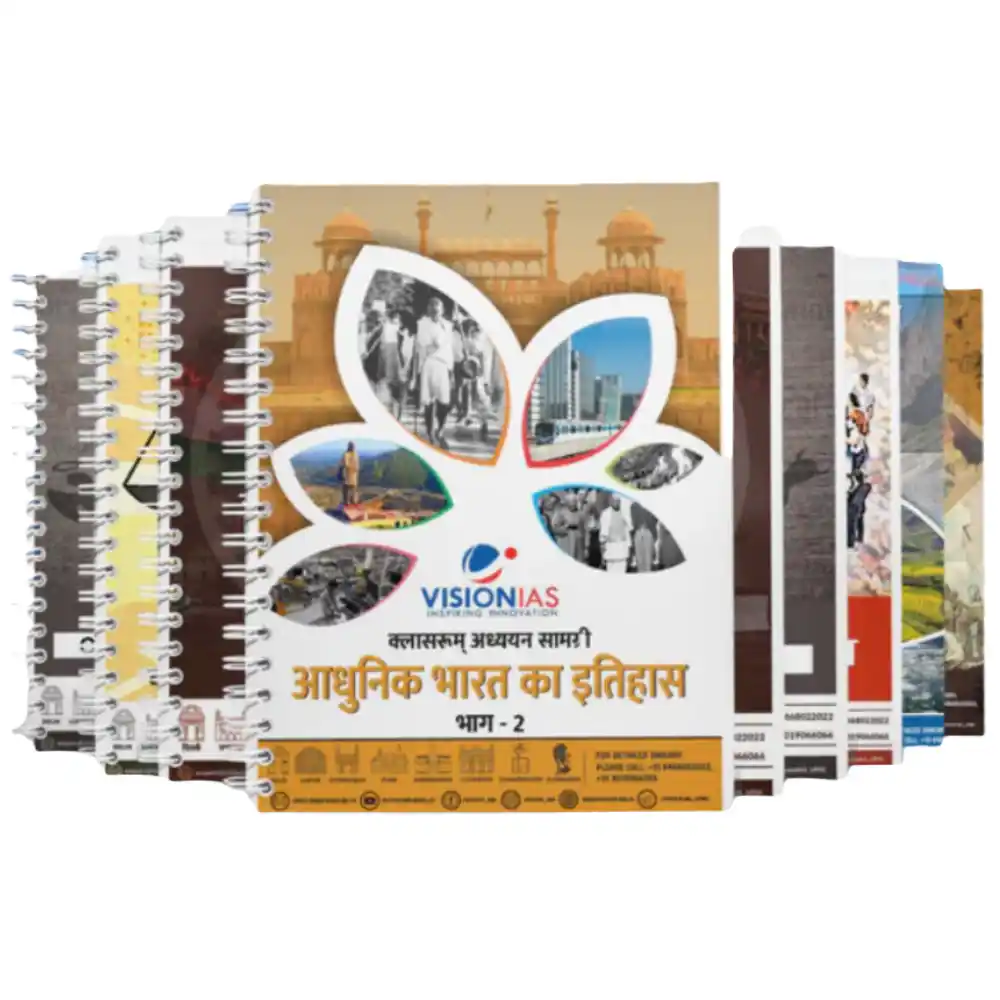
Bottom line: about 70–80% of the KAS GS content overlaps with UPSC General Studies, so quality UPSC GS notes are a legitimate preparation shortcut — you simply layer Karnataka-specific history, geography, polity and current affairs on top. A proven GS note set such as the Vision IAS GS notes gives you that national backbone, which you supplement with state sources.
Topic-Wise Weightage & PYQ Trends (What Actually Gets Asked)
Most competing pages simply list topics; they rarely tell you where the marks concentrate. Based on recent question-paper trends, here is an indicative weightage picture to prioritise your preparation. Treat these as directional priorities drawn from past papers rather than fixed official percentages.
| Area | Stage | Indicative Weightage | Priority |
|---|---|---|---|
| Current Affairs (national + Karnataka) | Prelims & Mains | High | Daily, non-negotiable |
| Polity & Governance | Both | High | Core scoring area |
| Karnataka History & Culture | Both | High | Differentiator vs UPSC-only aspirants |
| Economy & Social Development | Both | Medium-High | Link to state schemes |
| Geography (India & Karnataka) | Both | Medium | Map-based practice |
| Environment & Ecology | Prelims (P2) & Mains | Medium | Current-affairs driven |
| Science & Technology | Prelims (P2) & Mains | Medium | NCERT + news |
| Ethics (GS IV) | Mains | Medium-High | Case-study practice |
The practical takeaway: polity, current affairs and Karnataka-specific history/culture are where diligent candidates separate themselves. Pair a strong polity base from Vajiram Polity notes with consistent monthly current-affairs revision.
Syllabus-Mapped Study Material & Booklist
Instead of a generic booklist, here is material mapped directly to each syllabus block, combining standard references with ready study notes that save you months of compilation.
| Syllabus Block | Core Source | Supplement |
|---|---|---|
| Polity & Governance | Laxmikanth + Constitution | Vajiram Polity notes |
| Economy & Social Development | NCERT + Economic Survey | Vision IAS Economics notes |
| Full GS (Prelims + Mains) | NCERTs | Vision IAS GS notes |
| Essay & GS IV Ethics | Practice writing | Vajiram Essay notes |
| Current Affairs | The Hindu / Deccan Herald | Vision IAS CA Magazine Jan 2026 |
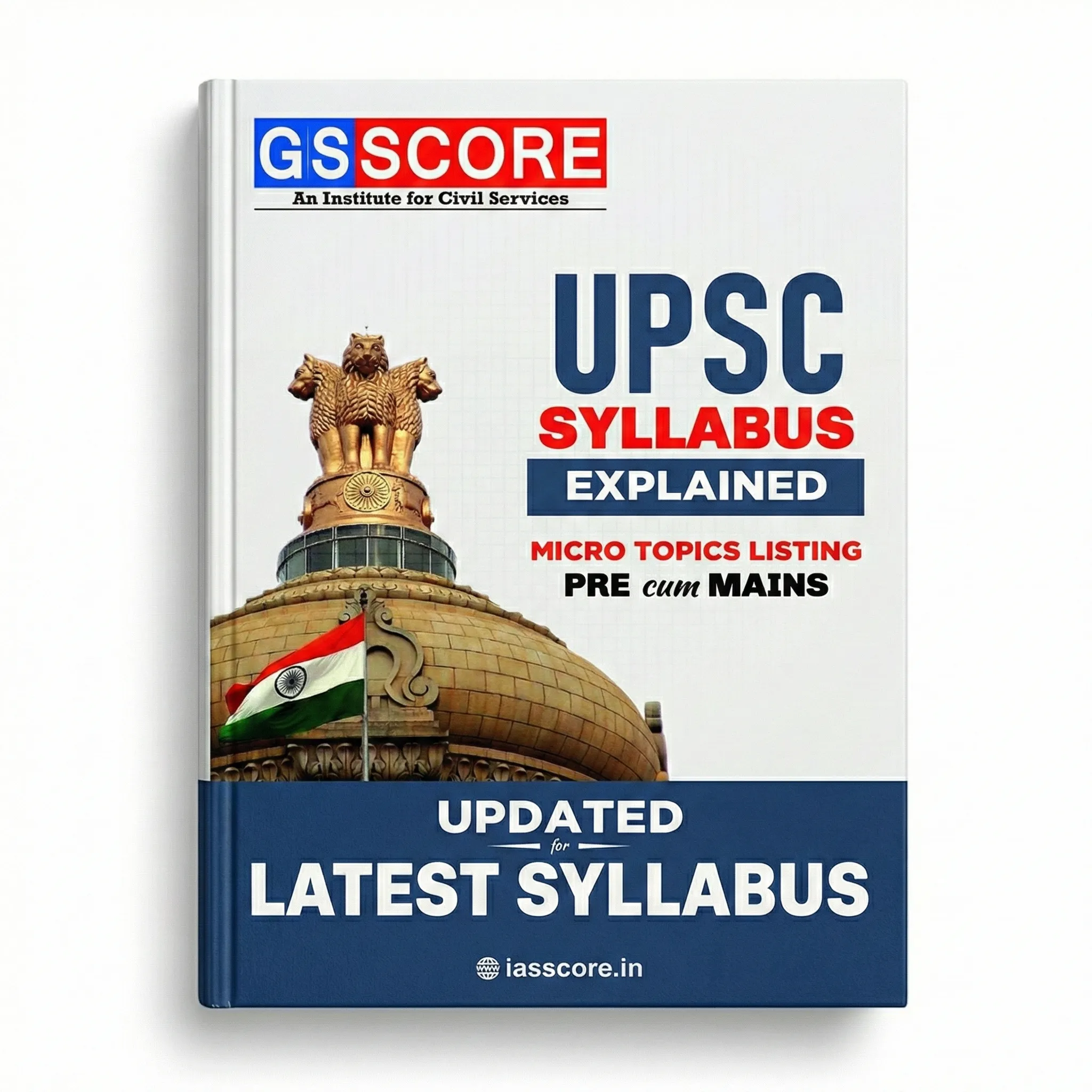
| Syllabus reference | Official KPSC PDF | GS Score Syllabus Booklet |
For Karnataka-specific content — state history, Karnataka geography, state polity and local schemes — add standard Karnataka reference books and the state economic survey, plus Kannada-medium material where the exam is written in Kannada.
How to Download the KPSC KAS Syllabus PDF (English & Kannada)
Many aspirants specifically search for a kpsc syllabus pdf download. The official, authoritative copy always comes from the Commission. Follow these steps:
- Visit the official KPSC website: kpsc.kar.nic.in.
- Open the latest Gazetted Probationers / KAS notification or the “Syllabus” section.
- Download the detailed Prelims and Mains syllabus PDF — it is available in both English and Kannada, matching the bilingual nature of the exam.
- Cross-check the notification year so you are using the 2026 cycle syllabus and the current (no-optional) Mains structure.
Because the KAS is written bilingually, the availability of the KPSC syllabus in Kannada matters — always keep both language versions handy so your terminology (especially in polity, economy and science) stays consistent in whichever medium you answer.
Smart Preparation Strategy Mapped to the Syllabus
Knowing the kpsc kas syllabus 2026 is step one; converting it into a study plan is step two. A workable sequence:
- Months 1–4: Build the NCERT + standard-book foundation across history, polity, geography, economy and science. Begin daily current affairs.
- Months 5–8: Layer Karnataka-specific content on every GS topic. Start answer writing for GS and Essay; begin ethics case-study practice for GS IV.
- Months 9–11: Full Prelims revision with MCQ practice (remember 0.25 negative marking), followed by Mains answer-writing intensives.
- Final weeks: Revise consolidated notes, practise previous-year papers, and polish language-paper fundamentals to comfortably clear the 35% qualifying cut-off.
Common Mistakes KAS Aspirants Make
- Ignoring Karnataka-specific content while over-relying on purely national UPSC material — the state layer is your scoring edge.
- Treating language papers casually — failing the 35% qualifying mark in Kannada or English invalidates everything.
- Blind guessing in Prelims — 0.25 negative marking punishes reckless attempts; eliminate options first.
- Hunting for an optional subject — there is none in the current KAS Mains, so do not waste months on it.
- Neglecting answer writing for the four GS papers and Essay, which carry the entire merit weight.
- Studying an outdated pattern — always confirm paper counts and marks against the current cycle’s official notification before building your timetable.
Frequently Asked Questions
What is the syllabus of KPSC KAS exam?
The KPSC KAS syllabus covers two objective Prelims papers (current affairs, history, geography, polity, economy, Karnataka affairs, science, environment and aptitude) and a descriptive Mains of two qualifying language papers, an Essay (250 marks) and four General Studies papers (250 each) spanning history/culture, geography/polity, economy/science/environment and ethics.
Is there negative marking in KPSC Prelims?
Yes. The KPSC KAS Prelims applies a negative marking of 0.25 marks for every wrong answer in both objective papers, so calibrated, informed attempts are safer than blind guessing.
Is KPSC syllabus same as UPSC?
The KPSC KAS syllabus is thematically very similar to UPSC — roughly 70–80% of the General Studies content overlaps. The key differences are a strong Karnataka-specific focus and the absence of any optional subject in the current KAS Mains, unlike UPSC which retains an optional.
How many papers are there in KPSC Mains?
The KPSC KAS Mains has seven papers: two qualifying language papers (Kannada and English, 150 marks each), one Essay paper (250 marks) and four General Studies papers (250 marks each). Only the Essay and four GS papers count toward the final merit.
Is optional subject there in KPSC KAS Mains?
No. Optional subjects have been removed from the current KPSC KAS Mains. All candidates write the same common papers — language, Essay and four General Studies papers — with no optional component.
Is Kannada compulsory for the KPSC KAS exam?
Kannada is a compulsory qualifying paper worth 150 marks, and you must score at least 35% to qualify. Its marks are not added to the merit list, but failing it disqualifies the candidature. The exam itself is bilingual, offered in both Kannada and English.
What is the exam pattern of KPSC KAS Prelims and Mains?
Prelims has two objective papers of 200 marks each (100 MCQs, two hours per paper, 0.25 negative marking) and is only a screening test. Mains is descriptive with seven papers — Kannada and English (150 each, qualifying at 35%), an Essay (250) and four General Studies papers (250 each) — followed by a 200-mark Personality Test. Final merit is built only from the Essay, four GS papers and the interview.
How can I download the KPSC KAS syllabus PDF?
Visit the official Commission website kpsc.kar.nic.in, open the latest Gazetted Probationers / KAS notification or the Syllabus section, and download the detailed Prelims and Mains syllabus PDF. It is available in both English and Kannada; always confirm the PDF matches the 2026 cycle and the current no-optional Mains structure.
In which language can I write the KPSC KAS Mains?
The KAS Mains is bilingual and can be written in English or Kannada. Keep both language versions of the official syllabus handy so your subject terminology stays consistent in the medium you choose to answer.
Recommended Study Material

Continue Reading
MPSC Syllabus 2026: Rajyaseva Prelims, Mains + PDF
The MPSC syllabus for the Rajyaseva (Maharashtra Civil Services) examination now follows a revised, UPSC-style descriptive pattern: a…
UPSC Ethics Syllabus 2026: GS Paper 4 Topics, PDF & Books
The upsc ethics syllabus is the official UPSC-notified syllabus for General Studies Paper 4 — titled Ethics, Integrity…
RRB ALP Syllabus 2026: CBT 1, CBT 2 & CBAT + Free PDF Download
The RRB ALP syllabus for 2026 spans three examination stages: CBT 1 (Mathematics, General Intelligence & Reasoning, and…