RRB ALP Syllabus 2026: CBT 1, CBT 2 & CBAT + Free PDF Download
Complete RRB ALP syllabus 2026 — CBT 1, CBT 2 Part A & B, CBAT test batteries, exam pattern, weightage, negative marking, trade-wise topics and syllabus PDF download.

The RRB ALP syllabus for 2026 spans three examination stages: CBT 1 (Mathematics, General Intelligence & Reasoning, and General Science), CBT 2 (Part A on Maths, Reasoning, Basic Science & Engineering and General Awareness, plus a trade-based Part B), and the CBAT computer-based aptitude test with 5 psychometric batteries. Questions sit at roughly Class 10 level, both CBTs carry 1/3rd negative marking, and the 2026 revision dropped General Awareness & Current Affairs from CBT 1 while fixing the final merit at a 50:50 weightage between CBT 2 Part A and the CBAT.
Quick answer for busy aspirants:
- Stages: CBT 1 → CBT 2 (Part A + Part B) → CBAT → Document Verification → Medical (A-1).
- Merit: Only CBT 2 Part A and CBAT decide your rank, 50:50. CBT 1 is screening only.
- Negative marking: 1/3 mark in both CBTs; none in the CBAT.
- CBAT cut-off: Minimum 42 in each of the 5 batteries, no relaxation.
If you are preparing for the Railway Assistant Loco Pilot post, this guide gives you the complete, stage-wise rrb alp syllabus 2026, subject-wise topic lists, per-section weightage tables, a deep breakdown of the CBAT psycho test, the full trade-wise Part B syllabus, cut-off trends, a study plan, and a downloadable PDF checklist you can print and tick off. Everything below should be cross-checked against your zone’s official CEN notification before you finalise your prep — this article is a planning companion, not a substitute for the notice.
RRB ALP Selection Process: The 3 Stages at a Glance
The Railway Recruitment Board selects Assistant Loco Pilots through a sequential, elimination-style process. You must clear each stage to be called for the next. Understanding the flow first makes the rrb alp syllabus far easier to plan around.
| Stage | Name | Nature | Purpose |
|---|---|---|---|
| 1 | CBT 1 (First Stage) | Screening / qualifying | Shortlist candidates for CBT 2 (~15x vacancies) |
| 2 | CBT 2 (Second Stage) | Merit-deciding + qualifying | Part A counts for merit; Part B is trade qualifying |
| 3 | CBAT (Aptitude Test) | Merit-deciding (50%) | Psycho test for loco-pilot suitability |
| 4 | Document Verification (DV) | Qualifying | Verify certificates & eligibility |
| 5 | Medical Examination (A-1) | Qualifying | Highest fitness standard incl. vision test |
Marks from CBT 1 are only used for screening. Your final merit is built from CBT 2 Part A and the CBAT, weighted 50:50 — a key change many aspirants still miss. That single fact should shape how much time you give the aptitude test. Note that the CBAT applies to the ALP post specifically; Technician candidates skip it, which is why ALP prep must budget real hours for the psycho test.
RRB ALP Exam Pattern 2026 (All Stages)
The rrb alp exam pattern 2026 is standardised across boards. Both CBTs are objective, computer-based, and carry 1 mark per question with a 1/3rd penalty for wrong answers. The CBAT has no negative marking.
| Stage | Total Questions | Total Marks | Duration | Negative Marking |
|---|---|---|---|---|
| CBT 1 | 75 | 75 | 60 min | 1/3 mark |
| CBT 2 Part A | 100 | 100 | 90 min | 1/3 mark |
| CBT 2 Part B | 75 | 75 | 60 min (part of 2:30 total) | 1/3 mark |
| CBAT | 5 test batteries | Qualifying (min 42) | ~2 hrs | No negative marking |
CBT 2 Part A and Part B are attempted back-to-back in a single sitting of 2 hours 30 minutes, so time management across both parts matters. PwBD candidates get compensatory time (scribe/extra time as per rules). Questions appear in multiple languages including Hindi and English, and you can switch the display language inside the exam interface.
RRB ALP CBT 1 Syllabus 2026 (Subject-Wise)
The rrb alp cbt 1 syllabus covers three subjects after the 2026 revision. This is a purely qualifying stage — normalised marks decide who advances at roughly 15 times the vacancies per trade/community. Do not over-invest here, but you must clear the section-neutral cut-off (UR 40%, OBC/SC 30%, ST 25%).
| Subject | No. of Questions | Marks | Approx. Weightage |
|---|---|---|---|
| Mathematics | 20 | 20 | 27% |
| General Intelligence & Reasoning | 25 | 25 | 33% |
| General Science | 20 | 20 | 27% |
| General Awareness on Current Affairs | 10 (older pattern) | 10 | Removed in 2026 |
| Total | 75 | 75 | 100% |
Which subjects are asked in RRB ALP CBT 1?
Mathematics, General Intelligence & Reasoning, and General Science. In the 2026 pattern, Reasoning carries the most questions (25), so it deserves the most practice, followed by Maths and General Science at 20 each.
CBT 1 Mathematics Topics
Number System, BODMAS, Decimals, Fractions, LCM & HCF, Ratio and Proportion, Percentages, Mensuration, Time and Work, Time and Distance, Simple and Compound Interest, Profit and Loss, Algebra, Geometry and Trigonometry, Elementary Statistics, Square Roots, Age Calculations, Calendar & Clock, and Pipes & Cisterns — all at Class 10 level.
CBT 1 General Intelligence & Reasoning Topics
Analogies, Alphabetical and Number Series, Coding and Decoding, Mathematical Operations, Relationships, Syllogism, Jumbling, Venn Diagram, Data Interpretation and Sufficiency, Conclusions and Decision Making, Similarities and Differences, Analytical Reasoning, Classification, Directions, and Statement–Argument & Assumptions.
CBT 1 General Science Topics
Physics, Chemistry, and Life Sciences at the CBSE Class 10 standard — units and measurement, force and motion, work and energy, light, electricity, magnetism, acids-bases-salts, metals and non-metals, carbon compounds, cell biology, human physiology, and environmental science.
RRB ALP CBT 2 Syllabus: Part A and Part B
The rrb alp cbt 2 syllabus part a and part b is where the real merit fight begins. CBT 2 has 175 questions in total split across two parts, attempted in a single sitting of 2 hours 30 minutes.
What is Part A and Part B in RRB ALP CBT 2?
Part A (100 questions, 90 minutes) is the merit-deciding portion covering Maths, Reasoning, Basic Science & Engineering, and General Awareness. Part B (75 questions, 60 minutes) is a qualifying trade test based on your engineering diploma/ITI trade — you only need to pass it (35% for all categories, no relaxation), but you must qualify Part A first for Part B to be evaluated.
| Part | Section | Questions | Role in Result |
|---|---|---|---|
| Part A | Mathematics | ~25 | Merit |
| Part A | General Intelligence & Reasoning | ~25 | Merit |
| Part A | Basic Science & Engineering | ~40 | Merit |
| Part A | General Awareness & Current Affairs | ~10 | Merit |
| Part B | Trade-relevant (Engineering/ITI) | 75 | Qualifying (35%) |
CBT 2 Part A — Basic Science & Engineering Topics
This is the highest-weightage block in Part A and the section that separates rank-holders. Topics include: Engineering Drawing (projections, views, drawing instruments, symbolic representation), Units, Measurements, Mass, Weight and Density, Work Power and Energy, Speed and Velocity, Heat and Temperature, Basic Electricity, Levers and Simple Machines, Occupational Safety and Health, Environment Education, and IT Literacy.
CBT 2 Part A — Maths, Reasoning & General Awareness
Mathematics and Reasoning mirror CBT 1 but with slightly tougher questions. General Awareness covers science, current national and international affairs, sports, culture, personalities, economics, politics, and everyday general knowledge. Aspirants who also sit UPSC/State PCS-style prep often keep a monthly current affairs digest handy — Competer’s current affairs magazine (January 2026) is a compact way to cover the current-affairs slice of General Awareness.
RRB ALP CBT 2 Part B: Trade-Wise Syllabus
Part B is drawn from the relevant trade as per DGET (Directorate General of Employment & Training). You choose Part B based on the trade of your ITI/diploma. This is the core of the rrb alp technical/trade wise syllabus. Below is the trade grouping and the core topics for the four most-opted engineering streams.
| Discipline | Relevant Trades (indicative) |
|---|---|
| Electrical | Electrician, Wireman, Instrument Mechanic, Electronics Mechanic, Electrical Engineering diploma |
| Mechanical | Fitter, Mechanic Motor Vehicle, Turner, Machinist, Refrigeration & AC, Heat Engine, Mechanical Engineering diploma |
| Automobile | Mechanic Motor Vehicle, Tractor Mechanic, Mechanic Diesel, Automobile Engineering diploma |
| Electronics | Electronics Mechanic, Radio & TV, Instrument Mechanic, Electronics Engineering diploma |
Part B — Electrical Trade Syllabus
Electrical India, Rolling Contact, Roller Bearings, Motors and Generators, Transformers, Switch Gear, Cables, Magnetism, Basic Electronics, Measuring Instruments, Electrical Circuits, Single and Three Phase Systems, Power Distribution, and Estimation & Costing.
Part B — Mechanical Trade Syllabus
Dimensions, Heat, Engines, Turbo Machines, Kinematics of Machines, Engineering Mechanics, Strength of Materials, Metal Handling, Refrigeration and Air Conditioning, Applied Mechanics, Automobile Engineering, Thermodynamics, Metallurgical Engineering, and Production Engineering.
Part B — Automobile Trade Syllabus
Machine Design, System Theory, IC Engines, Heat Transfer, Thermodynamics, Materials Applied Mechanics, The Theory of Machines, Metallurgical Production Technology, Power Plant Turbines & Boilers, and Automobile electrical systems.
Part B — Electronics Trade Syllabus
The Electronic Devices, Circuits, Digital Electronics, Microprocessors, Microcontroller, Electronic Measurements, Communication Systems, Robotics, Networking and Industrial Applications, and Electronic Instrumentation.
Candidates without an eligible diploma/ITI can appear in Part B against a combined syllabus of relevant trades notified by RRB. Always confirm your exact trade code from the notification before locking your Part B choice — an incorrect trade selection can cost you the qualifying stage even if your Part A merit is strong.
RRB ALP CBAT Syllabus (Psycho / Aptitude Test) Explained
The rrb alp cbat syllabus is the stage most candidates under-prepare — and it now decides 50% of your merit. The Computer Based Aptitude Test evaluates whether you have the psychological and perceptual attributes needed to drive a locomotive safely. It has 5 test batteries, is available only in English and Hindi, carries no negative marking, and you must score a minimum of 42 marks in each battery — with no relaxation for any category.
What is the CBAT test in RRB ALP and how many test batteries does it have?
The CBAT is a psychometric aptitude test with 5 test batteries. It is mandatory for the ALP post (not for Technician). You qualify only if you clear the T-score of 42 in every single battery.
| Test Battery | What It Measures | How to Practice |
|---|---|---|
| Memory Test | Ability to retain and recall figures/patterns shown briefly | Flash-card drills; recall grids of shapes/numbers under a timer |
| Following Directions | Accuracy in obeying multi-step instructions quickly | Timed instruction-based worksheets; grid navigation puzzles |
| Depth Perception | Judging distance, size and 3D relationships between objects | Odd-one-out by size/depth; 3D visualisation exercises |
| Concentration / Attention | Sustained focus and error-spotting over long sequences | Cancellation tasks; spot-the-difference under time pressure |
| Perceptual Speed | Speed of matching, comparing and identifying symbols | Symbol-matching sprints; rapid comparison drills daily |
CBAT strategy: because there is no negative marking, attempt every item — but the test is speed-driven, so pace matters more than deliberation. Take at least 10–15 full-length CBAT simulations before the exam; consistency across all five batteries beats a high score in one. Remember there is no re-attempt if you miss the 42 threshold in even a single battery, so build the weakest battery up rather than polishing your strongest.
What is the passing/qualifying mark for RRB ALP CBAT?
You must secure a minimum T-score of 42 marks in each of the 5 test batteries. Fail even one battery and you are out — there is no aggregate or averaging, and no category relaxation on this cut-off.
Negative Marking & Merit Weightage in RRB ALP 2026
Two scoring rules define the rrb alp syllabus 2026 strategy.
| Rule | Detail |
|---|---|
| Negative marking (CBT 1 & CBT 2) | 1/3rd mark deducted per wrong answer |
| Negative marking (CBAT) | None |
| Final merit weightage | CBT 2 Part A : CBAT = 50 : 50 |
| CBT 1 marks in merit | Not counted (screening only) |
| Part B (CBT 2) | Qualifying only, 35% for all categories |
Is there negative marking in the RRB ALP exam?
Yes — one-third (0.33) of a mark is deducted for each wrong answer in both CBT 1 and CBT 2. The CBAT, however, has no negative marking, so you should attempt all its items.
Is General Awareness removed from RRB ALP CBT 1 in 2026?
Yes. The 2026 revision removed the General Awareness & Current Affairs section from CBT 1, leaving three subjects — Mathematics, General Intelligence & Reasoning, and General Science — for 75 marks. General Awareness still appears in CBT 2 Part A, so do not drop it from your overall plan.
What Changed in 2026: Before vs After
Here is the clean before/after comparison the top pages scatter across paragraphs.
| Element | Earlier Pattern | 2026 Pattern |
|---|---|---|
| CBT 1 subjects | 4 (incl. General Awareness) | 3 (GA removed) |
| CBT 1 subject split | Maths 20 / Reasoning 25 / GS 20 / GA 10 | Redistributed across Maths, Reasoning, GS (75 total) |
| Final merit basis | CBT 2 Part A weighted higher than CBAT | CBT 2 Part A : CBAT = 50 : 50 |
| CBAT importance | Qualifying-leaning | Decides half your rank |
The takeaway: the CBAT is no longer a formality. Treat it as an equal partner to CBT 2 Part A when you allocate revision time.
Cut-Off Trends & ‘Good Attempts’ Benchmark
While cut-offs vary by RRB zone, trade and category, historical trends give a realistic target. Use these as planning benchmarks, not guarantees.
| Stage | Qualifying % | ‘Safe’ Score / Attempts |
|---|---|---|
| CBT 1 (UR) | 40% | 55–60+ / 75 for a strong shortlist |
| CBT 1 (OBC/SC) | 30% | 50+ / 75 |
| CBT 1 (ST) | 25% | 45+ / 75 |
| CBT 2 Part A | Category-wise (40/30/30/25%) | 70+ / 100 for competitive merit |
| CBT 2 Part B | 35% (all categories) | 27+ / 75 to qualify |
| CBAT | 42 per battery | Clear all 5 batteries |
CBT 1 is generally moderate; CBT 2 Basic Science & Engineering is the difficulty spike. In CBT 2 Part A, roughly 78–85 accurate attempts out of 100 is a genuinely competitive band in high-vacancy zones. Cut-offs are published by each RRB after the result, so treat the figures above as trend-based planning targets and confirm against your zone’s published cut-off once it is out.
Stage-Wise Study Plan & Section Strategy
Map your effort to the weightage. Here is a realistic 4-month timeline tied to the rrb alp syllabus.
| Phase | Duration | Focus |
|---|---|---|
| Foundation | Weeks 1–6 | Class 10 Maths, Reasoning basics, NCERT General Science |
| CBT 1 push | Weeks 7–9 | Speed drills + daily 75-question mocks with negative marking |
| CBT 2 build-up | Weeks 10–14 | Basic Science & Engineering, GA, trade Part B revision |
| CBAT + revision | Weeks 15–16 | Aptitude battery simulations + full mock rotation |
Section tips
- Reasoning first: it is the highest-scoring, lowest-risk section — target 90%+ accuracy.
- Maths for speed: master shortcuts for percentages, ratio, time-work and interest to save clock time.
- Basic Science & Engineering: the CBT 2 game-changer — start Engineering Drawing and Basic Electricity early.
- General Awareness: a steady 20–30 minutes daily on current affairs prevents last-minute cramming. Aspirants who also cover economy find structured notes like the Vision IAS Economics notes useful for the economic-awareness questions.
- CBAT: simulate under strict timing — attention and perceptual-speed batteries reward practised reflexes.
Best Books & Study Material Mapped to the Syllabus
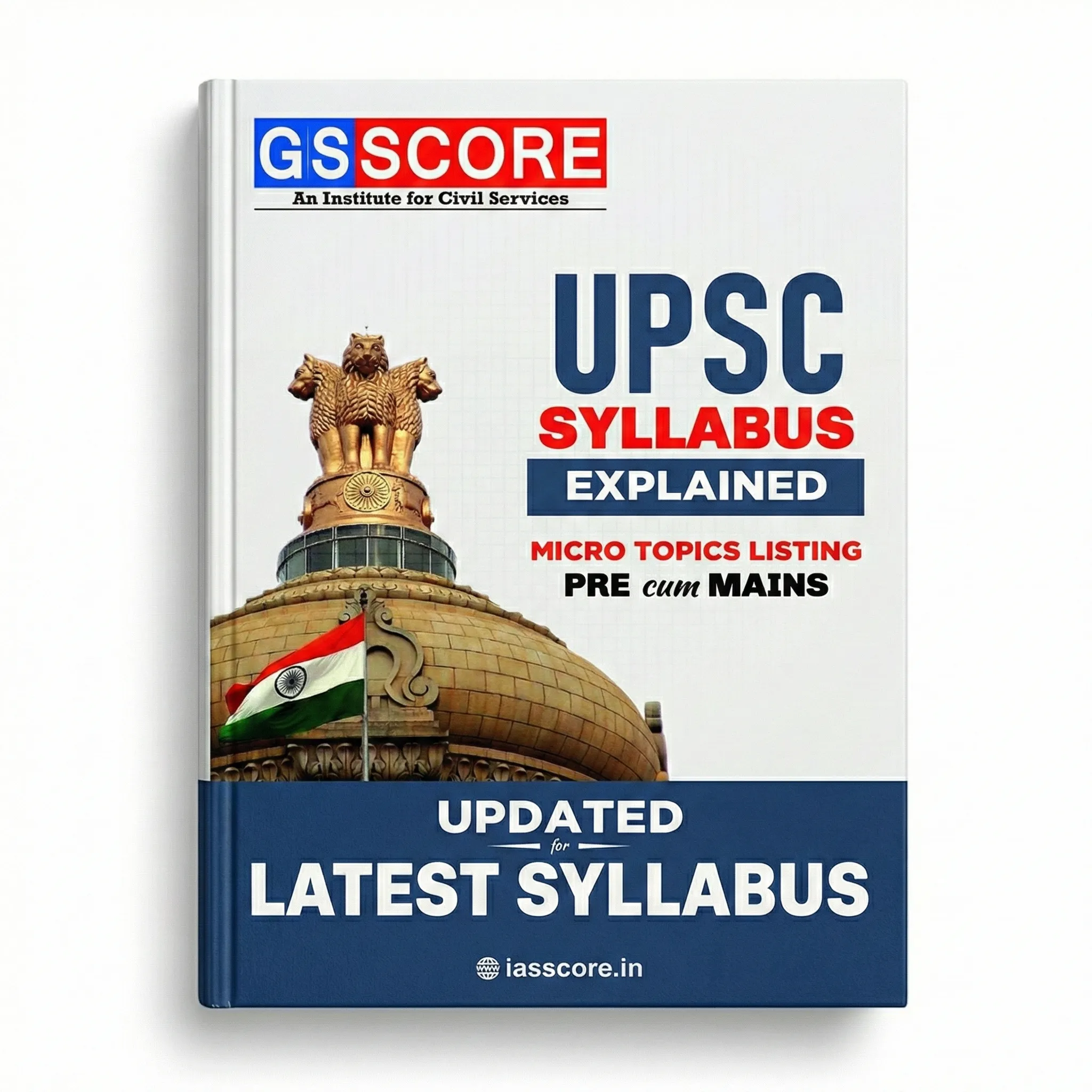
Match your material to each section rather than buying one thick ‘combined’ guide. A syllabus-first booklet, a current-affairs digest, and a section-wise practice set cover most of the rrb alp technical/trade wise syllabus and Part A. If you want a clean, exam-board-style syllabus reference to structure revision, a dedicated syllabus booklet keeps every topic in one place, and a monthly current affairs edition covers the General Awareness slice. For the general-economy overlap in Part A’s GA, the economics notes are a handy add-on. Pair these with a trade-specific ITI/diploma textbook for Part B.
RRB ALP Syllabus PDF Download & One-Page Checklist
For offline planning, save the official rrb alp syllabus pdf download from the notification on the concerned RRB regional website (e.g., rrbcdg.gov.in and other zonal RRB portals) and cross-check it against the topic lists above. The syllabus is published inside the detailed CEN (Centralised Employment Notice) as an annexure, so the PDF you want is the notification itself. Print the one-page checklist below and tick off each topic as you finish it.
| Stage / Section | Topic Blocks to Tick | Done? |
|---|---|---|
| CBT 1 Maths | Number system, %/ratio, time-work, mensuration, geometry | ☐ |
| CBT 1 Reasoning | Series, coding, syllogism, DI, directions, analogies | ☐ |
| CBT 1 Gen. Science | Physics, chemistry, life science (Class 10) | ☐ |
| CBT 2 Part A | Basic Science & Engg., Maths, Reasoning, GA | ☐ |
| CBT 2 Part B | Your trade full topic list | ☐ |
| CBAT | All 5 batteries simulated 10+ times | ☐ |
Common Mistakes to Avoid
- Treating CBAT as optional — it is 50% of merit and cannot be relaxed.
- Ignoring Basic Science & Engineering until late — it is the toughest, highest-weight CBT 2 block.
- Blind guessing in the CBTs despite 1/3rd negative marking.
- Skipping the official trade code check before choosing Part B.
- Still studying General Awareness for CBT 1 (removed in 2026) instead of for CBT 2.
Frequently Asked Questions
What is the syllabus of RRB ALP?
The RRB ALP syllabus covers three stages: CBT 1 (Mathematics, General Intelligence & Reasoning, General Science), CBT 2 with Part A (Maths, Reasoning, Basic Science & Engineering, General Awareness) and Part B (your trade-relevant engineering/ITI topics), and the CBAT aptitude test with 5 psychometric batteries. Difficulty is broadly at Class 10 level.
How many stages are there in the RRB ALP exam?
There are three main examination stages — CBT 1, CBT 2, and the CBAT — followed by Document Verification and a Medical Examination. You must clear each stage to progress to the next.
Is there negative marking in the RRB ALP exam?
Yes. Both CBT 1 and CBT 2 deduct one-third (0.33) of a mark for every wrong answer. The CBAT has no negative marking, so all its questions should be attempted.
What is Part A and Part B in RRB ALP CBT 2?
Part A (100 questions) is merit-deciding and covers Maths, Reasoning, Basic Science & Engineering, and General Awareness. Part B (75 questions) is a qualifying trade test based on your ITI/diploma, requiring 35% to pass with no category relaxation.
What is the CBAT test in RRB ALP and how many test batteries does it have?
The CBAT (Computer Based Aptitude Test) is a psychometric test that checks your suitability to drive a locomotive. It has 5 test batteries — Memory, Following Directions, Depth Perception, Concentration/Attention, and Perceptual Speed — and is mandatory only for the ALP post.
What is the passing mark for RRB ALP CBAT?
Candidates must score a minimum T-score of 42 in each of the 5 CBAT test batteries. Failing even one battery disqualifies you, and there is no relaxation for any category.
Is General Awareness removed from RRB ALP CBT 1 in 2026?
Yes, the 2026 pattern removed General Awareness & Current Affairs from CBT 1, which now has only Mathematics, Reasoning, and General Science for 75 marks. General Awareness continues to be tested in CBT 2 Part A.
Where can I download the RRB ALP syllabus PDF?
The official syllabus is included as an annexure in the RRB ALP CEN notification on your zonal RRB website (such as rrbcdg.gov.in). Download that PDF and match it against the topic lists in this guide, then use the printable checklist above to track your revision.
Recommended Study Material
Continue Reading
UPSC Exam Pattern 2026: Prelims, Mains & Interview Marks
The UPSC exam pattern for the Civil Services Examination (CSE) is a three-stage process: the Preliminary Examination (400…
NEET Exam Pattern 2026: Marks, Questions & Marking Scheme
The NEET exam pattern for 2026 is a single 3-hour (180-minute) pen-and-paper test of 180 compulsory questions carrying…
Vision IAS vs Drishti IAS: Which Is Better? (2026)
Vision IAS vs Drishti IAS comes down to one core trade-off: Vision IAS is the stronger pick for…