This is the complete drishti ias book list for upsc in hindi — a subject-wise reading list for Prelims and Mains, mapped to the exact, buyable Drishti Hindi study-material set so you stop guessing what to read and in what order. Hindi-medium aspirants follow a fixed sequence: NCERT (Class 6–12) builds the base, one standard author per subject (Lakshmikanth, Rajiv Ahir, Sanjeev Verma) adds depth, and the printed Drishti IAS Hindi Study Material 2025-2026 (18 Booklets) compresses all of it into exam-ready revision. The product grid above lets you buy the relevant sets directly; this guide tells you which ones actually belong in a Hindi-medium plan and which to skip.
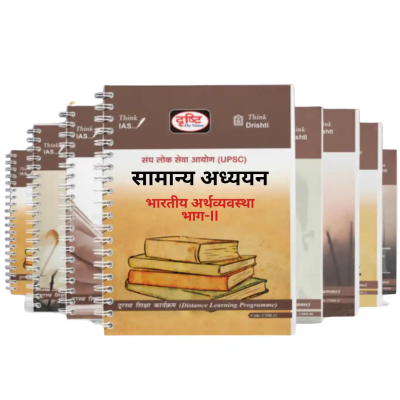
Drishti IAS Hindi Study Material 2025-2026 | 18 Booklets for UPSC CSE
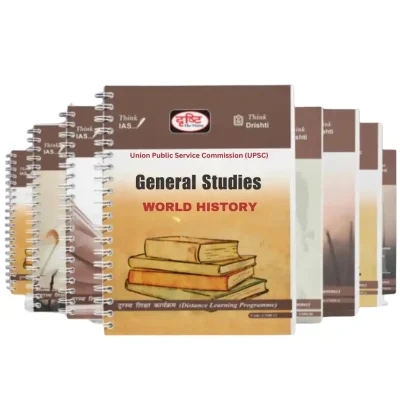
Drishti IAS Notes 2025-26 English GS Printed Booklets Set of 27
Drishti IAS Prelims Test Series 2026 | UPSC English Tests Series
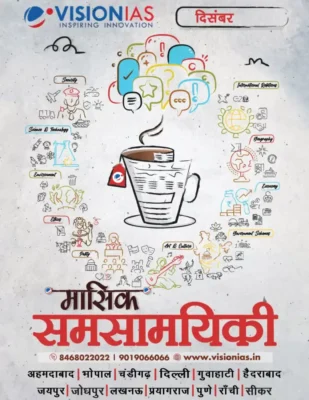
Vision IAS Current Affairs Magazine December 2025 | Hindi Medium Edition
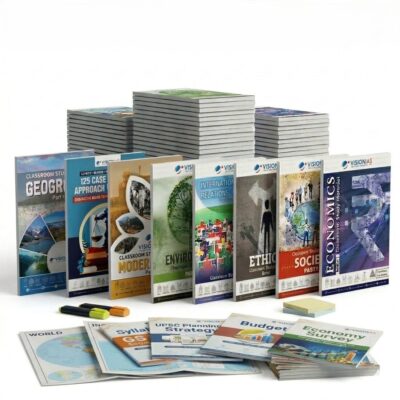
Vision IAS UPSC CSE 2026–27 Complete GS Notes | Prelims + Mains | 57 Booklets + Freebies
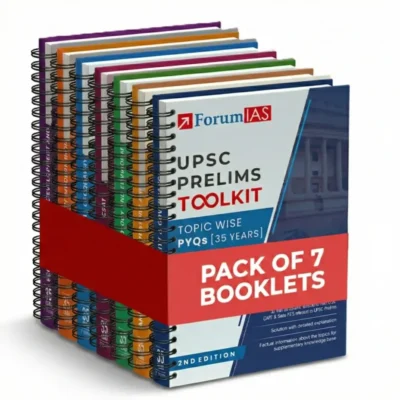
Forum IAS UPSC Prelims Toolkit: Topic Wise PYQ (1992-2025) – Ultimate Pack of 7 Booklets (2nd Edition)
What the drishti ias book list for upsc in hindi must cover
A usable list does three things at once: it spans every GS paper, it names a specific Hindi title per subject, and it tags each title for Prelims, Mains, or both. The non-negotiable foundation is NCERT Hindi — History, Geography, Polity, Economics and Science from Class 6 to 12 — downloadable free from the official NCERT site. On top of that base you keep exactly one standard book per subject, then use Drishti booklets for compact revision in Hindi. Stacking three books on one subject is the single most common Hindi-medium mistake; it slows revision and adds nothing to your score. Below is the priority-ordered subject map.
| Subject | Standard book (Hindi) | Stage |
|---|---|---|
| Ancient & Medieval History | NCERT + Drishti booklet | Prelims + Mains |
| Modern History | आधुनिक भारत का इतिहास — राजीव अहीर (स्पेक्ट्रम) | Prelims + Mains |
| Art & Culture | NCERT + Drishti booklet | Prelims |
| Polity | भारत की राजव्यवस्था — एम. लक्ष्मीकांत | Prelims + Mains |
| Geography | NCERT + महेश बर्णवाल / Drishti | Prelims + Mains |
| Economics | भारतीय अर्थव्यवस्था — संजीव वर्मा | Prelims + Mains |
| Environment & Ecology | Drishti पर्यावरण booklet | Prelims |
| Science & Tech / IR / Society / Ethics | Drishti booklets + current affairs | Mains |
The NCERT base: which classes for which subject
Before any booklet set earns your money, finish the Hindi NCERTs — they carry roughly 60% of Prelims weight and cost nothing. Read History from Class 6–8 for the ancient-medieval timeline, then Class 9–10 for the freedom struggle and Class 11–12 (Themes in Indian History) for analytical depth. For Polity, Class 9–12 ‘भारत का संविधान’ and ‘राजनीतिक सिद्धांत’ set up Lakshmikanth. Geography needs Class 6–12, with Class 11 physical geography and Class 12 human and Indian geography doing the heavy lifting. Economics: Class 9–10 for basics, Class 11–12 for macro concepts and Indian economic development. Skip nothing in Science Class 6–10. Read each NCERT twice before opening a Drishti booklet — the booklets assume you already know the vocabulary and move fast.
Standard authors: one per subject, no duplicates
After NCERT, the Hindi standard list is short and fixed. Lakshmikanth’s ‘भारत की राजव्यवस्था’ is mandatory for Polity — there is no substitute, and the Hindi translation tracks the English edition closely. Rajiv Ahir’s Spectrum ‘आधुनिक भारत का इतिहास’ is the one-stop Modern History book for both Prelims facts and Mains framing. Sanjeev Verma’s ‘भारतीय अर्थव्यवस्था’ is the cleanest Hindi Economics title for a non-commerce background. For Geography, Mahesh Barnwal supplements NCERT where map and physical-geography detail is thin. Everything beyond these — Art & Culture, Environment, Science & Tech, International Relations, Society, Internal Security and Ethics — is better covered by Drishti’s Hindi booklets than by buying a separate book per topic, because those subjects are current-affairs-driven and a single static book dates quickly.
What’s inside the Drishti IAS Hindi study-material set
Bookstore product pages rarely itemise the set, so here is exactly what the Drishti IAS Hindi 18-booklet set (2025-26) contains: complete GS for Prelims and Mains across History, Art & Culture, Geography, Indian Polity, Economy, Environment & Ecology, Science & Technology, International Relations, Society, Ethics (GS-4) and Internal Security. The 18 booklets map subject-for-subject onto the standard list above, which is why they work as revision rather than as a parallel syllabus. The English equivalent is the Drishti IAS Notes 2025-26 (27 booklets), larger only because it splits the same subjects into finer modules — more booklets, not more syllabus. Pair either with the Drishti IAS Prelims Test Series 2026 so you test recall instead of just re-reading.
| Option | Booklets | Medium | Best for |
|---|---|---|---|
| Drishti IAS Hindi Study Material 2025-26 | 18 | Hindi | Hindi-medium GS revision |
| Drishti IAS Notes 2025-26 | 27 | English | English-medium, detailed split |
| Vision IAS Complete GS Notes 2026-27 | 57 | English | Most exhaustive alternative |
| Forum IAS Prelims Toolkit (PYQ 1992-2025) | 7 | English | Topic-wise past-question drill |
How the 18 Hindi booklets split across Prelims and Mains
Treat the set as two stacks. The Prelims-weighted booklets — Polity, Environment & Ecology, Art & Culture, Geography and Economy — are the ones you revise three to four times before the May exam, because they convert directly into objective-question accuracy. The Mains-weighted booklets — Society, International Relations, Internal Security, Science & Technology and Ethics (GS-4) — you read once for structure, then update continuously with current affairs, since the questions are analytical and contemporary. History and Economy straddle both stages. This split matters for Hindi-medium aspirants specifically: answer-writing material in clean Hindi is scarce, so the GS-4 and Society booklets double as a model for the vocabulary and phrasing examiners expect in Hindi answers.
Pricing & value for the drishti ias book list for upsc in hindi
Drishti’s official Hindi DLP booklet sets are widely listed around ₹3,300, down from roughly ₹8,000 MRP. On Competer the Hindi study-material set is a compact 18-booklet pack, so it costs less than the 27-booklet English Drishti set and far less than the 57-booklet Vision IAS Complete GS Notes — which is the right call, because a Hindi-medium aspirant gains nothing from English-only volume. The one gap printed notes cannot close is current affairs; for that, add the Vision IAS Current Affairs Magazine (Hindi) as a monthly top-up rather than buying a second full static set. Reckon a realistic Hindi-medium spend as: free NCERT PDFs + three standard books + the 18-booklet Drishti set + a current-affairs magazine + a test series — and nothing beyond that. Check live prices on each product card above before ordering, since DLP discounts move.
Who should buy which
Top pick: the Drishti IAS Hindi 18-booklet set — it is the only ready-made, Hindi-medium GS package in this list and it matches the standard book list subject-for-subject. Buy it once you have read NCERT Hindi and want condensed revision notes you can cycle quickly. Beginners should finish NCERT first; the booklets assume basic familiarity and will feel terse otherwise. Do not buy the 57-booklet Vision set if you study in Hindi — it is English-only and far heavier than a Hindi-medium aspirant can absorb in one cycle. Optional-subject candidates (Hindi Literature, Philosophy, Sociology) need dedicated optional material; GS booklets do not cover the optional paper and should not be bought for that purpose.
| You are… | Buy |
|---|---|
| Hindi-medium, done with NCERT | Drishti Hindi 18-booklet set |
| Hindi-medium, weak on current affairs | Add Vision IAS CA Magazine (Hindi) |
| Comfortable in English, want depth | Drishti 27-booklet or Vision 57-booklet |
| Focused on Prelims accuracy | Drishti Prelims Test Series + Forum PYQ Toolkit |
Drishti Hindi vs Vision vs Forum: what each is actually for
These three are not interchangeable, and choosing by booklet count is a trap. The Drishti Hindi 18-booklet set is the only one written for a Hindi-medium reader — pick it as your core if Hindi is your exam language. The Vision 57-booklet set is the most exhaustive, but it is English-only and built for aspirants who want maximum coverage and have the months to read it; use it as a core only if you write the paper in English. The Forum IAS Prelims Toolkit (PYQ 1992-2025) is a different tool entirely — it is not study material but a topic-wise drill of past questions, valuable to anyone, Hindi or English, who has finished a subject and wants to test how the UPSC actually frames it. A clean Hindi-medium stack is therefore Drishti Hindi as core, Forum PYQ for question practice, and a Hindi current-affairs magazine for the moving parts.
A 10–12 month Hindi-medium reading sequence
Order matters more than volume. Months 1–3: read all NCERT Hindi twice and finish Lakshmikanth and Rajiv Ahir alongside the matching Drishti Polity and History booklets. Months 4–6: cover Geography, Economy, Environment and Art & Culture from the standard books and their Drishti booklets, and begin a daily Hindi current-affairs habit. Months 7–9: move to the Mains-weighted booklets — Society, IR, Internal Security, Science & Tech and Ethics — and start answer-writing in Hindi using the GS-4 booklet as a phrasing model. Months 10–12: stop adding new sources. Revise the five Prelims booklets three times, run the Drishti Prelims Test Series weekly, and drill past questions. The booklets earn their value in this final stretch, when fast, trustworthy revision in your own language beats re-reading thick standard books.
Buying tips for Hindi-medium aspirants
Confirm the edition reads 2025-26 so it reflects the current syllabus and recent schemes; an older print misses the latest government programmes that current-affairs questions lean on. Download NCERT Hindi PDFs free before spending on any booklet set — they are 60% of Prelims weight and skipping them wastes the booklets. Keep one standard book per subject (Lakshmikanth for Polity is essential and irreplaceable); never stack three books on the same topic. Use booklets for revision, not first reading. Pair them with a Test Series so you measure progress rather than only accumulate notes, and treat current affairs as a monthly subscription, not a one-time book, because it is the only part of GS that genuinely cannot be frozen in print.
Frequently Asked Questions
दृष्टि IAS की कौन-कौन सी किताबें UPSC के लिए सबसे अच्छी हैं?
दृष्टि की पॉलिटी, पर्यावरण, आर्ट एंड कल्चर और अर्थव्यवस्था बुकलेट्स सबसे उपयोगी मानी जाती हैं। 18-बुकलेट हिंदी सेट पूरे GS (प्रीलिम्स + मेन्स) को संक्षेप में कवर करता है।
क्या केवल दृष्टि IAS की किताबों से UPSC पास हो सकता है?
नहीं। बुकलेट्स रिवीजन के लिए हैं — पहले NCERT (कक्षा 6–12) और लक्ष्मीकांत व राजीव अहीर जैसी स्टैंडर्ड किताबें पढ़ें, फिर करेंट अफेयर्स जोड़ें।
दृष्टि IAS हिंदी माध्यम की पूरी बुकलेट सेट की कीमत कितनी है?
आधिकारिक हिंदी DLP सेट आमतौर पर लगभग ₹3,300 (₹8,000 MRP से कम) में मिलते हैं। Competer का 18-बुकलेट हिंदी सेट कॉम्पैक्ट है — ऊपर प्रोडक्ट कार्ड पर लाइव कीमत देखें।
UPSC हिंदी माध्यम के लिए NCERT के बाद कौन सी किताबें पढ़ें?
पॉलिटी के लिए लक्ष्मीकांत, आधुनिक इतिहास के लिए राजीव अहीर (स्पेक्ट्रम), अर्थव्यवस्था के लिए संजीव वर्मा, और बाकी विषयों के लिए दृष्टि की हिंदी बुकलेट्स।
UPSC प्रीलिम्स और मेन्स के लिए दृष्टि की कौन सी किताबें ज़रूरी हैं?
प्रीलिम्स के लिए पॉलिटी, पर्यावरण व आर्ट-कल्चर बुकलेट्स और प्रीलिम्स टेस्ट सीरीज़ ज़रूरी हैं; मेन्स के लिए एथिक्स (GS-4), समाज, अंतरराष्ट्रीय संबंध और आंतरिक सुरक्षा बुकलेट्स।