Buy PSIR Optional best book for upsc optional political science at Competer — printed and delivered with Cash on Delivery across India. Shop the full range below at the best price.
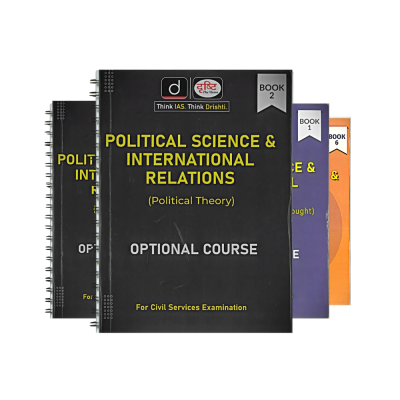
Drishti IAS PSIR Notes 2025-26 Printed Booklets Set of 6 for UPSC Preparation
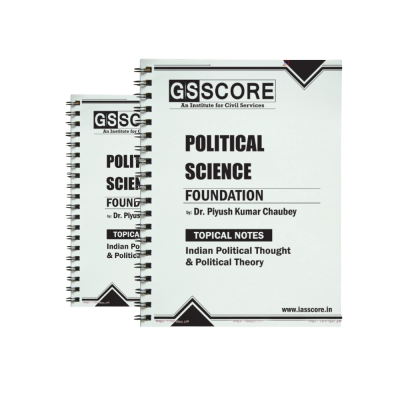
Piyush Chaubey PSIR Notes by GS Score for 2025-26 Set of 6
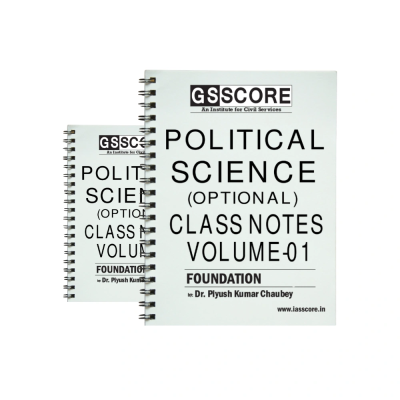
Piyush Chaubey PSIR Handwritten Notes by GS Score for 2025-26 Set of 3

Manjesh Sir Political Science Handwritten Notes for 2025-26 for UPSC PSIR
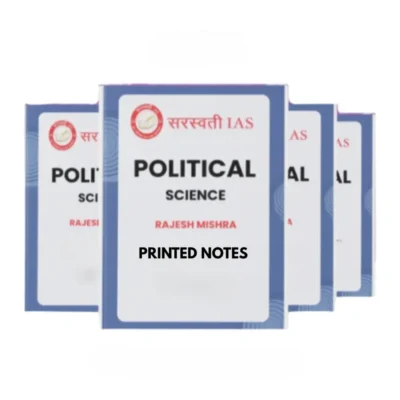
Rajesh Mishra PSIR Notes 2025-26 | UPSC Political Science | 5 Booklets
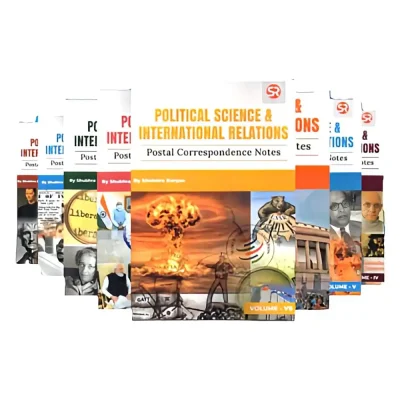
Shubhra Ranjan PSIR Class Notes 2025-26 Handwritten Booklets Set of 11
Shubhra Ranjan Handwritten Notes 2026 | PSIR Optional | 11 Booklets
Shubhra Ranjan Notes 2026 | PSIR Optional | English Medium | Set of 4 Booklets
Shubhra Ranjan PSIR Handwritten Notes 2025-2026 Hindi Set of 4 Booklets
Shubhra Ranjan PSIR Notes 2025-26 Hindi Edition 7 Booklets Printed
Rajesh Mishra PSIR Notes 2025-26 | 6 Booklet Set | Hindi Medium
Rajesh Mishra PSIR Handwritten Notes 2025–26 | 3 Booklet Set | Hindi Medium
What the best book for upsc optional political science covers
Choosing the best book for upsc optional political science is the single biggest decision an aspirant makes after selecting PSIR as an optional, because the syllabus is wide and demands both conceptual depth and answer-writing polish. A strong Political Science & International Relations (PSIR) resource set walks you through the entire two-paper structure: political theory, Indian government and politics, comparative politics, and international relations. Paper I builds your foundation in thinkers like Plato, Aristotle, Machiavelli, Marx and Gandhi, while Paper II carries you from India’s foreign policy to global groupings, the UN system, and contemporary flashpoints. The material on this page brings together standard textbooks, curated toppers’ notes and revision handouts so you can cover static concepts and dynamic current affairs from one shelf.
Good PSIR study material does not merely summarise; it connects theory to real events, supplies quotations and thinker frameworks for value addition, and models the analytical tone examiners reward. That combination of coverage and structure is what separates exam-ready notes from generic political science reading.
How to choose the best book for upsc optional political science
When you weigh options, judge them against the actual UPSC PSIR syllabus rather than a college reading list. Look for full syllabus mapping, so no sub-topic in either paper is left uncovered. Prioritise resources that pair conceptual clarity with answer-writing support, since Mains rewards structured, multi-dimensional answers, not textbook reproduction. Check that international relations content is current, because IR moves fast and stale notes cost marks. Also assess whether the language is concise and revision-friendly; during the final months you want handouts you can revise in a day, not dense volumes. Finally, favour a mix of a couple of core textbooks plus consolidated notes, which is how most successful PSIR candidates actually study.
Comparison of PSIR resource types
| Resource type | Best for | Coverage depth | Revision ease |
|---|---|---|---|
| Core textbooks | Building concepts from scratch | High on theory | Moderate |
| Toppers’ handwritten notes | Answer structure and value addition | Focused, exam-oriented | High |
| Printed revision notes | Quick final-lap revision | Condensed | Very high |
| Current affairs compilations | Paper II IR and dynamic topics | Contemporary focus | High |
Who should buy PSIR optional material
These resources suit first-time PSIR optional aspirants who need a structured entry into political theory and IR, as well as repeat candidates who already know the syllabus but want sharper notes for faster revision. Working professionals with limited hours benefit from condensed handouts that cut reading time, while candidates strong in current affairs but weak in theory can plug specific gaps. If you have chosen PSIR because of its overlap with GS Paper II, essay and interview, curated notes help you extract that cross-utility efficiently.
How to use PSIR books and notes effectively
Begin with a core textbook to understand each thinker and concept, then move to consolidated notes to see how those ideas translate into Mains answers. Read actively: underline thinker quotations, prepare one-page frameworks for recurring themes, and link Paper I theory to Paper II applications. Attempt previous-year questions after every unit and write at least a few answers weekly to internalise structure. Reserve printed revision notes for the last two months, cycling through them repeatedly so recall becomes automatic in the exam hall. Keep a separate current affairs file for IR so your dynamic content stays fresh right up to the exam.
Buying and delivery
Ordering on Competer is straightforward: browse the PSIR options in the grid above, add your chosen titles to the cart, and complete checkout with your delivery details. We support standard online payment methods and ship across India, with tracking shared once your order is dispatched. Delivery timelines depend on your location, and any specific dispatch or return details are shown on each product’s page so you can decide with full clarity before you pay.
Frequently Asked Questions
Which book is the best for UPSC PSIR optional?
There is no single answer for everyone; most aspirants combine a core theory textbook with well-structured revision notes so they cover concepts and answer-writing together.
Are these notes enough without coaching?
Comprehensive notes that map the full syllabus, paired with regular answer practice and previous-year questions, are sufficient for many self-study candidates.
Do the resources cover both Paper I and Paper II?
The recommended PSIR material spans political theory, Indian politics, comparative politics and international relations, so both papers are addressed.
How current is the international relations content?
IR sections and current affairs compilations are updated to reflect recent developments, which matters most for Paper II and dynamic questions.
How long does delivery take?
Dispatch and delivery timelines depend on your location and are displayed at checkout, with tracking shared once your order ships.