This Shubhra Ranjan IAS review is the search almost every PSIR aspirant runs before committing ₹55,000+ for the optional or roughly ₹85,000 for GS Foundation, so here is a decisive, balanced verdict on the institute founded in 2014 by Shubhra Ranjan Deshmukh. The short version: it is the strongest single choice in India for Political Science and International Relations optional, weaker and overpriced as a one-stop GS solution, and worth pairing with self-study GS material if your budget is tight. Below the analysis you will find printed GS notes and test series that let you carry the GS load yourself while taking only the PSIR optional here.

Vision IAS UPSC CSE 2026–27 Complete GS Notes | Prelims + Mains | 57 Booklets + Freebies

Vision IAS GS 2026-27 Booklets with Value Added Materials - 56 Booklets

Vision IAS Prelims Test Series 2026 | UPSC Prelims GS Tests in English Medium

Drishti IAS Notes 2025-26 English GS Printed Booklets Set of 27
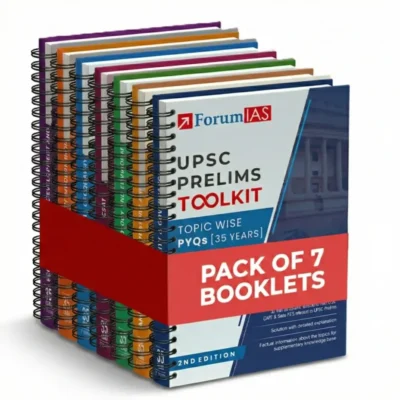
Forum IAS UPSC Prelims Toolkit: Topic Wise PYQ (1992-2025) – Ultimate Pack of 7 Booklets (2nd Edition)

Vision IAS Current Affairs Magazine January 2026 | English Medium Edition
Bottom Line Up Front
If PSIR is your optional, join — the conceptual depth, IR coverage and structured notes are hard to match. If you are choosing this institute mainly for GS Foundation, reconsider: dedicated GS coachings and printed GS material deliver more for the money. Take a free demo before paying, confirm 2026 fees in writing because older pages still show 2023 prices, and read the refund clause line by line, since extra-payment and refund disputes are the most repeated complaint across Justdial and Quora.
About Shubhra Ranjan IAS
Shubhra Ranjan IAS Studies started in 2014 and built its reputation on PSIR optional, where Shubhra Ranjan Ma’am personally teaches Polity, Governance and International Relations. The brand later expanded into GS Foundation, CSAT and Essay, with offline centres in Old Rajinder Nagar (Delhi), Pune, Bengaluru, Hyderabad and Lucknow, supported by a tablet course and an online live and recorded ecosystem for aspirants outside those cities. Its most-cited alumna is Tina Dabi (AIR 1, 2015), and on Justdial the brand carries 1,393+ ratings. Batch sizes typically run 150–200 students, taught in a notes-heavy, mentorship-led format where printed material and answer-writing practice do most of the work between classes.
Courses & Fees (2026)
Fees move with mode and city, but the indicative 2026 bands are below. PSIR optional is the flagship and the main reason aspirants enrol; everything else is a secondary product. Verify the current figure before paying, because several listing pages still quote 2023 prices that are now stale.
| Course | Indicative 2026 Fee | Mode |
|---|---|---|
| PSIR Optional | ₹55,000–₹60,500 | Offline / online / tablet |
| GS Foundation | ~₹85,000 | Offline / hybrid |
| CSAT | ~₹15,000 | Offline / online |
| Essay & Crash Courses | ₹10,000–₹25,000 | Online / offline |
Two fee points matter in practice. First, the PSIR band is for the full optional course, not module-wise classes, so the per-topic cost only makes sense if you complete the whole syllabus. Second, the GS Foundation figure of about ₹85,000 puts it in the same bracket as larger GS-first institutes that have deeper GS faculty benches — which is exactly why most aspirants here treat GS as something to supplement rather than buy in full.
Which Mode Should You Pick?
The same PSIR course feels different across offline, tablet and online, and picking the wrong mode is the most avoidable mistake. Offline gives you live doubt-solving and peer pressure but locks you to one city; the tablet course is the closest substitute to classroom learning with preloaded lectures you can replay; pure online live or recorded is cheapest in hidden costs but demands self-discipline.
| Mode | Best For | Trade-off |
|---|---|---|
| Offline (centre) | Aspirants in centre cities wanting live interaction | Fixed location, large 150–200 batches |
| Tablet course | Self-paced learners wanting classroom-quality lectures | Higher upfront cost, device-bound |
| Online live / recorded | Working aspirants and small-town students | Needs strong self-discipline, slower doubt resolution |
What the PSIR Course Actually Delivers
The reason PSIR is the standout is pedagogy, not branding. Shubhra Ranjan Ma’am builds Paper I and Paper II from first principles — Western and Indian political thought, comparative politics, the Indian Constitution and governance — then layers International Relations on top, which is the section most aspirants find hardest to self-study. The class notes are designed to be exam-ready rather than encyclopaedic, so you spend less time condensing and more time writing answers. The accompanying test series targets PSIR answer structure specifically, with model answers that show how to deploy thinkers and current IR events inside a 10- or 15-marker. For most candidates the value is this end-to-end loop: concept, structured notes, then graded answer-writing on the exact optional you sit.
Faculty, Facilities & Past Results
PSIR is taught by Shubhra Ranjan Ma’am herself; GS subjects are handled by a named in-house faculty team rather than the founder. Facilities include classroom centres, a tablet course with preloaded lectures, recorded-lecture access for online students, GS, CSAT and Essay test series, and PDF plus video material for the online cohort. Doubt-solving runs through mentor sessions and online portals, though response speed is the facility most often criticised in reviews. On results, the institute leans on PSIR-optional selections and high optional scores, with Tina Dabi the headline name. Verified year-on-year selection data is thin and not independently published, so treat the marketing galleries and rank claims as promotional rather than audited proof, and weight them less than a demo class you judge yourself.
Shubhra Ranjan IAS Review: Pros vs Cons
The core strength is PSIR depth and exam-ready notes; the core risk is inconsistent front-desk handling and recurring refund and money-demand complaints on Justdial and Quora that many review pages quietly skip. Both deserve equal weight before you pay.
| Pros | Cons |
|---|---|
| Strong, exam-oriented PSIR coverage | Complaints on front-desk staff behaviour |
| Personal teaching by Shubhra Ranjan Ma’am | Refund and extra-payment disputes reported |
| Tablet plus recorded online options | Large 150–200 batches dilute attention |
| Established test series and PSIR notes | Selection data not independently verified |
The Complaints, Read Honestly
No fair review hides the negative reviews. The pattern across public platforms is not about teaching quality — almost nobody disputes that the PSIR classes deliver — but about administration: slow or curt front-desk responses, disputes over additional payments, and friction when students seek refunds after switching plans or cities. The practical defence is procedural. Pay through traceable channels, keep the fee receipt and the written refund policy, and clarify upgrade or transfer costs before enrolling rather than after. Treating the academics and the admin as two separate decisions is the most accurate way to read this institute.
Shubhra Ranjan IAS Review vs Vision & Mitra for PSIR
For PSIR optional, Shubhra Ranjan remains the default pick for conceptual clarity and IR depth; Mitra IAS is rated for tight answer-writing and crisp notes; Vision IAS is stronger for GS than for PSIR. If GS is your weak link, you will likely need separate GS material no matter where you take the optional, so choose the optional on teaching fit and solve GS separately.
| Institute | Best For | Reputation |
|---|---|---|
| Shubhra Ranjan | PSIR optional | Strongest for concepts and IR |
| Mitra IAS | PSIR answer-writing | Strong for notes and tests |
| Vision IAS | GS Foundation | Strongest for GS, not PSIR |
A common, cost-effective combination among toppers is Shubhra Ranjan for the PSIR optional and answer-writing rhythm, plus a GS-first source for Prelims and Mains General Studies — either dedicated GS coaching if your budget allows, or printed GS notes and test series if it does not.
Who Should Join — and Who Should Not
Join if PSIR is your optional and you want structured concept-building from the subject specialist, especially if International Relations intimidates you. Do not join only for GS Foundation expecting it to beat dedicated GS-focused coachings, and skip the full programme if your budget is tight and you already study well from printed material. In that case, self-prepare GS using the Vision IAS Complete GS Notes (Prelims + Mains, 57 booklets) or the 56-booklet Vision IAS GS set, add the Drishti IAS English GS booklets for a second explanation of dense topics, and test yourself with the Vision IAS Prelims Test Series 2026 and the Forum IAS Prelims PYQ Toolkit — covering the entire GS load while you pay only for the PSIR optional at Shubhra Ranjan. For a single-optional aspirant on a budget, this split routinely costs less than a full GS Foundation programme and keeps the strongest part of the institute — PSIR — in your plan.
Final Verdict
Shubhra Ranjan IAS earns its reputation where it claims it: PSIR optional. As a focused optional institute it is a clear yes for concept depth, IR coverage and answer-oriented notes. As a complete UPSC solution it is only an average bet, and the administrative complaints are real enough to plan around. The smart move for most aspirants is to take the PSIR optional here, demo before paying, lock the 2026 fee and refund terms in writing, and cover GS with dedicated material or coaching that is built for it.
Frequently Asked Questions
Is Shubhra Ranjan IAS good for PSIR optional?
Yes. PSIR is its flagship and strongest product, with Shubhra Ranjan Ma’am personally teaching Polity, Governance and International Relations; it is the single most common reason aspirants enrol and the area where it outperforms rivals.
What is the fee of Shubhra Ranjan IAS coaching?
Indicative 2026 fees are around ₹55,000–₹60,500 for PSIR optional, roughly ₹85,000 for GS Foundation, about ₹15,000 for CSAT, and ₹10,000–₹25,000 for Essay or crash courses, varying by mode and city. Confirm the figure in writing before paying, since older pages still show 2023 prices.
Is Shubhra Ranjan good for GS preparation?
GS is competent but not the institute’s standout. Many aspirants pair the PSIR optional here with dedicated GS material or coaching for stronger Prelims and Mains GS coverage rather than relying on GS Foundation alone.
Does Shubhra Ranjan IAS provide online classes and recorded lectures?
Yes. It offers online live and recorded batches plus a tablet course with preloaded lectures; recorded access and PDF or video material are provided to online students outside the centre cities.
Where is Shubhra Ranjan IAS located and which cities have centres?
Offline centres are in Old Rajinder Nagar (Delhi), Pune, Bengaluru, Hyderabad and Lucknow, alongside online live, recorded and tablet options for aspirants outside these cities.
Are the refund complaints about Shubhra Ranjan IAS true?
Public platforms like Justdial and Quora do carry recurring complaints about front-desk behaviour and refund or extra-payment disputes. They concern administration rather than teaching quality, so pay through traceable channels and confirm the refund policy in writing before enrolling.