Is Vision IAS monthly current affairs enough for UPSC? For Prelims facts it is a strong backbone, but on its own it is not enough — the magazine builds neither your static/NCERT base nor your MCQ reflex, and Mains answers need deeper static-current linkage than month-wise notes supply. The realistic verdict: treat the monthly magazine as your single current-affairs spine, then bolt on a test series, GS notes and PYQ analysis. The Quora threads contradict each other because they answer different questions — “enough for what stage, at what preparation level?” Below we settle that with a do-this-not-that plan and the exact stack to buy.
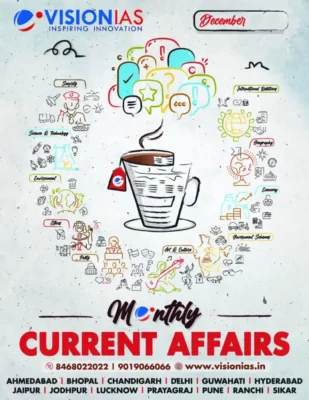
Vision IAS Current Affairs Magazine December 2025 | English Medium Edition
Vision IAS Current Affairs Magazine January 2026 | English Medium Edition
Vision IAS Current Affairs Magazine November 2025 | English Medium

Vision IAS Prelims Test Series 2026 | UPSC Prelims GS Tests in English Medium
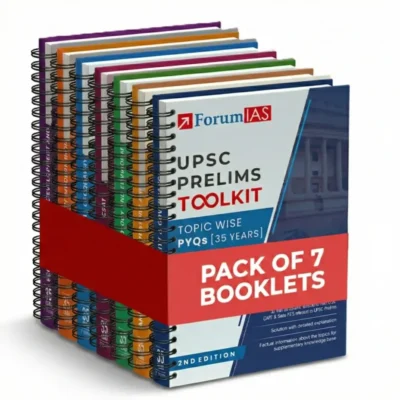
Forum IAS UPSC Prelims Toolkit: Topic Wise PYQ (1992-2025) – Ultimate Pack of 7 Booklets (2nd Edition)
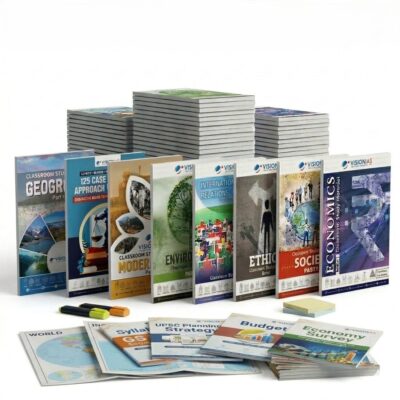
Vision IAS UPSC CSE 2026–27 Complete GS Notes | Prelims + Mains | 57 Booklets + Freebies
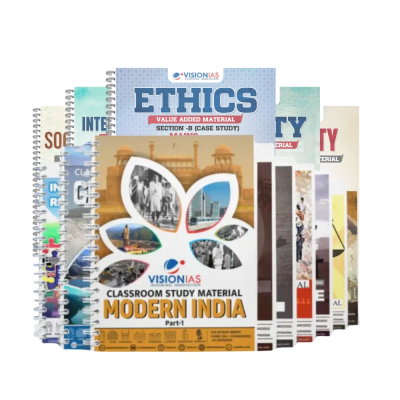
Vision IAS GS 2026-27 Booklets with Value Added Materials - 56 Booklets
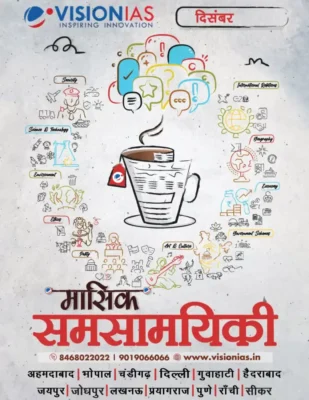
Vision IAS Current Affairs Magazine December 2025 | Hindi Medium Edition
What the Vision IAS monthly magazine actually covers (and what it skips)
The Vision IAS Current Affairs Magazine December 2025 (English) is mapped section-by-section to the GS syllabus — Polity, Economy, Environment, Science & Tech, International Relations, Society, Culture and Ethics — with value-added boxes, scheme snapshots, committee/report call-outs and a ‘Places in News’ tail (Bolivia, Norway and similar geographies that surface as map-based Prelims questions). In Prelims 2025, aspirants traced 25+ reflections to this ecosystem: PM Surya Ghar, the Lokpal, Asset Reconstruction Companies, surface coal gasification, and the FAO State of World Fisheries report. That overlap is not marketing — it is the magazine doing its core job.
What it deliberately does not do matters just as much. It lags the fastest-moving daily developments by the time it is printed and shipped. It hands you zero MCQs, so it never trains the elimination instinct Prelims rewards. And it silently assumes you already hold an NCERT and static foundation — when it says “this links to fundamental rights” or “recall the function of the Finance Commission,” it expects you to know that base. The magazine is a notes-and-understanding instrument, not a self-contained syllabus. Read in isolation by a beginner, half its linkage value is invisible.
Is Vision IAS monthly current affairs enough for Prelims vs Mains?
Segment the question, because the honest answer flips by stage. For Prelims, twelve monthly issues consolidated into a year-end PT 365 cover the factual current-affairs load almost completely — but “knowing” a fact and “scoring” it are different skills. You still need MCQ drilling through the Vision IAS Prelims Test Series 2026 and pattern-recognition from the Forum IAS Prelims PYQ Toolkit (1992–2025), which shows you how the UPSC actually frames a current event into a tricky statement-based question. For Mains, month-wise notes are too fragmented to write a 250-word answer: an examiner wants a single event placed against its constitutional, economic and ethical backdrop, and that synthesis comes from structured GS notes plus a consolidated Mains 365, not from twelve separate booklets you flip between.
| Question | Verdict | What to add |
|---|---|---|
| Enough for Prelims facts? | Almost — needs PT 365 + MCQ practice | Test series + PYQ toolkit |
| Enough for Mains depth? | No — too fragmented | GS notes + Mains 365 |
| Builds static/NCERT base? | No | NCERTs + standard GS notes |
| Replaces the newspaper? | Mostly, for limited-time aspirants | One editorial scan/week |
Read the table as a shopping list, not a scoreboard. Every “No” is a gap with a named fix, and none of those fixes is another current-affairs source — they are different categories of material entirely.
Monthly vs PT 365 vs Mains 365 vs newspaper
Most aspirants over-collect because they treat these four as rival products and try to “win” by owning all of them in parallel. They are sequential tools for one pipeline, not competitors. The monthly magazine is where understanding is built, month by month, while the news is still fresh in your head. PT 365 is that same year compressed into a Prelims-facing revision document — you do not read it monthly; you hit it in the final stretch. Mains 365 is the same raw material re-cut for answer-writing, opened only after Prelims is done. The newspaper fills exactly one gap: the window between an event happening and the magazine reaching your door.
| Resource | Purpose | When to use | Enough alone? |
|---|---|---|---|
| Monthly Magazine | Understanding + notes | All year, month by month | No |
| PT 365 | Prelims fact revision | Last 2–3 months | No (revision only) |
| Mains 365 | Answer enrichment | Post-Prelims | No |
| Newspaper | Daily gap-filling | Optional, 20 min/day | No |
For working professionals the calculus is sharper: drop daily newspaper hoarding entirely. The monthly magazine plus one weekend editorial scan is a defensible minimal current-affairs stack — and revising that stack three times beats reading three different sources once. Coverage breadth loses to revision depth in this exam every single time.
A month-by-month timeline: when each resource enters
Abstract advice is why aspirants stall. Here is the concrete sequence, anchored to a roughly 12-month runway to Prelims.
| Window | Current-affairs action | Parallel work |
|---|---|---|
| Month 12–9 (start) | Read each monthly magazine within 10 days of receiving it; make a one-line note per topic | Finish NCERTs + first pass of static GS notes |
| Month 8–4 | Keep the monthly run unbroken; start linking each item to a static chapter | Begin sectional Prelims tests |
| Month 3–2 | Switch from fresh reading to PT 365 consolidation; second revision of magazines | Full-length mock tests, weekly |
| Final 30 days | Third revision via PT 365 only; no new sources | PYQ-driven targeted revision |
| Post-Prelims | Open Mains 365; convert facts into answer points | Daily answer-writing |
The single rule that timeline enforces: never let an unread magazine pile up. Three unread issues is how aspirants convince themselves current affairs is “too much” and abandon the spine that was working.
How to read the magazine so it actually converts to marks
Whether Vision IAS current affairs is “enough” depends less on the product and more on the reading method. Passive highlighting produces recognition, not recall — and Prelims tests recall under four plausible options. Three habits change the return on every issue. First, read with the PYQ toolkit open beside you, so each topic is filtered through “how would the UPSC weaponise this into a statement?” Second, after every section, write the value-added box facts as standalone one-liners; these compressed lines, not the full pages, are what you revise in the last month. Third, link forward: when the December issue mentions a scheme introduced in August, flip back and connect them, because the exam asks about the scheme as a whole, not as a December fragment. A magazine read this way is closer to “enough”; the same magazine read passively is not, regardless of how complete its content is.
Pricing & value: build the stack, not a pile
A single month such as Vision IAS January 2026 (English) or November 2025 sits in the low-hundreds price band — cheap enough that collecting a full unbroken year costs less than most single test-series subscriptions. The leverage purchase is not more current affairs; it is the static base the magazine assumes you own: the Vision IAS Complete GS Notes 2026–27 (57 booklets) or the 56-booklet GS 2026-27 set with value-added material. Spend here first if you are early, because without that scaffolding the magazine’s linkages land on empty ground. Hindi-medium aspirants get full parity through the December 2025 Hindi edition, with no compromise in coverage or value-added boxes.
Who should buy which
| Profile | Buy this |
|---|---|
| Foundation-stage (1st attempt) | GS Notes (57 booklets) + monthly magazines from month one |
| Prelims-only / final 90 days | Monthly magazines + Prelims Test Series + Forum PYQ Toolkit |
| Working professional, low time | Monthly magazine + revise thrice; skip daily newspaper |
| Hindi medium | December Hindi magazine + Drishti static notes |
Top pick: pair twelve monthly magazines with the GS Notes for your static base and the Prelims Test Series for MCQ conversion — that triad covers understanding, foundation and scoring, which no single product does. Who should NOT buy the magazine alone: a first-attempt aspirant with no NCERT or static foundation. For that profile, reading current affairs without scaffolding wastes the magazine’s entire linkage advantage and breeds the false confidence of “I read it” without the recall to back it.
Common mistakes that make the magazine feel “not enough”
When aspirants conclude the magazine failed them, the cause is usually one of four self-inflicted errors. They buy three current-affairs sources for the same months, so they finish none and revise nothing. They read each issue once and never revisit, guaranteeing the facts evaporate by exam day. They start collecting only four months before Prelims, missing the early events that the year-end question paper still tests. And they skip MCQ practice entirely, mistaking the comfort of recognition for the skill of selection. None of these is a content gap in the magazine — each is a usage gap, and each has a fix already named in the stack above.
Buying tips
Commit to one current-affairs source and revise it to exhaustion — do not stack Insights, PIB monthly and Vision for the same months, because duplication, not insufficiency, is what actually sinks current-affairs prep. Buy the magazines as a continuous run (Nov, Dec, Jan…) so no month is missing and no early event slips through. Add the PYQ toolkit at the start, not the end, so you read every issue through a question lens rather than as passive reportage. And budget for the static GS notes before the next magazine month — that is the purchase that turns the whole current-affairs spine from “interesting reading” into exam-convertible understanding.
Frequently Asked Questions
Is Vision IAS monthly current affairs enough for UPSC Prelims?
Close, but not alone. Twelve monthly issues plus PT 365 cover the facts, yet you still need MCQ practice through a Prelims test series and previous-year pattern analysis to convert that knowledge into marks under exam conditions.
Is the Vision IAS monthly magazine enough for UPSC Mains?
No. Month-wise notes are too fragmented for Mains. You need static linkage from GS notes and consolidated answer fodder from Mains 365 to write enriched, multi-dimensional answers instead of isolated event summaries.
Do I need to read newspapers if I study Vision IAS current affairs?
Not heavily. The magazine covers most exam-relevant news. A 15–20 minute editorial scan a few times a week fills the lag; daily front-to-back newspaper reading is optional for time-pressed aspirants.
What is the difference between the Monthly Magazine, PT 365 and Mains 365?
The monthly magazine is for year-round understanding and notes; PT 365 is a consolidated Prelims fact-revision document for the last 2–3 months; Mains 365 compiles the year’s issues for answer enrichment after Prelims.
How many months of Vision IAS current affairs are needed for UPSC?
Roughly 12–18 months before your exam — a full year of monthly magazines consolidated into PT 365 and Mains 365 is the standard window aspirants follow.
Which is better for current affairs — Vision IAS or Insights IAS?
Both are reliable; the deciding factor is sticking to one. Vision’s monthly magazine has stronger value-added boxes and Prelims overlap, so pick it, revise it multiple times, and avoid mixing sources for the same months.