If you searched judicial review drishti ias hindi, you want one printed Polity set that fixes न्यायिक समीक्षा in revision-ready Hindi — the definition (the judiciary’s power to test whether a legislative act or executive order is constitutional), the article cluster (13, 32, 131-136, 137, 226, 227, 245-246, 251, 254, 372), the three प्रकार, the grounds on which a law is struck down, the India-vs-USA scope gap, and the Kesavananda-to-Coelho case line. Below are the Drishti and Vision IAS Hindi-medium booklets that carry न्यायिक समीक्षा inside the full M. Laxmikanth-style Polity syllabus, so the concept and its 200+ linked topics revise from a single source instead of a scattered free-PDF folder.
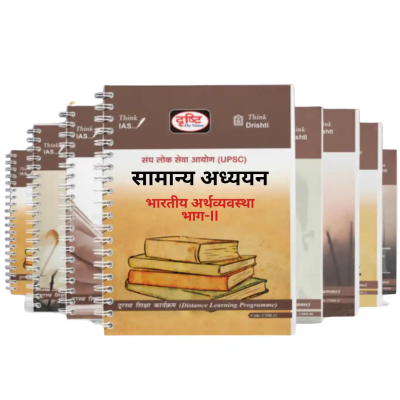
Drishti IAS Hindi Study Material 2025-2026 | 18 Booklets for UPSC CSE
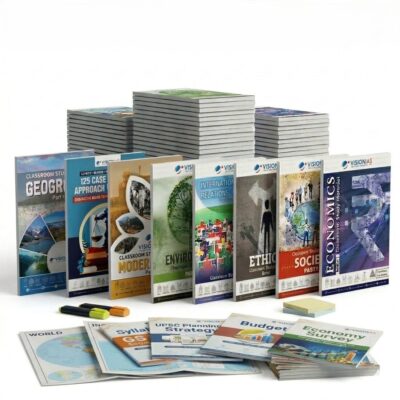
Vision IAS UPSC CSE 2026–27 Complete GS Notes | Prelims + Mains | 57 Booklets + Freebies
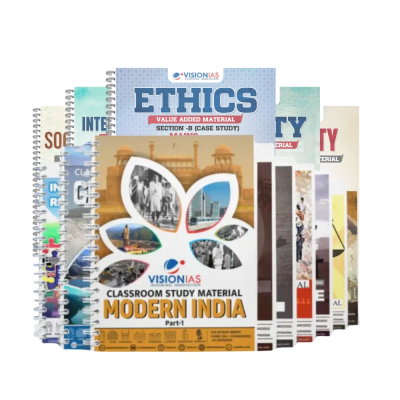
Vision IAS GS 2026-27 Booklets with Value Added Materials - 56 Booklets
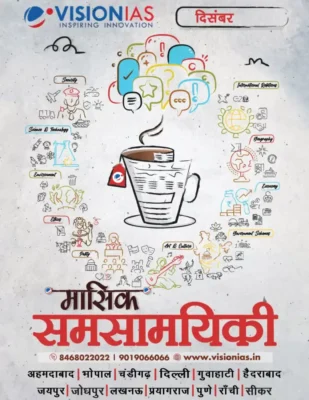
Vision IAS Current Affairs Magazine December 2025 | Hindi Medium Edition
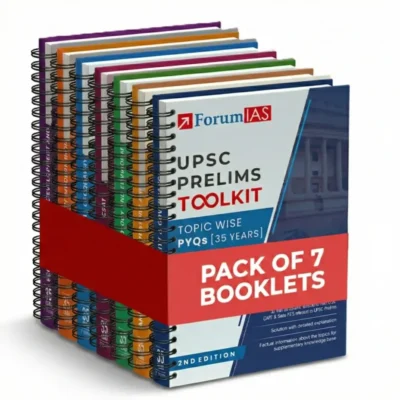
Forum IAS UPSC Prelims Toolkit: Topic Wise PYQ (1992-2025) – Ultimate Pack of 7 Booklets (2nd Edition)
Drishti IAS Prelims Test Series 2026 | UPSC English Tests Series
What a usable judicial review drishti ias hindi note must contain
A daily-news PDF (the Central Vista item that ranks today is the type case) gives 600 words welded to one judgment — useless three months later. An evergreen Hindi note on न्यायिक समीक्षा has to deliver six things together: the परिभाषा in plain Hindi, an अनुच्छेद-वार table, the three प्रकार (विधायी कार्यों, प्रशासनिक कार्रवाई और न्यायिक निर्णयों की समीक्षा), the specific grounds of invalidity (विधायी क्षमता का अभाव, मौलिक अधिकारों का उल्लंघन, मूल ढाँचे का हनन), a landmark-case revision list, and the “Procedure Established by Law” vs “Due Process of Law” contrast that examiners love. Miss any one and you will rebuild it from memory in the hall. The printed booklets below bundle all six plus the Mains answer skeleton — that is the whole reason to pay for print over a download.
न्यायिक समीक्षा — अनुच्छेद-वार table (quick revision)
| अनुच्छेद | प्रावधान |
|---|---|
| 13 | मौलिक अधिकारों से असंगत विधियाँ शून्य — न्यायिक समीक्षा का मूल आधार |
| 32 | उच्चतम न्यायालय में रिट के माध्यम से मौलिक अधिकारों की रक्षा |
| 131-136 | मूल/अपीलीय क्षेत्राधिकार व विशेष अनुमति याचिका (SLP) |
| 137 | उच्चतम न्यायालय द्वारा अपने निर्णयों का पुनर्विलोकन |
| 226 / 227 | उच्च न्यायालयों की रिट व अधीनस्थ न्यायालयों पर अधीक्षण शक्ति |
| 245-246, 251, 254 | केंद्र-राज्य विधायी क्षमता व टकराव की समीक्षा |
| 372 | संक्रमणकालीन विधियों की संवैधानिकता की समीक्षा |
Drill the split the way Prelims tests it: Article 13 supplies the substantive ground (a law clashing with Part III is void), while Articles 32 and 226 supply the procedural route (the writ that lets a citizen reach the court). 13 and 32 sit in Part III and bind the Supreme Court; 226 is wider — High Court writs run for fundamental rights “and for any other purpose,” so a state law can be challenged in a High Court on grounds beyond Part III. That single distinction has supplied multiple PYQ options.
The three प्रकार, and what gets a law struck down
न्यायिक समीक्षा operates on three classes of action — legislative (केंद्र/राज्य अधिनियम), administrative/executive (आदेश, अधिसूचनाएँ, नियुक्तियाँ), and judicial (अनुच्छेद 137 के तहत अपने ही निर्णय का पुनर्विलोकन). For Mains, pair each type with the test the court applies. A legislative act falls on three grounds: the legislature lacked competence (Schedule VII का उल्लंघन), it violated a fundamental right (Article 13), or it damaged the basic structure (Kesavananda). Executive action is tested for legality, reasonableness (Wednesbury), and procedural fairness. Memorising only “तीन प्रकार” without the grounds is the gap that separates a 7-mark answer from a 4-mark one — and exactly the layer a printed note carries that a news PDF drops.
India vs USA — the scope line examiners probe
The concept is borrowed from the US Constitution via Marbury v. Madison (1803), but India deliberately narrowed it. American courts apply “Due Process of Law” — they can void a statute for being substantively unjust or unreasonable. India’s framers chose “Procedure Established by Law” (Article 21), so the original test was only whether a valid procedure existed, not whether it was fair. Maneka Gandhi (1978) then read fairness back in, pulling Indian practice partway toward due process without adopting the label. न्यायिक समीक्षा itself is part of the संविधान के मूल ढाँचे, affirmed across Kesavananda Bharati (1973), Indira Gandhi v. Raj Narain (1975) and Minerva Mills (1980) — meaning Parliament cannot amend it away even with a two-thirds majority. State the borrowing, the deliberate narrowing, and the Maneka correction in one line and you have the full arc most aspirants compress into a vague “USA से ली गई.”
Landmark cases — एक-पंक्ति significance
| Case | एक-पंक्ति महत्त्व |
|---|---|
| Marbury v. Madison (1803) | न्यायिक समीक्षा की अवधारणा का स्रोत (USA) |
| Shankari Prasad (1951) | संसद संशोधन से मौलिक अधिकार सीमित कर सकती है |
| Golaknath (1967) | संसद मौलिक अधिकारों में कटौती नहीं कर सकती |
| Kesavananda Bharati (1973) | मूल ढाँचा सिद्धांत — न्यायिक समीक्षा उसका भाग |
| Minerva Mills (1980) | न्यायिक समीक्षा को मूल ढाँचा घोषित किया |
| I.R. Coelho (2007) | 9वीं अनुसूची की विधियाँ भी समीक्षा के अधीन |
| S.R. Bommai (1994) | अनुच्छेद 356 की उद्घोषणा न्यायिक समीक्षा योग्य |
Revise the table as a chronology of a tug-of-war, not seven loose facts: Shankari Prasad and Sajjan Singh let Parliament amend rights, Golaknath reversed that, the 24th Amendment hit back, Kesavananda settled it with the basic-structure doctrine, and Minerva Mills then locked judicial review inside that doctrine. I.R. Coelho closed the last escape hatch — even Ninth Schedule laws added after 1973 are reviewable. S.R. Bommai is your federalism crossover: Article 356 proclamations became justiciable, which is why न्यायिक समीक्षा questions and President’s Rule questions share answer material.
Comparison — which Hindi material covers it best
The Drishti IAS Hindi Study Material 2025-2026 (18 booklets) is the direct match for anyone who searched “drishti ias hindi” — its Polity booklet carries न्यायिक समीक्षा in the same crisp Hindi as the website, with the article table and case list already laid out. The Vision IAS Complete GS Notes (57 booklets, Prelims + Mains) goes further into Mains answer-writing, judicial-activism debates, and case linkages across GS-II. For the current-affairs hook — Central Vista-type litigation, electoral-bonds-type rulings — the Vision IAS Current Affairs December 2025 Hindi Edition keeps the concept tied to live cases.
| Material | Medium | Booklets | Best for |
|---|---|---|---|
| Drishti IAS Hindi Study Material | Hindi | 18 | Core concept + Prelims revision |
| Vision IAS Complete GS Notes 2026-27 | English | 57 | Mains depth, full GS coverage |
| Vision IAS GS 2026-27 Booklets | English | 56 | Static Polity + value-added notes |
| Vision IAS CA December 2025 | Hindi | 1 | Current-affairs case linkage |
| Forum IAS Prelims Toolkit (PYQ 1992-2025) | English | 7 | Topic-wise past questions |
Who should buy which
Hindi-medium UPSC and State-PCS aspirants should start with the Drishti Hindi set — it matches the exact phrasing you reached through this search, so there is no translation tax during revision. If you write Mains in English or want the broadest static coverage across all four GS papers, take Vision IAS GS 2026-27 (56 booklets) instead. To pressure-test recall on न्यायिक समीक्षा with real questions, add the Forum IAS Prelims Toolkit (topic-wise PYQ 1992-2025) and the Drishti Prelims Test Series 2026 — PYQ shows you that this topic is tested through article-matching and case-matching, not definitions. One firm exclusion: do not buy the 57-booklet Vision GS set if you are a pure Hindi-medium beginner who only needs Polity revision — it is in English and far wider than your need, and the Drishti Hindi Polity booklet alone closes this topic.
Buying tips that change your score, not just your shelf
One paid printed Polity set beats a folder of free PDFs because न्यायिक समीक्षा never appears alone — it pulls in basic structure, federalism (S.R. Bommai), Ninth Schedule (Coelho), and PIL as the access route. Nail the four terms aspirants swap in the hall: judicial review (testing constitutionality), judicial activism (proactive, purposive interpretation in the public interest), judicial overreach (the court crossing into executive or legislative turf), and PIL (the procedural doorway that widened locus standi). Buy a 2025-26 edition so post-2023 rulings are folded in, pair the static booklet with exactly one current-affairs magazine — not five — and turn the landmark-case table above into a single-page mind-map you revise in the last 48 hours. That sequence, not the volume of paper, is what moves the mark.
Frequently Asked Questions
न्यायिक समीक्षा क्या है?
न्यायिक समीक्षा न्यायपालिका की वह शक्ति है जिसके तहत वह विधायिका के अधिनियमों और कार्यपालिका के आदेशों की संवैधानिकता की जाँच करती है — केंद्र और राज्य दोनों स्तरों पर। असंवैधानिक पाए जाने पर ऐसी विधि या आदेश शून्य घोषित कर दिए जाते हैं।
न्यायिक समीक्षा किस देश के संविधान से ली गई है?
यह अवधारणा संयुक्त राज्य अमेरिका (USA) के संविधान से ली गई है, जहाँ Marbury v. Madison (1803) मामले में इसे स्थापित किया गया। भारत में इसका दायरा सीमित है क्योंकि यहाँ “Procedure Established by Law” लागू होती है, “Due Process” नहीं।
न्यायिक समीक्षा से संबंधित अनुच्छेद कौन-से हैं?
मुख्य अनुच्छेद हैं — 13, 32, 131-136, 137, 226, 227, 245-246, 251, 254 और 372। इनमें अनुच्छेद 13 और 32 (उच्चतम न्यायालय) तथा 226 (उच्च न्यायालय) सर्वाधिक महत्वपूर्ण हैं।
न्यायिक समीक्षा के कितने प्रकार होते हैं?
तीन प्रकार — विधायी कार्यों की समीक्षा, प्रशासनिक कार्रवाई की समीक्षा, और न्यायिक निर्णयों की समीक्षा (अनुच्छेद 137 के तहत पुनर्विलोकन)।
न्यायिक समीक्षा और न्यायिक सक्रियता में क्या अंतर है?
न्यायिक समीक्षा किसी विधि/आदेश की संवैधानिकता जाँचने की शक्ति है, जबकि न्यायिक सक्रियता न्यायालय द्वारा सामाजिक हित में सक्रिय व विस्तृत व्याख्या करना है। जब न्यायालय कार्यपालिका/विधायिका के क्षेत्र में अति-हस्तक्षेप करता है तो उसे न्यायिक अतिरेक (overreach) कहते हैं।