This Vision IAS review skips the star-rating theatre and gives you the buyer-side verdict UPSC aspirants actually search for: which Vision IAS products earn their price in 2026, what the coaching ratings (Glassdoor ~3.0, MouthShut ~2.84) really measure, and where printed booklets at a fraction of the ₹15,000–₹2,10,000 course fees do the same job as the classroom. The shortlist you can buy standalone — without joining the full programme — is the Prelims Test Series 2026, the 57-booklet GS Notes, and the monthly current affairs magazine. Everything below tells you which of those to buy, in what order, and which to skip — no hedging.

Vision IAS Prelims Test Series 2026 | UPSC Prelims GS Tests in English Medium
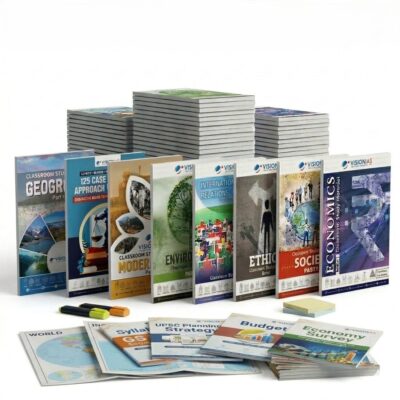
Vision IAS UPSC CSE 2026–27 Complete GS Notes | Prelims + Mains | 57 Booklets + Freebies
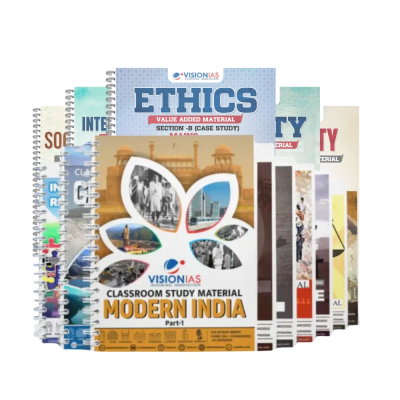
Vision IAS GS 2026-27 Booklets with Value Added Materials - 56 Booklets
Vision IAS CSAT Test Series 2025-26 | UPSC CSAT Tests in English Medium
Vision IAS Current Affairs Magazine January 2026 | English Medium Edition
Vision IAS Current Affairs Magazine December 2025 | English Medium Edition
Vision IAS Current Affairs Magazine December 2025 | Hindi Medium Edition
What to look at in a Vision IAS review
The single biggest mistake aspirants make is reading a Vision IAS review as one verdict. It is not. Aggregate ratings collapse four unrelated things — classroom coaching, the mobile app, the test series, and the printed material — into one number, and the coaching almost always drags that number down. A ₹2.1 lakh GS Foundation batch and a ₹700 monthly magazine cannot share a star score, yet that is exactly what the ~3.0 Glassdoor and ~2.84 MouthShut figures do. Judge Vision IAS the way a buyer should: product by product, against the specific job you need done.
There are five products that matter, and they do not deserve equal weight. First, the flagship test series — UPSC-pattern Prelims plus Mains, with model answers, OMR-style sheets, and post-test analytics. This is the most defensible purchase for a serious aspirant in the final stretch. Second, and most-bought as a standalone item, the printed GS notes set covering Polity, Economy, Geography, Modern and Ancient History, Environment, and Science & Technology in syllabus order. Third and fourth, PT365 and the monthly current affairs magazine — the highest value-per-rupee picks, because the syllabus events they compress would otherwise cost you weeks of newspaper note-making. Fifth, CSAT support, which only matters if the qualifying paper is a genuine risk for you. Treat these as five separate buy/skip decisions, not one brand endorsement.
The one credible knock that recurs across Quora and Telegram threads is inconsistency in Mains copy evaluation turnaround — some aspirants wait longer than promised for detailed feedback. That criticism is real, and you should weigh it. But notice precisely what it does and does not touch: it does not affect the printed static notes, and it does not affect the Prelims OMR tests, which are auto-checked against a published key. That is the exact reason standalone buyers strip out the coaching, keep the notes and Prelims practice, and source Mains evaluation elsewhere. A weak Mains-feedback queue is not a reason to avoid Vision’s static material; it is a reason to unbundle it.
Vision IAS products compared
Here is the head-to-head on the four purchases most aspirants weigh, scored on the only thing that matters — what each is actually best at, not how nicely it is marketed.
| Product | What it covers | Best for | Verdict |
|---|---|---|---|
| Prelims Test Series 2026 | UPSC-pattern Prelims GS tests, English medium, with keys and analytics | Final 6-month Prelims grind | Buy — strongest pick for an exam-year aspirant |
| GS Notes (57 booklets) | Prelims + Mains static syllabus, value-added material, syllabus order | Self-study foundation from scratch | Buy first — best value-per-rupee in the range |
| Current Affairs Magazine | Monthly events, English & Hindi editions, syllabus-tagged | Daily revision for every aspirant | Buy every month — lowest-risk purchase here |
| CSAT Test Series | Aptitude, reasoning & comprehension practice | Non-maths-background candidates only | Conditional — buy only if CSAT is a real weak point |
Read the table as a sequence, not a menu. The GS notes come first because they set your foundation and the static syllabus barely moves year to year, so the cost amortises across your whole preparation. For that static coverage the 56-booklet GS set with value-added material and the larger 57-booklet Prelims+Mains pack are the two workhorses — pick the 56-booklet set if you want the tighter Prelims-weighted version, the 57-booklet pack if you want Mains depth bundled in. The test series comes second and late, because firing UPSC-pattern mocks before you have read the syllabus once just manufactures low scores and anxiety. The magazine runs in parallel from day one. CSAT is the only genuinely optional line item: if you are an engineer or already clear the qualifying paper in PYQs, skip it and spend the money on more Mains practice. If you want a one-line head-to-head before reading further, Drishti IAS suits Hindi-medium aspirants better, while Forum IAS leads on raw PYQ depth — both expanded below.
Pricing & value: coaching vs printed material
The price spread on Vision IAS is enormous, and the gap is the whole story of this review. The same brand name sits behind a ₹2 lakh classroom seat and a sub-₹1,000 magazine, and the marginal value of the expensive end is what most aspirants over-pay for. Map the routes against what you actually receive.
| Route | Indicative cost | You get | Hidden catch |
|---|---|---|---|
| Full classroom (GS Foundation) | ₹1,65,000–₹2,10,000+ | Lectures, material, test series | Class-management complaints; value depends on your attendance |
| Online / recorded | ₹65,000–₹1,20,000 | Portal + recorded lectures | Self-discipline required; no accountability |
| Test series only | ₹8,000–₹15,000 | Prelims/Mains tests + answer keys | No mentorship or doubt-clearing |
| Printed material (Competer) | Booklet-pack pricing | The same Vision IAS notes, delivered to you | No live doubt-clearing |
Do the arithmetic before you pay. The jump from the recorded course to the full classroom can be a lakh of rupees, and what that lakh buys is physical presence and class management — the precise area the ~3.0 ratings flag as inconsistent. You are paying the most for the weakest-rated component. Meanwhile the content that drives results — the static notes and the Prelims tests — is available at the bottom two rows for a fraction of the cost. A self-driven aspirant who buys printed booklets plus a test series spends in the low five figures and loses only live doubt-clearing, which a peer group, a mentor, or a Telegram study circle replaces for free. The lakh-plus routes only make sense if you genuinely will not study without a fixed classroom schedule holding you to it. If you will, the money is better kept.
Vision IAS vs Insights, Forum, Drishti & GS Score
Buyers searching “Vision IAS or Insights IAS” want a clean split, not a diplomatic shrug, so here it is. Vision IAS wins decisively on two fronts: structured static notes that follow the syllabus heading-by-heading, and sheer Prelims test volume. If your gap is foundational coverage or Prelims exposure, Vision is the default and you do not need to look further. It loses on Mains answer-writing culture — Insights IAS and Forum IAS have deeper communities, sharper model answers, and faster peer feedback there. On pure question analysis, the Forum IAS Prelims Toolkit with 1992–2025 PYQ beats Vision outright — three decades of decoded previous-year questions is something Vision’s test series does not replicate. For Hindi medium, do not fight the translation: the Drishti Hindi 18-booklet set reads more naturally than translated Vision notes, and natural-language comprehension matters more than brand at that level. GS Score sits between Vision and Forum on test difficulty — useful as a third mock source, not as a primary.
The practical takeaway: most successful aspirants do not pick one brand. They build a stack. The table below is that stack, mapped to need.
| Need | Buy this |
|---|---|
| Strong Prelims static base | Vision IAS GS Notes |
| Monthly current affairs | Vision Magazine (Jan/Dec/Nov) |
| Hindi-medium study material | Drishti IAS Hindi booklets |
| PYQ-driven Prelims revision | Forum IAS Toolkit |
Notice that Vision appears twice and rivals appear where Vision is genuinely weaker. That is the honest configuration — buy Vision for what it leads on, buy Forum and Drishti for what they lead on, and stop paying a single coaching brand to cover gaps it does not actually close.
Who should buy — and who should NOT
Buy the Vision IAS test series and notes if you are a self-driven aspirant who needs quality material and pattern practice and can supply your own discipline. For you, the printed booklets plus a Prelims test series are close to ideal, and you keep the lakh-plus coaching fee in your pocket. Buy the January 2026 current affairs magazine no matter which coaching you follow — it is low-cost, monthly, and syllabus-aligned, so the downside of a wrong call is a few hundred rupees, and the upside is a ready-made current-affairs revision spine.
Now the hard nos. Do NOT pay ₹2 lakh for full classroom coaching if your real weak point is consistency rather than content. The class-management complaints behind the ~3.0 rating hurt motivation-dependent students the most, and those are exactly the students who buy the expensive batch hoping it will fix their discipline — it usually does not, and the fee is wasted. Do NOT force English Vision notes if you think and write in Hindi; pick the Hindi magazine edition or move to Drishti, because comprehension speed beats brand prestige every time. And do NOT buy the Mains test series as your only Mains plan if fast, detailed feedback is what you need — the turnaround complaints are real, so pair it with Forum or Insights for answer evaluation. Matching the product to your actual constraint is the entire game.
Smart buying tips for a Vision IAS review
Sequence your spending and you cut waste without cutting quality. Buy the static notes once — the static syllabus barely changes, so a single set serves you across attempts and the per-year cost is trivial. Then subscribe to current affairs monthly rather than hoarding back issues; the December 2025 English edition and its Hindi counterpart cover the same events for both mediums, so you are never choosing between language and content. Order the printed booklets through Competer and have them delivered instead of relying on soft copies on a screen — OMR-style Prelims practice, margin notes, and last-month revision all work measurably better on paper, and screen fatigue is a silent score-killer in the final weeks.
Time the test series deliberately. Pair the GS notes with the Prelims Test Series 2026 only in your final six to eight months, not on day one. Mocks taken before a first syllabus pass produce demoralising scores and teach you little; mocks taken after it expose real gaps you can still close. One more rule of thumb: spend on the cheap, recurring items (magazine, PT365) freely, and treat every four- or five-figure decision as a question of whether you will actually use what you are buying. Buy what closes a named gap. Skip what only buys you the brand.
Frequently Asked Questions
Is Vision IAS good for UPSC preparation?
Yes for its study material and Prelims test series, which are syllabus-aligned and widely used. Its classroom coaching gets mixed reviews (~3.0 average), so most self-study aspirants buy only the notes and tests.
Is the Vision IAS test series worth it?
The Prelims test series is worth it for UPSC-pattern practice and analytics. Mains evaluation turnaround draws some complaints, so for Mains many aspirants combine it with Forum or Insights answer-writing.
How much does Vision IAS coaching cost?
Roughly ₹15,000 for test series only up to ₹2,10,000+ for full GS Foundation classroom programmes. Printed Vision IAS material is far cheaper than any coaching route.
Does Vision IAS provide study material in Hindi?
Yes — the current affairs magazine has a Hindi medium edition and notes are available in Hindi, though Hindi-medium aspirants often prefer Drishti IAS for natural Hindi explanations.
Which is better, Vision IAS or Insights IAS?
Vision IAS leads on structured static notes and Prelims test volume; Insights IAS is stronger for Mains answer-writing practice. Many toppers use Vision notes plus Insights for Mains.