Buy Drishti IAS notes at Competer — printed and delivered with Cash on Delivery across India. Shop the full range below at the best price.
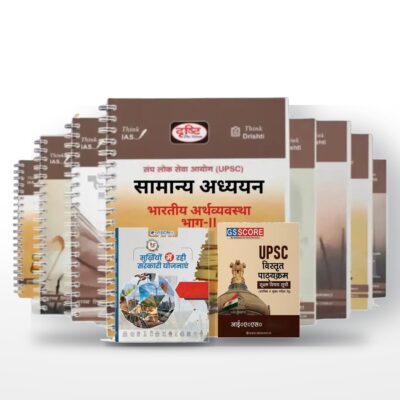
UPSC Beginner Starter Combo | Official Syllabus Booklet + Drishti GS Notes + PT 365 Set | Hindi Medium
Drishti IAS UPSC Prelims Practice Combo 2026 | Prelims Test Series + CSAT Test Series | Hindi Medium
Drishti IAS UPSC Prelims Practice Combo 2026 | Prelims Test Series + CSAT Test Series | English Medium
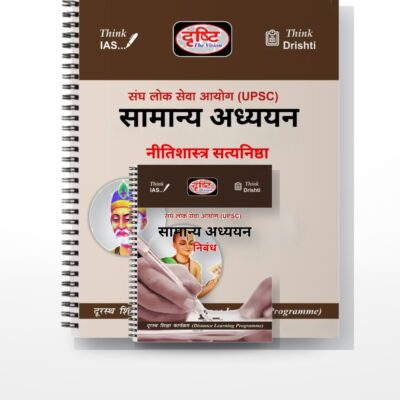
Drishti IAS UPSC Mains GS Paper 4 Combo | Ethics, Essay | Hindi Medium
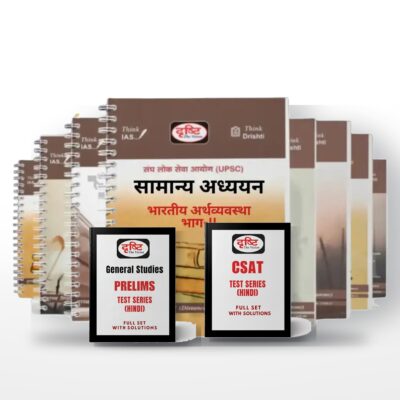
Drishti IAS UPSC 2025-26 Combo | GS Notes + Prelims Test Series + CSAT Tests | Hindi Medium
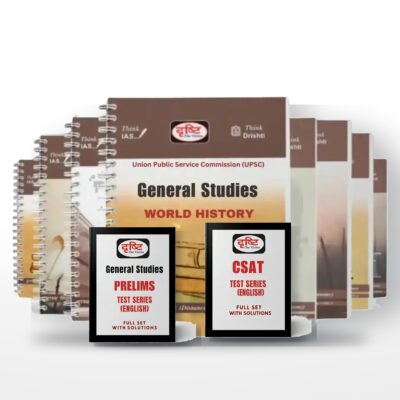
Drishti IAS UPSC 2025-26 Combo | GS Notes 27 Booklets + Prelims Test Series + CSAT Tests | English Medium
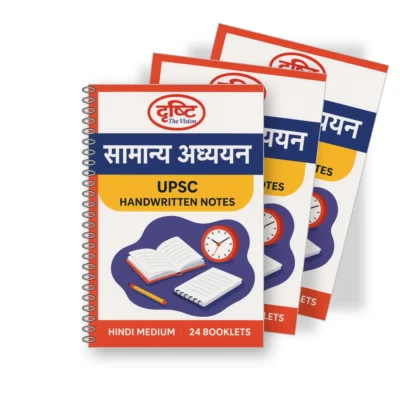
Drishti IAS GS Class Notes in Hindi Medium -Complete Handwritten Notes 2025-26 for UPSC General Studies | Drishti IAS Handwritten Hindi Notes Set of 24 Booklets | UPSC CSE Mains Prelims Printed Notes | Polity, Economy, Ethics, Environment, History, Geography, Internal Security, Science & Tech

Drishti MPPSC General Studies Notes in Hindi Medium 2025-26 Printed Booklets for MPPSC Exam | Set of 32 Booklets Covering History, Polity, Economy, Geography, Science, Ethics | Drishti Hindi Medium MPPSC Printed Notes 2025-26 | Latest Complete Study Material for Madhya Pradesh Civil Services Examination
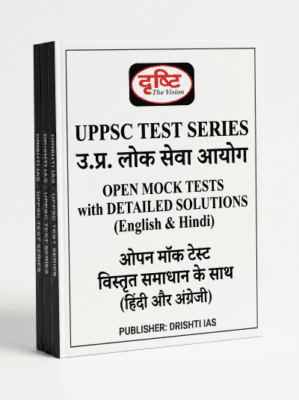
Drishti UPPSC Prelims Test Series 2026 | UPPSC Bilingual Hindi + English Medium Test Series with Solutions
Drishti IAS CSAT Test Series 2026 | UPSC CSAT English

Drishti IAS Hindi CSAT Test Series | UPSC CSAT
Drishti IAS PSIR Notes 2025-26 Printed Booklets Set of 6 for UPSC Preparation
The drishti ias notes are among the most trusted GS study resources for UPSC Civil Services aspirants preparing in both Hindi and English medium. Compiled around the complete General Studies syllabus, these notes distil static and dynamic topics into structured, revision-friendly material that maps directly to the Prelims and Mains demand. If you are searching for reliable, syllabus-aligned coverage that you can study from cover to cover, this page brings the full GS notes set together for you in one place.
What the Drishti IAS Notes Cover
The GS notes span the four core Mains papers along with the Prelims foundation. Coverage includes Indian Polity and Governance, History (Ancient, Medieval, Modern and Art & Culture), Geography (physical, Indian and world), Indian Economy, Environment and Ecology, Science & Technology, and Internal Security and International Relations. Ethics (GS Paper 4) material adds case-study framing and value-based content. Each subject is broken into digestible units with headings, bullet summaries, diagrams and linkage to previous years’ question trends, so you understand not just the concept but how the examination tests it.
How to Choose the Right Set of Drishti IAS Notes
Start with your medium of preparation. The notes are available in Hindi and English, and choosing the language you write your answers in keeps terminology consistent from study to exam hall. Next, match your stage: complete beginners benefit from the full GS bundle, while repeaters may prefer subject-wise notes to plug specific gaps. Consider your timeline too — if the exam is close, prioritise high-weightage subjects like Polity, Economy and current-affairs-linked topics. Finally, check that the edition reflects the latest syllabus emphasis so your revision stays relevant.
Comparison: Full GS Bundle vs Subject-Wise Notes
Both formats draw from the same GS framework; the right pick depends on how much ground you still need to cover.
| Factor | Full GS Bundle | Subject-Wise Notes |
|---|---|---|
| Best for | Fresh aspirants building the base | Repeaters fixing weak areas |
| Coverage | All GS papers together | Chosen subjects only |
| Cost efficiency | Better value per subject | Pay only for what you need |
| Revision speed | Comprehensive, longer cycle | Focused, quicker turnaround |
| Medium options | Hindi and English | Hindi and English |
Who Should Buy These Notes
These notes suit first-attempt aspirants who want a dependable, ready-structured base instead of assembling material from scattered sources. Working professionals and students short on time gain from the pre-summarised format that cuts down note-making hours. Hindi-medium candidates who often struggle to find quality consolidated GS material will find the Hindi set especially useful. Repeaters and those in the revision phase can use subject-wise notes to sharpen retention on high-yield areas without rereading everything.
How to Use Drishti IAS Notes Effectively
Read each subject actively — underline, add margin notes and connect topics to current affairs as you go. Follow a three-read revision cycle: a detailed first pass, a bullet-and-heading second pass, and a rapid pre-exam skim of summaries and diagrams. Pair the notes with previous years’ questions to test recall and answer-writing. For Mains, practise structuring answers using the frameworks and keywords the notes highlight. Consistency matters more than speed; a fixed daily target keeps the full syllabus in rotation.
Buying & Delivery
Select your preferred medium and set, add it to your cart from the product cards above, and complete a secure checkout. Printed material is dispatched to your delivery address across India, with tracking shared once your order ships. If you need help choosing between the full bundle and subject-wise notes, reach out to Competer support before ordering so your set matches your exact preparation stage and language.
Frequently Asked Questions
Are the Drishti IAS notes available in both Hindi and English?
Yes. The GS notes are offered in Hindi and English medium so you can study and revise in the language you use for your answers.
Do these notes cover the full UPSC GS syllabus?
They cover the complete General Studies syllabus across Prelims and Mains — Polity, History, Geography, Economy, Environment, Science & Technology, International Relations, Security and Ethics.
Should I buy the full bundle or subject-wise notes?
Choose the full GS bundle if you are building your base from scratch, and subject-wise notes if you only need to strengthen specific weak areas during revision.
Are the notes suitable for beginners?
Yes. The structured headings, summaries and diagrams make the notes easy to follow for first-time aspirants while still being useful for repeaters.
How will my order be delivered?
Printed notes are shipped to your address across India after checkout, and a tracking update is shared once the order is dispatched.