JPSC Syllabus 2026: Prelims & Mains Pattern + PDF Download
Complete JPSC syllabus 2026 with Prelims & Mains exam pattern, subject-wise topics, a weightage table, Hindi coverage and how to download the JPSC syllabus PDF.

The JPSC syllabus covers a three-stage selection process for the Jharkhand Combined Civil Services Examination — a Preliminary test (two objective General Studies papers of 200 marks each), a written Main examination (six descriptive papers), and a 100-mark Personality Test (interview). It is set by the Jharkhand Public Service Commission and blends UPSC-style General Studies with a heavy, exclusive focus on Jharkhand’s history, tribal movements, geography, economy, land laws and governance. This guide gives you the complete unit-by-unit Prelims and Mains syllabus, the latest JPSC exam pattern 2026, a subject-wise weightage table, Hindi and regional-language coverage, and exactly how to download the JPSC syllabus PDF — so you can start planning today.
JPSC Syllabus 2026: Overview and Latest Update
The Jharkhand Public Service Commission (JPSC) conducts the Combined Civil Services Examination (CCSE) to recruit candidates for posts such as Deputy Collector, Deputy Superintendent of Police (DSP), Jharkhand Education Service, Block Development Officer, District Commandant and other Class-I and Class-II state services. The recruitment cycle referenced by aspirants preparing in 2026 follows the pattern standardised from the 7th JPSC onward and carried into the latest Combined Civil Services notifications. Before you build a timetable, it helps to see the full shape of the exam.
| Particular | Detail |
|---|---|
| Conducting body | Jharkhand Public Service Commission (JPSC) |
| Exam name | Jharkhand Combined Civil Services Examination (CCSE) |
| Selection stages | Preliminary → Main → Personality Test (Interview) |
| Prelims papers | 2 (General Studies Paper I & Paper II) |
| Mains papers | 6 (one qualifying language paper + five merit papers) |
| Prelims nature | Qualifying / screening only |
| Medium | Hindi and English (some Mains papers allow regional languages) |
| Interview marks | 100 |
| Official website | jpsc.gov.in |
Always cross-check the numbers below against the specific advertisement PDF released on the official JPSC website, because marks and the language-paper list can vary slightly between notifications. Competer maps standard, exam-ready study material to each unit so you are never guessing which book covers which topic.
JPSC Exam Pattern 2026: Three-Stage Selection Process
The JPSC exam pattern 2026 runs across three distinct stages, and each stage tests a different skill. Prelims is a fast, objective screening; Mains is a demanding descriptive test of depth and structure; and the interview judges personality, awareness and suitability for administration.
| Stage | Type | Papers | Total Marks | Counts in Merit? |
|---|---|---|---|---|
| Preliminary | Objective (MCQ) | 2 | 400 | No — qualifying only |
| Main Examination | Descriptive (written) | 6 | 1,050* | Yes (five papers) |
| Personality Test | Interview | 1 | 100 | Yes |
*Paper I of the Mains (General Hindi & General English) is qualifying and its marks are not added to the final merit list. The final rank is prepared from the five counted Mains papers plus the interview.
How many papers are there in JPSC Prelims and Mains?
JPSC Prelims has 2 papers (both General Studies, both objective). JPSC Mains has 6 papers — one qualifying language paper (General Hindi & General English) and five merit-counting papers covering language & literature, social sciences, polity, economy and general science. This is a key structural point aspirants confuse, so anchor your plan to it.
JPSC Prelims Syllabus 2026: Exam Pattern
The JPSC prelims syllabus 2026 is delivered through two objective papers. Both are multiple-choice, and both are worth 200 marks over two hours each. Paper I is broad national General Studies; Paper II leans heavily into Jharkhand-specific General Studies and general aptitude.
| Paper | Subject | Marks | Duration | Type |
|---|---|---|---|---|
| Paper I | General Studies (National + General) | 200 | 2 hours | Objective (MCQ) |
| Paper II | General Studies (Jharkhand-specific + Aptitude) | 200 | 2 hours | Objective (MCQ) |
Is there negative marking in JPSC Prelims?
As per the JPSC notification pattern, there is no negative marking in the JPSC Preliminary examination — unlike UPSC, where one-third of a mark is deducted per wrong answer. This makes intelligent guessing viable in JPSC Prelims, but always confirm the marking scheme printed in the current advertisement, as JPSC has revised instructions across cycles.
Is JPSC Prelims qualifying in nature?
Yes. JPSC Prelims is purely a qualifying/screening stage. Its marks are not added to the final merit list; it only decides who advances to the Main examination. Candidates are typically shortlisted at roughly 15 times the number of vacancies, so you must clear the cut-off, but you do not need to top Prelims — the real ranking battle is in Mains and the interview.
JPSC Prelims Paper I Syllabus (General Studies)
Paper I mirrors classic civil-services General Studies. The main units are:
- History of India — Ancient, Medieval and Modern India; the freedom movement and national leaders.
- Geography of India and the World — physical, social and economic geography; Indian agriculture and natural resources.
- Indian Polity & Governance — Constitution, political system, Panchayati Raj, public policy, rights issues.
- Economy & Sustainable Development — economic and social development, poverty, inclusion, demographics, government schemes.
- General Science & Technology — everyday science, developments in science & tech, their applications.
- Environmental Ecology — biodiversity, climate change (no subject specialisation required).
- Current Affairs — national and international events of significance.
JPSC Prelims Paper II Syllabus (Jharkhand-Specific)
Paper II is where JPSC diverges sharply from UPSC — and where most generic study material fails aspirants. It concentrates on Jharkhand’s identity, plus general aptitude. Core units include:
- History of Jharkhand — ancient to modern; the formation of the state.
- Jharkhand movements — tribal revolts and the statehood movement (Kol, Santhal Hul, Birsa Munda’s Ulgulan, and later agitations).
- Folk literature, culture, art & festivals — tribal and regional traditions, languages and folk arts.
- Land laws of Jharkhand — CNT Act, SPT Act and related tenancy legislation.
- Geography & natural resources — minerals, forests, rivers and physiography of Jharkhand.
- Industries & economy of Jharkhand — mining, major industrial hubs and the state economy.
- Government schemes — state welfare and development programmes.
- Forest & disaster management — conservation and state disaster response.
- General aptitude & reasoning — basic mental ability and data interpretation.
JPSC Mains Syllabus: Exam Pattern and Six Papers
The JPSC mains syllabus is the heart of the exam and the stage that decides your rank. It comprises six descriptive papers. Paper I is qualifying (you must score the minimum, usually 30%, but the marks are not counted). The remaining five papers are added to your merit total.
| Paper | Subject | Marks | Nature |
|---|---|---|---|
| Paper I | General Hindi & General English | 100 | Qualifying (min ~30%) |
| Paper II | Language & Literature (choose one) | 150 | Merit |
| Paper III | Social Science — History, Geography & other | 200 | Merit |
| Paper IV | Indian Constitution, Polity, Public Administration & Good Governance | 200 | Merit |
| Paper V | Indian Economy, Globalisation & Sustainable Development | 200 | Merit |
| Paper VI | General Science, Environment & Technology Development | 200 | Merit |
Counted Mains marks total 950 (Papers II–VI), and with the 100-mark Personality Test the final merit is out of 1,050. Because the qualifying language paper alone can knock out unprepared candidates, never leave Paper I to chance.
How many optional or language papers are in JPSC Mains?
JPSC does not use a full UPSC-style optional subject with two separate papers. Instead, the exam has one language-based paper set that works like a light optional: the compulsory Paper I (General Hindi & General English), which is qualifying, and Paper II (Language & Literature), where you choose a single language and its literature. So the practical answer is: one qualifying language paper plus one optional-style Language & Literature paper, and the four remaining merit papers (III–VI) are fixed General Studies groups with no choice. This is far lighter than UPSC’s two-paper optional, which is good news if you dislike carrying a heavy optional — but it also means the fixed GS papers decide most of your merit, so you cannot lean on an optional to rescue a weak GS base.
Mains Paper I — General Hindi & General English (Qualifying)
Tests essay/precis writing, grammar, comprehension, translation and letter writing in both languages. It is qualifying, but a fail here ends your attempt regardless of your merit scores.
Mains Paper II — Language & Literature
You choose one language and study its grammar, prose, poetry and literary history. Options typically include Hindi, English, Urdu, Bengali, Odia, Sanskrit, Pali and Jharkhand’s tribal/regional languages — Santhali, Ho, Mundari, Kurukh (Oraon), Kharia, Nagpuri, Khortha, Kurmali and Panch Pargania. Native speakers of a regional language often score well here, so this is a strategic scoring paper.
Mains Paper III — Social Science (History & Geography)
Covers History of India and Jharkhand, World History outlines, Indian and Jharkhand geography, and elements of sociology. Expect strong Jharkhand-focused questions on tribal history and the statehood movement.
Mains Paper IV — Constitution, Polity & Governance
Indian Constitution, Union and State government, Panchayati Raj and local self-government, public administration, good governance, and the specific administrative framework of Jharkhand.
Mains Paper V — Indian Economy & Development
Indian economy, planning, globalisation, sustainable development, agriculture and industry, plus the economy, minerals and industrial profile of Jharkhand.
Mains Paper VI — General Science, Environment & Technology
Physics, chemistry and biology fundamentals, environment and ecology, IT, biotechnology, space and defence technology, and applied science relevant to Jharkhand’s resources and challenges.
Which Subjects Have the Highest Weightage in JPSC?
Top-ranking pages list topics but rarely tell you where the marks actually sit. Based on the marks distribution and previous-year JPSC question trends, here is a practical weightage guide to prioritise your effort. Treat it as a strategic map, not an official mark allocation.
| Area | Where it scores | Practical weightage | Priority |
|---|---|---|---|
| Jharkhand GK (history, movement, geography, economy) | Prelims Paper II + Mains III/V | Very High | 1 — non-negotiable |
| Polity & Governance | Prelims Paper I + Mains IV | High | 2 |
| Indian Economy & Schemes | Prelims Paper I + Mains V | High | 2 |
| History (India + Jharkhand) | Prelims + Mains III | High | 3 |
| Geography & Environment | Prelims + Mains III/VI | Medium-High | 3 |
| General Science & Tech | Prelims + Mains VI | Medium | 4 |
| Current Affairs | All stages | High (continuous) | Ongoing |
| Language & Literature | Mains II (150) | High if chosen well | Strategic |
The single biggest scoring lever in JPSC is Jharkhand-specific General Studies. It appears in Prelims Paper II and threads through three Mains papers, yet it is exactly the portion that generic UPSC material ignores. Building a strong national GS base and layering Jharkhand GK on top is the winning formula.
Study Material Mapped to the JPSC Syllabus
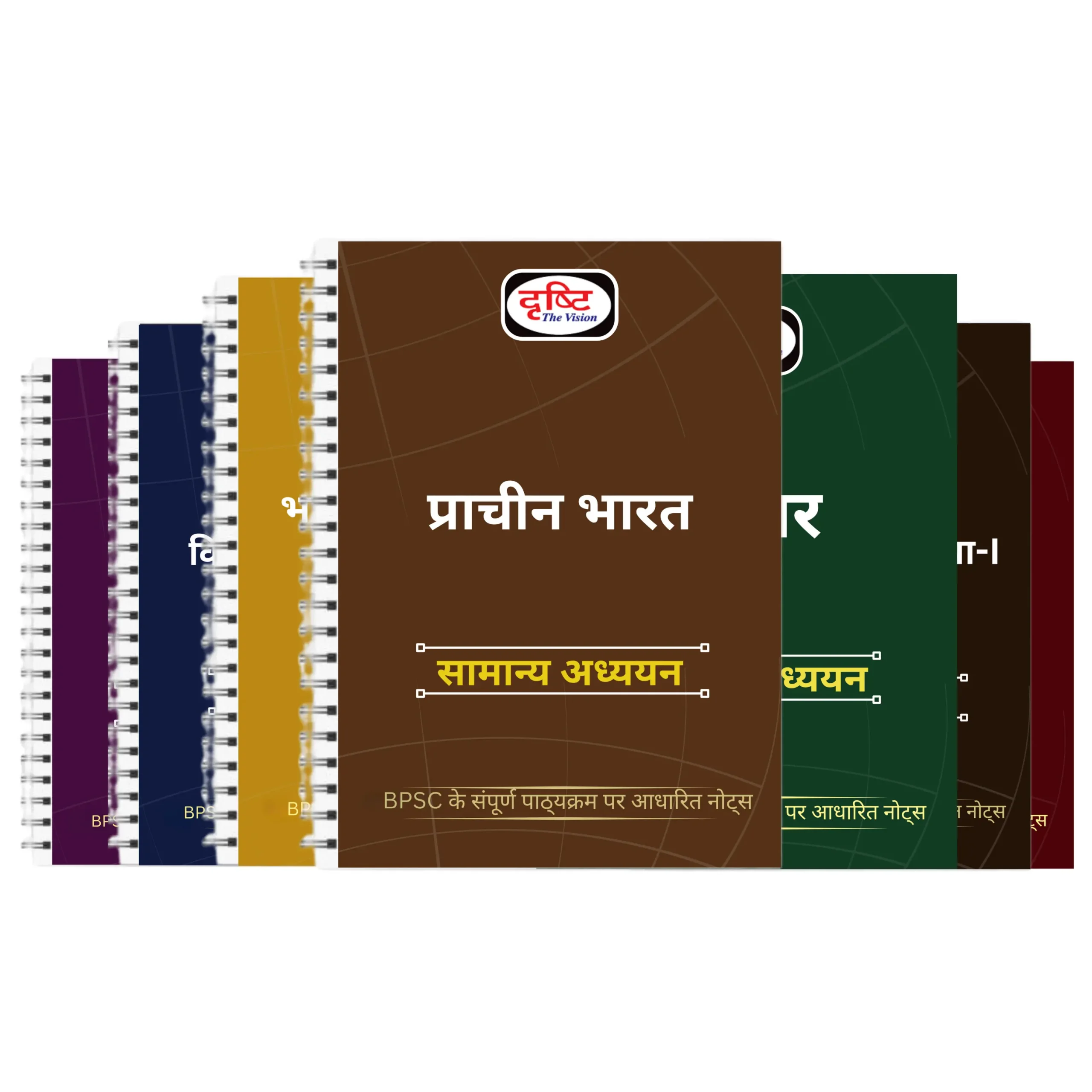
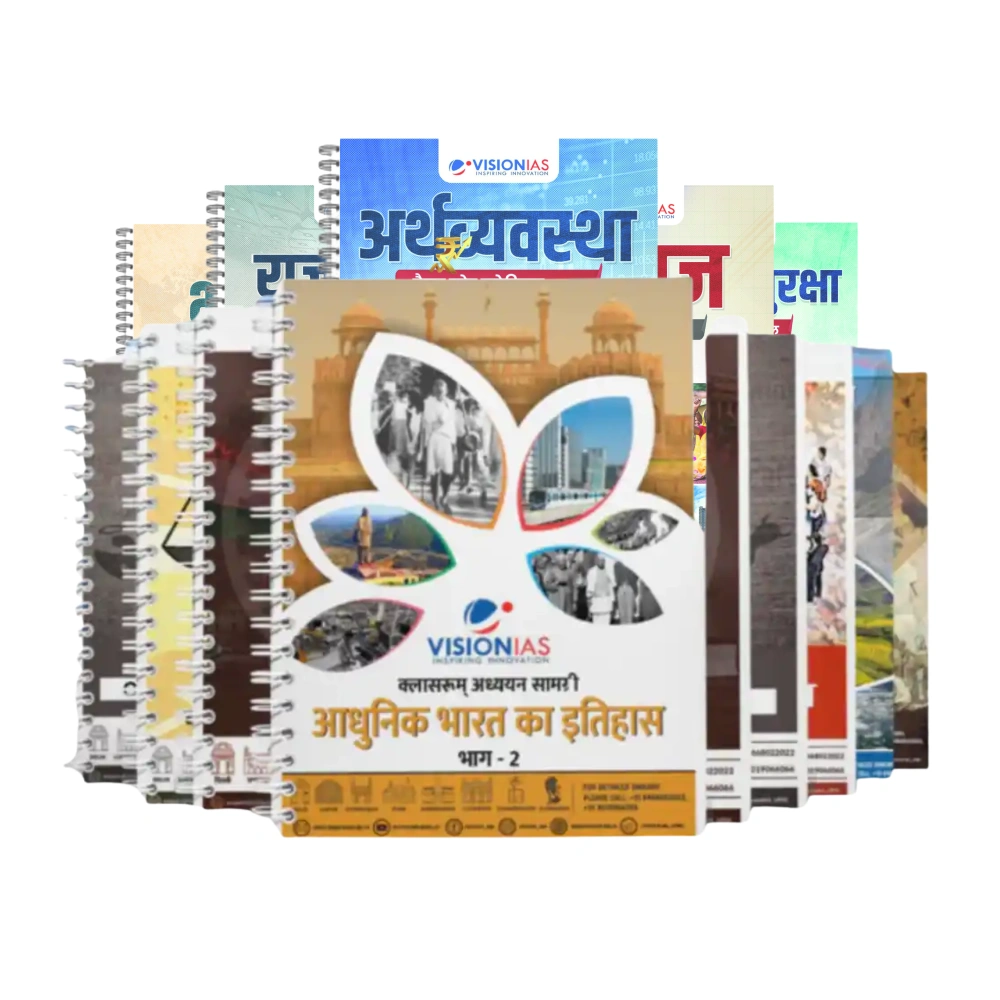
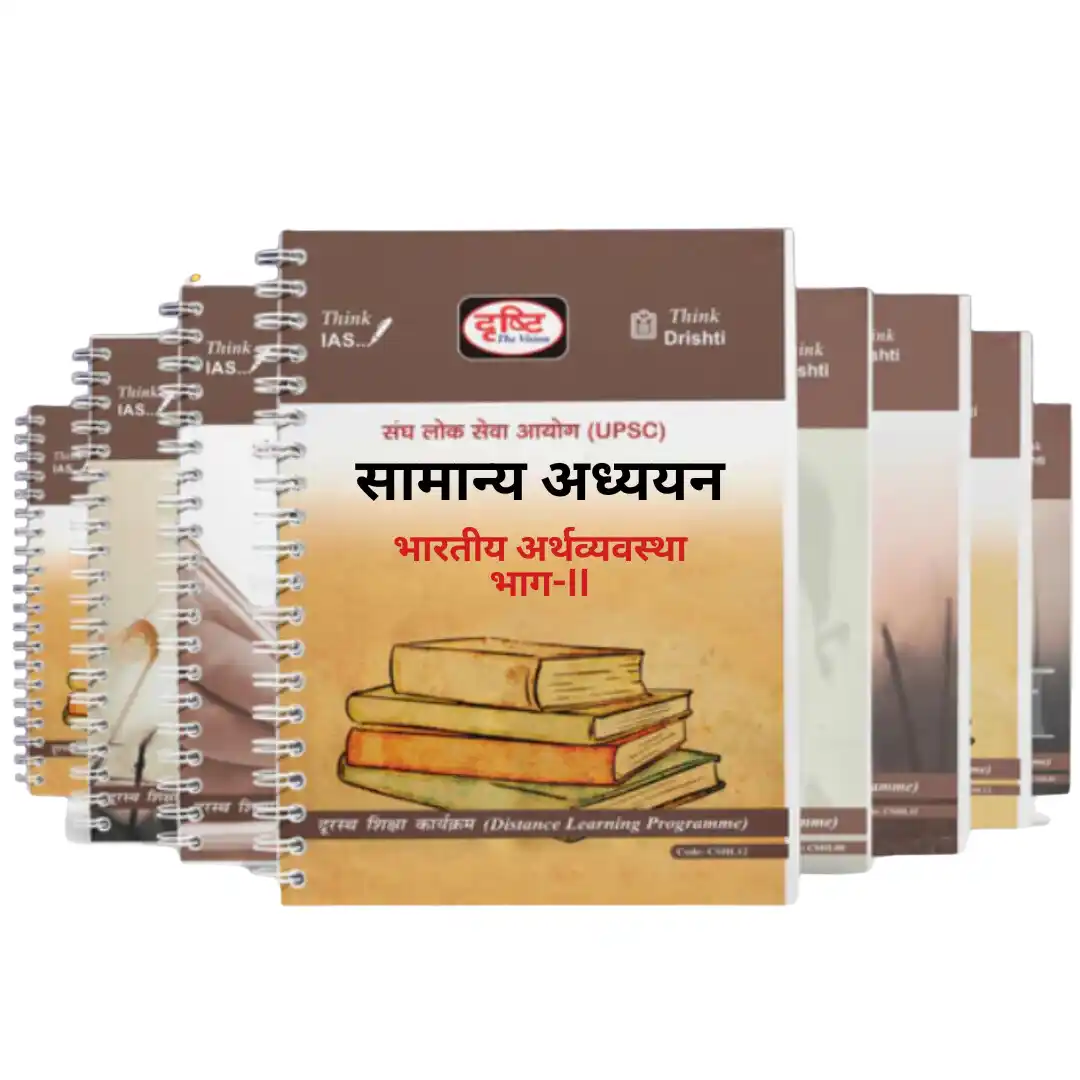
Since Prelims Paper I and most Mains merit papers overlap with civil-services General Studies, a solid GS foundation does double duty. Aspirants preparing in Hindi can build the national portion from a structured set like the Vision IAS GS Notes in Hindi (2026-27, 54 booklets), then add Jharkhand-specific study for Paper II. Because JPSC is a state PCS in the same family as Bihar’s exam, many candidates also use state-PCS material such as the Drishti BPSC Books (Hindi Medium set of 24) for its regional-history and Hindi-medium approach that transfers well to Jharkhand preparation.
| Syllabus Unit | Best-fit resource type |
|---|---|
| Prelims Paper I — Polity | Concise polity notes such as Vajiram Polity Notes |
| Prelims Paper I — full GS (Hindi) | Drishti IAS Hindi Study Material (18 booklets) |
| State GS & regional history | Drishti BPSC Books (state PCS pattern) |
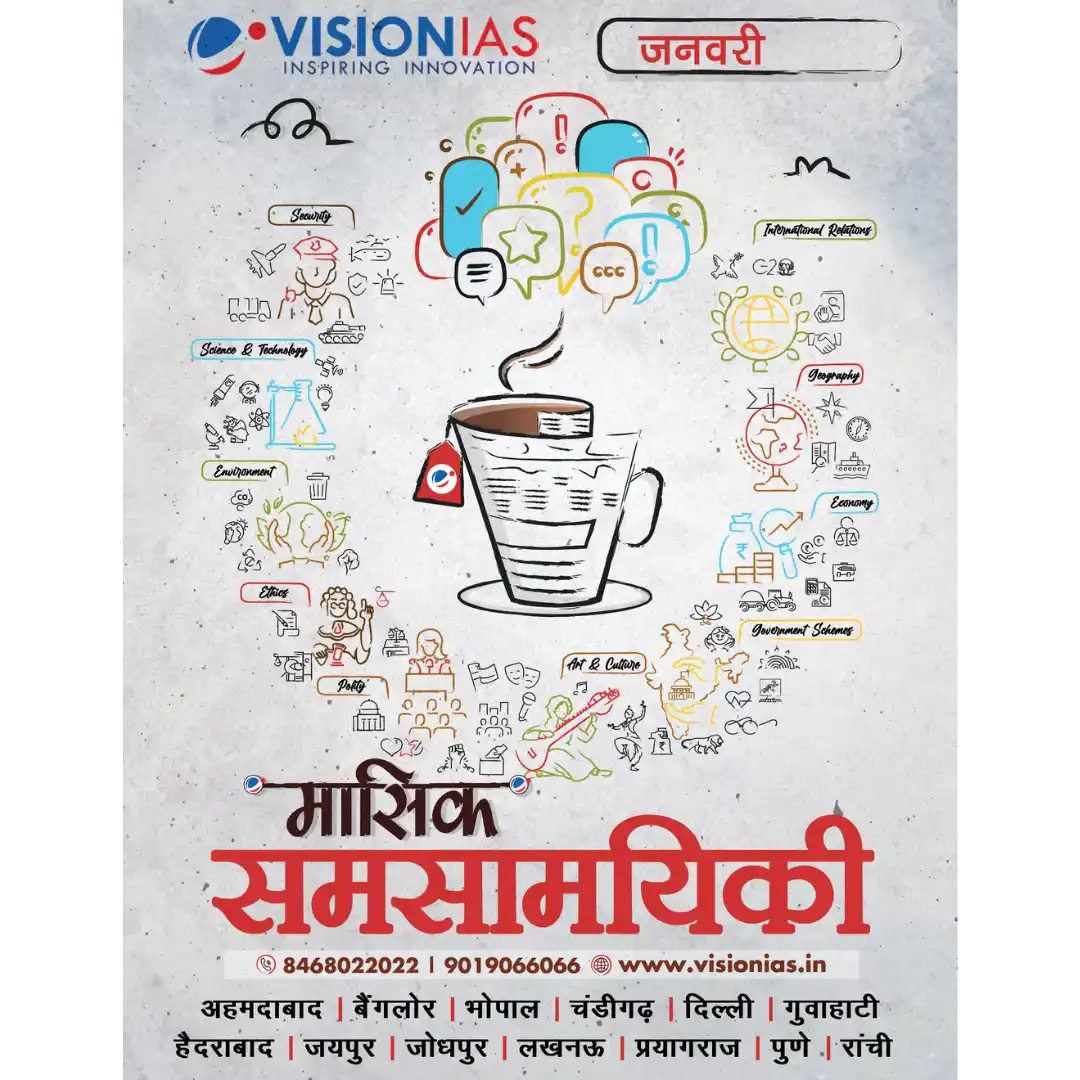
| Current Affairs (all stages) | Vision IAS Current Affairs Magazine (Hindi) |
| Jharkhand GK (Paper II) | State-specific Jharkhand GK books + official schemes |
Keep national GS and Jharkhand GK as two parallel notebooks — most toppers report that the state-specific portion is where the merit gap opens up.
JPSC Interview / Personality Test (100 Marks)
Candidates who clear the Mains are called for a 100-mark Personality Test. The board assesses mental alertness, clarity of expression, balanced judgement, depth of interest, leadership and social awareness — with a natural emphasis on Jharkhand’s society, tribal culture, current issues and administration. Your Detailed Application Form (DAF), home district, graduation subject and optional language are common launch points for questions. Since Mains (950) plus interview (100) decide the final rank, a strong, well-prepared interview can move you several ranks.
Is JPSC Syllabus Same as UPSC?
No — the JPSC civil services syllabus overlaps with UPSC in General Studies but differs in three big ways. First, JPSC has a compulsory Jharkhand-specific layer (Prelims Paper II and much of Mains) that UPSC lacks. Second, JPSC Mains uses subject-grouped papers (social science, polity, economy, science) rather than UPSC’s GS I–IV plus a separate optional; JPSC’s “optional” is essentially the Language & Literature paper. Third, JPSC Prelims has no negative marking, while UPSC deducts marks. So UPSC GS material is an excellent base, but you must add Jharkhand content and adapt to JPSC’s paper structure.
| Feature | JPSC (Jharkhand) | UPSC (Central) |
|---|---|---|
| Prelims papers | 2 GS papers (400 marks) | GS + CSAT (CSAT qualifying) |
| Negative marking (Prelims) | No | Yes (1/3) |
| State-specific content | Heavy (Jharkhand) | Minimal |
| Optional subject | Language & Literature paper | Full optional (2 papers) |
| Mains merit marks | 950 + 100 interview | 1750 + 275 interview |
Old (7th JPSC) vs Current Pattern: What Changed
Aspirants are often confused by references to older JPSC structures. The earlier system used a differently weighted Prelims and a slightly different Mains grouping. The current standardised pattern fixes Prelims at two 200-mark GS papers with no negative marking, and Mains at six papers with the language paper qualifying and five papers counted for merit. Two practical takeaways: build your plan on the two-paper Prelims and six-paper Mains structure above, and treat any old cut-off or paper-count references cautiously. Whenever a fresh notification drops, verify the marks table before finalising your strategy — this is precisely why citing the official JPSC advertisement matters.
JPSC Syllabus in Hindi and Regional Languages
JPSC is a Hindi-friendly exam. The question papers are bilingual (Hindi and English), and Hindi-medium candidates are on equal footing. For the JPSC syllabus in Hindi, the same unit list above applies — only the medium of study changes. Hindi-medium aspirants can prepare national GS from Hindi booklet sets and pair them with Jharkhand GK books written in Hindi. Uniquely, the Mains Language & Literature paper lets you write in a Jharkhand vernacular such as Santhali, Ho, Mundari, Kurukh or Khortha — a scoring advantage for native speakers that most national coaching content overlooks. Choose your language paper early so you have time to master its literature and grammar syllabus.
How Can I Download the JPSC Syllabus PDF?
For a JPSC syllabus PDF download, follow these steps to get the authentic, official document straight from the source:
- Visit the official JPSC website — jpsc.gov.in.
- Open the Advertisement / Notification or “What’s New” section.
- Find the latest Combined Civil Services Examination advertisement.
- Download the notification PDF — the detailed Prelims and Mains syllabus is annexed inside it.
- Save both the syllabus pages and the exam-pattern table for offline revision.
Always treat the notification PDF as the final authority. Coaching syllabus sheets are useful summaries, but marks, the language-paper list and marking rules must be confirmed against the official file. Pair the official syllabus PDF with a printable tracker: list every unit above, mark it Not-Started / Revising / Done, and review weak units weekly.
JPSC Preparation Strategy and Study Plan
A syllabus is only useful if you convert it into a timeline. Here is a realistic phase-wise plan for a 10–12 month JPSC preparation run.
| Phase | Duration | Focus |
|---|---|---|
| Phase 1 — Foundation | Months 1–4 | NCERTs + national GS (History, Polity, Geography, Economy) + start Jharkhand GK |
| Phase 2 — Jharkhand & Mains depth | Months 5–7 | Deep Jharkhand history/movement/land laws + Mains answer writing + pick language paper |
| Phase 3 — Prelims sprint | Months 8–9 | MCQ practice, PYQs, both GS papers, current affairs consolidation |
| Phase 4 — Mains + Interview | Months 10–12 | Full-length Mains writing, revision, personality-test prep |
Common Mistakes to Avoid
- Studying only national GS and neglecting Jharkhand Paper II — the single most common reason for elimination.
- Ignoring the qualifying language paper (Mains Paper I) until the last minute.
- Skipping answer-writing practice; JPSC Mains rewards structured, point-based answers with local examples.
- Choosing a Language & Literature paper you cannot commit to — pick early and study its full syllabus.
- Relying on outdated cut-off or pattern data instead of the current official notification.
Answer-Writing and Optional/Language Paper Tips
For Mains, practise 150–250 word answers with a clear intro-body-conclusion and Jharkhand-specific data (mineral output, tribal demographics, state schemes). For the Language & Literature paper, native or fluent speakers of a regional language often outscore those who pick an unfamiliar language for “prestige” — go with strength, not perception. Keep a running current-affairs register from a monthly magazine so both Prelims and Mains stay fresh.
Frequently Asked Questions
What is the syllabus of JPSC?
The JPSC syllabus covers three stages: Prelims (two objective General Studies papers of 200 marks each — one national GS, one Jharkhand-specific GS), Mains (six descriptive papers covering language, literature, social science, polity, economy and general science, totalling 1,050 marks with five papers counted), and a 100-mark Personality Test. Jharkhand history, movements, geography, economy and land laws are central throughout.
Is JPSC syllabus same as UPSC?
No. JPSC shares General Studies content with UPSC but adds a heavy Jharkhand-specific layer, uses subject-grouped Mains papers instead of GS I–IV plus a full optional, and — unlike UPSC — has no negative marking in Prelims. UPSC GS material makes a strong base, but you must add Jharkhand content and adapt to JPSC’s structure.
How many papers are there in JPSC Prelims and Mains?
JPSC Prelims has 2 objective General Studies papers. JPSC Mains has 6 descriptive papers — one qualifying language paper (General Hindi & General English) plus five merit-counting papers on language & literature, social science, polity, economy and general science.
How many optional or language papers are in JPSC Mains?
JPSC Mains has one optional-style language paper — Paper II, Language & Literature, where you choose a single language — plus the compulsory qualifying Paper I (General Hindi & General English). Unlike UPSC there is no separate two-paper optional subject; the other four merit papers are fixed General Studies groups.
Is there negative marking in JPSC Prelims?
As per the JPSC notification pattern, there is no negative marking in the Preliminary examination, so unanswered questions cost nothing extra and intelligent attempts are viable. Still, confirm the marking scheme in the current official advertisement before your exam.
Is JPSC Prelims qualifying in nature?
Yes. JPSC Prelims is only a qualifying/screening stage — its marks are not added to the final merit list and simply decide who advances to Mains. Aspirants are typically shortlisted at around 15 times the vacancies, so you need to clear the cut-off but not top the Prelims.
Which subjects have the highest weightage in JPSC?
Jharkhand-specific General Studies carries the highest practical weightage because it appears in Prelims Paper II and across three Mains papers. Polity, Indian Economy, and History (India + Jharkhand) follow closely, while Current Affairs contributes across every stage.
How can I download the JPSC syllabus PDF?
Go to the official website jpsc.gov.in, open the latest Combined Civil Services Examination advertisement in the Notification section, and download the notification PDF — the full Prelims and Mains syllabus is annexed inside it. Treat this official file as the final authority on marks and pattern.
Recommended Study Material
Continue Reading

Best Test Series for UPSC 2026: 9 Options Compared with Prices
The best test series for UPSC 2026 is Vision IAS for Prelims — the most representative difficulty, detailed…
Best Study Material for NEET 2026: Aakash, Allen, Bansal & More Compared
What is the best study material for NEET? Choosing the best study material for NEET often feels harder…
NEET Biology Syllabus 2026: Chapter-Wise Weightage + PDF
The NEET Biology syllabus is built entirely on the NCERT Class 11 and Class 12 textbooks and covers…