RPSC RAS Syllabus 2026: Prelims, Mains Pattern + PDF
Complete RPSC RAS syllabus 2026 for Prelims & Mains: topic-wise subjects, exam pattern, weightage, Hindi/English PDF download and best books to prepare.


The RPSC RAS syllabus is built around one objective Prelims paper (150 questions, 200 marks) followed by four descriptive Mains papers (200 marks each, 800 total) and a 100-mark Personality Test/Interview. Prelims is qualifying-only — its marks do not count in the final merit; the merit list is built purely from Mains (800) plus Interview (100), out of 900 marks. Rajasthan-specific General Knowledge — history, art, culture, geography, polity and current affairs — is the single biggest scoring differentiator across both stages.
In one line: master Rajasthan GK, clear Prelims on accuracy, then win the rank in Mains answer-writing and the interview. If you are an RAS 2026 aspirant, this guide gives you the complete topic-wise rpsc ras syllabus 2026 for Prelims and Mains, the full rpsc ras exam pattern, unit-wise weightage and previous-year trends, the Hindi-medium syllabus, the official PDF download route, a paper-wise study plan and the best books to cover every unit. Let us break it down stage by stage.
RPSC RAS 2026 Overview: The 3-Stage Selection Process
The Rajasthan Administrative Service (RAS) exam — officially the Rajasthan State and Subordinate Services Combined Competitive Examination — is conducted by the Rajasthan Public Service Commission (RPSC), Ajmer. It recruits candidates for premier state services such as RAS (State Administrative), RPS (State Police), RAcS (Accounts), and various subordinate services. Selection happens across three sequential stages:
- Stage 1 — Preliminary Examination: One objective paper, screening-only. Marks are not added to the final merit.
- Stage 2 — Main Examination: Four descriptive papers of 200 marks each. Candidates are shortlisted at roughly 15 times the number of vacancies.
- Stage 3 — Personality Test / Interview: 100 marks. Final merit = Mains (800) + Interview (100).
Understanding this architecture first is critical because it dictates how you should study each unit. A topic that is worth one 1.33-mark MCQ in Prelims may be worth a full 15-mark analytical answer in Mains — so you cannot prepare the syllabus the same way for both stages.
RPSC RAS 2026 Quick-Reference Table
| Parameter | Details |
|---|---|
| Conducting Body | Rajasthan Public Service Commission (RPSC), Ajmer |
| Exam Name | RAS/RTS Combined Competitive Exam 2026 |
| Selection Stages | Prelims → Mains → Interview (Personality Test) |
| Prelims Marks | 200 (objective, screening-only) |
| Mains Marks | 800 (4 papers × 200) |
| Interview Marks | 100 |
| Final Merit Out Of | 900 (Mains 800 + Interview 100) |
| Medium | Hindi & English (Paper-IV tests both languages) |
| Negative Marking | 1/3 mark in Prelims |
| Eligibility | Graduation in any discipline; age 21–40 (relaxations apply) |
RPSC RAS Prelims Exam Pattern 2026
The RPSC RAS exam pattern for the Preliminary stage is simple but ruthless: a single paper of General Knowledge and General Science decides who advances. It is qualifying in nature — you only need to clear the cut-off to reach Mains, but the competition means aspirants routinely target 130+ marks to be safe against a shifting cut-off.
| Feature | Details |
|---|---|
| Number of Papers | 1 (General Knowledge & General Science) |
| Total Questions | 150 |
| Total Marks | 200 |
| Duration | 3 hours |
| Question Type | Objective (MCQ) |
| Negative Marking | 1/3 mark deducted per wrong answer |
| Nature | Qualifying/screening — marks not counted in final merit |
Because each question carries roughly 1.33 marks and blind guessing costs you, accuracy management is the core skill Prelims rewards. RPSC has also used a mandatory fifth option in the OMR to discourage blank answers, so answering strategy matters — plan to attempt only where you can reasonably eliminate at least two choices. Practising full-length mocks under timed conditions — similar to a disciplined Hindi-medium prelims test series — is the fastest way to build that temperament.
RPSC RAS Prelims Syllabus 2026 — 9 Subject Areas (Topic-Wise)
The rpsc ras prelims syllabus is organised into nine broad subject areas. Rajasthan-centric portions and current affairs together account for the largest share of questions, which is why generic UPSC-style preparation alone rarely clears RAS. Below is the complete unit-wise breakdown with indicative weightage based on previous-year trends. Treat the weightage as directional guidance, not an official quota — RPSC does not publish a fixed per-unit split.
| Subject Area | Key Topics | Indicative Weightage |
|---|---|---|
| 1. History, Art & Culture of Rajasthan | Ancient civilisations, major dynasties (Guhil, Chauhan, Rathore, Kachhwaha), 1857 & freedom struggle, integration of Rajasthan, forts, folk deities, fairs & festivals, paintings, dance, music, dialects, saints | High (25–30 Qs) |
| 2. Indian History | Indus Valley to modern India, national movement, post-independence consolidation | Medium (10–12 Qs) |
| 3. World & Modern History | Renaissance, Industrial Revolution, World Wars, major world events | Low (4–6 Qs) |
| 4. Geography (World, India & Rajasthan) | Physical geography basics, India’s relief/climate/resources, Rajasthan’s physiography, drainage, climate, minerals, agriculture, wildlife, population | High (25–28 Qs) |
| 5. Indian Constitution, Polity & Rajasthan Administration | Constitutional framework, Panchayati Raj, state political & administrative system, Governor, CM, State Secretariat, RPSC, State HRC, Lokayukta | High (18–22 Qs) |
| 6. Economic Concepts & Rajasthan Economy | Basic economics, budgeting, banking, Indian economy, agriculture & industry of Rajasthan, major schemes, infrastructure | Medium (14–16 Qs) |
| 7. Science & Technology | Everyday science, biotech, IT, space & defence tech, health, environment & ecology | Medium (14–18 Qs) |
| 8. Reasoning & Mental Ability | Logical reasoning, analytical ability, number series, data interpretation, basic numeracy | Medium (18–22 Qs) |
| 9. Current Affairs | State, national & international events; government schemes; sports; awards; persons in news | High (18–22 Qs) |
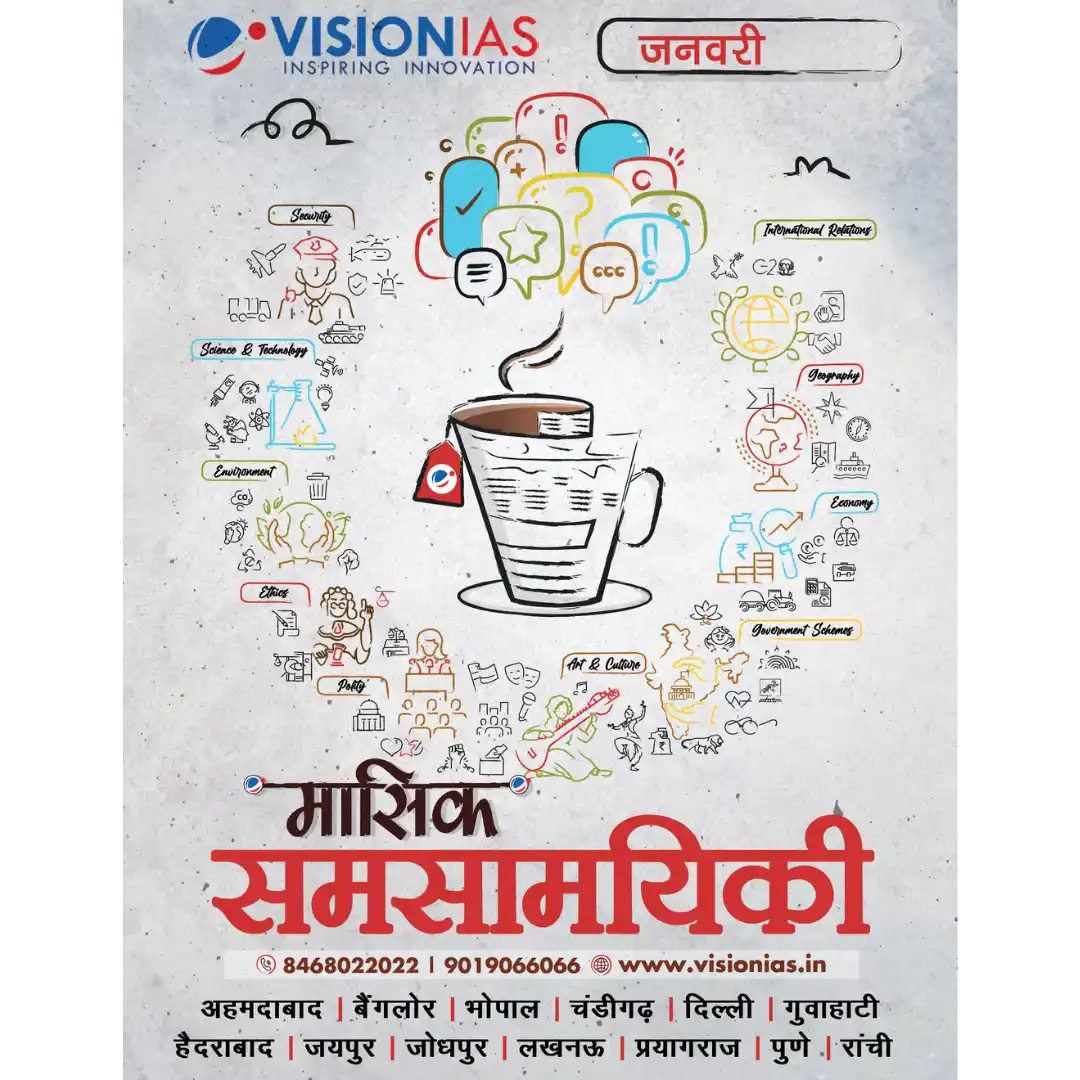
Notice the pattern: Rajasthan-specific units (history/culture, geography, polity/administration, economy) plus current affairs form the backbone — collectively well over half the paper. Keeping a rolling monthly digest such as the Vision IAS Current Affairs Magazine (Hindi) alongside a dedicated Rajasthan-GK source is the most reliable way to secure these high-weightage marks. Do not over-invest in low-yield world history at the expense of these clusters.
RPSC RAS Mains Exam Pattern 2026
Candidates who clear Prelims sit for the Mains — four descriptive papers where handwriting, structure and answer-writing speed matter as much as knowledge. All four papers are compulsory and there is no optional subject in RAS, which is a major structural difference from UPSC. Every paper is 200 marks and 3 hours, and all four are counted in the merit.
| Paper | Subject | Marks | Duration |
|---|---|---|---|
| Paper-I | General Studies-I | 200 | 3 hours |
| Paper-II | General Studies-II | 200 | 3 hours |
| Paper-III | General Studies-III | 200 | 3 hours |
| Paper-IV | General Hindi & General English | 200 | 3 hours |
| Total | 800 | 12 hours | |
Question types span very-short (up to 15 words), short (up to 50 words), medium and long descriptive/analytical answers, so you must practise across word limits. Managing the clock is a skill in itself: with 200 marks in 180 minutes, you have under a minute per mark, which means no single answer can be over-written. The Mains shortlist is drawn at approximately 15 times the number of advertised vacancies, so a comfortable Prelims score plus disciplined Mains writing is the surest route to a rank.
RPSC RAS Mains Syllabus 2026 — Paper-Wise Breakdown
The rpsc ras mains syllabus is dense and Rajasthan-heavy. Each GS paper mixes national and global themes with a strong Rajasthan-specific layer. Here is the complete paper-by-paper structure.
Paper-I: General Studies-I
| Unit | Coverage |
|---|---|
| History | History of India & Indian culture; modern period (1750–present); Rajasthan history, art, culture, heritage, literature, traditions & legacy |
| Economics | Indian economy, planning, budgeting; economic development of Rajasthan; agriculture, industry & service sector |
| Sociology, Management, Accounting & Auditing | Basics of sociology; social values; management concepts; accounting & auditing fundamentals |
Paper-II: General Studies-II
| Unit | Coverage |
|---|---|
| Administrative Ethics | Ethics & human interface, attitude, aptitude, emotional intelligence, integrity, probity in governance, case studies |
| General Science & Technology | Physics, chemistry, biology fundamentals; biotech; IT & communication; space & defence |
| Earth Science (Geography & Geology) | World, India & Rajasthan geography; physical, economic & social geography; disaster management; environment & ecology |
Paper-III: General Studies-III
| Unit | Coverage |
|---|---|
| Indian Political System, World Politics & Current Affairs | Constitution, polity, governance; current national & international affairs |
| Concept of Individual, Society & Public Administration | Human behaviour, personality, attitude, public administration & management |
| Behaviour, Law, Sports & Yoga | Sports & yoga; law relevant to public services; leadership |
Paper-IV: General Hindi & General English
| Section | Coverage |
|---|---|
| General Hindi (100 marks) | Grammar (sandhi, samas, upsarg, pratyay), synonyms/antonyms, idioms & proverbs, sentence correction, translation, precis, letter/report writing |
| General English (100 marks) | Grammar & usage, comprehension, precis writing, letter/report writing, translation, vocabulary |
Paper-IV is often the most under-rated: it is the most predictable, most scoring paper in the entire exam because the syllabus is finite and rule-based. Answer-writing polish — structure, introductions, conclusions and enriched content — is where Mains ranks are made in the GS papers. Practising essay and structured answers with a resource like the Vajiram Essay Notes helps you internalise the framework that examiners reward, even though the underlying content must be Rajasthan-oriented.
Old vs Revised (Jan 2026) RAS Mains Syllabus: What Changed
Returning aspirants often ask what is different in the latest cycle. While the four-paper, 800-mark architecture is stable, RPSC has periodically rebalanced the internal units. Here is a comparison so you know exactly where to re-focus.
| Aspect | Earlier Pattern | Revised (2026 cycle) |
|---|---|---|
| Paper structure | 4 papers × 200 | Unchanged — 4 papers × 200 |
| Ethics placement | Distributed | Emphasised in GS Paper-II with case studies |
| Current affairs | Lighter treatment | Greater weight in GS Paper-III (national & international) |
| Rajasthan focus | Present | Reinforced across History, Economy & Geography units |
| Language paper | Hindi + English | Unchanged — 100 + 100 marks |
Always cross-check the exact notification on rpsc.rajasthan.gov.in, as RPSC issues the authoritative syllabus with each advertisement. Coaching-compiled weightage and “what changed” notes — including this one — are interpretive aids, not a substitute for the official PDF.
RPSC RAS Syllabus in Hindi (हिंदी में)
Rajasthan has one of the largest Hindi-medium aspirant bases in India, so here is the core rpsc ras syllabus in Hindi for quick reference:
- प्रारंभिक परीक्षा: सामान्य ज्ञान एवं सामान्य विज्ञान — राजस्थान का इतिहास, कला-संस्कृति, भूगोल, राजव्यवस्था एवं प्रशासन, अर्थव्यवस्था, विज्ञान एवं प्रौद्योगिकी, तर्कशक्ति एवं मानसिक योग्यता, समसामयिक घटनाएँ।
- मुख्य परीक्षा प्रश्नपत्र-I: इतिहास, अर्थशास्त्र, समाजशास्त्र/प्रबंधन/लेखांकन।
- प्रश्नपत्र-II: प्रशासनिक नैतिकता, सामान्य विज्ञान एवं प्रौद्योगिकी, पृथ्वी विज्ञान (भूगोल एवं भूविज्ञान)।
- प्रश्नपत्र-III: भारतीय राजव्यवस्था, विश्व राजनीति एवं समसामयिकी, लोक प्रशासन, विधि, खेल एवं योग।
- प्रश्नपत्र-IV: सामान्य हिंदी एवं सामान्य अंग्रेजी (व्याकरण, अनुवाद, निबंध एवं पत्र-लेखन)।
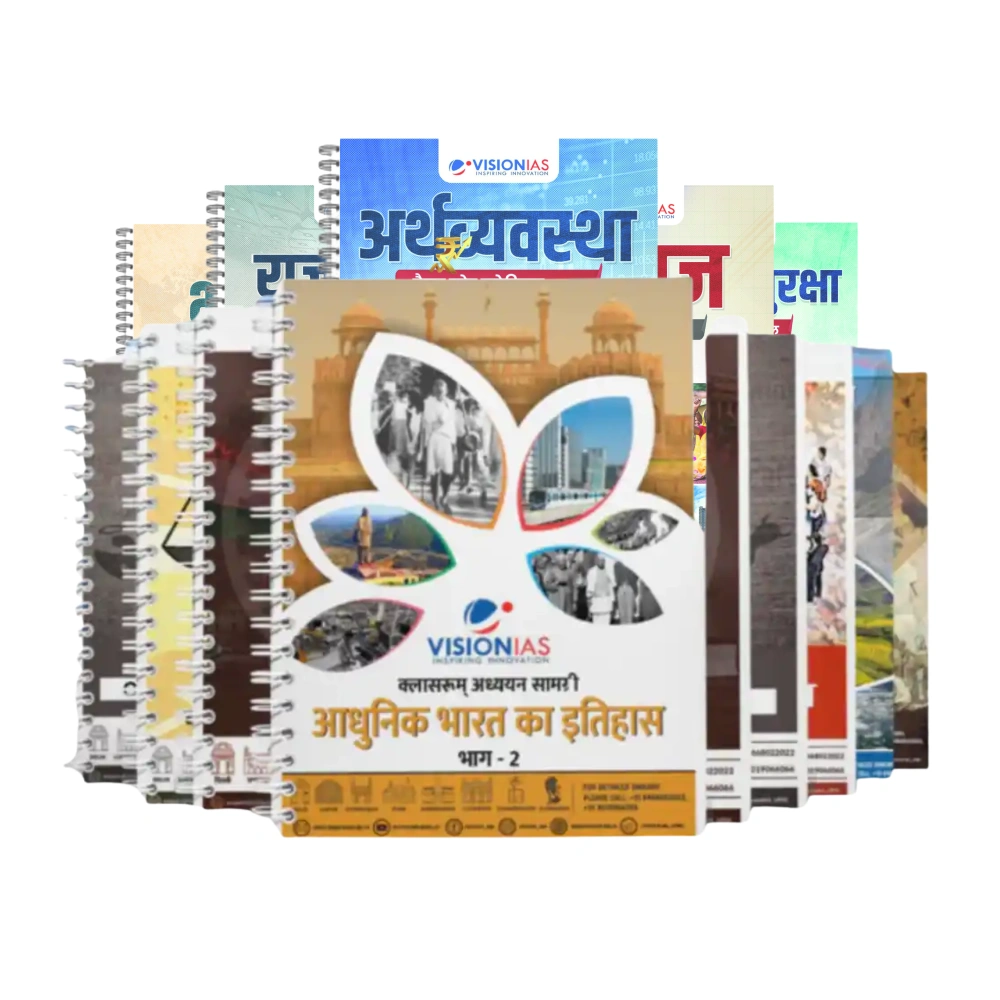
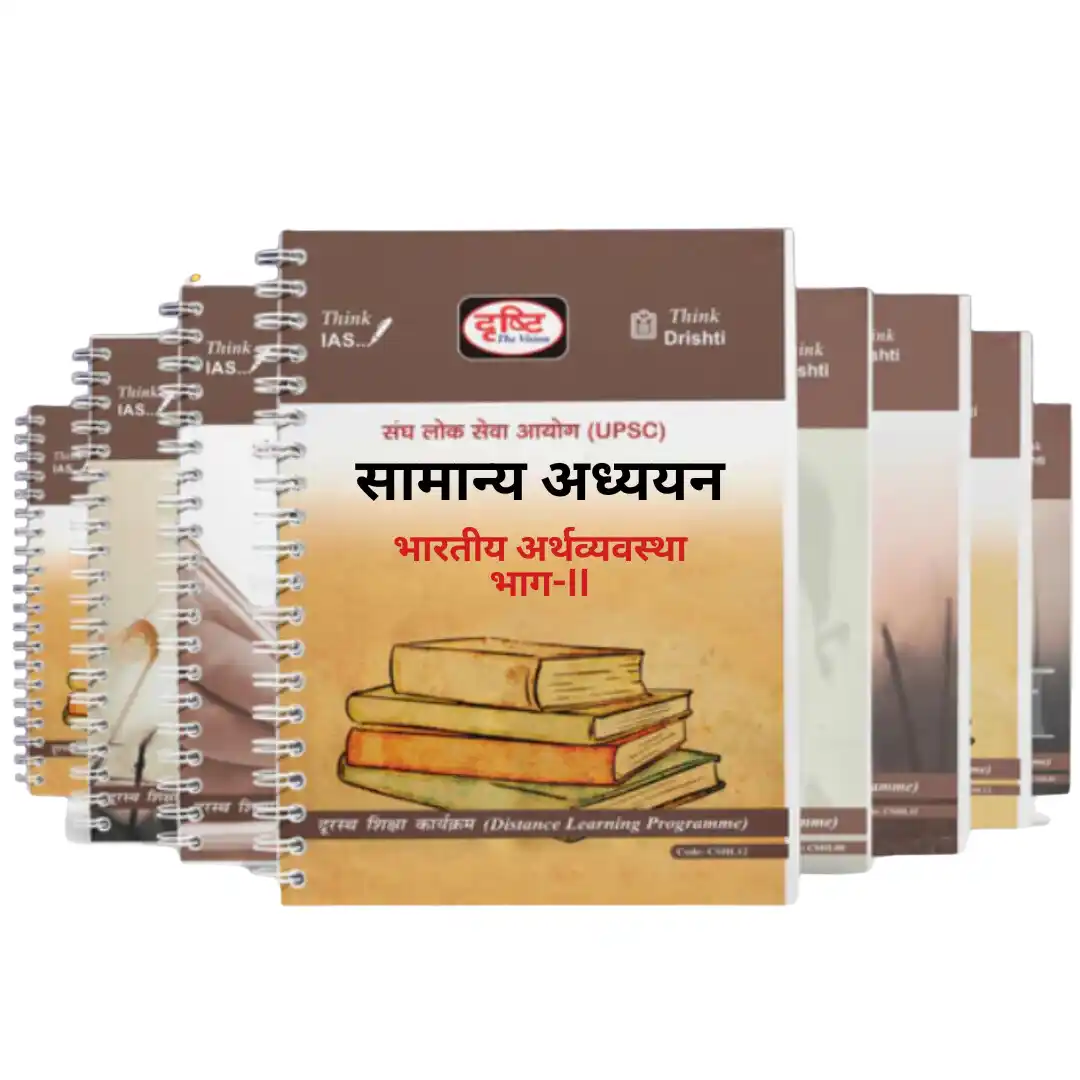
The official syllabus is released in both Hindi and English with identical content, so Hindi-medium candidates are at no disadvantage in scope — only in the availability of quality study material. For Hindi-medium foundation building across GS units, printed booklet sets like the Vision IAS GS Notes in Hindi and the Drishti IAS Hindi Study Material give you conceptual coverage that you can then layer with Rajasthan-specific sources.
Rajasthan GK Deep Dive: The Highest-Scoring Differentiator
More than any other section, Rajasthan-specific GK decides RAS ranks — it is heavily weighted, less predictable for generic aspirants, and where local candidates gain an edge. Build depth in these clusters:
| Cluster | Must-Know Topics |
|---|---|
| History & Dynasties | Chauhans of Ajmer, Guhilas/Sisodias of Mewar, Rathores of Marwar, Kachhwahas of Amber, 1857 revolt in Rajasthan, Praja Mandal movements, integration |
| Art & Culture | Miniature painting schools (Mewar, Kishangarh, Bundi), folk dances (Ghoomar, Kalbelia, Terah Taali), folk music, instruments, handicrafts |
| Folk Deities & Fairs | Ramdevji, Gogaji, Pabuji, Tejaji; Pushkar fair, Nagaur fair, cattle fairs |
| Geography | Aravalli range, desert ecology, rivers (Chambal, Banas, Luni), lakes, minerals, wildlife sanctuaries & tiger reserves |
| Polity & Administration | State legislature, RPSC, State Election Commission, State Information Commission, district administration, Panchayati Raj |
| Economy & Schemes | Agriculture, dairy, tourism, MSMEs, solar energy, flagship state welfare schemes |
A practical tip: because the same Rajasthan clusters appear in Prelims MCQs, Mains answers and the interview, build one consolidated Rajasthan-GK notebook early and revise it repeatedly. This single asset compounds across all three stages more than any other resource.
Best Books to Cover the RPSC RAS Syllabus
A layered booklist — NCERTs for basics, standard references for GS, and Rajasthan-specific titles for the differentiator — covers the syllabus most efficiently. There is no single “one book for RAS”; the winning approach is a small, revised stack rather than a large, unfinished pile. Here is a practical mapping.
| Syllabus Area | Recommended Resource |
|---|---|
| Foundation (all subjects) | NCERTs (Class 6–12) for History, Geography, Polity, Economy, Science |
| Polity & Governance | Laxmikanth-style polity notes such as Vajiram Polity Notes |
| Indian Economy | Concept-first material like Vision IAS Economics Notes |
| Rajasthan GK | Standard Rajasthan-specific GK guides + RBSE state board books |
| Current Affairs | Monthly magazines (state + national), e.g. Vision IAS CA (Hindi) |
| Answer Writing & Essay | Structured essay/answer resources for Mains descriptive practice |
Whatever titles you choose, prioritise finishing and revising a fixed stack at least three times over collecting new books each month — RAS rewards retention and recall, not shelf size.
RPSC RAS Study Plan & Preparation Strategy
Because Prelims and Mains have overlapping-but-differently-tested syllabi, an integrated timeline works best. Aim to finish static coverage before the Prelims, then pivot to answer writing.
| Phase | Duration | Focus |
|---|---|---|
| Foundation | Months 1–3 | NCERTs + Rajasthan GK basics; build notes for high-weightage units |
| Core GS | Months 4–6 | Standard references for Polity, Economy, Geography, Science; daily current affairs |
| Prelims Sprint | Months 7–8 | Full-length mocks, PYQ analysis, revision, reasoning practice |
| Mains Transition | Post-Prelims (2 weeks) | Shift to descriptive mode; map units to answer frameworks |
| Mains Intensive | Next 8–10 weeks | Daily answer writing, essay practice, Hindi/English Paper-IV drills |
| Interview | After Mains result | DAF-based mocks, Rajasthan current affairs, personality development |
The most common planning error is treating Prelims and Mains as separate campaigns. Instead, study each static unit at Mains depth from the start and simply convert it to MCQ practice during the Prelims sprint — this avoids re-learning the same syllabus twice.
One-Page Syllabus Checklist (Printable)
- ☐ Rajasthan History, Art & Culture — dynasties, painting, folk, fairs
- ☐ Rajasthan & Indian Geography — physiography, rivers, minerals, ecology
- ☐ Polity & State Administration — Constitution + Rajasthan machinery
- ☐ Economy — Indian + Rajasthan development & schemes
- ☐ Science & Tech + Environment
- ☐ Reasoning & Mental Ability (Prelims)
- ☐ Current Affairs (state + national + international)
- ☐ Mains Paper-IV — Hindi & English grammar + writing
- ☐ Ethics & case studies (Mains GS-II)
- ☐ Answer writing & essay practice
RPSC RAS Personality Test / Interview (100 Marks)
The final stage most pages skip. The Personality Test carries 100 marks and, together with Mains, decides your rank. The board assesses:
- Mental alertness, clarity and logical reasoning
- Balance of judgement and depth of interest
- Leadership, social cohesion and integrity of character
- Awareness of Rajasthan’s socio-economic & cultural issues
- Ability to take a stand on contemporary affairs
Preparation centres on your Detailed Application Form (DAF), your home district/state, optional graduation subject, and current Rajasthan-centric affairs. Because 100 marks can swing a rank by hundreds of positions when Mains scores cluster tightly, the interview is disproportionately decisive — never treat it as a formality. Regular mock interviews and reading a national daily are the highest-return activities here.
RPSC RAS Syllabus PDF Download (Hindi & English)
The authoritative rpsc ras syllabus PDF download is always the one attached to the official notification on the RPSC portal (rpsc.rajasthan.gov.in), available in both Hindi and English. Steps to download:
- Visit rpsc.rajasthan.gov.in and open the Syllabus or Notification section.
- Select the RAS/RTS Combined Competitive Exam.
- Download the separate Prelims and Mains syllabus PDFs (Hindi/English).
- Save and print the one-page checklist above for daily tracking.
Because RPSC issues the definitive syllabus with each advertisement, always treat the official PDF as final and use guides like this one for interpretation, weightage and strategy. If a downloaded PDF from any third-party site differs from the RPSC version, the RPSC version prevails.
Common Mistakes RAS Aspirants Make
- Under-preparing Rajasthan GK — it is the highest-scoring and most decisive section.
- Ignoring answer writing until after Prelims — Mains ranks depend on structured, time-bound writing built over months.
- Neglecting Paper-IV — 200 easy-to-score marks in Hindi & English are routinely wasted.
- Blind guessing in Prelims — 1/3 negative marking punishes low-accuracy attempts.
- Skipping current affairs consistency — state + national CA appears in every stage, including the interview.
- Chasing new books over revision — recall of a finished stack beats half-read coverage of many.
Frequently Asked Questions
What is the syllabus of RPSC RAS 2026?
The RPSC RAS 2026 syllabus has one objective Prelims paper covering nine areas — Rajasthan & Indian history, geography, polity & administration, economy, science & technology, reasoning and current affairs — followed by four descriptive Mains papers (three General Studies papers plus a General Hindi & English paper) and a Personality Test. Rajasthan-specific GK carries the highest weight across all stages.
How many papers are there in RAS Mains?
RAS Mains has four compulsory descriptive papers of 200 marks each, totalling 800 marks: General Studies-I, General Studies-II, General Studies-III, and General Hindi & General English. There is no optional subject in RAS Mains.
Is there negative marking in RPSC RAS Prelims?
Yes. RPSC RAS Prelims deducts one-third (1/3) mark for every incorrect answer. This makes accuracy management crucial, so avoid blind guessing and attempt questions where you can reasonably eliminate options.
Do RAS Prelims marks count in the final merit list?
No. RAS Prelims is a screening/qualifying stage only. Its marks are not added to the final merit. The final selection is based solely on the Mains (800 marks) plus the Personality Test/Interview (100 marks), out of 900.
Is the RAS exam available in Hindi and English medium?
Yes. The RPSC RAS exam is conducted in both Hindi and English, and the official syllabus is released in both languages. Mains Paper-IV specifically tests General Hindi and General English, each carrying 100 marks.
What is the exam pattern for RPSC RAS Prelims and Mains?
Prelims is a single 200-mark objective paper of 150 questions in 3 hours with 1/3 negative marking, and is qualifying only. Mains has four descriptive papers of 200 marks each (800 total), each 3 hours long, followed by a 100-mark interview. The final merit is out of 900 (Mains 800 + Interview 100).
How many marks is the RAS interview/personality test?
The RAS Personality Test (interview) carries 100 marks. It evaluates mental alertness, judgement, leadership, integrity and awareness of Rajasthan’s socio-economic and current affairs, and directly influences your final rank alongside the Mains score.
Which books are best for covering the RPSC RAS syllabus?
Use a layered stack: NCERTs (Class 6–12) for foundation, standard references for Polity and Economy, dedicated Rajasthan-GK guides plus RBSE state-board books for the highest-weightage Rajasthan portion, and monthly current-affairs magazines for both state and national events. Finishing and revising this fixed stack repeatedly matters more than adding new titles.
Recommended Study Material
Continue Reading
SSC MTS Syllabus 2025: Subject-Wise Topics, Exam Pattern & PDF
Last reviewed: August 2026. Cross-checked against the Staff Selection Commission's official Scheme of Examination. The SSC MTS syllabus…
RBI Grade B Syllabus 2026: Phase 1, 2, Pattern + PDF
The RBI Grade B syllabus is spread across three phases: Phase 1 (Prelims) tests General Awareness, Reasoning, Quantitative…
UGC NET Paper 1 Syllabus 2026: 10 Units + Weightage & PDF
The ugc net paper 1 syllabus has 10 compulsory units — Teaching Aptitude, Research Aptitude, Comprehension, Communication, Mathematical…