Bank PO Preparation 2026: Strategy, Syllabus & Study Plan
Complete bank PO preparation guide for 2026: IBPS & SBI PO syllabus, exam pattern, best books, section-wise strategy and a 90-day study plan for beginners.

Bank PO preparation in 2026 comes down to three things: a clear grip on the IBPS/SBI PO exam pattern (Prelims, Mains and Interview), disciplined section-wise practice across Reasoning, Quantitative Aptitude, English, General/Banking Awareness and Computer Aptitude, and a fixed daily timetable built around mock tests. A focused beginner studying 6-8 hours a day with regular sectional tests and previous-year papers can realistically crack Bank PO in 4-6 months — even doing bank PO preparation at home without any coaching.
This guide covers everything you need — full exam pattern, complete syllabus, best books and study material per section, a phase-wise 30/60/90-day plan, negative-marking and attempt strategy, cut-off awareness, and honest salary and career detail so you know exactly what you are working towards. It is written for beginners as well as repeat aspirants who want to convert a near-miss into a selection.
A quick note on accuracy: vacancies, dates, cut-offs and salary components change with every recruitment cycle and the latest bipartite settlement. The figures below are indicative and drawn from recent IBPS and SBI notification trends — always confirm exact numbers on the official IBPS (ibps.in) and SBI (sbi.co.in/careers) notifications before you apply.
What is a Bank PO? Full Form, Role and Job Profile
Bank PO stands for Bank Probationary Officer — an entry-level managerial (Scale I officer) position in public-sector banks. “Probationary” means you serve a probation period of usually 2 years, during which you are trained and rotated across departments before confirmation. A PO is not a clerk; it is an officer-grade job with decision-making responsibility.
The day-to-day role includes customer relationship management, loan and credit appraisal, cash and cheque handling supervision, cross-selling of financial products, branch administration, KYC/compliance, and general banking operations. Fast growth is a big attraction — a PO can rise to Assistant Manager, Manager, Chief Manager, AGM, DGM and beyond, and can be posted anywhere in India.
Major Bank PO Exams in 2026: IBPS, SBI, RRB and RBI
“Bank PO” is an umbrella term. There are four main recruitment routes, and most aspirants prepare for all of them simultaneously because the syllabus overlaps almost entirely.
| Exam | Conducting Body | Post | Approx. Notification | Approx. Vacancies |
|---|---|---|---|---|
| IBPS PO | Institute of Banking Personnel Selection | PO/MT in 11 PSU banks | August 2026 | 4,000+ |
| SBI PO | State Bank of India | Probationary Officer | April-September 2026 | 2,000+ |
| IBPS RRB PO | IBPS (for Regional Rural Banks) | Officer Scale I | June 2026 | 3,000+ |
| RBI Grade B / Assistant | Reserve Bank of India | Grade B Officer / Assistant | Varies | 200-1,000 |
SBI PO and IBPS PO are the most sought-after because of prestige, pay and posting in metros/urban centres. IBPS RRB PO (Officer Scale I) is slightly easier in pattern (no separate English section in Prelims) and is a smart backup. RBI Grade B has a tougher, economics-heavy syllabus and is usually attempted after some banking experience. The practical takeaway for beginners: prepare one common foundation and let a single study cycle qualify you for three or four exams in the same year.
Bank PO Eligibility Criteria: Age and Qualification
Eligibility is nearly uniform across exams, which makes preparing for all of them together efficient. The core requirement is a graduate degree in any discipline from a recognised university.
| Exam | Age Limit (Gen) | Educational Qualification | Attempts (Gen) |
|---|---|---|---|
| IBPS PO | 20-30 years | Graduation in any stream | 4 |
| SBI PO | 21-30 years | Graduation in any stream | 4 |
| IBPS RRB PO | 18-30 years | Graduation in any stream | No limit within age |
| RBI Grade B | 21-30 years | Graduation with 60% (Gen) | 6 |
Age relaxation applies as per government norms: OBC +3 years, SC/ST +5 years, and PwBD +10 years. Final-year graduation students can usually apply provided they submit proof of passing before the joining date — check each notification, as this is one of the most common eligibility mistakes candidates make.
Bank PO Exam Pattern: The Three-Stage Structure
Every major Bank PO exam follows a three-stage process: Preliminary Exam → Main Exam → Interview (SBI PO adds a Group Exercise/Psychometric round). Prelims is qualifying only — marks don’t count towards the final merit list. Final selection is based on Mains + Interview.
Stage 1: Preliminary Exam Pattern (IBPS & SBI PO)
| Section | Questions | Marks | Time |
|---|---|---|---|
| English Language | 30 | 30 | 20 min |
| Quantitative Aptitude | 35 | 35 | 20 min |
| Reasoning Ability | 35 | 35 | 20 min |
| Total | 100 | 100 | 60 min |
Prelims has sectional timing (20 minutes locked per section) and a negative marking of 0.25 marks for every wrong answer. For IBPS RRB PO Prelims, the pattern differs: only Reasoning (40 marks) and Quantitative Aptitude (40 marks) — 80 questions in 45 minutes, with no English section.
Stage 2: Main Exam Pattern (IBPS PO)
| Section | Questions | Marks | Time |
|---|---|---|---|
| Reasoning & Computer Aptitude | 45 | 60 | 60 min |
| Data Analysis & Interpretation | 35 | 60 | 45 min |
| General/Economy/Banking Awareness | 40 | 40 | 35 min |
| English Language | 35 | 40 | 40 min |
| Descriptive (Letter + Essay) | 2 | 25 | 30 min |
| Total | 157 | 225 | 3 hr 30 min |
SBI PO Mains is similar (200 objective + 50 descriptive marks) and is followed by a Group Exercise & Interview worth 50 marks. Mains introduces higher-order Data Interpretation, computer aptitude and a heavy banking/current-affairs component — this is where the real selection battle is fought.
What is the Syllabus for IBPS PO and SBI PO? Section-Wise Breakdown
Understanding the exact topics is the foundation of any serious bank PO preparation strategy. IBPS PO and SBI PO share effectively the same syllabus — the five core subjects and their high-weightage topics are below.
| Section | Important Topics |
|---|---|
| Reasoning Ability | Puzzles & seating arrangement, syllogism, coding-decoding, blood relations, inequality, direction sense, order & ranking, input-output, data sufficiency |
| Quantitative Aptitude | Simplification & approximation, number series, quadratic equations, Data Interpretation (tables, bar, pie, line, caselet), arithmetic (profit & loss, time-speed-distance, SI/CI, percentages, ratio, partnership) |
| English Language | Reading comprehension, cloze test, para jumbles, sentence improvement, error spotting, fillers, vocabulary, word usage |
| General/Banking Awareness | Banking terms & abbreviations, RBI functions, monetary policy, financial & static awareness, current affairs (6 months), government schemes, national/international news |
| Computer Aptitude | Computer fundamentals, hardware/software, MS Office, networking, internet, shortcuts, database and security basics |
Weightage-wise, in Prelims your Quant and Reasoning together decide your fate; in Mains, Data Analysis & Interpretation plus Banking Awareness carry the largest scoring potential. Master DI and puzzles early — they are the highest-yield, most time-consuming areas.
IBPS PO vs SBI PO: Which Should Beginners Target First?
Both share the same syllabus, so you never “choose” between them — you prepare once and appear for both. But knowing the differences helps you set expectations, especially in the Mains stage.
| Parameter | IBPS PO | SBI PO |
|---|---|---|
| Difficulty level | Moderate | Moderate to high (tricky, time-pressured) |
| Prelims cut-off trend | Slightly lower | Generally higher, more competition |
| Mains highlight | Balanced sections | Innovative, application-based questions |
| Interview weight | Interview only (100 marks) | GE + PI (Group Exercise + Interview) |
| Best for | Wider vacancies, multiple banks | Prestige, metro postings, faster growth |
Beginners should build their base with the standard IBPS-level pattern first, then push their speed and accuracy to the SBI level. If you are strong enough for SBI PO, IBPS PO becomes comfortable.
How to Prepare for Bank PO Exam at Home Without Coaching
Self-study works — thousands clear Bank PO every year with only books, mock tests and online resources. The key to successful bank PO preparation at home is structure and consistency, not the number of hours you sit. Here is a practical framework, ideal for bank PO preparation for beginners.
- Learn the pattern first: Spend your first week fully understanding the syllabus and exam pattern so you never waste time on out-of-scope topics.
- Build concept clarity: For each Quant and Reasoning topic, learn the concept, then solve 40-50 questions before moving on.
- Practise daily DI and puzzles: These two decide selection. Do at least 2 DI sets and 2 puzzles every single day.
- Read a newspaper daily: The Hindu or Indian Express for English and current affairs; maintain a one-page monthly current-affairs note.
- Take mock tests religiously: One full mock every 2-3 days in the last two months, followed by a 45-minute analysis of mistakes.
- Solve previous-year papers: They reveal the exact difficulty and question style you will face.
Because the Banking Awareness and current-affairs component overlaps closely with what UPSC aspirants track, a well-structured monthly current-affairs resource such as the Vision IAS Current Affairs Magazine (January 2026) is a compact way to cover national, economic and banking-relevant news in one place instead of scattered PDFs.
IBPS PO Preparation Tips: Quick Wins That Move Your Score
Beyond the daily routine, a handful of high-leverage habits separate candidates who clear from those who narrowly miss. Use these ibps po preparation tips throughout your cycle:
- Time every practice set: Never solve untimed after the first fortnight. Prelims is won on speed, so build a stopwatch habit early.
- Learn 2-3 DI shortcuts a week: Percentage-to-fraction conversions, approximation and ratio tricks save 30-40 seconds per question — enough to attempt 5-6 more.
- Keep a rolling error log: Note every wrong answer with its reason (concept gap, silly slip or time pressure) and revisit it weekly. Most gains come from not repeating old mistakes.
- Front-load current affairs: Revise the last six months monthly rather than cramming — Mains Banking Awareness rewards steady coverage.
- Simulate exam conditions: Take at least a few mocks at the actual exam time slot to train your focus and stamina.
Best Books and Study Material for Bank PO Preparation
One of the biggest gaps in most guides is a clear, section-mapped book list. Here is a consolidated set of the best bank PO books and study material per subject, followed by aptitude resources that overlap with banking Quant and Reasoning.
| Section | Recommended Books |
|---|---|
| Quantitative Aptitude | Quantitative Aptitude by R.S. Aggarwal; Fast Track Objective Arithmetic by Rajesh Verma |
| Reasoning Ability | A Modern Approach to Verbal & Non-Verbal Reasoning (R.S. Aggarwal); Analytical Reasoning by M.K. Pandey |
| English Language | Objective General English by S.P. Bakshi; Word Power Made Easy by Norman Lewis |
| General/Banking Awareness | Banking Awareness by Arihant; monthly current-affairs magazines + daily newspaper |
| Computer Aptitude | Objective Computer Awareness by Arihant |
| Practice/Mock | Sectional test series + full-length online mocks |
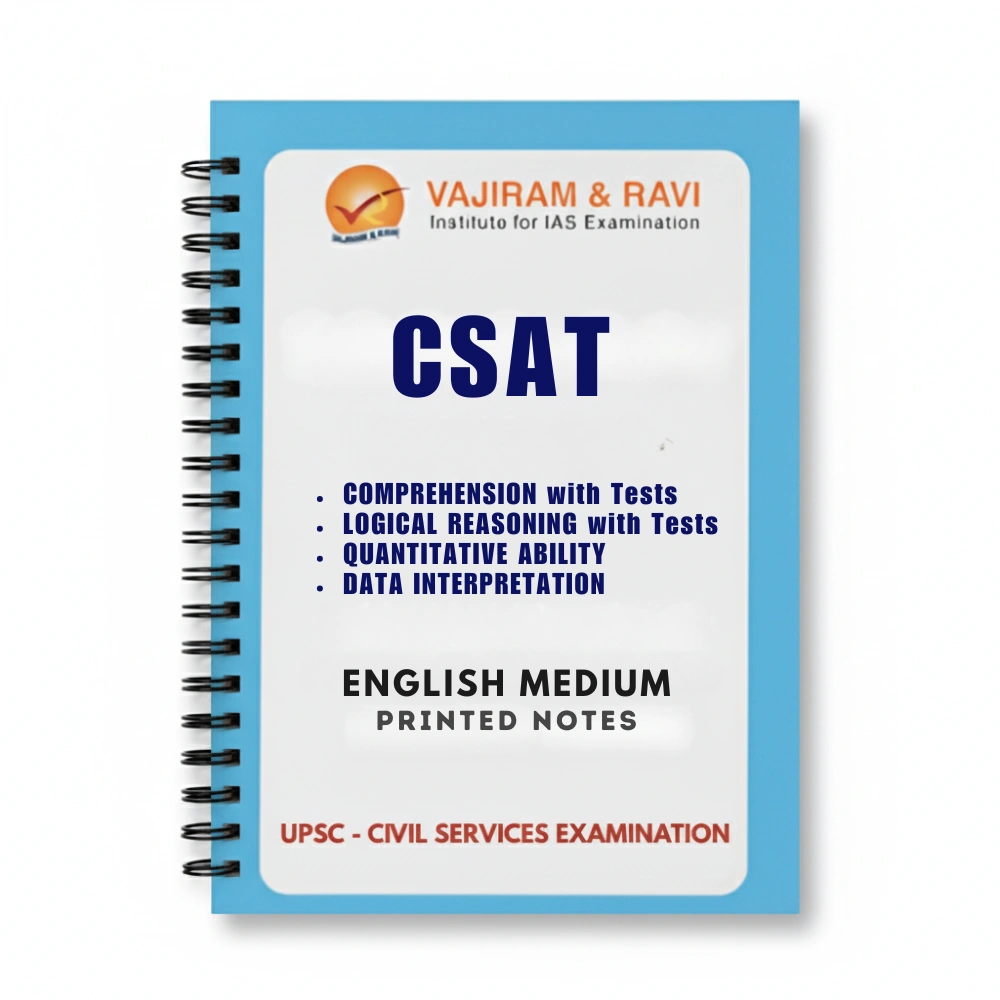
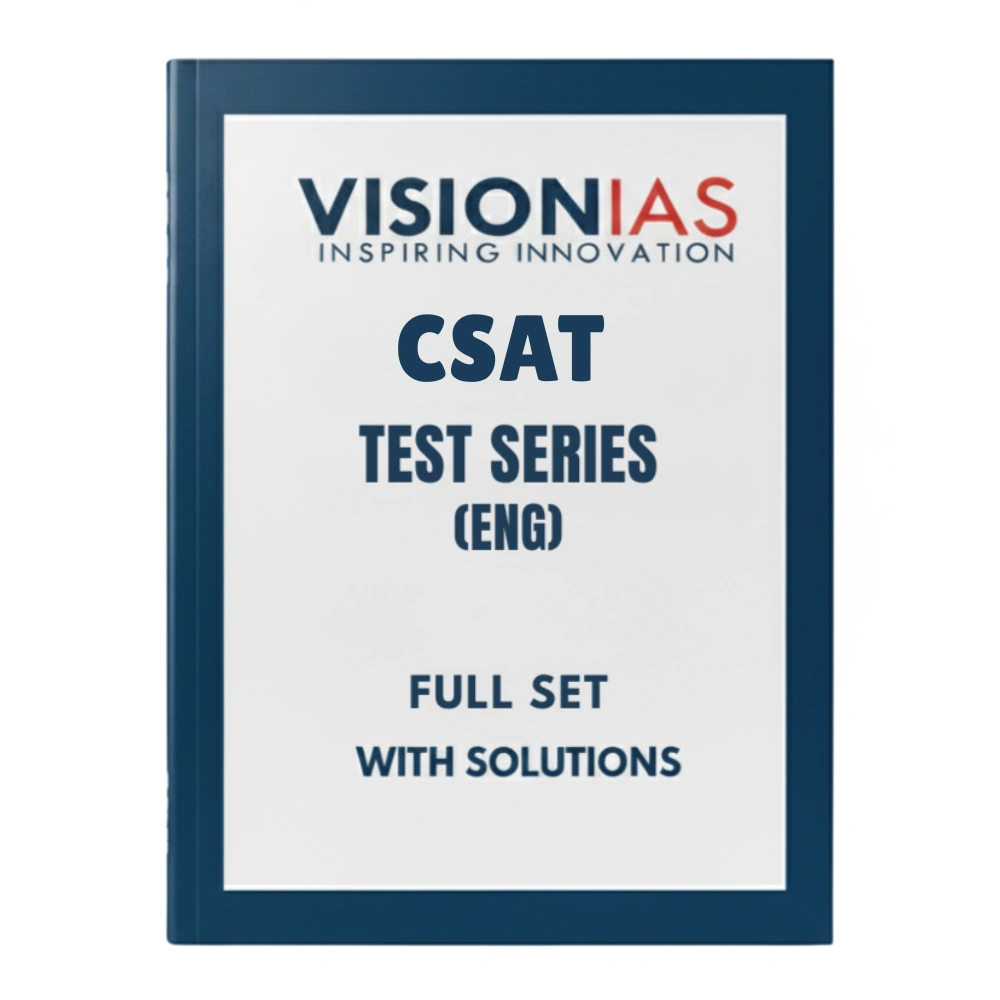
Since Bank PO Quant and Reasoning share their foundation with UPSC’s CSAT aptitude paper, aspirants who want extra concept practice and solved DI/reasoning sets often use a structured aptitude resource like the Vajiram CSAT Complete Booklet Set with Practice Questions to strengthen simplification, data interpretation and logical-reasoning fundamentals before moving to bank-specific mocks. For timed, exam-like practice discipline, a test series such as the Vision IAS CSAT Test Series helps you build the speed-and-accuracy habit that Prelims demands.
90-Day Bank PO Study Plan and Daily Timetable
Top pages describe planning in the abstract; here is a concrete phase-wise plan you can follow. This 90-day framework assumes a beginner starting from scratch and studying 6-8 hours daily.
| Phase | Days | Focus | Goal |
|---|---|---|---|
| Foundation | 1-30 | Learn all Quant, Reasoning, English basics; build vocab; start daily current affairs | Complete concepts + sectional tests |
| Speed Building | 31-60 | DI & puzzles daily; sectional tests; Prelims-level full mocks twice a week | Cross Prelims cut-off consistently |
| Mains + Revision | 61-90 | Mains-level DI, banking awareness, descriptive writing; full mocks every 2 days | Exam-ready with strong accuracy |
A realistic daily timetable for balanced, home-based preparation looks like this:
| Time Slot | Activity | Duration |
|---|---|---|
| Morning | Quantitative Aptitude (concept + practice) | 2 hrs |
| Mid-morning | Reasoning Ability (puzzles + topics) | 1.5 hrs |
| Afternoon | English + newspaper reading | 1.5 hrs |
| Evening | Banking/current affairs + revision notes | 1 hr |
| Night | Sectional/full mock test + analysis | 1.5 hrs |
Adjust the ratio to your weak areas — if Quant is your weakness, give it the largest block. Working professionals can compress this into 3-4 focused hours on weekdays plus longer weekend blocks; the phases stay the same, only the timeline stretches. Consistency across 90 days beats occasional 12-hour marathons.
Negative Marking, Attempt Strategy and Cut-Off Awareness
Every Bank PO objective test carries a 0.25 negative mark per wrong answer, so attempt strategy is as important as knowledge. You do not need to attempt all 100 questions in Prelims — you need to clear both the overall and sectional cut-offs with high accuracy.
- Prelims target: Aim for 70-80 accurate attempts out of 100 with 90%+ accuracy. Blind guessing destroys scores.
- Sectional cut-off: You must clear the minimum in each of the three sections, so never skip a whole section — secure your safe attempts everywhere first.
- Order of attempt: Start with your strongest section, bank easy marks, then move to tougher ones. Skip time-consuming puzzles/DI on first pass and return later.
- Cut-off awareness: Study previous cut-offs for your category and state — IBPS applies normalisation across shifts, so aim comfortably above the expected cut-off, not just at it.
Revision matters as much as learning: keep a formula sheet and an error log, and revisit them weekly so mistakes don’t repeat on exam day.
Is Bank PO Tough to Crack in Your First Attempt?
Bank PO is competitive but very much a first-attempt exam — a large share of selected candidates clear it within one or two serious attempts. What makes it feel tough is not the syllabus difficulty (most topics are class 10-12 level) but the combination of speed, sectional timing, negative marking and high competition for limited seats.
The candidates who struggle usually make avoidable errors: they under-practise timed mocks, ignore sectional cut-offs, or chase too many resources without depth. If you respect the exam pattern, protect your accuracy, and analyse every mock, a first-attempt selection is realistic even without coaching. Treat the first attempt as a genuine target, not a trial run — that mindset alone lifts most aspirants’ scores.
Bank PO Salary and Career Growth: Is It Worth It?
Motivation matters over a 4-6 month grind, so know the reward. A Bank PO enjoys a strong pay package plus allowances, job security and rapid promotion — making it one of the most rewarding government-sector jobs for graduates.
| Component | Approx. Figure (Bank PO) |
|---|---|
| Basic Pay | ~₹48,480 per month |
| Gross monthly (with DA, HRA etc.) | ~₹55,000-70,000 (city dependent) |
| Approx. annual CTC | ~₹10-16 lakh (SBI PO higher end) |
| Perks | DA, HRA, medical, leased accommodation, LFC, pension (NPS) |
| Promotion path | PO → Manager → Chief Manager → AGM → DGM+ |
Exact figures vary by bank, city and the latest bipartite settlement, but the trajectory is clear: a disciplined performer can reach senior management within 10-15 years. Combined with stability and social respect, Bank PO remains firmly worth the effort.
Common Mistakes to Avoid in Bank PO Preparation
- Ignoring mock analysis: Taking mocks without analysing errors is wasted effort — the learning is in the review.
- Neglecting sectional cut-offs: Being brilliant in one subject won’t save you if you fail another section’s minimum.
- Skipping current affairs: Banking Awareness in Mains is a scoring goldmine; don’t leave it for the last week.
- Over-studying, under-practising: Reading theory endlessly without timed practice kills your speed.
- Chasing too many resources: Pick one solid book per subject and one test series; depth beats variety.
Get these five right, stay consistent for one honest cycle, and Bank PO preparation stops feeling like a gamble and starts feeling like a plan you are steadily executing.
Frequently Asked Questions
How can I prepare for Bank PO exam at home without coaching?
Yes, you can crack Bank PO at home. Understand the syllabus and pattern first, use one standard book per subject, practise DI and puzzles daily, read a newspaper for English and current affairs, and take a full mock test every 2-3 days followed by detailed error analysis. Consistency and mock discipline matter far more than coaching.
Which is the best book for Bank PO preparation?
There is no single best book — use a subject-wise set: R.S. Aggarwal for Quantitative Aptitude and Reasoning, S.P. Bakshi’s Objective General English plus Norman Lewis’s Word Power Made Easy for English, Arihant’s Banking Awareness for the awareness section, and a good online test series for practice. Pair these with daily current affairs.
How many hours should I study daily for Bank PO?
For beginners, 6-8 focused hours a day is ideal, split across Quant, Reasoning, English, Banking Awareness and one mock test. Working aspirants can manage with 3-4 highly focused hours daily plus longer weekend sessions. Quality and daily consistency beat long, irregular study marathons.
Can a beginner crack Bank PO in 3 to 6 months?
Yes. A disciplined beginner following a structured 90-day-plus plan with strong DI, puzzle and mock-test practice can clear Bank PO in 3-6 months. The timeline depends on your starting aptitude, daily hours and how seriously you analyse mistakes and revise weak areas.
What is the syllabus for IBPS PO and SBI PO?
IBPS PO and SBI PO share effectively the same syllabus across five areas: Reasoning Ability, Quantitative Aptitude, English Language, General/Banking Awareness and Computer Aptitude. Prelims tests English, Quant and Reasoning; Mains adds Data Analysis & Interpretation, Banking/Economy Awareness, Computer Aptitude and a descriptive letter-and-essay paper.
Is Bank PO exam tough to crack in the first attempt?
It is competitive but a genuine first-attempt exam — many candidates clear it in one serious attempt. The difficulty lies in speed, sectional timing and negative marking rather than topic difficulty. Consistent timed mocks, careful accuracy and thorough mock analysis make a first-attempt selection realistic, even without coaching.
What is the age limit and eligibility for Bank PO?
The general age limit is 20-30 years for IBPS PO and 21-30 for SBI PO, with relaxations of +3 years for OBC, +5 for SC/ST and +10 for PwBD. The educational qualification is a graduation degree in any discipline from a recognised university; final-year students can often apply with proof of passing before joining.
What is the salary of a Bank PO after selection?
A Bank PO’s basic pay is around ₹48,480 per month, with a gross in-hand salary of roughly ₹55,000-70,000 depending on the city, plus DA, HRA, medical benefits and accommodation. Annual CTC ranges from about ₹10 lakh to ₹16 lakh, with SBI PO typically at the higher end.
Recommended Study Material

Continue Reading
SSC CPO Syllabus 2025: Paper 1 & 2, Exam Pattern + PDF
The ssc cpo syllabus is built around two computer-based papers: Paper 1 tests Reasoning, General Knowledge, Quantitative Aptitude…
UPTET Syllabus 2026: Paper 1 & 2 Subject-Wise + PDF (Hindi)
The UPTET syllabus is divided into two papers — Paper 1 for candidates who want to teach Classes…
Super TET Syllabus 2026: Subject-Wise Marks, Pattern + PDF
The Super TET syllabus covers 10 subjects across 150 objective questions worth 150 marks, with Language (40 marks)…