Best Books for UPSC 2026: Subject-Wise List + Free PDF
Best books for UPSC 2026: a subject-wise Prelims & Mains booklist with must-buy vs skip tiers, latest editions, Hindi options, budget sets & a free PDF.

The best books for UPSC are the NCERTs (Classes 6–12) for your foundation, plus one standard reference per subject: Laxmikanth for Polity, Spectrum for Modern History, GC Leong for Geography, Nitin Singhania for Art & Culture, Ramesh Singh for Economy and Shankar IAS for Environment. For about 90% of the syllabus you need fewer than 15 core books plus daily current affairs — not the 50-title lists most blogs throw at you.
This guide gives you a curated, subject-wise UPSC book list for 2026, split cleanly into Prelims, Mains (GS Paper I–IV), CSAT and Optionals, with a must-buy vs skip tier, latest-edition guidance, Hindi-medium equivalents, a realistic reading timeline and a free downloadable PDF. The goal is simple: buy the right set once, revise it many times, and stop over-buying.
Best books for UPSC at a glance
If you read nothing else, this is the shortlist that covers the bulk of the General Studies syllabus for both Prelims and Mains:
- Foundation: NCERTs, Classes 6–12 (History, Geography, Polity, Economics, Science, Art).
- Polity: Indian Polity — M. Laxmikanth (latest edition).
- Modern History: A Brief History of Modern India — Spectrum; India’s Struggle for Independence — Bipan Chandra for Mains depth.
- Geography: Certificate Physical & Human Geography — GC Leong + a good atlas.
- Economy: Indian Economy — Ramesh Singh.
- Environment: Environment — Shankar IAS.
- Art & Culture: Indian Art and Culture — Nitin Singhania.
- Everything else: a daily newspaper and one monthly current-affairs compilation.
This list is built around the standard references that recur across topper interviews and the official UPSC syllabus, prioritised by how much of the paper each book actually covers rather than by length. Everything below explains how to use each title, which edition to buy, and what you can safely skip.
UPSC exam pattern 2026: what your books must cover
Before choosing books, anchor them to the exam. UPSC Civil Services is a three-stage exam — Prelims (screening), Mains (written) and the Personality Test. Your booklist must be built backwards from the Mains syllabus, because most standard books serve both stages.
| Stage | Papers | Marks | Nature |
|---|---|---|---|
| Prelims | GS Paper I + CSAT (Paper II) | 200 + 200 | Objective (CSAT qualifying, 33%) |
| Mains | Essay, GS I–IV, Optional I–II, 2 language papers | 1750 (merit) + 600 (qualifying) | Descriptive/written |
| Interview | Personality Test | 275 | Board interview |
Two takeaways for buying books: (1) the same standard books power both Prelims and Mains, so you rarely need separate sets; and (2) current affairs, answer-writing practice and revision matter more than owning extra titles. Keep this in mind as you read the subject-wise list below.
Foundation first: best NCERT books for UPSC (Class 6–12)
Every topper starts here. NCERTs build the conceptual base in plain language, and Prelims regularly lifts questions almost verbatim from them. Read these before touching any advanced reference — jumping straight to Laxmikanth or Spectrum without the NCERT base is the single most common beginner mistake.
| Subject | NCERT classes to read | Priority |
|---|---|---|
| History | Class 6–8 (old), 11 (Ancient/Medieval), 12 (Modern) | High |
| Geography | Class 6–12 (all) | High |
| Polity | Class 9–12 (Political Science) | Medium |
| Economics | Class 9–12 | High |
| Science | Class 6–10 (General Science) | Medium |
| Art & Culture | Class 11 (An Introduction to Indian Art) | High |
Is NCERT alone enough? No — but it covers roughly 25–30% of the GS Prelims paper and makes the standard books far easier to absorb. Treat NCERTs as the runway, not the destination. For a class-by-class breakdown and free downloads, see our dedicated NCERT booklist guide linked in the PDF section.
Best books for UPSC subject-wise (the core GS list)
This is the heart of any UPSC booklist subject wise. Below is the standard reference book for each GS subject — the exact set that appears on virtually every topper’s shelf. Stick to one book per subject; a second book on the same topic gives diminishing returns and eats revision time.
| Subject | Best standard book | Author/Publisher | Serves |
|---|---|---|---|
| Indian Polity | Indian Polity | M. Laxmikanth | Prelims + Mains GS-II |
| Modern History | A Brief History of Modern India | Spectrum (Rajiv Ahir) | Prelims + Mains GS-I |
| Freedom Struggle | India’s Struggle for Independence | Bipan Chandra | Mains GS-I |
| Art & Culture | Indian Art and Culture | Nitin Singhania | Prelims + Mains GS-I |
| Geography | Certificate Physical & Human Geography | G.C. Leong | Prelims + Mains GS-I |
| Indian Economy | Indian Economy | Ramesh Singh | Prelims + Mains GS-III |
| Environment & Ecology | Environment | Shankar IAS | Prelims + Mains GS-III |
| Science & Tech | NCERTs + current affairs | Compilation | Prelims + Mains GS-III |
| International Relations | Newspaper + monthly CA | Compilation | Mains GS-II |
| Ethics (GS-IV) | Lexicon / Ethics notes | Chronicle / coaching | Mains GS-IV |
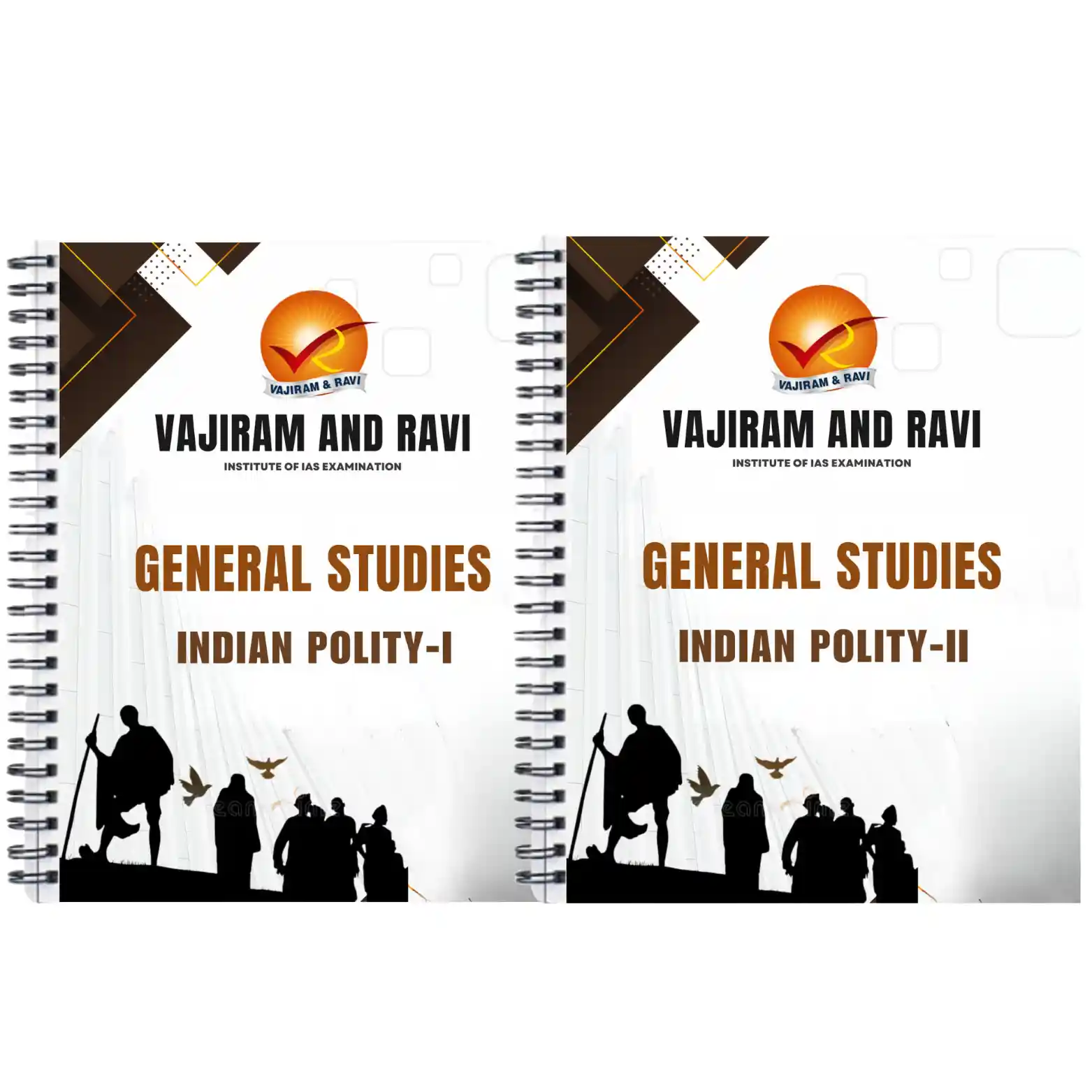
Notice that IR, Internal Security, Social Justice and Science & Tech have no single “textbook” — they are best built from newspapers, the 2nd ARC report and consolidated coaching notes. Ready-made booklets save enormous compilation time here; the Vajiram Polity Notes and Vision IAS Economics Notes distil Laxmikanth and Ramesh Singh into exam-ready form for quick revision.
History: Ancient, Medieval, Modern, Art & Culture and World
Split history smartly. For Ancient and Medieval, the old NCERTs (RS Sharma, Satish Chandra) are sufficient. For Modern India, Spectrum is the go-to for Prelims facts; Bipan Chandra adds the analytical depth Mains demands. For Art & Culture, Nitin Singhania is unmatched. For World History (Mains GS-I only), NCERT Class 9–10 plus a short reference covers the French Revolution to the Cold War.
Geography and Environment
GC Leong builds physical geography; NCERTs cover Indian and human geography; an atlas (Oxford or Orient BlackSwan) is non-negotiable for map-based questions. Environment is increasingly a scoring area — Shankar IAS Environment is the single best resource, and it overlaps heavily with current-affairs conservation news.
Best books for UPSC Polity, Economy and Ethics: resolving the “which one” dilemma
Beginners waste weeks deciding between competing titles. Here are the head-to-head verdicts that recur across every topper interview.
| Dilemma | Option A | Option B | Verdict |
|---|---|---|---|
| Modern History | Spectrum (fact-dense, crisp) | Bipan Chandra (analytical, dense) | Spectrum for Prelims; Bipan Chandra only if you take History optional or want GS-I depth |
| Economy | Ramesh Singh (comprehensive) | Sanjeev Verma (concise) | Ramesh Singh for full coverage; Sanjeev Verma if you find economics hard |
| Polity | Laxmikanth (standard) | DD Basu (advanced) | Laxmikanth for 99% of aspirants; DD Basu only for Law/PSIR optional |
| Art & Culture | Nitin Singhania | CCRT / NCERT Fine Arts | Nitin Singhania as base; CCRT to fill gaps |
For Ethics (GS-IV), there is no perfect textbook — the paper rewards examples and structured answers, not theory. A concise ethics module plus practised case studies beats a thick book. The Drishti IAS Ethics Notes pair definitions with ready case-study frameworks, which is exactly what GS-IV needs.
Are the same books used for Prelims and Mains?
Mostly, yes — and this is the biggest money-saver on your booklist. About 80% of your standard books serve both stages; you simply read them differently (facts-and-elimination for Prelims, arguments-and-examples for Mains). Only a few Mains-specific additions and answer-writing practice sit on top.
| Component | Prelims-specific | Mains-specific | Shared core |
|---|---|---|---|
| Polity | Laxmikanth (facts) | Laxmikanth (analysis) + 2nd ARC | Laxmikanth |
| History | Spectrum | Bipan Chandra | NCERTs |
| Economy | Ramesh Singh + CA | Economic Survey highlights | Ramesh Singh |
| CSAT / Ethics | CSAT practice sets | Ethics notes + case studies | — |
| Current Affairs | Monthly magazine | Monthly magazine + editorials | Monthly magazine |
The practical implication: don’t buy “Prelims books” and “Mains books” separately. Buy the standard set once and layer answer-writing practice and current affairs on top.
CSAT (Paper II): the paper aspirants underestimate
CSAT is qualifying (33%), but failing it cancels your Prelims regardless of your GS score — and recent papers have been harder. Non-maths backgrounds especially must not treat it as an afterthought.
| CSAT area | Recommended resource | Focus |
|---|---|---|
| Comprehension | Previous year papers | Speed reading, inference |
| Reasoning | Arihant / RS Aggarwal | Syllogism, series, direction |
| Basic Numeracy | Class 8–10 maths / RS Aggarwal | Percentage, ratio, DI |
| Practice | Full-length CSAT sets | Time management |
A single practice-oriented CSAT booklet plus 10 years of PYQs is enough for most aspirants. The Vajiram CSAT Complete Booklet Set with practice questions covers all three areas with solved examples, so you avoid buying three separate aptitude books.
Best books for UPSC optional subjects
Your optional carries 500 marks and often decides the final rank. UPSC offers 48 optionals; the most-chosen are PSIR, Sociology, Geography, Public Administration, Anthropology and History. Each has its own compact booklist — over-buying here is especially wasteful because coaching-consolidated notes usually beat scattered textbooks for scoring.
| Optional | Popular resource | Best for |
|---|---|---|
| PSIR | Shubhra Ranjan / Rajesh Mishra notes | Arts, IR-inclined aspirants |
| Sociology | SS Pandey / Vikash Ranjan notes | Scoring, beginner-friendly |
| Geography | Shabbir Sir / GC Leong + Savindra Singh | Science & diagram lovers |
| Public Administration | Vajiram Pub Ad notes | Overlap with GS-II |
| Anthropology | Brain Tree notes | Short syllabus, diagrams |
Ready optional booklets — such as Shubhra Ranjan PSIR notes — save the months you would otherwise spend compiling from multiple textbooks. Choose your optional first by interest and scoring trend (see our optional-selection guide), then buy exactly one trusted note set for it.
Must-buy vs optional: a tiered, budget-friendly UPSC book list 2026
Exhaustive lists cause the over-buying they warn against. Here is the honest tiering for your UPSC book list 2026 — what to buy first, what can wait, and what to skip until you’re sure you need it.
| Tier | Books | Why |
|---|---|---|
| Must-buy (Day 1) | Core NCERTs, Laxmikanth, Spectrum, GC Leong + atlas, Ramesh Singh, Shankar IAS Environment, Nitin Singhania | Covers ~85% of GS across both stages |
| Buy after 2–3 months | Ethics notes, CSAT practice set, monthly current affairs, optional notes | Needed once foundation is set |
| Optional / skip early | DD Basu, second economy book, multiple history titles | Only for specific optionals or gaps |
| Budget | What it buys | Best for |
|---|---|---|
| Starter (~₹3,000–4,000) | Core NCERTs + Laxmikanth + Spectrum + Ramesh Singh | First-time aspirants testing the waters |
| Standard (~₹6,000–9,000) | Full GS standard set + consolidated coaching booklets | Serious full-time aspirants |
| Complete (~₹12,000+) | GS set + optional notes + test series + current affairs | Prelims-to-Mains in one cycle |
If you prefer one consolidated, revision-ready GS set instead of assembling a dozen books, the Vision IAS English Study Material compiles the entire GS syllabus into exam-oriented booklets — useful as a spine you revise around, with standard books as reference.
Editions matter: which version of Laxmikanth and Spectrum to buy
An outdated edition can cost you marks on new constitutional amendments, schemes and data. Always verify the edition before buying — old stock circulates widely.
| Book | Buy this edition | Watch out for |
|---|---|---|
| Laxmikanth Polity | Latest edition, updated for recent amendments | Missing recent amendments |
| Spectrum Modern India | Most recent reprint | Older reprints are fine (facts stable) |
| Ramesh Singh Economy | 2025/2026 edition | Old GDP/budget data |
| Shankar IAS Environment | Latest edition | Outdated conservation status |
For subjects that change yearly — Economy, Environment, Science & Tech — the freshest edition genuinely matters. For History and static Geography, a slightly older reprint is perfectly usable, so don’t pay a premium for the newest print.
Newspapers, reports and current affairs: the books alone won’t cut it
UPSC is a current-affairs-driven exam. Static books give the base; the following non-book sources convert that base into marks, especially in Mains and Interview.
- Newspaper: The Hindu or Indian Express — 45–60 minutes daily, editorials for Mains.
- Monthly magazine: one consolidated current-affairs magazine to avoid information overload.
- Government sources: 2nd ARC report (Governance/Ethics), Economic Survey and Budget highlights, Yojana and Kurukshetra, PIB for schemes.
Rather than clip news daily, most aspirants revise a monthly compilation like the Vision IAS Current Affairs Magazine (January 2026), which curates the month’s relevant events into Prelims- and Mains-ready notes.
Best books for UPSC in Hindi medium
Hindi-medium demand is high and well-served. Most standard books have official Hindi editions, and coaching material is widely available in Hindi — so a Hindi-medium aspirant can build the same core booklist without compromise.
| Subject | Hindi-medium book |
|---|---|
| Polity | Bharat ki Rajvyavastha — M. Laxmikanth |
| Modern History | Aadhunik Bharat ka Itihas — Spectrum / Bipan Chandra |
| Geography | NCERT (Hindi) + Mahesh Kumar Barnwal |
| Economy | Bharatiya Arthvyavastha — Ramesh Singh (Hindi) |
| Full GS notes | Drishti / Vision IAS Hindi booklets |
For a ready Hindi GS set, the Drishti IAS Hindi Study Material is among the most trusted consolidated options, and PSIR aspirants can use Hindi-medium optional notes such as Rajesh Mishra’s set.
A realistic reading sequence: what to read month by month
Owning the right books is half the battle; reading them in the right order is the other half. Here is a beginner-friendly sequence for a Prelims-to-Mains cycle.
| Phase | Timeline | What to read |
|---|---|---|
| Foundation | Month 1–3 | All NCERTs + start Laxmikanth & Spectrum + daily newspaper |
| Standard books | Month 4–6 | GC Leong, Ramesh Singh, Shankar IAS, Nitin Singhania |
| Consolidation | Month 7–9 | Revision + monthly CA + start answer writing + optional |
| Prelims push | Month 10–12 | PYQs, test series, revise limited sources |
The golden rule across all 12 months: revise limited sources repeatedly. Reading Laxmikanth five times beats reading five polity books once. Understanding beats memorising — and a small, well-revised booklist is what actually clears this exam.
Common booklist mistakes to avoid
- Buying 40+ books and finishing none — pick one book per subject.
- Skipping NCERTs to look “advanced” — you’ll struggle with standard books.
- Ignoring CSAT until the last month — it can sink an otherwise strong Prelims.
- Chasing every new title on YouTube instead of revising what you own.
- Buying outdated editions of Economy/Environment.
- Treating current affairs as optional — it’s 30–40% of the exam.
Download the free UPSC booklist PDF (2026)
We’ve compiled this entire subject-wise list — must-buy vs optional tiering, editions, Hindi equivalents and the month-wise timeline — into a single printable PDF. Use it as a buying checklist so you purchase once and revise many times. The download link is available on this page, alongside our companion NCERT-for-UPSC and optional-selection guides.
Frequently Asked Questions
Which books are best for UPSC preparation for beginners?
Beginners should start with NCERTs (Class 6–12), then add Laxmikanth for Polity, Spectrum for Modern History, GC Leong for Geography, Ramesh Singh for Economy, Shankar IAS for Environment and Nitin Singhania for Art & Culture — plus a daily newspaper. This compact set covers most of the GS syllabus for both Prelims and Mains.
Is NCERT enough to crack the UPSC exam?
No, NCERTs alone are not enough, but they are essential. They cover roughly 25–30% of GS Prelims and build the base needed for standard reference books. Treat NCERTs as your foundation and layer standard books, current affairs and answer-writing practice on top.
Which is the best book for Indian Polity for UPSC?
Indian Polity by M. Laxmikanth is the best and most widely recommended book for Polity. It serves both Prelims and Mains GS-II. Buy the latest edition so recent constitutional amendments are included; DD Basu is only needed for Law or PSIR optional.
How many books should I read for UPSC?
You need fewer than 15 core books — one standard reference per subject plus NCERTs — supplemented by daily current affairs and answer-writing practice. Reading a limited set repeatedly is far more effective than owning dozens of books you never revise.
What is the best book for Modern History for UPSC — Spectrum or Bipan Chandra?
For Prelims, Spectrum (A Brief History of Modern India) is better because it is fact-dense and crisp. For Mains GS-I depth or a History optional, Bipan Chandra’s India’s Struggle for Independence adds analysis. Most aspirants use Spectrum as their core and refer to Bipan Chandra selectively.
Which book is best for UPSC Economy?
Indian Economy by Ramesh Singh is the standard choice for comprehensive coverage across Prelims and Mains GS-III. If you find economics difficult, Sanjeev Verma’s Indian Economy is a more concise alternative. Pair either with the latest Economic Survey and Budget highlights.
Are the same books used for both Prelims and Mains?
Yes, for the most part. About 80% of the standard books — Laxmikanth, Ramesh Singh, Shankar IAS, NCERTs — serve both stages; you just read them differently (facts and elimination for Prelims, arguments and examples for Mains). Only a few Mains-specific additions, plus answer-writing practice and current affairs, sit on top. So buy one standard set rather than separate Prelims and Mains sets.
Which books are best for UPSC in Hindi medium?
Hindi-medium aspirants can use the official Hindi editions of the same standard books: Bharat ki Rajvyavastha (Laxmikanth) for Polity, Aadhunik Bharat ka Itihas for Modern History, Bharatiya Arthvyavastha (Ramesh Singh) for Economy, Mahesh Kumar Barnwal for Geography, and Drishti or Vision IAS Hindi booklets for consolidated GS notes. The core list stays identical — only the language changes.
Recommended Study Material
Continue Reading
UKPSC Syllabus 2026: Prelims & Mains + PDF (Hindi & English)
The UKPSC syllabus for the Uttarakhand Combined State Civil/Upper Subordinate Services (PCS) exam is split across three stages…
Vision IAS vs Drishti IAS 2026: Study Material, Notes & Verdict
Vision IAS vs Drishti IAS comes down to two decisions: your medium and your stage. For English-medium aspirants…
NEET Syllabus 2026: Subject-Wise Topics, Weightage + PDF
The NEET syllabus for 2026 is the official National Testing Agency (NTA) list of examinable topics — finalised…