Agniveer Syllabus 2026: Post-Wise Topics, Pattern + PDF
Complete Agniveer syllabus 2026 with post-wise topics (GD, Technical, Clerk/SKT, Tradesman), exam pattern, negative marking, physical standards & PDF download.

The Agniveer syllabus for 2026 is a computer-based (CBT) written test built around General Knowledge, General Science, Mathematics, and post-specific subjects — pegged to the NCERT Class 8–12 standard. The exact subjects and marks differ by post: Agniveer GD is a single 100-mark paper, while Agniveer Technical and Agniveer Clerk/Store Keeper Technical (SKT) are 200-mark papers with extra sections. Every post follows the same three-stage selection: Written Exam (CEE) → Physical Fitness Test (PFT) → Medical Examination.
This guide gives you the full Indian Army Agniveer syllabus 2026 — the complete topic-by-topic breakdown for each subject and post, the latest exam pattern with marks and negative marking, physical and medical standards, high-scoring topics from previous papers, a printable study plan, and an official Agniveer syllabus PDF download route. Whether you are targeting GD, Technical, Clerk/SKT, or Tradesman, everything you need to plan your preparation is on this page.
What Is Agniveer? Agnipath Scheme & Syllabus Overview 2026
Agniveer is the entry rank under the Agnipath Scheme, launched by the Government of India in 2022 to recruit soldiers into the Indian Army, Navy, and Air Force for a four-year term. The Indian Army recruits Agniveers across several posts — General Duty (GD), Technical, Clerk/Store Keeper Technical, Tradesman, and specialised technical categories — through the Indian Army’s online Common Entrance Examination (CEE).
From 2022 onwards, the recruitment sequence was reversed: candidates now sit the online written CEE first, and only shortlisted candidates are called for the Physical Fitness Test and Medical Examination at the Recruitment Rally. This makes the written syllabus the single most important gate — a strong CBT score is what secures your recruitment rally call letter. The syllabus difficulty is deliberately kept at the NCERT Class 8 to Class 12 level, so a disciplined aspirant with clear fundamentals can score well.
The 2026 cycle retains the post-wise pattern, 50-question papers per section, 60–90 minute durations, and negative marking. Below we break down every element in detail.
Agniveer Exam Pattern 2026: Marks, Questions & Duration
The Agniveer exam pattern 2026 is an online Computer-Based Test (CBT). Each subject section carries 50 questions of the objective multiple-choice type. The number of sections, total marks, and duration change depending on the post you apply for. Here is the consolidated pattern:
| Post | Subjects | Total Questions | Total Marks | Duration |
|---|---|---|---|---|
| Agniveer GD | GK, General Science, Maths, Logical Reasoning | 50 | 100 | 60 minutes |
| Agniveer Technical | GK, GK/Science + Physics, Chemistry, Maths | 50 | 200 | 90 minutes |
| Agniveer Clerk / SKT | Part 1: GK, GS, Maths, Computer Science; Part 2: General English | 50 + 50 | 200 | 90 minutes |
| Agniveer Tradesman (10th) | GK, General Science, Maths, Logical Reasoning | 50 | 100 | 60 minutes |
| Agniveer Tradesman (8th) | GK, General Science, Maths | 50 | 100 | 60 minutes |
Key takeaways: GD and Tradesman are the shortest papers at 60 minutes for 100 marks, whereas Technical and Clerk/SKT are longer 90-minute papers worth 200 marks. In Clerk/SKT the paper splits into two parts, and you must clear a minimum qualifying mark in each part separately — a strong Part 1 cannot rescue a weak English section.
How Many Questions Are in the Agniveer Written Exam?
Each Agniveer CBT paper has 50 objective questions per section. For GD and Tradesman there is one combined 50-question paper. For Clerk/SKT, there are effectively two parts (50 + 50 pattern across the combined subjects), and the total marks scale up accordingly. All questions are multiple-choice with four options.
Is There Negative Marking in the Agniveer Exam?
Yes. The Agniveer CBT applies negative marking of 0.25 marks (one-fourth) for every wrong answer. There is no penalty for unattempted questions. Because each question typically carries higher weight in Technical/Clerk papers, careless guessing is costly — attempt only where you can eliminate options.
Agniveer GD Syllabus 2026: Subject-Wise Topics
The Agniveer GD syllabus is the most widely attempted paper. It has one 100-mark section with four subjects — General Knowledge, General Science, Mathematics, and Logical Reasoning — with the marks distributed as below.
| Subject | Approx. Marks (of 100) | Standard |
|---|---|---|
| General Knowledge | 30 | Up to Class 10 |
| General Science | 40 | Class 10 |
| Mathematics | 30 | Class 10 |
| Logical Reasoning | Integrated | Class 10 |
General Knowledge: Indian history & freedom struggle, national and international current affairs, sports and awards, important dates and days, geography (rivers, mountains, capitals), Indian polity and Constitution basics, general economics, defence and Army-related GK, and static GK (books, authors, first-in-India). Keeping up with monthly current events is essential — a structured resource like the Vision IAS Current Affairs Magazine (January 2026) helps you consolidate recent national, defence and international events that repeatedly appear in the GK section.
General Science: Physics (motion, force, work, energy, light, sound, electricity, magnetism), Chemistry (matter, atoms, acids-bases-salts, metals-non-metals, chemical reactions), and Biology (cell, human body systems, nutrition, diseases, plants). Questions are conceptual and NCERT-based.
Mathematics: Number system, HCF & LCM, decimals and fractions, ratio & proportion, percentage, average, profit & loss, simple & compound interest, time & work, time-speed-distance, mensuration (area, volume), algebra basics, trigonometry, and geometry.
Logical Reasoning: Coding-decoding, analogy, series (number and alphabet), blood relations, direction sense, odd-one-out, mirror images, Venn diagrams, and simple non-verbal reasoning.
What Are the Subjects in the Agniveer GD Exam?
The Agniveer GD exam covers four subjects — General Knowledge, General Science, Mathematics, and Logical Reasoning — in a single 100-mark, 60-minute online paper of 50 questions.
Agniveer Technical Syllabus 2026: Physics, Chemistry & Maths
The Agniveer Technical syllabus is pitched at the Class 11–12 (NCERT/PCM) level and is worth 200 marks. It tests General Knowledge/Science plus the core technical trio — Physics, Chemistry, and Mathematics — making it the right choice for candidates who have studied science in Class 12.
| Subject | Approx. Marks (of 200) | Standard |
|---|---|---|
| General Knowledge & Science | 50 | Class 10–12 |
| Physics | 50 | Class 11–12 |
| Chemistry | 50 | Class 11–12 |
| Mathematics | 50 | Class 11–12 |
Physics: Units and measurements, kinematics, laws of motion, work-energy-power, gravitation, properties of solids and liquids, thermodynamics, oscillations and waves, electrostatics, current electricity, magnetic effects of current, electromagnetic induction, optics, dual nature of matter, atoms and nuclei, and semiconductor electronics.
Chemistry: Basic concepts of chemistry, structure of atom, classification of elements and periodicity, chemical bonding, states of matter, thermodynamics, equilibrium, redox reactions, hydrogen, s-block and p-block elements, organic chemistry basics, hydrocarbons, and environmental chemistry.
Mathematics: Sets, relations and functions, trigonometry, complex numbers, quadratic equations, sequences and series, permutations and combinations, binomial theorem, straight lines and conic sections, limits and derivatives, statistics and probability, matrices and determinants, and integration basics.
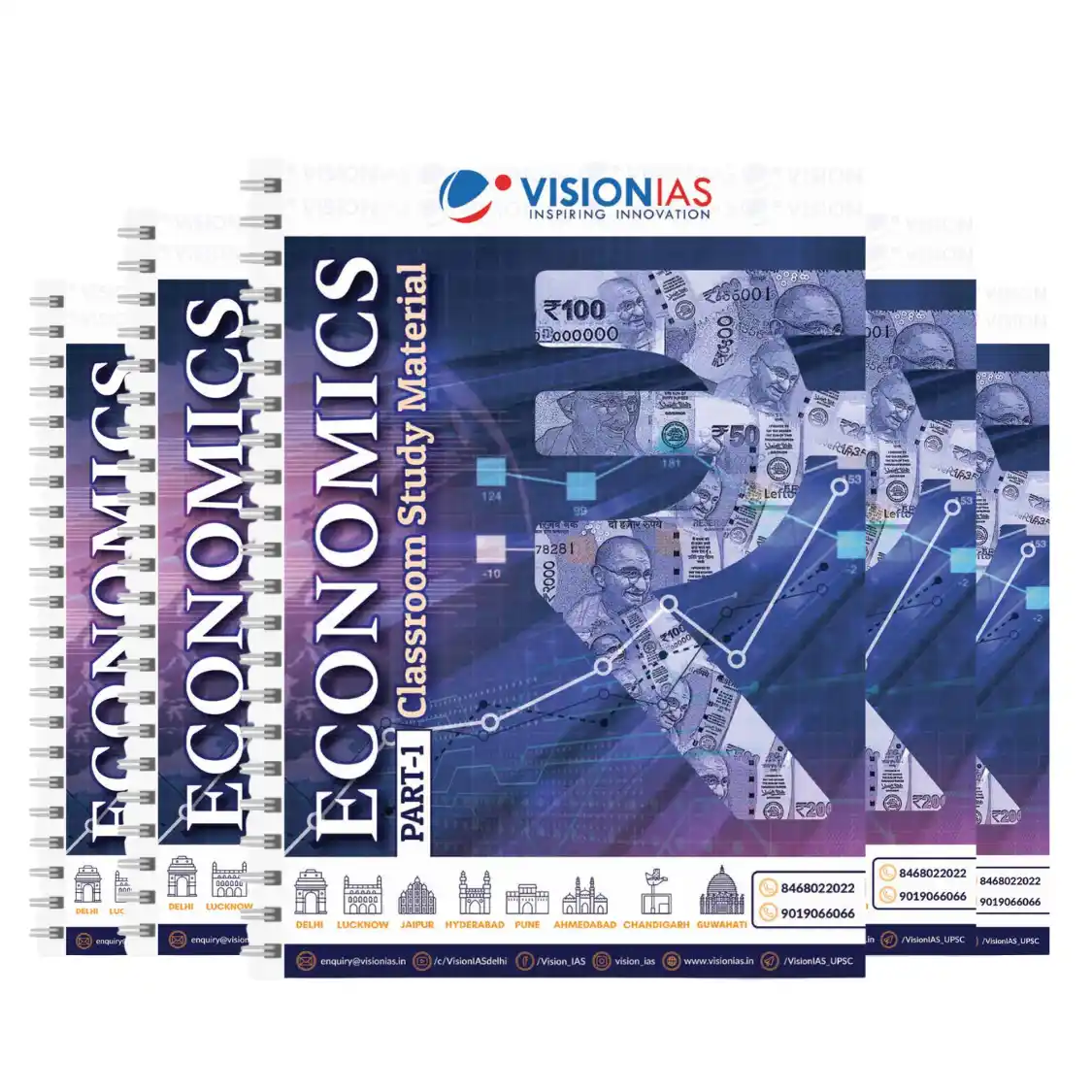
General Knowledge & Science: Current affairs, general science fundamentals, and defence GK as in the GD paper. Candidates studying economics-linked GK can strengthen fundamentals with concise resources such as Vision IAS Economics Notes, useful for the economy portion of General Awareness.
Agniveer Clerk / Store Keeper Technical (SKT) Syllabus 2026
The Agniveer Clerk/Store Keeper Technical syllabus is a 200-mark, two-part paper. Part 1 covers General Knowledge, General Science, Mathematics, and Computer Science; Part 2 is dedicated to General English. This is the only Agniveer post where English and Computer Science carry decisive weight, and where you must qualify in each part separately.
| Part | Subjects | Approx. Marks | Qualifying Rule |
|---|---|---|---|
| Part 1 | General Knowledge, General Science, Maths, Computer Science | 100 | Must clear section cut-off |
| Part 2 | General English | 100 | Must clear section cut-off |
Mathematics: Arithmetic (number systems, HCF-LCM, decimals, fractions), algebra, ratio-proportion, percentage, profit-loss, average, interest, mensuration, trigonometry, and geometry — Class 10–12 level.
General Science & GK: Physics, Chemistry, Biology fundamentals, current affairs, history, geography, polity, economics, and static GK.
Computer Science: Introduction to computers, generations and types of computers, input/output devices, memory (RAM, ROM, storage), operating system basics, MS Office (Word, Excel, PowerPoint), internet and email, computer networks basics, and cyber security fundamentals. This section is often glossed over in other guides but is genuinely scoring for anyone comfortable with basic IT.
General English: Comprehension passages, spotting errors, fill in the blanks, synonyms and antonyms, one-word substitution, idioms and phrases, sentence correction, active-passive voice, direct-indirect speech, tenses, articles, prepositions, and vocabulary. Because English is a full 100-mark qualifying part, daily reading and grammar practice are non-negotiable for Clerk/SKT aspirants.
Agniveer Tradesman Syllabus 2026
The Agniveer Tradesman syllabus is the most basic, offered at two education levels — Class 10 pass and Class 8 pass. Both are 100-mark, 60-minute papers. The Class 10 version includes Logical Reasoning; the Class 8 version drops it.
| Subject | Tradesman (10th) | Tradesman (8th) |
|---|---|---|
| General Knowledge | Yes | Yes |
| General Science | Yes | Yes |
| Mathematics | Yes | Yes |
| Logical Reasoning | Yes | No |
Topics mirror the GD paper but at a slightly easier Class 8–10 standard: everyday science, basic arithmetic, national current affairs, sports, geography, and simple reasoning.
Agniveer GD vs Technical vs Clerk: Syllabus Comparison at a Glance
Choosing the right post before you begin preparation saves months. This comparison table lets you pick your post by education, subjects, and difficulty at a single glance.
| Feature | Agniveer GD | Agniveer Technical | Agniveer Clerk / SKT |
|---|---|---|---|
| Education Required | Class 10 (45% agg.) | Class 12 (PCM) | Class 12 (any stream, 60% agg.) |
| Total Marks | 100 | 200 | 200 |
| Core Subjects | GK, Science, Maths, Reasoning | GK, Physics, Chemistry, Maths | GK, Science, Maths, Computer, English |
| Duration | 60 min | 90 min | 90 min |
| Difficulty | Class 10 level | Class 11–12 (PCM) | Class 12 + English/Computer |
| Best For | Non-science aspirants | Science (PCM) students | Strong English + IT aptitude |
What Is the Difference Between Agniveer GD, Technical and Clerk Syllabus?
GD tests general subjects at Class 10 level (100 marks). Technical adds Physics, Chemistry, and Maths at Class 12 PCM level (200 marks) for science students. Clerk/SKT is 200 marks with a dedicated General English part and Computer Science, and requires clearing each part separately — best suited to candidates strong in language and IT basics.
Agniveer Eligibility 2026: Age, Education & Marks
Syllabus planning is pointless without confirming eligibility. Here are the core criteria for the main Agniveer posts:
| Post | Age | Education | Minimum Marks |
|---|---|---|---|
| Agniveer GD | 17.5–21 years | Class 10 / Matric | 45% aggregate, 33% each subject* |
| Agniveer Technical | 17.5–21 years | Class 12 with PCM | 50% aggregate, 40% each subject |
| Agniveer Clerk / SKT | 17.5–21 years | Class 12 (any stream) | 60% aggregate, 50% each subject |
| Agniveer Tradesman | 17.5–21 years | Class 8 / Class 10 pass | Pass (no % bar for 8th) |
*Candidates who passed Class 10 with a grading system need a minimum of D grade (33–40) in each subject and an aggregate of C2 grade or 4.75 points. Always confirm the exact percentages against the official notification for your rally.
Agniveer Selection Process 2026: Three Stages Explained
Recruitment is a strict three-stage funnel. You must clear each stage to advance:
| Stage | Component | What It Tests |
|---|---|---|
| Stage 1 | Online Written Exam (CEE) | Subject knowledge as per post syllabus |
| Stage 2 | Physical Fitness Test (PFT) + Physical Measurement | Running, pull-ups, balance, height/chest |
| Stage 3 | Medical Examination | Vision, hearing, general fitness, standards |
Shortlisting after the CBT is based on merit, so a higher written score directly improves your chances of a rally call. Only after clearing the PFT and physical measurement do you undergo the medical, and the final merit list combines written marks with physical performance.
Agniveer Physical Fitness Test (PFT) Standards 2026
The Physical Fitness Test is scored and grouped (Group I / Group II). The 1.6 km run is the biggest scorer. Here are the benchmark standards for most zones:
| Event | Group I (Highest Marks) | Group II |
|---|---|---|
| 1.6 km Run | Up to 5 min 30 sec — 60 marks | 5:31 to 5:45 — 48 marks |
| Beam / Pull-ups | 10 pull-ups — 40 marks | 9 pull-ups — 33 marks |
| 9-feet Ditch Jump | Qualifying (clear the ditch) | Qualifying |
| Zig-Zag Balance | Qualifying | Qualifying |
Pull-up scoring typically runs: 10 pull-ups = 40 marks, 9 = 33, 8 = 27, 7 = 21, 6 = 16 marks. The 9-feet ditch jump and zig-zag balance are qualifying (pass/fail) events. Physical standards vary slightly by region and category, so check your rally’s specific requirement — but training toward a sub-5:30 run and 10 pull-ups keeps you in the top group.
Agniveer Medical Standards 2026
The medical examination follows the PFT. Broad standards for General Duty include:
| Parameter | Standard (General / GD) |
|---|---|
| Height (general) | Approx. 170 cm (varies by region) |
| Chest | Minimum 77 cm with 5 cm expansion |
| Weight | Proportionate to height and age |
| Vision | 6/6 in better eye, 6/9 in worse (GD) |
| Hearing & Teeth | Normal hearing; minimum 14 dental points |
Candidates must be free from any disease or deformity that hampers military duty. Flat feet, knock knees, and colour blindness are common disqualifiers, so a self-check before the rally saves disappointment.
Weightage Analysis & High-Scoring Topics from Previous Papers
Based on trends from recent CEE papers, some topics reliably yield more questions. Prioritise these high-return areas:
| Subject | High-Scoring Topics | Priority |
|---|---|---|
| General Science | Human body, electricity, motion, acids-bases | Very High |
| Mathematics | Percentage, ratio, time-work, mensuration | High |
| General Knowledge | Current affairs, defence GK, static GK | High |
| Reasoning | Series, coding-decoding, analogy | Medium |
| English (Clerk) | Comprehension, error spotting, vocabulary | High |
General Science alone carries roughly 40 of 100 marks in the GD paper, so mastering NCERT science is the fastest way to lift your score. For GK, a rolling current-affairs habit matters more than rote static facts.
Agniveer Study Plan 2026: 90-Day Printable Timeline
Use this printable 90-day plan to structure preparation. Adjust the ratio toward your weakest subject.
| Phase | Days | Focus |
|---|---|---|
| Foundation | Day 1–30 | NCERT Class 8–10 Science & Maths; daily GK notes |
| Post-Specific | Day 31–60 | Physics/Chemistry (Tech) or English/Computer (Clerk); reasoning drills |
| Practice | Day 61–80 | Daily mock tests, previous-year papers, timed sections |
| Revision | Day 81–90 | Formula revision, weak-area fixes, current affairs recap |
Run the 1.6 km daily and build pull-up capacity alongside written prep — the PFT is only weeks after the CBT result, so physical training cannot wait until you clear the written test.
Which NCERT Class Standard Is the Agniveer Exam Based On?
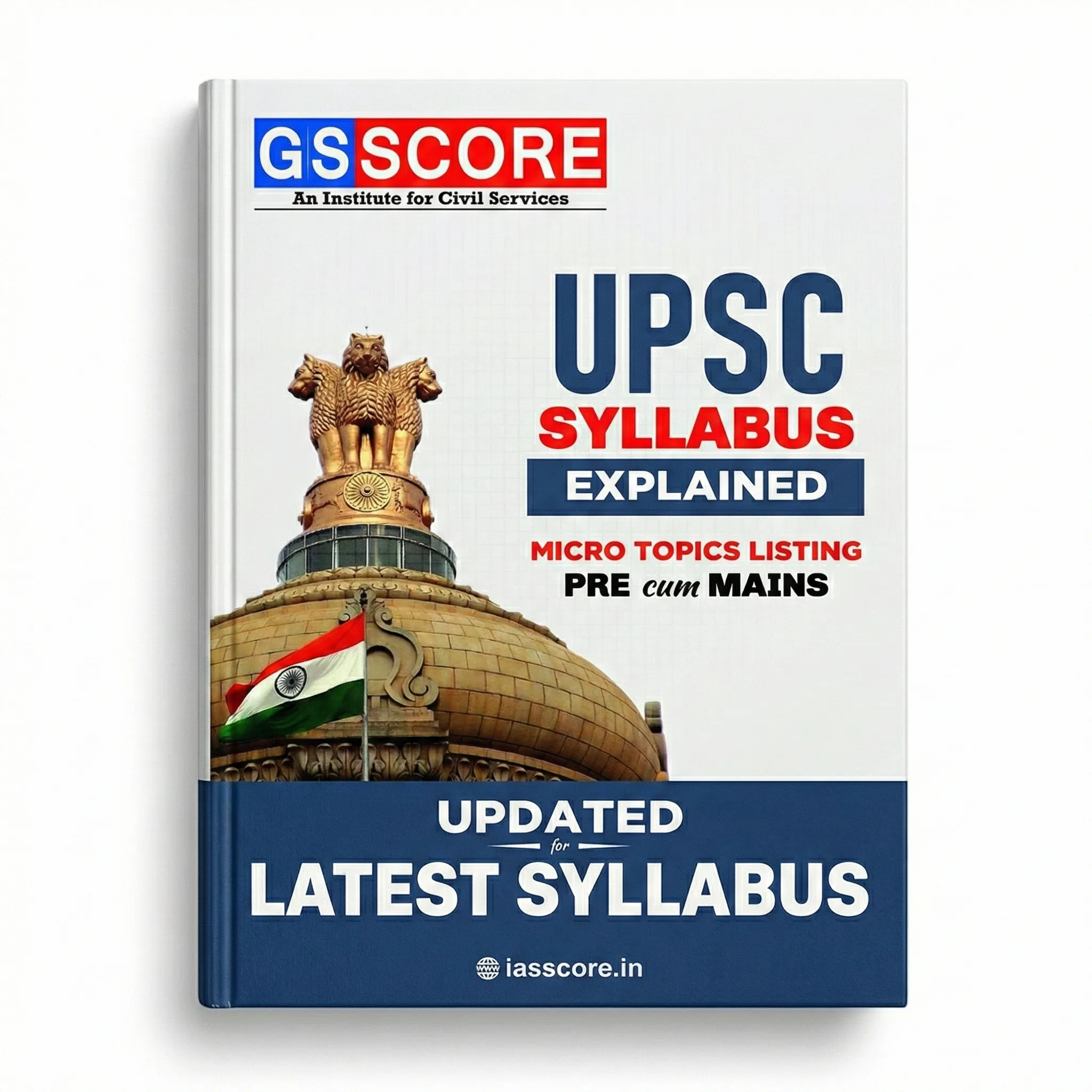
The Agniveer written exam is based on the NCERT Class 8 to Class 12 standard. GD and Tradesman sit at Class 8–10 level, while Technical and Clerk/SKT reach the Class 11–12 (PCM and English) level. Mastering NCERT textbooks for the relevant classes covers the bulk of the syllabus. For syllabus mapping and structured revision habits, aspirants often reference an organised syllabus booklet such as the GS Score Latest Syllabus Booklet to keep their coverage disciplined.
Agniveer Syllabus PDF Download 2026
The official, authoritative Agniveer syllabus PDF is released by the Indian Army with each recruitment notification on the official portal joinindianarmy.nic.in. To download it:
- Visit the official Join Indian Army website (joinindianarmy.nic.in).
- Open the current Agniveer recruitment notification / JCO-OR section.
- Locate the post-wise syllabus and exam-pattern PDF for GD, Technical, Clerk/SKT, or Tradesman.
- Download and print the section relevant to your post for offline planning.
Always treat the official notification PDF as the final word on marks, negative marking, and eligibility percentages, since these can be revised year to year. Use this guide to plan and the official PDF to confirm.
Common Mistakes Agniveer Aspirants Make
- Ignoring negative marking: Random guessing on all 50 questions can wipe out earned marks at 0.25 per error.
- Neglecting physical training: Many clear the CBT but fail the 1.6 km run because they started training too late.
- Skipping English/Computer (Clerk): Since each part has a separate cut-off, weakness in one part fails the whole paper.
- Over-focusing on static GK: Current affairs and general science deliver far more marks per hour studied.
- Not attempting mock tests: Time management on a 60-minute, 50-question paper only comes from timed practice.
Frequently Asked Questions
What is the syllabus of Agniveer?
The Agniveer syllabus covers General Knowledge, General Science, Mathematics, and Logical Reasoning for GD; it adds Physics, Chemistry, and Maths for Technical; and adds Computer Science plus General English for Clerk/SKT. All topics are at the NCERT Class 8–12 standard, tested through an online CBT of 50 questions per section.
Is there negative marking in the Agniveer exam?
Yes. The Agniveer CBT deducts 0.25 marks (one-fourth) for each wrong answer. There is no penalty for unattempted questions, so it is safer to skip questions you cannot reasonably eliminate.
What are the subjects in the Agniveer GD exam?
The Agniveer GD exam has four subjects — General Knowledge, General Science, Mathematics, and Logical Reasoning — in one 100-mark, 60-minute paper of 50 questions.
How many questions are there in the Agniveer written exam?
Each Agniveer CBT section contains 50 objective multiple-choice questions. GD and Tradesman have one combined 50-question paper, while Clerk/SKT effectively uses a two-part 50+50 structure worth 200 marks.
What is the passing/qualifying mark for the Agniveer exam?
There is no fixed universal pass mark; shortlisting is on merit through a category-wise cut-off that varies by post, zone, and year. For Clerk/SKT, candidates must additionally clear the minimum qualifying mark in each of the two parts separately.
Is the Agniveer exam online or offline?
The Agniveer written exam is conducted online as a Computer-Based Test (CBT) at designated exam centres. The Physical Fitness Test and Medical Examination that follow are conducted in person at the recruitment rally.
Recommended Study Material

Continue Reading
CGPSC Syllabus 2025: Prelims, Mains + PDF Download
The CGPSC syllabus spans three stages: an objective Prelims (Paper 1 General Studies + Paper 2 Aptitude Test,…
UPSC Prelims Syllabus 2026: Subject-Wise GS + CSAT + PDF
The UPSC Prelims syllabus covers two objective papers — General Studies Paper 1 (100 questions, 200 marks) and…
SSC CGL Exam Pattern 2026: Tier 1 & 2, Marks, Timing
The SSC CGL exam pattern is a two-tier, fully computer-based (CBT) selection process: Tier 1 is a 100-question,…