SSC CGL Exam Pattern 2026: Tier 1 & 2, Marks, Timing
SSC CGL exam pattern 2026: Tier 1 & Tier 2 sections, questions, total marks, sectional timing and negative marking — with worked examples and attempt tips.

The SSC CGL exam pattern is a two-tier, fully computer-based (CBT) selection process: Tier 1 is a 100-question, 200-mark qualifying screening test of 60 minutes, and Tier 2 is the marks-deciding stage that determines your final merit and post. Tier 1 has 4 sections (Reasoning, General Awareness, Quantitative Aptitude, English) of 25 questions / 50 marks each, with 0.50 negative marking and 15-minute sectional timing per section. Tier 2 Paper I carries 450 marks across Mathematical Abilities, Reasoning, English, General Awareness and Computer Knowledge, plus a qualifying Data Entry Speed Test (DEST).
This guide gives you the exact, source-aligned ssc cgl exam pattern 2026 — every section, question count, mark, duration, sectional timing and the ssc cgl marking scheme and negative marking — and then goes beyond the standard pages with a worked negative-marking example, a safe-score target table tied to recent cutoffs, a post-wise paper map, and a printable one-page summary for last-minute revision.
This breakdown is mapped to the structure laid out in the official SSC notification on ssc.gov.in and reflects the two-tier pattern in force for the 2026 cycle. Every figure below is stated as marks, question counts and minutes exactly as the Commission defines them; where other pages disagree — notably on the Tier 2 Paper I total — the discrepancy is reconciled in the Tier 2 section rather than glossed over. Always cross-check the latest notification PDF for year-specific dates and qualifying norms before your exam.
SSC CGL Exam Pattern 2026 at a Glance
The Staff Selection Commission conducts the Combined Graduate Level (CGL) examination to recruit Group B and Group C posts across central government ministries and departments. As per the latest notification, the ssc cgl exam pattern 2026 retains the streamlined two-tier structure introduced in 2023, removing the older descriptive Tier 3 and the separate skill-test Tier 4 from the merit chain.
| Stage | Type | Mode | Counts in Merit? | Total Marks |
|---|---|---|---|---|
| Tier 1 | Objective MCQ | Online (CBT) | No — qualifying only | 200 |
| Tier 2 — Paper I | Objective MCQ + DEST | Online (CBT) | Yes — merit deciding | 450 |
| Tier 2 — Paper II (Statistics) | Objective MCQ | Online (CBT) | Yes — for JSO/SI posts | 200 |
| Tier 2 — Paper III (Finance & Economics) | Objective MCQ | Online (CBT) | Yes — for AAO post | 200 |
Key takeaway: Tier 1 only decides whether you advance. Your rank, post and department are decided almost entirely by Tier 2 Paper I (and Paper II / III for specialised posts). Plan your effort accordingly — strong aspirants treat Tier 1 as a hurdle to clear comfortably and pour their depth into Tier 2.
SSC CGL Tier 1 Exam Pattern: Sections, Questions and Marks
The ssc cgl tier 1 exam pattern is identical for every candidate regardless of the post applied for. It tests four sections of 25 questions each, all carrying equal weight, for a combined 100 questions and 200 marks in 60 minutes.
| Section | Subject | No. of Questions | Maximum Marks | Suggested Duration |
|---|---|---|---|---|
| A | General Intelligence & Reasoning | 25 | 50 | 15 minutes |
| B | General Awareness | 25 | 50 | 15 minutes |
| C | Quantitative Aptitude | 25 | 50 | 15 minutes |
| D | English Comprehension | 25 | 50 | 15 minutes |
| Total | 100 | 200 | 60 minutes | |
Every question is a multiple-choice question with 4 options and carries 2 marks. The medium for all sections except English is bilingual (English and Hindi). The total duration of 60 minutes is extended to 80 minutes for candidates eligible for a scribe (PwBD candidates), giving 20 minutes of compensatory time.
How many questions and total marks are there in SSC CGL Tier 1?
There are exactly 100 questions for 200 marks in Tier 1 — 25 questions of 2 marks each in all four sections. This 100/200 structure has been stable across recent cycles and continues in the ssc cgl exam pattern 2026.
SSC CGL Sectional Timing in Tier 1: The Rule That Trips Aspirants
A defining feature of the ssc cgl tier 1 exam pattern is sectional timing. The 60-minute paper is not a single open window — each of the four sections is locked to 15 minutes. Once 15 minutes elapse on a section, the screen automatically moves to the next section and you cannot return to the previous one.
This ssc cgl sectional timing rule has three practical consequences:
- No time transfer: Unused time in an easy section (say Reasoning) cannot be carried forward to a tougher one (say Quant). Each section must be finished inside its own 15-minute box.
- No back-navigation: You cannot revisit a section after its window closes, so flagging questions “to attempt later in the same section” only works within those 15 minutes.
- Fixed order: The sequence in which sections appear is set by the system, so you must be ready to perform on every subject from the first minute.
Strategy implication: practise every mock test under a strict 15-minute-per-section clock. Train to lock in your strongest section first within its window (banking the marks), and to make fast cut-loss decisions in your weakest section rather than over-investing.
What is the sectional timing in SSC CGL Tier 1?
Each of the four Tier 1 sections has a fixed 15-minute window, totalling 60 minutes. Time cannot be shared between sections, and you cannot go back to a section once its 15 minutes are over.
SSC CGL Tier 2 Exam Pattern 2026: Paper I, II and III
The ssc cgl tier 2 exam pattern is where the selection is actually decided. Tier 2 consists of three papers, but not every candidate sits all three — the papers you attempt depend on the posts you are eligible for and have opted for.
| Paper | For Which Posts | Who Appears | Maximum Marks |
|---|---|---|---|
| Paper I | All posts | Every shortlisted candidate | 450 |
| Paper II | Junior Statistical Officer (JSO) & Statistical Investigator | Only candidates who applied for JSO/SI | 200 |
| Paper III | Assistant Audit Officer / Assistant Accounts Officer (AAO) | Only candidates who applied for AAO | 200 |
SSC CGL Tier 2 Paper I Structure (Compulsory for All)
Paper I is split into two sessions held on the same day. The marks split across pages is often reported inconsistently (you will see 440 vs 450) — here is the clean, correct breakdown. Paper I has three sections; Section III (Computer Knowledge) is qualifying and the DEST is a separate qualifying module.
| Session | Section | Module | Questions | Marks |
|---|---|---|---|---|
| Session 1 | Section I | Module 1: Mathematical Abilities | 30 | 90 |
| Session 1 | Section I | Module 2: Reasoning & General Intelligence | 30 | 90 |
| Session 1 | Section II | Module 1: English Language & Comprehension | 45 | 135 |
| Session 1 | Section II | Module 2: General Awareness | 25 | 75 |
| Session 1 | Section III | Module 1: Computer Knowledge (qualifying) | 20 | 60 |
| Session 2 | Section III | Module 2: Data Entry Speed Test (qualifying) | — | Qualifying |
| Scored total (Sections I + II) | 130 | 390 | ||
| Including Computer Knowledge | 150 | 450 | ||
Every question in Paper I carries 3 marks. The 450-mark figure includes the 60-mark Computer Knowledge module; because Computer Knowledge is qualifying (not added to merit), the marks that actually feed your merit rank come from the 390 marks of Sections I and II. This is why some pages quote 390/440/450 — they are describing different slices of the same paper. The single correct headline is: Paper I = 150 scored questions worth 450 marks, of which 130 questions (390 marks) decide merit. The combined time for the Section I + II modules is 2 hours 15 minutes.
Is the Computer Knowledge Test in SSC CGL qualifying in nature?
Yes. The Computer Knowledge module (Section III, Module 1) is qualifying — you must clear the prescribed qualifying threshold, but its 60 marks are not counted in your final merit score. The Data Entry Speed Test (DEST) is also qualifying.
DEST: Data Entry Speed Test Explained
The Data Entry Speed Test checks typing speed on a computer. Candidates are given an English passage and must achieve roughly 2000 key depressions in 15 minutes (about 8,000 key depressions per hour). DEST is qualifying in nature for most posts and becomes especially relevant for the post of Tax Assistant. PwBD candidates eligible for relaxation get adjusted norms or exemption as per the notification.
SSC CGL Tier 2 Paper II & Paper III
Paper II (Statistics) and Paper III (General Studies — Finance & Economics) each have 100 questions for 200 marks in 2 hours, with 2 marks per question. You only sit these if you opted for the relevant specialised posts.
| Paper | Subject | Questions | Marks | Duration | Marks/Question |
|---|---|---|---|---|---|
| Paper II | Statistics | 100 | 200 | 2 hours | 2 |
| Paper III | General Studies (Finance & Economics) | 100 | 200 | 2 hours | 2 |
SSC CGL Marking Scheme and Negative Marking (with a Worked Example)
Understanding the ssc cgl marking scheme and negative marking is essential because attempt strategy under sectional timing lives or dies on it. The penalty differs between Tier 1 and Tier 2.
| Stage / Section | Marks per Correct Answer | Negative Marking per Wrong Answer |
|---|---|---|
| Tier 1 (all sections) | +2 | −0.50 |
| Tier 2 Paper I — Sections I & II | +3 | −1.00 |
| Tier 2 Paper I — Section III (Computer) | +3 | −0.50 |
| Tier 2 Paper II (Statistics) | +2 | −0.50 |
| Tier 2 Paper III (Finance & Economics) | +2 | −0.50 |
Note the sharp jump in Tier 2 Paper I Sections I & II: a wrong answer costs a full 1 mark against a +3 gain. Guesswork that pays off in Tier 1 can be expensive in Tier 2.
Is there negative marking in SSC CGL exam?
Yes. SSC CGL has negative marking at every stage. In Tier 1, 0.50 marks are deducted for each wrong answer. In Tier 2 Paper I, the penalty is 1 mark in Sections I and II and 0.50 marks in the Computer Knowledge section and in Papers II and III. There is no penalty for un-attempted questions.
Worked Example: Net Score Under Negative Marking
Suppose in Tier 1 you attempt 80 questions out of 100, and 68 are correct while 12 are wrong.
- Marks for correct: 68 × 2 = +136
- Penalty for wrong: 12 × 0.50 = −6
- Net score = 136 − 6 = 130 / 200
Now compare a reckless approach — attempting all 100 with 70 correct and 30 wrong:
- Correct: 70 × 2 = +140; Penalty: 30 × 0.50 = −15; Net = 125
The disciplined 80-attempt candidate scores higher (130) than the all-out 100-attempt candidate (125) despite answering fewer questions correctly, because every blind guess that misses erodes the marks earned. The lesson: attempt only what you can reason to a confident answer, and skip pure guesses — especially in Tier 2 where the penalty is double.
SSC CGL Total Marks: Tier 1 and Tier 2 Summary
Here is the consolidated ssc cgl total marks tier 1 and tier 2 picture, so you know exactly what counts toward your rank.
| Component | Marks | Counts in Final Merit? |
|---|---|---|
| Tier 1 | 200 | No (qualifying) |
| Tier 2 Paper I — scored sections | 390 (of 450) | Yes |
| Tier 2 Paper I — Computer Knowledge | 60 | No (qualifying) |
| Tier 2 Paper II (JSO/SI only) | 200 | Yes (for those posts) |
| Tier 2 Paper III (AAO only) | 200 | Yes (for those posts) |
For the vast majority of posts (Inspector, Assistant Section Officer, Auditor, Accountant, Tax Assistant, UDC, etc.), your merit comes from Paper I’s 390 scored marks alone.
Is SSC CGL Tier 1 qualifying or counted in the final merit?
Tier 1 is qualifying only. It is used to shortlist candidates for Tier 2 but its marks are not added to the final merit. Your rank and post allocation are based on Tier 2 performance.
Post-Wise Paper Map: Which Papers You Sit
Use this simple decision aid to know exactly which Tier 2 papers apply to your chosen posts.
| Post Opted | Paper I | Paper II (Statistics) | Paper III (Finance) |
|---|---|---|---|
| Most posts (ASO, Inspector, Auditor, Tax Assistant, UDC) | Yes | No | No |
| Junior Statistical Officer (JSO) / Statistical Investigator | Yes | Yes | No |
| Assistant Audit Officer / Assistant Accounts Officer (AAO) | Yes | No | Yes |
If you are not targeting JSO or AAO, your entire Tier 2 effort goes into Paper I — there is no need to study Statistics or advanced Finance & Economics.
Mode of Exam, Duration and PwBD/Scribe Time
Every stage of SSC CGL is conducted online as a Computer-Based Test (CBT) at designated test centres across India. Questions appear on screen and answers are marked with a mouse; there is no offline OMR component in the current pattern.
| Stage | Standard Duration | Duration with Scribe (PwBD) |
|---|---|---|
| Tier 1 | 60 minutes | 80 minutes |
| Tier 2 Paper I (Section I + II) | 2 hr 15 min | + compensatory time as per rules |
| Tier 2 Paper II / III | 2 hours each | 2 hr 40 min |
Eligible PwBD candidates receive 20 minutes of extra time per hour of examination. Exact compensatory timings are specified in each year’s official notification.
Normalization of Marks and How Final Merit Is Calculated
Because SSC CGL is held in multiple shifts across several days, the difficulty of question papers can vary slightly between shifts. To ensure fairness, the Commission applies normalization of marks — a statistical formula that adjusts raw scores to a common scale so that no candidate is advantaged or disadvantaged by sitting an easier or harder shift. Both Tier 1 (for shortlisting) and Tier 2 scored sections are normalized.
The final merit list is prepared on the basis of normalized Tier 2 marks (Paper I scored sections, plus Paper II/III where applicable), subject to qualifying the Computer Knowledge module and DEST. Tie-breaking rules (such as marks in specific sections, then date of birth) are applied as per the notification when candidates have equal aggregate marks.
Safe-Score and Good-Attempt Targets (Based on Recent Cutoff Trends)
Top pages rarely connect the pattern to a concrete target. Based on recent cutoff trends, here is an indicative “good attempt” benchmark for Tier 1 to comfortably clear and stay competitive. Treat these as planning guides, not guarantees — cutoffs shift by category, post and year.
| Section | Good Attempts (of 25) | Target Accuracy | Indicative Net Marks |
|---|---|---|---|
| Reasoning | 22–24 | 90%+ | 40–46 |
| General Awareness | 18–22 | 85%+ | 32–42 |
| Quantitative Aptitude | 18–22 | 85%+ | 32–42 |
| English | 21–24 | 88%+ | 38–46 |
| Tier 1 Overall | ~80–90 | ~88% | 145–170+ |
Reasoning and General Awareness are the fastest-scoring sections — Reasoning because it is logic-based and quick, GA because each question takes seconds if you know the fact. Banking high accuracy here frees time and confidence for Quant and English.
Attempt Strategy Under Sectional Timing
Because each Tier 1 section is locked to 15 minutes, your strategy must be section-internal, not paper-wide. Here is a proven approach:
- General Awareness (15 min): Go fast. Each question is a recall check — answer what you know in one read, skip blanks instantly. Aim to finish in 7–8 minutes and never burn time “thinking” on GA.
- Reasoning (15 min): Pick the low-hanging fruit (series, analogy, coding-decoding) first, then attempt puzzles. Most aspirants clear 22+ here comfortably.
- Quantitative Aptitude (15 min): The biggest time-sink. Do arithmetic and DI you are confident in first; leave lengthy geometry/trigonometry for the end. Do not chase a single stubborn question.
- English (15 min): Vocabulary, error-spotting and cloze tests are fast; reading comprehension is time-heavy — attempt RC last if your reading speed is moderate.
Golden rule: in each 15-minute window, make two passes — pass one for sure-shot questions, pass two for the moderately difficult ones — and abandon pure guesses given the 0.50 penalty.
What Changed in the SSC CGL 2026 Pattern vs Previous Years
The current ssc cgl exam pattern 2026 reflects the major 2023 restructuring, which remains in force:
- Two tiers instead of four: The old descriptive Tier 3 (essay/letter writing) and the standalone Tier 4 skill test were removed from the merit pipeline.
- Tier 2 redesigned into modules: Paper I now bundles Maths, Reasoning, English, GA and Computer Knowledge into sectioned modules within sessions, plus DEST.
- Computer Knowledge made qualifying: It is now a formal qualifying module that must be cleared.
- Higher per-question weight in Tier 2: Each Paper I question carries 3 marks with a steeper 1-mark penalty in Sections I & II, rewarding accuracy over volume.
Always confirm the fine print against the official notification PDF on ssc.gov.in for the cycle you are appearing in, as the Commission can revise timings, qualifying norms and compensatory rules year to year.
Mapping the Pattern to Your Preparation and Study Material
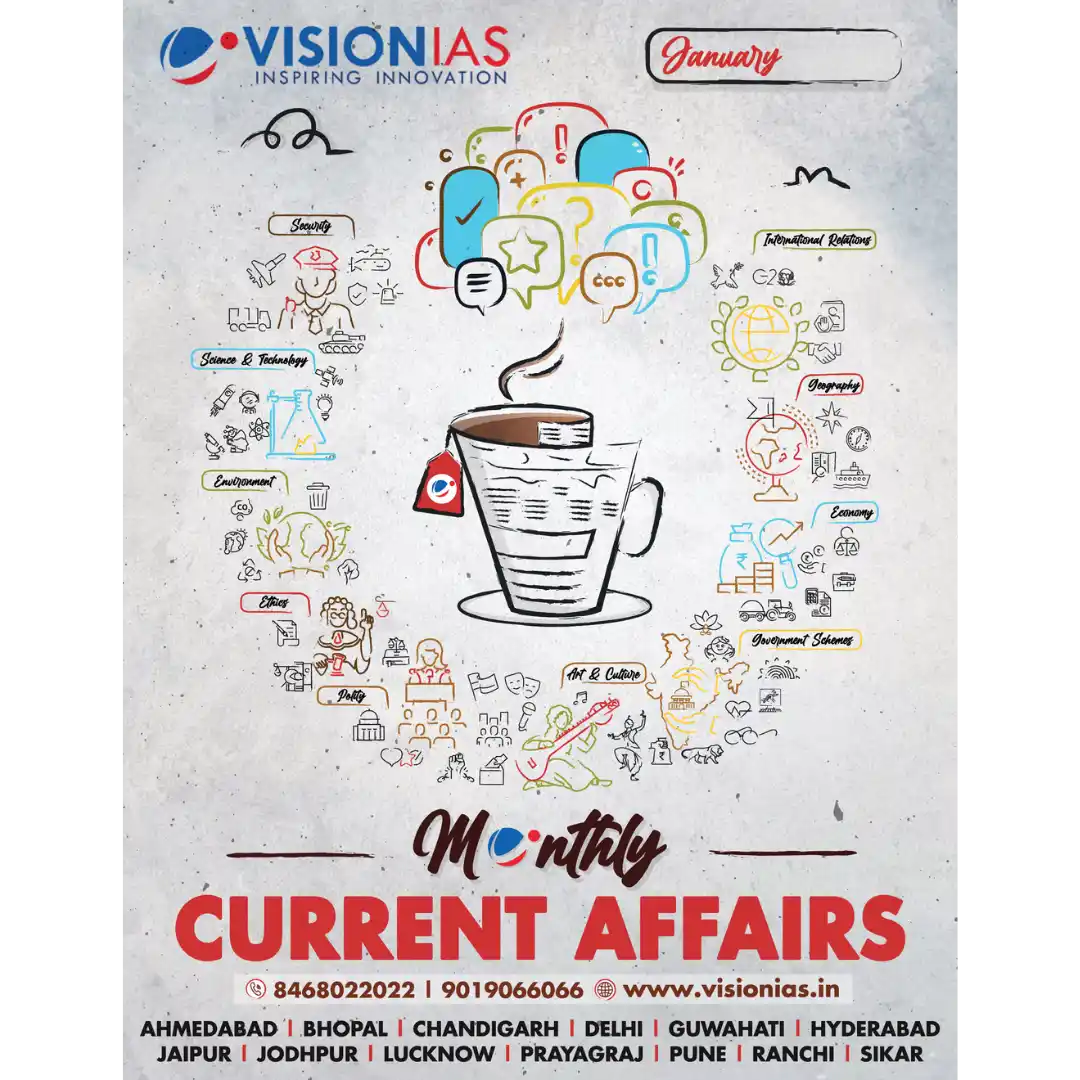
Knowing the pattern is step one; the bigger differentiator is matching each section to the right resources. General Awareness — the most scoring-per-minute section — rewards a strong static GK base plus current affairs of the last 8–10 months. A solid current-affairs habit, such as following a monthly compilation like the Vision IAS Current Affairs Magazine (January 2026, English), helps you cover national, international, economy and government-scheme news that overlaps heavily with the SSC CGL GA syllabus.
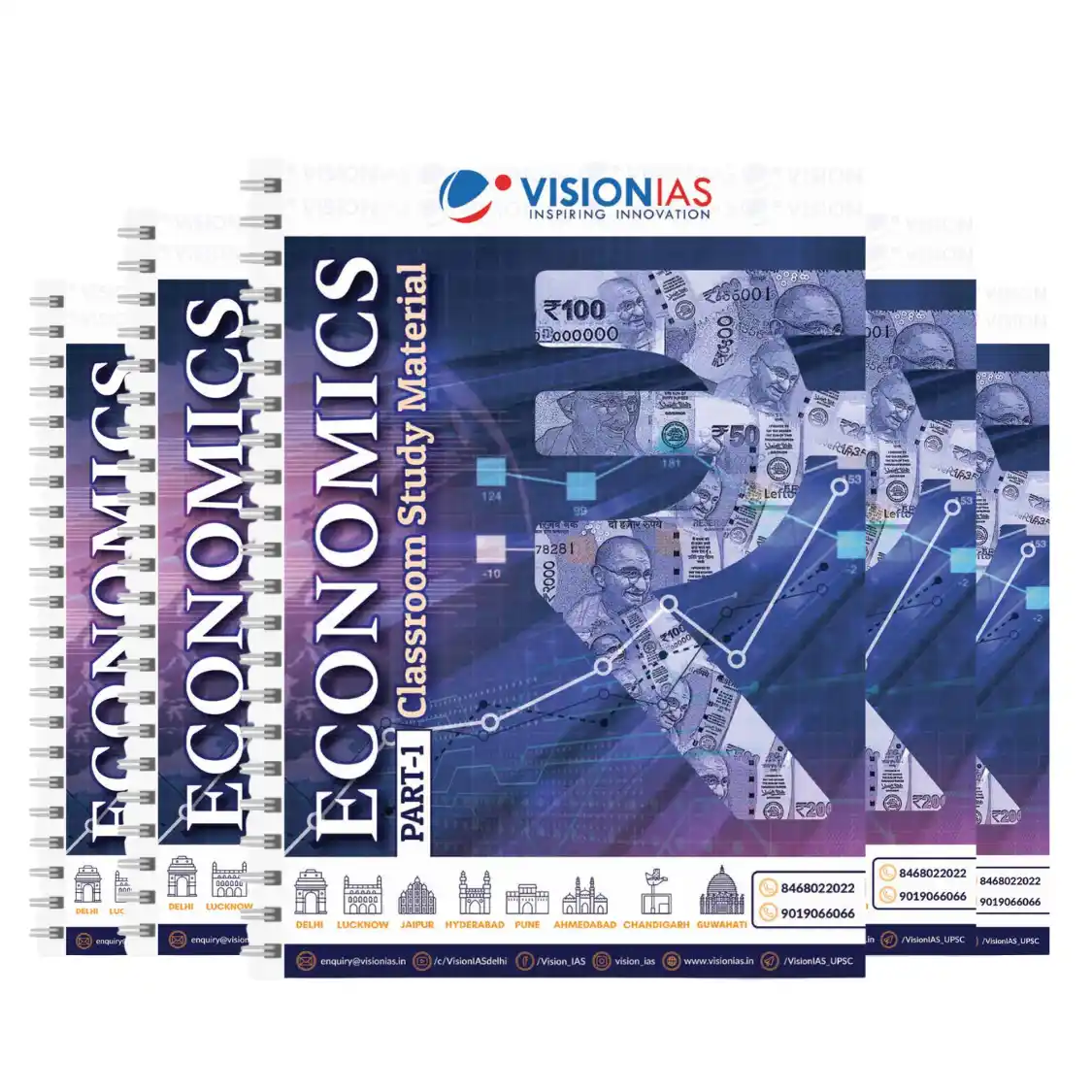
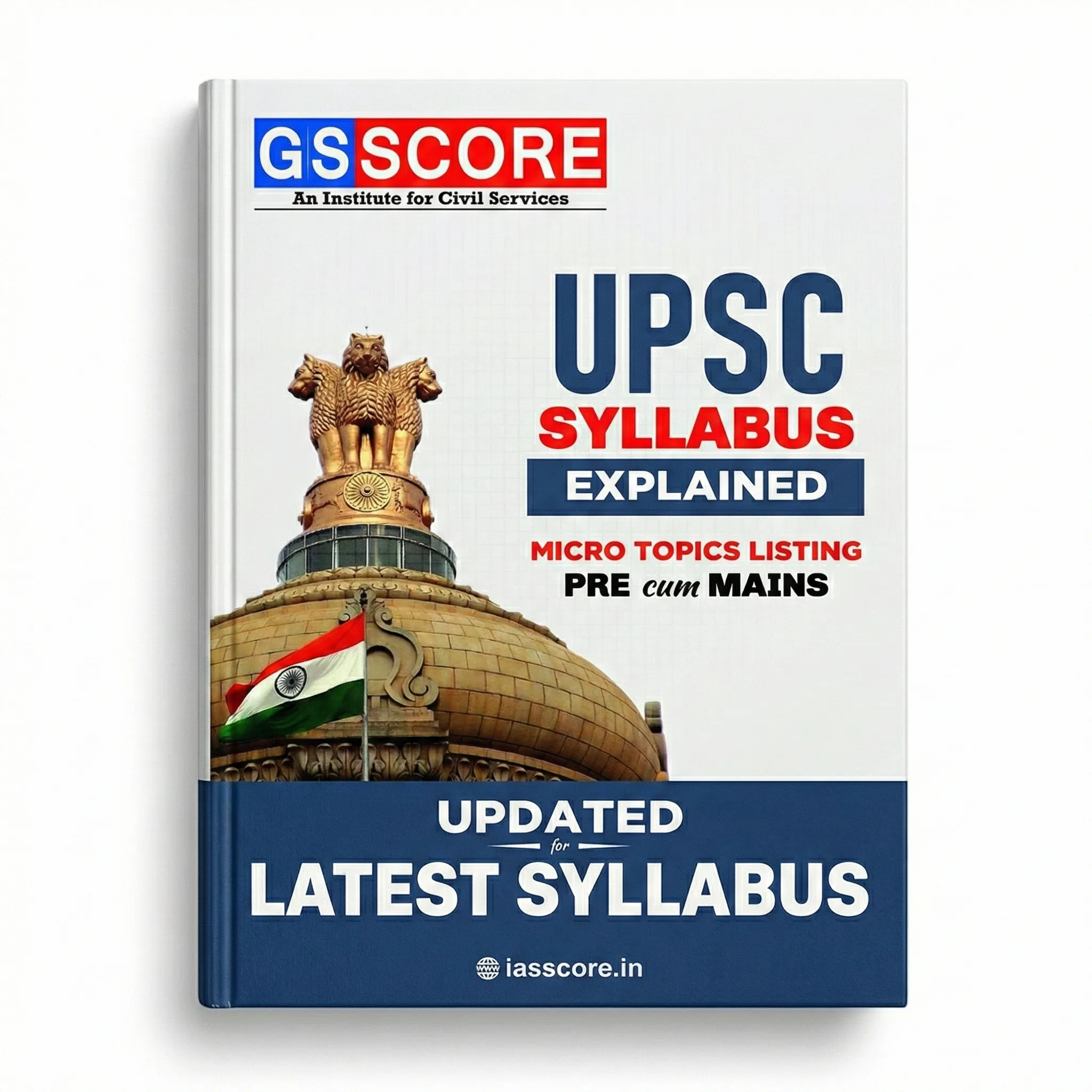
The economy and polity portions of GA respond well to concise, exam-focused notes; aspirants strengthening these areas often use compact resources like the Vision IAS Economics Notes to build conceptual clarity on banking, fiscal policy and key indicators that recur in objective tests. To keep your topic list aligned and avoid studying out-of-scope material, a clean syllabus reference such as the GS Score Latest Syllabus Booklet helps you map exactly what to revise versus skip. For Quant and Reasoning, the highest-return strategy is timed practice — solve under the 15-minute sectional clock until pacing becomes instinctive, then review every error to convert weak topics into strengths.
Common Mistakes Aspirants Make With the SSC CGL Pattern
- Ignoring sectional timing in practice: Solving sections without a 15-minute lock builds the wrong habits and causes panic on exam day.
- Over-attempting under negative marking: Blind guessing on shaky questions, especially in Tier 2 Paper I where the penalty is 1 mark.
- Under-preparing Tier 2 while obsessing over Tier 1: Tier 1 is only qualifying; Paper I decides your rank and post.
- Skipping Computer Knowledge and DEST: They are qualifying — fail to clear and your scored marks won’t matter.
- Studying Statistics/Finance unnecessarily: Only JSO and AAO aspirants need Paper II/III; everyone else should focus solely on Paper I.
Printable One-Page SSC CGL Pattern Summary
Keep this quick-glance table for last-minute revision before the exam.
| Quick Fact | Detail |
|---|---|
| Tiers | 2 (Tier 1 qualifying, Tier 2 merit-deciding) |
| Tier 1 | 4 sections, 100 Q, 200 marks, 60 min |
| Tier 1 per section | 25 Q, 50 marks, 15 min (no time transfer) |
| Tier 1 negative marking | −0.50 per wrong |
| Tier 2 Paper I | 150 scored Q, 450 marks (390 merit + 60 Computer qualifying) |
| Tier 2 Paper I per question | +3 marks; −1 (Sec I & II), −0.50 (Computer) |
| DEST | ~2000 key depressions in 15 min (qualifying) |
| Paper II / III | 100 Q, 200 marks each (JSO/SI and AAO only) |
| Mode | Online CBT, multiple shifts, normalized |
Download the authoritative breakdown from the official SSC CGL notification and syllabus PDF on the Commission’s website (ssc.gov.in) for the exact, year-specific timings and qualifying norms.
Frequently Asked Questions
What is the exam pattern of SSC CGL Tier 1 and Tier 2?
SSC CGL has two tiers, both online. Tier 1 is a 60-minute qualifying test of 100 questions / 200 marks across Reasoning, General Awareness, Quantitative Aptitude and English (25 questions and 50 marks each, with 15-minute sectional timing). Tier 2 is merit-deciding and consists of Paper I (450 marks including a qualifying Computer Knowledge module and DEST), plus Paper II (Statistics) and Paper III (Finance & Economics) for specific posts.
How many tiers are there in SSC CGL 2026?
There are two tiers in SSC CGL 2026. The older Tier 3 (descriptive) and Tier 4 (skill test) were removed from the merit process in the 2023 restructuring, leaving Tier 1 (qualifying) and Tier 2 (merit-deciding).
What is the marking scheme for SSC CGL Tier 2 Paper 1?
Each question in Tier 2 Paper I carries 3 marks. Negative marking is 1 mark for a wrong answer in Sections I and II (Maths, Reasoning, English, General Awareness) and 0.50 marks in the Computer Knowledge section. The Computer Knowledge module and DEST are qualifying and not added to merit.
Is there negative marking in every section of SSC CGL?
Yes. Tier 1 deducts 0.50 marks per wrong answer in all sections. Tier 2 deducts 1 mark in Paper I Sections I & II and 0.50 marks in the Computer section and in Papers II and III. Un-attempted questions carry no penalty, so disciplined attempting beats blind guessing.
How many questions should I attempt to clear SSC CGL Tier 1?
Based on recent trends, attempting roughly 80–90 of 100 questions at around 88% accuracy puts you in a comfortable, competitive range. Prioritise high-accuracy attempts in Reasoning and General Awareness, and avoid risky guesses given the 0.50 negative marking.
Is the SSC CGL Tier 1 exam pattern the same for all posts?
Yes. The Tier 1 exam pattern is identical for every candidate — the same four sections, 100 questions, 200 marks and 15-minute sectional timing — regardless of the post you applied for. The differences appear only in Tier 2, where Paper II (Statistics) and Paper III (Finance & Economics) are added for JSO/SI and AAO aspirants respectively, while Paper I is common to all.
How is the SSC CGL final merit list calculated?
The final merit list is based on your normalized Tier 2 marks — the scored sections of Paper I (390 marks), plus Paper II and/or Paper III where applicable — provided you have qualified the Computer Knowledge module and the DEST. Tier 1 marks are not added to the merit. Where two candidates have equal totals, tie-breaking rules from the notification (such as marks in specific sections, then date of birth) decide the rank.
Can I prepare for SSC CGL and other exams simultaneously?
Yes. SSC CGL’s General Awareness, Reasoning, Quant and English sections overlap substantially with other SSC exams (CHSL, CPO, MTS) and banking exams, so a shared foundation in current affairs, aptitude and English lets you prepare for multiple exams together while customising practice to each exam’s pattern and timing.
Recommended Study Material
Continue Reading

UGC NET Political Science Syllabus 2026: All 10 Units + PDF
The ugc net political science syllabus is set by the National Testing Agency (NTA) and is split into…

Best Current Affairs Magazine for UPSC 2026: Ranked, Priced & Compared
The best current affairs magazine for UPSC in 2026 is the Vision IAS Monthly Current Affairs Magazine —…
UPSC Ethics Syllabus 2026: GS Paper 4 Topics + PDF
The upsc ethics syllabus is the official prescribed content for General Studies Paper 4 — titled Ethics, Integrity…