AFCAT Syllabus 2026: Section-Wise Topics, Pattern, EKT & PDF
Complete AFCAT syllabus 2026 with section-wise topics, exam pattern, marking scheme, EKT syllabus, topic weightage & official AFCAT syllabus PDF download steps.

The AFCAT syllabus has four sections in the main test — General Awareness, Verbal Ability in English, Numerical Ability, and Reasoning & Military Aptitude — totalling 100 questions for 300 marks in 120 minutes, with +3 for a correct answer and −1 for a wrong one. Candidates applying for Ground Duty (Technical) branches must additionally clear the Engineering Knowledge Test (EKT): 50 questions, 150 marks, 45 minutes. This guide breaks down every section, gives the number-of-questions weightage per topic, a branch-wise paper map, the full EKT stream-wise syllabus, and the exact steps to get the official AFCAT syllabus PDF.
AFCAT 2026 Overview: Exam at a Glance
The Air Force Common Admission Test (AFCAT) is conducted twice a year by the Indian Air Force (IAF) to recruit Class-1 Gazetted Officers into the Flying and Ground Duty (Technical and Non-Technical) branches. AFCAT 1 2026 is the first cycle of the year (notification typically in December, exam around February), and AFCAT 2 2026 follows mid-year — both use the identical syllabus and pattern described here. Before you dive into the section-wise afcat syllabus 2026, here is the high-level snapshot every aspirant should memorise.
| Particular | Details |
|---|---|
| Conducting Body | Indian Air Force (IAF) |
| Exam Name | Air Force Common Admission Test (AFCAT) |
| Frequency | Twice a year (AFCAT 1 & AFCAT 2) |
| Mode of Exam | Online (Computer Based Test) |
| Total Questions (AFCAT) | 100 |
| Total Marks (AFCAT) | 300 |
| Duration (AFCAT) | 120 minutes (2 hours) |
| Marking Scheme | +3 correct, −1 wrong, 0 unattempted |
| EKT (Technical branches only) | 50 Q / 150 marks / 45 minutes |
| Selection Stages | Written Exam → AFSB Interview → Medical Test |
| Official Website | afcat.cdac.in / afcat.edcil.co.in |
AFCAT Exam Pattern 2026
The afcat exam pattern is fixed and predictable, which is a gift for planners. The main paper carries 100 questions worth 3 marks each — 300 marks in total — spread across four sections. There is no sectional time limit, so you can move between sections freely within the 120-minute window. Understanding the question spread is the single biggest advantage you can build before opening a book.
| Section | Approx. Questions | Approx. Marks |
|---|---|---|
| General Awareness | 20 | 60 |
| Verbal Ability in English | 25–30 | 75–90 |
| Numerical Ability | 15–20 | 45–60 |
| Reasoning & Military Aptitude Test | 25–30 | 75–90 |
| Total | 100 | 300 |
The section split varies slightly across AFCAT cycles, but Verbal Ability and Reasoning consistently form the backbone of the paper — together they account for roughly 55–60 questions (about 165–180 marks). This is a critical insight the top-ranking pages rarely spell out: your score is won or lost in English and Reasoning, not General Awareness.
AFCAT Marking Scheme: Is There Negative Marking?
Yes — AFCAT has negative marking. Here is exactly how each answer is scored:
| Response | Marks Awarded |
|---|---|
| Correct answer | +3 |
| Incorrect answer | −1 |
| Unattempted / left blank | 0 |
The −1 penalty means blind guessing is expensive: every three wrong guesses wipe out one correct answer. However, because the penalty is only one-third of the reward, educated guessing after eliminating two options is statistically profitable. The smart rule of thumb: attempt confidently when you can eliminate at least two choices, and leave a question only when you have zero basis to narrow it down.
AFCAT Syllabus 2026: Subject-Wise Topics
This is the core of the afcat syllabus subject wise topics breakdown. Each of the four sections has a well-defined topic list. Below, every subject is expanded with the exact topics the IAF draws questions from, so you know precisely what to study and what to skip.
1. General Awareness (GA) — approx. 20 questions
General Awareness is static-plus-current. Questions are single-line factual items, so speed matters more than depth. The section rewards consistent newspaper reading and a strong grasp of national defence and current affairs.
- History (Indian & World, freedom struggle, important battles)
- Geography (Indian & physical geography, rivers, climate)
- Indian Polity & Constitution
- Economy (basic concepts, budget, banking)
- General Science (Physics, Chemistry, Biology basics)
- Current Affairs (national & international, last 6–8 months)
- Defence & Aviation (Indian Air Force, defence exercises, ranks, missiles, aircraft)
- Sports, Awards & Honours
- Books & Authors, Important Days
- Art & Culture, Environment
For the current-affairs slice — which typically supplies 8–10 of the 20 GA questions — a compiled monthly magazine is far more efficient than scrolling news feeds. A resource like the Vision IAS Current Affairs Magazine (January 2026) gives you a month-by-month, exam-ready digest that maps neatly onto the AFCAT current-affairs window.
2. Verbal Ability in English — approx. 25–30 questions
The highest-scoring section for most candidates because it is purely skill-based and negative-marking-safe with practice. The afcat syllabus for English tests comprehension and grammar, not literature.
- Reading Comprehension (passage-based questions)
- Error Detection / Sentence Correction
- Synonyms & Antonyms
- Fill in the Blanks (single & double)
- Cloze Test
- Idioms & Phrases
- Sentence Rearrangement / Jumbled Sentences
- Vocabulary & Word Usage
- Grammar (tenses, articles, prepositions, subject-verb agreement)
3. Numerical Ability — approx. 15–20 questions
The Numerical Ability section is class 10–12 arithmetic. It is not high-level mathematics, so even non-engineering candidates can master it with focused practice. Speed and accuracy under time pressure are what get tested.
- Decimal Fractions & Simplification
- Time & Distance / Time & Work
- Percentage
- Profit & Loss
- Ratio & Proportion
- Simple Interest & Compound Interest
- Average
- Simplification & Approximation
- Number System
4. Reasoning & Military Aptitude Test — approx. 25–30 questions
This section blends verbal and non-verbal reasoning with spatial ability, the latter being especially relevant for Flying branch aspirants. It carries the joint-highest weightage alongside English.
- Verbal Reasoning: Analogy, Blood Relations, Coding-Decoding, Series
- Venn Diagrams
- Non-Verbal Reasoning: Pattern completion, mirror & water images
- Spatial Ability & Rotated Blocks
- Odd One Out / Classification
- Embedded Figures
- Missing Figures & Sequencing
AFCAT Section-Wise Weightage & Priority (The Gap Top Pages Miss)
Most syllabus pages list topics but never tell you where the marks actually sit. Here is a priority map built from previous-year AFCAT trends to guide your time allocation. Study the high-weightage clusters first.
| Section | Approx. Marks | Difficulty | Priority |
|---|---|---|---|
| Verbal Ability (English) | 75–90 | Easy–Moderate | Very High |
| Reasoning & Military Aptitude | 75–90 | Easy | Very High |
| General Awareness | ~60 | Moderate–Hard | Medium |
| Numerical Ability | 45–60 | Easy–Moderate | High |
Strategy takeaway: English and Reasoning together can fetch you ~150+ marks with the least effort — these are your accuracy anchors. Numerical Ability is a quick-scoring bank if you drill formulas. General Awareness has the lowest return on time (broadest syllabus, fewest questions), so cap your prep here and never let it eat into English or Reasoning practice.
Branch-Wise AFCAT Paper Map: Which Papers Must You Take?
A major point of confusion — and a gap on most pages — is which paper each branch actually sits for. The AFCAT (main test) is compulsory for everyone. The EKT is only for Ground Duty (Technical) aspirants. This table settles it in one glance.
| Branch | AFCAT Paper | EKT Required? |
|---|---|---|
| Flying Branch | Yes | No |
| Ground Duty (Technical) — AE(L), AE(M) | Yes | Yes |
| Ground Duty (Non-Technical) — Admin, Logistics, Accounts, Education, Met | Yes | No |
So if you are aiming for the Aeronautical Engineering (Electronics) or Aeronautical Engineering (Mechanical) roles, you write AFCAT + EKT on the same day. Flying and Non-Technical candidates write only the AFCAT.
AFCAT EKT Syllabus 2026: Stream-Wise Breakdown
The afcat ekt syllabus is where most guides go thin. The Engineering Knowledge Test has a common fundamentals block plus a stream-specific section (Mechanical, Computer Science, or Electrical & Electronics). Here is the EKT pattern followed by a full stream-wise topic list.
| EKT Particular | Detail |
|---|---|
| Total Questions | 50 |
| Total Marks | 150 |
| Duration | 45 minutes |
| Marking | +3 correct, −1 wrong |
| Applicable To | Ground Duty (Technical) only |
The EKT paper is split into three components: General Engineering (common), Specialist topics (stream-wise), and basic reasoning/aptitude woven in.
EKT — Mechanical Stream
- Thermodynamics & Heat Transfer
- Fluid Mechanics & Hydraulic Machines
- Theory of Machines & Mechanisms
- Engineering Mechanics & Strength of Materials
- Manufacturing Science & Materials
- Machine Design
- Automotive Engineering
EKT — Computer Science Stream
- Analog & Digital Electronics
- Computer Networks
- Information Technology & Programming
- Operating Systems & Data Structures
- Microprocessors & Microcontrollers
- Switching Theory & Boolean Algebra
EKT — Electrical & Electronics Stream
- Electronic Devices & Circuits
- Control Engineering
- Telecommunication Systems
- Electrical Machines & Power Systems
- Analog & Digital Communication
- Network Theory & Signal Processing
- Radar Theory & Antenna & Wave Propagation
Common to all three streams is a General Engineering foundation covering Engineering Mathematics, Engineering Physics, Engineering Drawing, and basic Electrical/Mechanical fundamentals — so revise your first-year B.Tech core alongside your specialisation.
AFCAT Syllabus PDF Download 2026
You should always cross-check topics against the official notification. For the authoritative afcat syllabus pdf download, refer to the AFCAT candidate login and information brochure hosted on the official portals — afcat.cdac.in and the legacy reference afcat.edcil.co.in. The detailed syllabus is published inside the official AFCAT information brochure released with every cycle’s notification (AFCAT 1 and AFCAT 2).
To download the official AFCAT syllabus PDF, follow these steps:
- Visit the official AFCAT website (afcat.cdac.in).
- Open the latest afcat 1 2026 syllabus notification or the AFCAT information brochure link on the homepage.
- Navigate to the “Syllabus” appendix inside the brochure.
- Save or print the PDF for offline reference.
This brochure carries the complete section-wise AFCAT and EKT syllabus exactly as tested, so treat it as your final source of truth over any third-party list. The syllabus has stayed consistent across recent cycles, but always confirm against the current-year brochure in case the IAF revises any topic.
How to Prepare: A Smart AFCAT Study Plan
A syllabus is only useful if it drives a plan. Because AFCAT runs on a tight 120-minute clock across 100 questions, you get roughly 72 seconds per question — so preparation is about speed as much as knowledge. Here is a weightage-driven approach.
| Phase | Focus | Duration |
|---|---|---|
| Phase 1 — Foundation | English grammar + Reasoning basics + Quant formulas | Weeks 1–3 |
| Phase 2 — Coverage | Complete all four sections + start EKT (if technical) | Weeks 4–7 |
| Phase 3 — Current Affairs | Last 6–8 months GA + defence news consolidation | Ongoing |
| Phase 4 — Mock Tests | Full-length mocks + PYQ analysis + error log | Final 3 weeks |
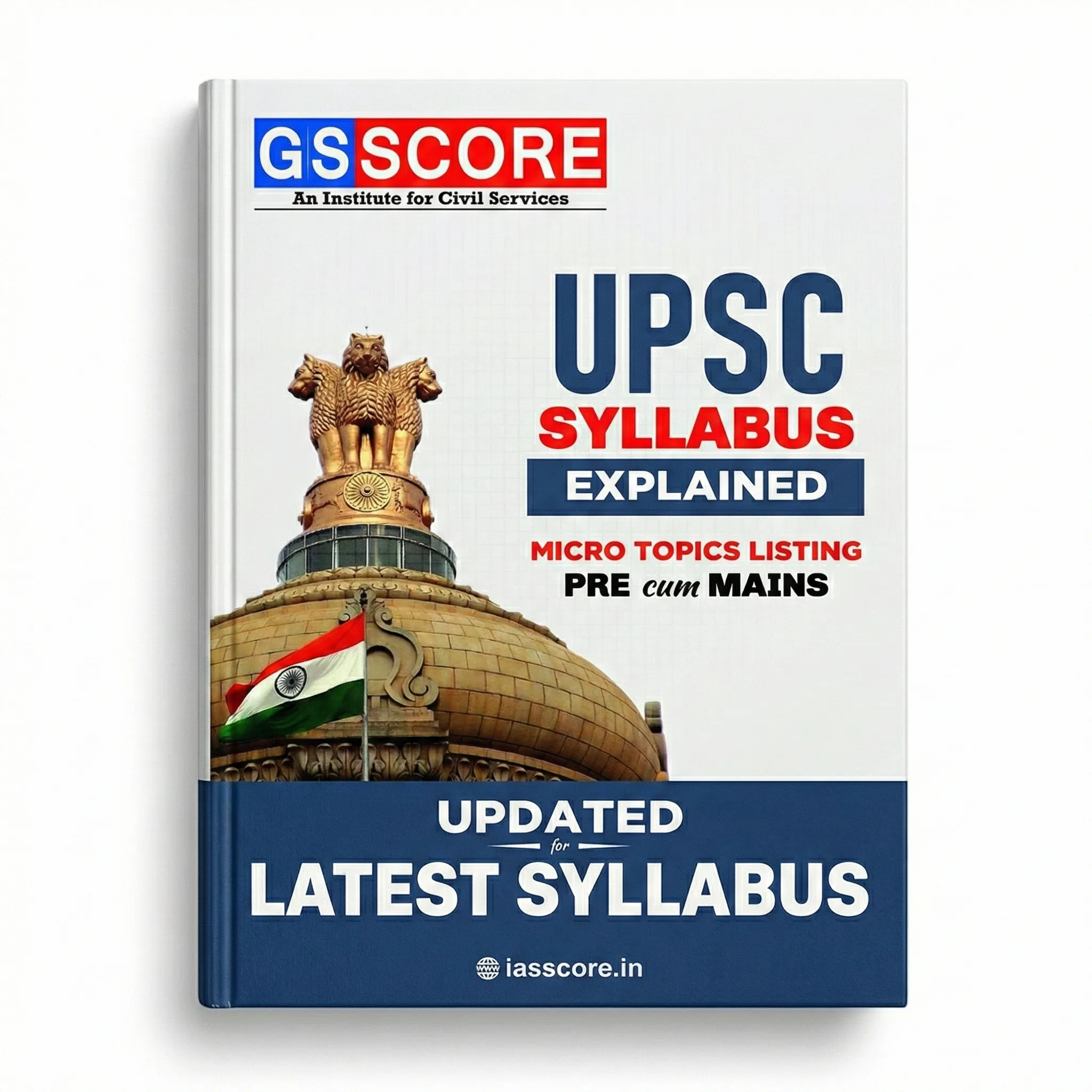
Anchor your GA revision on a rolling current-affairs resource — the Vision IAS Current Affairs Magazine (December 2025) paired with the January edition covers the exact window AFCAT tends to draw from. If you prefer a printed, structured syllabus reference to plan against, the GS Score Latest Syllabus Booklet is a handy companion for building a topic-tick-off tracker.
High-Weightage vs Low-Weightage: Where to Spend Time
Tie every study hour to marks. High-weightage, high-return clusters: Reading Comprehension, Error Spotting, Blood Relations, Coding-Decoding, Percentage, Profit & Loss, and Time-Speed-Distance. Lower-return: obscure static GK, rare non-verbal patterns, and niche history dates. Front-load the high-return clusters and touch the low-return ones only in your final revision.
AFCAT Selection Process 2026
Clearing the written exam is stage one of three. The full selection pipeline is:
| Stage | What Happens |
|---|---|
| 1. Written Exam (AFCAT + EKT) | Online CBT; shortlist by cut-off |
| 2. AFSB Interview | Stage-1 (OIR + PP&DT), Stage-2 (Psychology, GTO, Interview) over 5–6 days |
| 3. Medical Examination | Detailed medical at AFCME/IAM |
Final merit is based on AFSB performance, not the written score — the written exam is only a qualifying gateway. So while a strong AFCAT score gets you the call, the AFSB is where selection is truly earned.
Recommended Books & Preparation Resources
Pair standard AFCAT guides with a solid current-affairs feed and full-length mock tests. For the aptitude sections, any reputed AFCAT-specific guide plus a quantitative aptitude book (for Numerical Ability) and a verbal/non-verbal reasoning book works well. For the GA and current-affairs component, a monthly magazine compilation is the most time-efficient tool — a resource such as the Vision IAS Current Affairs Magazine (January 2026) keeps you aligned with the latest exam window without drowning in raw news.
Whatever you pick, the non-negotiables are: previous-year AFCAT papers (to internalise the question style), at least 15–20 full-length mock tests (to build the 72-second-per-question reflex), and an error log you revisit weekly.
Common Mistakes AFCAT Aspirants Make
- Over-preparing General Awareness — it has the broadest syllabus but the fewest questions; do not let it crowd out English and Reasoning.
- Ignoring negative marking — attempting questions with zero elimination bleeds marks; guess only after cutting two options.
- Skipping mocks — AFCAT is a speed test; knowledge without timed practice fails on exam day.
- Technical candidates neglecting EKT — the EKT is a separate 150-mark hurdle; balance it with the main paper.
- Stale current affairs — focus tightly on the last 6–8 months, especially defence and aviation news.
Frequently Asked Questions
What is the syllabus for the AFCAT exam?
The AFCAT syllabus has four sections: General Awareness (history, geography, polity, science, current affairs, defence), Verbal Ability in English (comprehension, grammar, synonyms/antonyms, cloze test), Numerical Ability (percentage, profit & loss, time-speed-distance, ratio, interest), and Reasoning & Military Aptitude (analogy, blood relations, coding-decoding, spatial ability). Technical branch candidates also have the EKT covering their engineering stream.
What is the AFCAT exam pattern and marking scheme?
The AFCAT main paper has 100 questions worth 300 marks, to be completed in 120 minutes across four sections. Each correct answer earns +3 marks, each wrong answer deducts −1 mark, and unattempted questions score 0. The EKT (technical branches only) has 50 questions for 150 marks in 45 minutes with the same marking scheme.
How many questions are asked in AFCAT and what is the total marks?
The AFCAT main test has exactly 100 questions carrying a total of 300 marks, since each question is worth 3 marks. The paper is completed in 120 minutes. Technical-branch candidates additionally take the EKT, which has 50 questions for 150 marks in 45 minutes, making a combined 150 questions and 450 marks on the same day.
Is there negative marking in AFCAT?
Yes. AFCAT deducts −1 mark for every incorrect answer, while a correct answer gives +3 and unattempted questions give 0. Because the penalty is one-third of the reward, educated guessing after eliminating two options is usually worthwhile, but blind guessing is not.
What topics are covered in AFCAT General Awareness?
AFCAT General Awareness covers History, Geography, Indian Polity, Economy, General Science, Current Affairs, Defence & Aviation, Sports, Awards, Books & Authors, Art & Culture, and Environment. Current affairs from the last 6–8 months and defence-related news carry noticeable weight.
Which subjects or topics have the highest weightage in AFCAT?
Verbal Ability in English and Reasoning & Military Aptitude carry the highest weightage, with about 25–30 questions each (roughly 75–90 marks per section). Together they make up 55–60 of the 100 questions, so they decide most of your score. Within them, Reading Comprehension, Error Spotting, Blood Relations, and Coding-Decoding are the highest-return topics, followed by Percentage, Profit & Loss, and Time-Speed-Distance in Numerical Ability.
What is the EKT syllabus and who has to appear for it?
The Engineering Knowledge Test (EKT) is only for Ground Duty (Technical) branch candidates. It has 50 questions for 150 marks in 45 minutes, covering a common General Engineering block plus a stream-specific section — Mechanical, Computer Science, or Electrical & Electronics. Flying and Non-Technical candidates do not appear for the EKT.
How can I download the AFCAT syllabus PDF?
Download the official AFCAT syllabus PDF from the official website (afcat.cdac.in / afcat.edcil.co.in). Open the latest AFCAT 2026 notification or information brochure, go to the Syllabus appendix, and save the PDF. This official brochure carries the complete section-wise AFCAT and EKT syllabus exactly as tested.
Recommended Study Material


Continue Reading
RRB NTPC Syllabus 2025: CBT 1 & CBT 2 Pattern + PDF Download
The rrb ntpc syllabus covers three subjects — Mathematics, General Intelligence & Reasoning, and General Awareness — tested…
NDA Syllabus 2026: Subject-Wise Maths, GAT + PDF Download
The NDA syllabus is set by UPSC and covers two written papers — Paper I Mathematics (300 marks)…
NEET Syllabus 2026: Subject-Wise Topics, Weightage + PDF
The NEET syllabus for 2026 covers three subjects — Physics (20 units), Chemistry (20 units) and Biology (10…