RRB NTPC Syllabus 2025: CBT 1 & CBT 2 Subjects, Pattern + PDF
Complete RRB NTPC syllabus 2025 with CBT 1 & CBT 2 exam pattern, subject-wise topics, weightage tables, high-return topics, cutoff trends and a free syllabus PDF download.

The rrb ntpc syllabus covers three sections in both CBT 1 and CBT 2 — Mathematics, General Intelligence & Reasoning, and General Awareness — with the same topics but a higher difficulty and question count in CBT 2. CBT 1 has 100 questions (100 marks, 90 minutes) and is used to screen candidates, while CBT 2 has 120 questions (120 marks, 90 minutes) and decides the final merit. There is 1/3 negative marking in both stages, and selection runs through CBT 1 → CBT 2 → Typing Skill Test or CBAT (for eligible posts) → Document Verification → Medical Examination.
RRB NTPC Syllabus 2025 — key facts at a glance:
- Sections (both CBTs): Mathematics, General Intelligence & Reasoning, General Awareness
- CBT 1: 100 questions · 100 marks · 90 minutes · screening stage
- CBT 2: 120 questions · 120 marks · 90 minutes · merit-deciding stage
- Negative marking: 1/3 (0.33) mark per wrong answer in both stages
- Syllabus difference: topics are identical; only depth and question count rise in CBT 2
- Skill stage: Typing Test (typist posts) or CBAT (Station Master / Traffic Assistant) — qualifying only
This guide gives you the complete, subject-wise rrb ntpc syllabus 2025, the full exam pattern for both computer-based tests, topic-wise weightage tables built from previous-year trends, a high-return topic priority list, the post-vs-test mapping (who sits for Typing Test vs CBAT), indicative cutoff trends, a 30/60/90-day study plan, and a clean rrb ntpc syllabus pdf download so you can plan every day of preparation.
Quick Navigation: RRB NTPC Syllabus 2025 Table of Contents
- RRB NTPC Exam Overview & Selection Process
- RRB NTPC Exam Pattern (CBT 1 & CBT 2)
- RRB NTPC CBT 1 Syllabus — Subject-Wise
- RRB NTPC CBT 2 Syllabus — Subject-Wise
- Mathematics Syllabus + Weightage
- General Intelligence & Reasoning Syllabus + Weightage
- General Awareness Syllabus + Weightage
- Typing Skill Test vs CBAT — Post Mapping
- High-Return Topics to Study First
- Previous-Year Cutoff Trends
- Preparation Strategy & 30/60/90-Day Plan
- RRB NTPC Syllabus PDF Download
- Frequently Asked Questions
RRB NTPC Exam Overview & Selection Process
RRB NTPC (Non-Technical Popular Categories) is conducted by the Railway Recruitment Boards to fill non-technical posts across Indian Railways, such as Junior Clerk, Accounts Clerk, Trains Clerk, Commercial cum Ticket Clerk, Junior Time Keeper, Goods Guard, Senior Clerk, Junior Account Assistant, Senior Time Keeper, Commercial Apprentice, and Station Master. Posts are split into two levels based on educational qualification — Undergraduate (12th pass) and Graduate (degree holders).
The recruitment is a multi-stage process. Every candidate must clear the same core sequence, with an added skill/aptitude stage only for specific posts.
| Stage | What It Is | Nature |
|---|---|---|
| CBT 1 (First Stage) | Computer-based test — screening | Qualifying / screening |
| CBT 2 (Second Stage) | Computer-based test — deeper | Merit-deciding |
| Typing Skill Test / CBAT | Typing Test (clerical posts) or Computer-Based Aptitude Test (Station Master / Traffic Assistant) | Qualifying (post-specific) |
| Document Verification | Certificate & eligibility check | Qualifying |
| Medical Examination | Fitness standards per post | Qualifying |
Only CBT 1 and CBT 2 marks contribute to the merit list (CBT 1 is normally used to shortlist for CBT 2). The Typing Test and CBAT are qualifying in nature — you must pass, but the scores do not add to your merit total.
RRB NTPC Exam Pattern (CBT 1 & CBT 2)
Understanding the rrb ntpc exam pattern is the first step to a smart study plan. Both CBTs are objective, multiple-choice, and computer-based, with three sections and a 1/3 (0.33) mark negative marking for each wrong answer.
CBT 1 Exam Pattern
| Section | No. of Questions | Marks |
|---|---|---|
| Mathematics | 30 | 30 |
| General Intelligence & Reasoning | 30 | 30 |
| General Awareness | 40 | 40 |
| Total | 100 | 100 |
Duration: 90 minutes (120 minutes for PwBD candidates with a scribe). Negative marking: 1/3 mark per wrong answer.
CBT 2 Exam Pattern
| Section | No. of Questions | Marks |
|---|---|---|
| Mathematics | 35 | 35 |
| General Intelligence & Reasoning | 35 | 35 |
| General Awareness | 50 | 50 |
| Total | 120 | 120 |
Duration: 90 minutes (120 minutes for PwBD candidates with a scribe). Negative marking: 1/3 mark per wrong answer. The key difference is that CBT 2 has 20 more questions overall, deeper conceptual difficulty, and — most importantly — it decides your final merit.
Section-Wise Minimum Qualifying Marks
Apart from the overall cutoff, you must clear the minimum qualifying percentage in each CBT to be considered: 40% for UR/EWS, 30% for OBC (NCL) and SC, and 25% for ST, with relaxation for PwBD candidates where an adequate number are not available. Missing the minimum in even one section disqualifies you regardless of your total, so no section can be fully skipped.
Normalisation of Marks Across Shifts
Because RRB NTPC is held in multiple shifts across many days, raw marks are normalised to remove the advantage of an easier shift. Your final score is a normalised score, not your raw score, so a slightly tougher shift will not put you at a disadvantage. This is why chasing accuracy (not just attempt count) matters — normalisation rewards consistent, high-accuracy performance.
RRB NTPC CBT 1 Syllabus — Subject-Wise
The rrb ntpc cbt 1 syllabus is the screening layer. It spans the same three subjects you will see in CBT 2, but the questions are set at a slightly easier, faster-to-solve level so the board can shortlist a large candidate pool. Below is the section-wise breakdown.
Mathematics (CBT 1)
Number System, Decimals, Fractions, LCM & HCF, Ratio and Proportion, Percentage, Mensuration, Time and Work, Time and Distance, Simple and Compound Interest, Profit and Loss, Elementary Algebra, Geometry, Trigonometry, Elementary Statistics, and Data Interpretation.
General Intelligence & Reasoning (CBT 1)
Analogies, Completion of Number and Alphabetical Series, Coding and Decoding, Mathematical Operations, Similarities and Differences, Relationships (Blood Relations), Analytical Reasoning, Syllogism, Jumbling, Venn Diagrams, Puzzle, Data Sufficiency, Statement–Conclusion, Statement–Courses of Action, Decision Making, Maps, and Interpretation of Graphs.
General Awareness (CBT 1)
Current Events of National and International Importance, Games and Sports, Art and Culture of India, Indian Literature, Monuments and Places of India, General Science and Life Science (up to 10th standard), History of India and Freedom Struggle, Physical/Social/Economic Geography of India and the World, Indian Polity and Governance (Constitution and political system), General Scientific and Technological Developments (including Space and Nuclear Programme), UN and other important World Organisations, Environmental Issues, Basics of Computers and Applications, Common Abbreviations, Transport Systems in India, Indian Economy, Famous Personalities of India and the World, Flagship Government Programmes, Flora and Fauna of India, and Important Government and Public Sector Organisations.
RRB NTPC CBT 2 Syllabus — Subject-Wise
The rrb ntpc cbt 2 syllabus lists the same topics as CBT 1 — the syllabus content is identical. What changes is depth, question difficulty, and count (35 + 35 + 50). CBT 2 questions test multi-step application in Mathematics, more complex arrangement puzzles in Reasoning, and finer factual recall in General Awareness. Treat CBT 2 as an intensified version of CBT 1, not a new syllabus.
Because the content overlaps completely, your preparation is continuous: build the base for CBT 1, then push into harder practice sets and previous-year CBT 2 papers to level up. There is no separate booklist for CBT 2 — the difference is entirely in practice intensity and speed.
RRB NTPC Mathematics Syllabus + Weightage
The rrb ntpc maths and reasoning syllabus is where most aspirants gain or lose their merit position, because these two sections are the most score-boosting with focused practice. Here is the topic-wise expected weightage for Mathematics based on previous-year question trends.
| Maths Topic | Expected Qs (CBT 1) | Expected Qs (CBT 2) |
|---|---|---|
| Number System, LCM/HCF, Simplification | 3-4 | 4-5 |
| Percentage | 2-3 | 3-4 |
| Ratio & Proportion | 2-3 | 2-3 |
| Profit & Loss | 2-3 | 3-4 |
| Time, Work & Wages | 2-3 | 3 |
| Time, Speed & Distance | 2-3 | 3 |
| Simple & Compound Interest | 2 | 2-3 |
| Average, Mixture & Alligation | 1-2 | 2 |
| Algebra | 2-3 | 3-4 |
| Geometry & Mensuration | 2-3 | 3-4 |
| Trigonometry | 1-2 | 2-3 |
| Data Interpretation | 2-3 | 3-4 |
Arithmetic (percentage, ratio, profit & loss, time-work, TSD, SI/CI) forms the largest bloc, so a strong arithmetic base gives the best return on study hours. Geometry, trigonometry, and mensuration are formula-heavy — a one-page formula sheet you revise daily is worth more than solving hundreds of scattered questions.
General Intelligence & Reasoning Syllabus + Weightage
Reasoning is the most scoring section in RRB NTPC because the topics are pattern-based and, with practice, near-guaranteed marks. Here is the expected topic-wise spread.
| Reasoning Topic | Expected Qs (CBT 1) | Expected Qs (CBT 2) |
|---|---|---|
| Analogy | 3-4 | 3-4 |
| Series (Number & Alphabet) | 3-4 | 3-4 |
| Coding-Decoding | 2-3 | 3 |
| Blood Relations | 2-3 | 2-3 |
| Syllogism | 2-3 | 3 |
| Venn Diagram | 2-3 | 2-3 |
| Puzzle & Seating Arrangement | 2-3 | 3-4 |
| Mathematical Operations | 2 | 2-3 |
| Statement–Conclusion / Courses of Action | 2-3 | 3 |
| Data Sufficiency & Decision Making | 1-2 | 2-3 |
| Non-Verbal (Mirror/Water Image, Figures) | 1-2 | 2 |
Analogy, series, syllogism, and Venn diagrams are the fastest, highest-accuracy topics — clear these first to lock in a strong base score, then move to puzzles and seating arrangement, which take longer but carry good weight in CBT 2.
General Awareness Syllabus + Weightage
General Awareness carries the highest weight — 40 questions in CBT 1 and 50 in CBT 2 — so it is often the section that separates a selection from a near-miss. It rewards steady daily reading rather than last-minute cramming.
| GA Sub-Topic | Expected Qs (CBT 1) | Expected Qs (CBT 2) |
|---|---|---|
| Current Affairs (National & International) | 10-12 | 12-15 |
| General Science (Physics, Chemistry, Biology up to 10th) | 8-10 | 10-12 |
| Indian History & Freedom Struggle | 4-5 | 5-6 |
| Geography (India & World) | 3-4 | 4-5 |
| Indian Polity & Governance | 3-4 | 4-5 |
| Indian Economy | 2-3 | 3-4 |
| Static GK (Awards, Sports, Books, Days) | 3-4 | 4-5 |
| Computers & Technology | 2-3 | 2-3 |
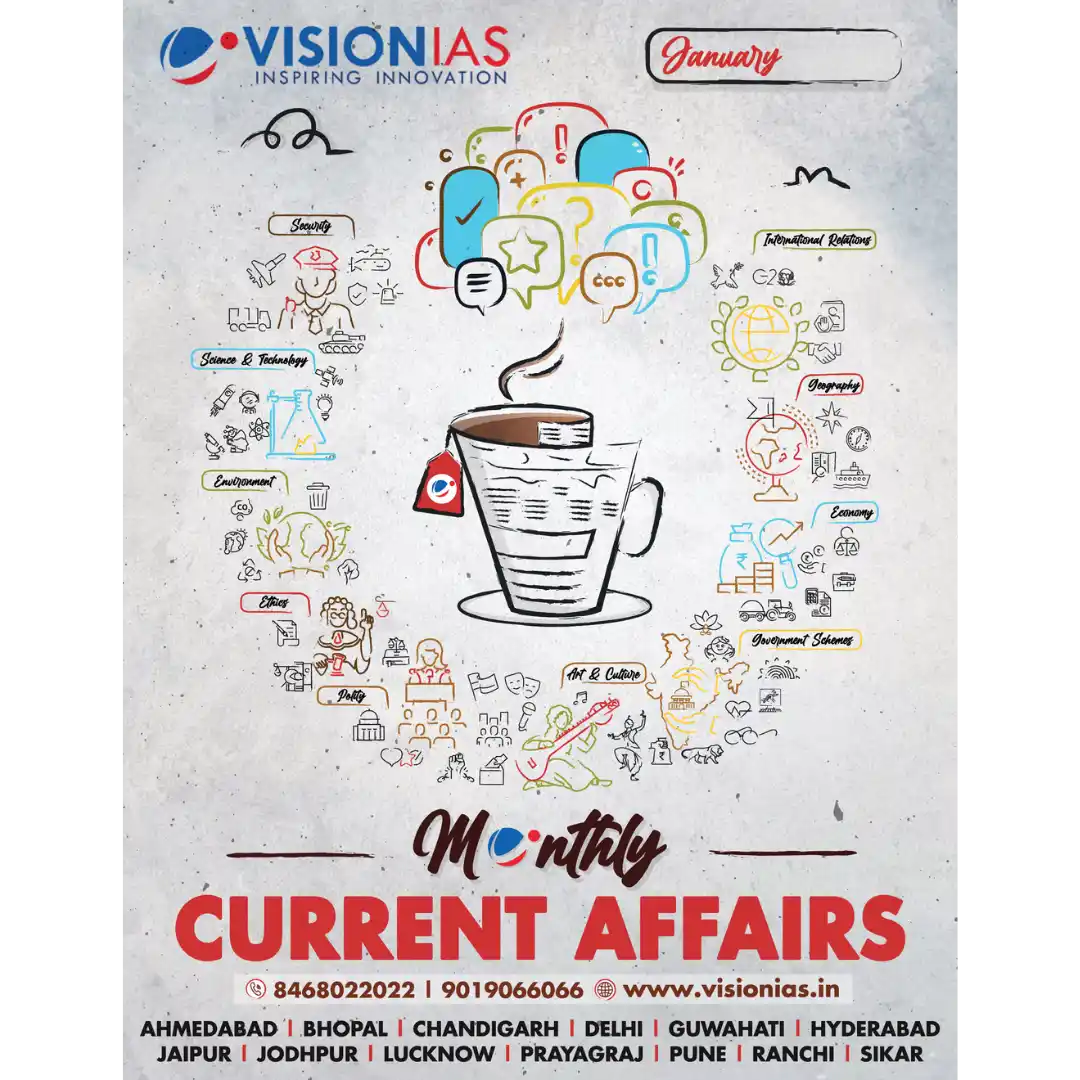
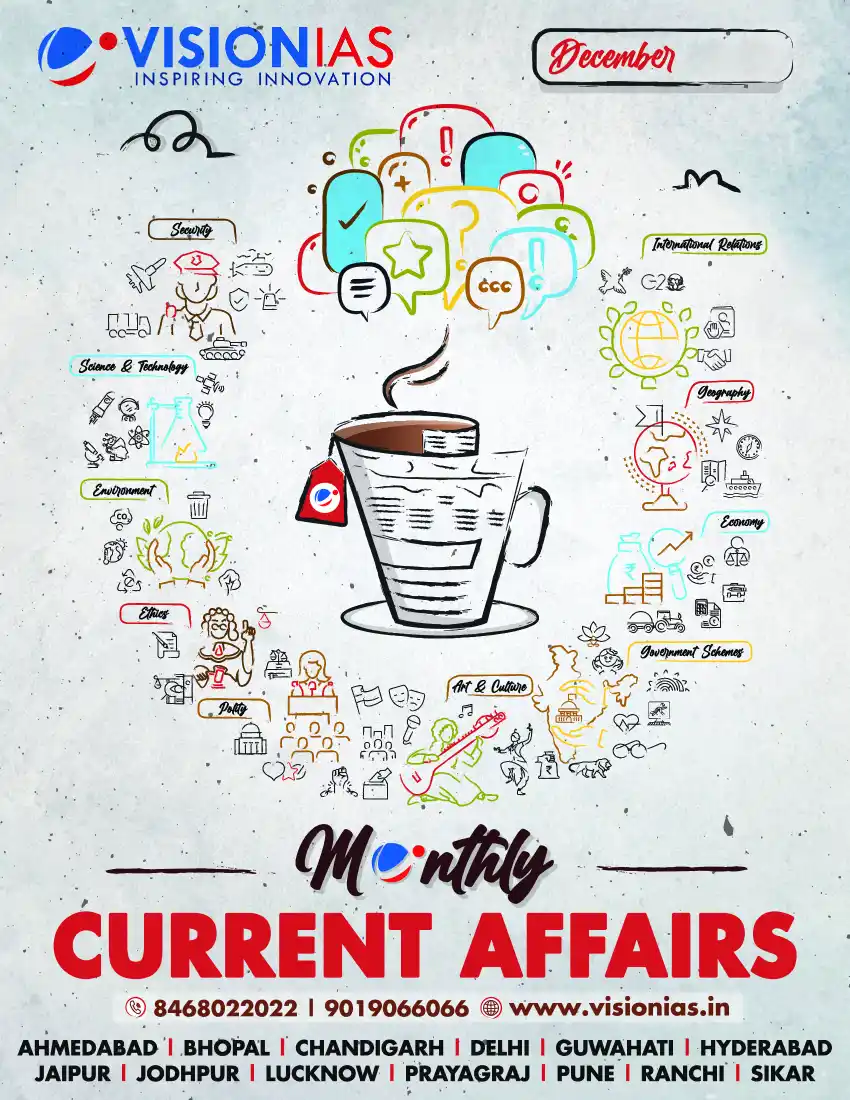
Current affairs and general science together account for roughly half of all GA questions — that is your priority order. For current affairs, a monthly magazine habit is the most efficient way to cover national and international events, government schemes, awards, sports, and appointments in one place. Aspirants preparing across competitive exams often keep a rolling set such as the Vision IAS Current Affairs Magazine (January 2026) and the earlier December 2025 edition to build a 6–8 month current-affairs window ahead of the exam.
Typing Skill Test vs CBAT — Post-Wise Mapping
A point most syllabus pages skip: not every post has the same third stage. Some posts require a Typing Skill Test, others require the CBAT (Computer-Based Aptitude Test), and many require neither. Knowing which applies to your target post saves wasted preparation.
| Post | Level | Skill Test Required |
|---|---|---|
| Station Master | Graduate | CBAT (Aptitude Test) |
| Traffic Assistant | Graduate | CBAT (Aptitude Test) |
| Junior Clerk cum Typist | Undergraduate | Typing Skill Test |
| Accounts Clerk cum Typist | Undergraduate | Typing Skill Test |
| Junior Time Keeper | Undergraduate | Typing Skill Test |
| Senior Clerk cum Typist | Graduate | Typing Skill Test |
| Junior Account Assistant cum Typist | Graduate | Typing Skill Test |
| Commercial cum Ticket Clerk | Undergraduate | None (DV + Medical only) |
| Goods Guard / Commercial Apprentice | Graduate | None (DV + Medical only) |
Typing Skill Test Details
The Typing Test is qualifying only. Candidates must type 30 words per minute (WPM) in English or 25 WPM in Hindi on a personal computer. No editing tools (spell check, autocorrect, thesaurus) are allowed. It confirms basic clerical typing ability for typist posts.
CBAT (Computer-Based Aptitude Test) Details
CBAT applies to Station Master and Traffic Assistant. It measures psychological aptitude across battery tests and you must score a minimum of 42 marks in each test battery to qualify — there is no relaxation on this minimum for any category. For final selection of these posts, 70% weight comes from CBT 2 and 30% from CBAT.
High-Return Topics to Study First (Data-Backed Priority)
Instead of studying the syllabus linearly, attack the topics that deliver the most marks per hour. Based on repeated previous-year weightage, here is a priority list to front-load in your plan.
| Priority | Topic Cluster | Why It’s High-Return |
|---|---|---|
| 1 | Current Affairs (last 6-8 months) | 10-15 Qs; scoring with daily reading |
| 2 | General Science (10th level) | 8-12 Qs; static, revision-friendly |
| 3 | Arithmetic (%, ratio, P&L, TSD, time-work) | Largest Maths bloc; concepts reused |
| 4 | Reasoning (analogy, series, syllogism, Venn) | Fast, high-accuracy, near-guaranteed marks |
| 5 | Indian Polity & History basics | 7-9 combined Qs; NCERT-driven |
| 6 | Puzzles & Seating Arrangement | Higher weight in CBT 2; needs practice |
| 7 | Geometry, Trigonometry, Mensuration | Formula-based; one sheet covers most |
If you have limited time, mastering priorities 1–4 alone can put you comfortably past most cutoffs, because they cover the bulk of both the high-weight GA section and the two most scoring Maths/Reasoning clusters.
Previous-Year Cutoff Trends (Indicative)
Cutoffs vary by RRB zone, post level, and category, but the following normalised ranges give a realistic target. Treat these as a directional benchmark, not exact figures.
| Category | CBT 1 Cutoff (Indicative %) | CBT 2 Cutoff (Indicative %) |
|---|---|---|
| UR / General | 75-85 | 72-82 |
| OBC | 70-80 | 68-78 |
| SC | 62-72 | 60-70 |
| ST | 55-68 | 52-65 |
Because marks are normalised across shifts, a raw score slightly below these percentages can still qualify from a tougher shift. Aim to clear the section-wise minimum qualifying marks (40% UR, 30% OBC/SC, 25% ST) and then maximise accuracy to push your normalised total above the merit line.
Preparation Strategy & 30/60/90-Day Plan
A syllabus is only useful when it is tied to a timeline. Here is a practical, phased plan that maps directly to the sections above.
| Phase | Focus | Daily Split |
|---|---|---|
| Days 1-30 (Foundation) | Arithmetic basics, reasoning fundamentals, NCERT science/polity/history, start daily current affairs | 2 hr Maths, 2 hr Reasoning, 2 hr GA |
| Days 31-60 (Build-Up) | Advanced arithmetic, puzzles & seating, DI, static GK, 1 current-affairs magazine/month, sectional tests | 2 hr practice, 2 hr GA, 2 hr sectional tests |
| Days 61-90 (Test & Revise) | Full-length mocks, previous-year papers, speed & accuracy, formula-sheet revision, error log | 1 full mock + 3 hr analysis + revision |
Subject-Wise Tips
Mathematics: Learn shortcuts for percentage-to-fraction conversions, ratio, and profit & loss — these speed up arithmetic dramatically. Keep a single formula sheet for geometry, trigonometry, and mensuration and revise it every morning.
Reasoning: Do 20–30 questions daily across analogy, series, and syllogism to build reflex-level speed, then add one full puzzle set daily. Reasoning is where you buy time for the tougher Maths questions.
General Awareness: Read one current-affairs magazine per month and maintain a running one-line notes file. Pair it with 10th-standard NCERT science, polity, and history for the static portion. A steady set like the November 2025 current affairs magazine onward helps you cover the exact months most likely to be asked.
Common Mistakes to Avoid
Ignoring negative marking and over-attempting; treating CBT 2 as a new syllabus instead of a deeper CBT 1; skipping mock analysis; neglecting the high-weight GA section until the last month; and not practising typing/CBAT early for posts that require it. Fixing these five habits alone lifts most candidates above the cutoff.
RRB NTPC Syllabus PDF Download
For a fast, printable revision copy, use the rrb ntpc syllabus pdf download that consolidates the full CBT 1 and CBT 2 syllabus, exam pattern, and weightage tables from this page into a clean, ad-free checklist. The most authoritative source is always the official RRB NTPC notification and CEN (Centralised Employment Notice) published on the regional RRB websites — download the CEN PDF for the exact, post-wise syllabus and eligibility, and use this page’s tables as your day-to-day study tracker.
Print the subject-wise topic lists and weightage tables above, tick off each topic as you complete it, and keep the 30/60/90-day plan pinned to your study desk. Pairing a printed syllabus checklist with a rolling current-affairs set such as the latest monthly current affairs magazine gives you both the map and the material in one place.
A note on sources: the exam pattern, section counts, negative marking and skill-test criteria above follow the structure published in official RRB NTPC CENs; the topic-wise weightage, cutoff ranges and priority order are indicative estimates compiled from previous-year papers and aspirant feedback. Always cross-check the exact syllabus and post-wise details against your board’s current notification before finalising your plan.
Frequently Asked Questions
What is the syllabus of RRB NTPC?
The RRB NTPC syllabus has three sections — Mathematics, General Intelligence & Reasoning, and General Awareness — in both CBT 1 and CBT 2. Mathematics covers arithmetic, algebra, geometry, trigonometry, mensuration and data interpretation; Reasoning covers analogies, series, coding-decoding, syllogism, puzzles and Venn diagrams; and General Awareness covers current affairs, general science, history, geography, polity, economy, static GK and computers.
Is RRB NTPC CBT 1 and CBT 2 syllabus the same?
Yes, the topics in CBT 1 and CBT 2 are the same across all three sections. The difference is that CBT 2 has more questions (120 vs 100), a higher difficulty level, and it decides the final merit, whereas CBT 1 is mainly used to screen and shortlist candidates for CBT 2.
How many subjects are there in RRB NTPC?
There are three subjects (sections) in RRB NTPC — Mathematics, General Intelligence & Reasoning, and General Awareness. General Awareness carries the highest weight, with 40 questions in CBT 1 and 50 in CBT 2.
What is the exam pattern of RRB NTPC CBT 1?
RRB NTPC CBT 1 has 100 objective questions for 100 marks in 90 minutes — 30 Mathematics, 30 General Intelligence & Reasoning, and 40 General Awareness. There is 1/3 (0.33) negative marking per wrong answer, and PwBD candidates with a scribe get 120 minutes. CBT 1 is a screening stage used to shortlist candidates for CBT 2.
Is there negative marking in RRB NTPC?
Yes. Both CBT 1 and CBT 2 have negative marking of 1/3 (0.33) mark for every wrong answer. There is no penalty for unattempted questions, so it is safer to skip a question than to guess blindly.
Which is the toughest section in RRB NTPC?
Most aspirants find General Awareness the toughest because of its wide, unpredictable scope — especially current affairs and general science — and its high question count. Mathematics can be time-consuming, while Reasoning is generally the most scoring and reliable section with practice.
Is there a typing test in RRB NTPC?
Yes, but only for specific typist/clerical posts such as Junior Clerk cum Typist, Accounts Clerk cum Typist and Senior Clerk cum Typist. The Typing Skill Test is qualifying only — you must type 30 WPM in English or 25 WPM in Hindi, with no editing tools allowed, and the score does not add to your merit. Posts like Station Master and Traffic Assistant instead take the CBAT, and several posts have no skill test at all.
Is the RRB NTPC syllabus the same for graduate and undergraduate posts?
The three subjects — Mathematics, Reasoning and General Awareness — are the same for both Undergraduate (12th-level) and Graduate posts. The difference lies in the standard of the questions and the eligibility: undergraduate-level posts are pitched around 12th standard, while graduate-level posts carry a higher difficulty. The broad topic list, however, stays common across both levels.
Can I clear RRB NTPC in 1 month?
Clearing RRB NTPC in one month is difficult but possible for candidates with a strong existing base in arithmetic, reasoning and general knowledge. In that case, focus only on high-return topics — current affairs, general science, arithmetic and quick-scoring reasoning — and dedicate the month to daily full-length mocks and revision rather than learning new concepts from scratch.
Recommended Study Material
Continue Reading
CAPF Syllabus 2026: Paper 1 & 2, Pattern, PST/PET + PDF
The CAPF syllabus for the UPSC Assistant Commandant (AC) 2026 exam has two written papers: Paper 1 —…
MPPSC Syllabus 2026: Prelims, Mains, Pattern + PDF
The MPPSC syllabus for the 2026 State Service Examination is built around three stages: a two-paper objective Prelims…
UPSC Prelims Syllabus 2026: Subject-Wise + PDF & Pattern
The upsc prelims syllabus has two papers — General Studies Paper 1 (GS) and CSAT (Paper 2) —…