RRB NTPC Syllabus 2026: CBT 1 & CBT 2 Topics, Pattern + PDF
Complete RRB NTPC syllabus 2026 with CBT 1 & CBT 2 exam pattern, subject-wise topics, weightage, negative marking, graduate vs undergraduate details and how to download the syllabus PDF.

The rrb ntpc syllabus covers three subjects across both stages of the computer-based test — General Awareness, Mathematics, and General Intelligence & Reasoning. CBT 1 has 100 questions (100 marks, 90 minutes) and CBT 2 has 120 questions (120 marks, 90 minutes), both carrying a negative marking of 1/3rd mark per wrong answer. The syllabus for CBT 1 and CBT 2 is essentially the same; only the number of questions and the level of difficulty increase in CBT 2. The topics are also identical for graduate and undergraduate posts.
This guide gives you the complete, up-to-date RRB NTPC syllabus 2026 for the Railway Recruitment Board’s Non-Technical Popular Categories exam — subject-wise topics, the full exam pattern for both stages, real previous-year weightage, the graduate vs undergraduate distinction, the selection process (CBT 1 → CBT 2 → CBAT/Typing Test → DV & Medical), a 90-day study plan, and how to get the official syllabus PDF. Everything below is organised so you can plan your preparation from day one.
RRB NTPC Syllabus 2026 at a Glance (Key Takeaways)
- Subjects (both stages): General Awareness, Mathematics, General Intelligence & Reasoning.
- CBT 1: 100 questions, 100 marks, 90 minutes (GA 40, Maths 30, Reasoning 30).
- CBT 2: 120 questions, 120 marks, 90 minutes (GA 50, Maths 35, Reasoning 35).
- Negative marking: 1/3rd mark deducted for every wrong answer in both stages.
- Highest weightage: General Awareness (40% of CBT 1, ~41.6% of CBT 2).
- Graduate vs undergraduate: same syllabus; only eligibility, posts and difficulty differ.
- Extra tests: CBAT for Station Master & Traffic Assistant; Typing Skill Test for clerk/typist posts.
RRB NTPC 2026 Exam Overview & Highlights
RRB NTPC is conducted by the Railway Recruitment Boards (under the Railway Recruitment Control Board, RRCB) to fill non-technical posts in Indian Railways such as Station Master, Goods Train Manager, Junior Clerk, Accounts Clerk, Commercial cum Ticket Clerk, Senior Clerk, Senior Time Keeper and Traffic Assistant. Before you dive into topics, fix these basics in your mind.
| Particular | Detail |
|---|---|
| Conducting Body | Railway Recruitment Boards (RRBs) / RRCB |
| Exam Name | Non-Technical Popular Categories (NTPC) |
| Level | Graduate & Undergraduate (12th pass) posts |
| Selection Stages | CBT 1 → CBT 2 → Typing Skill Test / CBAT → DV & Medical |
| Mode | Online (Computer-Based Test) |
| Total Sections | 3 (General Awareness, Mathematics, Reasoning) |
| Negative Marking | 1/3rd mark per wrong answer |
| Question Type | Objective, multiple-choice (MCQ) |
| Languages | English, Hindi & 13 other regional languages |
| Official Website | rrbcdg.gov.in and regional RRB websites |
RRB NTPC Selection Process 2026
The RRB NTPC recruitment runs through four clearly defined stages. Understanding the full process matters because your preparation focus changes depending on the post you apply for — some posts require a Computer-Based Aptitude Test (CBAT), while others require a Typing Skill Test.
| Stage | What It Involves | Nature |
|---|---|---|
| CBT 1 (First Stage) | 100 questions screening test | Qualifying + shortlisting |
| CBT 2 (Second Stage) | 120 questions main test | Merit-deciding |
| Typing Skill Test | For clerk/typist posts | Qualifying only |
| CBAT (Aptitude Test) | For Station Master & Traffic Assistant | Merit component (partial) |
| Document Verification & Medical | Final eligibility & fitness check | Qualifying |
Marks from CBT 1 are normalised and used only for shortlisting candidates for CBT 2. The final merit is built on CBT 2 (and CBAT where applicable), so CBT 2 is where the real competition is decided. Candidates are typically shortlisted for CBT 2 at several times the number of vacancies, category-wise, based on their normalised CBT 1 score.
What Is the Syllabus of RRB NTPC 2026?
The rrb ntpc syllabus 2026 is divided into three sections that appear in both CBT 1 and CBT 2:
- General Awareness — current affairs, history, geography, polity, economy, general science, static GK and computers.
- Mathematics — arithmetic, algebra, geometry, mensuration, trigonometry and data interpretation.
- General Intelligence & Reasoning — verbal and non-verbal reasoning, analogies, series, coding-decoding, puzzles and syllogism.
The good news: there is only one syllabus to master. Whether you are targeting a graduate-level post like Station Master or an undergraduate-level post like Junior Clerk, the topics are identical. What changes is the number of questions and the difficulty level, which we break down next.
RRB NTPC CBT 1 Syllabus & Exam Pattern
The rrb ntpc cbt 1 syllabus is a screening test designed to filter candidates for CBT 2. It is common for all posts — graduate and undergraduate. You get 90 minutes to attempt 100 questions worth 100 marks, with each wrong answer costing you 1/3rd of a mark.
| Section | No. of Questions | Marks | Duration |
|---|---|---|---|
| General Awareness | 40 | 40 | 90 minutes (120 min for PwBD candidates) |
| Mathematics | 30 | 30 | |
| General Intelligence & Reasoning | 30 | 30 | |
| Total | 100 | 100 |
Note that General Awareness alone carries 40% of the CBT 1 paper, making it the single highest-weightage section — a fact most aspirants under-plan for. There is no sectional cut-off in CBT 1; only your aggregate normalised score decides whether you advance to CBT 2, so you can offset a weaker section with a stronger one.
RRB NTPC CBT 2 Syllabus & Exam Pattern
The rrb ntpc cbt 2 syllabus mirrors CBT 1 topic-for-topic, but the paper is longer (120 questions in 90 minutes) and the questions are noticeably tougher. CBT 2 is the merit-deciding stage, so your accuracy here determines your final rank.
| Section | No. of Questions | Marks | Duration |
|---|---|---|---|
| General Awareness | 50 | 50 | 90 minutes (120 min for PwBD candidates) |
| Mathematics | 35 | 35 | |
| General Intelligence & Reasoning | 35 | 35 | |
| Total | 120 | 120 |
One important detail many aspirants miss: RRB NTPC posts fall under different pay levels (Level 2, 3, 4, 5 and 6 of the 7th CPC), and candidates sit a separate CBT 2 paper based on the pay level of the post they qualified for. The exam pattern, sections and syllabus remain identical across all these papers — only the specific question set differs. So you do not need different notes for a Level 5 post versus a Level 2 post.
Is the RRB NTPC CBT 1 and CBT 2 Syllabus the Same?
Yes — the topics in CBT 1 and CBT 2 are identical. The differences are: (1) CBT 2 has 20 more questions (120 vs 100), (2) CBT 2 has a higher difficulty level, and (3) CBT 2 marks decide the final merit list while CBT 1 is only for shortlisting. So you prepare one syllabus once, then simply practise harder-level questions for CBT 2.
RRB NTPC Mathematics Syllabus (Subject-Wise)
The rrb ntpc maths syllabus is pure arithmetic and quantitative aptitude — no advanced or higher mathematics. With focused practice, this is the section where accuracy can touch 100%. Here is the complete topic list.
| Topic | Sub-topics |
|---|---|
| Number System | LCM, HCF, divisibility, decimals, fractions, BODMAS |
| Percentage | Basic percentage, increase/decrease, applications |
| Ratio & Proportion | Simple ratios, partnership, mixtures & alligation |
| Simple & Compound Interest | SI, CI, difference between SI and CI |
| Profit & Loss | Cost price, selling price, discount, marked price |
| Time, Speed & Distance | Trains, boats & streams, relative speed |
| Time & Work | Work efficiency, pipes & cisterns |
| Mensuration | Area & volume of 2D and 3D figures |
| Algebra | Basic equations, identities, factorisation |
| Geometry & Trigonometry | Lines, triangles, circles, ratios, heights & distances |
| Data Interpretation | Tables, bar graphs, pie charts, line graphs |
| Elementary Statistics | Mean, median, mode |
Most maths questions are formula-driven and predictable, so build a one-page formula sheet early and revise it daily. Arithmetic topics — percentage, ratio, profit & loss, time-speed-distance and interest — together account for the majority of maths questions, so prioritise these before moving to geometry and trigonometry.
RRB NTPC General Intelligence & Reasoning Syllabus
Reasoning rewards practice more than any other section — the question types repeat year after year. Master the patterns and you can score full marks here quickly. The complete topic list is below.
| Verbal Reasoning | Non-Verbal / Analytical |
|---|---|
| Analogies | Venn diagrams |
| Number & alphabetical series | Puzzles & seating arrangement |
| Coding-decoding | Data sufficiency |
| Blood relations | Statement & conclusion |
| Syllogism | Decision making |
| Directions & distances | Mathematical operations |
| Classification (odd one out) | Maps & interpretation of graphs |
| Coding of statements | Similarities & differences |
Because these question types recur so reliably, timed sectional practice pays off fast. Aim to finish reasoning in under 25 minutes in the actual exam so you free up time for the lengthier General Awareness and calculation-heavy maths questions.
RRB NTPC General Awareness Syllabus (The Highest-Weightage Section)
General Awareness carries the most marks (40 in CBT 1, 50 in CBT 2), yet it is the section aspirants prepare most casually. The GA syllabus is vast, so treat it as your priority. Below is the full micro-topic breakdown that dominates the paper.
| Area | Micro-Topics to Cover |
|---|---|
| Current Affairs | National & international events, awards, sports, appointments, books & authors, summits, defence, schemes (last 12 months) |
| History | Ancient, medieval & modern India, freedom struggle, important movements & dates |
| Geography | India & world geography, rivers, mountains, climate, physical & economic geography |
| Indian Polity | Constitution, fundamental rights, Parliament, judiciary, Panchayati Raj, amendments |
| Economy | Budget, banking, RBI, GDP, inflation, government economic schemes |
| General Science | Physics, Chemistry & Biology of Class 10 level, everyday science |
| Static GK | Important days, dams, national parks, dance forms, first-in-India, capitals & currencies |
| Computers & Technology | Computer basics, abbreviations, internet, MS Office fundamentals |
| Railways & Environment | Indian Railways facts, environmental issues, flagship schemes & policies |
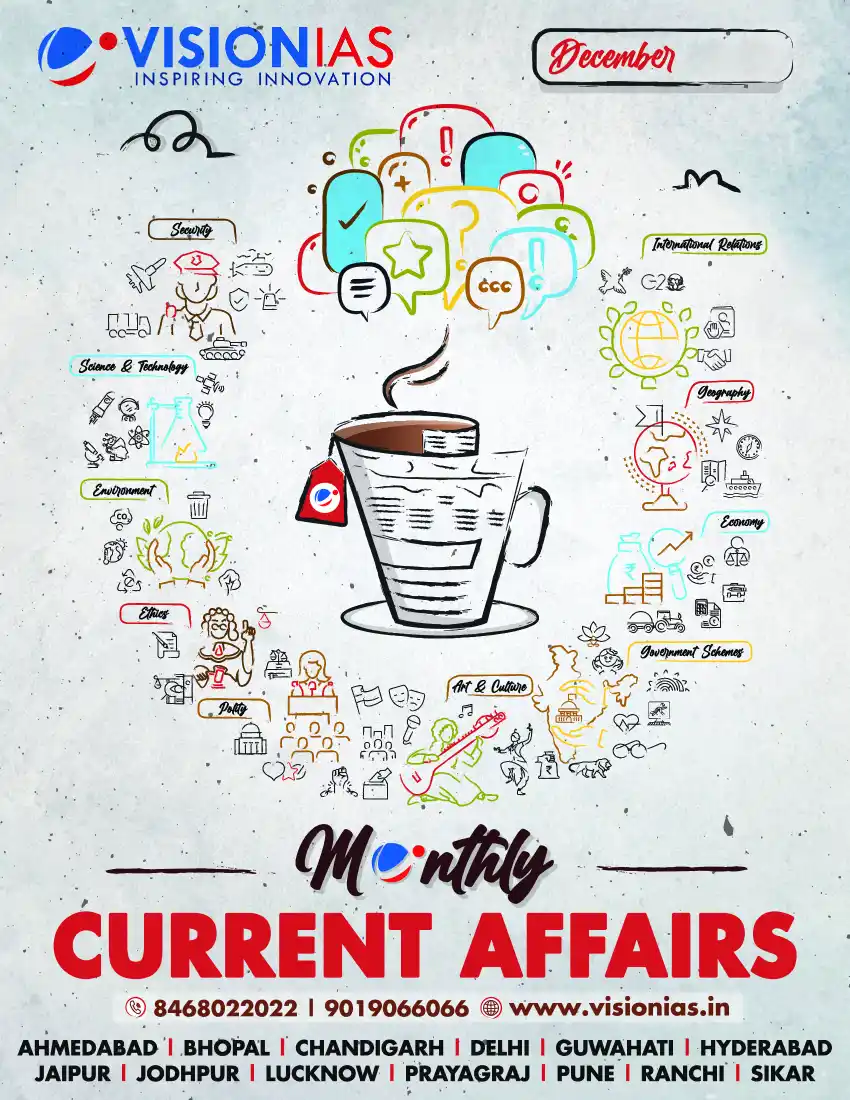
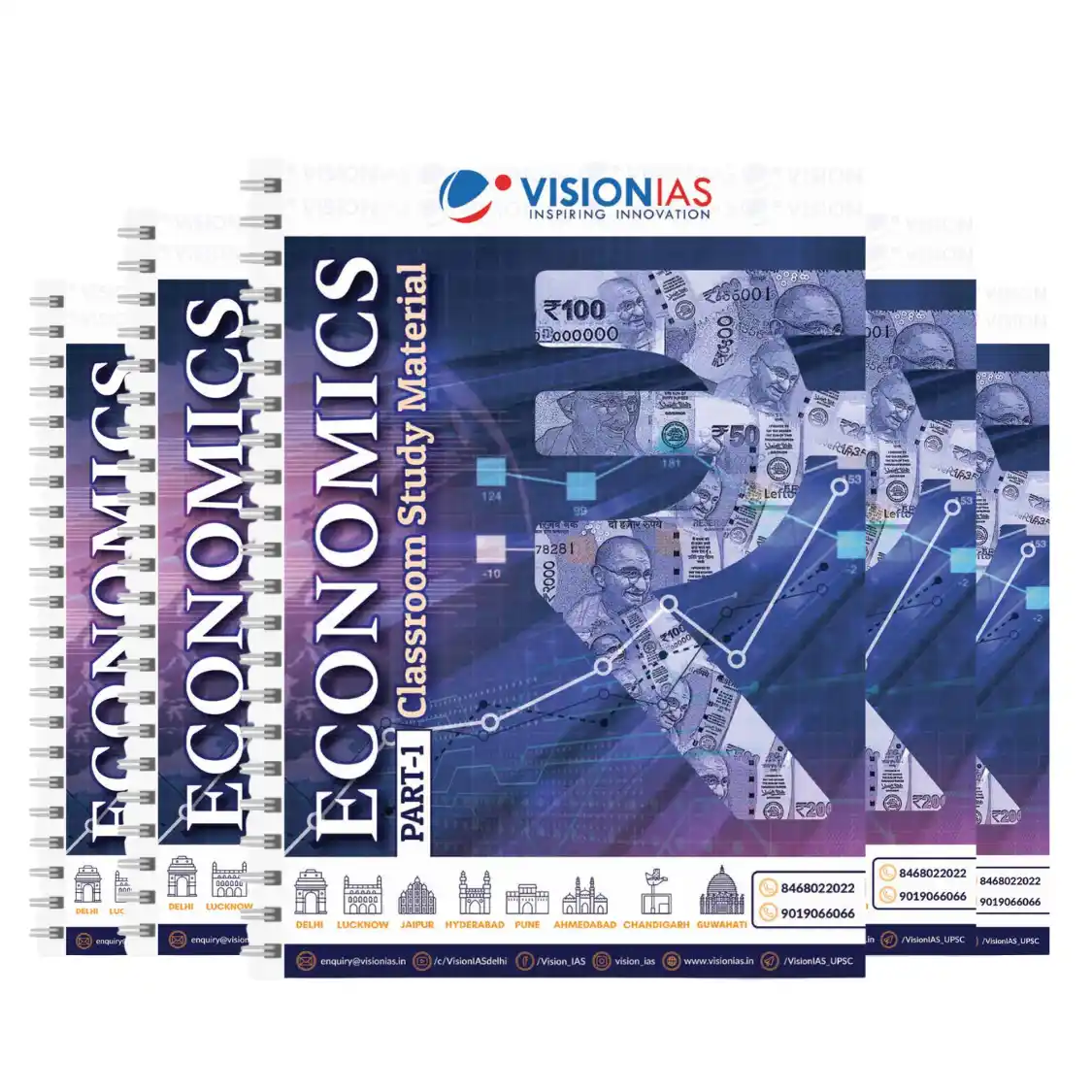
Because General Awareness leans heavily on current affairs, a reliable monthly current affairs source is essential. A structured monthly magazine like the Vision IAS Current Affairs Magazine (January 2026) or the December 2025 edition keeps your national and international affairs updated in one place — the same events tested in RRB NTPC also feature in these compilations. For the economy portion, a compact resource such as the Vision IAS Economics Notes covers banking, budget and RBI basics clearly.
Which Subject Has the Highest Weightage in RRB NTPC?
General Awareness has the highest weightage in RRB NTPC — 40 questions in CBT 1 and 50 in CBT 2. Here is how the weightage compares across both stages so you can allocate study time proportionally.
| Section | CBT 1 Weightage | CBT 2 Weightage | Priority |
|---|---|---|---|
| General Awareness | 40% | 41.6% | Highest — start early |
| Mathematics | 30% | 29.2% | High — highest scoring |
| Reasoning | 30% | 29.2% | High — quickest to master |
Topic-Wise Weightage from Previous-Year Papers
Beyond section-level marks, knowing which topics repeatedly appear helps you prioritise. Based on trends from previous RRB NTPC papers, the approximate per-topic frequency is as follows.
| Subject | High-Frequency Topics | Approx. Questions |
|---|---|---|
| Mathematics | Percentage, SI/CI, profit & loss, time-speed-distance, DI | 18–22 of 30–35 |
| Reasoning | Series, coding-decoding, analogies, puzzles, syllogism | 20–24 of 30–35 |
| General Awareness | Current affairs, general science, static GK, polity | 28–32 of 40–50 |
These figures are indicative trends drawn from earlier cycles rather than an official RRB breakdown — the actual paper varies shift to shift due to normalisation across multiple sittings. Use them to guide time allocation, not as a fixed guarantee.
Graduate vs Undergraduate Syllabus: What’s the Difference?
A common confusion — the rrb ntpc syllabus for graduate and undergraduate posts is exactly the same. There is no separate topic list. The distinction lies only in eligibility and the posts on offer, not in the syllabus.
| Aspect | Undergraduate (12th pass) | Graduate |
|---|---|---|
| Eligibility | 12th (10+2) pass | Bachelor’s degree |
| Typical Posts | Junior Clerk, Accounts Clerk, Trains Clerk, Commercial cum Ticket Clerk | Station Master, Goods Train Manager, Senior Clerk, Traffic Assistant, Accounts Clerk cum Typist |
| Syllabus | Same 3 subjects | Same 3 subjects |
| Exam Pattern | Same CBT 1 & CBT 2 structure | Same CBT 1 & CBT 2 structure |
| Difficulty | Slightly easier weighting | Slightly higher difficulty |
What Is the Difference Between RRB NTPC Graduate and Undergraduate Syllabus?
There is no difference in the syllabus topics. Both levels test General Awareness, Mathematics and Reasoning from the same list. The graduate-level papers may pitch questions at a marginally higher standard, but you can prepare from a single set of notes for either level.
CBAT and Typing Skill Test Explained
After clearing CBT 2, some posts require an additional test. This is where post selection changes your prep focus.
What Is CBAT and Typing Test in RRB NTPC?
The Computer-Based Aptitude Test (CBAT) is mandatory only for Station Master and Traffic Assistant. Candidates must score a minimum T-Score of 42 in each test battery to qualify — there is no relaxation for any category. CBAT marks contribute 30% to the final merit for these posts (CBT 2 contributes 70%). The test measures psychological aptitude through several batteries such as selective attention, perceptual speed, memory, concentration and depth perception — it cannot be crammed like a knowledge subject, so practise sample batteries in advance if you are targeting these posts.
The Typing Skill Test applies to clerical/typist posts such as Junior Clerk cum Typist, Senior Clerk cum Typist and Accounts Clerk cum Typist. Candidates must type 30 words per minute (wpm) in English or 25 wpm in Hindi. It is only qualifying in nature — marks are not added to the merit list.
| Test | Applicable Posts | Qualifying Criteria | Merit Impact |
|---|---|---|---|
| CBAT | Station Master, Traffic Assistant | T-Score of 42 (no relaxation) | 30% of final merit |
| Typing Skill Test | Clerk / Typist posts | 30 wpm English / 25 wpm Hindi | Qualifying only |
Is There Negative Marking in RRB NTPC?
Yes. RRB NTPC applies negative marking of 1/3rd (0.33) mark for every wrong answer in both CBT 1 and CBT 2. Unattempted questions carry no penalty. This directly shapes your exam strategy: never make wild guesses. As a rule of thumb, attempt a question only if you can confidently eliminate at least two options. Blind guessing across 10 questions can silently cost you 3+ marks — often the difference between selection and rejection at cut-off.
How Does Normalisation Affect Your RRB NTPC Score?
Because RRB NTPC is held in multiple shifts across several days, raw scores are adjusted through a normalisation formula to account for differences in difficulty between shifts. This means your final score may differ slightly from your raw marks. You cannot control which shift you sit, so focus on maximising accuracy — a strong raw score in a tough shift is rewarded fairly after normalisation.
90-Day RRB NTPC Study Plan Tied to the Syllabus
A syllabus is only useful if you sequence it correctly. Since General Awareness is the largest and slowest-to-build section, start it on day one and run it in parallel throughout. Here is a practical roadmap.
| Phase | Focus | Targets |
|---|---|---|
| Days 1–30 | Foundation | Maths arithmetic (number system, percentage, ratio, SI/CI); reasoning basics (series, analogies, coding); begin daily current affairs + static GK |
| Days 31–60 | Advanced & Application | Maths (mensuration, geometry, trigonometry, DI); reasoning (puzzles, syllogism, data sufficiency); GA (polity, history, geography, economy, science) |
| Days 61–85 | Practice & Mocks | Full-length CBT 1 & CBT 2 mock tests; previous-year papers; error analysis |
| Days 86–90 | Revision | Formula sheets, current affairs of last 6 months, weak-area revision, exam-day strategy |
Aim for at least one full mock test every alternate day in the final month. Analysing your mistakes matters more than attempting new mocks — track which topics repeatedly cost you marks and revise them specifically.
Best Books & Resources for RRB NTPC 2026
You do not need dozens of books. A tight, well-chosen set covering each section works best.
| Subject | Recommended Resource Type | Purpose |
|---|---|---|
| Mathematics | Arithmetic + fast-maths practice book | Concept + speed |
| Reasoning | Verbal & non-verbal reasoning book | Pattern recognition |
| General Awareness | Static GK book + monthly current affairs magazine | Coverage + updates |
| General Science | Class 6–10 NCERT science / one-liner GS book | Basics |
| Overall | Previous-year papers + online mock tests | Exam simulation |
For the current affairs component that decides a big chunk of General Awareness, a monthly compilation such as the Vision IAS Current Affairs Magazine saves hours of scattered reading and gives you exam-ready summaries.
How to Download the RRB NTPC Syllabus PDF
You can download the rrb ntpc syllabus pdf directly from the official recruitment notification, which contains the exact section-wise topic list for CBT 1 and CBT 2.
How Can I Download the RRB NTPC Syllabus PDF?
- Visit the official RRB website (rrbcdg.gov.in) or your regional RRB portal.
- Open the latest NTPC recruitment notification (CEN document).
- Navigate to the section titled “Scheme & Syllabus of Examination” — usually an annexure.
- Use your browser’s Save-as-PDF or the download option to save the full syllabus.
The complete subject-wise syllabus and exam pattern presented in this article — including all three sections, both CBT stages, the weightage tables and the study plan — can be printed straight from this page for a clean, sign-up-free study copy.
Common Mistakes to Avoid
- Ignoring General Awareness early: It is the biggest section and cannot be crammed in the last week.
- Guessing recklessly: Negative marking of 1/3rd punishes blind attempts — prioritise accuracy.
- Skipping CBT 2-level practice: CBT 1 practice alone will not prepare you for the tougher CBT 2 paper that decides your rank.
- Not taking timed mocks: Speed and time management are as important as knowledge in a 90-minute paper.
- Neglecting static GK & science: These give reliable, repeatable marks that current-affairs-only aspirants miss.
- Ignoring the extra tests: If you target Station Master or a typist post, plan CBAT or typing practice early instead of leaving it to the last stage.
Frequently Asked Questions
What is the syllabus of RRB NTPC 2026?
The RRB NTPC 2026 syllabus covers three subjects across CBT 1 and CBT 2: General Awareness (current affairs, history, geography, polity, economy, science, static GK, computers), Mathematics (number system, percentage, ratio, SI/CI, mensuration, algebra, geometry, trigonometry, data interpretation) and General Intelligence & Reasoning (analogies, series, coding-decoding, syllogism, puzzles, blood relations). The syllabus is the same for graduate and undergraduate posts.
Is the RRB NTPC CBT 1 and CBT 2 syllabus the same?
Yes, the topics for CBT 1 and CBT 2 are identical. The only differences are that CBT 2 has more questions (120 vs 100), a higher difficulty level, and its marks decide the final merit, while CBT 1 is used only for shortlisting candidates for CBT 2.
How many questions are asked in RRB NTPC CBT 1 and CBT 2?
CBT 1 has 100 questions for 100 marks in 90 minutes (40 General Awareness, 30 Mathematics, 30 Reasoning). CBT 2 has 120 questions for 120 marks in 90 minutes (50 General Awareness, 35 Mathematics, 35 Reasoning). PwBD candidates get 120 minutes in both.
Is there negative marking in RRB NTPC exam?
Yes, there is negative marking of 1/3rd (0.33) mark for every wrong answer in both CBT 1 and CBT 2. There is no penalty for unattempted questions, so avoid blind guessing and attempt only when you can eliminate at least two options.
Which subject has the highest weightage in RRB NTPC?
General Awareness has the highest weightage — 40 out of 100 questions in CBT 1 and 50 out of 120 in CBT 2. Mathematics and Reasoning carry 30 questions each in CBT 1 and 35 each in CBT 2. Start General Awareness preparation early because it is the largest and slowest-to-build section.
What is the difference between RRB NTPC graduate and undergraduate syllabus?
There is no difference in the syllabus itself — both graduate and undergraduate posts are tested on the same General Awareness, Mathematics and Reasoning topics with the same CBT 1 and CBT 2 pattern. Only eligibility (12th pass vs bachelor’s degree), the posts on offer and the difficulty pitch differ, so a single set of notes works for either level.
What is CBAT and typing test in RRB NTPC?
CBAT (Computer-Based Aptitude Test) is mandatory only for Station Master and Traffic Assistant posts, requiring a minimum T-Score of 42 with no relaxation, and it contributes 30% to final merit. The Typing Skill Test applies to clerk/typist posts and requires 30 wpm in English or 25 wpm in Hindi — it is only qualifying in nature.
How can I download the RRB NTPC syllabus PDF?
Visit the official RRB website (rrbcdg.gov.in) or your regional RRB portal, open the latest NTPC recruitment notification (CEN document), go to the “Scheme & Syllabus of Examination” annexure, and use your browser’s Save-as-PDF option to save it. The full subject-wise syllabus and exam pattern in this article can also be printed directly from this page.
Recommended Study Material

Continue Reading
Anthropology Optional Syllabus 2026: UPSC Paper 1 & 2 + PDF
The anthropology optional syllabus for UPSC is divided into two papers — Paper 1 (fundamentals of physical and…
RRB Group D Syllabus 2025: Subject-Wise Topics, Exam Pattern + PDF
The RRB Group D syllabus covers four subjects in a single Computer-Based Test (CBT): Mathematics (25 marks), General…
RPSC RAS Syllabus 2026: Prelims, Mains Pattern + PDF
The rpsc ras syllabus for 2026 is divided across three stages conducted by the Rajasthan Public Service Commission…