Best Book for SSC GK 2026: Top Picks + Buying Guide
Best book for SSC GK? Compare Lucent, Blackbook, Kiran & Pinnacle for SSC CGL/CHSL/MTS, with a topic-weightage table and a 60-day plan to score 40+ in GA.

The best book for SSC GK is not a single title but a three-part combination: Lucent’s General Knowledge for the static-GK foundation, a previous-year MCQ book like Kiran’s SSC General Awareness Chapter-wise Solved Papers or Pinnacle SSC General Studies for practice, and a monthly current affairs compilation for the latest 6-8 months of news. Buy these three together rather than chasing one all-in-one book, and you cover the entire General Awareness section for SSC CGL, CHSL, MTS and GD. Bottom line: if you can only buy one book today, buy Lucent — then add a PYQ book and a current-affairs source as your exam nears.
The General Awareness (GA) section is the highest-scoring and least time-consuming part of any SSC exam — you either know the answer in five seconds or you don’t. That makes book selection the single biggest lever on your GA score. This guide separates GA into its three real buckets, names the exact editions to buy, compares Hindi vs English versions, gives a 60-day study plan, and answers the questions aspirants actually ask before spending money. The recommendations below are built from recent SSC CGL/CHSL paper patterns, the topic-wise weightage SSC has repeated for years, and the book combinations selected candidates consistently report using — not from a single publisher’s marketing.
The Best Book for SSC GK: Quick Shortlist
Before the detail, here is the verdict in one table. These four titles, used in the right roles, are what toppers actually carry into the GA section.
| Book | Author / Publisher | Best For | Approx. Price (₹) |
|---|---|---|---|
| General Knowledge | Lucent Publications | Static GK foundation (must-buy) | 180-260 |
| Blackbook of General Awareness | Nikhil Gupta | One-liners, lists & last-month revision | 350-450 |
| SSC General Awareness Chapter-wise Solved Papers | Kiran Publications | 5,000+ previous-year MCQs | 300-400 |
| SSC General Studies / GK | Pinnacle | Topic-wise PYQs with notes | 350-500 |
For most aspirants, Lucent + one PYQ book + a monthly current affairs source is the complete, no-regrets purchase. Everything below explains who needs what and why.
How SSC General Awareness Is Actually Scored
GA carries 25 questions worth 50 marks in SSC CGL Tier 1 and is a major block in CHSL, MTS and GD too. The mistake beginners make is treating GA as one giant topic. In reality the marks are split predictably across static subjects and current affairs. Here is the realistic topic-wise weightage seen in recent SSC CGL papers.
| Topic | Approx. Questions (out of 25) | Primary Source |
|---|---|---|
| General Science (Physics, Chemistry, Biology) | 7-8 | Lucent + NCERT |
| History (Ancient, Medieval, Modern) | 5-6 | Lucent |
| Polity & Constitution | 5-6 | Lucent |
| Current Affairs | 3-4 | Monthly compilation |
| Geography | 2 | Lucent + NCERT maps |
| Economy | 2 | Lucent |
| Static GK / Misc (sports, awards, books) | 1-2 | Blackbook |
Two takeaways jump out. First, Science, History and Polity alone account for roughly 17-20 of 25 questions — and all three are covered cover-to-cover by Lucent. Second, current affairs is only 3-4 questions, so you should never let it consume the bulk of your time. This weightage is exactly why your money should go to a strong static-GK book first.
Bucket 1: Static GK — Why Lucent’s General Knowledge Wins
If you buy only one book, it is Lucent’s General Knowledge. It is the best book for SSC CGL general awareness on the static side because it is concise, exam-oriented, and maps almost perfectly to the SSC syllabus — no padding, no UPSC-level depth you’ll never be tested on. Each chapter ends with objective questions, and the famous “facts at a glance” style means you can revise an entire subject in an afternoon.
Which is the best GK book for SSC CGL in English?
For English-medium aspirants, the best GK book for SSC CGL in English is again Lucent’s General Knowledge (English edition) as the core, paired with Kiran or Pinnacle for English-language PYQs. The language is simple and exam-focused, so non-native English readers cope easily. You do not need a separate “premium” English GK book — Lucent plus a PYQ book in English plus a monthly English current-affairs magazine is the complete English-medium stack.
Is Lucent enough for SSC CGL GK?
For static GK, Lucent is about 80-85% enough. It fully covers Polity, History, Economy, basic Geography and a large part of Science. Where it is thin is (a) current affairs, which no static book can cover, and (b) the deep one-liner lists — classical dances, important temples, recent awards, stadiums — that SSC loves. That 15-20% gap is exactly what the Blackbook and a current affairs source fill. So Lucent is enough as a foundation, but not enough on its own.
Best GK book for SSC in Hindi
Lucent publishes a near-identical Hindi edition (“Samanya Gyan”), and it is the default static-GK choice for Hindi-medium aspirants. The content, chapter order and question sets mirror the English version, so Hindi-medium candidates lose nothing. The Blackbook and Kiran also have Hindi editions. Our advice for bilingual aspirants: pick one medium for static GK and stick to it, but read current affairs in whichever language you read the news — many toppers revise static GK in Hindi while consuming current affairs in English.
Bucket 2: Previous-Year MCQ Books — Practice That Repeats
Reading GK is not the same as scoring GK. You need a previous-year-question (PYQ) book to train recall under exam conditions and to spot the patterns SSC repeats. This is where Kiran and Pinnacle come in.
Kiran’s SSC General Awareness Chapter-wise Solved Papers
Kiran’s General Awareness is the 5,000+ MCQ workhorse. It compiles GA questions from past SSC exams (CGL, CHSL, MTS, CPO, Steno) arranged chapter-wise, so you can drill History or Science in one sitting. The sheer volume means you will repeatedly see the same high-frequency facts — which is precisely the point.
Pinnacle SSC General Studies
Pinnacle’s GS book blends crisp topic notes with previous-year MCQs and is popular for its clean layout and detailed solutions. If you want a book that teaches and tests in the same flow, Pinnacle edges out Kiran; if you only want raw question volume, Kiran wins.
| PYQ Book | Question Bank | Format | Choose If |
|---|---|---|---|
| Kiran SSC General Awareness | 5,000+ MCQs | Chapter-wise solved papers | You want maximum practice volume |
| Pinnacle SSC General Studies | 3,000+ MCQs + notes | Notes + topic-wise PYQs | You want to learn and test together |
Are previous year GK questions repeated in SSC exams?
Yes — and this is the most under-rated fact in SSC prep. SSC recycles GK questions heavily; exact questions and near-identical facts reappear across years and across CGL/CHSL/MTS. Aspirants routinely report seeing 8-12 GA questions in a paper that they had already encountered in a PYQ book. Solving a chapter-wise PYQ book is therefore not optional revision — it is direct mark-scoring.
Bucket 3: Current Affairs — Use Monthly Compilations, Not One Book
No printed book can stay current, so handle the ssc gk book for static gk and current affairs split correctly: static from a book, current affairs from monthly compilations. The standard sources are Arihant’s monthly current affairs, Pratiyogita Darpan, and free daily/monthly PDFs from portals like AffairsCloud and GKToday. Many SSC aspirants also use the well-structured UPSC monthly magazines because the national-level coverage overlaps heavily with SSC’s current affairs questions.
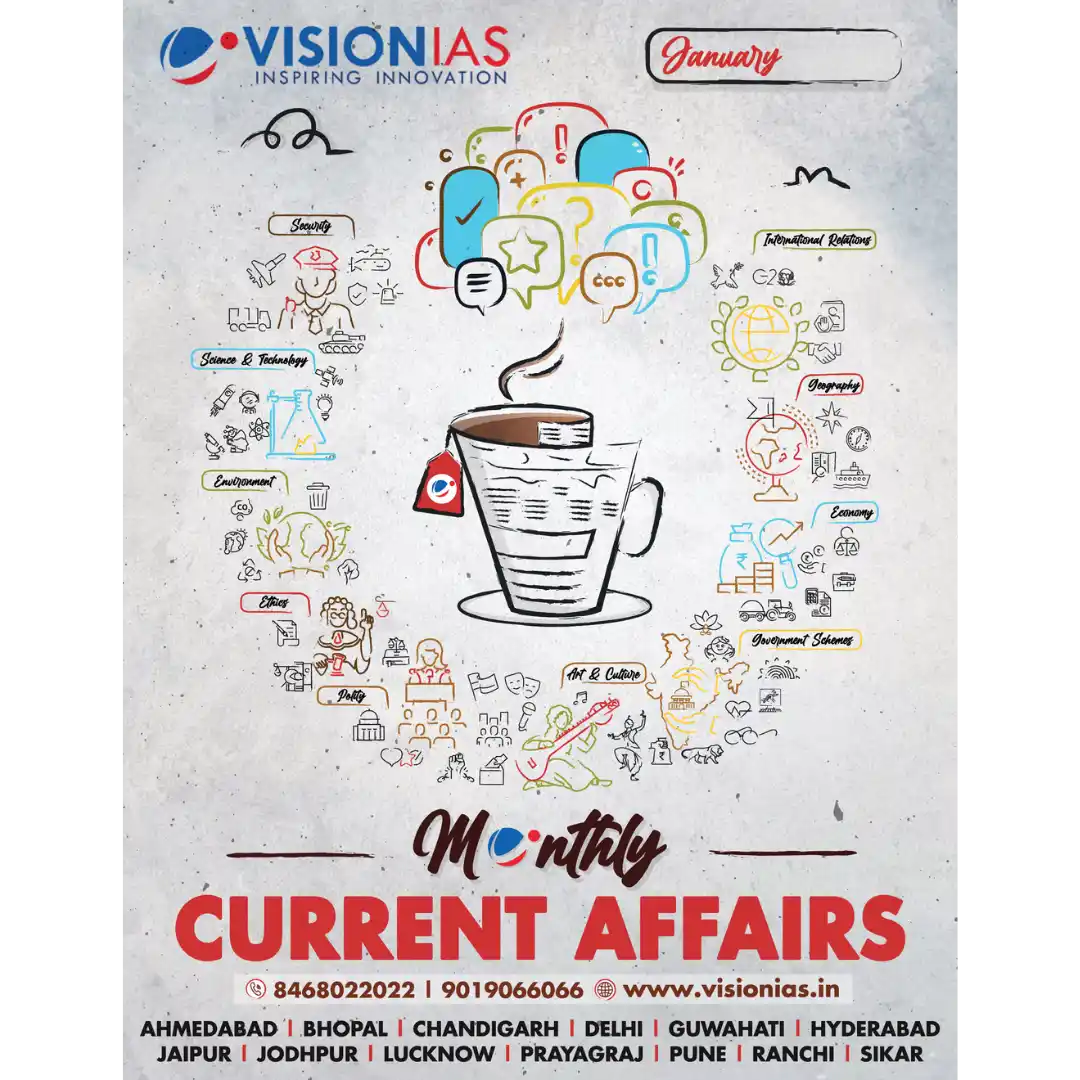
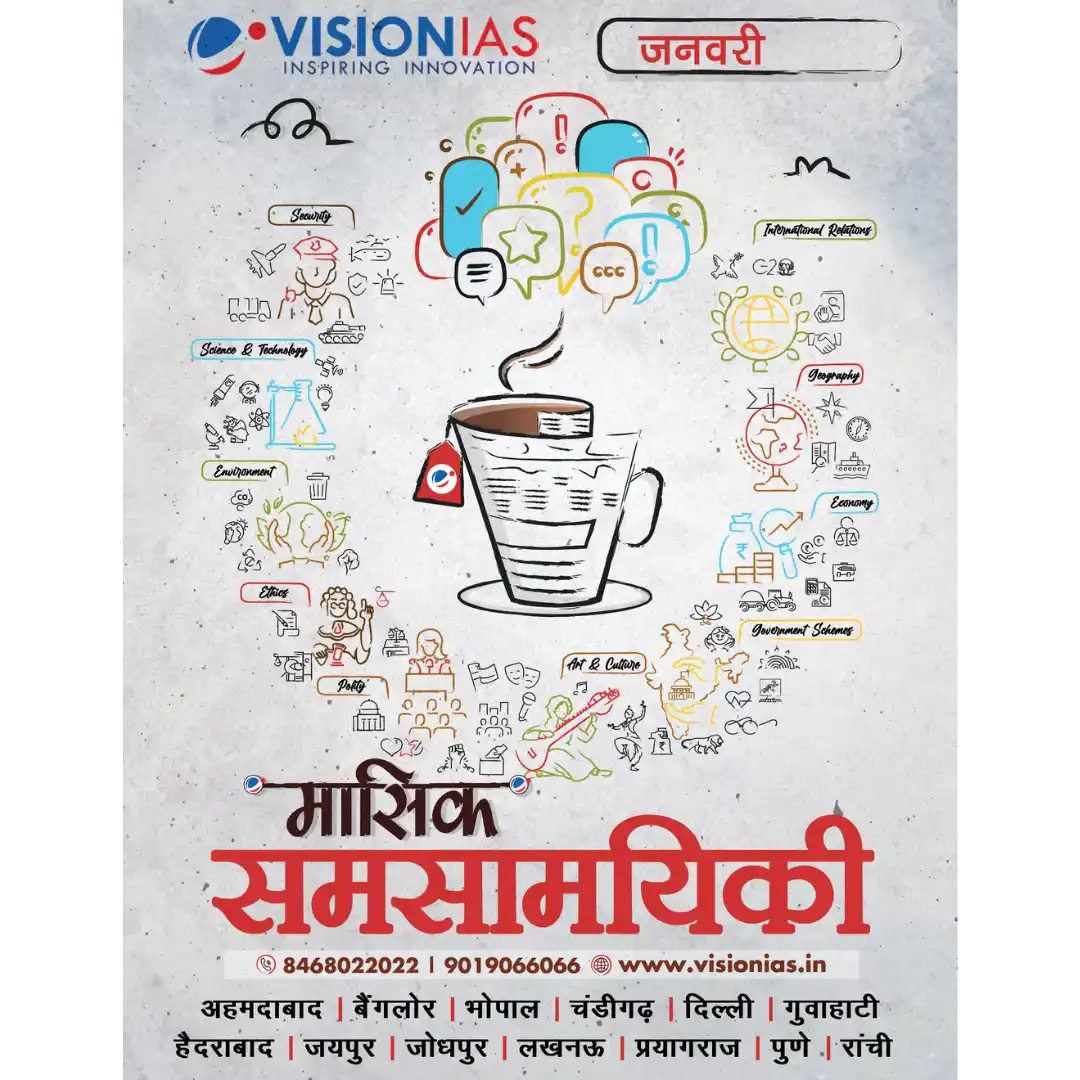
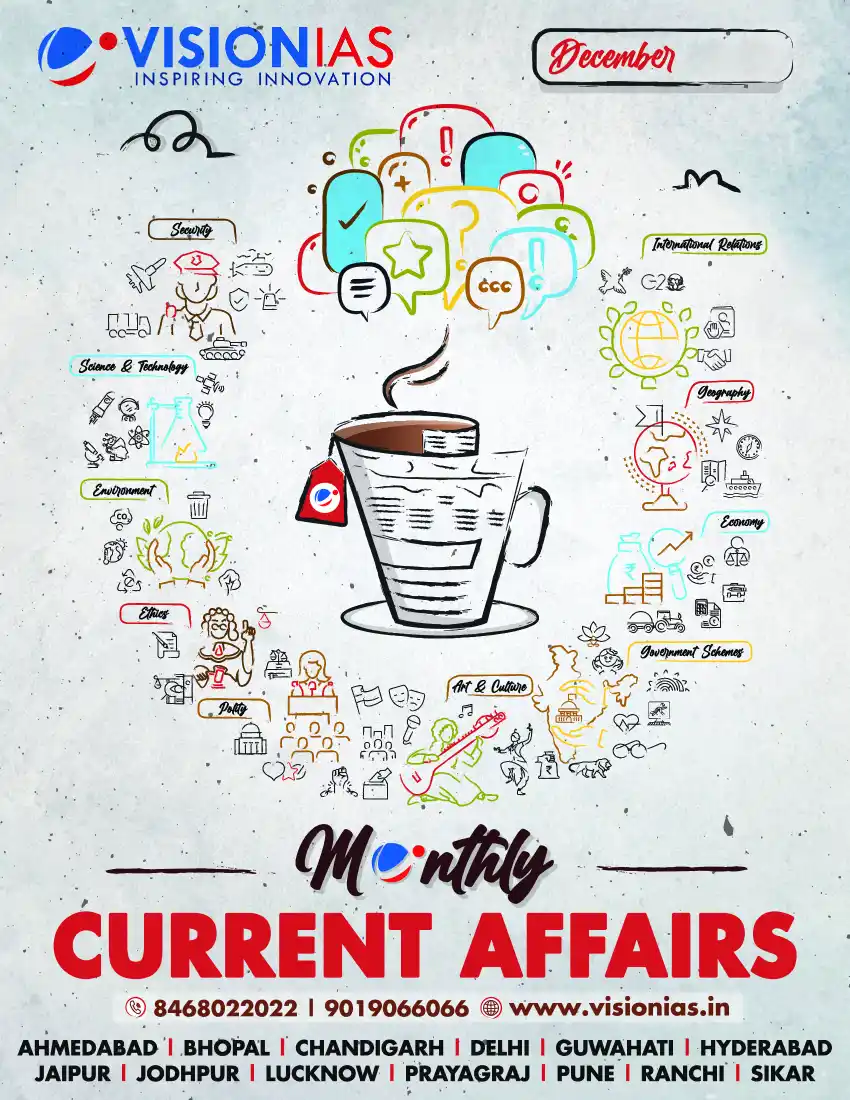
If you prefer a polished monthly compilation to clip your current-affairs prep cleanly, the Vision IAS Current Affairs Magazine January 2026 (English) and the December 2025 edition give you month-by-month coverage of national news, awards, schemes and appointments — the exact categories SSC tests. Hindi-medium aspirants can use the January 2026 Hindi edition for the same coverage in Hindi.
How many months of current affairs are needed for SSC CGL?
Cover the last 6 to 8 months before your exam date. SSC current affairs questions are not breaking-news heavy; they lean on the past two quarters of important events — major appointments, sports winners, government schemes, summits, books and awards. Doing 6-8 months thoroughly beats trying to memorise a full year superficially. In the final 30 days, switch to a single last-6-months capsule for rapid revision.
Subject-Wise Static GK: What to Read and Where
For aspirants targeting 45+ in GA, here is how to source each static subject beyond Lucent. NCERTs (Classes 6-10) are free PDFs and are the best supplement for Science, History and Geography fundamentals.
| Subject | Core Source | Supplement |
|---|---|---|
| History | Lucent (Ancient/Medieval/Modern) | NCERT Class 6-8, Blackbook lists |
| Polity | Lucent Polity chapters | NCERT Class 9-10 Civics |
| Geography | Lucent + maps | NCERT Class 9-10 Geography |
| Economy | Lucent Economy section | Current affairs (budget, schemes) |
| General Science | Lucent Science | NCERT Class 6-10 Science |
| Environment / Ecology | Lucent + current affairs | NCERT supplements |
| Computer Awareness | Lucent / Kiran objective computer | Pinnacle notes |
A common mistake: aspirants buy thick UPSC books for static GK. Avoid Spectrum (Modern History) and Laxmikanth (Polity) for SSC GA. They are excellent books, but their depth is built for UPSC Mains, not for SSC’s one-line objective questions. Reading them wastes weeks you don’t have. Lucent’s compressed coverage is the correct altitude for SSC.
Lucent vs Blackbook: Which Is Better for SSC?
This is the most-asked comparison, and the honest answer is they do different jobs — most toppers own both. Lucent is your learning and concept book; the Blackbook of General Awareness by Nikhil Gupta is your revision and lists book. The Blackbook excels at exactly what Lucent skims: one-liners, classical dances, important temples and lakes, national parks, recent awards and a strong last-month current-affairs section.
| Factor | Lucent GK | Blackbook of GA |
|---|---|---|
| Role | Static GK foundation | Revision, lists, last-month CA |
| Depth | Concept-level, subject-wise | One-liner, fact-dense |
| Best stage | Months 1-2 (learning) | Final 30 days (revision) |
| Current affairs | None | Last-month section included |
| Price | Lower (₹180-260) | Higher (₹350-450) |
Verdict: start with Lucent, add the Blackbook 6-8 weeks before the exam for rapid-fire revision. If your budget is tight and the exam is months away, buy Lucent now and the Blackbook later.
Best GK Books by Exam: CGL vs CHSL vs MTS vs GD
Most blogs assume everyone is a CGL aspirant. In reality the GA depth differs by exam, and so should your buying. The best gk book for ssc chsl and mts is lighter than what CGL demands, because the GA questions are slightly easier and fewer concepts are tested.
| Exam | GA Difficulty | Recommended Stack |
|---|---|---|
| SSC CGL | Highest | Lucent + Kiran/Pinnacle PYQ + Blackbook + monthly CA |
| SSC CHSL | Moderate | Lucent + Kiran PYQ + monthly CA |
| SSC MTS | Moderate-Easy | Lucent + PYQ practice + last-6-months CA |
| SSC GD Constable | Easy-Moderate | Lucent (selected chapters) + GD-specific PYQs |
| SSC Stenographer | Moderate | Lucent + Kiran PYQ + monthly CA |
CHSL and MTS aspirants do not need to over-invest — Lucent plus a PYQ book plus six months of current affairs is genuinely sufficient. CGL aspirants, facing tougher and more numerous GA questions, should add the Blackbook and be more rigorous with current affairs.
Best Book for SSC General Awareness for Beginners
If you are just starting and feel overwhelmed, this is the simplest path. The best book for ssc general awareness for beginners is Lucent, full stop — it assumes no prior knowledge, uses simple language, and is available in both Hindi and English. Do not buy five books on day one. Begin with Lucent, finish two full reads, then add a PYQ book once you can attempt chapter questions confidently. Layer in current affairs from month one as a 15-minute daily habit, not a separate study block.
Decision matrix: who should buy which
| You Are | Buy This | Skip This |
|---|---|---|
| Beginner, exam 6+ months away | Lucent + monthly CA | Multiple PYQ books at once |
| Mid-stage, exam 2-4 months away | Lucent + Kiran/Pinnacle PYQ + CA | UPSC-level books |
| Revision stage, exam 30-45 days away | Blackbook + last-6-months CA capsule | Starting a new thick book |
| Limited-time / re-attempt | Blackbook + PYQ + CA capsule | Reading Lucent cover-to-cover again |
Common Mistakes Aspirants Make Buying SSC GK Books
Picking the right titles is only half the job; using them wrong still costs marks. These are the avoidable errors that quietly drag down GA scores.
- Buying too many books at once. Three or four well-revised books beat ten half-read ones. Volume of revision matters more than volume of titles.
- Treating current affairs like the main event. It is only 3-4 questions. Static GK is 21-22 — spend your time accordingly.
- Reading static GK only once. GA rewards recall, and recall comes from repeated revision, not a single thorough read.
- Ignoring previous-year questions. SSC repeats facts. Skipping a PYQ book means voluntarily giving away the easiest marks in the paper.
- Not checking the edition year. An old edition can carry stale current-affairs, economy and award data — verify the printing year before you pay.
Fix these five and your existing books will outperform a shelf of newer ones.
How to Score 40+ in SSC General Awareness
Scoring 40+ marks (of 50) in GA is realistic and is what separates selected candidates. It comes down to revision frequency, not new material. Here is the method toppers use.
- Revise Lucent at least 4 times. The first read is learning; reads 2-4 are pure recall. Each pass should get faster — by the fourth, you skim only the boxed facts.
- Solve a full PYQ book chapter-wise, then re-attempt only the questions you got wrong. Track them in a one-page error log.
- Do current affairs daily in 15 minutes, consolidated monthly. Never let it balloon into hours.
- Use the Blackbook in the final month for one-liners and lists you keep forgetting.
- Attempt 2-3 GA sectional mocks a week in the last 6 weeks to fix timing — GA should take you under 7 minutes in the actual paper.
Should I read newspapers daily for SSC GK?
Not strictly necessary. For UPSC, daily newspapers matter; for SSC, a good monthly current affairs compilation covers what you need more efficiently. SSC current affairs questions are fact-based (who won, who was appointed, which scheme launched), not analysis-based. A 15-minute daily current-affairs PDF plus a monthly compilation beats spending an hour on a full newspaper. If you enjoy reading the paper, keep it — but it is a bonus, not a requirement.
A 60-Day SSC GA Study Plan (Book-to-Day Mapping)
This plan assumes Lucent + one PYQ book + a monthly current affairs source. Adjust speed to your exam date; the static-to-current-affairs ratio should stay roughly 80:20.
| Days | Focus | Books in Use |
|---|---|---|
| Day 1-20 | First read of Lucent (Polity, History, Economy) | Lucent + daily CA (15 min) |
| Day 21-35 | Lucent Science, Geography, Misc + start PYQs | Lucent + Kiran/Pinnacle |
| Day 36-48 | Second Lucent revision + full PYQ solving | Lucent (revision) + PYQ book |
| Day 49-56 | Blackbook one-liners + sectional mocks | Blackbook + mocks |
| Day 57-60 | Final revision: error log + last-6-months CA capsule | Blackbook + CA capsule |
Budget Picks: Free vs Paid for SSC GK
You can prepare GA on almost any budget. NCERT PDFs (Classes 6-10) are free and excellent for Science, History and Geography basics. Daily and monthly current affairs PDFs from AffairsCloud and GKToday are free. What is worth paying for is a physical Lucent (for distraction-free revision) and one PYQ book (for question density). A complete, exam-winning GA setup costs under ₹1,000.
| Resource | Cost | Verdict |
|---|---|---|
| NCERT Class 6-10 PDFs | Free | Best free static supplement |
| Free CA PDFs (AffairsCloud/GKToday) | Free | Sufficient for SSC current affairs |
| Lucent GK (print) | ₹180-260 | Worth buying — core book |
| Kiran/Pinnacle PYQ | ₹300-500 | Worth buying — practice |
| Blackbook | ₹350-450 | Optional but high-value for CGL |
| Monthly CA magazine | ₹150-300/month | Buy if you want structured CA |
One buying note that genuinely matters for SSC: always check the edition year, especially for any book with a current-affairs or economy section. An outdated edition can carry stale appointment names, scheme figures and award winners. For pure static subjects like History and Polity, the edition matters far less.
Sample SSC GA Questions to Test Your Books
Use these to gauge whether your current materials are working. A well-prepared aspirant should answer most in under ten seconds each.
- Which Article of the Constitution deals with the abolition of untouchability? (Polity — Lucent)
- Who was the founder of the Slave Dynasty? (History — Lucent)
- The unit of electrical resistance is? (Science — Lucent/NCERT)
- Which classical dance form originated in Tamil Nadu? (Static lists — Blackbook)
- Which scheme was launched recently for street vendors’ credit? (Current affairs — monthly CA)
If you missed the static ones, you need more Lucent revisions. If you missed the lists, add the Blackbook. If you missed the current-affairs question, tighten your monthly CA habit.
Final Recommendation
The best book for SSC GK is a stack, not a single title: Lucent’s General Knowledge as your static foundation, Kiran or Pinnacle for previous-year MCQ practice, the Blackbook for last-month revision, and a monthly current affairs compilation for the latest 6-8 months. Beginners should start with Lucent alone; CGL aspirants should own all four; CHSL and MTS aspirants can skip the Blackbook. Revise Lucent four times, solve PYQs religiously because SSC repeats questions, and keep current affairs to a tight daily habit. Do this and 40+ in GA is well within reach. To keep your current-affairs prep organised month by month, pair your books with a structured monthly magazine such as the Vision IAS January 2026 current affairs magazine.
Frequently Asked Questions
Which is the best book for SSC GK?
There is no single best book — the best setup is Lucent’s General Knowledge for static GK, a previous-year MCQ book like Kiran’s SSC General Awareness or Pinnacle SSC General Studies for practice, and a monthly current affairs compilation for the latest news. Lucent is the one indispensable purchase.
Is Lucent’s GK enough for SSC CGL?
For static GK, Lucent covers about 80-85% of what SSC CGL asks and is enough as a foundation. It does not cover current affairs and is thin on one-liner lists, so pair it with a monthly current affairs source and, ideally, the Blackbook for last-month revision.
Which is better for SSC, Lucent or Blackbook of General Awareness?
They serve different roles, so most toppers use both. Lucent is the learning and concept book for static subjects; the Blackbook is the revision book for one-liners, lists and last-month current affairs. Start with Lucent and add the Blackbook 6-8 weeks before the exam.
How many months of current affairs are needed for SSC CGL?
Cover the last 6 to 8 months before your exam thoroughly. SSC current affairs questions focus on major appointments, schemes, sports, awards and summits from the past two quarters, so depth over that window beats skimming a full year.
Are previous year GK questions repeated in SSC exams?
Yes, frequently. SSC recycles GK questions and facts across years and across CGL, CHSL and MTS. Solving a chapter-wise PYQ book like Kiran’s often lets you answer 8-12 questions in the actual paper that you have already seen.
Which is the best GK book for SSC in Hindi?
Lucent’s Samanya Gyan (the Hindi edition of Lucent GK) is the default static-GK book for Hindi-medium aspirants and mirrors the English version. The Blackbook and Kiran also have Hindi editions, so a full Hindi-medium GA stack is easily available.
How can I score 40+ marks in SSC general awareness?
Revise Lucent at least four times, solve a full PYQ book chapter-wise and re-attempt your wrong answers from an error log, keep current affairs to a tight 15-minute daily habit, use the Blackbook for last-month one-liners, and take 2-3 GA sectional mocks a week in the final six weeks. The 40+ scorers win on revision frequency, not new material.
Should I read newspapers daily for SSC GK preparation?
It is helpful but not required. SSC current affairs questions are fact-based, so a 15-minute daily current-affairs PDF plus a monthly compilation covers them more efficiently than a full newspaper. Read the paper if you enjoy it, but treat it as a bonus rather than a core requirement.
Recommended Study Material
Continue Reading
NCERT Books for NEET 2026: List, Subject-Wise Weightage & Free PDF Download
The NCERT books for NEET you must study are the official Class 11 and Class 12 NCERT textbooks…
Anthropology Optional Syllabus 2026: Paper 1 & 2 + PDF
The anthropology optional syllabus for UPSC is split into two Mains papers of 250 marks each (500 total):…
Sociology Optional Syllabus 2026: Paper 1 & 2 + PDF
The sociology optional syllabus for UPSC is a two-paper syllabus of 250 marks each (500 total): Paper 1,…