NCERT Books for NEET 2026: Subject-Wise List + Free PDF
NCERT books for NEET 2026 — subject & class-wise list, free PDF download links, weightage, deleted chapters, and whether NCERT alone is enough to score 600+.

NCERT books for NEET are the single most important resource for your preparation because roughly 80–85% of NEET questions are drawn directly or conceptually from the NCERT Class 11 and Class 12 textbooks in Physics, Chemistry and Biology. In Biology alone, close to 90–95% of questions are traceable to NCERT lines, diagrams and in-text boxes. Short answer: NCERT is non-negotiable and reliably carries you to a 500–550+ score, but crossing 650+ needs targeted practice, PYQs and application drilling layered on top.
This guide gives you the complete, exam-ready picture — the exact NCERT books for NEET Class 11 and 12, subject-wise weightage, free PDF download links, the chapters you can safely skip after the NEET 2026 syllabus rationalisation, a proof of how NCERT lines become real NEET questions, an effective reading method, and an honest decision framework on whether NCERT is enough for your target score.
Quick answers at a glance:
- Is NCERT enough for NEET? Enough to qualify and reach ~500–550; not enough alone for 650+.
- How much of NEET is NCERT? ~80–85% overall (Biology ~90–95%, Chemistry ~85–90%, Physics ~60–70%).
- Class 11 or 12? Both — the syllabus is split roughly evenly and many chapters build across the two years.
- Free PDF? Yes, legally, from the official NCERT portal (ncert.nic.in) and e-Pathshala.
Why NCERT Books for NEET Are the Foundation
The NEET syllabus notified by the NTA (National Testing Agency) is built almost entirely on the NCERT curriculum for Classes 11 and 12. When the NTA rationalised the syllabus in 2024, it explicitly aligned NEET with the current NCERT textbooks, removing topics that NCERT had dropped. That is why toppers and Kota faculty repeat one line every year: “Master NCERT first.”
There are three concrete reasons NCERT books for NEET matter so much:
- Syllabus alignment: Every official NEET topic maps to an NCERT chapter. No coaching module invents content outside this base.
- Direct question lifting: Especially in Biology and Inorganic Chemistry, questions are often single NCERT sentences reframed as MCQs — including statements from the small in-text boxes, examples and figure captions.
- Factual accuracy: When two options seem correct, NTA’s answer key treats the NCERT statement as the final authority. Knowing the exact NCERT wording resolves ambiguous questions.
How Many NEET Questions Come From NCERT (Subject-Wise Weightage)
NEET has 180 questions for 720 marks — 45 questions each in Physics and Chemistry and 90 in Biology (Botany + Zoology). Here is a realistic estimate of how much of each subject is NCERT-based, gathered from repeated year-on-year paper analysis. Treat these as informed ranges, not official figures — the NTA does not publish an NCERT-vs-non-NCERT split.
| Subject | Questions | Marks | Approx. NCERT-Based Share | What NCERT Covers Best |
|---|---|---|---|---|
| Biology (Botany + Zoology) | 90 | 360 | ~90–95% | Nearly everything — text, diagrams, in-text boxes |
| Chemistry | 45 | 180 | ~85–90% | Inorganic + Organic theory, most physical concepts |
| Physics | 45 | 180 | ~60–70% | Theory, formulae, definitions — not numerical variety |
| Overall NEET | 180 | 720 | ~80–85% | Complete conceptual foundation |
The takeaway: Biology and Chemistry are where NCERT pays off the most. Physics needs NCERT for concepts and formulae, but the numerical application has to come from practice books — a gap we address later. In marks terms, that ~80–85% translates to roughly 570–610 marks’ worth of the paper resting on how well you know NCERT, which is exactly why it is the first thing to master.
Which NCERT Books Are Best for NEET Biology, Physics and Chemistry?
For NEET, the “best” NCERT books are simply the official NCERT Class 11 and Class 12 textbooks for each subject — there is no premium or alternative edition you should chase. For Biology, the NCERT textbook itself is the gold standard; read it as your primary book, not a reference. For Chemistry, NCERT theory is excellent for Inorganic and Organic, and covers most Physical concepts — only Physical Chemistry numericals need outside practice. For Physics, use NCERT for theory, definitions and formulae, and pair it with a dedicated numerical practice book. In other words: the best NCERT strategy is not a different book, it is a different depth of reading for each subject.
NCERT Books for NEET: Class 11 and Class 12 Full List
You need both Class 11 and Class 12 NCERT books for all three subjects — there is no skipping one class. Roughly half the NEET syllabus sits in Class 11 and half in Class 12, and many chapters (like Human Physiology or Organic Chemistry) build across both years. Here is the complete list.
| Subject | Class 11 NCERT Book | Class 12 NCERT Book |
|---|---|---|
| Physics | Physics Part I & Part II | Physics Part I & Part II |
| Chemistry | Chemistry Part I & Part II | Chemistry Part I & Part II |
| Biology | Biology (single textbook) | Biology (single textbook) |
That is six NCERT titles in total (counting Biology as one book per class, Physics and Chemistry as two parts each). Buying the full physical Class 11 + 12 PCB set in one go saves the hassle of hunting for individual books, and having clean print copies to annotate line-by-line is far better for revision than reading off a screen.
Chapters and Weightage Per Subject
Knowing where the marks concentrate helps you prioritise NCERT chapters. The table below shows the approximate chapter load and high-weightage areas so you invest your line-by-line reading where it returns the most marks.
| Subject | Approx. Chapters (11+12) | High-Weightage NCERT Areas |
|---|---|---|
| Biology | ~38 | Human Physiology, Genetics & Evolution, Ecology, Cell Biology, Plant Physiology |
| Chemistry | ~28 | Organic Chemistry, Coordination Compounds, Chemical Bonding, Equilibrium, Thermodynamics |
| Physics | ~29 | Mechanics, Electrodynamics, Modern Physics, Optics, Thermodynamics |
Note that high-weightage does not mean “only study these.” NEET routinely pulls one-off questions from low-weightage chapters, so the smarter reading of this table is: never leave the high-weightage chapters weak, and still cover the rest at least once.
Where to Download NCERT Books for NEET as Free PDF
All NCERT textbooks are published free by the government, so you can legally download every NCERT book for NEET as a PDF — subject-wise, class-wise or chapter-wise — from the official NCERT portal. This is the safest route for an NCERT books for NEET PDF download: skip random third-party sites that bundle ads or outdated editions, and use the organised table below.
| Book | Format Available | Official Free Source |
|---|---|---|
| Class 11 Physics (Part I & II) | Full book + chapter-wise PDF | ncert.nic.in → Textbooks (PDF) |
| Class 12 Physics (Part I & II) | Full book + chapter-wise PDF | ncert.nic.in → Textbooks (PDF) |
| Class 11 Chemistry (Part I & II) | Full book + chapter-wise PDF | ncert.nic.in → Textbooks (PDF) |
| Class 12 Chemistry (Part I & II) | Full book + chapter-wise PDF | ncert.nic.in → Textbooks (PDF) |
| Class 11 Biology | Full book + chapter-wise PDF | ncert.nic.in → Textbooks (PDF) |
| Class 12 Biology | Full book + chapter-wise PDF | ncert.nic.in → Textbooks (PDF) |
To download: open ncert.nic.in, go to the “Textbooks (PDF)” section, choose the class, select the subject, and download either the whole book or individual chapters. The e-Pathshala app and website carry the same PDFs, and are handy on a phone for quick lookups between classes.
An honest reality check: free PDFs are perfect for quick reference and search, but most serious aspirants find that studying line-by-line, highlighting, and revising 4–5 times is far easier on printed books than on a phone or laptop. Screen fatigue and broken revision are the two biggest silent killers of NCERT-based preparation. A clean printed Class 11 + 12 PCB set to annotate — combined with the PDFs for search — is the practical setup most toppers use.
Are NCERT Books Enough for NEET 2026?
Yes, NCERT is enough to qualify NEET and reach a 500–550 score band comfortably — but it is not enough on its own to score 650+. NCERT gives you the theory and roughly 80% of the paper; the remaining marks come from application, speed and question variety that only practice books and PYQs build. Here is the score-band decision framework.
| Target Score | Is NCERT Enough? | What You Need |
|---|---|---|
| Up to ~500–550 | Largely yes | NCERT mastery + past-year papers |
| ~550–620 | NCERT + light support | NCERT + one NCERT-based objective book + PYQs |
| ~620–680 | No, not alone | NCERT + subject reference books + mock tests |
| 680–720 (AIR < 1000) | Definitely not alone | NCERT line-by-line + full reference set + heavy mocks |
Read this table honestly against your own goal. If your target is a state government seat around 550, NCERT plus PYQs genuinely is enough. If you are chasing a top government MBBS seat, NCERT is the entry ticket, not the whole journey.
Is NCERT Alone Enough to Score 600+ in NEET?
For Biology, NCERT alone can realistically get you close to full marks if memorised line-by-line — Biology is where NCERT-only students win. For Chemistry, NCERT covers most of the paper but Physical Chemistry numericals need extra practice. For Physics, NCERT alone will not get you a 600+ contribution from Physics — the numerical application simply isn’t drilled enough in NCERT. So to cross 600 overall, NCERT-only works for Biology, but you must add practice resources for Physics and part of Chemistry. The realistic split: aim to max out Biology on NCERT, and treat Physics numericals as the deciding factor between a 550 and a 650.
NEET 2026 Deleted Chapters: What NOT to Study in NCERT
After the NTA syllabus rationalisation, several NCERT topics were dropped from NEET, and studying them wastes precious time. The table below is a “don’t-over-invest” guide mapping commonly rationalised areas. Always cross-check the final list against the official NTA NEET 2026 syllabus, as the NTA can revise it.
| Subject | Reduced / Removed Areas (verify with NTA) | Action |
|---|---|---|
| Physics | Some topics from communication systems and select applied sections | Skip removed portions; keep core mechanics & electrodynamics |
| Chemistry | Portions of states of matter, surface chemistry, some environmental/polymer content | Focus on retained Organic, Inorganic & core Physical |
| Biology | Reduced content in areas like strategies for food production and select applied topics | Prioritise Human Physiology, Genetics, Ecology, Cell Biology |
Rule of thumb: if a topic exists in the older NCERT but is not in the current NTA syllabus PDF, park it. Do not blindly study every page — study every page that is in the current syllabus. One caution: a topic being trimmed from the syllabus does not always mean its foundational concept is safe to ignore if a later chapter depends on it, so check the dependency before fully dropping anything.
How to Read NCERT Books Effectively for NEET
Owning NCERT is not the same as extracting marks from it. The students who convert NCERT into a 650+ score follow a disciplined method, not passive reading. Here is the exact approach.
- Read line-by-line, especially Biology: Every sentence is a potential MCQ. Do not skim. Underline example names, values, exceptions and conditions.
- Never skip in-text boxes, examples and figure captions: NTA loves lifting questions from these overlooked spots — the small boxed facts in Biology are a goldmine.
- Study every diagram: Label and re-draw diagrams in Biology (heart, nephron, neuron, flower structure) and Chemistry (mechanisms). Diagram-based questions are near-guaranteed.
- Solve in-text and end-of-chapter questions: These reinforce the exact concepts NEET tests, and their data values often reappear in options.
- Use NCERT Exemplar: After the main textbook, NCERT Exemplar problems (especially Chemistry and Biology) add MCQ-style rigour and expose you to tougher application — a low-cost, high-return addition.
- Revise 4–5 times: A single reading is useless for retention. Plan multiple revision passes, each faster than the last, converting full pages into keywords by the final sweep.
- Convert every NCERT read into a question set: immediately after a chapter, solve 20–30 NCERT-based MCQs or a PYQ set on it. This is what turns “I have read it” into “I can answer it.”
How Many Times Should You Revise Each Subject?
| Subject | Recommended Revisions | Method |
|---|---|---|
| Biology | 5+ | Line-by-line first, then keyword + diagram sweeps |
| Chemistry | 4–5 | Inorganic memory revisions + Organic reaction sheets |
| Physics | 3–4 | Formula sheets + repeated numerical practice |
Proof: How an NCERT Line Becomes a NEET Question
This is the angle most pages skip — showing you that NCERT-line reading isn’t a slogan. Below are representative examples of how a plain NCERT statement is reframed into a NEET-style question. Study NCERT with this lens and you will start spotting “question-able” lines yourself.
| NCERT Line (Typical) | NEET-Style Question |
|---|---|
| Biology: a stated function of a specific hormone or organelle in an in-text line | “Which of the following is the correct function of X?” — options built around that exact line |
| Chemistry (Inorganic): a periodic trend or property stated as fact | “Arrange/identify the correct order of property Y” — directly from the NCERT statement |
| Physics: a definition or law stated in NCERT theory | Assertion-Reason question using the NCERT definition as the reasoning |
The pattern is consistent: the more precisely you know the NCERT wording, the faster and more confidently you eliminate wrong options. In a paper where the difference between two ranks can be a single mark, this precision is where NCERT quietly wins you seats.
Best Supplementary and Reference Books to Add to NCERT
NCERT is the base; these references fill the application gap for a 620+ target. Do not start with them — layer them after NCERT mastery.
| Subject | NCERT-Companion / Objective | Deeper Reference (High Target) |
|---|---|---|
| Physics | MTG NCERT at Your Fingertips (Physics) | DC Pandey / HC Verma for numerical practice |
| Chemistry | MTG NCERT at Your Fingertips (Chemistry) | OP Tandon (Physical/Inorganic), MS Chauhan (Organic) |
| Biology | MTG NCERT at Your Fingertips (Biology) | Trueman’s Biology (selective use) |
For a budget aspirant, the smartest combination is: NCERT (base) + NCERT Exemplar + one “NCERT at Your Fingertips”-style objective book per subject + previous-year papers. That covers the vast majority of NEET without buying every reference on the market.
If you want a single consolidated, exam-ready module set that is built around the latest NTA pattern and mirrors NCERT while adding mindmaps and practice, the Careerwill NEET Study Module Set (23 modules, 4200+ pages) is a strong companion to your NCERT books — designed by Kota NEET faculty to bridge exactly the application gap NCERT leaves open. Many droppers use NCERT for theory and a module set like this for structured revision and question practice.
A Practical NCERT-Based NEET Study Timetable
Here is a concrete, NCERT-first schedule you can adapt whether you are in Class 11, Class 12 or dropping a year. The principle: build on NCERT, then layer practice.
| Phase | Duration | Focus |
|---|---|---|
| Foundation | Months 1–5 | NCERT line-by-line, chapter-wise, all three subjects; solve in-text questions |
| Reinforcement | Months 6–8 | NCERT Exemplar + one objective book/subject + start PYQs |
| Application | Months 9–10 | Physics numericals, Organic mechanisms; full-length mock tests weekly |
| Revision | Months 11–12 | Rapid NCERT revisions (Biology 2–3 sweeps), formula sheets, error log |
Daily, aim to keep Biology as an everyday NCERT-reading habit (its volume of factual recall rewards frequency), while rotating Physics and Chemistry through problem-solving blocks. If you are starting late, compress the Foundation and Reinforcement phases but never delete the Revision phase — an un-revised NCERT is where most points leak on exam day.
Common Mistakes Aspirants Make With NCERT
- Treating NCERT as “too easy” and jumping to references. This is the top reason strong students lose Biology and Inorganic marks they should never lose.
- Reading once and moving on. Without 4–5 revisions, retention collapses by the exam.
- Ignoring in-text boxes and diagrams. A disproportionate number of “unexpected” questions come from exactly here.
- Studying deleted chapters. Wasting weeks on rationalised-out topics instead of the live syllabus.
- Relying on PDFs only and never revising properly. Screen-only study breaks the multiple-revision habit that NCERT demands.
- Reading NCERT but never testing on it. Passive reading feels productive; only solving NCERT-based MCQs and PYQs reveals what you actually remember.
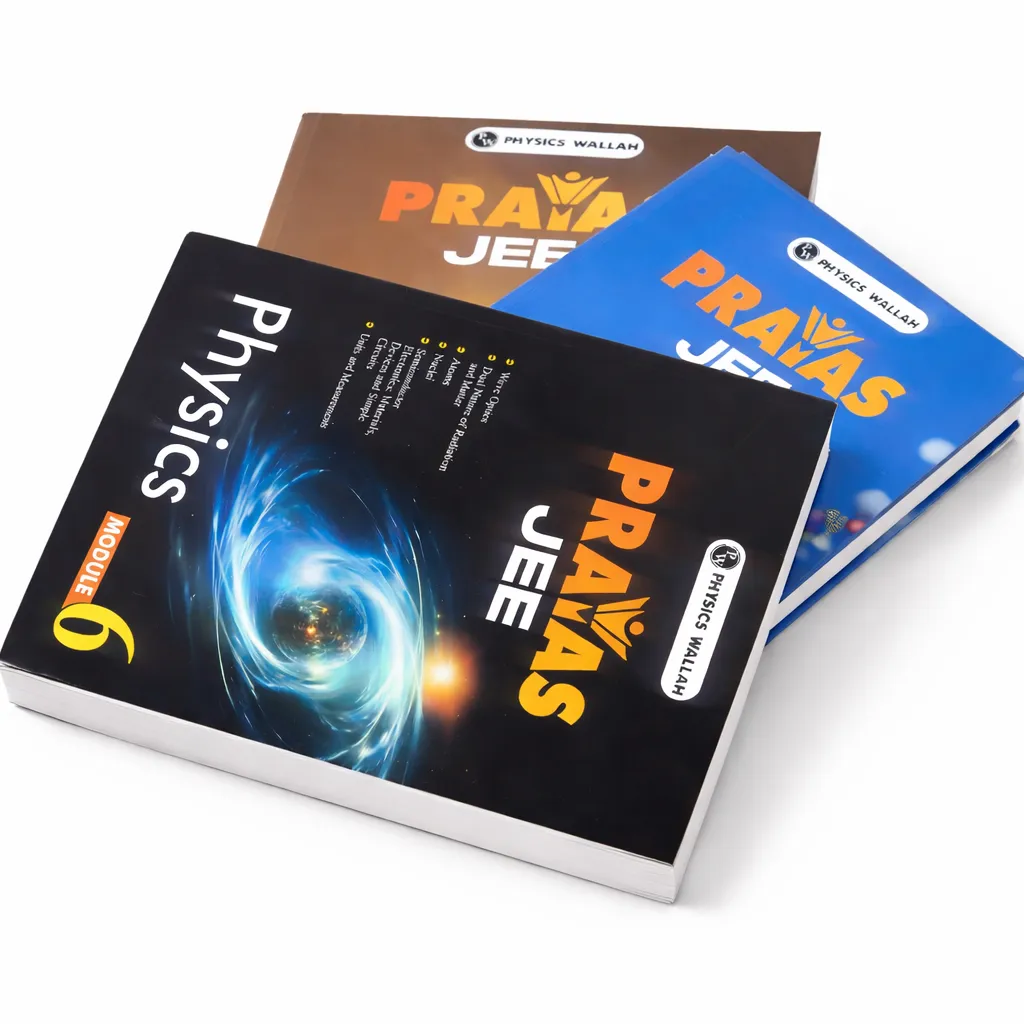
Science students preparing for both NEET and engineering should note that the same NCERT discipline underpins JEE too — if you or a peer are on the engineering track, structured module sets like the PW Prayas JEE Modules (Class 11+12 set) and the eSaral IIT JEE Modules follow the same NCERT-first philosophy for Physics and Chemistry.
The Bottom Line on NCERT Books for NEET
NCERT books for NEET are your foundation, not your finish line. Read both Class 11 and Class 12 line-by-line, respect the diagrams and in-text boxes, drop the rationalised chapters, revise 4–5 times, and you will secure the ~80% of the paper that is pure NCERT. Then add Exemplar, an objective companion book and previous-year papers to convert that base into a 650+ score. Get the NCERT part right first — everything else is layered on top of it.
Frequently Asked Questions
Are NCERT books enough for NEET 2026?
NCERT books are enough to qualify NEET and reach roughly a 500–550 score band, especially in Biology where nearly 90–95% of questions are NCERT-based. To score 650+, you must add NCERT Exemplar, an objective book per subject, and previous-year papers for Physics numericals and application-based questions.
How many questions in NEET come directly from NCERT?
Around 80–85% of all NEET questions are NCERT-based. Subject-wise, Biology is about 90–95%, Chemistry about 85–90%, and Physics about 60–70% — with Physics needing extra numerical practice beyond NCERT theory. These are estimates from year-on-year paper analysis, not official NTA figures.
Which NCERT books are best for NEET Biology, Physics and Chemistry?
The best books are the official NCERT Class 11 and 12 textbooks for each subject — there is no premium edition to chase. Biology NCERT is the gold standard and should be your primary book; Chemistry NCERT is excellent for Inorganic and Organic; Physics NCERT is best for theory and formulae and should be paired with a numerical practice book.
Do I need both Class 11 and Class 12 NCERT books for NEET?
Yes. The NEET syllabus is split roughly evenly across Class 11 and Class 12 for all three subjects, and many chapters build across both years. You cannot skip either class — you need all six NCERT titles (Physics, Chemistry and Biology for Classes 11 and 12).
How should I read NCERT books effectively for NEET?
Read line-by-line, never skip in-text boxes, examples, figure captions or diagrams, solve the in-text and end-of-chapter questions, add NCERT Exemplar for MCQ rigour, and revise each subject 4–5 times. After every chapter, immediately test yourself with NCERT-based MCQs or PYQs so reading converts into recall.
Where can I download NCERT books for NEET as free PDF?
Download them free from the official NCERT portal (ncert.nic.in) under “Textbooks (PDF)”, or from the e-Pathshala app. You can get full books or chapter-wise PDFs for Physics, Chemistry and Biology. PDFs are great for reference, but most toppers study and revise from printed books to avoid screen fatigue.
Which chapters are not covered in NCERT for NEET Physics and Chemistry?
After the NTA syllabus rationalisation, several topics were removed — such as portions of communication systems in Physics and parts of states of matter, surface chemistry and select environmental/polymer content in Chemistry. Always cross-check the current NTA NEET 2026 syllabus and skip any topic not listed there.
Is NCERT alone enough to score 600+ in NEET?
For Biology, NCERT alone — memorised line-by-line — can get you close to full marks. For Chemistry it covers most of the paper, but Physical Chemistry numericals need practice. For Physics, NCERT alone is not enough for a high score, so a numerical practice book is essential to cross 600+ overall.
Recommended Study Material


Continue Reading
SSC MTS Syllabus 2025: Subject-Wise Topics, Pattern & PDF
The SSC MTS syllabus for the Computer-Based Examination (Paper-I) covers four subjects — Numerical & Mathematical Ability, Reasoning…
JEE Main 2026 Preparation: Study Plan, Timetable & Books
JEE Main 2026 preparation works best when you combine a syllabus-first approach with a phase-wise study plan: build…
WBCS Syllabus 2026: Prelims, Mains, Optional + PDF
The WBCS syllabus for 2026 is set by the West Bengal Public Service Commission (WBPSC) and runs across…