How to Prepare for NEET 2026: Step-by-Step Roadmap + Plan
How to prepare for NEET 2026 at home: subject-wise roadmap, ready timetables, chapter weightage, best books, mock-test plan and tips for beginners.


How to prepare for NEET: master the NCERT textbooks cover-to-cover (they drive 70–75% of questions), build a 6–8 hour daily timetable that gives Biology the most time, add just one standard reference book per subject, and solve 10 years of previous year questions plus 30+ full-length mock tests with detailed analysis. Layer 3–4 revision cycles on top and you can realistically target 600+ out of 720 — even at home, without coaching.
NEET-UG is India’s single gateway to MBBS, BDS, BAMS and allied medical seats, and roughly 22–24 lakh aspirants compete for a limited pool of MBBS seats every year. The encouraging part: NEET rewards disciplined, NCERT-anchored preparation far more than expensive coaching. This guide gives you the exact exam pattern, chapter-wise weightage, ready-to-use timetables for every aspirant profile (Class 11, Class 12, dropper, 6-month crash, self-study), a concrete booklist, monthly target scores, a zero-to-start plan for absolute beginners, and the mistakes that quietly sink rank.
How to Prepare for NEET 2026: The 8-Step Roadmap at a Glance
Before the detail, here is the entire journey in one view. Each step is expanded in the sections below.
| Step | What to do | Why it matters |
|---|---|---|
| 1. Decode the pattern | Learn the 180-question, 720-mark format and +4/–1 marking | You can’t score what you don’t understand |
| 2. Own the syllabus | Map NCERT Class 11 & 12 chapters, note deleted topics | 70–75% of questions come straight from NCERT |
| 3. Fix a timetable | 6–8 focused hours, Biology-heavy allocation | Consistency beats intensity over 12 months |
| 4. Subject-wise strategy | Biology = memory + diagrams, Chemistry = 3 branches, Physics = concepts + formulas | Each subject needs a different attack |
| 5. Right material | NCERT first, then one reference book per subject | Depth over quantity prevents burnout |
| 6. Notes + PYQs | Short notes, a mistake notebook, 10 years of PYQs | Reveals NTA’s repeat patterns |
| 7. Mock tests | 30+ full-length tests with analysis | Builds speed, accuracy and exam temperament |
| 8. Revise | 3–4 revision cycles, last month full-time revision | Retention, not first-time learning, wins NEET |
How to Start NEET Preparation from Zero Level
If you are starting from scratch and feel overwhelmed, do not chase a perfect plan — start a simple one today. The zero-level opening move is always the same: open NCERT Class 11 Biology, read one chapter slowly, and make a one-page note of it. Beginners who wait for the “ideal” resource lose the most time.
- Week 1–2: Fix a realistic 4–6 hour timetable, gather the three NCERT sets (Physics, Chemistry, Biology for Class 11 & 12), and finish 2–3 Biology chapters to build momentum.
- Which subject first? Start with Biology — it is the most scoring (360 marks), the most NCERT-based, and the least intimidating, so early wins keep you consistent. Add one Chemistry chapter (begin with Inorganic or GOC) and one easy Physics unit (Units & Measurements, Kinematics) in parallel so no subject becomes a stranger.
- Build the loop: read a chapter → make short notes → solve that chapter’s PYQs → log errors. Repeat this loop for every chapter and your foundation compounds.
- Add references later: bring in a reference book per subject only after your NCERT base for a chapter is solid, not before.
A structured, sequenced module set removes the biggest beginner problem — not knowing what to study next. That is exactly the gap an ordered set like the Careerwill NEET Study Module Set is designed to fill for someone starting from zero.
Understand the NEET 2026 Exam Pattern and Marking
NEET-UG 2026 will be a pen-and-paper (OMR) exam conducted by the NTA. The single biggest 2026 reality most old blogs get wrong: from 2025 onwards, NTA removed the optional Section B and reverted to a fixed set of compulsory questions with a reduced duration. Know the current format cold.
| Subject | Questions | Marks | Share of paper |
|---|---|---|---|
| Physics | 45 | 180 | 25% |
| Chemistry | 45 | 180 | 25% |
| Biology (Botany 45 + Zoology 45) | 90 | 360 | 50% |
| Total | 180 | 720 | 100% |
- Marking scheme: +4 for a correct answer, –1 for a wrong answer, 0 for unattempted. Reckless guessing is expensive.
- Duration: 3 hours (180 minutes) — that is roughly 1 minute per question, so speed matters.
- Mode & language: Offline OMR; available in 13 languages including English, Hindi and regional mediums.
- No Section B choice: all 180 questions are compulsory in the current pattern, so you cannot skip weak chapters and hope for optional cushioning.
Takeaway: Biology alone carries 360 marks — half the paper. A strong biology score is the backbone of a high rank, but Physics and Chemistry decide whether you clear the cutoff for a government MBBS seat.
Know the Syllabus and Why NCERT Dominates
The NEET syllabus is finalised by the NMC and closely mirrors the rationalised NCERT Class 11 and 12 curriculum for Physics, Chemistry and Biology. Independent PYQ analyses consistently show that 70–75% of NEET questions are directly or indirectly lifted from NCERT lines, diagrams and tables — especially in Biology and Inorganic Chemistry, where questions are often verbatim.
2026 Syllabus Rationalisation: What Changed
NTA/NMC trimmed the syllabus in recent cycles, dropping some topics that used to be tested. Practical, exam-facing implications for 2026:
- Several peripheral chapters and sub-topics were pruned, so cross-check every chapter against the latest official NEET 2026 syllabus before investing time.
- The reduced syllabus means deeper, application-based questions on the remaining chapters — surface reading no longer suffices.
- Never study from an outdated coaching module without reconciling it against the current NCERT edition.
For the complete official breakdown you can pair this roadmap with a dedicated syllabus reference and a fully NCERT-aligned module set such as the Careerwill NEET Study Module Set, which is built around the latest NTA pattern across 23 modules and 4,200+ pages with mind-maps for quick recall.
Subject-Wise Weightage: Where the Marks Actually Are
Blanket advice like “Biology is important” is useless. Here is chapter-level weightage distilled from multi-year PYQ trends so you know exactly where to spend hours. Treat these as strong indicators, not guarantees.
Biology (≈360 marks, 90 questions)
| High-yield unit | Class | Approx. questions |
|---|---|---|
| Genetics & Evolution | 12 | 9–12 |
| Human Physiology | 11 | 10–13 |
| Cell Biology & Cell Division | 11 | 6–8 |
| Ecology & Environment | 12 | 8–10 |
| Biotechnology & Applications | 12 | 5–7 |
| Plant Physiology | 11 | 5–7 |
| Reproduction (Plant & Human) | 12 | 7–9 |
Chemistry (≈180 marks, 45 questions)
| Branch | High-yield chapters | Approx. share |
|---|---|---|
| Physical | Thermodynamics, Equilibrium, Electrochemistry, Solutions | ~35% |
| Organic | GOC, Hydrocarbons, Aldehydes/Ketones, Biomolecules, Alcohols-Phenols-Ethers | ~35% |
| Inorganic | Chemical Bonding, Periodic Table, Coordination Compounds, p-block | ~30% |
Physics (≈180 marks, 45 questions)
| High-yield unit | Class | Approx. questions |
|---|---|---|
| Mechanics (Laws of Motion, Work-Energy, Rotational) | 11 | 9–11 |
| Electrodynamics (Current, Electrostatics, Magnetism) | 12 | 9–12 |
| Modern Physics (Dual Nature, Atoms, Nuclei, Semiconductors) | 12 | 7–9 |
| Optics & Waves | 11 & 12 | 6–8 |
| Thermodynamics & KTG | 11 | 4–6 |
Strategy in one line: secure every high-yield Biology and Inorganic Chemistry mark first (they are memory-based and reliable), then push into scoring Physics units.
Build a Realistic NEET Study Plan and Timetable
A good NEET timetable protects 6–8 hours of focused study, weights Biology highest, and always ends the day with self-testing. Here is a proven daily template for a Class 12 student or dropper.
| Time block | Activity | Duration |
|---|---|---|
| 6:30–8:00 AM | Physics (concepts + numericals, fresh mind) | 1.5 hr |
| 9:00–11:00 AM | Biology (NCERT reading + diagrams) | 2 hr |
| 12:00–1:30 PM | Chemistry (rotate Physical/Organic/Inorganic) | 1.5 hr |
| 3:30–5:00 PM | Practice questions / PYQs of the day’s topics | 1.5 hr |
| 6:00–7:00 PM | Short-notes revision + mistake notebook | 1 hr |
| 8:30–9:30 PM | Biology revision or 45-question mini test | 1 hr |
Ready-Made Plans for Every Aspirant Profile
Most blogs give one generic plan. You need one that fits your starting point. Pick the row that matches you.
| Profile | Daily study | Core focus | Timeline shape |
|---|---|---|---|
| Class 11 student | 4–5 hr (with school) | Build NCERT foundation, no backlog | Finish Class 11 syllabus + weekly tests; light Class 12 preview |
| Class 12 student | 5–6 hr (with school/boards) | Class 12 syllabus + Class 11 revision | Align boards with NEET; ramp mocks after boards |
| Dropper / repeater | 8–10 hr | Fix weak areas, maximise mocks | 2 full syllabus passes + 40+ mocks |
| 6-month crash | 9–11 hr | High-yield chapters + PYQs only | Ruthless prioritisation; daily testing |
| Working / pure self-study | 3–4 hr weekday, 8 hr weekend | NCERT + recorded lectures + weekend mocks | 18-month soft timeline recommended |
Can You Crack NEET in One Year?
Yes — one year is a standard, workable timeline if you are consistent. In 12 months you can cover the full NCERT syllabus once, take a second revision pass, solve 10 years of PYQs, and sit 30+ full mocks. The one-year plan works when you front-load the syllabus in the first 6–7 months, then shift the back half almost entirely to revision, PYQs and mock analysis. What breaks a one-year attempt is not the calendar — it is broken consistency and skipped mock analysis.
Subject-Wise Strategy That Actually Moves Your Score
Biology: Your Rank-Maker
Biology is high-scoring because it is largely memory and comprehension based. Read NCERT line by line — including the small print, examples, and diagrams (many questions come from figure labels and boxed matter). Convert every process into a flowchart, and drill genetics numericals and taxonomy tables. Aim to lose almost no marks here; toppers routinely score 330–355 of 360.
Chemistry: The Balancer
Treat Chemistry as three subjects. Inorganic is near-verbatim NCERT — pure memory, so revise it repeatedly. Organic demands mechanism understanding over rote (master GOC first). Physical is numerical — maintain a formula sheet and practise daily. This is the subject where NCERT alone gets you furthest.
Physics: The Cutoff Decider
Physics scares aspirants but is where ranks separate. Prioritise concept clarity, then formula command, then relentless problem-solving. Keep a single formula notebook, solve topic-wise problems before mixed sets, and never mug formulas without deriving them once. Even 130+/180 in Physics lifts your overall rank dramatically.
Choose the Right Study Material: NCERT First, Then One Reference
The most common self-study mistake is drowning in ten books per subject. Read NCERT until you can recall it, then add exactly one standard reference per subject for practice and depth. There is no single “best book” for NEET — NCERT is the non-negotiable core, and the best reference is the one you actually finish.
| Subject | Foundation | Recommended reference | Why this pick |
|---|---|---|---|
| Biology | NCERT 11 & 12 (non-negotiable) | Trueman’s / MTG Objective + NCERT Exemplar | Exhaustive MCQ practice on NCERT lines |
| Physics | NCERT + concept module | HC Verma / DC Pandey (Objective) | Concept-building + graded numericals |
| Chemistry | NCERT (esp. Inorganic) | MS Chauhan (Organic), N Awasthi (Physical) | Best-in-class topic drills |
| All three | — | Integrated NEET module set | One aligned source with mind-maps + PYQs |
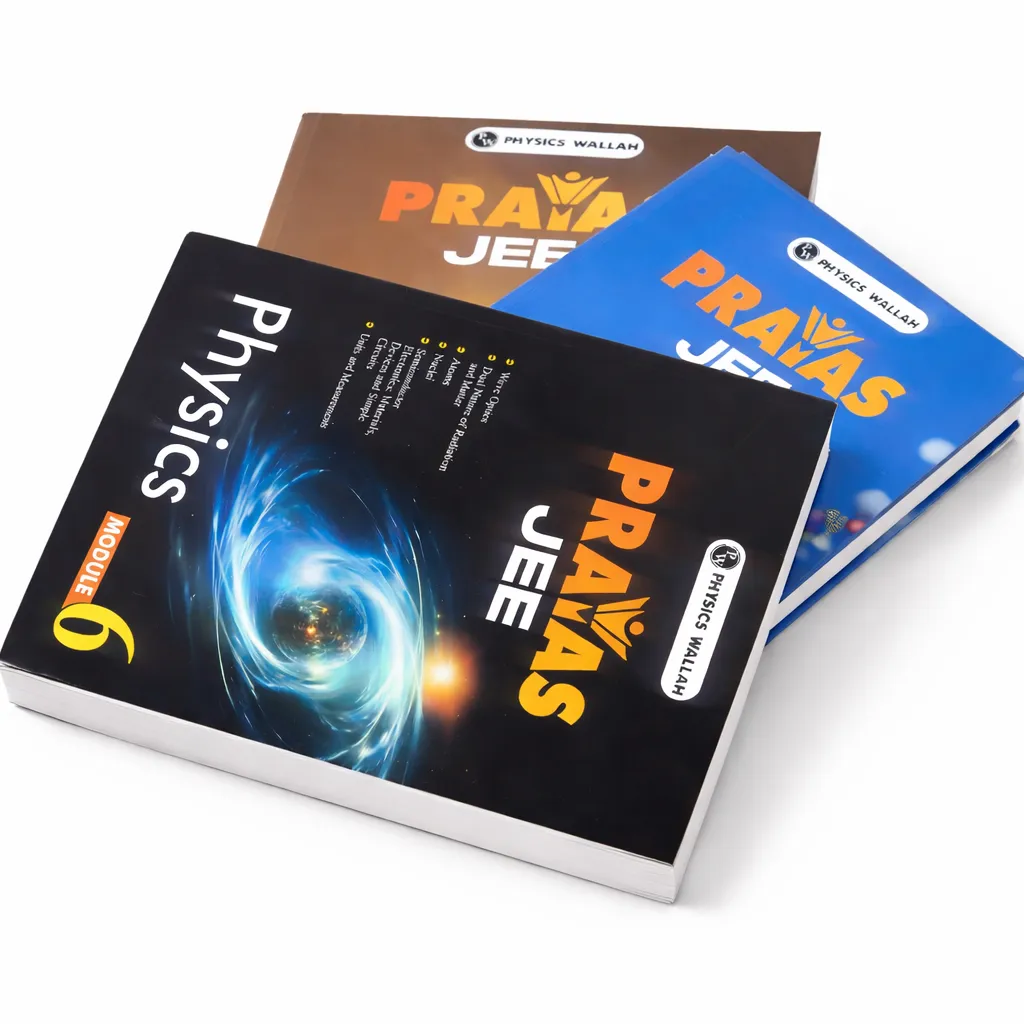
If you want a single coordinated resource instead of assembling books, an integrated set like the Careerwill NEET Study Module Set — designed by Kota faculties, updated to the latest NTA pattern with mind-maps across 23 modules — replaces scattered materials and keeps every subject on one syllabus track. Aspirants juggling NEET alongside engineering ambitions in the family sometimes also keep the eSaral IIT JEE Modules or PW Prayas JEE Modules handy, since Physics and Chemistry overlap heavily between the two exams.
Make Short Notes, Flashcards and a Mistake Notebook
Notes you make yourself are revised 5x faster than any textbook. Build three assets from Day 1:
- Short notes: one page per chapter — formulas, exceptions, named reactions, key values. This becomes your last-week revision bible.
- Flashcards: ideal for Biology terminology, Inorganic exceptions and Physics formulas; test yourself in dead time.
- Mistake notebook: the single highest-ROI habit in NEET prep. Log every wrong answer, why you got it wrong (concept gap / silly error / misread), and the correct approach. Re-reading only this notebook before the exam can add 30–40 marks.
Solve 10 Years of PYQs and Sample Papers
NEET repeats concepts, phrasings and even exact questions. Solving 10 years of previous year questions is not optional — it is how you learn NTA’s mind. Do PYQs chapter-wise while you study a chapter, then year-wise (full papers) in the final months. Track which chapters repeat most; you will find the weightage tables above confirmed in the data. A realistic target: 8,000–10,000 quality practice questions across your preparation.
Take Full-Length Mock Tests and Analyse Them
Mocks convert knowledge into marks. Aim for 30+ full-length mock tests before the exam, simulating the exact 180-question, 3-hour, OMR environment (same start time, no phone, negative marking honoured). The test is only half the value — the analysis is the other half:
- Categorise every mistake: silly, conceptual, or unknown.
- Track section-wise timing — are you finishing Biology in 45 minutes to bank time for Physics?
- Recompute your accuracy: attempting fewer questions with 95% accuracy often beats attempting all with 80%.
Monthly Benchmark Scores: Are You On Pace?
Most aspirants have no way to know if they’re progressing. Use these milestone mock scores (out of 720) as a rough one-year self-check.
| Month of prep | Target mock score | What it signals |
|---|---|---|
| Month 3 | 350–420 | Foundation forming; Biology should already be strong |
| Month 6 | 480–540 | Full syllabus once covered; weak areas visible |
| Month 9 | 560–610 | Revision + PYQ effect showing |
| Month 11–12 | 620–670+ | Government MBBS range; refine speed & accuracy |
Plan 3–4 Revision Cycles Before the Exam
NEET is won on retention, not first-time learning. Schedule your revisions deliberately:
| Cycle | When | Focus |
|---|---|---|
| Revision 1 | After finishing full syllabus | Complete NCERT re-read + short notes |
| Revision 2 | ~2–3 months before exam | Short notes + mistake notebook + weak chapters |
| Revision 3 | Final month (dedicate ~30 days) | Rapid revision + daily full mocks |
| Revision 4 | Last 7–10 days | Only notes, formulas, flashcards — no new topics |
Golden rule: never start a new topic in the last two weeks. The final month should be near-100% revision and testing.
Time Management Inside the NEET Exam Hall
With 180 minutes for 180 questions, your average is one minute per question — but you should not spend it evenly. A reliable attempt order for most students:
- Biology first (≈45–50 min): highest scoring, least time per question, builds confidence.
- Chemistry next (≈40–45 min): Inorganic and Organic are quick; leave Physical numericals flagged.
- Physics last (≈60–70 min): give it your calmest remaining time and the buffer minutes.
- Do two OMR passes: attempt sure-shots first, then return to flagged questions. Fill the OMR carefully — a shifted bubble can cost your rank.
Common Mistakes That Cost NEET Rank
- Over-relying on reference books before finishing NCERT — reference practice on a shaky NCERT base is wasted effort.
- Skipping mock analysis — taking tests without dissecting them repeats the same mistakes forever.
- Postponing revision — “I’ll revise later” turns into forgetting 40% before the exam.
- Neglecting Physics — because it’s hard, aspirants avoid it, then miss the government-seat cutoff.
- Chasing every new YouTube channel/book — resource-hopping fractures consistency. Pick one plan and finish it.
- Guessing blindly — with –1 marking, random guessing on 20 questions can cost you real marks.
Preparing for NEET at Home Without Coaching
Thousands crack NEET every year through self-study — coaching is a convenience, not a requirement. If you’re a tier-2/3 town student on a budget, this is your low-cost stack:
- Free: NCERT textbooks (download free from the official NCERT site), free NEET PYQ PDFs, government-run and reputable free YouTube lecture series, and free mock tests from established test platforms.
- Low-cost: one printed integrated module set for structure, plus one objective book per subject.
- Discipline systems: a fixed timetable, a study group of 2–3 serious aspirants for accountability, and weekly self-set targets.
Self-study’s only real risk is inconsistency and no external testing — solve both with a strict schedule and regular full-length mocks. A structured printed set such as the Careerwill NEET module set gives home aspirants the sequencing and mind-maps a classroom would otherwise provide.
The Dropper’s Playbook (Repeaters, Read This)
Droppers are one of NEET’s largest cohorts and often outperform first-timers — because they’ve seen the exam. If you’re repeating, run a different game plan:
- Diagnose first: analyse last year’s scorecard section-wise. Your rank leak is usually one or two subjects, not all three.
- Two full passes: a year is enough for two complete syllabus revisions plus 40+ mocks.
- Attack weak subjects, maintain strong ones: a dropper who was 500+ needs +120 marks, and those live in your weakest 20 chapters.
- Guard your mental health: the pressure is heavier the second time — protect sleep and a fixed routine ruthlessly.
Health, Motivation and Beating Burnout — The Actionable Version
Generic “stay motivated” advice helps no one. Build systems instead:
- Sleep 6.5–7.5 hours on a fixed schedule — sleep deprivation directly lowers recall and mock scores.
- Use focus blocks: 50 minutes study + 10 minutes break (Pomodoro) beats marathon cramming.
- Clear backlog weekly, not daily: keep a “pending topics” list and dedicate one weekend slot to it so it never snowballs.
- One rest half-day per week prevents burnout and improves next-week output.
- Move your body 20–30 minutes daily — a walk or light exercise resets focus better than another hour of tired reading.
- Limit doom-scrolling: park your phone in another room during study blocks. This single change recovers 1–2 productive hours a day.
Motivation follows action, not the other way round. Systems keep you going on the days motivation is absent — and there will be many.
Frequently Asked Questions
How can I start NEET preparation from zero level?
Start with NCERT Class 11 Biology, one chapter at a time, and build a simple 4–6 hour daily timetable. Make short notes as you go, solve chapter-wise PYQs immediately after each chapter, and add one reference book per subject only after your NCERT base is solid. A structured module set can give absolute beginners the right sequencing so you always know what to study next.
Can I crack NEET in one year with self-study?
Yes. One year is enough to cover the full syllabus once, revise 2–3 times, and take 30+ mock tests if you study 8–10 hours daily with consistency. Thousands qualify through self-study every year — the deciding factors are NCERT mastery, regular mock analysis, and disciplined revision, not coaching.
Is NEET possible without coaching, and can I prepare at home?
Absolutely. NEET is heavily NCERT-based, so home preparation with NCERT, one reference per subject, free PYQ PDFs, quality lectures and regular mock tests is fully viable. The only real risks — inconsistency and lack of testing — are solved by a fixed timetable and weekly full-length mocks.
How many hours should I study daily for NEET?
School-going students should target 4–6 focused hours plus schoolwork, while droppers should aim for 8–10 hours. Quality matters more than quantity — 6 truly focused hours beat 10 distracted ones. Always end the day with self-testing and short-notes revision.
Which subject should I start with or attempt first in NEET?
While preparing, start with Biology — it carries 360 marks, is the most NCERT-based, and gives quick early wins that keep you consistent. Inside the exam hall, also attempt Biology first (in about 45–50 minutes), then Chemistry, and leave Physics for last so you can spend your buffer time on its numericals.
Which is the best book for NEET preparation?
NCERT Class 11 and 12 are the single best and most essential books, since 70–75% of questions come from them. Beyond NCERT, the best reference is the one you finish: Trueman’s or MTG for Biology, HC Verma or DC Pandey for Physics, and MS Chauhan (Organic) plus N Awasthi (Physical) for Chemistry — or one integrated module set to keep everything on one track.
Are NCERT books enough to crack NEET?
NCERT alone can get you 550–600+ because 70–75% of questions come from it, especially in Biology and Inorganic Chemistry. But to reach 650+ and secure a government MBBS seat, supplement NCERT with one reference book per subject for extra practice in Physics numericals and Organic/Physical Chemistry.
How many mock tests and PYQs should I solve before NEET?
Aim for at least 30 full-length mock tests and the last 10 years of previous year questions, totalling roughly 8,000–10,000 practice questions. More important than the count is analysing every test — logging mistakes in a notebook and fixing them is what converts practice into a higher score.
Recommended Study Material


Continue Reading

Bank PO Preparation 2026: Full Roadmap, Timetable, Syllabus & Books
Bank PO preparation is a 6–9 month, three-stage effort — Prelims, Mains and Interview — built around four…

OJAS GPSC Syllabus 2026: Class 1-2, Prelims, Mains + PDF
The ojas gpsc syllabus for Class 1-2 (Gujarat Administrative, Civil and allied services) is a three-stage syllabus covering…

SBI Clerk Syllabus 2026: Prelims, Mains, Pattern + PDF
The SBI Clerk syllabus (Junior Associate) for 2026 is split across two written stages plus a language test.…