Best Current Affairs Magazine for UPSC 2026: Ranked & Compared
The best current affairs magazine for UPSC in 2026, ranked and compared: Vision IAS, InsightsIAS, Drishti, Yojana & more for prelims, mains, price and Hindi medium.

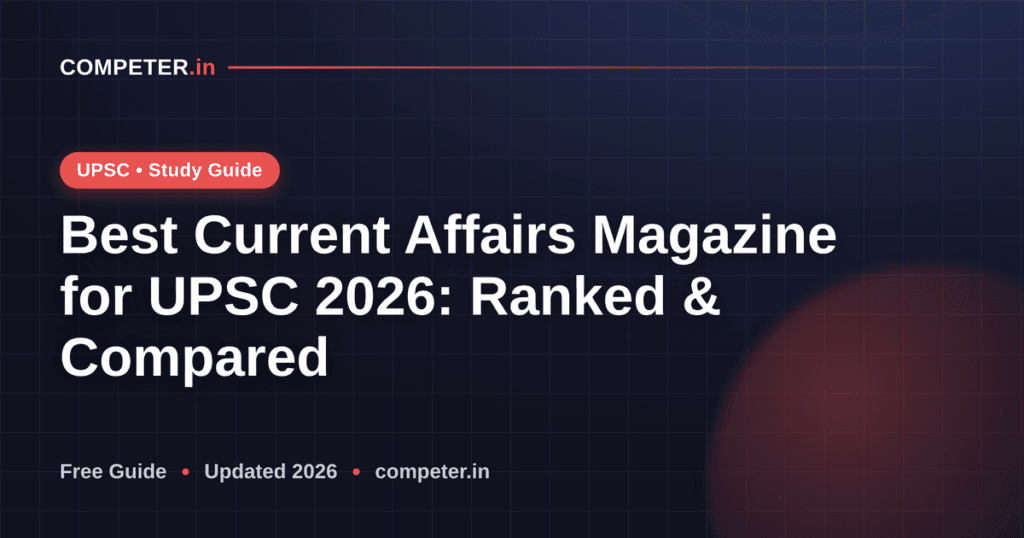
The best current affairs magazine for UPSC in 2026 is the Vision IAS Monthly Current Affairs Magazine — it is the single most widely used compilation among selected candidates, covers prelims and mains in one syllabus-tagged document, and is available in both English and Hindi. Pair it with Yojana (low-cost, government-published) for depth on economy and governance schemes, and you have a complete, affordable current-affairs stack. If you remember only one line from this guide: pick one monthly compilation, read it for 12–15 months before your prelims, and revise it three times rather than collecting five magazines you never finish.
Below we rank every option UPSC aspirants actually consider — government magazines and coaching monthlies alike — give a clear head-to-head verdict on the ones people genuinely debate (Vision IAS vs InsightsIAS vs Drishti), and tell you the exact combo to buy by aspirant type. There is no self-promotion of a single house magazine here — just an honest ranking based on syllabus coverage, revision-friendliness, language options and price.
How we ranked these magazines: we weighted six things aspirants care about — completeness of monthly news coverage, quality of the prelims facts section, depth of mains value-addition, language and Hindi-medium availability, price, and how easy each source is to revise. Government magazines were judged as thematic supplements, coaching monthlies as core sources, because that is how they function in a real timetable. This guide reflects the 2025–26 exam cycle.
Best Current Affairs Magazine for UPSC: Quick Verdict Table
If you want the answer in 30 seconds, this comparison table covers the magazines worth your money and time. Use it to decide, then read the sections below for the reasoning.
| Magazine | Best for | Prelims / Mains | Language | Price |
|---|---|---|---|---|
| Vision IAS Monthly CA | All-round core magazine | Both | English + Hindi | ~₹199–299/month |
| InsightsIAS Monthly CA | Mains answer material | Mains-leaning | English | Free PDF / paid print |
| Drishti IAS Monthly CA | Hindi-medium aspirants | Both | Hindi + English | Free PDF / paid print |
| Yojana | Economy, governance, schemes | Mains + prelims | English + Hindi | ~₹22/issue (govt) |
| Kurukshetra | Rural development, agriculture | Mains (GS3) | English + Hindi | ~₹22/issue (govt) |
| Down To Earth | Environment & ecology | Both (GS3) | English + Hindi | ~₹75/issue |
| EPW | Advanced analysis, essay/interview | Mains (optional) | English | Subscription |
| Pratiyogita Darpan | Beginners, Hindi-medium GK | Prelims-leaning | Hindi + English | ~₹50/issue |
Why a Current Affairs Magazine Matters for UPSC
Roughly 20–25% of UPSC Prelims General Studies Paper 1 and a large slice of all four Mains GS papers is driven by current affairs. A newspaper gives you raw daily events; a monthly magazine gives you those events filtered, contextualised and linked to the syllabus — which is exactly what the exam rewards. The magazine’s editorial team has already discarded the noise, added static background, and framed each issue the way an examiner might.
That is the core difference: a newspaper is unstructured input, a magazine is structured output. If you read only newspapers, you spend hours deciding what matters. If you read only magazines, you save time but lose the daily editorial reasoning that sharpens Mains answers. Most successful candidates do both — skim a newspaper daily for the habit, and rely on one monthly magazine as their revision spine.
Magazines also solve the single biggest current-affairs failure: revision. Daily notes scatter across apps and notebooks; a monthly compilation is a fixed, finite document you can revise three or four times before the exam. That repeatability is why toppers consistently name a monthly magazine as their primary current-affairs source.
Newspaper vs Magazine: How They Differ
| Aspect | Newspaper (The Hindu / Indian Express) | Monthly Magazine |
|---|---|---|
| Frequency | Daily, time-consuming | Monthly, consolidated |
| Filtering | You filter relevance yourself | Pre-filtered to syllabus |
| Revision | Hard — scattered notes | Easy — one finite document |
| Static linkage | Minimal | Background + concepts added |
| Best use | Daily editorial reasoning | Structured revision & facts |
Free Government Magazines vs Paid Coaching Compilations
UPSC current affairs magazines fall into two buckets, and you need to understand the split before you spend anything.
Government magazines (published by the Publications Division and think-tanks) are cheap or free and authoritative on policy: Yojana, Kurukshetra, and the analysis-heavy EPW and Down To Earth. They are excellent for depth on a theme but are not designed around the UPSC syllabus and do not track month-to-month current events comprehensively.
Coaching monthly compilations (Vision IAS, InsightsIAS, PW OnlyIAS, Drishti, BYJU’S) are purpose-built for UPSC: every relevant news item of the month, tagged to the GS paper, with prelims facts and mains angles. This is your core current-affairs source. The government magazines are the supplement.
The winning strategy is one from each bucket: a coaching monthly as your spine plus Yojana for economy/governance depth. Do not try to read all five coaching monthlies — they cover roughly 90% of the same news, and the overlap is a trap that eats revision time without adding marks.
Ranked List of the Top Current Affairs Magazines for UPSC
1. Vision IAS Monthly Current Affairs Magazine — Best Overall
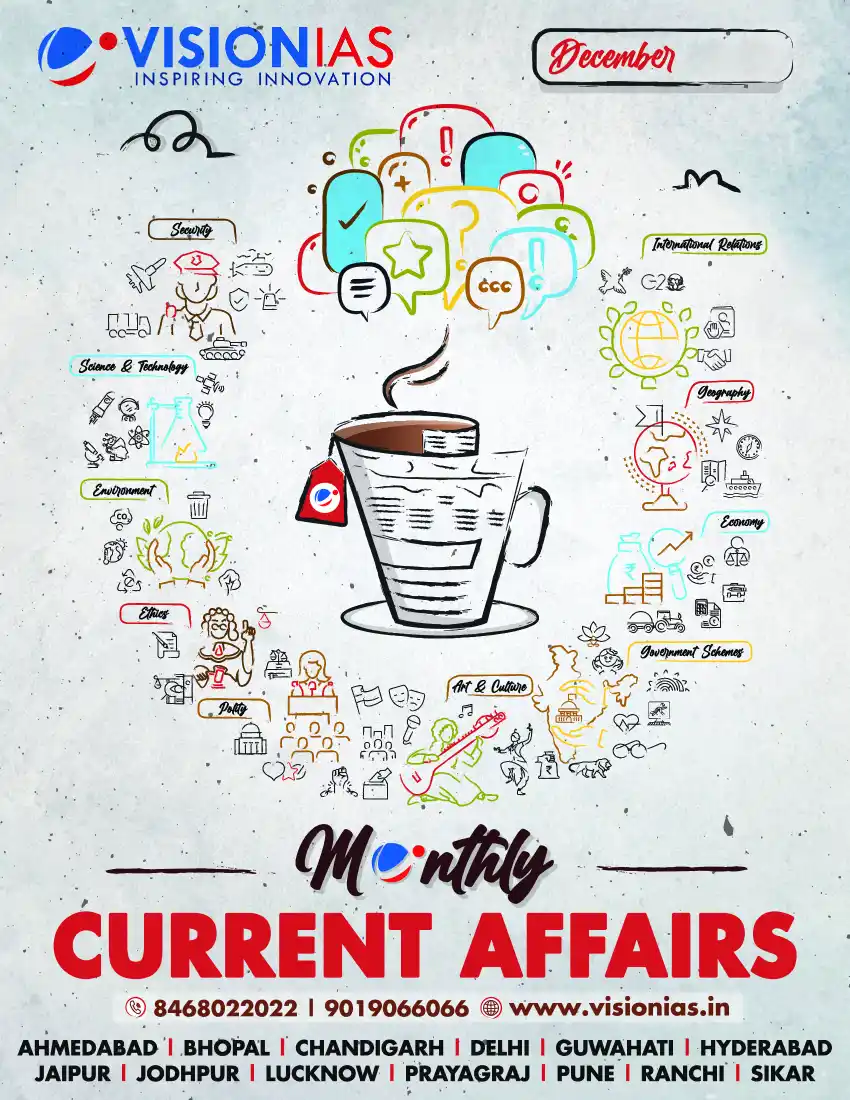
Published by Vision IAS, this is the default current-affairs magazine for the largest share of aspirants and selected candidates. Each monthly issue organises news GS paper-wise (Polity, Economy, Environment, S&T, IR, Social Issues), carries a dedicated prelims-oriented facts section, and adds crisp mains value-addition points. It works for both stages, which is why it tops this ranking. It is available in English and Hindi, and you can buy specific months on Competer — for example the Vision IAS Current Affairs Magazine January 2026 (English) or the December 2025 English edition.
2. InsightsIAS Monthly Current Affairs — Best for Mains
InsightsIAS produces a monthly compilation that is stronger on mains articulation — richer analysis, more balanced arguments, and better for lifting content directly into answers. Aspirants who prioritise GS Mains and essay content often prefer its editorial quality. It is slightly heavier to read than Vision IAS, so prelims-focused candidates short on time sometimes find it more than they need.
3. Drishti IAS Current Affairs — Best for Hindi Medium
Drishti IAS is the strongest choice for Hindi-medium aspirants, with clean Hindi language, well-structured monthly PDFs, and excellent static-plus-current integration. Its full GS material is available on Competer as the Drishti IAS Hindi Study Material, and its current-affairs approach follows the same reliable, exam-oriented style.
4. PW OnlyIAS & BYJU’S Monthly Compilations
PW OnlyIAS offers competitively priced monthly current affairs with good prelims coverage and is popular with budget-conscious aspirants. BYJU’S (formerly BYJU’S IAS / Gradeup) provides free, accessible monthly PDFs that are fine as a secondary reference. Neither displaces Vision IAS or InsightsIAS as a primary source, but both are legitimate free options if cost is your constraint.
5. Yojana — Best for Economy & Governance
Yojana is a monthly magazine from the Publications Division, Ministry of Information & Broadcasting. Each issue is theme-based (a single topic such as digital economy, health, or infrastructure) and is gold for GS Paper 2 (governance, schemes) and GS Paper 3 (economy). It is written by domain experts and government officials, making it authoritative for scheme details and policy rationale.
6. Kurukshetra — Best for Rural Development
Also from the Publications Division, Kurukshetra focuses on rural development, agriculture, panchayati raj, and the rural economy. It is the natural companion to Yojana and directly feeds GS Paper 3 (agriculture, rural economy) and GS Paper 2 (welfare schemes). One themed issue a month is enough.
7. Down To Earth — Best for Environment
Published by the Centre for Science and Environment, Down To Earth is the best single source for environment, ecology, climate and sustainability — a high-yield area for both Prelims and GS Paper 3. Fortnightly and fact-dense, it is optional but valuable for candidates who want an edge in environment questions.
8. EPW and Pratiyogita Darpan
Economic and Political Weekly (EPW) offers advanced, research-grade analysis useful for essay, interview and optional subjects — but it is dense and time-heavy, recommended only for candidates with spare bandwidth. Pratiyogita Darpan is a long-running general-knowledge magazine, strong in Hindi, and suits absolute beginners and other competitive exams more than a focused UPSC current-affairs strategy.
Vision IAS vs InsightsIAS vs Drishti: The Real Head-to-Head
This is the comparison aspirants actually argue about, and most listicles dodge it. Here is a direct verdict on the three coaching monthlies that matter, followed by a decision table.
Vision IAS vs InsightsIAS current affairs magazine: Vision IAS wins on coverage completeness, prelims facts and being a single balanced document for both stages — it is the safer default. InsightsIAS wins on mains depth and answer-ready analysis. If you are a beginner or prelims-focused, choose Vision IAS. If you are past your first prelims and want to strengthen mains and essay, InsightsIAS is worth the switch — but do not run both simultaneously.
Where Drishti fits: Drishti is the pick for Hindi-medium aspirants and for beginners who want simpler language and strong static integration. In English medium, Drishti is a solid third behind Vision IAS and InsightsIAS.
| Parameter | Vision IAS | InsightsIAS | Drishti IAS |
|---|---|---|---|
| Prelims coverage | Excellent | Good | Very good |
| Mains depth | Very good | Excellent | Good |
| Language ease | Moderate | Analytical/heavy | Simple, clear |
| Hindi medium | Yes (strong) | Limited | Best-in-class |
| Best for | All-round default | Mains-focused | Hindi + beginners |
| Verdict | Buy first | Upgrade for mains | Best in Hindi |
Bottom line: For most aspirants, Vision IAS is the one to buy. Reserve InsightsIAS for a deliberate mains upgrade, and choose Drishti if you study in Hindi.
Which Magazine Is Best for Prelims vs Mains?
Your current-affairs source should shift emphasis depending on the stage you are targeting, even if the core magazine stays the same.
Best Current Affairs Magazine for UPSC Prelims
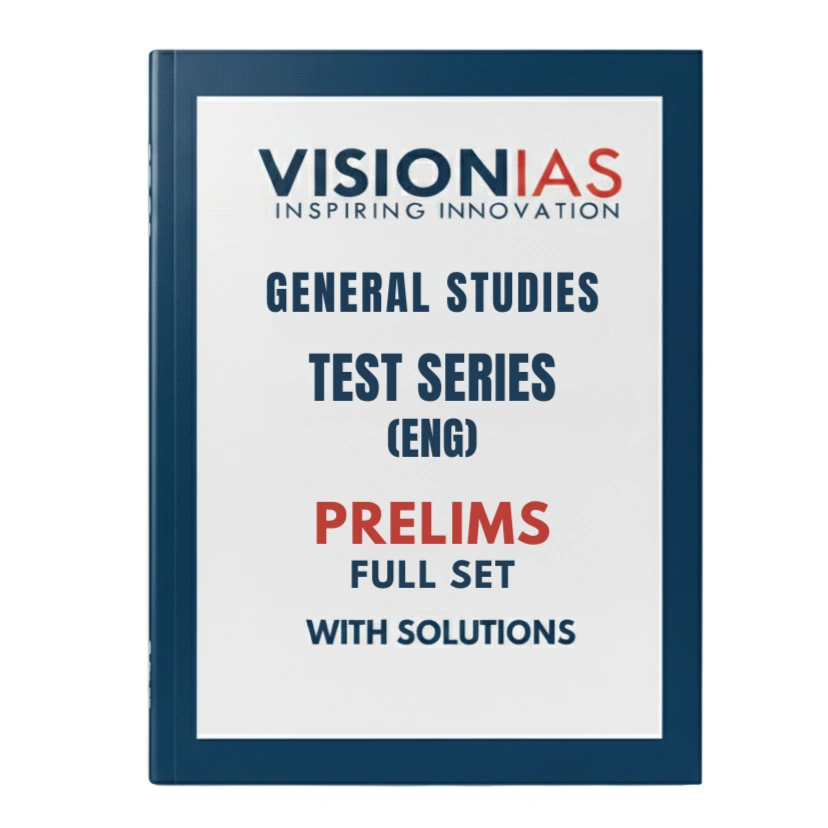
For prelims, factual accuracy and a dedicated “facts to remember” section matter most. Vision IAS Monthly Current Affairs, read alongside its prelims-specific compilations, is the strongest choice — its facts section and monthly quizzes map neatly to the objective format. Pair the magazine with a test series such as the Vision IAS Prelims Test Series 2026 to convert reading into recall, because current affairs sticks only when you are quizzed on it.
Best Current Affairs Magazine for UPSC Mains
For mains, you need analysis, multiple dimensions of an issue, and quotable data. InsightsIAS is excellent here, and Vision IAS’s mains value-addition points work well too. Supplement with Yojana for scheme and economy depth. The goal is not more magazines — it is extracting mains-ready points and data from the one you already read.
| Stage | Primary magazine | Supplement | Focus |
|---|---|---|---|
| Prelims | Vision IAS Monthly | Monthly quizzes / PT compilation | Facts, schemes, data points |
| Mains | Vision IAS / InsightsIAS | Yojana + Down To Earth | Analysis, dimensions, examples |
Best Current Affairs Magazine for UPSC in Hindi
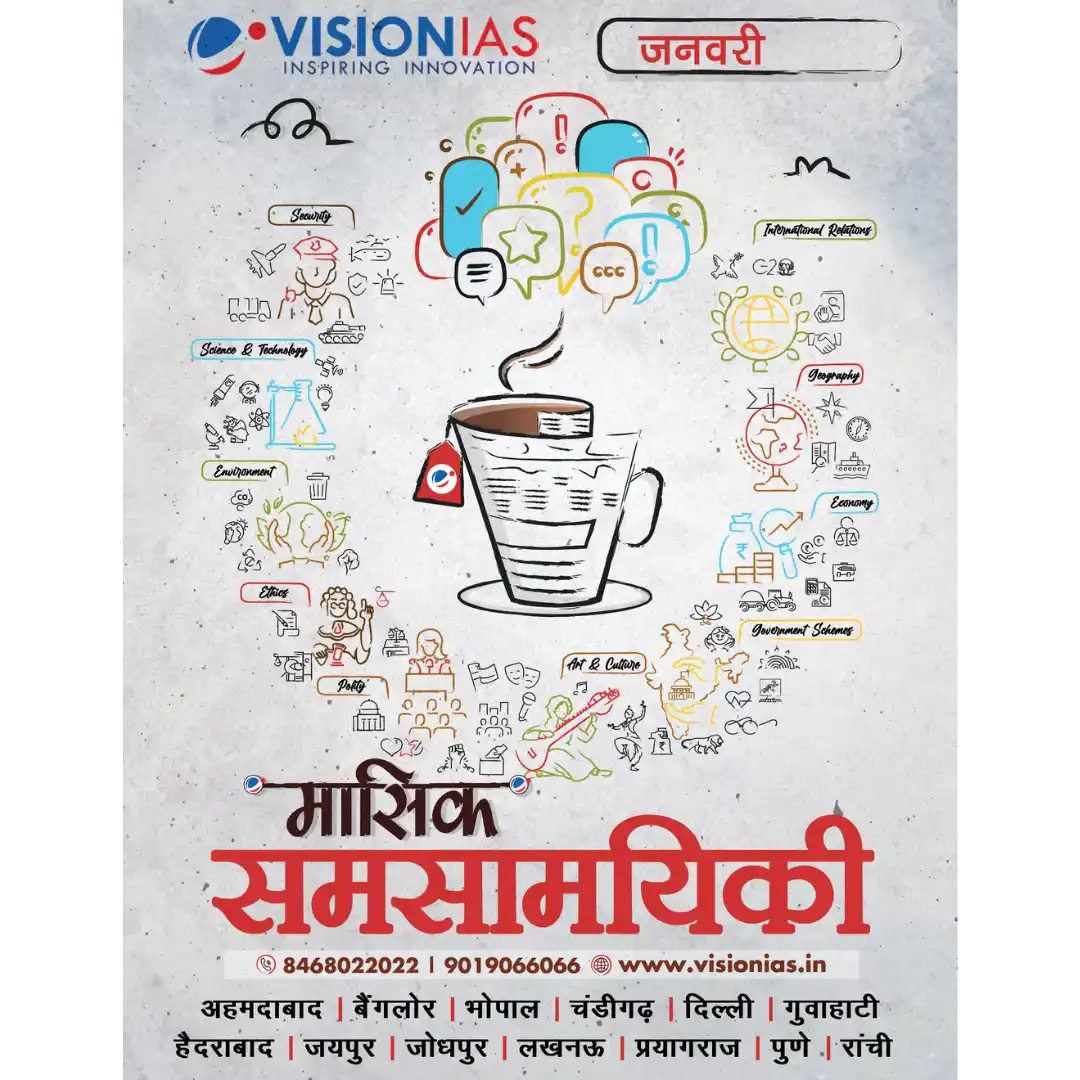
Hindi-medium aspirants are often under-served by English-first guides, so here is a clear ranking. Drishti IAS is the best Hindi-medium current-affairs source overall — natural Hindi, strong structure, and reliable static linkage. Vision IAS also publishes a full Hindi edition of its monthly magazine, which is an excellent choice if you want the Vision coverage in Hindi; on Competer you can buy the Vision IAS Current Affairs Magazine January 2026 (Hindi) or the December 2025 Hindi edition. Yojana and Kurukshetra are both published in Hindi and are just as authoritative in Hindi as in English. Pratiyogita Darpan remains a familiar Hindi option for beginners.
| Hindi magazine | Best for | Availability |
|---|---|---|
| Drishti IAS Masik | Core monthly, best Hindi | Free PDF / print |
| Vision IAS (Hindi) | Vision coverage in Hindi | Paid, per month |
| Yojana (Hindi) | Economy & governance | Govt, low cost |
| Kurukshetra (Hindi) | Rural development | Govt, low cost |
| Pratiyogita Darpan | Beginners, general GK | Newsstand |
Buy This Exact Combo: Recommendation by Aspirant Type
Generic lists leave you to decide; here is the exact stack to buy based on where you stand. Notice that every combo is only one or two magazines — that is deliberate.
| Aspirant type | Buy this combo | Why |
|---|---|---|
| Beginner (first attempt) | Vision IAS Monthly + Yojana | Complete coverage, simple to sustain |
| Prelims-focused | Vision IAS Monthly + PT quizzes/test series | Facts + active recall |
| Mains-focused (repeater) | InsightsIAS Monthly + Yojana | Answer depth + scheme data |
| Hindi medium | Drishti IAS or Vision IAS (Hindi) + Yojana Hindi | Best Hindi coverage |
| Working professional (low time) | Vision IAS Monthly only | One document, revise thrice |
Whichever you choose, commit for at least 6 months. The consistency of a single source beats the false comfort of owning several.
How to Read and Make Notes from a Monthly Magazine
Owning the best magazine is worthless without a reading method. Here is the workflow selected candidates use:
- First read (within the month): read the full issue, marking prelims facts in one colour and mains points in another.
- Make micro-notes, not full notes: add only what is not already in the magazine — a keyword, a data point, a linkage. Do not rewrite the magazine.
- Tag to GS papers: since coaching monthlies are already GS-tagged, use that structure for your notes so revision maps to the syllabus.
- Revise 3 times: a first read, a second faster read a month later, and a final rapid revision before prelims/mains.
- Quiz yourself: attempt the monthly current-affairs quiz or a test series — recall, not re-reading, is what fixes facts.
Print versus PDF is a genuine trade-off. PDFs are free or cheap and searchable, but heavy on-screen reading causes fatigue and poor retention for most people. Printed magazines are easier to annotate, revise and carry, and they cut screen time — which is why many aspirants buy printed monthly editions even when a PDF exists.
How Many Months of Current Affairs Do You Need?
For UPSC Prelims, cover roughly the last 12–15 months before the exam — that is, from about January of the year preceding your attempt up to the exam month. For Mains, extend to 15–18 months so you capture year-long developments and their analysis. Practically, this means 12–18 monthly magazine issues, revised, not merely read once.
| Stage | Coverage window | Issues to keep |
|---|---|---|
| Prelims | ~12–15 months before exam | 12–15 monthly issues |
| Mains | ~15–18 months before exam | 15–18 monthly issues + annual compilations |
Closer to prelims, replace individual monthly reading with the magazine publisher’s annual/PT current affairs compilation, which condenses the whole year into a revisable document.
Are Coaching Magazines Better Than Newspapers for UPSC?
They answer different jobs, so the honest answer is “use both, but let each do what it is good at.” A newspaper trains you to reason about issues daily and gives you the raw editorial arguments that make Mains answers sound original; a coaching magazine consolidates the month into a syllabus-tagged, revisable document that you can actually finish. If your time is severely limited, a good monthly magazine plus a 15-minute newspaper skim beats an unfinished two-hour daily newspaper routine — because in the exam hall, what you revised three times counts, not what you once read. Beginners who feel overwhelmed by the newspaper should start with the monthly magazine as their spine and layer the newspaper habit on gradually.
Common Mistakes Aspirants Make with Current Affairs Magazines
- Collecting too many: buying Vision, Insights, Drishti and PW at once. You will finish none. Stick to one core magazine.
- Reading without revising: a single read has almost zero exam value. Budget time for three revisions.
- Making bloated notes: re-copying the magazine wastes weeks. Annotate the magazine itself.
- Ignoring prelims facts: mains readers often skip the facts section and lose easy prelims marks.
- Switching sources mid-year: changing magazines breaks continuity. Choose once and commit.
Cost, Where to Buy, and Print vs PDF
Government magazines are the cheapest — Yojana and Kurukshetra cost around ₹22 per issue and are available by subscription or as free PDFs on the Publications Division site. Coaching monthly PDFs (Vision IAS, InsightsIAS, Drishti, PW) are often free to download, but many aspirants prefer printed editions for better revision and less screen fatigue. Printed monthly current-affairs magazines typically cost around ₹150–300 per month depending on the publisher and edition. On Competer you can buy specific printed monthly editions — for example the Vision IAS Current Affairs Magazine November 2025 (English) — so you get a physical, annotate-ready copy without hunting for a local vendor. For a full current-affairs plus static setup, many aspirants pair the monthly magazine with core GS notes and a test series rather than buying everything piecemeal.
Frequently Asked Questions
Which is the best current affairs magazine for UPSC?
The Vision IAS Monthly Current Affairs Magazine is the best overall choice — it covers both prelims and mains in one syllabus-tagged document, is used by a large share of selected candidates, and is available in English and Hindi. Pair it with Yojana for economy and governance depth.
Which monthly magazine is sufficient for UPSC preparation?
One good coaching monthly — such as Vision IAS or InsightsIAS — read consistently and revised three times is sufficient for the current-affairs core. Add Yojana for governance and economy. You do not need multiple coaching magazines, as they cover largely the same news.
Is Vision IAS monthly magazine enough for current affairs?
For most aspirants, yes — the Vision IAS monthly magazine is enough as your core current-affairs source because it is syllabus-tagged, covers both prelims facts and mains angles, and is easy to revise. The only additions worth making are Yojana for economy and governance depth, and a PT/annual compilation for final prelims revision. What actually decides your marks is revising it three times and quizzing yourself, not adding a second coaching magazine.
Are coaching magazines better than newspapers for UPSC?
They serve different purposes and are best used together. Newspapers build daily reasoning and supply editorial arguments for Mains answers; coaching magazines consolidate the month into a revisable, syllabus-tagged document. If time is tight, a monthly magazine plus a short daily newspaper skim is more effective than an unfinished long newspaper routine, because revision — not first-time reading — is what fixes current affairs for the exam.
Is Yojana or Kurukshetra better for UPSC?
They serve different purposes. Yojana is better for economy, governance and government schemes (GS2 and GS3), while Kurukshetra is better for rural development, agriculture and the rural economy (GS3). Ideally read both, as each is a themed monthly issue and takes little time.
Which is better for current affairs, Vision IAS or InsightsIAS?
Vision IAS is better for all-round coverage and prelims facts and is the safer default, especially for beginners. InsightsIAS is better for mains-level analysis and answer writing. Choose Vision IAS first; upgrade to InsightsIAS if you are specifically strengthening mains and essay.
How many months of current affairs are needed for UPSC prelims?
Cover roughly the last 12–15 months before your prelims — about 12 to 15 monthly magazine issues. For mains, extend to 15–18 months. Revise these issues at least twice, and use an annual PT compilation for final revision.
Which current affairs magazine is best in Hindi medium?
Drishti IAS is the best Hindi-medium current-affairs magazine for its clear Hindi and strong structure, while Vision IAS also publishes a full Hindi edition of its monthly magazine. Supplement either with Yojana and Kurukshetra in Hindi for economy and rural topics.
Recommended Study Material
Continue Reading

UPSC Optional Subjects List 2026: All 48 + Best Picks
The UPSC optional subjects list contains 48 optional subjects in total — 25 core academic subjects (from Agriculture…
JEE Advanced Syllabus 2026: PCM Topics, Weightage + PDF Download
The jee advanced syllabus for 2026 covers three subjects — Physics, Chemistry and Mathematics — built on the…
RBI Grade B Syllabus 2026: Phase 1, Phase 2 & Interview + PDF
The RBI Grade B syllabus is a three-stage structure: Phase 1 (Prelims) covers General Awareness, English, Quantitative Aptitude…