UPSC Optional Subjects List 2026: All 48 + Best Picks
Complete UPSC optional subjects list 2026 — all 48 optionals, marks, success-rate data, best picks by background, and how to choose. Printable list inside.

The UPSC optional subjects list contains 48 optional subjects in total — 25 core academic subjects (from Agriculture to Zoology) plus 23 literature options covering Indian languages and English. In UPSC Civil Services Mains, you must choose exactly one optional subject, which is examined across two papers (Paper VI and Paper VII) carrying 250 marks each — a combined 500 marks that count directly toward your final merit rank.
This guide gives you the complete, printable list of all 48 optionals, the latest success-rate data, an honest look at the statistical traps that mislead most aspirants, and a clear framework to choose the best optional subject for UPSC based on your graduation background, GS overlap, and study-material availability.
Key Facts at a Glance (2026)
| Question | Quick Answer |
|---|---|
| How many optional subjects? | 48 total — 25 core academic + 23 literature |
| How many do you pick? | Exactly one, for Mains only (not Prelims) |
| Total marks | 500 (Paper VI + Paper VII, 250 each) |
| Weight in Mains written | ~28.5% of 1750 marks |
| Safest all-round picks | Sociology, PSIR, Geography, Public Administration, Anthropology |
| Shortest syllabus | Philosophy (then Sociology, Anthropology) |
| Can you change it later? | Yes — allowed in any subsequent attempt |
Data below is drawn from UPSC’s official notifications and the Commission’s disclosed subject-wise result break-ups (2019 and 2021 cycles, the most recent detailed data released). Treat any single-year success figure as directional, not a guarantee.
UPSC Optional Subjects List 2026: The Complete Official Breakdown
The Union Public Service Commission divides the optional subjects into two families. Understanding this split is the first step in reading the full upsc optional subjects list 2026 correctly.
| Category | Count | Range / Examples |
|---|---|---|
| Core academic subjects | 25 | Agriculture, Anthropology, Botany … Sociology, Zoology |
| Literature of languages | 23 | Assamese, Bengali, Hindi, Tamil, Urdu, English, etc. |
| Total optionals | 48 | Choose exactly ONE for Mains |
You can select only one optional subject, and it is tested in two descriptive papers in the Mains stage. The optional is not part of Prelims — it appears only in the Written (Mains) examination.
All 25 Core Optional Subjects (A–Z)
These are the general/technical academic subjects available to every eligible candidate. This is the list of optional subjects in UPSC Mains that most aspirants choose from.
| # | Optional Subject | # | Optional Subject |
|---|---|---|---|
| 1 | Agriculture | 14 | Law |
| 2 | Animal Husbandry & Veterinary Science | 15 | Management |
| 3 | Anthropology | 16 | Mathematics |
| 4 | Botany | 17 | Mechanical Engineering |
| 5 | Chemistry | 18 | Medical Science |
| 6 | Civil Engineering | 19 | Philosophy |
| 7 | Commerce & Accountancy | 20 | Physics |
| 8 | Economics | 21 | Political Science & International Relations (PSIR) |
| 9 | Electrical Engineering | 22 | Psychology |
| 10 | Geography | 23 | Public Administration |
| 11 | Geology | 24 | Sociology |
| 12 | History | 25 | Statistics |
| 13 | Zoology | — | — |
Note: Zoology is the last entry alphabetically (Agriculture to Zoology), which is why the official range is often described as “Agriculture to Zoology.” All 25 subjects are open to any graduate regardless of the degree they hold.
UPSC Literature Optional Subjects List (All 23 Languages)
The second family is the upsc literature optional subjects list — literature of a specific language. You do not need to have studied the language at graduation to pick its literature; you only need solid reading and writing proficiency.
| # | Literature Optional | # | Literature Optional |
|---|---|---|---|
| 1 | Assamese | 13 | Nepali |
| 2 | Bengali | 14 | Odia |
| 3 | Bodo | 15 | Punjabi |
| 4 | Dogri | 16 | Sanskrit |
| 5 | English | 17 | Santhali |
| 6 | Gujarati | 18 | Sindhi |
| 7 | Hindi | 19 | Tamil |
| 8 | Kannada | 20 | Telugu |
| 9 | Kashmiri | 21 | Urdu |
| 10 | Konkani | 22 | Manipuri (Meitei) |
| 11 | Maithili | 23 | Malayalam |
| 12 | Marathi | — | — |
Together, 25 core subjects + 23 literature options = 48 optional subjects. Save or print the two tables above as your ready-reference copy of the full 48-subject list — most competing pages don’t offer a clean printable version.
How Many Marks Is the Optional Subject in UPSC Mains?
The optional subject is one of the heaviest weightages in the entire selection process. It is split into two papers, and both count fully toward your merit.
| Paper | Subject | Marks | Duration | Nature |
|---|---|---|---|---|
| Paper VI | Optional Paper I | 250 | 3 hours | Descriptive, counts in merit |
| Paper VII | Optional Paper II | 250 | 3 hours | Descriptive, counts in merit |
| Total Optional Weight | 500 | — | ~28.5% of 1750 written marks | |
Out of 1750 marks in the Mains written exam (plus 275 for the Personality Test), the optional alone carries 500 marks. A strong optional scoring 300+/500 can lift your rank dramatically, while a weak one can sink an otherwise good candidate. This is exactly why choosing the right subject matters more than most beginners assume. For the full paper structure, see our detailed UPSC syllabus booklet for cross-referencing the GS papers alongside your optional.
Most Popular UPSC Optional Subjects (And Why)
A handful of subjects dominate the choices of successful candidates because they combine manageable syllabi, abundant coaching material, and heavy overlap with the General Studies papers.
- Geography — consistently the single most-chosen optional; strong GS-I overlap and diagram-based scoring.
- Sociology — short syllabus, easy to grasp for non-background candidates, overlaps with GS-I and GS-II.
- PSIR (Political Science & International Relations) — deep overlap with GS-II (polity, governance, IR).
- Public Administration — once the most popular optional; overlaps with GS-II and GS-IV (ethics).
- History — large but well-defined syllabus; overlaps with GS-I.
- Anthropology — science-lite, diagram-friendly, and the shortest “science” optional, popular with engineers and doctors.
- Philosophy — the shortest syllabus of all optionals; overlaps with the ethics paper (GS-IV).
UPSC Optional Subjects with Highest Success Rate (Latest Data + Honest Caveat)
Aspirants constantly search for the upsc optional subjects with highest success rate. The table below uses UPSC’s official disclosed data (2019 and 2021 cycles, the most recent detailed break-ups released). Read the caveat immediately after — it is the single most important thing on this page.
| Optional | Candidates Appeared (approx.) | Recommended (approx.) | Success Rate |
|---|---|---|---|
| Literature (regional, various) | Very small pools | Few | 10–20%+ (misleading) |
| Medical Science | ~300 | ~40 | ~13% |
| Anthropology | ~2,900 | ~230 | ~8% |
| Sociology | ~3,200 | ~230 | ~7% |
| Political Science & IR | ~3,800 | ~230 | ~6% |
| Geography | ~4,700 | ~250 | ~5% |
| History | ~3,900 | ~180 | ~4.6% |
| Public Administration | ~3,000 | ~130 | ~4.3% |
The statistical trap you must understand: High success rates in Medical Science, Law, Commerce, and most literature optionals come from tiny, self-selected candidate pools. When only 60–300 highly specialised graduates (who studied that exact subject for 5+ years) appear, even a handful of selections produces an inflated percentage. This does NOT mean these subjects are “easier” — it means the people taking them were already experts. A general aspirant switching to Medical Science or a niche literature purely for the success-rate figure is misreading the data. Success rates have also broadly declined across popular optionals as more candidates compete, so treat any single-year figure as directional, not a guarantee.
Which Is the Most Scoring Optional Subject in UPSC?
There is no permanently “most scoring” optional — scoring depends far more on your answer-writing quality than on the subject label. That said, a few optionals have a track record of producing high individual scores (often 300+/500) with reasonable consistency, which is what aspirants usually mean by “most scoring.”
- Anthropology — concise, diagram-friendly answers can push scores high, especially for science-background candidates.
- Sociology — thinker-based, structured answers reward clear presentation and score well for prepared candidates.
- Mathematics — theoretically the highest-ceiling optional (near-full marks are possible), but only for candidates who are near-perfect; it has no partial-credit safety net.
- PSIR & Geography — deliver strong, repeatable scores thanks to structured content and heavy GS overlap.
Bottom line: “most scoring” is candidate-specific. A subject you can revise three times and write crisp, structured answers in will out-score a theoretically high-ceiling subject you half-know. Chase mastery, not the label.
How to Choose Optional Subject for UPSC: A 6-Factor Framework
Instead of chasing a success-rate number, evaluate every shortlisted subject against these six factors. This is the most reliable way to decide how to choose optional subject for upsc.
| Factor | What to Check | Why It Matters |
|---|---|---|
| 1. Real interest | Can you read it for 8–10 months without burnout? | You’ll spend ~400+ hours on it |
| 2. Graduation background | Do you already have a base (e.g., engineer → maths/anthro)? | Cuts preparation time sharply |
| 3. GS syllabus overlap | Does it help GS-I/II/III/IV or Essay? | Double return on study effort |
| 4. Study-material availability | Are reliable notes, books, PYQs accessible? | Self-study becomes viable |
| 5. Scoring trend | Is it fetching 280+ scores recently? | Predictable marks reduce risk |
| 6. Time required | Syllabus length vs. months you have | Short syllabus = faster revision |
A subject that scores well on 4–5 of these factors is a safe bet. Never pick on interest alone (you may not score) or on scoring alone (you may burn out). Before you finalise, test-read two shortlisted syllabi for a week each and attempt 3–4 past-year questions in each — the subject you can structure answers in most comfortably is usually your right pick.
GS Overlap Analysis: Optionals That Do Double Duty
Certain optionals share significant syllabus with the General Studies papers, letting one hour of study count twice. This overlap is a decisive advantage.
| Optional | Overlaps With | Overlap Strength |
|---|---|---|
| Public Administration | GS-II (governance), GS-IV (ethics) | High |
| PSIR | GS-II (polity, IR), Essay | High |
| Sociology | GS-I (society), GS-II, Essay | High |
| Geography | GS-I (geography), GS-III (environment) | High |
| History | GS-I (art, culture, modern history) | Medium-High |
| Law | GS-II (polity, constitution) | Medium |
If you have no strong background, one of these overlap-heavy optionals is usually the smartest default because it strengthens your GS score at the same time.
Master Comparison Table: Syllabus, Overlap, Success & Best-For
Here is the single-glance comparison most pages miss — syllabus length vs. GS overlap vs. success signal vs. ideal background.
| Optional | Syllabus Length | GS Overlap | Success Signal | Best For |
|---|---|---|---|---|
| Sociology | Short | High | Strong | Any background, beginners |
| PSIR | Medium | High | Strong | Arts, IR enthusiasts |
| Geography | Medium-Long | High | Strong | Science + arts students |
| Public Administration | Short-Medium | High | Moderate | Governance-focused aspirants |
| Anthropology | Short | Low-Medium | Strong | Engineers, doctors |
| Philosophy | Shortest | Medium (ethics) | Moderate | Fast revisers, analytical minds |
| History | Long | Medium-High | Moderate | Readers who enjoy history |
| Economics | Long, technical | Medium (GS-III) | Moderate | Economics/commerce grads |
Which Optional Subject Has the Shortest Syllabus for UPSC?
Philosophy is widely regarded as having the shortest and most static syllabus of all UPSC optionals — it can be completed and revised in roughly 3–4 months, with almost no current-affairs component. Close behind are Sociology and Anthropology, both short and beginner-friendly. Short syllabus is a real advantage because it allows multiple revisions before the exam, but remember: a short syllabus also means more competition and tighter marking, so scoring still depends on answer-writing quality, not just coverage.
Optional Subjects to Approach With Caution (High-Risk)
Not every optional is a safe choice for a general aspirant. These carry higher risk unless you have a strong background:
- Mathematics & Statistics — high-scoring if perfect, but a single calculation slip can cost an entire question; no partial safety net.
- Engineering optionals (Civil/Mechanical/Electrical) — huge, technical syllabi with limited coaching support and slow revision.
- Literature of a language you’re not fluent in — the inflated success rate tempts many, but weak language command destroys scores.
- Law — vast and dynamic; rewarding mainly for law graduates.
- Pure sciences (Physics/Chemistry) without a background — long, technical, and offer weak GS overlap.
Toppers’ Optional Choices: Recent Trends
Year after year, the toppers’ list reinforces the popularity of overlap-heavy humanities optionals. In recent cycles, several AIR top-rankers have cleared with Anthropology, Sociology, PSIR, and Geography, while others have succeeded with their graduation subjects (e.g., engineering-background toppers choosing Anthropology or Mathematics). The pattern is clear: there is no single “topper’s optional” — winners consistently pick a subject that fits their background and revise it thoroughly, rather than chasing whichever subject topped last year’s charts.
Preparation Strategy for Any Optional Subject
Once you’ve chosen, execution decides your marks. Follow this proven sequence regardless of subject:
- Syllabus mastery first — print the official optional syllabus and map every keyword; the syllabus is your checklist.
- Standard books + reliable notes — build a fixed, limited source list and stick to it rather than collecting everything.
- Previous year questions (PYQs) — analyse 10 years of optional PYQs to spot recurring themes and question patterns.
- Answer writing — practise structured intro-body-conclusion answers with diagrams/case studies; this is where marks are made or lost.
- Revision cycles — plan at least 3 full revisions before Mains.
- Current affairs linkage — for dynamic optionals (PSIR, Sociology, Geography), connect static concepts to current examples.
Best Study Material for Popular Optional Subjects
Reliable, subject-specific notes cut your preparation time and standardise your source list. Here are trusted optional booklets for the most-chosen subjects, available printed and delivered:
| Optional | Recommended Material | Format |
|---|---|---|
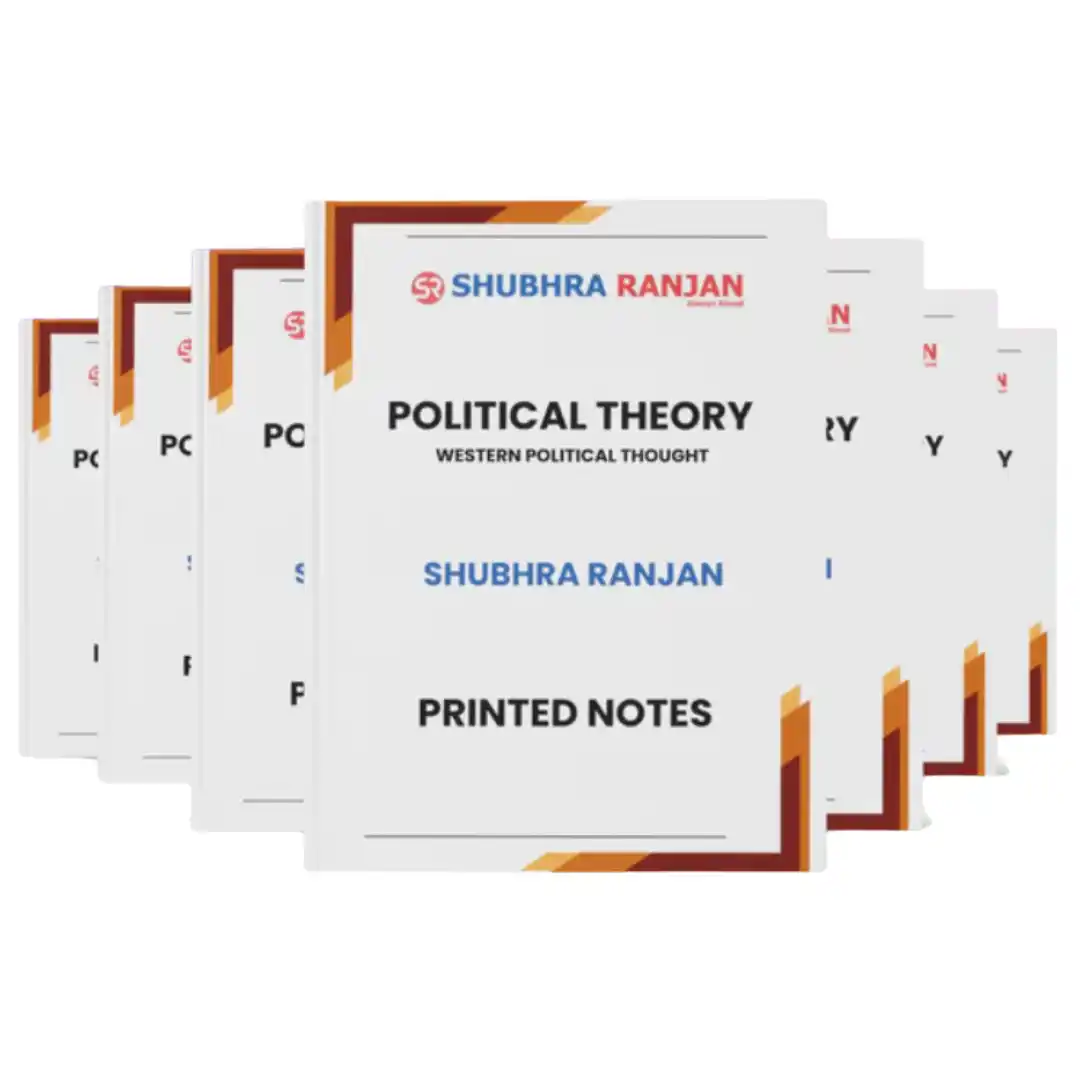
| PSIR | Shubhra Ranjan PSIR Notes (English, Set of 4) | Printed booklets |
| PSIR (Hindi) | Rajesh Mishra PSIR Notes (Hindi, 6 booklets) | Printed booklets |
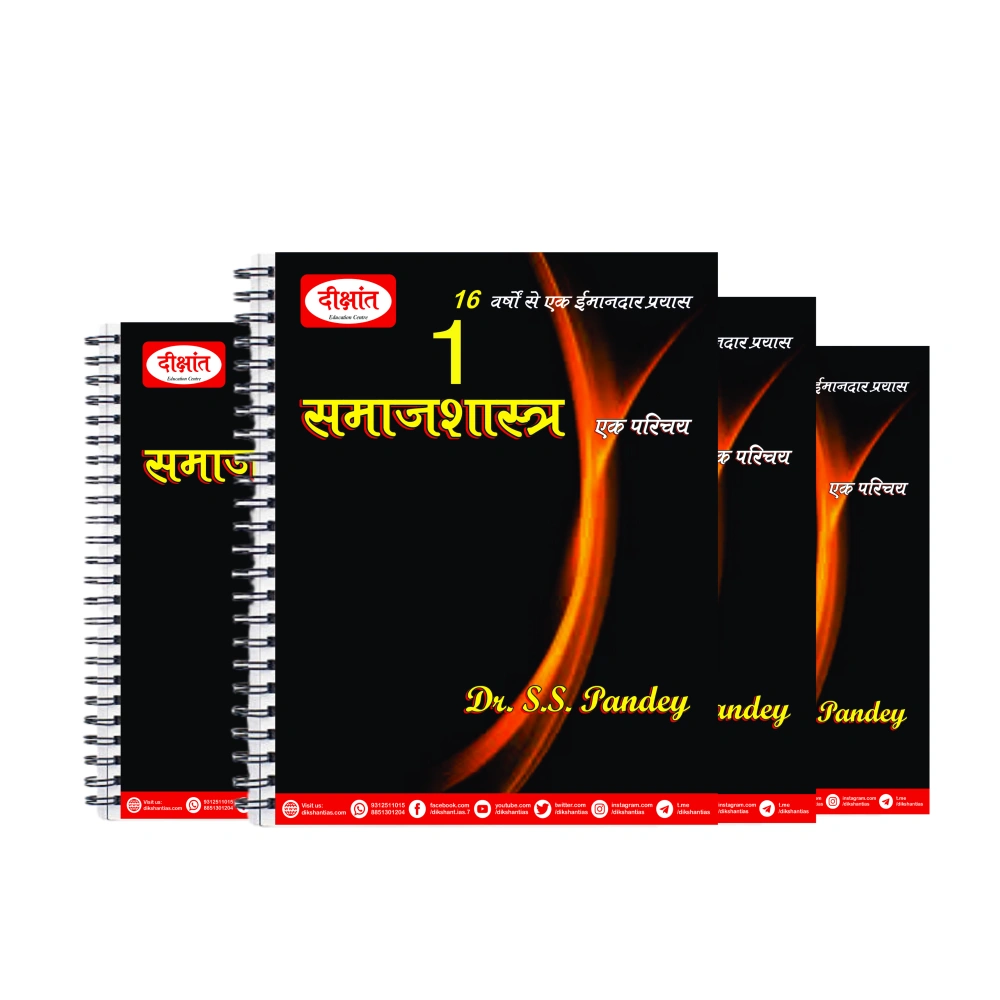
| Sociology | SS Pandey Sociology Notes (25 modules) | Printed booklets |
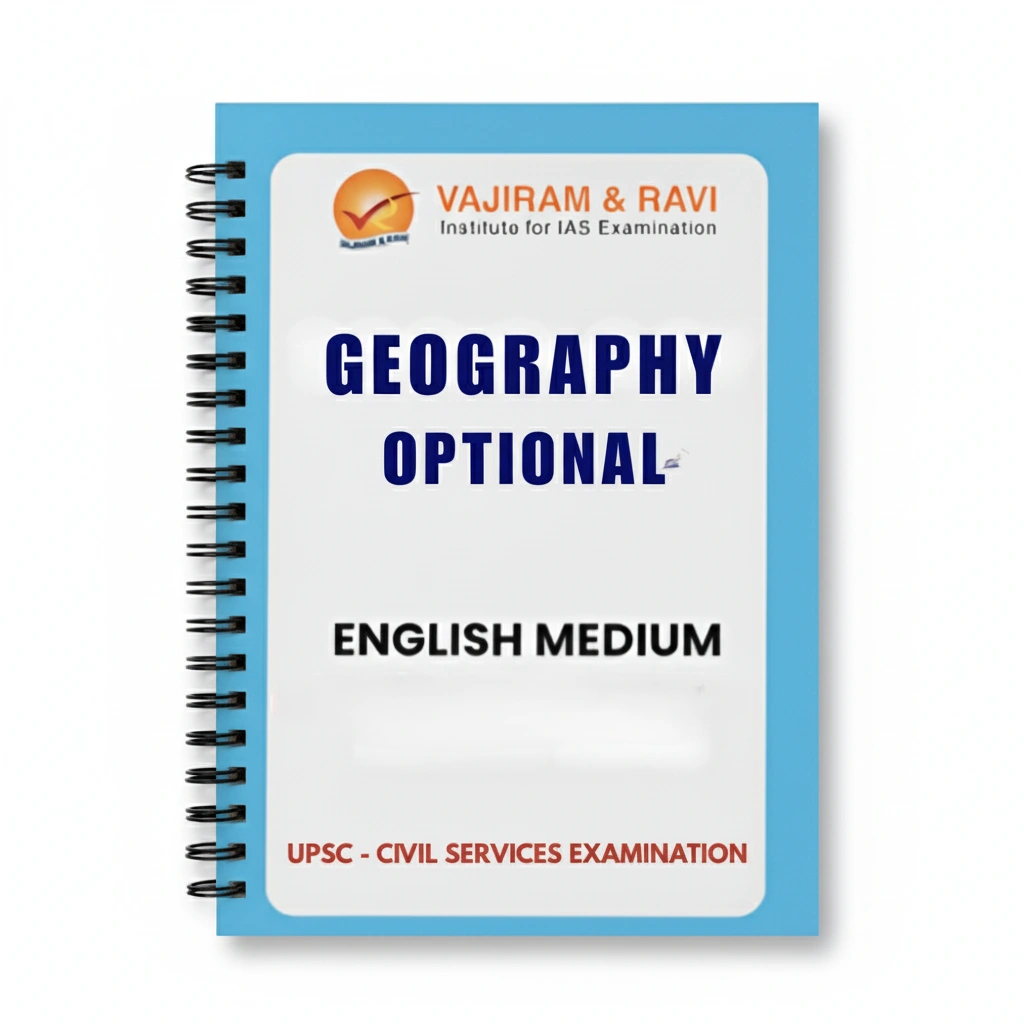
| Geography | Vajiram Geography Optional Notes (Set of 11) | Printed booklets |
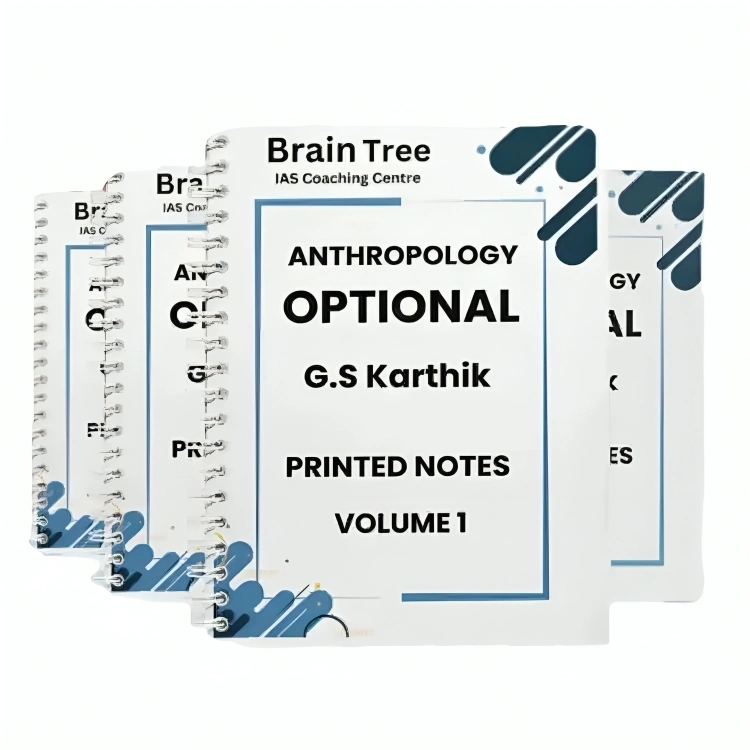
| Anthropology | Brain Tree Anthropology Notes 2025-26 | Printed booklets |
| Public Administration | Vajiram Public Administration Notes (Set of 3) | Printed booklets |
For science and specialised optionals, aspirants also rely on Evolution Zoology Notes and Mitra’s IAS Philosophy Notes. Pairing your optional notes with strong GS material keeps your whole preparation aligned under one source list.
Can You Change Your Optional Subject Between Attempts?
Yes — UPSC allows you to change your optional subject in a subsequent attempt; there is no rule locking you to your first choice. However, switching means restarting a 400+ hour learning curve, so change only if your first optional consistently under-scores, the material is truly inaccessible to you, or you’ve discovered a far better GS-overlap fit. Do not switch on impulse after one bad result — most successful candidates stick with one well-prepared optional across attempts.
Frequently Asked Questions
How many optional subjects are there in UPSC?
There are 48 optional subjects in the UPSC Civil Services Mains — 25 core academic subjects (from Agriculture to Zoology) and 23 literature options covering Indian languages and English. You must choose exactly one, examined across two papers of 250 marks each.
Which optional subject is best for UPSC?
There is no universally “best” optional. For most general aspirants, Sociology, PSIR, Geography, Public Administration, and Anthropology are the safest picks because they have manageable syllabi, strong study material, and heavy overlap with the General Studies papers. The best optional for you is the one matching your interest and graduation background.
Which UPSC optional has the highest success rate?
On paper, several literature optionals and Medical Science show the highest success rates, but these come from very small, specialised candidate pools, which inflates the percentage. Among mainstream optionals, Anthropology and Sociology have shown relatively strong success rates. Do not choose an optional on success rate alone — the number is often misleading.
Can I choose any optional subject regardless of my graduation?
Yes. You can pick any of the 48 optionals irrespective of your graduation degree, including a literature optional in a language you did not study formally. The only requirement is real command of the subject; UPSC does not impose a background eligibility condition on optional choice.
How many marks is the optional subject in UPSC Mains?
The optional subject carries 500 marks total — Paper VI and Paper VII of 250 marks each. Both papers are descriptive and count fully toward your final merit ranking, making the optional roughly 28.5% of the 1750-mark Mains written examination.
Which is the most scoring optional subject in UPSC?
There is no fixed “most scoring” optional — it depends on your answer-writing quality. Anthropology, Sociology, PSIR, and Geography have a track record of producing high, repeatable scores, while Mathematics has the highest theoretical ceiling for near-perfect candidates but no partial-credit safety net. A subject you can revise thoroughly and write crisp, structured answers in will out-score a high-ceiling subject you half-know.
Which optional subject has the shortest syllabus for UPSC?
Philosophy has the shortest and most static syllabus, completable in about 3–4 months with almost no current-affairs load. Sociology and Anthropology are close behind. A short syllabus allows more revisions, but scoring still depends on answer-writing quality and structured presentation.
Can I change my optional subject between UPSC attempts?
Yes. UPSC lets you change your optional in any subsequent attempt — there is no rule tying you to your first choice. But switching restarts a 400+ hour learning curve, so change only if your optional consistently under-scores, its material is hard to access, or you find a clearly better GS-overlap fit. Most successful candidates keep one well-prepared optional across attempts rather than switching after a single poor result.
Recommended Study Material
Continue Reading
CTET Paper 2 Syllabus 2026: Subjects, Pattern + PDF
The CTET Paper 2 syllabus covers five sections for a total of 150 marks: Child Development & Pedagogy…
RRB Technician Syllabus 2026: Grade 1 & 3, Pattern + PDF
The rrb technician syllabus for 2026 is tested in a single 90-minute Computer Based Test (CBT) of 100…
CTET Paper 2 Syllabus 2026: Subject-Wise Topics + PDF
The CTET Paper 2 syllabus covers five sections for aspiring Classes 6–8 teachers: Child Development & Pedagogy (30…