RRB Technician Syllabus 2026: Grade 1 & 3, Pattern + PDF
RRB Technician Syllabus 2026 with subject-wise topics, Grade 1 Signal vs Grade 3 exam pattern, marks, weightage, qualifying marks & PDF download.

The rrb technician syllabus for 2026 is tested in a single 90-minute Computer Based Test (CBT) of 100 questions worth 100 marks, with 1/3 negative marking for every wrong answer. Technician Grade 1 Signal is examined on General Awareness, General Intelligence & Reasoning, Basics of Computers & Applications, Mathematics and Basic Science & Engineering; Technician Grade 3 is examined on Mathematics, General Intelligence & Reasoning, General Science and General Awareness. This guide gives you the complete subject-wise syllabus, the exam pattern with marks and weightage, a Grade 1 vs Grade 3 comparison, previous-year topic trends, category-wise qualifying marks, best-book guidance and a downloadable study planner — everything you need to start structured preparation today.
RRB Technician Syllabus 2026: Quick Overview
The Railway Recruitment Board (RRB) and Railway Recruitment Cells (RRC) conduct Technician recruitment to fill technical posts across the Indian Railways zones. Understanding the exam structure before touching any topic saves weeks of misdirected effort. Here is the at-a-glance summary of the RRB Technician 2026 exam that every aspirant should memorise first.
| Parameter | Details |
|---|---|
| Conducting body | Railway Recruitment Board (RRB) / RRC |
| Posts | Technician Grade 1 Signal & Technician Grade 3 |
| Exam mode | Computer Based Test (CBT) — online, objective |
| Number of questions | 100 |
| Total marks | 100 |
| Duration | 90 minutes (120 minutes for PwBD with scribe) |
| Marking scheme | 1 mark per correct answer |
| Negative marking | 1/3 mark deducted per wrong answer |
| Language | 15 languages incl. English & Hindi |
| Selection stages | CBT → Document Verification → Medical Examination |
Note the two distinct grades. Technician Grade 1 Signal is a higher, engineering-oriented post that requires a diploma/degree in a relevant engineering discipline, while Technician Grade 3 is open to ITI / 10th-plus-ITI holders and tests a more general science base. Your grade decides which pattern applies to you, so lock that in before you build a timetable.
This breakdown reflects the exam structure used in the current RRB Technician recruitment cycle. The exact question split is fixed by each zonal RRB’s official Centralised Employment Notice (CEN), so treat the tables in this guide as your working blueprint and always cross-verify the final numbers against your own zone’s notification PDF before the exam.
RRB Technician Exam Pattern 2026: Grade 1 Signal
The RRB Technician exam pattern 2026 for Grade 1 Signal spreads 100 questions across five subjects. The single biggest block is Basic Science & Engineering at 35 marks — more than a third of the paper — which makes it the deciding subject for this grade. There is no separate qualifying section; your combined normalised score determines merit.
| Subject | No. of Questions | Marks |
|---|---|---|
| General Awareness | 10 | 10 |
| General Intelligence & Reasoning | 15 | 15 |
| Basics of Computers & Applications | 20 | 20 |
| Mathematics | 20 | 20 |
| Basic Science & Engineering | 35 | 35 |
| Total | 100 | 100 |
Strategy signal: a Grade 1 aspirant who masters Basic Science & Engineering (35) plus Basics of Computers (20) has already secured 55 marks of technical content that a diploma holder can convert far faster than a rival relying only on general subjects. Prioritise accordingly.
RRB Technician Exam Pattern 2026: Grade 3
The Technician Grade 3 syllabus follows a simpler four-subject pattern. Here the highest weightage sits with General Science at 40 marks, followed by Mathematics and Reasoning at 25 each. Grade 3 has no computer or engineering section, which is the clearest structural difference from Grade 1.
| Subject | No. of Questions | Marks |
|---|---|---|
| Mathematics | 25 | 25 |
| General Intelligence & Reasoning | 25 | 25 |
| General Science | 40 | 40 |
| General Awareness | 10 | 10 |
| Total | 100 | 100 |
For Grade 3, General Science (Physics, Chemistry and Life Science of roughly Class 10 standard) alone carries 40% of the paper. Candidates who neglect it while over-preparing Mathematics routinely miss the cutoff — the marks simply are not there to make up.
Grade 1 Signal vs Grade 3 Syllabus: Side-by-Side
Most guides split the two grades into long, separate sections and leave you flipping back and forth. Here is the single-glance comparison that tells you exactly how the two papers differ — the fastest way to confirm which grade you are actually preparing for.
| Aspect | Technician Grade 1 Signal | Technician Grade 3 |
|---|---|---|
| Eligibility | Diploma/Degree in relevant engineering | 10th + ITI / relevant trade |
| Subjects | 5 subjects | 4 subjects |
| Highest weightage | Basic Science & Engineering (35) | General Science (40) |
| Computer section | Yes — 20 marks | No |
| Engineering section | Yes — 35 marks | No |
| Mathematics | 20 marks | 25 marks |
| Reasoning | 15 marks | 25 marks |
| General Awareness | 10 marks | 10 marks |
| Difficulty level | Diploma/technical standard | Class 10 / ITI standard |
| Total | 100 marks / 90 min | 100 marks / 90 min |
Bottom line: if you hold an engineering diploma or degree and applied for the Signal post, follow the five-subject Grade 1 plan. If you qualified through 10th + ITI, the four-subject Grade 3 plan is yours. Do not mix the two — the engineering and computer sections do not appear in Grade 3 at all, and General Science does not appear as a standalone 40-mark subject in Grade 1.
Mathematics Syllabus (Both Grades)
Mathematics is common to both grades and rewards formula fluency plus speed. Expect arithmetic-heavy questions of SSC / RRB Group D difficulty. The subject-wise topics below cover everything the CBT can ask.
| Area | Topics |
|---|---|
| Number System | Number system, BODMAS, decimals, fractions, LCM & HCF |
| Arithmetic | Ratio & proportion, percentage, profit & loss, average, simple & compound interest |
| Time-based | Time & work, time, speed & distance, pipes & cisterns |
| Algebra | Elementary algebra, equations, simplification |
| Geometry & Mensuration | Lines, angles, triangles, circles, area, perimeter, volume |
| Trigonometry | Ratios, heights & distances, identities |
| Data & Probability | Elementary statistics, mensuration, probability |
| Others | Age calculations, calendar & clock, square roots |
Priority within Maths: percentage, ratio, time-speed-distance and profit-loss deliver the most questions per hour of study. Nail these four families before moving to trigonometry and probability.
General Intelligence & Reasoning Syllabus (Both Grades)
Reasoning is the highest-accuracy subject if drilled — most questions are pattern-based and negative-marking-safe once you recognise the type. Grade 3 weights it heavily at 25 marks, so Grade 3 aspirants should treat it as a scoring engine.
| Type | Topics |
|---|---|
| Verbal | Analogies, alphabetical & number series, coding-decoding, syllogism |
| Logical | Mathematical operations, relationships, statements & conclusions/arguments |
| Analytical | Analytical reasoning, data sufficiency, decision making |
| Non-verbal | Venn diagrams, similarities & differences, classification |
| Others | Directions, jumbling, maps, interpretation of graphs |
Coding-decoding, series and analogies are the perennial high-frequency trio. If time is short, secure these three before syllogism and data sufficiency.
Basic Science & Engineering (Grade 1 Signal Only)
This is the make-or-break section for Grade 1 — 35 marks, more than any other. The RRB Technician Grade 1 Signal syllabus draws on core physics and applied engineering concepts pitched at diploma level. Command over this block is what separates selected candidates from the rest.
| Unit | Topics |
|---|---|
| Physics & Units | Physical quantities, SI units, measurements, mass, weight, density, work, power, energy |
| Electricity & Magnetism | Electric charge, field & intensity, potential, Ohm’s law, resistance, capacitance, magnetism, electromagnetic induction |
| Basic Electronics | Semiconductors, diodes, transistors, rectifiers, amplifiers, logic gates |
| Measuring Systems | Instruments, sensors, transducers, measurement of current, voltage, power |
| Digital Electronics | Number systems, Boolean algebra, combinational & sequential circuits |
| Microprocessors & Microcontrollers | Architecture, memory, I/O, basic programming concepts |
| Engineering Basics | Occupational safety & health, environment, engineering drawing (projections, symbols) |
Because this section is 35% of the whole paper, a Grade 1 aspirant should allocate the single largest study block here — realistically 35-40% of total prep time, mirroring its weightage.
Basics of Computers & Applications (Grade 1 Signal Only)
Worth 20 marks in Grade 1, this section is conceptual and highly scoring for anyone comfortable with everyday computing. It does not appear in Grade 3 at all.
| Area | Topics |
|---|---|
| Architecture | Computer organisation, input/output devices, memory, storage |
| Operating Systems | Windows, Unix/Linux basics, files & folders, functions of an OS |
| Networking | LAN/WAN, topologies, protocols, network devices |
| Internet | Web browsing, email, WWW, websites, URLs, search engines |
| MS Office | MS Word, Excel, PowerPoint, basic operations |
| Security & Storage | Computer virus, antivirus, data storage, memory units |
This is arguably the easiest 20 marks in the Grade 1 paper. Aim for near-full marks here to offset any weakness elsewhere.
General Science & General Awareness Syllabus
General Science is the 40-mark heavyweight of Grade 3, while General Awareness (10 marks) is common to both grades. General Science is broadly Class 10 standard Physics, Chemistry and Life Science; General Awareness leans on current events and static GK.
| Subject | Topics |
|---|---|
| Physics | Motion, force, work-energy-power, light, sound, heat, electricity, magnetism |
| Chemistry | Matter, atoms & molecules, acids-bases-salts, metals & non-metals, chemical reactions |
| Life Science / Biology | Cell, tissues, human body systems, nutrition, diseases, environment |
| General Awareness | Current affairs, sports, culture, personalities, economics, politics, science-tech in the news |
For current-affairs preparation, a compact monthly digest works far better than scattered browsing. Aspirants often build their General Awareness base with a structured magazine such as the Vision IAS Current Affairs Magazine (January 2026), which condenses the month’s news into exam-ready notes you can revise in a single sitting.
PYQ Trends: Which Topics Get Asked Most
Top-ranking syllabus pages rarely tell you where the questions actually come from. Based on recent RRB Technician and allied railway CBTs, here is the approximate topic-frequency picture — use it to weight revision, not to skip topics entirely.
| Subject | High-frequency topics | Typical question share |
|---|---|---|
| Mathematics | Percentage, ratio, TSD, profit & loss, SI/CI | ~55-60% of Maths questions |
| Reasoning | Series, coding-decoding, analogy, syllogism | ~50-55% of Reasoning |
| Basic Science & Engineering | Electricity, basic electronics, units & measurement | ~45-50% of the section |
| General Science | Physics laws, human body, chemical reactions | ~50% of General Science |
| General Awareness | Last 6-8 months current affairs, static GK | ~60% current affairs |
Solving previous-year and topic-wise questions is the highest-return activity in the final months. Aspirants who want a disciplined PYQ workflow often model it on a structured toolkit like the Forum IAS Topic-Wise PYQ Toolkit — the topic-wise practice habit it builds transfers directly to how you should drill RRB Technician sections.
Minimum Qualifying Marks by Category
Clearing the CBT is not only about merit rank — you must first cross the category-wise qualifying percentage. Miss it and your marks are not even considered, regardless of how high they are.
| Category | Minimum Qualifying Marks |
|---|---|
| UR (Unreserved) | 40% |
| EWS | 40% |
| OBC (Non-Creamy Layer) | 30% |
| SC | 30% |
| ST | 25% |
These percentages can be relaxed by up to 2% for reserved categories where vacancies warrant. Marks are normalised across shifts before the merit list is drawn, so your raw score and final score can differ slightly.
Selection Process & Normalisation Explained
The RRB Technician selection runs in three sequential stages. There is only one CBT — clear it, and you move to verification and medical fitness.
| Stage | What happens |
|---|---|
| 1. CBT | Single 100-mark computer-based test; decides merit |
| 2. Document Verification | Certificates, category, eligibility checked |
| 3. Medical Examination | Vision and fitness standards as per post |
Normalisation, simply put: because the exam runs in multiple shifts of differing difficulty, RRB adjusts every candidate’s raw score to a common scale. If your shift was harder than average, normalisation nudges your score up; if it was easier, slightly down. You cannot control it — so focus on maximising accuracy, which protects you under any shift.
Subject-Wise Study Plan & Weekly Timetable
Here is the differentiator most syllabus pages skip: a printable weekly plan mapped to weightage. Give the most hours to the highest-mark subject of your grade. The sample below assumes a ~10-12 week runway.
| Day | Grade 1 Signal focus | Grade 3 focus |
|---|---|---|
| Monday | Basic Science & Engineering + revision | General Science (Physics) |
| Tuesday | Mathematics practice | Mathematics practice |
| Wednesday | Basics of Computers | Reasoning drills |
| Thursday | Basic Science & Engineering (electronics) | General Science (Chemistry) |
| Friday | Reasoning drills | Mathematics + Reasoning mix |
| Saturday | General Awareness + current affairs | General Science (Biology) + GA |
| Sunday | Full-length mock + analysis | Full-length mock + analysis |
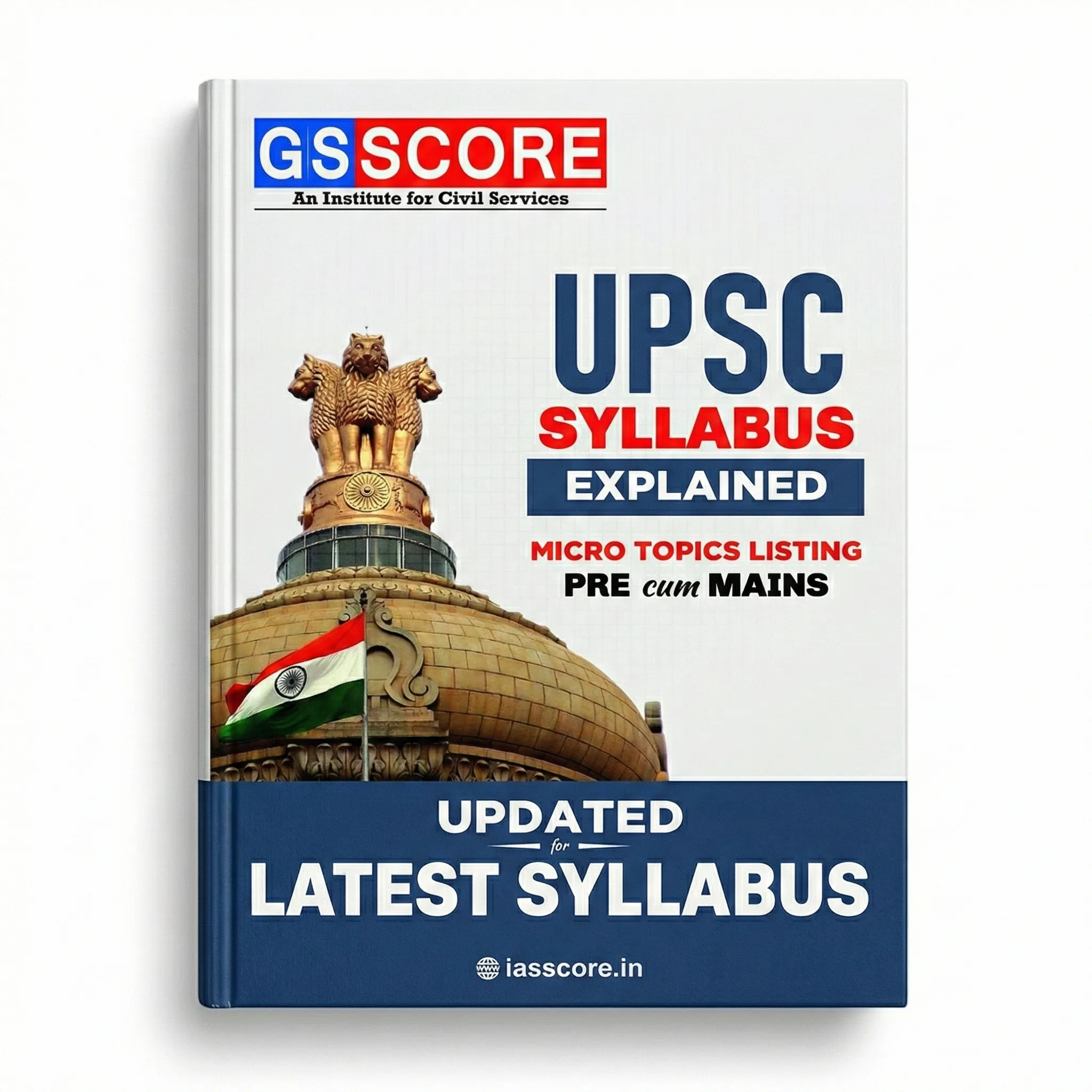
Rule of thumb: spend prep time in proportion to marks. Grade 1 → roughly 35% on Basic Science & Engineering. Grade 3 → roughly 40% on General Science. Everything else fits around those anchors. To stay aligned with the official topic list while you plan, some aspirants keep a clean syllabus reference like the GS Score Latest Syllabus Booklet handy as a checklist model for ticking off completed topics.
Best Books & Preparation Tips
The right resource depends on your grade. Grade 1 needs a diploma-level engineering reference; Grade 3 needs a strong Class 10 science and arithmetic base. Across both, a few habits decide outcomes.
- Practise with a timer. 100 questions in 90 minutes means <54 seconds each — speed is a skill, build it in mocks.
- Respect the 1/3 negative marking. Guess only when you can eliminate two options; blind guessing statistically loses marks.
- Revise current affairs weekly. General Awareness is thin (10 marks) but easy to lose if you cram it last-minute — a monthly magazine keeps it steady.
- Solve full-length PYQ papers to internalise the exact difficulty and question phrasing.
- Front-load the heavyweight subject (Engineering for Grade 1, General Science for Grade 3) in your first six weeks while energy is high.
What to read for each grade: Grade 1 Signal candidates should anchor on a standard diploma-level electrical/electronics engineering text plus an objective railway technical question bank; Grade 3 candidates should pair a Lucent-style General Science / GK book with an SSC-grade arithmetic and reasoning practice book. Whatever titles you choose, judge them by the volume of solved objective questions, not page count. Pair a good conceptual book with consistent current-affairs revision from a source like the Vision IAS Current Affairs Magazine and a topic-wise practice discipline modelled on the Forum IAS PYQ Toolkit, and your General Awareness and revision loop will out-run most rivals.
RRB Technician Syllabus PDF Download
Keep a clean copy of the syllabus beside you throughout preparation. For the RRB Technician syllabus PDF download, use the official Centralised Employment Notice on your zonal RRB website (rrbcdg.gov.in and the other zone portals) — that notification is the authoritative source for the exact subject split and marks. For day-to-day use, maintain a printable subject-wise checklist — one row per topic with a tick box — built from the tables in this guide so you can track completion at a glance. A cleanly formatted, checkbox-style planner beats a raw notification excerpt because it turns the syllabus into an actionable to-do list rather than a wall of text.
Common Mistakes to Avoid
Even strong candidates lose selection to avoidable errors. Watch for these.
- Preparing the wrong grade’s syllabus — Grade 3 aspirants wasting time on the computer/engineering sections that never appear for them.
- Under-weighting the heavyweight subject — neglecting Basic Science & Engineering (Grade 1) or General Science (Grade 3).
- Ignoring negative marking and over-attempting, turning a good score into a mediocre one.
- Skipping mocks until the last week, so speed and shift-timing are never rehearsed.
- Cramming current affairs instead of revising a monthly digest steadily.
- Trusting unofficial syllabus lists without cross-checking your zone’s CEN notification for the final marks split.
Frequently Asked Questions
What is the syllabus of RRB Technician 2026?
The RRB Technician 2026 syllabus depends on the grade. Grade 1 Signal covers General Awareness, Reasoning, Basics of Computers & Applications, Mathematics and Basic Science & Engineering. Grade 3 covers Mathematics, Reasoning, General Science and General Awareness. Both are tested in a single 100-mark CBT of 90 minutes.
What is the exam pattern for RRB Technician?
Both grades take one CBT of 100 objective questions worth 100 marks in 90 minutes, with 1/3 negative marking. Grade 1 Signal has five subjects with Basic Science & Engineering carrying the most (35 marks); Grade 3 has four subjects with General Science carrying the most (40 marks). Marks are normalised across shifts before the merit list is prepared.
What is the difference between RRB Technician Grade 1 and Grade 3 syllabus?
Grade 1 Signal has five subjects and includes Basic Science & Engineering (35 marks) and Basics of Computers (20 marks), reflecting its diploma/degree eligibility. Grade 3 has four subjects, no computer or engineering section, and is dominated by General Science (40 marks) at roughly Class 10 / ITI standard.
Is there negative marking in the RRB Technician exam?
Yes. One-third (1/3) of a mark is deducted for every wrong answer in the CBT. Since each correct answer earns 1 mark, three wrong answers cancel one correct answer. Attempt questions only when you can confidently eliminate options.
How many questions are asked in the RRB Technician CBT?
The CBT has 100 questions carrying 100 marks, to be completed in 90 minutes (120 minutes for eligible PwBD candidates using a scribe). That works out to under one minute per question, so speed and accuracy both matter.
Which subject has the highest weightage in the RRB Technician exam?
For Grade 1 Signal it is Basic Science & Engineering at 35 marks. For Grade 3 it is General Science at 40 marks. These heavyweight subjects should receive the largest share of your preparation time in each respective grade.
What are the minimum qualifying marks for the RRB Technician CBT?
The minimum qualifying percentages are 40% for UR and EWS, 30% for OBC (NCL) and SC, and 25% for ST. These can be relaxed by up to 2% for reserved categories where vacancies require, and final selection is based on normalised marks.
How should I prepare for the RRB Technician exam and which books are best?
Study in proportion to weightage: front-load Basic Science & Engineering for Grade 1 or General Science for Grade 3, then rotate Mathematics, Reasoning and General Awareness. Use a diploma-level engineering reference (Grade 1) or a Class 10 General Science plus SSC-grade arithmetic/reasoning book (Grade 3), and judge any book by its volume of solved objective questions. Add weekly current-affairs revision from a monthly magazine and solve full-length PYQ mocks under a timer to master the 90-minute, negative-marking format.
Recommended Study Material


Continue Reading
SSC GD Syllabus 2026: Subject-Wise Topics, Exam Pattern + PDF
The SSC GD syllabus covers four subjects in the Computer Based Test (CBT) — General Intelligence & Reasoning,…
NDA Syllabus 2026: Subject-Wise Maths, GAT + PDF Download
The NDA syllabus is set by UPSC and covers two written papers — Paper I Mathematics (300 marks)…
JEE Main Exam Pattern 2026: Marks, Marking Scheme, Paper 1, 2A & 2B
The JEE Main exam pattern for Paper 1 (B.E./B.Tech) has 75 questions worth a total of 300 marks,…