JEE Main Exam Pattern 2026: Marks, Marking Scheme, Paper 1, 2A & 2B
JEE Main exam pattern 2026: 75 questions, 300 marks, marking scheme, Paper 1, 2A & 2B, subject-wise weightage, duration, languages and an attempt strategy.

The JEE Main exam pattern for Paper 1 (B.E./B.Tech) has 75 questions worth a total of 300 marks, split equally across Physics, Chemistry and Mathematics. Each subject carries 20 multiple-choice questions in Section A and 5 numerical value questions in Section B, with +4 for every correct answer, -1 for every wrong answer (including numerical questions since 2025) and 0 for unattempted ones. The computer-based test runs for 3 hours, is held in two sessions (January and April), and the better of the two scores is used for ranking.
That single paragraph answers the question most aspirants type into search, but the JEE Main exam pattern has several moving parts that decide your final percentile — what counts as a section, when negative marking bites, how Paper 2 differs, and which chapters carry the most marks. This guide breaks down the complete pattern for Paper 1, Paper 2A (B.Arch) and Paper 2B (B.Planning), the exact marking scheme, total marks, subject-wise and chapter-wise weightage, duration, languages, percentile normalisation, the 2024-vs-2025-vs-2026 changes, and a section-by-section attempt strategy so you can plan your attempt with confidence.
JEE Main Exam Pattern 2026 at a Glance
The National Testing Agency (NTA) conducts JEE Main in three papers. Paper 1 is for B.E./B.Tech admissions (NITs, IIITs, GFTIs and the gateway to JEE Advanced), Paper 2A is for B.Arch, and Paper 2B is for B.Planning. A candidate can appear for one, two or all three papers depending on the courses they want. The table below summarises the full JEE Main 2026 exam pattern across all three papers.
| Feature | Paper 1 (B.Tech) | Paper 2A (B.Arch) | Paper 2B (B.Planning) |
|---|---|---|---|
| Total questions (to attempt) | 75 | 77 | 100 |
| Total marks | 300 | 400 | 400 |
| Subjects/sections | Physics, Chemistry, Maths | Maths, Aptitude, Drawing | Maths, Aptitude, Planning |
| Question types | MCQ + Numerical | MCQ, Numerical + Drawing | MCQ + Numerical |
| Duration | 3 hours | 3 hours | 3 hours |
| Mode | Computer-based | CBT + Drawing on paper | Computer-based |
| Sessions per year | 2 (Jan & April) | 2 (Jan & April) | 2 (Jan & April) |
PwD (Persons with Disability) candidates are given an extended duration of 4 hours instead of 3 hours across all papers. The pattern shown here reflects the latest NTA information bulletin; always cross-check the official bulletin on jeemain.nta.nic.in once it is released for your session, as the broad structure is stable but exact dates change every cycle.
JEE Main Paper 1 Exam Pattern (B.Tech)
The JEE Main Paper 1 exam pattern (B.Tech) is the most-attempted of the three. It tests three subjects — Physics, Chemistry and Mathematics — with each subject divided into two sections, A and B. All three subjects carry equal weight, so no single subject can be ignored; your composite score and rank are built from your performance across all of them.
Section A and Section B explained
Section A contains 20 multiple-choice questions (MCQs) per subject, each with four options and a single correct answer. Section B contains 5 Numerical Value Questions (NVQs) per subject, where you type the numerical answer instead of choosing an option. A crucial 2025 change carried into 2026: all 5 NVQs are now compulsory. Earlier, candidates were given 10 NVQs and could choose any 5 — that optional choice has been removed. The practical effect is that there is no longer a buffer of “extra” numerical questions you can skip, so your accuracy on the harder, calculation-heavy items matters more than before.
| Subject | Section A (MCQ) | Section B (NVQ) | Total questions | Marks |
|---|---|---|---|---|
| Physics | 20 | 5 | 25 | 100 |
| Chemistry | 20 | 5 | 25 | 100 |
| Mathematics | 20 | 5 | 25 | 100 |
| Total | 60 | 15 | 75 | 300 |
JEE Main Marking Scheme 2026
The JEE Main marking scheme is uniform across all questions in Paper 1. Understanding it is the single biggest lever you have over your score, because negative marking can erase the gains from several correct answers if you guess carelessly. Both MCQs and NVQs follow the same +4 / -1 / 0 rule, so there is no longer a “low-risk” question type on the paper.
| Response | MCQ (Section A) | NVQ (Section B) |
|---|---|---|
| Correct answer | +4 | +4 |
| Incorrect answer | -1 | -1 |
| Unattempted | 0 | 0 |
| More than one option (MCQ) | -1 | N/A |
| Marked for review but not submitted | 0 (treated as unattempted) | 0 (treated as unattempted) |
One subtlety worth noting: a question you “mark for review” but never confirm as answered is scored as unattempted (0), not as a wrong answer. The negative mark only applies once you have actually submitted a wrong response. This is why disciplined use of the review tool — and confirming only the answers you trust — protects your score.
Is there negative marking in the numerical value questions in JEE Main?
Yes. Since 2025, negative marking of -1 applies to wrong numerical value questions too. Before this change, NVQs carried no negative marking, which made them “safe” guesses. That is no longer the case in 2026 — a wrong typed answer in Section B costs you 1 mark, exactly like an MCQ. Round your numerical answers correctly (to the precision the question specifies), and only attempt NVQs you are confident about. A common avoidable error is a rounding or unit slip on a question you actually solved correctly, which turns a +4 into a -1: a 5-mark swing on a single question.
JEE Main Total Marks and Number of Questions
The JEE Main total marks and number of questions for Paper 1 are fixed: 75 questions to attempt, carrying 300 marks. While the question paper technically shows 90 questions (30 per subject), you only attempt 75 because Section B is limited to 5 NVQs per subject. The maximum theoretical score is +300; the minimum (if every attempted answer is wrong) is -75. In practice, even a strong candidate rarely attempts all 75 perfectly, which is why the gap between a good attempt and a great one usually comes down to how few wrong answers you submit, not how many questions you try.
How many questions are there in JEE Main 2026?
In JEE Main 2026 Paper 1 you attempt 75 questions — 25 per subject (20 MCQs + 5 NVQs). Paper 2A (B.Arch) has 77 questions and Paper 2B (B.Planning) has 100 questions. So the answer depends on which paper you sit, but for the overwhelming majority of engineering aspirants the figure is 75 questions for 300 marks.
JEE Main Exam Pattern Paper 2 (B.Arch & B.Planning)
The JEE Main exam pattern Paper 2 (B.Arch & B.Planning) differs significantly from Paper 1. Both Paper 2A and Paper 2B carry 400 marks and include a Mathematics and an Aptitude section, but they diverge on the third component — Drawing for B.Arch and a Planning section for B.Planning. The Mathematics section follows the same 20 MCQ + 5 NVQ structure as Paper 1, so the marking logic you learn for B.Tech carries over directly.
Paper 2A — B.Arch pattern
| Section | Questions | Marks | Mode |
|---|---|---|---|
| Mathematics (Part I) | 20 MCQ + 5 NVQ | 100 | Computer-based |
| Aptitude Test (Part II) | 50 | 200 | Computer-based |
| Drawing Test (Part III) | 2 | 100 | On paper (A4 sheet) |
| Total | 77 | 400 | — |
The Drawing Test is evaluated by examiners rather than auto-graded, so it does not follow the +4/-1 rule; it rewards proportion, perspective, composition and presentation. The Aptitude section is the highest-scoring single component at 200 marks, so B.Arch aspirants should not treat it as secondary to Drawing.
Paper 2B — B.Planning pattern
| Section | Questions | Marks | Mode |
|---|---|---|---|
| Mathematics (Part I) | 20 MCQ + 5 NVQ | 100 | Computer-based |
| Aptitude Test (Part II) | 50 | 200 | Computer-based |
| Planning (Part III) | 25 | 100 | Computer-based |
| Total | 100 | 400 | — |
A candidate who wants both B.Arch and B.Planning admission options can appear for Paper 2A and Paper 2B together, since they share the common Mathematics and Aptitude sections and differ only in the third part.
What is the difference between JEE Main Paper 1, Paper 2A and Paper 2B?
Paper 1 is for B.Tech and tests Physics, Chemistry and Maths (300 marks). Paper 2A is for B.Arch and tests Maths, Aptitude and a hand-drawn Drawing test (400 marks). Paper 2B is for B.Planning and tests Maths, Aptitude and a Planning section (400 marks). The Drawing test in Paper 2A is the only component conducted on paper rather than online, and it is the only part not graded by the +4/-1 system.
JEE Main Exam Pattern Subject-Wise Weightage
Knowing the JEE Main exam pattern subject-wise weightage is the difference between studying hard and studying smart. Each subject carries equal marks (100 each in Paper 1), but within each subject some chapters consistently carry far more marks than others. The tables below highlight the historically high-yield chapters based on past NTA papers — focus your revision here for the best marks-per-hour return. Treat these figures as indicative trends across recent sessions, not a fixed blueprint, because NTA never publishes an official chapter-wise split.
Physics — high-weightage chapters
| Chapter/Unit | Approx. weightage | Difficulty |
|---|---|---|
| Modern Physics & Electronics | ~16-18% | Easy-Medium |
| Electrodynamics (Current, EMI, Magnetism) | ~22-24% | Medium |
| Mechanics (Kinematics, Rotation, Gravitation) | ~25-28% | Medium-Hard |
| Heat & Thermodynamics | ~8-10% | Medium |
| Optics & Waves | ~10-12% | Easy-Medium |
Chemistry — high-weightage chapters
| Branch/Unit | Approx. weightage | Scoring potential |
|---|---|---|
| Physical Chemistry (Mole concept, Equilibrium, Electrochem) | ~33-36% | High |
| Organic Chemistry (GOC, Hydrocarbons, Oxygen compounds) | ~33-35% | High |
| Inorganic Chemistry (Periodic table, Coordination, p-block) | ~30-32% | Very High (memory-based) |
Mathematics — high-weightage chapters
| Chapter/Unit | Approx. weightage | Difficulty |
|---|---|---|
| Calculus (Limits, Integration, Differential Eq.) | ~28-32% | Medium-Hard |
| Coordinate Geometry | ~16-18% | Medium |
| Algebra (Complex no., Matrices, Sequences) | ~22-25% | Medium |
| Vectors & 3D Geometry | ~10-12% | Easy-Medium |
| Trigonometry & Probability | ~12-14% | Easy-Medium |
These percentages vary slightly between the January and April sessions, but the broad pattern holds year after year. Chemistry is often the highest marks-per-minute subject because Inorganic is memory-based and Physical Chemistry is formula-driven; Mathematics is usually the most time-consuming. Practising chapter-wise from structured modules like the eSaral IIT JEE Modules 2026 helps you align your effort with this weightage instead of spreading it thin.
JEE Main 2026 Exam Pattern: Mode, Duration & Languages
The JEE Main 2026 exam pattern is fully computer-based (online) for all sections except the B.Arch Drawing test, which is answered with pen and paper on an A4 sheet. The total duration is 3 hours (180 minutes), extended to 4 hours for PwD candidates who are eligible for a scribe. Each candidate gets a unique set of questions drawn from the question bank for their shift, which is part of why NTA normalises scores rather than ranking on raw marks.
How many sections are there in JEE Main and what is the duration?
Paper 1 has six sections in total — Section A and Section B for each of Physics, Chemistry and Mathematics — completed within 3 hours. There is no sectional time limit, so you can move freely between subjects, but managing your own time across the six sections is essential. Because nothing forces you to finish one subject before starting another, a poorly planned attempt can leave an entire subject under-attempted, so a personal time budget (covered below) matters as much as the syllabus.
In how many languages is JEE Main conducted?
JEE Main 2026 is conducted in 13 languages: English, Hindi, Assamese, Bengali, Gujarati, Kannada, Malayalam, Marathi, Odia, Punjabi, Tamil, Telugu and Urdu. The medium chosen during application applies to the question paper; English and Hindi are available at all centres nationwide, while regional languages are offered at centres in their respective states. If you choose a regional language, the paper is usually shown bilingually with English, and in case of any ambiguity in translation, the English version is treated as final.
| Parameter | Detail |
|---|---|
| Mode | Computer-based (Drawing on paper) |
| Duration | 3 hours (4 hours for PwD) |
| Languages | 13 (English, Hindi + 11 regional) |
| Sectional timing | None — flexible |
| On-screen calculator | Not allowed (rough sheets provided) |
Two Sessions, Best-of-Two & NTA Percentile Normalisation
JEE Main is held twice a year — Session 1 in January and Session 2 in April. You may appear in one or both sessions; if you take both, the better of the two NTA scores is used for ranking and counselling. This two-attempt structure reduces the pressure of a single bad day and lets you treat Session 1 as a high-stakes diagnostic if you wish, then improve in Session 2.
Because different sessions and shifts have slightly different difficulty levels, NTA does not rank on raw marks. Instead it uses percentile normalisation. Your NTA score is a percentile (up to 7 decimal places) showing the percentage of candidates who scored equal to or below you in your shift. These percentiles are then merged across sessions, and the higher percentile of your two attempts is retained. A consequence worth understanding: percentiles are shift-relative, so two students with the same raw marks in different shifts can receive slightly different percentiles, and a 99+ percentile reflects your standing within your shift, not a fixed mark.
How ties are broken
When two candidates have the same overall NTA percentile, the tie is resolved in this order: higher Mathematics score, then Physics, then Chemistry, then the lower ratio of wrong-to-correct answers. The earlier age-based tie-breaker has been removed, making accuracy in Maths more decisive than ever. The practical lesson is that maximising your Mathematics percentile and keeping your wrong-to-correct ratio low can quietly improve your final rank even when your total score is identical to someone else’s.
What Changed: JEE Main 2024 vs 2025 vs 2026
NTA has steadily tightened the pattern over the last three cycles. The most important shift was the removal of optional questions in Section B. Here is a clear year-on-year comparison so you know exactly what applies in 2026.
| Aspect | 2024 | 2025 | 2026 |
|---|---|---|---|
| Section B questions | 10 (attempt any 5) | 5 (all compulsory) | 5 (all compulsory) |
| Negative marking in NVQ | No | Yes (-1) | Yes (-1) |
| Questions to attempt | 75 | 75 | 75 |
| Total marks | 300 | 300 | 300 |
| Number of sessions | 2 | 2 | 2 |
The takeaway: in 2026 there is no “choice cushion” in Section B and no safe-guessing zone for numerical questions. Every question counts, and every wrong answer costs. If you are practising with older 2023 or early-2024 material, recalibrate your strategy — advice that told you to “freely attempt all numericals” is now outdated.
JEE Main vs JEE Advanced Exam Pattern
Many aspirants confuse the two exams. JEE Main is the qualifying exam for NITs/IIITs/GFTIs and the gateway to JEE Advanced; only the top ~2.5 lakh Main qualifiers can sit for JEE Advanced, which is the entrance to the IITs. Their patterns are very different, and a strategy tuned only for Main’s predictable format can be caught off guard by Advanced.
| Feature | JEE Main | JEE Advanced |
|---|---|---|
| Conducting body | NTA | An IIT (rotational) |
| Pattern | Fixed (MCQ + NVQ) | Variable each year |
| Question types | MCQ, Numerical | MCQ, MSQ, Numerical, Match, Comprehension |
| Marking | Consistent +4/-1 | Variable, partial marking possible |
| Papers | 1 paper (Paper 1) | 2 compulsory papers |
| Attempts/year | 2 sessions | 1 |
If you are targeting the IITs, study the eSaral IIT JEE Modules 2026 with both exams in mind — the conceptual depth needed for Advanced also strengthens your Main performance, since the Main syllabus is effectively a subset of what Advanced expects.
Attempt Strategy: How to Master the JEE Main Exam Pattern
Knowing the pattern is step one; using it strategically is what improves your rank. With Section B now fully compulsory and carrying negative marks, your in-exam approach must change from older advice. The goal is to maximise net marks, which means balancing how many questions you attempt against how accurately you attempt them.
Recommended time allocation
| Subject | Suggested time | Strategy |
|---|---|---|
| Chemistry | 40-45 min | Attempt first — fastest, most factual |
| Mathematics | 65-70 min | Longest — buffer extra time here |
| Physics | 55-60 min | Mix of concept and calculation |
| Review/buffer | 10-15 min | Recheck NVQ rounding and marked questions |
These figures are a starting template, not a rule — adjust them to your own strengths. If Mathematics is your strongest subject, you may finish it faster and reinvest time in Physics. The key is to decide your split before exam day and rehearse it in mocks, so you are not improvising under pressure.
Order of attempting to minimise negative marking
Make two passes. In the first pass, solve every question you are confident about and skip anything that needs more than ~2 minutes. In the second pass, return to flagged questions. Because NVQs now carry -1, treat them with the same caution as MCQs — never type a blind guess. With a single bad guess wiping out the +4 from a correct answer (a 5-mark swing), disciplined skipping is a scoring strategy, not a weakness. A useful rule of thumb: only attempt an MCQ if you can confidently eliminate at least two of the four options, and only submit an NVQ when you have actually solved it, not estimated it.
Are all questions in Section B of JEE Main compulsory now?
Yes. Since 2025 and continuing in 2026, all 5 numerical value questions per subject in Section B are compulsory — the earlier option to choose 5 out of 10 has been removed. Plan to attempt all 15 NVQs, but only commit to answers you can verify. The removal of choice means you can no longer skip the two hardest numericals in a subject and still attempt your quota, so building speed on numerical problems during practice is now non-negotiable.
How to Prepare for the JEE Main 2026 Exam Pattern
The pattern rewards three things: conceptual clarity, speed and accuracy under negative marking. Build your preparation around them rather than around raw syllabus coverage alone.
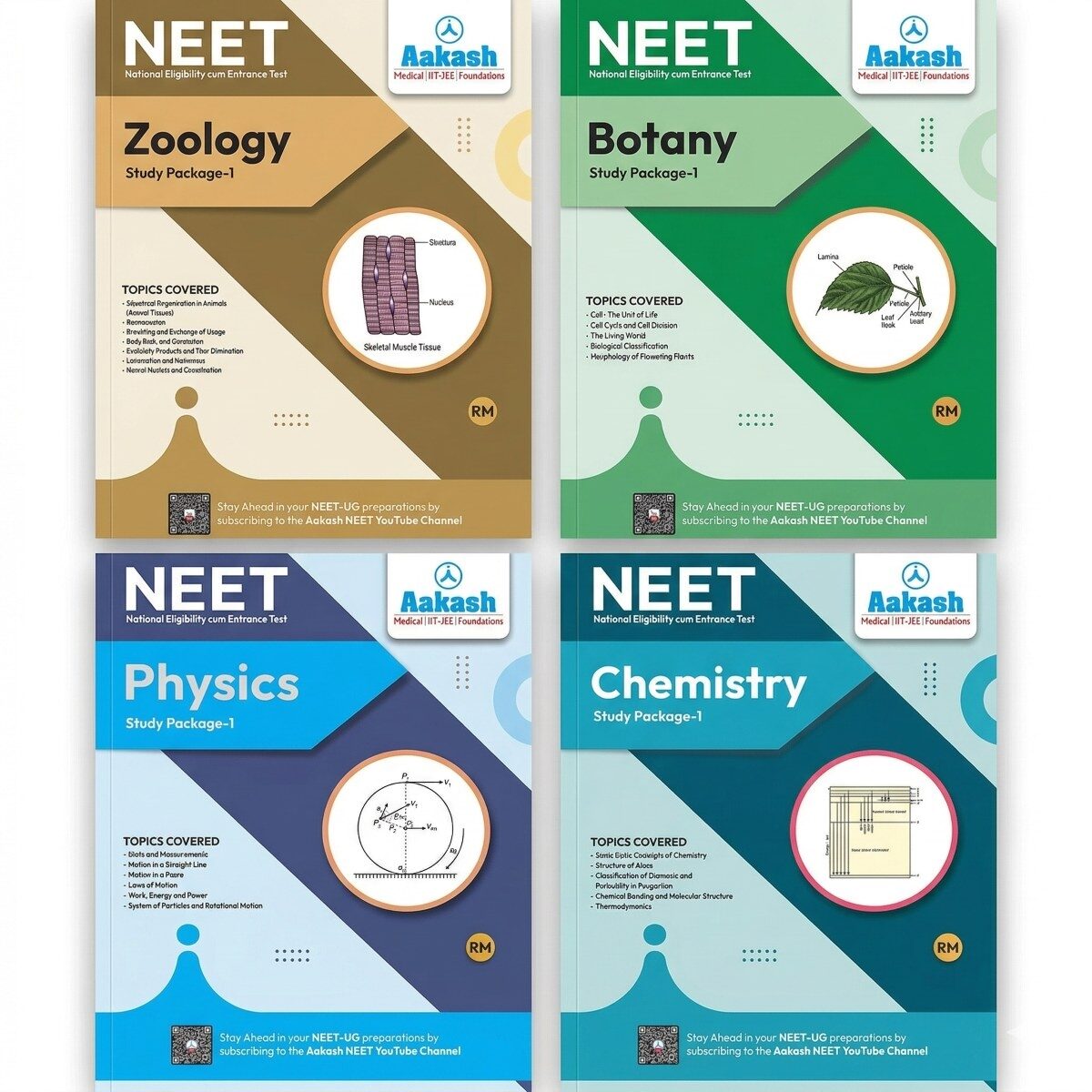
Start with strong, exam-aligned theory and chapter-wise practice. The eSaral IIT JEE Modules 2026 cover the complete Physics, Chemistry and Maths syllabus in the weightage order discussed above, making them well-suited to the current pattern. If you are in Class 11 or 12 and building a foundation, structured school-level material such as the Aakash Class 10 Study Material helps cement the NCERT base that JEE questions are built on. Aspirants preparing for both engineering and medical streams often pair their JEE prep with the Aakash NEET 11th + 12th Complete Set for overlapping Physics and Chemistry coverage.
Use mock tests and previous-year papers
The single best way to internalise the JEE Main exam pattern is to take full-length, computer-based mock tests under the exact 3-hour, 75-question format. Solve previous-year and memory-based papers to spot recurring chapters, then download the official NTA sample paper and pattern sheet from jeemain.nta.nic.in to practise the interface. Track your wrong-to-correct ratio in every mock — the same metric NTA uses to break ties — and after each test, review every wrong answer to classify it as a concept gap, a silly error or a guess gone wrong. Fixing the silly-error and bad-guess buckets typically adds more marks than learning new topics late in the cycle.
Frequently Asked Questions
How many questions are there in JEE Main 2026?
JEE Main 2026 Paper 1 (B.Tech) has 75 questions to attempt — 25 per subject (20 MCQs in Section A and 5 numerical value questions in Section B) across Physics, Chemistry and Mathematics. Paper 2A (B.Arch) has 77 questions and Paper 2B (B.Planning) has 100 questions.
What is the marking scheme for JEE Main?
Each correct answer earns +4 marks, each incorrect answer loses -1 mark, and unattempted questions score 0. This applies to both MCQs and numerical value questions in 2026. Paper 1 carries a maximum of 300 marks.
What is the total marks of JEE Main Paper 1?
JEE Main Paper 1 (B.Tech) carries a total of 300 marks — 100 marks each for Physics, Chemistry and Mathematics, with 75 questions attempted in a 3-hour computer-based test.
Is there negative marking in the numerical value questions in JEE Main?
Yes. Since 2025, a wrong numerical value question in Section B carries -1 negative marking, the same as an MCQ. Earlier, NVQs had no negative marking, so candidates must now answer them only when confident.
Are all questions in Section B of JEE Main compulsory now?
Yes. Since 2025 and continuing in 2026, all 5 numerical value questions per subject in Section B are compulsory. The earlier system of providing 10 NVQs and letting you choose any 5 has been removed, so you must attempt all 15 NVQs across the three subjects.
How many sections are there in JEE Main and what is the duration?
JEE Main Paper 1 has six sections — Section A (MCQs) and Section B (numericals) for each of Physics, Chemistry and Mathematics — to be completed in 3 hours (4 hours for eligible PwD candidates). There is no sectional time limit, so you can switch between subjects freely.
In how many languages is JEE Main conducted?
JEE Main 2026 is conducted in 13 languages: English, Hindi, Assamese, Bengali, Gujarati, Kannada, Malayalam, Marathi, Odia, Punjabi, Tamil, Telugu and Urdu. English and Hindi are available at all centres; regional languages are offered in their respective states.
What is the difference between JEE Main Paper 1, Paper 2A and Paper 2B?
Paper 1 (B.Tech) tests Physics, Chemistry and Maths for 300 marks. Paper 2A (B.Arch) tests Maths, Aptitude and a pen-and-paper Drawing test for 400 marks. Paper 2B (B.Planning) tests Maths, Aptitude and a Planning section for 400 marks. Only the Paper 2A Drawing test is conducted offline.
Is a calculator allowed in JEE Main 2026?
No. Physical calculators, log tables and any electronic devices are not permitted in JEE Main. There is also no on-screen calculator; rough sheets are provided at the centre for working out calculations.
How many sessions of JEE Main are held and which score counts?
JEE Main is held in two sessions every year — January and April. Candidates may appear in one or both; if both are attempted, the better NTA percentile score of the two is used for ranking and counselling.
Recommended Study Material

![AAKASH [2024 Ed.] Latest Study Material for Class 10](https://competer.in/wp-content/uploads/2025/03/WhatsAppImage2024-05-07at6.43.29PM.jpg)
Continue Reading
Super TET Syllabus 2026: Subject-Wise Topics, Pattern + PDF
The Super TET syllabus for 2026 is a single 150-mark, 150-question objective paper covering 10 sections — Language…
SSC CPO Syllabus 2025: Paper 1 & 2 Pattern, PET/PST + PDF
The SSC CPO syllabus covers four subjects in Paper 1 (General Intelligence & Reasoning, General Knowledge & General…

Best Books for NEET 2026: Subject-Wise List (Physics, Chemistry, Biology) + Prices
The best books for NEET are the three NCERT textbooks for Class 11 and 12 (Physics, Chemistry, Biology)…