Super TET Syllabus 2026: Subject-Wise Topics, Pattern + PDF
Complete Super TET syllabus 2026: subject-wise topics, the new 120Q/360-marks exam pattern, primary & junior breakdown, qualifying marks, Hindi notes & PDF download.

The Super TET syllabus for the UP Assistant Teacher recruitment covers ten broad areas — Language, Mathematics, Science, Environmental & Social Studies, General Knowledge & Current Affairs, Reasoning, Teaching Skills, Child Psychology, Information Technology and Life Skills/Management — all tested through a single objective paper. Under the revised pattern now being adopted by UPESSC, the exam carries 120 questions for 360 marks in 120 minutes with +3 for each correct answer and –1 for each wrong answer, replacing the older 150-question/150-marks format that had no negative marking. In short: the content stays the same, but accuracy now matters far more than raw attempts.
This guide gives you the complete, latest Super TET syllabus 2026 — subject-wise topics, a printable weightage checklist, the separate primary (Classes 1–5) and junior (Classes 6–8) structure, the Super TET syllabus in Hindi, qualifying-marks guidance, a PDF download walkthrough, and a marks-driven preparation roadmap. We have deliberately kept it clean and ad-light so you can actually plan your study instead of hunting through clutter.
Super TET 2026: Exam Overview
Super TET (also written as UP Super TET) is the recruitment examination for appointment of Assistant Teachers in UP Basic Education Council schools. It is a selection test taken after you have already qualified a Teacher Eligibility Test (UPTET or CTET). The recruitment is now conducted by the Uttar Pradesh Education Service Selection Commission (UPESSC), the unified commission that has taken over teacher recruitment in the state.
There are two streams within the same recruitment: Primary level (Classes 1–5) and Upper Primary / Junior level (Classes 6–8). The core syllabus is largely common, but the junior stream adds a subject-specialisation pathway, which we explain in detail below.
| Particular | Detail |
|---|---|
| Exam name | UP Super TET (Assistant Teacher Recruitment) |
| Conducting body | UPESSC (UP Education Service Selection Commission) |
| Post | Assistant Teacher, UP Basic Schools |
| Levels | Primary (1–5) & Junior/Upper Primary (6–8) |
| Mode | Offline / OMR-based written test (objective) |
| Total questions (revised) | 120 |
| Total marks (revised) | 360 |
| Duration | 120 minutes (2 hours) |
| Negative marking (revised) | Yes, –1 per wrong answer |
| Medium | Hindi (with Sanskrit/English language sections) |
Super TET Exam Pattern 2026: Old vs New (Reconciled)
The single biggest confusion among aspirants is which Super TET exam pattern is in force. Here is the honest position for the 2026 cycle. Historically, Super TET was held under a 150 questions / 150 marks format with one mark per question and no negative marking, for a duration of three hours. With recruitment moving to UPESSC and the push to align with other state selection exams, the revised pattern is 120 questions for 360 marks (3 marks each), 120 minutes, with +3 for correct and –1 for wrong answers.
Treat the revised 120Q/360-marks/+3,–1 pattern as the working assumption for 2026, but always confirm against the official notification on the UPESSC portal before your exam, because the final marking scheme is fixed by the recruitment advertisement. The syllabus content is unchanged between the two patterns — only the number of questions, marks per question and the negative-marking rule differ.
| Feature | Old Pattern | New / Revised Pattern (2026) |
|---|---|---|
| Number of questions | 150 | 120 |
| Marks per question | 1 | 3 |
| Total marks | 150 | 360 |
| Negative marking | None | –1 per wrong answer |
| Duration | 180 minutes | 120 minutes |
| Question type | Objective (MCQ) | Objective (MCQ) |
What this change means for you: the new scheme rewards accuracy far more than speed-guessing. Under the old no-negative format, attempting all 150 questions was always correct strategy. Under +3/–1, a wrong answer costs you a net 4 marks relative to a correct one, so blind guessing is penalised. We cover attempt strategy in the dedicated section below.
Super TET Subject-Wise Syllabus & Marks Distribution
The Super TET subject wise syllabus is divided into ten components. The table below gives the established subject-wise question weightage that has defined the exam. Because the revised pattern reduces the paper to 120 questions, use these numbers as the relative weightage each subject carries — the proportions stay broadly the same even as the absolute question count is trimmed.
| Subject | Approx. Questions (classic 150 pattern) | Relative Weightage |
|---|---|---|
| Language (Hindi / Sanskrit / English) | 40 | High |
| General Knowledge & Current Affairs | 30 | High |
| Mathematics / Numerical Ability | 20 | High |
| Science | 10 | Medium |
| Environment & Social Studies | 10 | Medium |
| Teaching Skills / Methodology | 10 | Medium |
| Child Psychology (Bal Manovigyan) | 10 | Medium |
| Life Skills / Management & Aptitude | 10 | Medium |
| Information Technology (IT) | 5 | Low |
| Reasoning Ability | 5 | Low |
| Total | 150 | — |
Clearly, Language, GK & Current Affairs and Mathematics together carry roughly 90 of 150 questions — about 60% of the paper. Any serious preparation plan must front-load these three high-weightage pillars before touching anything else.
Detailed Topic Breakdown Under Each Subject
Below is the complete topic checklist. Print it, and tick each topic as you finish it.
1. Language — Hindi, Sanskrit & English
Hindi: Varnamala (vowels & consonants), sandhi, samas, upsarg-pratyay, tatsam-tadbhav, paryayvachi & vilom shabd, anekarthi shabd, muhavare & lokoktiyan, vakya shuddhi, ras, chhand, alankar, sahitya & pramukh rachnakar. Sanskrit: shabd roop, dhatu roop, karak, sandhi, samas, basic grammar. English: tenses, articles, prepositions, active–passive voice, direct–indirect speech, synonyms-antonyms, one-word substitution, error spotting and comprehension.
2. General Knowledge & Current Affairs
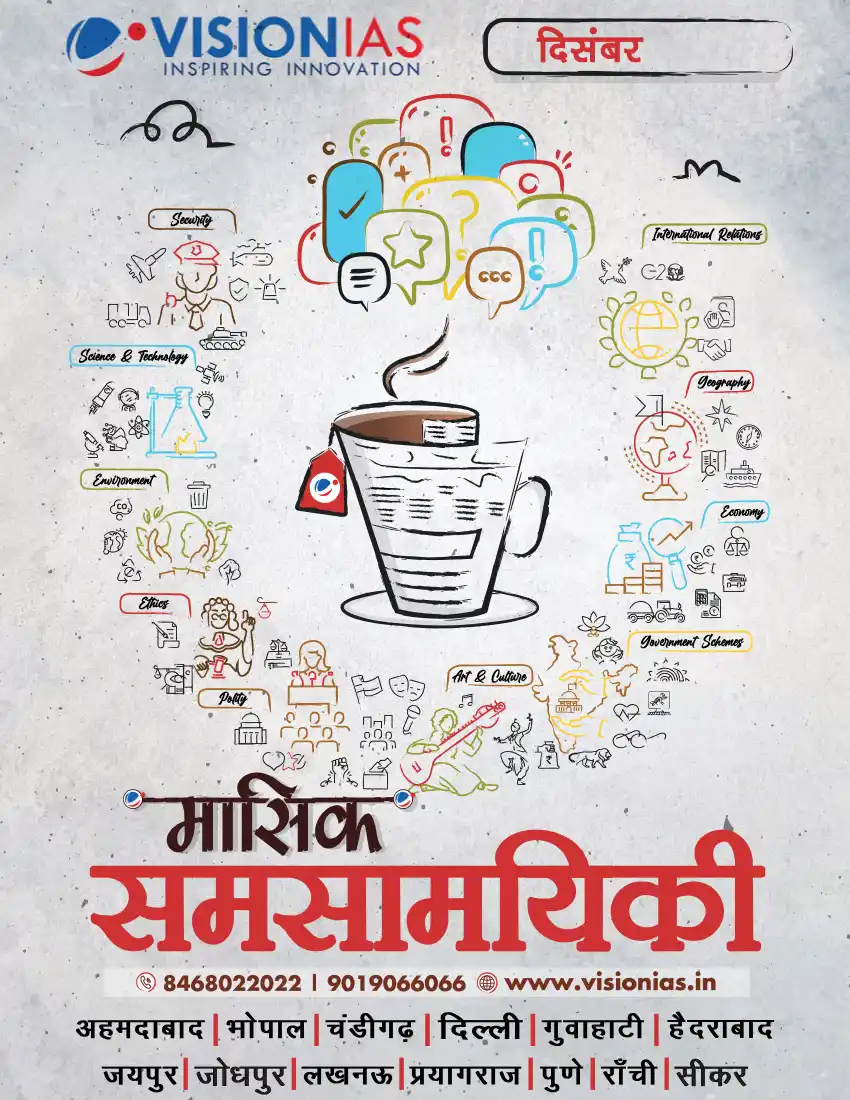
Indian history and freedom struggle, Indian polity & Constitution, geography (India & UP), economy basics, general science, sports, awards, important days, books & authors, and national + Uttar Pradesh current affairs of the last 6–12 months. UP-specific GK (schemes, districts, culture) is frequently asked. Staying current here is non-negotiable — a dated monthly compilation such as the Vision IAS Current Affairs Magazine (Hindi Medium) helps you revise the running affairs in one place.
3. Mathematics / Numerical Ability
Number system, LCM & HCF, simplification, percentage, ratio & proportion, average, profit & loss, simple & compound interest, time-work, time-speed-distance, mensuration, algebra basics, data interpretation, and elementary geometry up to the level taught in classes 1–8.
4. Science
Physics (motion, force, light, sound, electricity), chemistry (matter, elements & compounds, acids-bases), biology (human body, nutrition, diseases, plants & animals), and everyday applied science relevant to primary teaching.
5. Environment & Social Studies
Environmental awareness, pollution, ecosystems, natural resources, conservation; plus history, geography and civics content appropriate to the upper-primary curriculum.
6. Teaching Skills / Methodology (Shikshan Kaushal)
Teaching–learning process, teaching methods and techniques, lesson planning, teaching aids & TLM, evaluation and assessment, micro-teaching, classroom management, and inclusive education.
7. Child Psychology (Bal Manovigyan)
Growth & development, stages of child development, learning theories, motivation, intelligence, personality, individual differences, learning disabilities, and children with special needs.
8. Information Technology (IT)
Computer fundamentals, input/output devices, MS Office basics, internet & email, ICT in education, and digital tools used in the classroom.
9. Life Skills / Management & Aptitude
Communication skills, decision making, problem solving, time & stress management, leadership, emotional intelligence and teaching aptitude.
10. Reasoning Ability
Analogy, classification, series, coding-decoding, blood relations, direction sense, syllogism, number & alphabet series, Venn diagrams, and basic non-verbal reasoning.
Super TET Primary and Junior Syllabus (1–5 vs 6–8)
Both levels of the Super TET primary and junior syllabus share the common ten-component structure above. The key difference is the optional subject pathway for the junior/upper-primary level (Classes 6–8), where a portion of the paper is linked to the subject you intend to teach.
| Aspect | Primary (1–5) | Upper Primary / Junior (6–8) |
|---|---|---|
| Core common syllabus | Yes — all 10 components | Yes — all 10 components |
| Optional/specialisation subject | Not applicable | Applicable (subject-linked questions) |
| Depth of subject content | Up to Class 5 level | Up to Class 8 level (higher) |
| Eligibility TET | CTET/UPTET Paper 1 | CTET/UPTET Paper 2 |
If you are targeting the junior level, choose your optional subject early (e.g., Science/Maths, Social Science, Language) and align your Science, Maths and Language preparation to the slightly deeper Class 6–8 standard.
Super TET Syllabus in Hindi (हिंदी में)
Because Super TET is primarily a Hindi-medium paper, most aspirants search for the Super TET syllabus in Hindi. The ten components map directly to their Hindi names, so you can revise using whichever language you are comfortable with:
| English | हिंदी (Hindi) |
|---|---|
| Language | भाषा (हिंदी/संस्कृत/अंग्रेज़ी) |
| Mathematics | गणित / संख्यात्मक योग्यता |
| Science | विज्ञान |
| Environment & Social Studies | पर्यावरण एवं सामाजिक अध्ययन |
| General Knowledge & Current Affairs | सामान्य ज्ञान एवं समसामयिकी |
| Reasoning | तार्किक योग्यता |
| Teaching Skills | शिक्षण कौशल |
| Child Psychology | बाल मनोविज्ञान |
| Information Technology | सूचना प्रौद्योगिकी |
| Life Skills / Management | जीवन कौशल / प्रबंधन |
The official notification itself is bilingual, so the हिंदी syllabus text appears alongside the English version in the same document — no separate Hindi PDF is usually needed.
Printable Subject-Wise Weightage Checklist
Use this one-glance cheat sheet to prioritise. “Priority” reflects marks per hour of effort under the new +3/–1 scheme.
| Subject | Weightage Band | Study Priority | Target Accuracy |
|---|---|---|---|
| Language (Hindi/Sanskrit/English) | Very High | 1 | 85%+ |
| GK & Current Affairs | High | 2 | 75%+ |
| Mathematics | High | 2 | 80%+ |
| Child Psychology | Medium | 3 | 85%+ |
| Teaching Skills | Medium | 3 | 85%+ |
| Science | Medium | 4 | 75%+ |
| Env. & Social Studies | Medium | 4 | 75%+ |
| Reasoning | Low | 5 | 80%+ |
| IT | Low | 5 | 80%+ |
| Life Skills/Management | Low | 5 | 80%+ |
Note the pattern: Child Psychology, Teaching Skills, Reasoning and IT are small in volume but highly scoring — the questions are predictable and repeat year on year. These are your “sure-shot” marks under negative marking.
Super TET Qualifying / Passing Marks & Cut-Off
Super TET is a merit-based selection exam, so two things decide your fate: clearing the qualifying threshold, and then standing high enough on the final merit list. Historically, the indicative qualifying bar has been around 40% for general/unreserved candidates and about 33% for reserved (OBC/SC/ST) candidates. Clearing this threshold makes you eligible for the merit list; it does not guarantee a posting.
| Category | Indicative Qualifying % | Basis |
|---|---|---|
| General / Unreserved | ~40% | Minimum to be considered |
| OBC / SC / ST | ~33% | Relaxed minimum |
| Final selection | Cut-off (varies yearly) | Merit rank vs vacancies |
The actual cut-off is dynamic — it moves every cycle with the number of vacancies, the difficulty of the paper and the number of applicants. Final appointment is usually based on a combined score (academic record + TET + Super TET as weighted in the advertisement), so a strong Super TET score lifts you above the qualifying line and up the merit list. Always verify the exact qualifying percentage and selection weightage in the current year’s official notification, because UPESSC fixes these per recruitment cycle.
Negative-Marking Strategy for the +3/–1 Scheme
This is the biggest tactical shift and the area most top pages ignore. Under the new scheme every question is worth +3, and every wrong answer is –1.
- Do not blind-guess. A random guess on a 4-option MCQ has a 25% hit rate; over many questions this is a losing bet under –1.
- Eliminate, then decide. If you can rule out two options, the expected value turns positive — attempt it.
- Bank the certainties first. Clear Child Psychology, Teaching Skills, IT, Reasoning and your strong Language/Maths questions in the first pass with near-100% accuracy.
- Leave pure unknowns blank. Zero is better than –1. A disciplined 110 attempts at 90% accuracy beats a reckless 120 attempts at 70%.
| Strategy | Attempts | Accuracy | Approx. Net Marks (/360) |
|---|---|---|---|
| Reckless (attempt all) | 120 | 70% | (84×3) – (36×1) = 216 |
| Disciplined (selective) | 110 | 90% | (99×3) – (11×1) = 286 |
The disciplined approach yields 70 more marks — often the difference between a merit seat and the waitlist.
Super TET Preparation Roadmap (Marks-Weighted Plan)
Here is a four-month plan that allocates time in proportion to subject weightage.
| Phase | Focus | Daily Split |
|---|---|---|
| Month 1 — Foundation | Hindi grammar + Maths basics + NCERT science | Language 2h, Maths 2h, GK 1h |
| Month 2 — High-weightage depth | Advanced Language, full GK, Child Psychology | Language 1.5h, GK 1.5h, Psychology 1h, Maths 1h |
| Month 3 — Pedagogy + revision | Teaching Skills, IT, Reasoning, Life Skills, PYQ | Pedagogy 2h, Reasoning/IT 1h, PYQ 2h |
| Month 4 — Mock tests | Full-length mocks under +3/–1, current affairs revision | 1 mock/day + analysis + current affairs 1h |
Solve at least 15–20 previous year papers (PYQ) under the revised marking so your attempt instinct is calibrated to negative marking before exam day. Analyse every mock: your error log is more valuable than the score, because it tells you exactly where your –1s are leaking from.
Best Books & Study Material for Super TET
Map your material to the three high-weightage pillars first. Because Super TET is a Hindi-medium exam, Hindi-first resources work best:
- Language & General Studies foundation (Hindi): a structured Hindi GS set such as the Drishti IAS Hindi Study Material builds strong conceptual GK, polity, history and geography — the backbone of the GK section.
- Current Affairs: a monthly magazine like the Vision IAS Current Affairs (Hindi) keeps national and state affairs in one revisable document. An English edition is also available if you prefer bilingual revision.
- GK, Reasoning & Maths practice for state exams: the Drishti BPSC Books (Hindi) set is a strong source of objective GK, reasoning and quantitative practice tuned to Hindi-medium state-level exams.
Supplement these with NCERT textbooks (Classes 6–8) for Science, Maths and Social Studies, and a dedicated Child Development & Pedagogy book for the teaching sections.
Super TET Syllabus PDF Download (English & Hindi)
You can complete your Super TET syllabus PDF download directly from the official source. Steps:
- Visit the official UPESSC portal (the UP Education Service Selection Commission website).
- Open the latest Assistant Teacher recruitment notification / advertisement.
- The detailed syllabus and exam pattern are published within the PDF notification — download and save it.
- For the Super TET syllabus in Hindi, the notification itself is bilingual; the Hindi (हिंदी) syllabus section appears alongside the English text in the same document.
Always treat the syllabus printed in the current year’s official notification as the final authority, because UPESSC fixes the exact marks and pattern per recruitment cycle.
Super TET vs CTET/UPTET: Clearing the Confusion
These are often mixed up, but they serve different purposes.
| Basis | CTET / UPTET | Super TET |
|---|---|---|
| Nature | Eligibility test | Recruitment / selection test |
| Result | Eligibility certificate | Merit-based appointment |
| Conducted by | CBSE (CTET) / UPBEB (UPTET) | UPESSC |
| Prerequisite | None (just qualification) | Must have cleared CTET/UPTET first |
| Outcome | Lifetime validity certificate | Teacher job in UP basic schools |
In short: UPTET/CTET make you eligible; Super TET gets you selected.
Common Mistakes Super TET Aspirants Make
- Ignoring the high-scoring, low-volume subjects (Child Psychology, Teaching Skills, IT) that are easiest to perfect.
- Carrying the old “attempt everything” habit into the new negative-marking exam.
- Neglecting UP-specific current affairs and state GK.
- Studying only English-medium material for a Hindi-medium paper.
- Skipping full-length mocks under the revised +3/–1 marking until the last week.
- Chasing only the qualifying percentage instead of the much higher merit cut-off that actually secures a seat.
Frequently Asked Questions
What is the syllabus of Super TET?
The Super TET syllabus has ten components: Language (Hindi/Sanskrit/English), Mathematics, Science, Environment & Social Studies, General Knowledge & Current Affairs, Reasoning, Teaching Skills, Child Psychology, Information Technology, and Life Skills/Management. The paper is objective and conducted by UPESSC for Assistant Teacher recruitment in UP basic schools.
Is there negative marking in Super TET?
Under the revised 2026 pattern, yes — there is –1 negative marking for each wrong answer, with +3 for each correct answer. This is a change from the older 150-question format, which had no negative marking. Always confirm the marking scheme in the current official notification.
How many questions are asked in Super TET exam?
The revised pattern has 120 questions for 360 marks (3 marks each) in 120 minutes. The earlier pattern had 150 questions for 150 marks with no negative marking. The syllabus content is the same under both formats.
What is the new exam pattern of Super TET 2026?
The revised Super TET 2026 pattern is 120 objective questions, 360 total marks, 120 minutes duration, with +3 for every correct answer and –1 for every wrong answer. This rewards accuracy over blind attempting, so a selective, high-accuracy strategy works best.
What is the difference between CTET/UPTET and Super TET?
CTET and UPTET are eligibility tests that give you a qualification certificate; Super TET is a recruitment/selection test that leads to an actual Assistant Teacher appointment in UP basic schools. You must first clear CTET or UPTET to become eligible, and then clear Super TET and rank high on merit to get selected. In one line: CTET/UPTET make you eligible, Super TET gets you the job.
Is B.Ed or BTC required for Super TET?
You need a graduation degree plus a recognised teacher-training qualification (BTC/D.El.Ed or B.Ed as applicable to the level), and you must have already cleared the relevant TET (UPTET/CTET Paper 1 for primary, Paper 2 for junior). Check the current notification for the exact qualification and age-limit rules.
What is the passing or qualifying marks for Super TET?
The indicative qualifying bar has historically been around 40% for general/unreserved candidates and about 33% for reserved (OBC/SC/ST) candidates. However, clearing this is only the minimum — final selection depends on the merit cut-off, which varies each year with vacancies, paper difficulty and applicant numbers. Confirm the exact qualifying percentage and selection weightage in the official notification.
How do I download the Super TET syllabus PDF in Hindi?
Visit the official UPESSC portal, open the latest Assistant Teacher recruitment notification, and download the PDF — the syllabus and exam pattern are included inside, with the Hindi (हिंदी) version printed alongside the English text in the same bilingual document.
Recommended Study Material
Continue Reading
Best Test Series for UPSC 2026: 9 Options Compared with Prices
The best test series for UPSC 2026 is Vision IAS for Prelims — the most representative difficulty, detailed…
CDS Syllabus 2026: Subject-Wise Topics, Pattern + PDF
The CDS syllabus covers three written papers for IMA, INA and AFA — English, General Knowledge and Elementary…
HPSC Syllabus 2026: HCS Prelims, Mains Pattern + PDF
The HPSC syllabus for the Haryana Civil Services (HCS) exam is built around three stages — a Prelims…