SSC CPO Syllabus 2025: Paper 1 & 2 Pattern, PET/PST + PDF
Complete SSC CPO syllabus 2025 with Paper 1 & Paper 2 exam pattern, subject-wise topics, weightage, PET/PST physical standards, negative marking & a free syllabus PDF download.

The SSC CPO syllabus covers four subjects in Paper 1 (General Intelligence & Reasoning, General Knowledge & General Awareness, Quantitative Aptitude and English Comprehension) and one subject in Paper 2 (English Language & Comprehension). Paper 1 carries 200 questions for 200 marks in 120 minutes with 0.25 negative marking, followed by PET/PST physical tests, then Paper 2, and finally a Detailed Medical Examination (DME). This guide gives you the complete, subject-wise SSC CPO syllabus 2025, the latest exam pattern, topic weightage, PET/PST standards, best study material for each section, and how to get a free syllabus PDF download.
If you are targeting the post of Sub-Inspector (SI) in Delhi Police or CAPF (BSF, CISF, CRPF, ITBP, SSB) through the Staff Selection Commission Central Police Organisation exam, this is a single, complete resource to plan your preparation from day one — mapping every topic to its weightage, the physical norms, and a realistic study timetable.
SSC CPO Syllabus 2025 at a Glance
Before the detailed breakdown, here is the whole SSC CPO syllabus 2025 in one snapshot so you can see how the written and physical stages fit together. Use this as your quick-reference map; every row is expanded later in the guide.
| Component | What It Tests | Counts Toward Merit? |
|---|---|---|
| Paper 1 (CBT) | Reasoning, GK/GA, Quant, English (50 each) | Yes |
| PET / PST | Physical endurance, height, chest | No (qualifying) |
| Paper 2 (CBT) | English Language & Comprehension (200) | Yes |
| DME | Medical & vision fitness | No (qualifying) |
SSC CPO Selection Process: The 4 Stages
SSC CPO recruitment is conducted in four sequential stages, and you must clear each stage to move to the next. Marks from Paper 1 and Paper 2 are combined for the final merit list, while PET/PST and DME are qualifying in nature.
| Stage | Name | Type | Nature |
|---|---|---|---|
| Stage 1 | Paper 1 (CBT) | Computer-Based Test | Merit-counting |
| Stage 2 | PET / PST | Physical Endurance & Standard Test | Qualifying |
| Stage 3 | Paper 2 (CBT) | Computer-Based Test | Merit-counting |
| Stage 4 | DME | Detailed Medical Examination | Qualifying |
A key point many aspirants miss: PET/PST comes after Paper 1 but before Paper 2. So you must qualify Paper 1, clear the physical test, and only then appear for Paper 2. Plan your fitness and academics in parallel — you cannot afford to be strong in one and weak in the other.
SSC CPO Exam Pattern 2025 (Paper 1 & Paper 2)
The SSC CPO exam pattern uses sectional timing, which is the single biggest change returning aspirants must note. In Paper 1, each of the four sections has a fixed 30-minute window; you cannot revisit a section once its time is over. Both papers carry 0.25 negative marking for every wrong answer.
SSC CPO Paper 1 Exam Pattern
| Section | Subject | Questions | Marks | Sectional Time |
|---|---|---|---|---|
| A | General Intelligence & Reasoning | 50 | 50 | 30 minutes |
| B | General Knowledge & General Awareness | 50 | 50 | 30 minutes |
| C | Quantitative Aptitude | 50 | 50 | 30 minutes |
| D | English Comprehension | 50 | 50 | 30 minutes |
| Total | 200 | 200 | 120 minutes | |
SSC CPO Paper 2 Exam Pattern
| Subject | Questions | Marks | Duration | Negative Marking |
|---|---|---|---|---|
| English Language & Comprehension | 200 | 200 | 120 minutes | 0.25 per wrong answer |
Bilingual note: Paper 1 questions (except the English Comprehension section) are set in both English and Hindi, so you can attempt Reasoning, GK/GA and Quant in either language. Paper 2 is entirely in English, as it tests English language ability. Both papers are objective, multiple-choice, and computer-based.
SSC CPO Paper 1 Syllabus: Subject-Wise Topics
The SSC CPO Paper 1 syllabus is the foundation of your preparation because it decides who clears the first cut-off. Here is the detailed, subject-wise breakdown of all four sections.
1. General Intelligence & Reasoning
This section tests both verbal and non-verbal reasoning. It is the most scoring section for well-practised candidates because questions are formula-free and speed-based. Key topics include:
- Analogies, similarities and differences
- Syllogism and statement-conclusion
- Seating arrangement (linear & circular)
- Coding-decoding
- Blood relations
- Direction sense and distance
- Series (number, alphabet, figural)
- Ranking and ordering
- Venn diagrams and set relations
- Non-verbal reasoning: mirror/water images, paper folding, embedded figures
- Space visualisation, problem-solving, decision-making
2. General Knowledge & General Awareness
The GK/GA section is the fastest to attempt — there are no calculations, so you either know the answer or you don’t. This section rewards consistent current-affairs reading. Topics span:
- Current affairs (national & international, last 6-8 months)
- Static GK: history, geography, Indian polity & Constitution
- General science (Physics, Chemistry, Biology basics)
- Economy and Indian economic scene
- Awards and honours, books and authors
- Sports, important days, and government schemes
- Countries, capitals, currencies and organisations
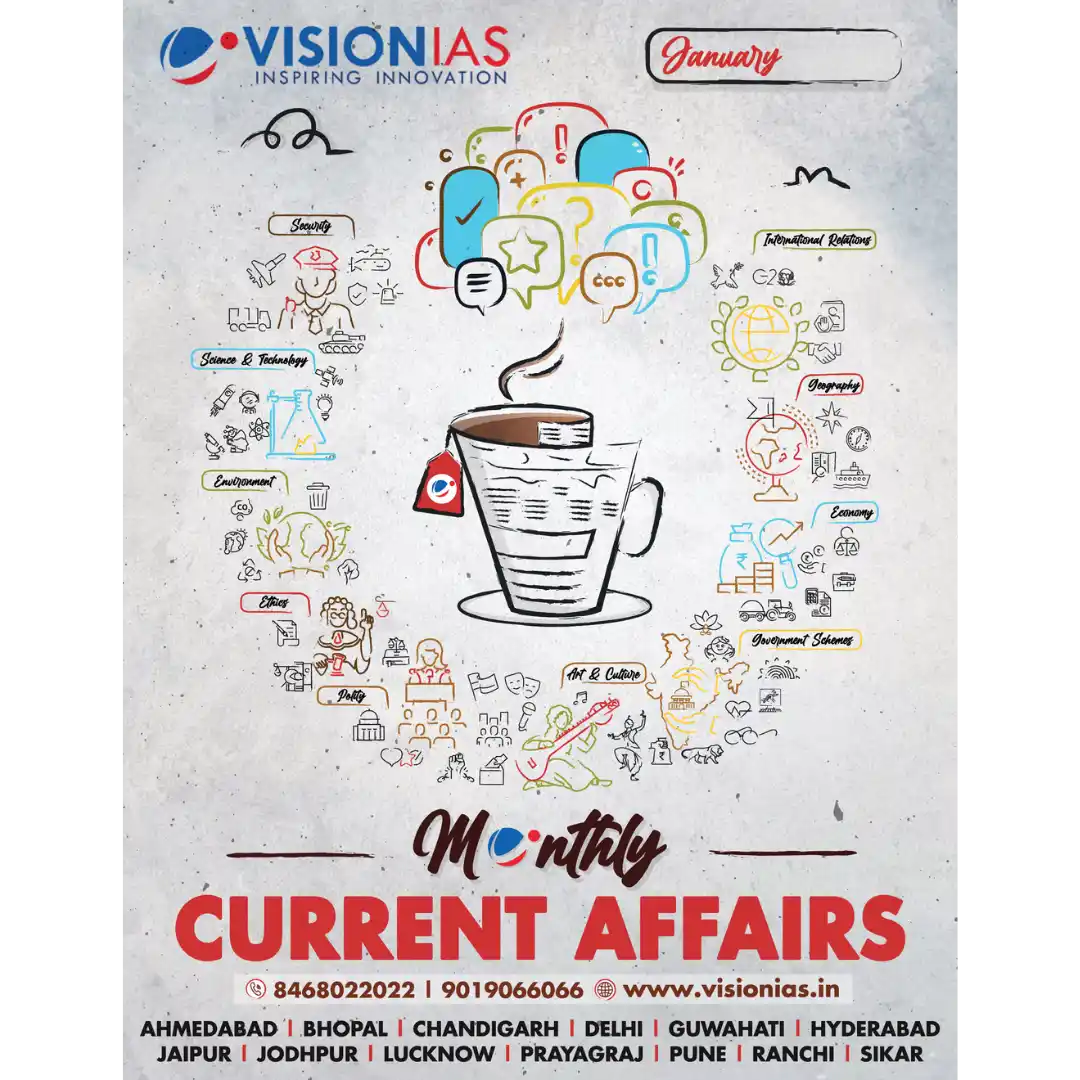
To lock this section, maintain a monthly current-affairs habit. A structured compilation like the Vision IAS Current Affairs Magazine (January 2026) is a strong revision aid for the national and international events that dominate SSC GK/GA questions.
3. Quantitative Aptitude
This section often decides your final rank because a strong Quant score creates a merit gap over average candidates. The SSC CPO syllabus for Quant covers arithmetic, algebra, geometry, trigonometry and data interpretation:
- Number system, simplification, LCM/HCF
- Percentage, profit & loss, discount
- Ratio and proportion, partnership, mixtures
- Average, ages
- Simple & compound interest
- Time, speed & distance; time & work
- Mensuration (2D & 3D)
- Geometry and coordinate geometry
- Trigonometry and height & distance
- Algebra (linear/quadratic equations)
- Data Interpretation: bar graphs, pie charts, tables
4. English Comprehension
In Paper 1, the English section is lighter than Paper 2 but still worth a full 50 marks. Topics include reading comprehension, fill in the blanks, error spotting, synonyms and antonyms, sentence correction, para jumbles, spelling and one-word substitution. Treat this as a warm-up for the far deeper Paper 2 English test — the concepts overlap, so every hour here pays off twice.
SSC CPO Paper 2 Syllabus: English Language & Comprehension
The SSC CPO Paper 2 syllabus is dedicated entirely to English and is more advanced than Paper 1. With 200 questions, it demands real command over grammar and vocabulary. The detailed topics are:
- Error spotting and detection
- Fill in the blanks and cloze test
- Synonyms and antonyms
- Spellings and misspelt words
- Idioms and phrases
- One-word substitution
- Improvement of sentences (sentence improvement)
- Active/passive voice conversion
- Direct/indirect narration (speech)
- Para jumbles / shuffling of sentences and parts
- Reading comprehension passages
Difference Between SSC CPO Paper 1 and Paper 2 English
A common confusion is how Paper 1 and Paper 2 English differ. Paper 1 English is a 50-question quick-check of basics; Paper 2 English is a 200-question deep test with harder grammar rules, tougher vocabulary and multiple comprehension passages. Prepare English once, but scale up depth and practice volume for Paper 2. Avoid treating them as two separate silos — the same rules apply, only the difficulty and question count rise.
| Aspect | Paper 1 English | Paper 2 English |
|---|---|---|
| Questions | 50 | 200 |
| Marks | 50 | 200 |
| Difficulty | Basic to moderate | Moderate to advanced |
| Comprehension | 1-2 short passages | Multiple longer passages |
| Role in merit | Part of 200-mark total | Standalone 200 marks |
SSC CPO Subject-Wise Weightage: What to Study First
Most syllabus pages stop at listing topics. To actually prioritise your prep, you need to know where the marks are. Based on previous-year (PYQ) trends, here is the approximate topic-frequency and expected marks per subject in Paper 1, so you can attack high-weightage areas first. Treat these as directional ranges, not fixed guarantees — exact splits vary shift to shift.
| Subject | High-Weightage Topics | Approx. Expected Marks | Priority |
|---|---|---|---|
| Reasoning | Series, analogy, coding-decoding, seating | 35-40 / 50 | High (scoring) |
| Quant | Arithmetic (%, ratio, SI/CI), DI, mensuration, geometry | 30-35 / 50 | High (rank-decider) |
| GK/GA | Current affairs, polity, history, science | 25-30 / 50 | Medium (fast marks) |
| English | Grammar, vocabulary, comprehension | 30-35 / 50 | High for Paper 2 |
Which subjects have the highest weightage? Reasoning and Quantitative Aptitude give the best return on effort because they are learnable and repetitive across years. GK/GA is high-speed but volatile, so it needs consistency rather than last-minute cramming. English carries double importance because it appears in both papers — a strong English base directly boosts your standalone 200-mark Paper 2.
SSC CPO PET/PST Physical Standards
After qualifying Paper 1, you must clear the Physical Endurance Test (PET) and Physical Standard Test (PST). These are qualifying — you either meet the norms or you are out, regardless of your written score. Below are the event-wise and category-wise SSC CPO PET PST physical standards.
PET (Physical Endurance Test) — Male Candidates
| Event | Qualifying Norm |
|---|---|
| 100 metre race | 16 seconds |
| 1.6 km race | 6.5 minutes |
| Long jump | 3.65 metres (3 chances) |
| High jump | 1.2 metres (3 chances) |
| Shot put (16 lbs) | 4.5 metres (3 chances) |
PET (Physical Endurance Test) — Female Candidates
| Event | Qualifying Norm |
|---|---|
| 100 metre race | 18 seconds |
| 800 metre race | 4 minutes |
| Long jump | 2.7 metres (3 chances) |
| High jump | 0.9 metres (3 chances) |
PST (Physical Standard Test) — Height & Chest
| Category | Male Height | Male Chest (Unexpanded–Expanded) | Female Height |
|---|---|---|---|
| General / OBC / SC | 170 cm | 80–85 cm | 157 cm |
| Scheduled Tribe (ST) | 162.5 cm | 77–82 cm | 154 cm |
| Hill/border area categories (Garhwalis, Gorkhas, etc.) | 165 cm | 78–83 cm | 155 cm |
Chest measurement applies to male candidates only, and a minimum 5 cm expansion is mandatory. Female candidates are measured for height and weight, not chest. Relaxations for specific categories are notified each cycle, so confirm your exact norm in the official notification.
SSC CPO Detailed Medical Examination (DME)
The final stage is the DME, which checks whether you are medically fit for a demanding uniformed role. Broad fitness and vision criteria include:
- Eye sight (with/without glasses): Distant vision 6/6 in the better eye and 6/9 in the worse eye is generally expected; near vision must be adequate for reading.
- No colour blindness, night blindness or squint.
- Sound mental and physical health with no deformity that impairs duty.
- Normal hearing, limbs, chest and cardiovascular function.
- No knock knees, flat foot, varicose veins or history of fits.
Always verify the exact vision and medical standards in the official notification for your chosen post, as CAPF and Delhi Police may specify minor variations.
SSC CPO Marking Scheme & Negative Marking
Is there negative marking in SSC CPO Paper 1 and Paper 2? Yes. Both papers deduct 0.25 marks for every wrong answer. Each correct answer awards 1 mark, and unattempted questions carry no penalty. With sectional timing in Paper 1, this makes accuracy far more valuable than blind guessing — attempt only where you are reasonably confident.
| Response | Marks Awarded |
|---|---|
| Correct answer | +1 |
| Wrong answer | −0.25 |
| Unattempted | 0 |
SSC CPO Syllabus vs SSC CGL: Are They the Same?
Is the SSC CPO syllabus same as SSC CGL? The subjects overlap heavily — both test Reasoning, GK/GA, Quant and English — but they are not identical. SSC CPO has a dedicated English-only Paper 2 and mandatory PET/PST physical tests, which CGL does not. CGL, on the other hand, has a more advanced Tier 2 covering statistics and finance for certain posts. If you are preparing for CPO, you can reuse most CGL study material for Paper 1 but must add physical training and heavy English practice for Paper 2.
Best Study Material Mapped to the SSC CPO Syllabus
Choosing the right material for each section saves months. Here is a practical mapping of what to use for every part of the SSC CPO syllabus 2025.
| Section | What to Focus On | Recommended Resource Type |
|---|---|---|
| Reasoning | Speed drills, non-verbal figures | Topic-wise practice books + daily quizzes |
| Quant | Formula sheets, DI sets, PYQ | Arithmetic + advanced maths workbook |
| GK/GA | Current affairs + static GK | Monthly current-affairs magazine |
| English | Grammar rules, vocabulary, comprehension | Grammar guide + PYQ compilation |
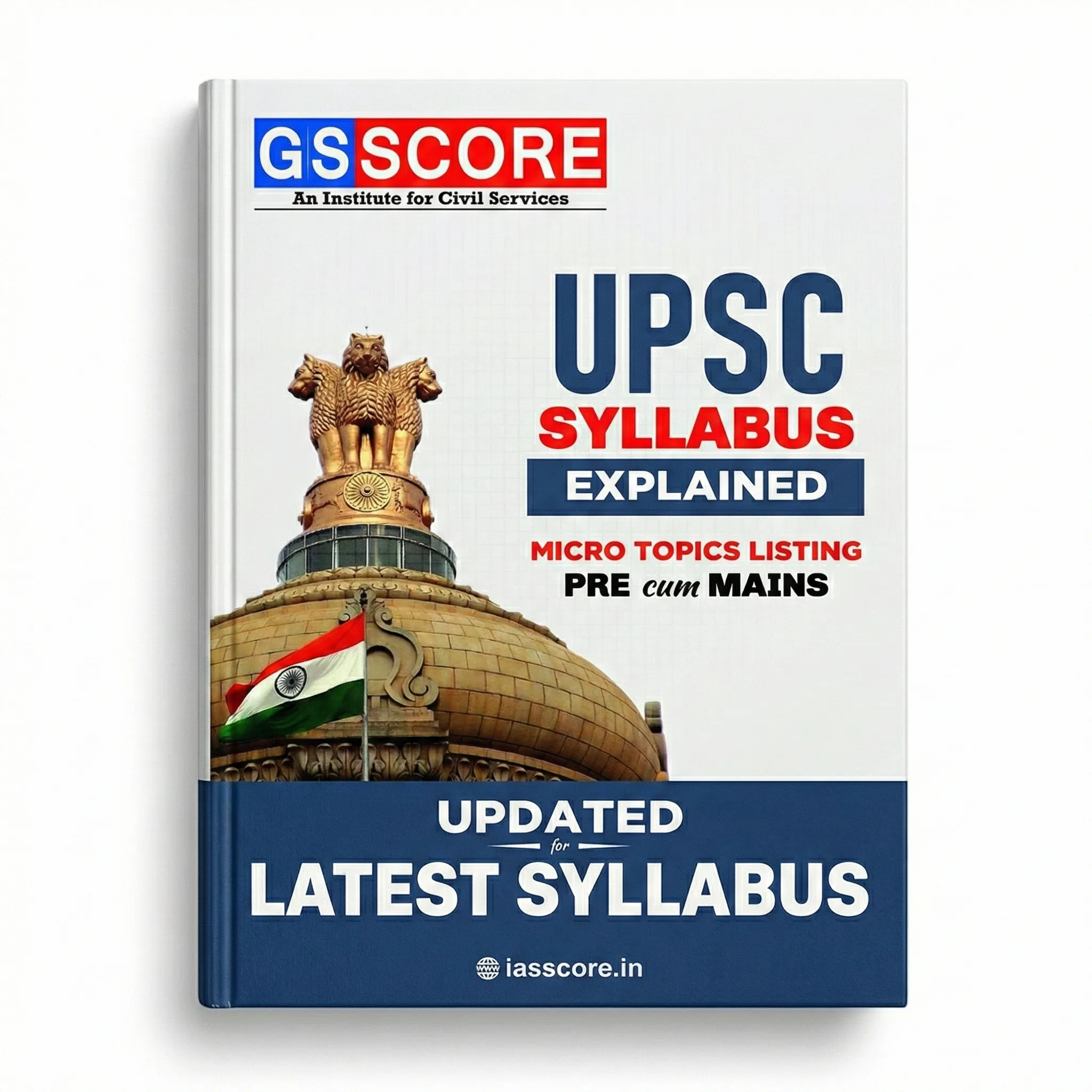
For the GK/GA section, a monthly current-affairs digest keeps you exam-ready without drowning in newspapers — the Vision IAS Current Affairs Magazine is a compact, revision-friendly option. To master the previous-year pattern that repeats across SSC exams, a topic-wise PYQ pack such as the Forum IAS Topic-Wise PYQ Toolkit trains you to recognise question framing and eliminate options quickly. And if you like studying strictly against the official syllabus map, a dedicated syllabus booklet helps you tick off every topic methodically.
SSC CPO Preparation Strategy & Study Timetable
A syllabus is only useful if it drives a plan. Here is a realistic, subject-linked timetable for a 4-month SSC CPO preparation window.
| Phase | Duration | Focus |
|---|---|---|
| Foundation | Month 1 | Build Quant & Reasoning basics; start daily current affairs |
| Concept + Practice | Month 2 | Finish full Paper 1 syllabus; begin PET training |
| Paper 2 focus | Month 3 | Deep English grammar & vocabulary; comprehension practice |
| Revision + Mocks | Month 4 | Full-length mocks, PYQ, sectional-timing practice, physical peak |
Subject-Wise Preparation Tips
- Reasoning: Solve 40-50 questions daily; the section is speed-dependent, so time every set.
- Quant: Memorise formulas and shortcuts; DI and arithmetic together fetch the bulk of marks.
- GK/GA: Revise current affairs weekly; do not leave it for the last week.
- English: Learn 10 new words daily and one grammar rule; this compounds fast for Paper 2.
- Physical: Run and practise events 4-5 days a week from Month 2 — do not wait for Paper 1 results.
Common Mistakes to Avoid
- Ignoring PET/PST until after Paper 1 results — fitness needs months, not weeks.
- Treating Paper 2 English casually; it is a full 200-mark test.
- Guessing blindly despite 0.25 negative marking.
- Skipping mock tests with sectional timing, then panicking on exam day.
- Neglecting current affairs revision in the final month.
SSC CPO Syllabus PDF Download & Checklist
How can I download the SSC CPO syllabus PDF? You can save this page as a PDF (use your browser’s Print → Save as PDF option) to get a clean, printable, subject-wise SSC CPO syllabus PDF download in one click, or copy the checklist below into your notes. The official, most authoritative syllabus is always in the SSC CPO notification released on the SSC website (ssc.gov.in) — always cross-check with it before finalising your plan.
Copy-paste preparation checklist:
- Paper 1: Reasoning ✔ GK/GA ✔ Quant ✔ English ✔ (50 each)
- Sectional timing (30 min/section) practised ✔
- Paper 2: full English grammar + vocabulary + comprehension ✔
- PET events at qualifying norms ✔
- PST height/chest checked against category ✔
- DME vision & fitness criteria understood ✔
- PYQ + full-length mocks completed ✔
Frequently Asked Questions
What is the syllabus of SSC CPO?
The SSC CPO syllabus has two written papers. Paper 1 covers General Intelligence & Reasoning, General Knowledge & General Awareness, Quantitative Aptitude and English Comprehension (50 questions each). Paper 2 is entirely English Language & Comprehension with 200 questions. Candidates also clear PET/PST physical tests and a Detailed Medical Examination.
How many papers are there in SSC CPO and what is the pattern?
There are two computer-based papers. Paper 1 has 200 questions for 200 marks in 120 minutes with 30-minute sectional timing across four sections. Paper 2 has 200 English questions for 200 marks in 120 minutes. Both carry 0.25 negative marking per wrong answer.
Is there negative marking in SSC CPO Paper 1 and Paper 2?
Yes. Both Paper 1 and Paper 2 deduct 0.25 marks for every incorrect answer, while each correct answer earns 1 mark and unattempted questions carry no penalty. Because of this, accuracy matters more than the number of attempts.
What is the difference between SSC CPO Paper 1 and Paper 2 English?
Paper 1 English is a 50-question basic-to-moderate test, while Paper 2 is a full 200-question advanced English exam with harder grammar, richer vocabulary and multiple comprehension passages. The rules are the same, but Paper 2 demands far deeper preparation and practice.
What are the physical standards (PET/PST) for SSC CPO?
For male candidates, PET includes a 100 m race in 16 seconds, 1.6 km run in 6.5 minutes, long jump 3.65 m, high jump 1.2 m and shot put 4.5 m, with a minimum height of 170 cm (162.5 cm for ST) and 80–85 cm chest. Female candidates run 100 m in 18 seconds and 800 m in 4 minutes, with a minimum height of 157 cm.
Is the SSC CPO syllabus same as SSC CGL?
The subjects overlap, but they are not identical. SSC CPO adds a dedicated English-only Paper 2 and compulsory PET/PST physical tests, which SSC CGL does not have. You can reuse most CGL Paper 1 material for CPO but must add physical training and intensive English practice for Paper 2.
Which subjects have the highest weightage in SSC CPO Paper 1?
All four sections carry equal 50 marks, but Reasoning and Quantitative Aptitude usually give the best return on effort because their topics repeat and are learnable. English matters twice over since it also forms the standalone 200-mark Paper 2, while GK/GA offers fast marks if your current affairs are strong.
How can I download the SSC CPO syllabus PDF?
Use your browser’s Print → Save as PDF option on this page to create a printable, subject-wise SSC CPO syllabus PDF, or copy the checklist provided above. For the official version, download the syllabus section from the SSC CPO notification on ssc.gov.in and cross-check it against your notes.
Recommended Study Material

Continue Reading
MPSC Syllabus 2026: Prelims, Mains, Pattern + PDF (Marathi)
The MPSC syllabus for the Maharashtra State Services (Rajyaseva) exam is divided across three stages — Prelims (2…
JPSC Syllabus 2026: Prelims & Mains + PDF (Hindi)
The JPSC syllabus for the Jharkhand Combined Civil Services Examination is divided across three stages: a Preliminary exam…
SSC CGL Syllabus 2025: Tier 1 & 2 Topics + PDF
The SSC CGL syllabus is built around two stages: Tier 1, a 100-question objective test carrying 200 marks…