MPSC Syllabus 2026: Prelims, Mains, Pattern + PDF (Marathi)
Complete MPSC syllabus 2026 — Rajyaseva prelims & mains exam pattern, revised 9-paper descriptive structure, 26 optionals, weightage, month-wise study plan + PDF in Marathi & English.

The MPSC syllabus for the Maharashtra State Services (Rajyaseva) exam is divided across three stages — Prelims (2 objective papers, 400 marks), Mains (9 descriptive papers, 1,750 merit marks) and a Personality Test/Interview of 275 marks. From the 2025 cycle onwards the Maharashtra Public Service Commission (MPSC) has shifted its Mains to a fully UPSC-style descriptive format, expanding from the old 6-paper/800-mark objective structure to 9 papers, with two optional-subject papers chosen from 26 optionals. This guide gives you the complete, paper-wise, micro-topic breakdown for the mpsc syllabus 2026, subject-wise weightage, a month-wise study plan, and where to get the syllabus PDF in Marathi and English.
MPSC Syllabus 2026 — Quick Answers
- Stages: Prelims (screening) → Mains (merit) → Interview (merit).
- Prelims: 2 papers × 200 = 400 marks; Paper II (CSAT) is qualifying at 33%.
- Mains: 9 papers; 7 merit papers × 250 = 1,750 marks; 2 language papers qualifying.
- Interview: 275 marks. Final merit = Mains 1,750 + Interview 275 = 2,025.
- Negative marking: Yes — 0.25 (1/4th) per wrong answer in Prelims.
- Medium: English or Marathi; papers are bilingual; a Marathi qualifying paper is compulsory.
MPSC Syllabus 2026 at a Glance: What Changed
The biggest change aspirants must understand is that MPSC Rajyaseva has aligned its Mains examination with the UPSC Civil Services pattern. The old Mains was largely objective (MCQ-based) and carried 800 marks across 6 papers. The revised mpsc rajyaseva syllabus makes Mains descriptive (written answers), adds an Essay paper, retains language papers as qualifying, and introduces two optional-subject papers — pushing the total merit weightage to 1,750 marks plus a 275-mark interview.
| Feature | Old Pattern (till 2024) | Revised Pattern (2025 onwards) |
|---|---|---|
| Mains format | Mostly objective (MCQ) | Descriptive (written) |
| Mains papers | 6 papers | 9 papers |
| Mains marks (merit) | 800 | 1,750 |
| Essay paper | Not separate | Yes (250 marks) |
| Optional subject | No optional | 2 papers (250 + 250) |
| Interview/PT | 100 marks | 275 marks |
| Overall style | State-specific objective | UPSC-style analytical |
Prelims remains objective. The three-stage funnel — Prelims to screen, Mains to test depth, Interview to assess personality — is unchanged, but the depth demanded at Mains is now far higher. Because dates and fine print can shift between notifications, always cross-check the exact figures for your year against the official notification on mpsc.gov.in before finalising a strategy.
MPSC Selection Process: Three Stages Explained
MPSC Rajyaseva selects candidates for posts such as Deputy Collector, DySP, Tahsildar, BDO and Assistant Commissioner through a three-tier process. Marks scored in Prelims are only for screening and are not added to the final merit; the final rank is decided by Mains (1,750) + Interview (275) = 2,025 marks.
| Stage | Type | Papers | Marks | Counts for final merit? |
|---|---|---|---|---|
| Prelims | Objective (MCQ) | 2 | 400 | No (screening only) |
| Mains | Descriptive | 9 | 1,750 (merit) | Yes |
| Interview / Personality Test | Oral | — | 275 | Yes |
MPSC Prelims Syllabus & Exam Pattern 2026
The mpsc prelims syllabus is spread across two papers of 200 marks each, both objective and of 2 hours’ duration. Paper I (General Studies) decides your prelims merit, while Paper II (CSAT) is qualifying in nature — you must score at least 33% but its marks are not counted for the prelims cut-off under the revised pattern.
| Paper | Subject | Questions | Marks | Duration | Nature |
|---|---|---|---|---|---|
| Paper I | General Studies | 100 | 200 | 2 hours | Merit |
| Paper II | CSAT (Aptitude) | 80 | 200 | 2 hours | Qualifying (33%) |
Is there negative marking in the MPSC prelims exam?
Yes. MPSC applies a negative marking of 1/4th (0.25) of the marks assigned to a question for every wrong answer. If a question carries 2 marks, a wrong answer deducts 0.5 marks. The exception is the decision-making/interpersonal-skills questions in the CSAT paper, where there is no negative marking. Leaving a question blank attracts no penalty, so intelligent risk management matters — a good rule of thumb is to attempt a guess only when you can confidently eliminate at least two of the four options.
MPSC Prelims Paper I (GS) — Micro-Topic Breakdown
This is where most aspirants under-prepare. The official heads are broad, but the actual questions map to specific micro-topics. Use the breakdown below to map each area to your books and notes.
| Broad Head | Key Micro-Topics to Master |
|---|---|
| Current Events | National & international affairs, government schemes, sports, awards, appointments, reports & indices |
| History of India & Maharashtra | Ancient/medieval outlines, 1857 revolt, Indian freedom struggle, socio-religious reform, Maharashtra: Shivaji, Peshwas, Satyashodhak Samaj, Samyukta Maharashtra movement |
| Geography (India & Maharashtra) | Physical geography, rivers, climate, agriculture, minerals, Maharashtra’s rivers, districts, crops, irrigation, industrial belts |
| Indian Polity & Governance | Constitution, Fundamental Rights & Duties, Parliament, Panchayati Raj, Maharashtra state legislature & local bodies, public policy, rights issues |
| Economic & Social Development | Sustainable development, poverty, inclusion, demographics, social sector schemes, budgeting basics |
| Environment & Ecology | Biodiversity, climate change, conservation, Western Ghats, protected areas — no specialised subject knowledge required |
| General Science | Everyday science, biology, physics, chemistry basics, science & tech in the news |
The Maharashtra-specific slice — history, geography and polity of the state — is the real differentiator versus UPSC and is where local candidates gain or lose 15–20 marks.
MPSC Prelims Paper II (CSAT) — Syllabus
CSAT tests aptitude rather than knowledge. Topics include comprehension, interpersonal skills and communication, logical reasoning and analytical ability, decision-making and problem-solving, general mental ability, basic numeracy (numbers, orders of magnitude up to Class X level) and data interpretation (charts, graphs, tables). Because CSAT is now qualifying, a steady CSAT practice set with solved questions is enough to clear the 33% bar without over-investing time.
MPSC Mains Exam Pattern 2026: 9 Papers, 1,750 Marks
The revised mpsc mains syllabus comprises nine papers. Two language papers (Marathi and English) are qualifying — you must pass them, but their marks are not added to the merit list. The remaining seven papers — Essay, four General Studies papers and two optional-subject papers — carry 250 marks each and together decide your Mains score of 1,750.
| Paper | Subject | Marks | Nature |
|---|---|---|---|
| Paper A | Marathi | 300 | Qualifying |
| Paper B | English | 300 | Qualifying |
| Paper I | Essay | 250 | Merit |
| Paper II | General Studies I | 250 | Merit |
| Paper III | General Studies II | 250 | Merit |
| Paper IV | General Studies III | 250 | Merit |
| Paper V | General Studies IV | 250 | Merit |
| Paper VI | Optional Paper I | 250 | Merit |
| Paper VII | Optional Paper II | 250 | Merit |
What is the total marks of the MPSC Mains exam? The merit-counted total is 1,750 marks (7 papers × 250). Including the qualifying language papers (600) and the 275-mark interview, the full journey is scored across 2,625 marks, with 2,025 counting toward your final rank.
MPSC Mains Syllabus: GS Paper-Wise Micro Breakdown
Because the four GS papers mirror the UPSC framework, most quality UPSC GS material maps almost directly — with the addition of a strong Maharashtra layer. Here is the paper-wise structure.
| GS Paper | Core Themes | Maharashtra Focus |
|---|---|---|
| GS I | History (Indian heritage, modern history, world history), Indian society, geography of India & world | Maharashtra’s history, culture, saints & reformers, state geography |
| GS II | Constitution, polity, governance, social justice, welfare schemes, international relations | State governance, local self-government, Maharashtra-specific policies |
| GS III | Economy, agriculture, science & tech, environment, disaster management, internal security | Maharashtra’s economy, agriculture, cooperative sector, industry |
| GS IV | Ethics, integrity, aptitude, emotional intelligence, case studies | Applied administrative ethics in a state-governance context |
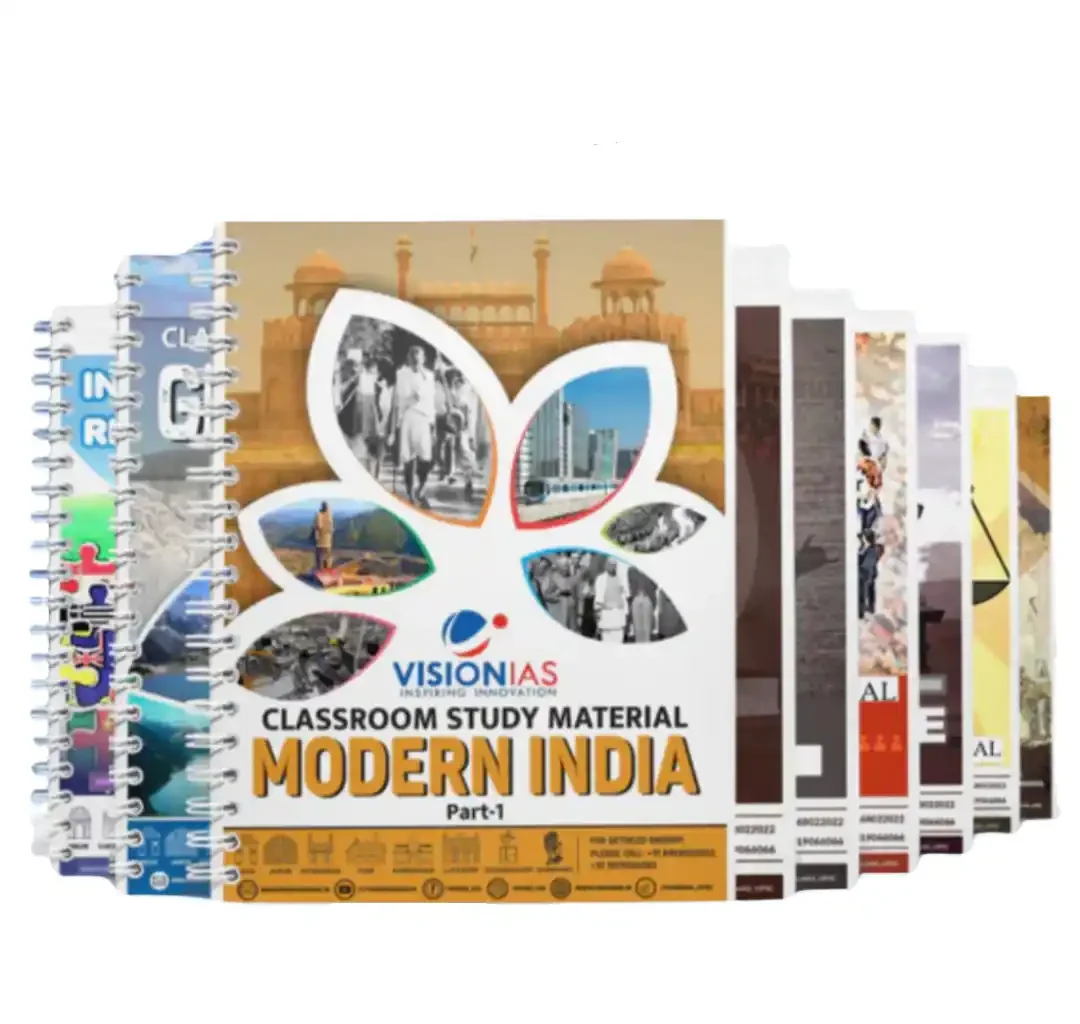
For deep, exam-ready coverage of these heads, structured GS booklets save months of note-making. Many toppers build their core from a complete GS set such as the Vision IAS GS notes, then add a thin Maharashtra-specific layer from state-focused sources.
How many papers are there in MPSC Mains 2026?
There are 9 papers in MPSC Mains 2026 — two qualifying language papers (Marathi, English), one Essay paper, four General Studies papers (GS I–IV) and two optional-subject papers. Seven of these (Essay + 4 GS + 2 optional) are counted for merit at 250 marks each.
MPSC Optional Subjects: All 26 Listed
Under the revised pattern, candidates choose one optional subject with two papers (250 marks each). MPSC offers a UPSC-aligned list of 26 optional subjects, including literature options. Choose based on your graduation background, interest, scoring reliability and availability of study material.
| # | Optional Subject | # | Optional Subject |
|---|---|---|---|
| 1 | Agriculture | 14 | History |
| 2 | Animal Husbandry & Veterinary Science | 15 | Law |
| 3 | Anthropology | 16 | Mathematics |
| 4 | Botany | 17 | Mechanical Engineering |
| 5 | Chemistry | 18 | Philosophy |
| 6 | Civil Engineering | 19 | Physics |
| 7 | Commerce & Accountancy | 20 | Political Science & International Relations |
| 8 | Economics | 21 | Psychology |
| 9 | Electrical Engineering | 22 | Public Administration |
| 10 | Geography | 23 | Sociology |
| 11 | Geology | 24 | Statistics |
| 12 | Marathi Literature | 25 | Zoology |
| 13 | English Literature | 26 | Hindi Literature |
Popular, material-rich picks include Political Science & IR, Public Administration, Sociology, Geography and History. Since these overlap heavily with UPSC, dedicated optional material — for example Shubhra Ranjan PSIR notes — can be reused directly for MPSC’s optional papers. When choosing, weigh three practical factors: your comfort with the subject, the depth and availability of standard sources, and whether the syllabus overlaps with the GS papers so your effort compounds.
Old vs New MPSC Mains Pattern: Full Comparison
Confusion between the two patterns is common. Here is exactly what changed and when it applies: the new descriptive pattern is effective from the 2025 examination cycle onwards, so every 2026 aspirant must prepare for the revised structure.
| Parameter | Old Mains (6 papers / 800) | New Mains (9 papers / 1,750) |
|---|---|---|
| Paper 1 & 2 | Language (Marathi+English), 100+100 | Marathi 300 + English 300 (qualifying) |
| Essay | Not a separate paper | Separate paper, 250 marks |
| General Studies | GS I–IV, objective, 150 each | GS I–IV, descriptive, 250 each |
| Optional subject | None | Two papers, 250 each |
| Answer type | Multiple-choice | Written/analytical |
| Interview | 100 marks | 275 marks |
| Applies to | Cycles up to 2024 | 2025 exam onwards (incl. 2026) |
Subject-Wise Weightage: Where the Marks Come From
Aspirants repeatedly ask how many questions come from each area so they can prioritise. While the exact split varies year to year, previous-year trend analysis of Prelims Paper I gives a reliable planning guide.
| Subject Area | Approx. Prelims Weightage | Priority |
|---|---|---|
| Current Affairs | 18–22% | Very High |
| Polity & Governance | 14–18% | High |
| History (India + Maharashtra) | 14–16% | High |
| Geography (India + Maharashtra) | 12–16% | High |
| Economy & Social Development | 10–14% | Medium-High |
| Environment & Ecology | 8–10% | Medium |
| General Science | 8–12% | Medium |
The clear takeaway: current affairs plus static polity, history and geography together account for roughly two-thirds of the paper. Treat these percentages as a planning aid rather than a fixed rule — MPSC does not publish an official section-wise split. Keeping a monthly current-affairs digest such as the Vision IAS Current Affairs magazine ensures you never lose the highest-weightage segment.
Study Material Mapping: Syllabus-to-Booklist
Most syllabus pages stop at the topic list. Here is a practical mapping of the mpsc exam pattern to the exact type of material each stage demands, so you can build a lean, non-repetitive resource stack.
| Requirement | What to Use |
|---|---|
| Understanding the exact syllabus & heads | An official-format syllabus booklet to keep on your desk |
| GS I–IV core (Prelims + Mains) | A complete GS notes set covering all four papers |
| Current affairs (highest weightage) | Monthly current-affairs magazine, revised regularly |
| CSAT qualifying | A CSAT practice booklet with solved questions |
| Optional subject (2 papers) | Subject-specific optional notes (PSIR, Sociology, Geography, etc.) |
| Answer writing (Mains descriptive) | Essay + model-answer material and a test series |
MPSC Syllabus-Based Study Plan: Month-Wise Timeline
A syllabus is only useful when tied to a timeline. This 10–12 month plan sequences the mpsc syllabus 2026 from foundation to revision.
| Phase | Months | Focus |
|---|---|---|
| Foundation | 1–3 | Polity, History, Geography (India + Maharashtra) static base + start current affairs |
| Build-up | 4–6 | Economy, Environment, Science; begin optional subject Paper I & II |
| Integration | 7–8 | GS Mains answer writing, Essay practice, finish optional |
| Prelims Sprint | 9–10 | Full-length Prelims + CSAT mock tests, current-affairs revision |
| Mains Push | Post-Prelims | Descriptive answer writing, previous-year questions, timed papers |
The single habit that separates rank-holders from repeaters is daily answer writing. Because Mains is now descriptive, start writing 2–3 structured answers a day from the Integration phase — introduction, a body organised around the demand of the question, and a forward-looking conclusion — rather than saving it for the final months.
MPSC Rajyaseva vs Other MPSC Exams
Many aspirants searching for the MPSC syllabus actually sit multiple MPSC exams that share overlapping content. Understanding the difference helps you reuse the same base preparation.
| Exam | Posts | Syllabus Overlap with Rajyaseva |
|---|---|---|
| Rajyaseva (State Services) | Deputy Collector, DySP, Tahsildar | — |
| Combined Group B | PSI, STI, ASO | High (GS core) |
| Combined Group C | Clerk, Tax Assistant, Excise SI | Medium-High |
| Engineering Services | Civil/Mechanical/Electrical posts | Partial (GS) + technical papers |
| Agriculture / Forest Services | Specialist posts | Partial (GS) + subject papers |
The GS foundation you build for Rajyaseva carries directly into the Combined exams, making a strong core investment highly efficient.
MPSC vs UPSC: How Similar Are They Now?
Is MPSC syllabus same as UPSC? After the revision, they are very close in structure and analytical depth but not identical. Both now use a descriptive Mains with GS I–IV, an Essay and optional subjects. The differences: MPSC has a compulsory Marathi language paper, a strong Maharashtra-specific layer in history, geography and polity, and the exam medium/state-governance context is Maharashtra-centric. Because of this overlap, UPSC-standard GS material works for MPSC provided you supplement it with Maharashtra-focused content and Marathi answer-writing practice.
Download MPSC Syllabus PDF (Marathi & English)
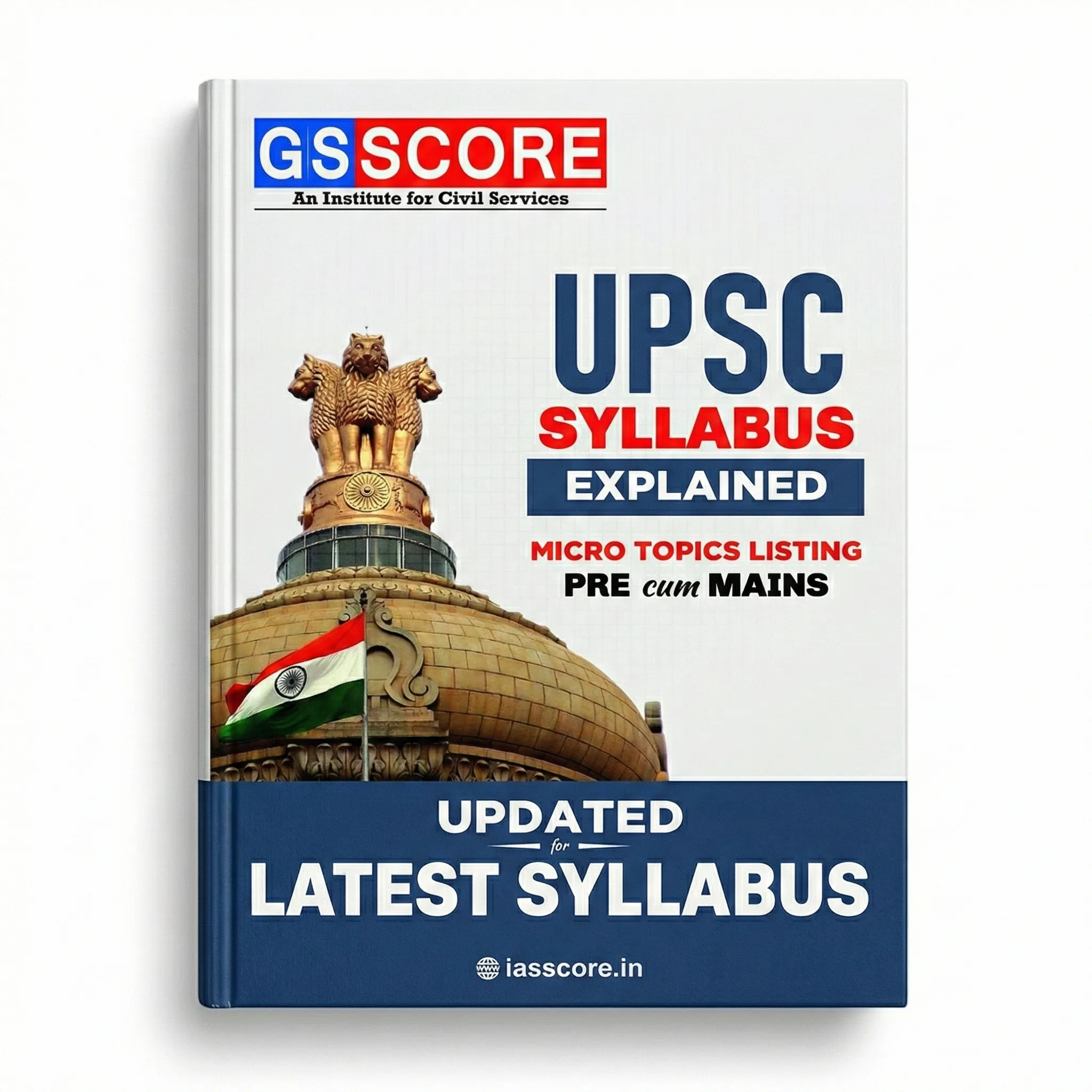
Aspirants preferring the regional medium are under-served online — many sites offer English only. The official mpsc syllabus pdf in marathi and English is published on the MPSC portal (mpsc.gov.in) with each notification. Download the syllabus for both Prelims and Mains, print the paper-wise topic list, and paste it into your study diary so you can tick off micro-topics as you complete them. Pairing the official PDF with a desk-side syllabus booklet keeps your daily study anchored to exactly what MPSC asks, and guarantees you are reading the current notification’s wording rather than an outdated version.
Common Mistakes MPSC Aspirants Make
First, treating the revised Mains like the old objective pattern — the descriptive format rewards structured written answers, not recognition memory. Second, ignoring the Maharashtra-specific slice, which is the easiest scoring zone for local candidates. Third, over-investing in CSAT when it is only qualifying. Fourth, delaying optional-subject preparation until after Prelims, leaving too little runway for two full papers. Fifth, chasing too many sources instead of revising one reliable GS set multiple times. Fix these and you convert syllabus knowledge into rank.
Frequently Asked Questions
What is the syllabus of MPSC exam?
The MPSC Rajyaseva syllabus has three stages: Prelims (GS Paper I of 100 questions/200 marks and CSAT Paper II of 80 questions/200 marks), Mains (9 papers including Marathi, English, Essay, four General Studies papers and two optional-subject papers totalling 1,750 merit marks), and a 275-mark Personality Test. It covers current affairs, history, geography, polity, economy, environment, science and a Maharashtra-specific layer.
Is MPSC syllabus same as UPSC?
Not identical, but very similar after the 2025 revision. Both use a descriptive Mains with GS I–IV, an Essay and optional subjects. MPSC differs by having a compulsory Marathi paper and a strong Maharashtra-specific emphasis in history, geography and polity, so you must supplement UPSC-standard material with state-focused content.
How many papers are there in MPSC Mains 2026?
Nine papers: two qualifying language papers (Marathi and English), one Essay paper, four General Studies papers (GS I–IV) and two optional-subject papers. Seven of them (Essay + 4 GS + 2 optional) count for merit at 250 marks each, for a Mains total of 1,750.
What is the total marks of the MPSC Mains exam?
The merit-counted Mains total is 1,750 marks — seven papers of 250 marks each. The two language papers (300 + 300) are qualifying and not added to merit. Combined with the 275-mark interview, the final merit list is prepared out of 2,025 marks.
What is the new MPSC exam pattern for 2026?
For 2026, Prelims stays objective (2 papers, 400 marks). Mains is now descriptive with 9 papers and 1,750 merit marks, up from the old 6-paper/800-mark objective format. It adds an Essay paper and two optional-subject papers, and the Interview carries 275 marks.
Is there negative marking in the MPSC prelims exam?
Yes. MPSC deducts 1/4th (0.25) of a question’s marks for each wrong answer in the objective Prelims. The exception is the decision-making questions in the CSAT paper, which carry no negative marking. Unattempted questions face no penalty.
Which optional subjects are available in MPSC Mains?
MPSC offers 26 optional subjects, including Political Science & International Relations, Public Administration, Sociology, Geography, History, Economics, Law, Psychology, Anthropology, the sciences and engineering branches, plus Marathi, English and Hindi Literature. Candidates choose one optional with two papers of 250 marks each.
Can I give the MPSC exam in English medium?
Yes. You can attempt the General Studies and optional papers in either English or Marathi, and question papers are provided bilingually. However, the Marathi language paper is compulsory and qualifying, so a working command of Marathi is required regardless of your chosen answering medium.
Where can I download the MPSC syllabus PDF in Marathi?
The official MPSC syllabus PDF in Marathi and English is released on the MPSC portal, mpsc.gov.in, alongside each Rajyaseva notification. Download both the Prelims and Mains syllabus, and confirm you are using the version attached to the latest notification so the paper structure and marks match the current cycle.
Is the MPSC Prelims Paper II (CSAT) counted for the cut-off?
No. Under the revised pattern CSAT is qualifying — you must score at least 33% to stay in the race, but its marks are not added to the Prelims merit. Your Prelims cut-off is decided by Paper I (General Studies) alone.
Does Prelims score count towards the final MPSC merit list?
No. Prelims is only a screening stage; its marks are not carried forward. The final rank is based on Mains (1,750 merit marks) plus the Interview (275 marks), a total of 2,025 marks.
Recommended Study Material
Continue Reading
SSC CGL Syllabus 2025: Tier 1 & 2 Topics + PDF
The SSC CGL syllabus is built around two stages: Tier 1, a 100-question objective test carrying 200 marks…
SBI Clerk Syllabus 2026: Prelims, Mains, Pattern + PDF
The SBI Clerk syllabus (Junior Associate) for 2026 is split across two written stages plus a language test.…

Best Test Series for UPSC 2026: 9 Options Compared with Prices
The best test series for UPSC 2026 is Vision IAS for Prelims — the most representative difficulty, detailed…