SBI Clerk Syllabus 2026: Prelims, Mains Pattern + PDF
Complete SBI Clerk syllabus 2026 with Prelims & Mains exam pattern, topic-wise weightage, negative marking, sectional timing, LPT rules and a free PDF checklist.

The SBI Clerk syllabus for the Junior Associate (Customer Support & Sales) post has three Prelims sections — English Language, Numerical Ability and Reasoning Ability (100 questions, 100 marks, 1 hour) — and four Mains sections — General/Financial Awareness, General English, Quantitative Aptitude, and Reasoning & Computer Aptitude (190 questions, 200 marks, 2 hours 40 minutes). Selection is written-only: Prelims (qualifying) → Mains (merit-deciding) → a Local Language Proficiency Test (LPT). There is no interview, and a 0.25 negative mark applies to every wrong answer in both phases.
This guide breaks down the complete sbi clerk syllabus section by section, adds the historical topic-wise weightage most top pages skip, compares it with IBPS Clerk, and gives you a syllabus-linked 90-day study plan plus a printable PDF checklist. Whether you are starting fresh or revising, use it as your single source of truth for SBI Clerk 2026 preparation. Every pattern below is cross-checked against the most recent SBI Junior Associate recruitment notification published on sbi.co.in, and will be refreshed when the 2026 notification is released.
Here is what this page covers, so you can jump straight to what you need:
- SBI Clerk 2026 selection process and exam pattern (Prelims & Mains)
- Full sbi clerk syllabus topic wise for every section, with question weightage
- Negative marking, sectional timing, cut-off targets and the LPT rules
- What is new for 2026, an SBI vs IBPS Clerk comparison, and a downloadable checklist
SBI Clerk 2026 Selection Process at a Glance
The State Bank of India recruits Junior Associates through a two-tier online examination followed by a language test. Understanding the flow first makes the syllabus far easier to prioritise, because it tells you where your marks actually count.
| Stage | Nature | Role in Selection |
|---|---|---|
| Preliminary Exam | Online objective | Qualifying only — marks not added to final merit |
| Main Exam | Online objective | Merit-deciding — final selection is based on the Mains score |
| Local Language Proficiency Test (LPT) | Language verification | Qualifying — conducted after Mains for shortlisted candidates |
| Interview | Not applicable | There is NO interview in SBI Clerk recruitment |
Because Prelims is only a screening filter, your real battle is the Mains. Clear the Prelims sectional and overall cut-offs comfortably, then invest the bulk of your effort in Mains, where General/Financial Awareness and accuracy under negative marking decide your rank. This single insight — Prelims to qualify, Mains to win — should shape how you split your study hours across the whole syllabus.
SBI Clerk Exam Pattern 2026: Prelims
The SBI Clerk exam pattern 2026 for Prelims stays consistent with recent cycles: three sections, 100 questions, 100 marks, and a total duration of one hour with a separate 20-minute clock for each section.
| Section | Questions | Marks | Sectional Time |
|---|---|---|---|
| English Language | 30 | 30 | 20 minutes |
| Numerical Ability | 35 | 35 | 20 minutes |
| Reasoning Ability | 35 | 35 | 20 minutes |
| Total | 100 | 100 | 60 minutes |
Yes, there is sectional timing in SBI Clerk Prelims — you cannot move between sections freely, so you must finish each within its 20-minute window. There is negative marking of 0.25 marks (one-fourth of the mark allotted) for every wrong answer. Prelims is qualifying: you only need to cross the cut-off, not maximise the score, so a calm, accuracy-first approach beats reckless speed.
SBI Clerk Exam Pattern 2026: Mains
The SBI Clerk Mains syllabus is tested across four sections totalling 190 questions and 200 marks in 2 hours 40 minutes, again with individual sectional timing.
| Section | Questions | Marks | Time |
|---|---|---|---|
| General / Financial Awareness | 50 | 50 | 35 minutes |
| General English | 40 | 40 | 35 minutes |
| Quantitative Aptitude | 50 | 50 | 45 minutes |
| Reasoning Ability & Computer Aptitude | 50 | 60 | 45 minutes |
| Total | 190 | 200 | 160 minutes |
Note that Reasoning & Computer Aptitude carries 60 marks for 50 questions — the highest weightage in the paper, since each question is worth 1.2 marks. The 0.25 negative marking rule applies here too. Your Mains score alone determines the final merit list, so this is where topic-wise strategy pays off the most.
SBI Clerk Prelims Syllabus (Section-Wise + Weightage)
Below is the detailed, topic-wise sbi clerk prelims syllabus with the approximate number of questions each area has historically contributed. Weightage is indicative, based on recent SBI Clerk Prelims papers, and helps you decide what to study first rather than trying to cover everything at once.
English Language (30 marks)
| Topic | Approx. Questions |
|---|---|
| Reading Comprehension | 7–10 |
| Cloze Test | 5–7 |
| Error Spotting / Sentence Correction | 5–7 |
| Para Jumbles / Sentence Rearrangement | 4–5 |
| Fill in the Blanks & Sentence Improvement | 3–5 |
| Word Usage / Phrase Replacement | 2–4 |
Numerical Ability (35 marks)
| Topic | Approx. Questions |
|---|---|
| Data Interpretation (tables, bar, pie, line) | 5–10 |
| Simplification & Approximation | 10–15 |
| Number Series (missing / wrong) | 5 |
| Quadratic Equations | 0–5 |
| Arithmetic (Profit & Loss, SI/CI, Time-Speed-Distance, Ages, Averages, Percentage, Ratio, Partnership, Mixtures) | 10–15 |
Reasoning Ability (35 marks)
| Topic | Approx. Questions |
|---|---|
| Puzzles & Seating Arrangement | 10–15 |
| Syllogism | 3–5 |
| Coding-Decoding | 3–5 |
| Inequality (Direct & Coded) | 3–5 |
| Blood Relations, Direction Sense, Order & Ranking | 5–8 |
| Alphanumeric Series, Number Series, Miscellaneous | 3–5 |
The clear takeaway: Simplification, Number Series, Puzzles and Seating Arrangement are the highest-yield Prelims areas. Master these four before touching anything else — together they can secure the sectional cut-offs in all three sections while you build accuracy on the rest.
SBI Clerk Mains Syllabus (Section-Wise + Weightage)
The sbi clerk mains syllabus is broader and includes a dedicated Computer Aptitude component plus banking and financial awareness. This is the merit-deciding paper, so study it topic-wise and treat every mark as a rank-mover.
General / Financial Awareness (50 marks)
This is the highest-scoring section per minute because there is no calculation involved — you either know the answer or you do not. It covers:
- Banking & Financial Awareness: RBI functions, monetary policy, repo/reverse repo, banking terms, NBFCs, negotiable instruments, types of accounts, PSL, Basel norms
- Static GK: capitals & currencies, national parks, dams, important days, books & authors
- Current Affairs (last 4–6 months): schemes, appointments, awards, sports, summits, agreements, obituaries
- Financial & Economic news: budget highlights, GDP data, financial regulators (SEBI, IRDAI, PFRDA)
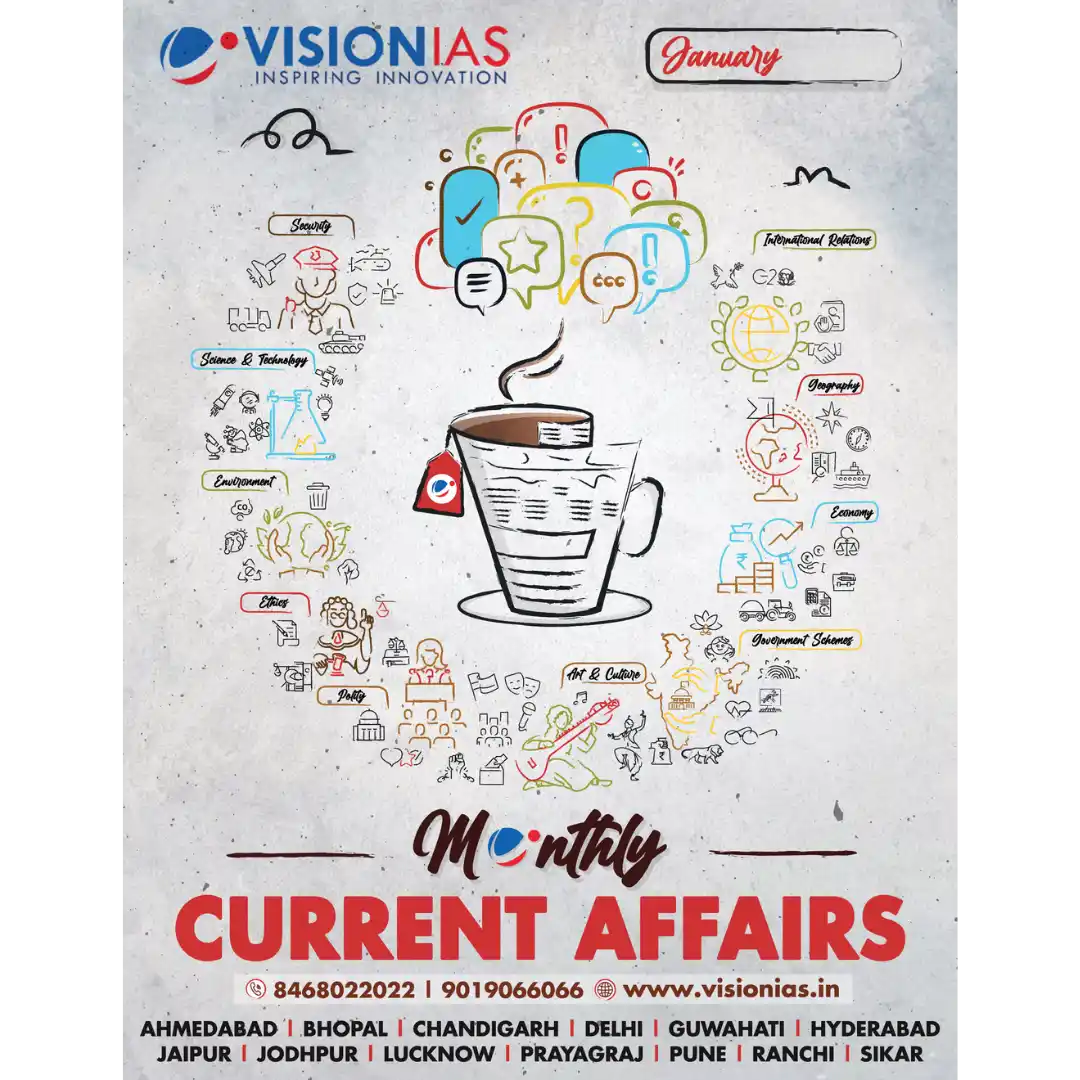
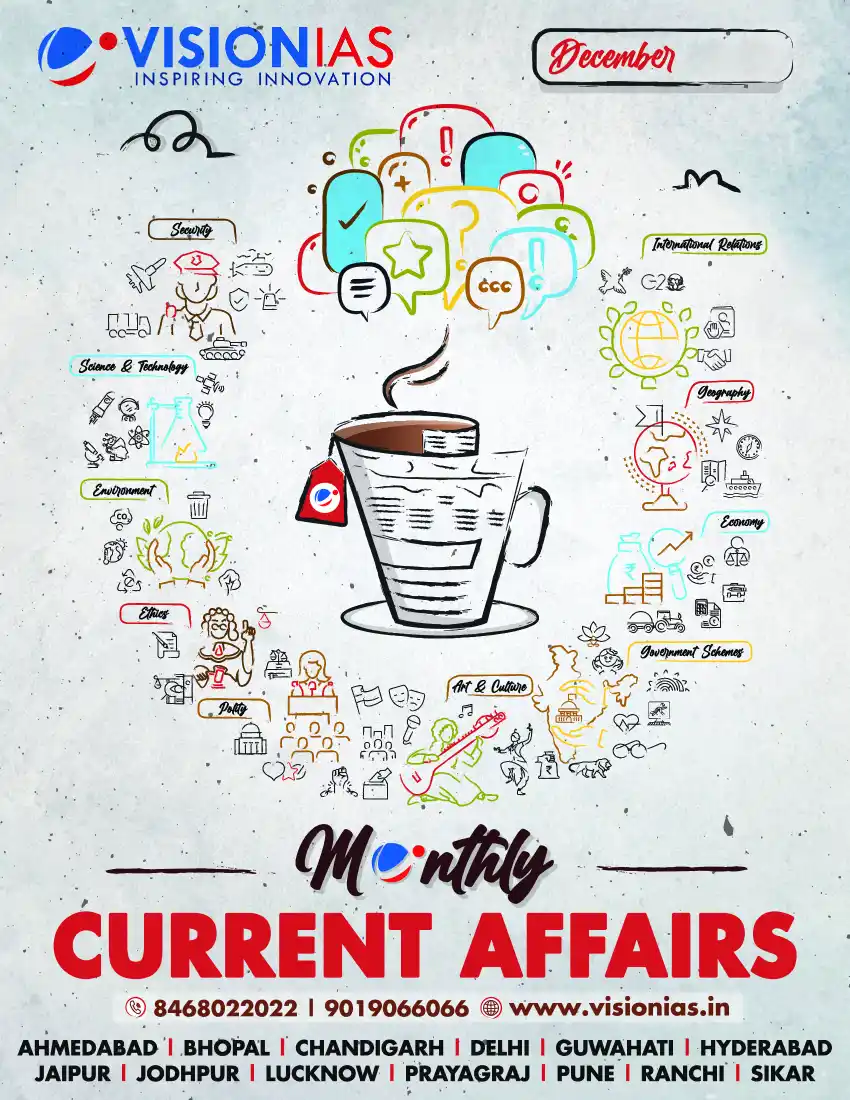
Roughly 60–70% of this section comes from current affairs and banking news of the previous six months. A monthly current-affairs habit is non-negotiable — a compilation such as the Vision IAS Current Affairs Magazine January 2026 is an efficient way to cover schemes, appointments and economic developments in one place, and pairing it with the December 2025 edition gives you the rolling window Mains loves to test.
General English (40 marks)
A tougher version of Prelims English: longer Reading Comprehension passages, advanced cloze tests, para jumbles, error detection, vocabulary-based questions, sentence connectors, word swaps and phrase replacement. Reading editorials daily builds both comprehension and the General Awareness section simultaneously, so it is one of the most time-efficient habits you can form.
Quantitative Aptitude (50 marks)
| Topic | Focus |
|---|---|
| Data Interpretation (Caselet, Missing, Pie, Bar) | Highest weightage — 15–20 questions |
| Data Sufficiency | 3–5 questions |
| Arithmetic Word Problems | Profit & loss, TSD, boats, pipes, mensuration, probability |
| Number Series & Quadratic Equations | Speed-based scoring |
| Quantity Comparison | Occasional 2–3 questions |
Reasoning Ability & Computer Aptitude (60 marks)
Reasoning includes complex puzzles (floor, box, month-based, comparison), seating (linear, circular, square), syllogism (possibility), inequality, data sufficiency, input-output, logical reasoning (statement-assumption, cause-effect) and machine input.
Computer Aptitude is the scoring sub-section many aspirants under-prepare. It typically covers:
| Computer Topic | What to Study |
|---|---|
| Fundamentals | Generations of computers, hardware, software, input/output devices |
| MS Office | MS Word, Excel (formulas, shortcuts), PowerPoint features |
| Operating Systems | Windows basics, file management |
| Networking & Internet | LAN/WAN, topologies, protocols, web browsers, email |
| Memory & Number System | RAM/ROM, units, binary basics |
| Security & Abbreviations | Viruses, firewalls, common computer abbreviations |
Computer Aptitude questions are factual and quick — a well-prepared candidate can convert 8–12 marks here with minimal time investment, directly boosting the 60-mark section. Because these questions rarely need scratch work, they are the ideal place to bank easy marks and free up minutes for the heavier reasoning puzzles.
Which Is the Most Scoring Section in SBI Clerk?
For most aspirants the General/Financial Awareness section in Mains is the single most scoring area because answers are recall-based, take seconds, and carry low risk under negative marking. In Prelims, Numerical Ability’s simplification and number-series questions plus Reasoning puzzles deliver the fastest marks. Prioritising these lets you clear sectional cut-offs while leaving buffer time for the trickier arithmetic and reading-comprehension questions. In short: to qualify, lean on Quant speed topics and Reasoning puzzles; to rank, dominate General/Financial Awareness and Computer Aptitude in Mains, and remember that Reasoning & Computer Aptitude carries the most marks (60) of any single section.
Local Language Proficiency Test (LPT) & Exemption
After the Mains result, shortlisted candidates undergo a Local Language Proficiency Test to confirm they can read, write and speak the official/local language of the state they applied for. Key points:
- The LPT is qualifying, not scored into merit.
- Candidates who studied the specified local language up to Class 10 (and can produce proof, such as a mark sheet) are usually exempted from the LPT.
- Failing to qualify the LPT can lead to disqualification even after clearing Mains, so choose your state/language carefully at the application stage.
Always verify the exact local language for your chosen state in the official SBI notification, since candidates are considered against state-wise vacancies and the accepted languages differ from state to state.
Negative Marking & Cut-off Trends
Both Prelims and Mains impose a penalty of 0.25 marks (one-fourth) for each wrong answer; unattempted questions carry no penalty. This makes accuracy more valuable than raw attempts — four wrong guesses wipe out the reward of one correct answer.
| Phase | Nature of Cut-off | Practical Target |
|---|---|---|
| Prelims | Sectional + overall (state-wise, category-wise) | Attempt 70–80 with ~90% accuracy to be safe |
| Mains | Overall qualifying + merit rank | Maximise GA + Computer, keep Quant/Reasoning accuracy high |
To clear the sectional cut-off in any section you generally need to solve the “easy” and “moderate” questions confidently — roughly 12–18 correct per Prelims section. Do not chase the hardest puzzle set at the cost of negative marks; a clean, selective attempt almost always beats a rushed, error-prone one.
SBI Clerk Syllabus 2026: What’s New vs Previous Year
The core structure of the sbi clerk syllabus 2026 is stable — the section names, question counts, marks and sectional timing remain the same as the previous cycle. The practical shifts to watch are:
- Current affairs window updated: Focus on the six months preceding your exam date; older events lose relevance.
- Higher DI and puzzle difficulty: Recent papers lean toward caselet and arithmetic-based DI rather than plain tables.
- Computer Aptitude stays factual: No new topics; MS Office, networking and fundamentals remain the safe bet.
In short, there is nothing structurally new to learn for 2026 — refresh your current affairs, practise higher-difficulty DI and puzzles, and confirm the final numbers against the official notification when it drops.
SBI Clerk vs IBPS Clerk Syllabus: Overlap for Combined Prep
Aspirants often prepare for both. The good news: the syllabi overlap by roughly 80–90%, so one preparation base serves both exams.
| Parameter | SBI Clerk | IBPS Clerk |
|---|---|---|
| Prelims sections | English, Numerical Ability, Reasoning | English, Numerical Ability, Reasoning |
| Prelims pattern | 100 Q / 100 marks / 1 hr | 100 Q / 100 marks / 1 hr |
| Mains sections | 4 (GA, English, Quant, Reasoning+Computer) | 4 (GA, English, Quant, Reasoning+Computer) |
| Mains marks | 200 | 200 |
| Computer Aptitude | Merged with Reasoning | Merged with Reasoning |
| Language test | LPT after Mains | Language proficiency at joining |
The difference lies mainly in difficulty pattern and cut-off levels, not topics. If you have covered the SBI Clerk syllabus, you have effectively covered the IBPS Clerk syllabus too — see our topic-wise previous-year question approach for how PYQ-driven revision cements both.
How to Prepare Using the SBI Clerk Syllabus (Study Plan)
A syllabus is only useful when converted into a day-count schedule. Here is a practical 90-day plan tied directly to the topic-wise weightage above.
| Phase | Days | Focus |
|---|---|---|
| Foundation | 1–30 | Learn concepts: arithmetic, DI basics, puzzles, syllogism, grammar rules; start daily current affairs |
| Prelims Sprint | 31–55 | High-yield topics (simplification, number series, seating, puzzles) + 1 sectional test daily |
| Mains Build-up | 56–80 | Advanced DI, complex puzzles, Computer Aptitude, banking & financial awareness |
| Revision + Mocks | 81–90 | Full-length mocks, error log review, current-affairs revision, speed & accuracy tuning |
Practical tips to apply the syllabus efficiently:
- Attempt topic-wise before full mocks: Solve 50 questions of one topic until accuracy crosses 85%, then move on.
- Maintain a current-affairs sheet: One page a day beats last-minute cramming. A structured monthly magazine keeps this consistent.
- Track sectional timing: Practise with the 20-minute Prelims clock so exam-day pacing feels natural.
- Log every wrong answer: Revisit your error log weekly — it is the fastest way to beat negative marking.
- Solve previous-year papers: They reveal the exact difficulty and phrasing SBI favours.
SBI Clerk Syllabus PDF Download (Topic-Wise Checklist)
To create your own sbi clerk syllabus pdf download for 2026, save this page as a PDF from your browser (Print → Save as PDF) or copy the section-wise tables above into a document — together they form a complete, topic-wise printable checklist you can tick off as you finish each area. There is no separate official syllabus PDF; for the authoritative version, always cross-check with the syllabus annexure in the latest SBI Junior Associate recruitment notification on sbi.co.in, since state-wise vacancies and language requirements are published there.
Turn the weightage tables into a revision tracker: mark each topic as “Learnt”, “Practised” and “Revised”. This three-stage checklist is more useful than a plain syllabus PDF because it forces you to measure readiness, not just coverage — and it is the difference between having seen a topic and being able to score on it.
Frequently Asked Questions
What is the syllabus of SBI Clerk?
The SBI Clerk syllabus has three Prelims sections — English Language, Numerical Ability and Reasoning Ability — and four Mains sections: General/Financial Awareness, General English, Quantitative Aptitude, and Reasoning & Computer Aptitude. Prelims carries 100 marks and Mains 200 marks.
Is there negative marking in SBI Clerk exam?
Yes. Both Prelims and Mains deduct 0.25 marks (one-fourth of the mark allotted) for every wrong answer. Unattempted questions carry no penalty, so accuracy matters more than the number of attempts.
How many subjects are there in SBI Clerk Prelims and Mains?
Prelims has three subjects (English, Numerical Ability, Reasoning). Mains has four subjects (General/Financial Awareness, General English, Quantitative Aptitude, and Reasoning & Computer Aptitude combined).
Is there an interview in SBI Clerk recruitment?
No. SBI Clerk (Junior Associate) selection has no interview. Final selection is based on the Main exam score, followed by a qualifying Local Language Proficiency Test.
What is the Local Language Proficiency Test (LPT) in SBI Clerk?
The LPT is a qualifying test conducted after Mains to verify that a candidate can read, write and speak the local language of the applied state. Candidates who studied that language up to Class 10 are usually exempted.
Is there sectional timing in SBI Clerk Prelims and Mains?
Yes. Prelims has 20 minutes per section, and Mains has separate timing for each section (35–45 minutes each). You cannot switch between sections, so time management within each section is essential.
Which is the most important or scoring section in SBI Clerk exam?
In Mains, General/Financial Awareness is usually the most scoring section because answers are recall-based and quick, with low negative-marking risk. In Prelims, simplification, number series and puzzles give the fastest marks. Reasoning & Computer Aptitude carries the highest marks (60) in Mains, so it is the most important section for merit rank.
How can I download the SBI Clerk syllabus PDF for 2026?
SBI does not release a standalone syllabus PDF; the syllabus is published inside the Junior Associate recruitment notification on sbi.co.in. You can save this page as a PDF (Print → Save as PDF) or copy the topic-wise tables above into a document to build your own printable 2026 checklist, then verify it against the official notification.
Is the SBI Clerk syllabus the same as IBPS Clerk?
The topics overlap by roughly 80–90%. Both share the same Prelims and Mains section structure and marks. The main differences are exam difficulty, cut-off levels and the fact that SBI conducts a Local Language Proficiency Test after Mains, so preparing for one largely covers the other.
Recommended Study Material

Continue Reading
JPSC Syllabus 2025: Prelims, Mains Pattern + PDF Download
The JPSC syllabus for 2025 covers the Combined Civil Services Examination (CCSE) across three stages: a Preliminary exam…
RPSC RAS Syllabus 2026: Prelims, Mains Pattern + PDF
The rpsc ras syllabus for 2026 is divided across three stages conducted by the Rajasthan Public Service Commission…
UGC NET Paper 1 Syllabus 2026: 10 Units + Weightage & PDF
The ugc net paper 1 syllabus has 10 compulsory units — Teaching Aptitude, Research Aptitude, Comprehension, Communication, Mathematical…