JPSC Syllabus 2025: Prelims, Mains Pattern + PDF Download
Complete JPSC syllabus 2025 for CCSE Prelims (GS-I & GS-II) and Mains 6 papers, exam pattern, marks, weightage + free JPSC syllabus PDF in Hindi & English.

The JPSC syllabus for 2025 covers the Combined Civil Services Examination (CCSE) across three stages: a Preliminary exam with two objective General Studies papers (200 marks each = 400 marks), a Main exam with six descriptive papers, and a final Personality Test/Interview worth 100 marks. Prelims carries no negative marking and tests general awareness plus deep Jharkhand-specific knowledge, while Mains blends compulsory language papers with core subjects like Polity, Economy, Social Science and General Science. This guide breaks down the complete JPSC syllabus 2025 for both Prelims and Mains, the full JPSC exam pattern, question-wise weightage, all 15 Language & Literature options, a consolidated Jharkhand GK list, and how to get a free JPSC syllabus PDF in Hindi and English.
Quick answer — the JPSC syllabus at a glance:
- Prelims: 2 objective GS papers — GS-I (national/general awareness) and GS-II (entirely Jharkhand) — 400 marks, no negative marking, screening only.
- Mains: 6 descriptive papers — Paper I (Hindi & English) qualifying; Papers II–VI counted for merit (950 marks).
- Interview: Personality Test of 100 marks, counted for merit.
- Final merit pool: 1050 marks (Mains merit 950 + Interview 100).
Note: JPSC occasionally revises the number of merit papers and marks between cycles, so always cross-check the figures below against the latest official CCSE notification on jpsc.gov.in before you finalise your plan.
JPSC Syllabus 2025 at a Glance
The Jharkhand Public Service Commission (JPSC) conducts the CCSE to recruit officers to the Jharkhand Administrative Service, Jharkhand Police Service, Jharkhand Financial Service and allied cadres. Before diving into the topic-wise JPSC syllabus 2025, here is the complete selection process in one snapshot so you understand where each syllabus fits.
| Stage | Type | Papers | Total Marks | Nature |
|---|---|---|---|---|
| Preliminary Examination | Objective (MCQ) | 2 (GS Paper-I & GS Paper-II) | 400 | Screening / qualifying for Mains |
| Main Examination | Descriptive (written) | 6 papers | 950 (merit) + 150 qualifying | Counted for final merit |
| Personality Test | Interview | — | 100 | Counted for final merit |
Marks scored in Prelims are not added to the final merit — Prelims only decides who qualifies for Mains. The final selection list is prepared from Mains (merit-counting papers) plus the Interview. This three-tier structure is the backbone of the entire JPSC exam pattern, so let us examine each stage in detail.
JPSC Exam Pattern for Prelims
The JPSC Preliminary Examination consists of two compulsory General Studies papers. Both are objective-type (multiple choice) and both carry 200 marks each, taking the Prelims total to 400 marks. The Preliminary stage is purely a screening test — you must clear the cut-off to be shortlisted for Mains, typically at a ratio of roughly 15 times the number of vacancies.
| Paper | Subject | Marks | Duration | Questions | Negative Marking |
|---|---|---|---|---|---|
| Paper-I | General Studies-I | 200 | 2 hours | 100 | No |
| Paper-II | General Studies-II (Jharkhand-specific) | 200 | 2 hours | 100 | No |
| Total | 400 | 4 hours | 200 | — | |
Is there negative marking in JPSC Prelims? No. As per the latest JPSC notification, there is no negative marking for wrong answers in the Preliminary Examination. This is a significant strategic advantage — you should attempt every single question, since blanks and wrong answers are scored identically. General Studies Paper-II, which is entirely Jharkhand-focused, is often the real differentiator because it is scoring for local aspirants and difficult for outsiders.
JPSC Prelims Syllabus: General Studies Paper-I
General Studies Paper-I of the JPSC prelims syllabus covers broad national and general awareness topics — the kind of ground that overlaps heavily with UPSC and other state PSC exams. The paper is designed to test a candidate’s general awareness of the environment around them and its application to society.
| Topic | What it Covers | Approx. Questions |
|---|---|---|
| History of India | Ancient, Medieval & Modern India; freedom struggle | 15 |
| Geography | Physical, social & economic geography of India & the world | 10 |
| Indian Polity & Governance | Constitution, political system, Panchayati Raj, public policy, rights issues | 15 |
| Economic & Sustainable Development | Economic and social development, poverty, inclusion, demographics, social sector initiatives | 15 |
| General Science & Technology | Everyday science, science & tech developments, their applications | 15 |
| National & International Current Events | Current affairs of national and international importance | 15 |
| Jharkhand General Knowledge | State-specific GK woven into GS-I | 10 |
| General Mental Ability / Miscellaneous | Reasoning, general awareness, miscellaneous | 5 |
The exact question distribution varies year to year, but History, Polity, Economy, Science & Technology and Current Affairs consistently form the high-weightage core. Because there is no negative marking, even topics you have only skimmed are worth an educated guess on exam day.
How GS Paper-I overlaps with UPSC
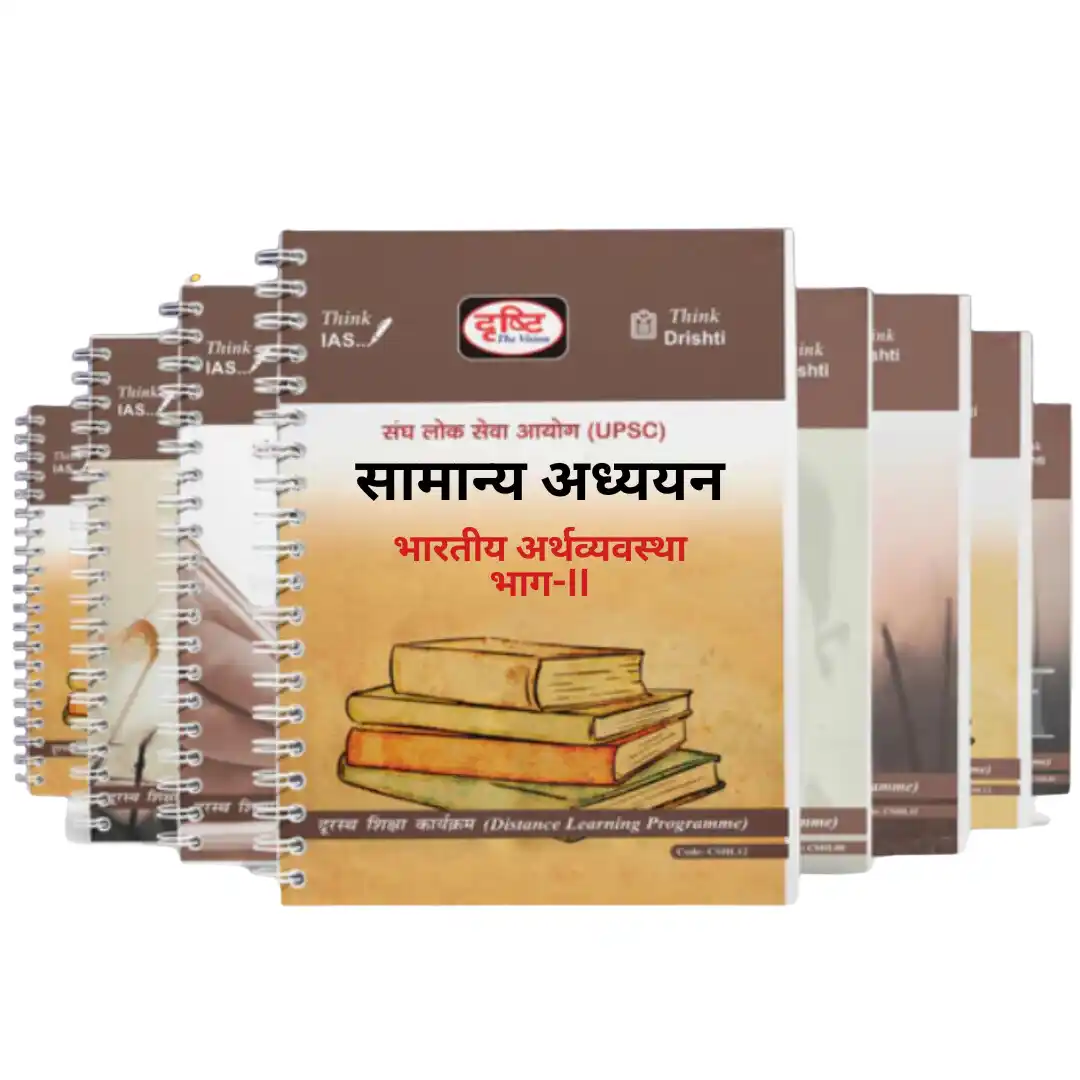
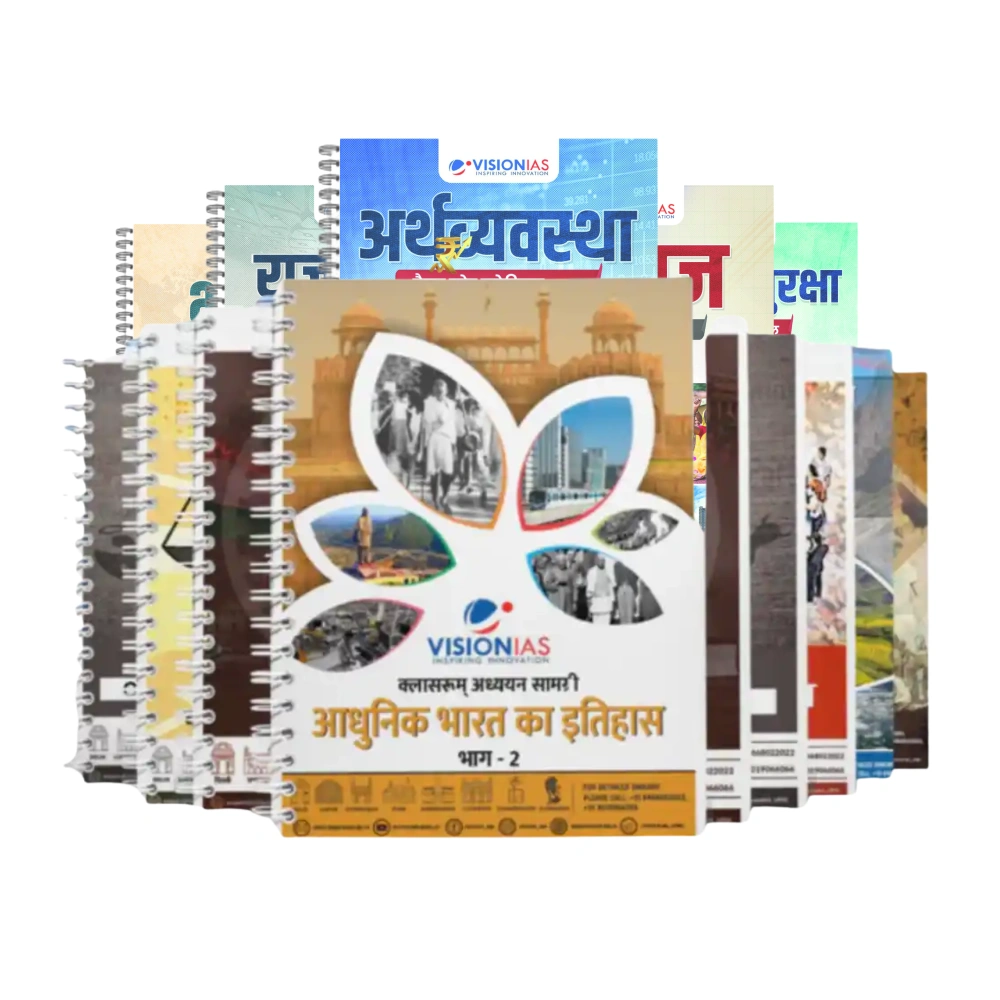
If you are simultaneously preparing for UPSC, roughly 60-70% of GS Paper-I content overlaps with the UPSC Prelims General Studies syllabus. Standard UPSC study material therefore builds most of your Paper-I foundation. Aspirants often use consolidated GS notes such as Vision IAS GS Notes in Hindi or Drishti IAS Hindi Study Material to cover History, Polity, Geography, Economy and Science in one place, then layer Jharkhand-specific material on top for Paper-II.
JPSC Prelims Syllabus: General Studies Paper-II (Jharkhand-Specific)
General Studies Paper-II is where the JPSC syllabus diverges sharply from UPSC and where dedicated aspirants win or lose. This entire 200-mark paper is centred on Jharkhand — its history, tribal movements, culture, geography, land laws, industry and environment. Many pages hide these details inside images; here is a clean, crawlable, copyable breakdown of every Paper-II theme.
| Theme | Detailed Topics |
|---|---|
| History of Jharkhand | Ancient, medieval and modern history of the Jharkhand region; Magadha, Mauryan and Mughal influence; British annexation |
| Tribal & Peasant Movements | Santhal Rebellion (Hul, 1855-56), Munda Rebellion (Ulgulan, Birsa Munda), Kol Uprising (1831-32), Bhumij revolt, Tana Bhagat movement, Kherwar movement |
| Jharkhand Statehood Movement | Adivasi Mahasabha, Jharkhand Party, demand for a separate state and formation of Jharkhand on 15 November 2000 |
| Culture, Folk Traditions & Festivals | Folk dances (Chhau, Paika, Jhumar, Domkach), folk music, festivals (Sarhul, Karma, Sohrai, Tusu), tribal languages, art, cuisine and attire |
| Land & Tenancy Laws | Chotanagpur Tenancy Act (CNT Act, 1908), Santhal Pargana Tenancy Act (SPT Act, 1949), land reforms and tribal land rights |
| Geography of Jharkhand | Physiography, Chotanagpur Plateau, rivers (Subarnarekha, Damodar, Koel, Sankh), climate, soil, forests, national parks and wildlife sanctuaries |
| Mineral Resources & Industry | Coal, iron ore, mica, bauxite, copper; industrial development — Tata Steel Jamshedpur, Bokaro Steel Plant, HEC Ranchi, mineral-based economy |
| Environment & Disaster Management | Ecology, biodiversity, pollution, climate concerns, disaster management framework specific to Jharkhand |
| State Polity & Administration | Jharkhand government structure, Panchayati Raj in scheduled areas, Fifth Schedule provisions, tribal advisory council |
| Current Affairs of Jharkhand | State schemes, budget, socio-economic indicators, sports personalities, recent developments |
Mastering this Jharkhand-centric block is non-negotiable. Because Paper-II is 200 marks and no other exam prepares you for it, it is the single highest-ROI section of the JPSC prelims syllabus for a serious aspirant.
Consolidated Jharkhand Static GK for JPSC
Beyond the thematic Paper-II syllabus, JPSC repeatedly asks static factual Jharkhand GK. Here is a consolidated, exam-ready list that most competitor pages simply do not provide.
| Category | Must-Know Facts |
|---|---|
| Formation & Capital | State formed 15 November 2000 (28th state); capital Ranchi; carved out of Bihar |
| Districts & Divisions | 24 districts across 5 administrative divisions (Palamu, North Chotanagpur, South Chotanagpur, Kolhan, Santhal Pargana) |
| Major Tribes | Santhal, Munda, Oraon, Ho, Kharia, Bhumij; Primitive/PVTGs — Birhor, Asur, Korwa, Mal Paharia, Sauria Paharia, Parhaiya, Savar, Birjia |
| Folk Dances | Chhau (Seraikela), Paika, Jhumar, Domkach, Firkal, Mardana Jhumar, Janani Jhumar |
| Major Rivers | Subarnarekha, Damodar (“lifeline of Jharkhand”), North & South Koel, Sankh, Barakar, Mayurakshi |
| Freedom Movements | Kol Uprising (1831), Santhal Hul (1855, Sidhu-Kanhu), Birsa Munda’s Ulgulan (1899-1900), Tana Bhagat movement |
| National Parks / Sanctuaries | Betla National Park, Palamau Tiger Reserve, Dalma Wildlife Sanctuary, Hazaribagh Wildlife Sanctuary |
| Festivals | Sarhul, Karma, Sohrai, Tusu, Jani Shikar, Bandna |
Building a personal one-page revision sheet from this list, and revising it weekly, is the fastest way to lock down Paper-II marks.
JPSC Exam Pattern for Mains
Candidates who clear Prelims sit the JPSC Main Examination — a descriptive, written exam of six papers. Paper I (General Hindi & General English) is qualifying in nature: you must score the minimum, but its 150 marks are not counted in the final merit. The remaining papers (II to VI) are counted for merit, along with Language & Literature.
| Paper | Subject | Marks | Duration | Merit Status |
|---|---|---|---|---|
| Paper I | General Hindi & General English | 150 | 3 hours | Qualifying only |
| Paper II | Language & Literature (choose 1 of 15) | 150 | 3 hours | Merit |
| Paper III | Social Science, History & Geography | 200 | 3 hours | Merit |
| Paper IV | Indian Constitution, Polity, Public Administration & Good Governance | 200 | 3 hours | Merit |
| Paper V | Indian Economy, Globalisation & Sustainable Development | 200 | 3 hours | Merit |
| Paper VI | General Science, Environment & Technology Development | 200 | 3 hours | Merit |
| Total (merit papers) | 950 | — | + 100 Interview | |
How many papers are there in JPSC Prelims and Mains? Prelims has 2 objective papers; Mains has 6 descriptive papers. Together with the Interview, that is the complete three-tier CCSE. The Mains merit total of 950 plus the 100-mark Personality Test gives the final scoring pool of 1050 marks.
JPSC Mains Syllabus: Paper-by-Paper Breakdown
Below is the subject-wise detailed JPSC mains syllabus for each of the six papers. Unlike thin competitor pages, this covers what each paper actually tests.
Paper I — General Hindi & General English (Qualifying, 150 marks)
This paper is split into General Hindi and General English, roughly 75 marks each. Topics include essay/precis writing, comprehension passages, grammar and usage, letter/report writing, translation, idioms and phrases, and correction of sentences. You need only the qualifying minimum (commonly 30%), so do not over-invest — but do not neglect it either, since failing it disqualifies you regardless of your other scores.
Paper II — Language & Literature (150 marks, Merit)
Candidates select one Language & Literature option from a list of 15. This paper covers the history of the chosen language and its literature, prominent authors and works, grammar, prose, poetry, literary criticism and essay writing in that language. Santhali, Ho, Mundari, Kurmali and Nagpuri options are especially popular with Jharkhand tribal-language speakers and are considered scoring. See the full option list in the next section.
Paper III — Social Science, History & Geography (200 marks, Merit)
Covers History of India and Jharkhand, World History outlines, Indian and Jharkhand Geography, physical/economic/social geography, distribution of resources, and elements of Sociology. Jharkhand-specific history and geography feature prominently, echoing the Prelims Paper-II emphasis.
Paper IV — Indian Constitution, Polity, Public Administration & Good Governance (200 marks, Merit)
Includes the making and salient features of the Indian Constitution, fundamental rights and duties, Union and State government, Panchayati Raj, public administration concepts, governance, accountability, transparency, e-governance, and Jharkhand’s administrative framework including Fifth Schedule and tribal governance. Standard polity resources such as Vajiram Polity Notes cover the constitutional core efficiently.
Paper V — Indian Economy, Globalisation & Sustainable Development (200 marks, Merit)
Covers basic economic concepts, Indian economy since Independence, planning, agriculture, industry, infrastructure, banking, budgeting, globalisation and its impact, sustainable development goals, and the economy of Jharkhand — minerals, industry and development challenges. A focused set like Vision IAS Economics Notes maps neatly onto this paper.
Paper VI — General Science, Environment & Technology Development (200 marks, Merit)
Includes general science (physics, chemistry, biology at an applied level), everyday science, developments in science & technology, information technology, space, defence, environment, ecology, biodiversity, climate change, and disaster management with a Jharkhand lens.
All 15 Language & Literature Options in JPSC Mains Paper II
What are the optional/language subjects in JPSC Mains Paper II? Candidates choose one of 15 Language & Literature options. Choosing a language you already read fluently — especially a tribal/regional language of Jharkhand — is one of the smartest strategic decisions in the entire exam, because these options are scoring and have limited competition.
| # | Language & Literature Option | Typical Suitability |
|---|---|---|
| 1 | Hindi | Most candidates; abundant material |
| 2 | English | English-medium candidates |
| 3 | Sanskrit | Scoring for those with a grammar base |
| 4 | Urdu | Urdu-medium candidates |
| 5 | Bengali | Bengali speakers (Santhal Pargana belt) |
| 6 | Odia | Odia speakers (border districts) |
| 7 | Santhali | Santhal tribe — highly scoring |
| 8 | Mundari | Munda tribe speakers |
| 9 | Ho | Ho tribe (Kolhan region) |
| 10 | Kharia | Kharia tribe speakers |
| 11 | Kurukh (Oraon) | Oraon tribe speakers |
| 12 | Kurmali | Kurmali speakers |
| 13 | Khortha | North Chotanagpur belt |
| 14 | Nagpuri | Widely spoken regional option |
| 15 | Panch Pargania | Panch Pargania region speakers |
Each option’s syllabus covers the origin and development of the language, its script, grammar, major literary works and authors, prose and poetry sections, and essay writing. Pick the language you can read, write and analyse comfortably — fluency beats popularity here.
JPSC Interview / Personality Test (100 Marks)
The final stage is the Personality Test, worth 100 marks and counted in the final merit. The board assesses your intellectual qualities, depth of general and Jharkhand-specific awareness, clarity of expression, leadership, balance of judgement, honesty and social attitude. Expect questions on your home district, current affairs, your Language & Literature option, your graduation subject, and your motivation for joining the civil services. Since Mains merit (950) and Interview (100) together decide the final list, a strong interview can meaningfully shift your rank.
JPSC CCSE Total Marks & Final Merit
What is the total marks and exam pattern of JPSC CCSE? Here is the complete marks distribution that determines your final selection.
| Stage / Paper | Marks | Counted in Merit? |
|---|---|---|
| Prelims (GS-I + GS-II) | 400 | No — screening only |
| Mains Paper I (Hindi & English) | 150 | No — qualifying |
| Mains Paper II (Language & Literature) | 150 | Yes |
| Mains Paper III (Social Science) | 200 | Yes |
| Mains Paper IV (Constitution & Polity) | 200 | Yes |
| Mains Paper V (Indian Economy) | 200 | Yes |
| Mains Paper VI (General Science) | 200 | Yes |
| Personality Test / Interview | 100 | Yes |
| Final Merit Total | 1050 | Mains merit + Interview |
Which JPSC Subjects Carry the Highest Weightage?
Not all of the JPSC syllabus is equal. Knowing where the marks concentrate lets you sequence your revision for maximum return. In Prelims, the whole of GS Paper-II (200 marks) is Jharkhand-specific, so state GK effectively decides the cut-off; within GS Paper-I, History, Polity, Economy, Science & Technology and Current Affairs dominate. In Mains, four merit papers of 200 marks each — Social Science, Polity, Economy and General Science — carry the bulk of the scoring weight, while the 150-mark Language & Literature paper is a high-yield differentiator because a fluent speaker can score heavily against limited competition.
| Priority | Where the Marks Are | Why it Matters |
|---|---|---|
| Highest | Prelims GS-II (Jharkhand) — 200 marks | Decides who clears Prelims; no other exam prepares you for it |
| High | Mains Papers III–VI — 800 marks combined | The core of your merit rank |
| High | Mains Paper II Language & Literature — 150 marks | Scoring for fluent regional/tribal-language candidates |
| Moderate | Prelims GS-I core (History, Polity, Economy, S&T, CA) | Consistent high-weightage topics year to year |
| Do not ignore | Mains Paper I (Hindi & English) — qualifying | Failing it disqualifies you regardless of merit scores |
Is JPSC Syllabus Same as UPSC Syllabus?
Is JPSC syllabus same as UPSC syllabus? No — they overlap but are not identical. The core General Studies subjects (History, Polity, Geography, Economy, Science & Technology, Current Affairs) overlap substantially, which is why UPSC material forms a strong foundation for JPSC. However, JPSC adds a heavy, exam-defining layer of Jharkhand-specific content — an entire Prelims paper (GS-II) and significant Mains weightage — plus a Language & Literature paper and compulsory General Hindi. UPSC, by contrast, has a full-length optional subject and an Essay paper that JPSC does not.
| Feature | JPSC CCSE | UPSC CSE |
|---|---|---|
| Prelims papers | 2 GS (both counted for screening) | GS Paper-I + CSAT (CSAT qualifying) |
| Negative marking (Prelims) | No | Yes (1/3) |
| State-specific paper | Yes — full GS-II on Jharkhand | No |
| Mains papers | 6 | 9 (incl. Essay + 2 Optional) |
| Optional subject | Language & Literature (1 of 15) | Full optional (48+ subjects) |
| Interview | 100 marks | 275 marks |
Practical takeaway: build your GS base with mainstream UPSC resources, then bolt on Jharkhand-specific study and your chosen language. The overlap makes dual preparation efficient, but the Jharkhand layer is where JPSC is actually won.
JPSC Syllabus PDF Download (Hindi & English)
How to download the JPSC syllabus PDF in Hindi? The official and most reliable source is the Jharkhand Public Service Commission website, jpsc.gov.in, where the CCSE notification carries the full Prelims and Mains syllabus. To create your own clean, printable JPSC syllabus PDF in both Hindi and English:
- Visit jpsc.gov.in and open the latest CCSE advertisement/notification PDF — it contains the official syllabus for all papers.
- Use the tables in this article — they are fully text-based (unlike image-based competitor pages) so you can copy, paste and print them directly.
- Print or “Save as PDF” from your browser to keep an offline English + Hindi reference for daily revision.
- Cross-check the marks and pattern against the newest notification, since JPSC occasionally revises the number of merit papers and marks between exam cycles.
For a professionally structured syllabus companion covering the overlapping GS foundation, aspirants also use the GS Score Latest Syllabus Booklet as a topic-mapping checklist while building their own JPSC notes.
Subject-Wise Recommended Study Material for JPSC
How to prepare for JPSC without coaching / best books for JPSC? Self-study works well for JPSC because most of the GS load overlaps with UPSC, and Jharkhand-specific content can be covered from a handful of state GK books plus current affairs. Here is a practical subject-to-resource map.
| Subject / Paper | What to Study | Suggested Resource |
|---|---|---|
| History, Polity, Geography, Economy (GS-I) | NCERTs + consolidated GS notes | Drishti IAS Hindi Study Material |
| Polity & Governance (Mains IV) | Constitution, governance, Jharkhand polity | Vajiram Polity Notes |
| Indian Economy (Mains V) | Economic concepts, planning, budget, SDGs | Vision IAS Economics Notes |
| Full GS (Hindi medium) | End-to-end GS in Hindi for Prelims + Mains | Vision IAS GS Notes in Hindi |
| Jharkhand GK (GS-II) | State history, geography, tribes, movements, schemes | State-specific Jharkhand GK book + monthly current affairs |
| Current Affairs | National + Jharkhand monthly updates | Vision IAS Current Affairs Magazine (Hindi) |
The winning combination is: mainstream GS material for the overlapping national syllabus, a dedicated Jharkhand GK source for GS Paper-II, a monthly current affairs magazine, and consistent answer-writing practice for Mains.
JPSC Eligibility & Age Limit (Quick Reference)
While the syllabus is your study map, eligibility decides whether you can appear. In brief: candidates must hold a bachelor’s degree from a recognised university; the minimum age is 21 years and the upper age limit is generally 35 years for the unreserved category, with standard relaxations for reserved categories (OBC, SC/ST) and women as per Jharkhand government rules. Knowledge of Hindi and one regional/tribal language is expected given the compulsory language papers. Always confirm exact age cut-off dates and attempt limits from the latest official notification.
Weightage-Based Preparation Strategy & Timeline
Because Prelims has no negative marking and GS-II is entirely Jharkhand-based, a smart candidate front-loads Jharkhand study and never leaves questions blank. Here is a workable 6-month timeline aligned to the JPSC syllabus.
| Phase | Focus | Key Actions |
|---|---|---|
| Months 1-2 | GS foundation (Paper-I) | NCERTs + GS notes for History, Polity, Geography, Economy, Science |
| Months 2-3 | Jharkhand GK (Paper-II) | State history, tribal movements, geography, land laws, culture — build the static GK sheet |
| Month 4 | Current Affairs + revision | National + Jharkhand current affairs; first full revision of static topics |
| Month 5 | Prelims practice | Full-length mocks for both GS papers; analyse gaps; revise weak areas |
| Month 6 | Mains groundwork | Answer writing, Language & Literature option, essay/precis for Paper I |
Common mistakes to avoid: underestimating GS Paper-II, leaving Prelims questions blank (there is no penalty — always guess), neglecting the qualifying language paper until it disqualifies you, and choosing a Language & Literature option you cannot actually write in. Anchor every study block to the weightage above, and revise the Jharkhand static GK weekly.
Frequently Asked Questions
What is the syllabus of JPSC exam?
The JPSC CCSE syllabus has three parts. Prelims covers two objective General Studies papers — GS-I (History, Geography, Polity, Economy, Science & Technology, Current Affairs) and GS-II (entirely Jharkhand-specific history, tribal movements, culture, geography, land laws and environment). Mains has six descriptive papers: General Hindi & English (qualifying), Language & Literature, Social Science, Constitution & Polity, Indian Economy, and General Science. A 100-mark Personality Test completes the process.
How many papers are there in JPSC Prelims and Mains?
JPSC Prelims has 2 objective papers (GS Paper-I and GS Paper-II, 200 marks each). JPSC Mains has 6 descriptive papers, of which Paper I (Hindi & English) is qualifying and Papers II-VI plus the Language & Literature paper are counted for merit, totalling 950 marks, followed by a 100-mark Interview.
Is JPSC syllabus same as UPSC syllabus?
No. The General Studies core overlaps significantly (roughly 60-70%), so UPSC material is a strong base for JPSC. But JPSC adds an entire Jharkhand-focused Prelims paper (GS-II), a Language & Literature paper with 15 options, and compulsory General Hindi — while UPSC has a full optional subject and an Essay paper that JPSC lacks. Preparation overlaps, but the Jharkhand layer is unique to JPSC.
Is there negative marking in JPSC Prelims?
No. As per the latest JPSC notification, there is no negative marking in the Preliminary Examination. Because blank and wrong answers score the same, you should attempt all 200 questions across both GS papers and make educated guesses wherever you are unsure.
What are the optional/language subjects in JPSC Mains Paper II?
Paper II offers 15 Language & Literature options: Hindi, English, Sanskrit, Urdu, Bengali, Odia, Santhali, Mundari, Ho, Kharia, Kurukh (Oraon), Kurmali, Khortha, Nagpuri and Panch Pargania. Tribal and regional languages like Santhali, Mundari, Nagpuri and Kurmali are popular scoring choices for local candidates who read them fluently.
How can I download the JPSC syllabus PDF in Hindi and English?
Download the official CCSE notification PDF from jpsc.gov.in, which contains the complete syllabus for all Prelims and Mains papers. You can also use the text tables in this article — they are fully copyable and printable — and “Save as PDF” from your browser to keep an offline Hindi and English reference. Always verify the marks and pattern against the newest notification before your exam cycle.
Is the JPSC exam tough to crack?
JPSC is competitive but very crackable with focused preparation, largely because there is no negative marking in Prelims and a big chunk of the GS syllabus overlaps with UPSC. The genuine challenge is GS Paper-II and the Jharkhand-specific Mains content, which demand dedicated state-GK study that outside candidates often underestimate. Aspirants who master Jharkhand history, tribal movements, geography and land laws early gain a decisive edge.
What is the JPSC cut-off and how is the final merit decided?
Prelims cut-offs vary each year with the number of vacancies and paper difficulty, and shortlisting is typically around 15 times the vacancies. Crucially, Prelims marks are not added to the final merit — they only qualify you for Mains. The final selection list is prepared purely from the Mains merit papers (950 marks) plus the 100-mark Personality Test, a scoring pool of 1050 marks.
Has the JPSC exam pattern changed for 2025?
The broad three-tier structure — Prelims (2 GS papers), Mains (6 papers) and Interview — has been consistent, but JPSC has in the past adjusted the number of merit-counting papers and mark allocations between cycles. Treat the pattern and marks in this guide as your working framework, and always confirm the exact structure against the current CCSE notification on jpsc.gov.in before your attempt.
Recommended Study Material
Continue Reading
MPSC Syllabus 2026: Prelims, Mains, Pattern + PDF (Marathi)
The MPSC syllabus for the Maharashtra State Services (Rajyaseva) exam is divided across three stages — Prelims (2…
History Optional Syllabus 2026: UPSC Paper 1 & 2 + PDF
The history optional syllabus for UPSC Civil Services Mains carries 500 marks across two papers of 250 marks…
Super TET Syllabus 2026: Subject-Wise Marks, Pattern + PDF
The Super TET syllabus covers 10 subjects across 150 objective questions worth 150 marks, with Language (40 marks)…