SSC CGL Syllabus 2025: Tier 1 & 2 Topics + PDF
Complete SSC CGL syllabus 2025 for Tier 1 & Tier 2: subject-wise topics, exam pattern, marking scheme, topic-wise weightage and a free syllabus PDF download.

The SSC CGL syllabus is built around two stages: Tier 1, a 100-question objective test carrying 200 marks across General Intelligence & Reasoning, General Awareness, Quantitative Aptitude and English Comprehension; and Tier 2, a multi-paper computer-based exam with Mathematical Abilities, Reasoning, English, General Awareness, Computer Knowledge and a Data Entry Speed Test. Tier 1 is only qualifying-cum-screening, while Tier 2 marks decide final merit and post allocation. Below you get the full subject-wise syllabus, the latest exam pattern and marking scheme, topic-wise weightage, a smart high-priority vs low-priority breakdown, a study plan, and a free syllabus PDF download.
SSC CGL Selection Process 2025 at a Glance
The Staff Selection Commission conducts the Combined Graduate Level (CGL) examination every year to recruit for Group B and Group C posts such as Income Tax Inspector, Assistant Section Officer, Auditor, Accountant, Junior Statistical Officer (JSO), Assistant Audit Officer (AAO), Tax Assistant and Upper Division Clerk. Understanding the full selection funnel is the first step before you touch the syllabus, because different posts weight different papers.
The recruitment now runs in a streamlined two-tier structure followed by document verification and, where applicable, a skill/data-entry test:
| Stage | Mode | Nature | Counts Toward Merit? |
|---|---|---|---|
| Tier 1 | Computer Based (CBT) | Objective, screening | No (qualifying only) |
| Tier 2 – Paper I | Computer Based (CBT) | Objective + DEST module | Yes (all posts) |
| Tier 2 – Paper II (Statistics) | Computer Based (CBT) | Objective | Yes (JSO posts) |
| Tier 2 – Paper III (Fin. & Eco.) | Computer Based (CBT) | Objective | Yes (AAO posts) |
| Document Verification | Offline | Eligibility check | No |
What actually changed: under the current pattern the old four-tier system (with a separate descriptive Tier 3 and Tier 4) has been merged. Descriptive writing was removed, and the Computer Knowledge Test plus Data Entry Speed Test are now embedded inside Tier 2 Paper I as Sections/Modules rather than a standalone qualifying tier. This is the single biggest point most syllabus pages hedge on when they mix up “2025” and “2026” — the two-tier structure below is the version in force.
SSC CGL Tier 1 Exam Pattern
Tier 1 is common to every post and is purely a screening filter. It has 4 sections, 100 questions and 200 marks, to be completed in 60 minutes. There is 0.50 negative marking for every wrong answer, so blind guessing costs you.
| Section | Questions | Marks | Suggested Time |
|---|---|---|---|
| General Intelligence & Reasoning | 25 | 50 | 10–12 min |
| General Awareness | 25 | 50 | 7–8 min |
| Quantitative Aptitude | 25 | 50 | 18–20 min |
| English Comprehension | 25 | 50 | 10–12 min |
| Total | 100 | 200 | 60 min |
A few pattern points that decide strategy: the full 60 minutes is available to move across sections (candidates eligible for a scribe get 80 minutes). All questions carry 2 marks each, and the paper is bilingual (English/Hindi) except the English section. Because Tier 1 is qualifying, your goal here is simple: clear the cut-off comfortably and conserve energy for Tier 2, where the real merit battle happens.
Full SSC CGL Syllabus Subject-Wise (Tier 1)
This is the heart of the ssc cgl syllabus 2025. Below is the complete ssc cgl tier 1 syllabus, subject by subject, with topic-wise weightage drawn from previous-year question trends so you know exactly where the marks sit — not just a flat topic list.
General Intelligence & Reasoning
This section is non-verbal and verbal reasoning with no fixed syllabus boundary, but the recurring topics are predictable. It is the fastest-scoring section if your accuracy is high.
| Topic | Typical Questions | Priority |
|---|---|---|
| Analogy & Classification | 4–6 | High |
| Series (number/alphabet) | 3–4 | High |
| Coding-Decoding | 2–3 | High |
| Matrix, Missing Numbers, Puzzle | 3–4 | Medium |
| Blood Relations & Direction | 1–2 | Medium |
| Paper folding, Mirror, Embedded figures | 3–4 | Medium |
| Syllogism, Venn diagram | 1–2 | Low |
Other listed topics: semantic/symbolic operations, space visualisation, problem-solving, word building, coding & de-coding, numerical operations, trends, and figural pattern folding.
Quantitative Aptitude (SSC CGL Maths Syllabus Topic-Wise)
The ssc cgl maths syllabus topic wise is where selections are won or lost, because Tier 2 doubles down on it. Master arithmetic first — it carries the biggest share of easy marks.
| Topic Cluster | Sub-topics | Weightage |
|---|---|---|
| Arithmetic | Percentage, Profit & Loss, Ratio, Averages, Time & Work, Time-Speed-Distance, SI & CI, Partnership, Mixtures | Very High (10–13 Q) |
| Advanced Maths | Geometry, Mensuration, Trigonometry, Algebra, Coordinate Geometry | High (8–10 Q) |
| Number System | LCM/HCF, Factors, Divisibility, Simplification | Medium (2–3 Q) |
| Data Interpretation | Bar graph, Pie chart, Table, Line graph | Medium (2–3 Q) |
High-priority: Geometry, Trigonometry, Mensuration and Algebra are the four advanced-maths pillars — roughly 30–35% of the section and heavily repeated in Tier 2. Low-priority / leave-for-last: lengthy DI sets when time is short.
English Comprehension
English is the most improvable section for a serious aspirant because it is finite and rule-based. Vocabulary and error-spotting alone can fetch 12–15 marks.
| Topic | Typical Questions | Priority |
|---|---|---|
| Synonyms/Antonyms, One-word substitution | 4–5 | High |
| Spelling, Idioms & Phrases | 2–3 | High |
| Sentence Improvement & Error Spotting | 4–5 | High |
| Fill in the Blanks, Cloze Test | 5–6 | Medium |
| Reading Comprehension | 3–5 | Medium |
| Active/Passive, Direct/Indirect, Para jumbles | 3–4 | Medium |
General Awareness
General Awareness rewards the least time per mark if you prepare smartly — it is answered in seconds with no calculation. The syllabus spans History, Geography, Polity, Economics, General Science, Static GK and Current Affairs of roughly the last 6–8 months.
| Sub-subject | Focus Areas | Weightage |
|---|---|---|
| General Science | Physics, Chemistry, Biology basics | High (6–8 Q) |
| Current Affairs | Awards, sports, schemes, appointments | High (4–6 Q) |
| History & Polity | Ancient/Medieval/Modern, Constitution | Medium (5–7 Q) |
| Geography & Economics | Indian & world geography, basic economy | Medium (4–6 Q) |
| Static GK | Books, dance, festivals, important dates | Low–Medium (2–3 Q) |
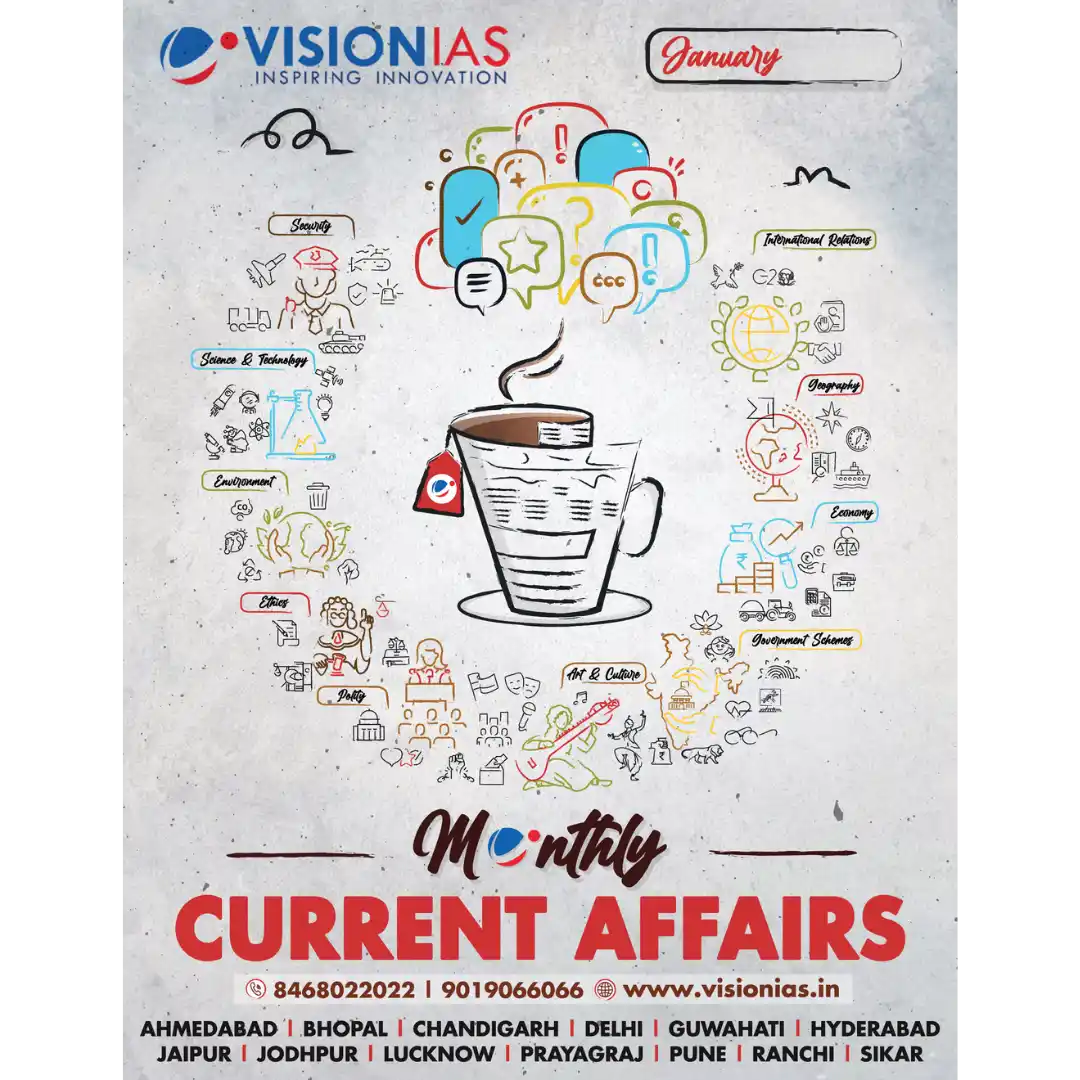
Because current affairs shift every month, a rolling monthly digest is the most efficient way to keep this section fresh — many aspirants pair static GK notes with a monthly magazine like Vision IAS Current Affairs Magazine to cover schemes, appointments and awards without drowning in newspapers.
SSC CGL Tier 2 Exam Pattern
Tier 2 is the decider. Under the current ssc cgl exam pattern, Tier 2 has three papers, but not every candidate sits all three:
- Paper I – compulsory for all posts.
- Paper II – only for those applying for Junior Statistical Officer (JSO).
- Paper III – only for Assistant Audit Officer / Assistant Accounts Officer (AAO) aspirants.
| Paper | Sections / Modules | Questions | Marks | Time |
|---|---|---|---|---|
| Paper I – Session 1 | Module 1: Mathematical Abilities; Module 2: Reasoning & General Intelligence | 30 + 30 | 180 | 1 hr |
| Paper I – Session 1 | Module 1: English; Module 2: General Awareness | 45 + 25 | 210 | 1 hr |
| Paper I – Session 2 | Module 1: Computer Knowledge Test | 20 | 60 | 15 min |
| Paper I – Session 2 | Module 2: Data Entry Speed Test (DEST) | 1 task | Qualifying | 15 min |
| Paper II | Statistics | 100 | 200 | 2 hr |
| Paper III | General Studies (Finance & Economics) | 100 | 200 | 2 hr |
Marking: Paper I Sections I & II carry 3 marks per question with 1 mark negative; the Computer Knowledge module carries 3 marks per question with 1 mark negative. Papers II and III carry 2 marks per question with 0.50 negative. The ssc cgl tier 2 syllabus for Paper I largely mirrors Tier 1 but goes deeper — expect tougher DI, higher-level algebra/geometry, and a longer English module.
Computer Knowledge Test (CKT)
Often buried on other pages, the Computer Knowledge module in Tier 2 Paper I is scoring and syllabus-limited. Topics: computer basics (organisation, hardware, software, memory), MS Office (Word, Excel, PowerPoint), internet & networking basics (WWW, browsers, email, services), cyber security fundamentals (viruses, firewalls, hacking, netiquette). Twenty focused hours can secure most of these 60 marks.
Data Entry Speed Test (DEST)
DEST is qualifying in nature (it does not add to merit) but you must clear it. You are given an English passage of about 2,000 key-depressions to type on a computer in 15 minutes — roughly 8,000 key depressions per hour. For posts like Tax Assistant, this is a hard requirement, so build typing speed with daily 15-minute drills rather than leaving it to exam day.
Tier 2 Paper II – Statistics Syllabus (for JSO)
Junior Statistical Officer aspirants sit Paper II, which tests statistics at graduate level. It is highly scoring for maths/stats graduates because the syllabus is fixed and formula-driven.
| Unit | Topics |
|---|---|
| Data Collection & Presentation | Primary/secondary data, classification, tabulation, graphs, frequency distribution |
| Measures of Central Tendency & Dispersion | Mean, median, mode, range, QD, mean deviation, standard deviation |
| Moments, Skewness & Kurtosis | Central and raw moments, measures of shape |
| Correlation & Regression | Scatter, Karl Pearson, rank correlation, lines of regression |
| Probability & Distributions | Theorems, Binomial, Poisson, Normal distributions |
| Sampling & Index Numbers | Sampling theory, estimation, index number methods & tests |
| Time Series & ANOVA | Components, trend measurement, analysis of variance |
Tier 2 Paper III – Finance & Economics (for AAO)
Assistant Audit Officer / Assistant Accounts Officer candidates take Paper III, split into two parts: Part A Finance & Accounts (80 marks) and Part B Economics & Governance (120 marks).
| Part | Key Topics |
|---|---|
| Finance & Accounts (80 marks) | Fundamentals of accounting, double-entry system, journals, ledgers, trial balance, financial statements, self-balancing ledgers |
| Economics & Governance (120 marks) | Comptroller & Auditor General, Finance Commission, demand-supply theory, production & cost, market forms, Indian economy, money & banking, economic reforms, role of IT in governance |
Which Is the Most Scoring Section in SSC CGL?
For most candidates, General Intelligence & Reasoning is the most scoring in Tier 1 because it needs no memorisation and has the highest speed-to-accuracy ratio. General Awareness is a close second on a per-minute basis. Quantitative Aptitude offers the biggest long-term payoff since it repeats in Tier 2 with heavier weight — so treat maths as your investment section and reasoning as your quick-win section. In Tier 2, the Mathematical Abilities and English modules together carry the lion’s share of merit marks, which is why serious aspirants front-load quant and vocabulary early in their timeline.
SSC CGL Preparation Strategy & Study Plan
Knowing the syllabus is half the job; sequencing it is the other half. Here is a realistic section-wise plan you can compress or expand around your exam date.
| Phase | Duration | Focus |
|---|---|---|
| Foundation | Weeks 1–6 | Arithmetic + advanced maths basics, English grammar rules, reasoning topic sweep |
| Concept Depth | Weeks 7–12 | Geometry/Trig/Algebra, GA static portions, vocabulary building, daily current affairs |
| Practice & PYQ | Weeks 13–18 | Topic-wise previous-year questions, sectional tests, speed drills, DEST typing |
| Full Mocks | Weeks 19–24 | Timed full-length mocks, error log review, revision of weak topics |
Two habits separate selected candidates from the rest. First, solve previous-year questions topic-wise — the SSC repeats patterns heavily, and drilling PYQs is the single highest-return activity; aspirants often use a structured PYQ compilation such as the Forum IAS Topic-Wise PYQ Toolkit to train question recognition even beyond a single exam. Second, take timed mock tests weekly from the concept-depth phase onward; a disciplined prelims-style test series builds the exam-clock temperament that no amount of untimed study can. Maintain an error log and revise it before every mock.
Common Mistakes to Avoid
- Ignoring negative marking and over-attempting — accuracy beats volume.
- Leaving GA current affairs for the last week instead of a monthly rolling habit.
- Studying advanced maths without first locking arithmetic accuracy.
- Skipping DEST typing practice until the interview stage.
- Preparing only for Tier 1 while neglecting the deeper Tier 2 quant/English.
Printable One-Page SSC CGL Syllabus Checklist
Tick each block as you finish it. Print this and stick it above your desk.
| Section | Must-Cover Blocks | Done? |
|---|---|---|
| Reasoning | Analogy, Series, Coding, Non-verbal, Puzzles | ☐ |
| Quant – Arithmetic | %, P&L, Ratio, TSD, Time&Work, SI/CI | ☐ |
| Quant – Advanced | Geometry, Trigonometry, Mensuration, Algebra, DI | ☐ |
| English | Vocab, Grammar, Error-spotting, Cloze, RC | ☐ |
| GA | Science, Polity, History, Geo, Economy, Current Affairs | ☐ |
| Tier 2 extras | Computer Knowledge, DEST typing | ☐ |
SSC CGL Syllabus PDF Download
For the authoritative, notification-linked syllabus, always cross-check the official ssc cgl syllabus pdf download from the annexure attached to the latest SSC CGL notification on ssc.gov.in. The PDF lists the exact modules, marks and marking scheme for Tier 1 and Tier 2 as reproduced above. Save the official annexure alongside this checklist so you always study to the current pattern rather than an outdated four-tier version. Bookmark this page for the topic-wise weightage and priority tags, which the bare official PDF does not provide.
Frequently Asked Questions
What is the syllabus of SSC CGL?
The SSC CGL syllabus covers four subjects in Tier 1 — General Intelligence & Reasoning, General Awareness, Quantitative Aptitude and English Comprehension — and a deeper Tier 2 with Mathematical Abilities, Reasoning, English, General Awareness, a Computer Knowledge Test and Data Entry Speed Test, plus optional Statistics (JSO) and Finance & Economics (AAO) papers.
How many subjects are there in SSC CGL Tier 1?
Tier 1 has four subjects, each with 25 questions and 50 marks, for a total of 100 questions and 200 marks in 60 minutes.
Is there negative marking in SSC CGL?
Yes. Tier 1 has 0.50 marks deducted per wrong answer. In Tier 2, Paper I Sections I & II and the Computer module deduct 1 mark per wrong answer, while Papers II and III deduct 0.50 marks.
Is SSC CGL Tier 1 qualifying in nature?
Yes. Tier 1 is qualifying-cum-screening only; its marks do not count toward the final merit list. Final selection and post allocation are based on Tier 2 marks.
Is computer knowledge included in the SSC CGL syllabus?
Yes. A Computer Knowledge Test is part of Tier 2 Paper I (Session 2), covering computer basics, MS Office, internet/networking and cyber-security fundamentals, along with a qualifying Data Entry Speed Test.
How many attempts are allowed for SSC CGL?
There is no fixed limit on the number of attempts for SSC CGL. You can appear as many times as you like as long as you meet the age-limit eligibility (which varies by post and category) for that year’s notification.
Recommended Study Material

Continue Reading
SSC CGL Exam Pattern 2026: Tier 1 & Tier 2 Marks, Marking Scheme & PDF
The SSC CGL exam pattern follows a two-stage, fully computer-based structure: Tier 1 and Tier 2. Tier 1…
RRB JE Syllabus 2026: CBT 1 & 2 Topics, Pattern + PDF
The rrb je syllabus spans two computer-based stages: CBT 1 (100 marks / 90 minutes — Mathematics, General…

CGPSC Syllabus 2026: Prelims, Mains Pattern + PDF Download
The cgpsc syllabus for 2026 covers a three-stage State Service Examination conducted by the Chhattisgarh Public Service Commission:…