SSC CGL Exam Pattern 2026: Tier 1 & 2, Marks + PDF
SSC CGL exam pattern 2026 explained: Tier 1 & Tier 2 sections, questions, marks, duration, negative marking, DEST and which tier decides final selection.

The SSC CGL exam pattern for 2026 follows a two-tier, fully computer-based structure: Tier 1 is a 100-question, 200-mark qualifying screening test of 60 minutes, and Tier 2 is the scoring stage that decides your final rank. Tier 1 carries four sections (Reasoning, General Awareness, Quantitative Aptitude and English) with 25 questions each, while Tier 2 Paper 1 is compulsory for all posts and carries 450 marks across mathematics, reasoning, English, general awareness, computer knowledge and a Data Entry Speed Test (DEST). Negative marking applies at every objective stage, and only Tier 2 marks count for final selection.
Key takeaways at a glance:
- Tiers: 2 (Tier 1 qualifying, Tier 2 merit-deciding).
- Tier 1: 100 questions, 200 marks, 60 minutes, 4 sections, no sectional timing.
- Tier 2 Paper 1: 150 scored questions, 450 marks, plus Computer Knowledge + DEST.
- Negative marking: 0.50 in Tier 1; up to 1 mark in Tier 2 Paper 1.
- Final selection: Tier 2 only, on normalized scores.
Compiled and fact-checked by the Competer exam desk against the latest SSC Combined Graduate Level notification and the Commission’s marking scheme. Always confirm figures against the official notification PDF before your exam, as the Commission can revise details year to year.
SSC CGL Exam Pattern 2026 at a Glance (Cheat-Sheet)
Before the detailed breakdown, here is the entire SSC CGL exam pattern 2026 compressed into one summary table you can screenshot and keep. This is the fastest way to understand how many stages, questions, marks and minutes stand between you and a Group B/C posting like Income Tax Inspector, Assistant Section Officer or Auditor.
| Stage | Type | Questions | Total Marks | Duration | Negative Marking | Role in Selection |
|---|---|---|---|---|---|---|
| Tier 1 | Objective (MCQ), CBT | 100 | 200 | 60 minutes | 0.50 per wrong answer | Qualifying / screening |
| Tier 2 – Paper 1 | Objective + DEST, CBT | 150 + DEST | 450 | 2 hr 30 min (approx.) | 1 mark (Sec 1 & 2), 0.50 (computer) | Merit-deciding for all posts |
| Tier 2 – Paper 2 | Objective (Statistics) | 100 | 200 | 2 hours | 0.50 per wrong answer | JSO posts only |
| Tier 2 – Paper 3 | Objective (Fin. & Eco.) | 100 | 200 | 2 hours | 0.50 per wrong answer | AAO posts only |
Keep this cheat-sheet handy through your prep. If you want a printable version, we link an exam pattern + syllabus PDF lower in this guide.
How Many Tiers Are There in SSC CGL 2026?
SSC CGL 2026 has two tiers. This is one of the most important updates for aspirants who studied the older four-stage format. The Staff Selection Commission moved the Combined Graduate Level examination to a streamlined two-tier structure, scrapping the separate descriptive paper (old Tier 3) and the standalone skill test (old Tier 4). The typing and data entry skill assessment did not disappear — it was folded into Tier 2 Paper 1 as the DEST module.
- Tier 1: A common qualifying test for every candidate, regardless of the post applied for.
- Tier 2: The decisive stage. It contains Paper 1 (compulsory for all), Paper 2 (only for Junior Statistical Officer applicants) and Paper 3 (only for Assistant Audit Officer / Assistant Accounts Officer applicants).
Because Tier 1 is only a screening filter, your entire final merit is built on Tier 2. Understanding this early changes how you should invest your study hours.
SSC CGL Tier 1 Exam Pattern
The SSC CGL Tier 1 exam pattern is identical for all candidates. It is a one-hour computer-based test with 100 objective questions worth 2 marks each, split equally across four sections. There is no descriptive component and no sub-choice — every question is multiple choice with four options.
| Section | Subject | No. of Questions | Maximum Marks | Marks per Question |
|---|---|---|---|---|
| A | General Intelligence & Reasoning | 25 | 50 | 2 |
| B | General Awareness | 25 | 50 | 2 |
| C | Quantitative Aptitude | 25 | 50 | 2 |
| D | English Comprehension | 25 | 50 | 2 |
| Total | 100 | 200 | — | |
What Is the Exam Pattern of SSC CGL Tier 1?
In short: 100 questions, 200 marks, 60 minutes (80 minutes for candidates eligible for scribes/PwBD), four sections of 25 questions each, and 0.50 negative marking. The test is conducted entirely online (CBT) at designated centres. The medium is bilingual (English and Hindi) except for the English Comprehension section. There is no fixed cut-off displayed inside the exam — you must clear an overall qualifying standard set by the Commission that year.
How Many Questions Are Asked in SSC CGL Tier 1?
Exactly 100 questions are asked in Tier 1 — 25 each from General Intelligence & Reasoning, General Awareness, Quantitative Aptitude and English Comprehension. At 2 marks per question, that is 200 marks in 60 minutes, giving you an average of just 36 seconds per question. Speed and accuracy together decide your Tier 1 score.
Is There Sectional Timing in SSC CGL Tier 1?
No. There is no official sectional timing in SSC CGL Tier 1. You get a single 60-minute window to attempt all 100 questions in any order you like, and you can move freely between sections. This is a crucial distinction from banking exams like IBPS PO, which lock each section to a fixed time.
That said, smart aspirants self-impose a soft budget of roughly 15 minutes per section so that no single subject eats the clock. The table below shows a recommended, not mandatory, time allocation that helps you finish with a few minutes to spare for review.
| Attempt Order | Section | Suggested Time | Why This Order |
|---|---|---|---|
| 1st | General Awareness | 7-8 minutes | Memory-based, no calculation — bank easy marks fast |
| 2nd | English Comprehension | 10-12 minutes | Quick reading & grammar; low time cost per question |
| 3rd | General Intelligence & Reasoning | 15 minutes | High-scoring and logical; steady pace |
| 4th | Quantitative Aptitude | 18-20 minutes | Most time-hungry; keep buffer time here |
The logic is simple: clear the fast, high-accuracy sections (GA and English) early to lock in marks, then give your remaining minutes to Quant, which is the biggest time sink. Because there is no sectional cut-off in Tier 1, an aggressive Quant attempt can lift your overall score — but never at the cost of leaving easy GA and English marks on the table.
SSC CGL Tier 2 Exam Pattern
The SSC CGL Tier 2 exam pattern is where selection is actually decided. Tier 2 has three papers, but not everyone sits for all three. Paper 1 is compulsory for every shortlisted candidate. Paper 2 and Paper 3 are post-specific and only apply if you applied for statistical or accounts/audit roles.
SSC CGL Tier 2 Paper 1 Pattern (Compulsory for All Posts)
Paper 1 is a multi-section, multi-module test worth 450 marks. Each objective question carries 3 marks. It is organised into three sections; Section 3 additionally contains the Computer Knowledge Test and the Data Entry Speed Test (DEST).
| Section | Module | Subject | Questions | Marks | Time |
|---|---|---|---|---|---|
| Section 1 | Module 1 | Mathematical Abilities | 30 | 90 | 1 hour |
| Section 1 | Module 2 | Reasoning & General Intelligence | 30 | 90 | |
| Section 2 | Module 1 | English Language & Comprehension | 45 | 135 | 1 hour |
| Section 2 | Module 2 | General Awareness | 25 | 75 | |
| Section 3 | Module 1 | Computer Knowledge Test | 20 | 60 | 15 minutes |
| Section 3 | Module 2 | Data Entry Speed Test (DEST) | — | Qualifying | 15 minutes |
| Total (scored) | 150 | 450 | — | ||
So Paper 1 has 150 scored questions for 450 marks: 60 in Section 1, 70 in Section 2 and 20 in the Computer Knowledge module of Section 3. The DEST module does not add marks — more on that below.
SSC CGL Tier 2 Paper 2 and Paper 3 Pattern
Papers 2 and 3 are attempted only by candidates who applied for specific posts. Both are objective, 100 questions, 200 marks and 2 hours long.
| Paper | For Which Post | Subject | Questions | Marks | Duration |
|---|---|---|---|---|---|
| Paper 2 | Junior Statistical Officer (JSO) | Statistics | 100 | 200 | 2 hours |
| Paper 3 | Assistant Audit/Accounts Officer (AAO) | General Studies (Finance & Economics) | 100 | 200 | 2 hours |
If you applied only for general Group B/C posts (Inspector, ASO, Auditor, Tax Assistant, UDC, etc.), you appear for Paper 1 alone and are done with the written stage.
DEST & Computer Knowledge in Tier 2: The Module Everyone Skips
Most competing guides bury the skill-test module inside a table and never explain it clearly. Here is the standalone breakdown that aspirants actually search for.
Computer Knowledge Test (Section 3, Module 1): This is a scored, 20-question, 60-mark objective module testing computer basics — organisation of a computer, internet and email, MS Office, working with the internet, and networking/cyber-security fundamentals. It carries negative marking of 0.50 per wrong answer and its marks are added to your Paper 1 total.
Data Entry Speed Test (Section 3, Module 2 – DEST): DEST checks your typing speed on a computer. You must type a passage of about 2,000 key depressions in 15 minutes (roughly 8,000 key depressions per hour). For most posts DEST is qualifying in nature — it does not add to your merit score, but you must meet the required speed. For the post of Tax Assistant (CBIC & CBDT), DEST is a specific requirement of 8,000 key depressions per hour, so accuracy and typing practice matter more if that is your target post.
Bottom line: even strong candidates lose selections by ignoring DEST. Build 15 minutes of daily typing practice into your Tier 2 routine well before the exam.
SSC CGL Negative Marking Rules
Yes, there is SSC CGL negative marking at every objective stage, and the penalty is not the same across papers. Getting this wrong in your head during the exam can silently drag your normalized score down.
| Stage / Paper | Marks per Correct Answer | Negative Marking per Wrong Answer |
|---|---|---|
| Tier 1 (all sections) | +2 | −0.50 |
| Tier 2 Paper 1 – Section 1 & 2 | +3 | −1.00 |
| Tier 2 Paper 1 – Computer Knowledge | +3 | −0.50 |
| Tier 2 Paper 2 (Statistics) | +2 | −0.50 |
| Tier 2 Paper 3 (Finance & Eco.) | +2 | −0.50 |
Is There Negative Marking in SSC CGL Exam?
Yes. In Tier 1 you lose 0.50 marks for every wrong answer. In Tier 2 Paper 1 the penalty is steeper — a full 1 mark is deducted for each wrong answer in the Mathematical Abilities, Reasoning, English and General Awareness sections, while the Computer Knowledge module and Papers 2 and 3 deduct 0.50. This is why blind guessing in Tier 2 Paper 1 is especially dangerous; a wrong guess costs you the equivalent of one-third of a correct answer. Note that unattempted questions carry no penalty, so a calculated skip often beats a random guess.
Total Marks and Duration of SSC CGL
Here is the consolidated SSC CGL total marks and duration view. Remember that for merit purposes, only Tier 2 counts — Tier 1’s 200 marks simply decide who advances.
| Stage | Total Marks | Total Duration | Counts Toward Final Merit? |
|---|---|---|---|
| Tier 1 | 200 | 60 minutes | No (qualifying only) |
| Tier 2 Paper 1 | 450 | ~2 hr 30 min | Yes (all posts) |
| Tier 2 Paper 2 | 200 | 2 hours | Yes (JSO posts) |
| Tier 2 Paper 3 | 200 | 2 hours | Yes (AAO posts) |
What Is the Total Marks of SSC CGL Tier 1 and Tier 2?
SSC CGL Tier 1 is 200 marks and Tier 2 Paper 1 is 450 marks. Candidates for JSO and AAO posts sit additional 200-mark papers (Paper 2 or Paper 3 respectively). For a general-post aspirant, the entire merit is built on the 450 marks of Tier 2 Paper 1.
Which Tier Is Counted for Final Selection in SSC CGL?
Only Tier 2 is counted for final selection. Tier 1 is a screening test — you must clear it to qualify for Tier 2, but its marks are not carried into the final merit list. Your rank, and therefore the post and department you are allotted, depends entirely on your Tier 2 performance (Paper 1 for everyone, plus Paper 2 or 3 for statistical/accounts posts), followed by document verification.
The practical takeaway: never treat Tier 1 as “the real exam.” Clear it comfortably, then pour your best effort into Tier 2, because that is the stage that turns a qualified candidate into a selected officer.
How Multi-Shift Normalization Affects Your Score
SSC conducts CGL across multiple shifts and days because of the huge applicant pool. Since different shifts get different question sets that may vary slightly in difficulty, the Commission applies normalization — a statistical adjustment that converts raw marks into comparable normalized scores across shifts.
What this means for you:
- Your displayed merit is the normalized score, not your raw marks, in both Tier 1 and Tier 2.
- You cannot control which shift you get, so obsessing over “my shift was harder” is wasted energy — normalization is designed to neutralise exactly that.
- Accuracy still wins. Because negative marking is applied to raw marks before normalization, reducing silly errors is the single most reliable way to lift your normalized score.
Tie this back to cut-offs: SSC releases category-wise cut-offs on normalized scores. A difference of even 1-2 marks can shift your rank by hundreds of places, which is why the marks-vs-time strategy in the earlier tables matters so much.
Old vs New SSC CGL Exam Pattern
If you are searching for whether the pattern “changed,” here is the reassuring comparison. The move to a two-tier system is the biggest structural change, so anything you read describing three or four separate tiers is outdated.
| Feature | Old Pattern (pre-2022) | New / Latest Pattern (2026) |
|---|---|---|
| Number of tiers | 4 (Tier 1, 2, 3, 4) | 2 (Tier 1, Tier 2) |
| Descriptive paper | Separate Tier 3 (pen-paper) | Removed |
| Skill/typing test | Separate Tier 4 | Merged into Tier 2 as DEST module |
| Tier 1 marks | 200 | 200 (qualifying) |
| Tier 2 main paper marks | 200 per paper | 450 (Paper 1) |
| Computer knowledge | Qualifying CPT | Scored module in Paper 1 |
| Merit basis | Tier 1 + Tier 2 + Tier 3 | Tier 2 only |
What Is the Difference Between SSC CGL Tier 1 and Tier 2?
Tier 1 is a short 60-minute, 200-mark qualifying screening test with four equal sections and no merit weight. Tier 2 is a longer, higher-stakes merit-deciding stage with 450 marks in Paper 1 (plus post-specific Papers 2/3), a scored computer module, DEST typing test and heavier negative marking. Put simply: Tier 1 decides if you continue; Tier 2 decides your rank and posting.
Post-Wise Paper Mapping: Which Papers Do You Sit For?
A common confusion is which Tier 2 papers apply to you. It depends entirely on the post you applied for. Use this map.
| Post Applied For | Paper 1 | Paper 2 (Statistics) | Paper 3 (Fin. & Eco.) |
|---|---|---|---|
| Income Tax Inspector, ASO, Inspector (CBIC), Auditor, Accountant, UDC, Tax Assistant, etc. | Yes | No | No |
| Junior Statistical Officer (JSO) | Yes | Yes | No |
| Assistant Audit Officer / Assistant Accounts Officer (AAO) | Yes | No | Yes |
Everyone writes Paper 1. Only pick up Paper 2 or Paper 3 preparation if you specifically applied for JSO or AAO posts — otherwise those subjects are irrelevant to your merit.
Pattern-Based Preparation Strategy & Study Material
Once you internalise the pattern, your prep should mirror it. Marks concentrate in three high-weight areas across both tiers — Quantitative Aptitude / Mathematical Abilities, General Awareness, and English — so those deserve proportional study time. Here is how to convert the pattern into an action plan.
Section-Wise Focus Aligned to Marks
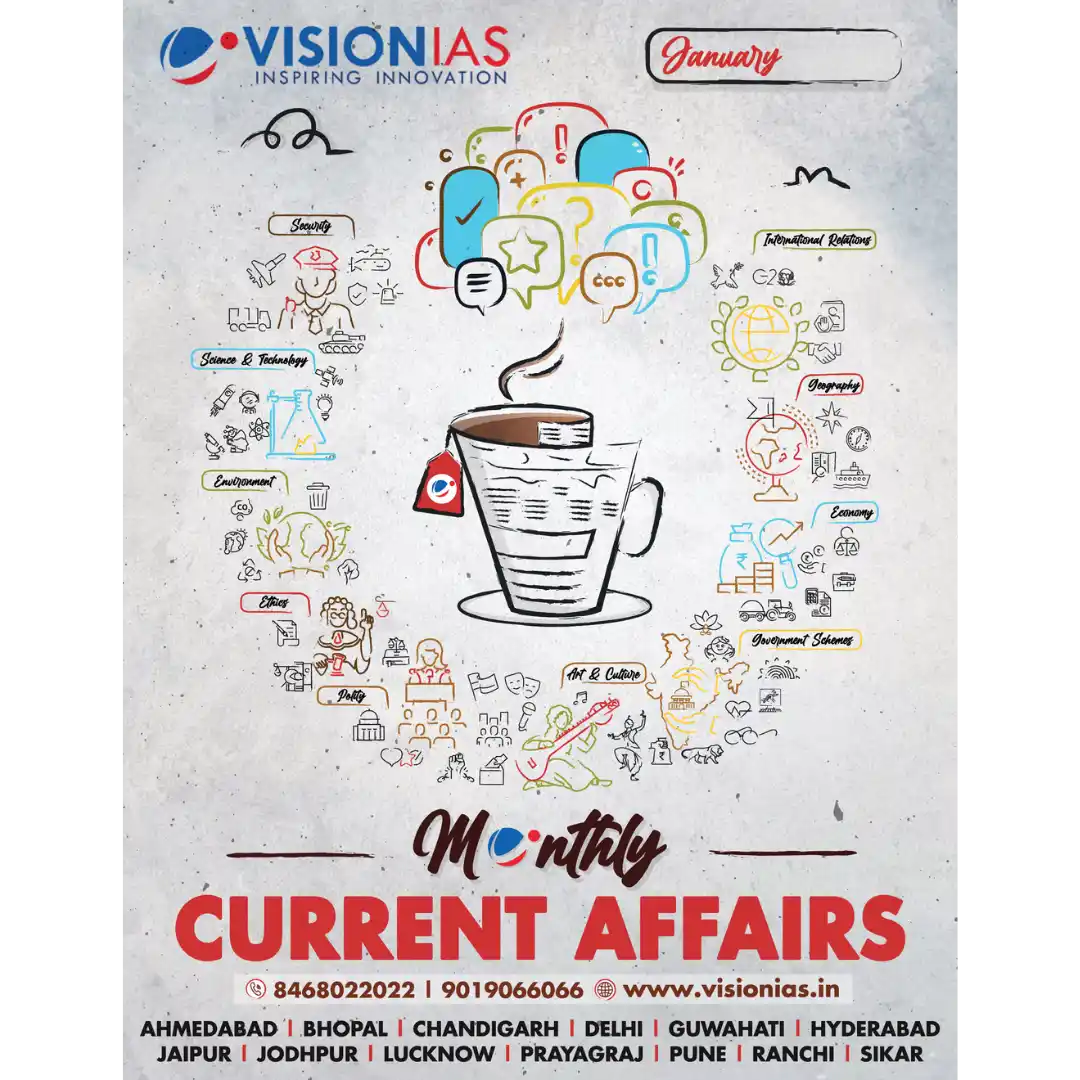
- General Awareness & current affairs: High return per hour because there is no calculation. GA appears in both Tier 1 (50 marks) and Tier 2 Paper 1 (75 marks). A disciplined daily current-affairs habit pays off across the whole exam — a monthly compilation like the Vision IAS Current Affairs Magazine (January 2026) keeps static-plus-dynamic GA in one place.
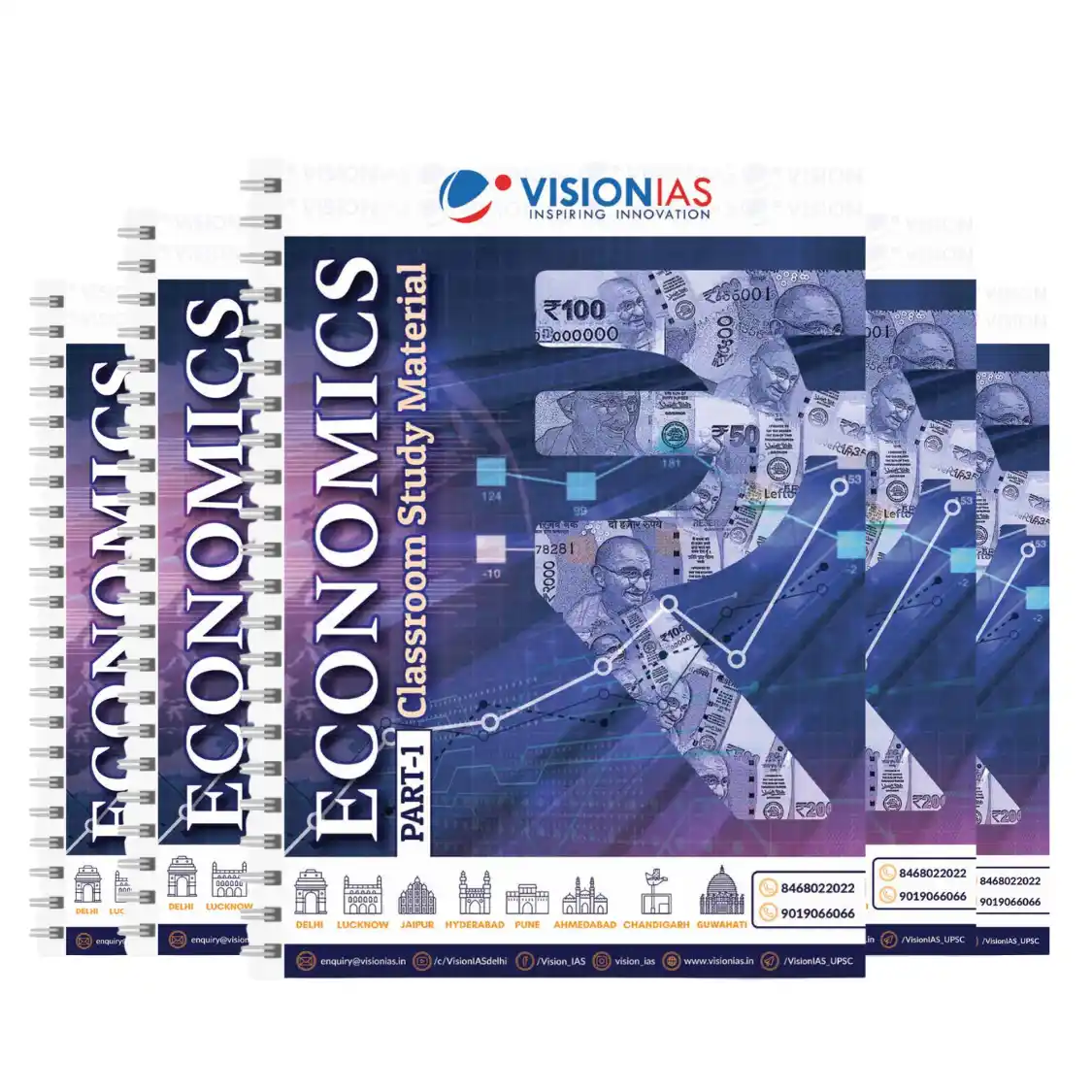
- Economy & finance for GA/Paper 3: Economics questions recur in General Awareness and form the core of Paper 3 for AAO aspirants. Structured notes such as the Vision IAS Economics Notes and Vajiram Polity Notes help you cover the static portion of GA that repeats year after year.
- Quant & Reasoning: These reward practice, not reading. Build speed with timed drills and previous-year sets so your 36-seconds-per-question pace becomes automatic.
- English: Grammar, vocabulary and comprehension carry a big 135-mark share in Tier 2 Paper 1 — the single largest module. Do not treat it as an afterthought.
Practice With Previous-Year Questions
SSC repeats concepts and even question frames heavily. Solving topic-wise previous-year papers under a timer is the fastest way to reverse-engineer the pattern and spot high-frequency topics. A consolidated PYQ resource such as the Forum IAS Topic-Wise PYQ Toolkit is useful for building the GS/GA and reasoning muscle that overlaps with SSC-style questions, alongside dedicated SSC mock tests.
Common Mistakes That Cost Selections
- Guessing blindly in Tier 2 Paper 1 where each wrong answer costs a full 1 mark.
- Neglecting DEST typing practice until the last week.
- Over-investing in Tier 1 (which is only qualifying) and under-preparing Tier 2 (which decides rank).
- Ignoring the Computer Knowledge module — 60 easy marks that many candidates leave on the table.
Download SSC CGL Exam Pattern & Syllabus PDF
For offline revision, save the official SSC CGL exam pattern and syllabus from the notification PDF on ssc.gov.in, which carries the exact section-wise structure, marks and DEST requirements shown above. Pair the one-page cheat-sheet at the top of this guide with the official syllabus PDF, and you have a complete, exam-ready reference. For deeper coverage of topics under each section, see our companion SSC CGL syllabus and preparation guides on Competer.
Frequently Asked Questions
How many tiers are there in SSC CGL 2026?
SSC CGL 2026 has two tiers. Tier 1 is a qualifying screening test, and Tier 2 (Paper 1 for all posts, plus Paper 2 or Paper 3 for statistical and accounts/audit posts) is the merit-deciding stage. The earlier separate descriptive paper and skill test have been merged or removed, with the DEST typing test now part of Tier 2 Paper 1.
Is there negative marking in the SSC CGL exam?
Yes. Tier 1 deducts 0.50 marks per wrong answer. Tier 2 Paper 1 deducts a full 1 mark for each wrong answer in the Mathematics, Reasoning, English and General Awareness sections, and 0.50 in the Computer Knowledge module. Papers 2 and 3 deduct 0.50 per wrong answer.
Which tier is counted for final selection in SSC CGL?
Only Tier 2 is counted for final selection. Tier 1 is qualifying and its marks are not added to the final merit list. Your rank and post allotment depend on your Tier 2 marks — Paper 1 for every candidate, plus Paper 2 or Paper 3 for JSO and AAO posts respectively.
How many questions are asked in SSC CGL Tier 1?
Tier 1 has 100 questions worth 200 marks — 25 questions each from General Intelligence & Reasoning, General Awareness, Quantitative Aptitude and English Comprehension. Each question carries 2 marks, and the total time allowed is 60 minutes (80 minutes for eligible PwBD candidates).
Is there sectional timing in SSC CGL Tier 1?
No. SSC CGL Tier 1 has a single 60-minute window for all 100 questions with no sectional lock, so you can move freely between sections. Aspirants often self-allocate around 15 minutes per section as a strategy, but this is a personal plan, not an official rule.
What is the total marks of SSC CGL Tier 1 and Tier 2?
Tier 1 is 200 marks and Tier 2 Paper 1 is 450 marks. Candidates applying for Junior Statistical Officer or Assistant Audit/Accounts Officer posts also sit an additional 200-mark paper (Paper 2 or Paper 3). Only the Tier 2 marks count toward the final merit list.
What is the difference between SSC CGL Tier 1 and Tier 2?
Tier 1 is a 60-minute, 200-mark qualifying test with four equal sections and no merit weight, meant only to screen candidates. Tier 2 is the merit-deciding stage: Paper 1 carries 450 marks with a scored Computer Knowledge module and a DEST typing test, plus post-specific Papers 2 and 3, and it uses heavier negative marking. Tier 1 decides if you advance; Tier 2 decides your rank and posting.
Is the SSC CGL exam online or offline?
The SSC CGL exam is conducted fully online as a computer-based test (CBT) at designated exam centres for both Tier 1 and Tier 2. There is no pen-and-paper stage in the current two-tier pattern; even the Data Entry Speed Test in Tier 2 Paper 1 is taken on a computer.
What is a good score in SSC CGL Tier 1?
Tier 1 is only qualifying, so there is no single “good score” beyond clearing the category-wise cut-off set by the Commission for that cycle. As a working target, general-category aspirants usually aim well above the cut-off — often around 140–160+ out of 200 in competitive cycles — to advance comfortably, but remember these marks do not carry into your final merit, which is built entirely on Tier 2.
Recommended Study Material

Continue Reading

How to Prepare for UPSC 2026: Step-by-Step Beginner Roadmap (No Coaching Needed)
To prepare for UPSC, start by understanding the three-stage Civil Services Exam (Prelims, Mains and Interview), read the…
CAPF Syllabus 2026: Paper 1 & 2, Pattern + PDF
The CAPF syllabus for the UPSC Assistant Commandant (AC) exam is built around two written papers plus a…
KPSC Syllabus 2026: KAS Prelims, Mains, Pattern + PDF
The KPSC syllabus for the KAS (Gazetted Probationers) exam is a three-stage structure: a Prelims screening test with…