SSC CGL Syllabus 2025: Tier 1 & 2 Topic-Wise + PDF
SSC CGL syllabus 2025 for Tier 1 & Tier 2: full topic-wise breakdown, exam pattern, marks, negative marking, weightage, JSO/AAO papers and official PDF.

The SSC CGL syllabus is split across two computer-based stages: Tier 1 — a qualifying 100-question screening test worth 200 marks — and Tier 2, the merit-deciding stage. Tier 1 covers four sections: General Intelligence & Reasoning, General Awareness, Quantitative Aptitude and English Comprehension. Tier 2 expands these into Paper 1 (compulsory for all posts — Maths, Reasoning, English, General Awareness, Computer Knowledge and a Data Entry Speed Test), plus Paper 2 (Statistics, for JSO posts) and Paper 3 (General Studies – Finance & Economics, for AAO posts). Below you get the full topic-wise syllabus, exam pattern, marks, negative marking, topic-wise weightage, a priority table and the official PDF download link — everything in one place.
SSC CGL Syllabus 2025 – Quick Overview
Before diving into the detailed ssc cgl syllabus 2025, here is the highlights table every aspirant should memorise. The Staff Selection Commission conducts the Combined Graduate Level examination annually to recruit Group B and Group C officers for ministries, departments and organisations under the Government of India.
| Feature | Details |
|---|---|
| Conducting Body | Staff Selection Commission (SSC) |
| Exam Name | Combined Graduate Level (CGL) Examination |
| Number of Tiers | 2 (Tier 1 and Tier 2) |
| Mode of Exam | Online (Computer Based Test) |
| Tier 1 Total Marks | 200 (qualifying in nature) |
| Tier 2 Total Marks | Paper 1: 450 | Paper 2 & 3: 200 each |
| Marking Scheme | Tier 1: +2 per question | Tier 2 Paper 1: +3 per question |
| Negative Marking | Tier 1: −0.50 | Tier 2 Paper 1: −1 | Paper 2 & 3: −0.50 |
| Language | English & Hindi (except English section) |
| Selection Process | Tier 1 → Tier 2 → Document Verification |
All figures below reflect the pattern in force since the 2022 restructuring; verify vacancy-specific details against the latest SSC notification before you apply.
SSC CGL Exam Pattern 2025
Understanding the ssc cgl exam pattern is the first step to decoding the syllabus, because marks, timing and negative marking decide where you invest your preparation hours. SSC has followed a two-tier structure since the 2022 revision, and both tiers are fully computer-based.
SSC CGL Tier 1 Exam Pattern
The ssc cgl tier 1 syllabus is delivered through a single 60-minute paper of 100 objective questions worth 200 marks. Each correct answer earns 2 marks and each wrong answer deducts 0.50 marks. There is no enforced sectional lock in Tier 1 — all four sections open together — but smart aspirants self-allot roughly 15 minutes per section to stay on pace.
| Section | No. of Questions | Maximum Marks | Duration |
|---|---|---|---|
| General Intelligence & Reasoning | 25 | 50 | 60 Minutes (80 min for PwD scribe users) |
| General Awareness | 25 | 50 | |
| Quantitative Aptitude | 25 | 50 | |
| English Comprehension | 25 | 50 | |
| Total | 100 | 200 |
Key point: Tier 1 is qualifying in nature. Since the 2022–23 cycle, Tier 1 marks are NOT added to the final merit list — you only need to clear the category-wise cut-off to advance to Tier 2. This single fact should reshape your strategy (more on this below).
SSC CGL Tier 2 Exam Pattern
The ssc cgl tier 2 syllabus is where the real scoring happens. Tier 2 now consists of three papers. Paper 1 is compulsory for all posts; Paper 2 is only for candidates applying for Junior Statistical Officer (JSO); Paper 3 is only for Assistant Audit Officer / Assistant Accounts Officer (AAO) aspirants.
| Paper | Sections / Modules | Questions | Marks | Duration |
|---|---|---|---|---|
| Paper 1 (all posts) | Section 1 – Mathematical Abilities + Reasoning & General Intelligence | 30 + 30 | 180 | 1 hour |
| Section 2 – English Language & Comprehension + General Awareness | 45 + 25 | 210 | 1 hour | |
| Section 3 Module 1 – Computer Knowledge Test | 20 | 60 | 15 min | |
| Section 3 Module 2 – Data Entry Speed Test (DEST) | 1 Data Entry Task | Qualifying | 15 min | |
| Paper 2 | Statistics (JSO posts) | 100 | 200 | 2 hours |
| Paper 3 | General Studies – Finance & Economics (AAO posts) | 100 | 200 | 2 hours |
Each question in Paper 1 carries 3 marks. Negative marking is −1 for every wrong answer in Paper 1 (Sections 1, 2 and the Computer Knowledge Module), and −0.50 in Papers 2 and 3. The Computer Knowledge Module and DEST module together form Section 3; the Computer Knowledge Test is now merit-counting, while DEST is qualifying only.
SSC CGL Selection Process 2025
The selection funnel is straightforward: clear Tier 1 → appear for Tier 2 → qualify skill tests (DEST/CPT where applicable) → Document Verification → final merit based on Tier 2 marks. Because Tier 1 only screens candidates, the final rank is decided entirely by Tier 2 performance. This is the single biggest difference between the two stages and the reason your study plan must be Tier-2-weighted from day one.
Detailed SSC CGL Tier 1 Syllabus 2025
Here is the complete subject-wise breakdown of the ssc cgl tier 1 syllabus. The four sections carry equal marks (50 each), but the effort required and the return on that effort differ sharply — which is why we’ve paired each subject with its high-yield topics.
SSC CGL Tier 1 Reasoning Syllabus (General Intelligence)
This section is non-mathematical and tests logical and analytical ability. It is the most scoring section per unit of effort in Tier 1.
- Analogies (semantic, symbolic, number)
- Classification / Odd one out
- Series (number, alphabet, mixed)
- Coding-Decoding
- Blood Relations
- Direction Sense
- Order and Ranking
- Syllogism
- Venn Diagrams
- Mathematical/Statement–Conclusion reasoning
- Mirror & Water Image
- Paper Folding & Cutting
- Embedded & Hidden Figures
- Cube and Dice
- Matrix / Number-based grid problems
- Word Formation and Dictionary order
SSC CGL Tier 1 Quantitative Aptitude Syllabus
Quant is the highest-value section for long-term scoring because the same concepts recur in Tier 2. Master these once and you cover both stages.
- Number System, LCM & HCF, Simplification
- Percentage, Ratio & Proportion, Average
- Profit, Loss & Discount
- Simple Interest & Compound Interest
- Time, Speed & Distance; Boats & Streams
- Time & Work, Pipes & Cisterns
- Partnership, Mixture & Alligation
- Algebra (elementary surds, identities, linear equations)
- Geometry (triangles, circles, tangents, congruence)
- Mensuration (2D & 3D — cone, cylinder, sphere, prism)
- Trigonometry & Heights and Distances
- Data Interpretation (bar graph, pie chart, tables)
SSC CGL Tier 1 English Comprehension Syllabus
English is the fastest section to attempt if your vocabulary and grammar are strong. It rewards daily practice over last-minute cramming.
- Reading Comprehension
- Cloze Test
- Spotting Errors & Sentence Correction
- Fill in the Blanks
- Synonyms & Antonyms
- Spellings / Detecting misspelt words
- Idioms & Phrases
- One Word Substitution
- Active/Passive Voice
- Direct/Indirect Narration
- Para Jumbles (sentence rearrangement)
- Improvement of Sentences
SSC CGL Tier 1 General Awareness Syllabus
General Awareness is the make-or-break section for time management because there is no calculation — you either know the answer or you don’t. Static GK plus current affairs dominate here.
- Indian History & Freedom Movement
- Indian & World Geography
- Indian Polity & Constitution
- Economics (basic concepts, budget, banking)
- General Science (Physics, Chemistry, Biology)
- Static GK (books, awards, sports, important days)
- Current Affairs (last 6–8 months)
- Art & Culture, Schemes & Committees
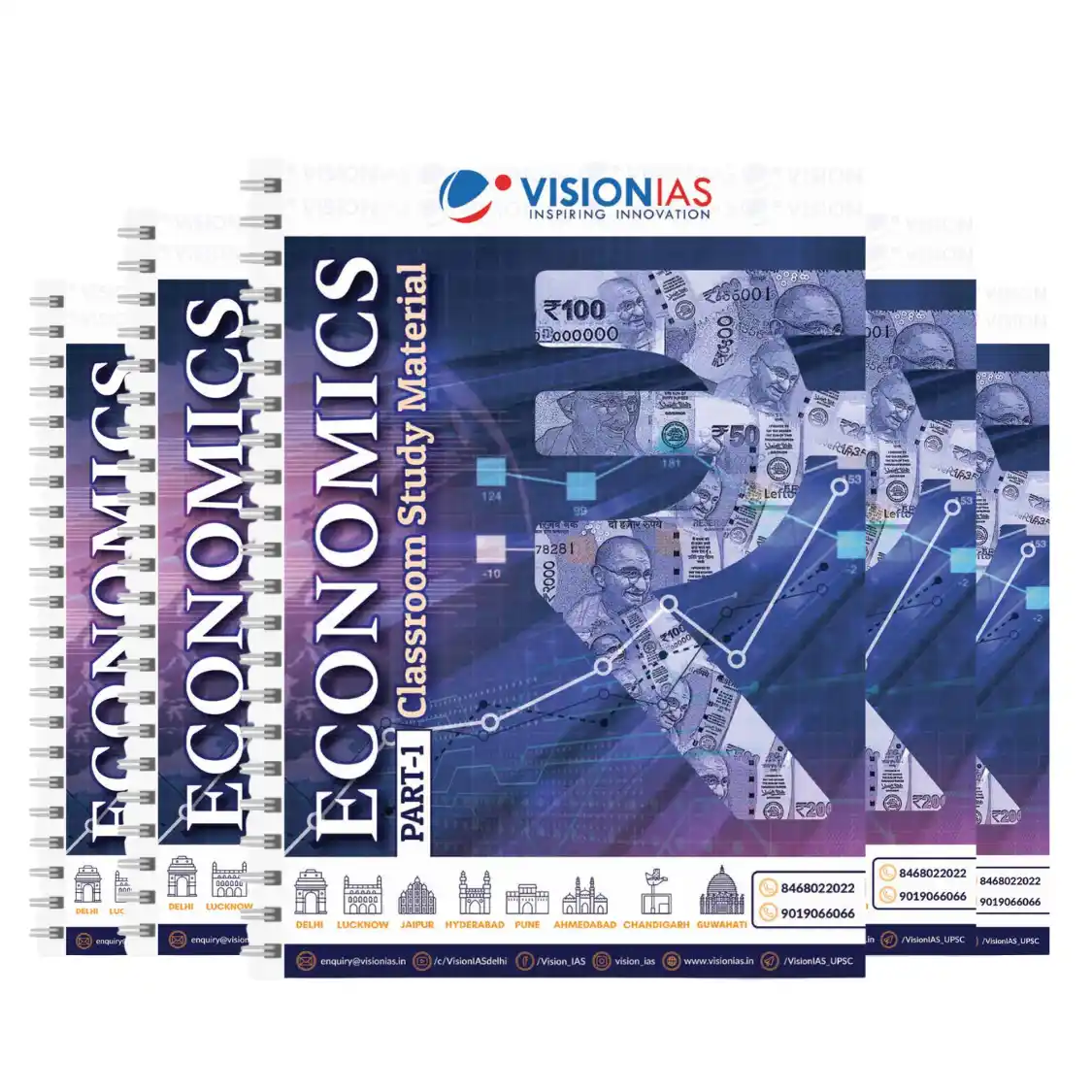
A strong economy and polity base built for competitive exams pays off across GA. Aspirants who want ready, exam-oriented notes often use structured booklets such as the Vision IAS Economics Notes to lock down banking, budget and macroeconomic terms that repeatedly appear in the SSC CGL General Awareness section.
Comprehensive SSC CGL Tier 2 Syllabus 2025
The ssc cgl tier 2 syllabus for Paper 1 mirrors Tier 1 but goes deeper. Because Paper 1 decides your final rank, this is where the bulk of your marks are earned. Below is the module-wise topic list.
Module 1 – Mathematical Abilities
Everything from Tier 1 Quant, plus a heavier emphasis on advanced Algebra, Geometry, Trigonometry and multi-step Data Interpretation. Expect longer, more calculation-intensive problems. A scientific calculator is permitted in Tier 2 (confirm this in the current notification), so accuracy matters more than raw speed.
Module 2 – Reasoning and General Intelligence
All Tier 1 reasoning topics continue, with additional weight on Series, Coding-Decoding, Analogy, Classification, Matrix, Direction and non-verbal figure problems. The difficulty rises but the concepts stay the same.
Module 1 (Section 2) – English Language and Comprehension
This 45-question module is the single largest scoring block in Paper 1. It covers vocabulary, grammar, error spotting, cloze tests, para jumbles, one-word substitutions, idioms, and multiple Reading Comprehension passages. Consistent readers routinely clear 130+ marks here.
Module 2 (Section 2) – General Awareness
Same static + current affairs universe as Tier 1, but questions are sharper. History, Polity, Geography, Economy, Science and Current Affairs remain the six pillars.
Module 1 (Section 3) – Computer Knowledge Test
This 20-question, 60-mark module is where many aspirants lose easy marks by underestimating it. The syllabus includes:
- Computer Basics — organisation of a computer, CPU, input/output devices, memory
- Software — operating systems, MS Office (Word, Excel, PowerPoint)
- Internet & networking — WWW, web browsers, email, search engines
- Networking basics — LAN, WAN, protocols
- Cyber security — viruses, hacking, firewalls, safe browsing
These are factual, high-accuracy questions — treat this module as guaranteed marks, but remember Paper 1 negative marking of −1 still applies, so don’t guess blindly.
Module 2 (Section 3) – Data Entry Speed Test (DEST)
DEST is a qualifying typing test: you must type a passage of roughly 2,000 key depressions in 15 minutes in English. It is not scored in your merit, but you must qualify it. Practise touch-typing for two weeks before the exam and you’ll clear it comfortably.
SSC CGL Tier 2 Paper 2 – Statistics Syllabus (for JSO Posts)
Paper 2 is only for those applying for the Junior Statistical Officer post in the Ministry of Statistics & Programme Implementation. It has 100 questions for 200 marks.
- Collection, Classification and Presentation of Statistical Data
- Measures of Central Tendency (mean, median, mode)
- Measures of Dispersion (range, quartile deviation, standard deviation)
- Moments, Skewness and Kurtosis
- Correlation and Regression
- Probability Theory & Probability Distributions (Binomial, Poisson, Normal)
- Sampling Theory & Statistical Inference
- Analysis of Variance, Time Series Analysis
- Index Numbers
SSC CGL Tier 2 Paper 3 – General Studies (Finance & Economics) for AAO Posts
Paper 3 is only for Assistant Audit Officer / Assistant Accounts Officer aspirants (Group B Gazetted). It carries 100 questions for 200 marks, split between Finance & Accounts and Economics & Governance.
| Part | Key Topics |
|---|---|
| Part A – Finance & Accounts (80 marks) | Fundamental principles & basic concepts of Accounting, Financial Accounting nature and scope, single & double entry, journal, ledgers, trial balance, rectification of errors |
| Part B – Economics & Governance (120 marks) | Comptroller & Auditor General of India, Finance Commission, theory of demand & supply, forms of market, national income, money & banking, Indian economy, economic reforms, role of information technology in governance |
SSC CGL Topic-Wise Weightage 2025
Generic weightage data varies across sites and years, so treat these as reliable trend ranges derived from previous year question (PYQ) analysis rather than fixed guarantees. The ssc cgl topic wise weightage below helps you decide where to spend your first 100 study hours.
| Section | High-Weightage Topics | Approx. Questions (Tier 1) |
|---|---|---|
| Quantitative Aptitude | Geometry, Mensuration, Trigonometry, DI, Percentage-based Arithmetic | 12–14 of 25 |
| Reasoning | Series, Analogy, Classification, Coding-Decoding, Non-verbal | 14–16 of 25 |
| English | Reading Comprehension, Error Spotting, Cloze Test, Vocabulary | 16–18 of 25 |
| General Awareness | Static GK, Science, Polity, Current Affairs | 18–20 of 25 |
High-Weightage vs Low-Effort Priority Table
This is the table competitor pages miss. It ranks topics by scoring efficiency — the marks you gain per hour invested — so you can maximise your Tier 2 score.
| Priority | Topics | Why |
|---|---|---|
| Attempt First (high yield, low effort) | Reasoning (Series/Analogy), English Vocabulary, Static GK, Computer Knowledge | Fast to solve, minimal calculation, high accuracy |
| Attempt Second (high yield, medium effort) | Arithmetic (Percentage, Ratio, SI/CI), Reading Comprehension, Polity, Geometry | Recurring in both tiers, strong ROI |
| Build Gradually (high effort, high reward) | Advanced Algebra, Trigonometry, Data Interpretation, Current Affairs | Time-consuming but decisive at merit level |
| Do Not Ignore (qualifying) | DEST typing, Computer basics | Small effort, but skipping risks disqualification |
Tier 1 vs Tier 2: What Students Must Understand
The most important strategic insight in the entire ssc cgl syllabus is this: because Tier 1 is only qualifying, you should not over-invest in scoring 190/200 in Tier 1. You need to comfortably clear the cut-off (usually well within reach with steady practice) and pour your energy into Tier 2, which alone decides your rank and post.
| Aspect | Tier 1 | Tier 2 (Paper 1) |
|---|---|---|
| Nature | Qualifying only | Merit-deciding |
| Questions | 100 | 150 (Sections 1, 2 & Computer) |
| Marks per question | +2 | +3 |
| Negative marking | −0.50 | −1 (Paper 1) |
| Calculator | Not allowed | Allowed (scientific) |
| Difficulty | Moderate | Higher |
What Changed in the SSC CGL 2025 Exam Pattern?
If you prepared from older material, note these post-2022 changes that still apply in 2025: Tier 1 became purely qualifying; the old Tier 3 (descriptive) and Tier 4 were removed; Tier 2 was restructured into modules with a merit-counting Computer Knowledge Test; a scientific calculator is now permitted in Tier 2; and negative marking in Tier 2 Paper 1 rose to −1. Always cross-check the latest official notification for vacancy and eligibility updates before applying.
SSC CGL Syllabus PDF Download
For a printable copy, the authoritative source is the official notification released by the Staff Selection Commission. To get the official ssc cgl syllabus pdf download, follow these steps:
- Visit the official SSC website: ssc.gov.in
- Open the latest SSC CGL Notification PDF under the “Notice” or “Latest Notifications” section
- Scroll to the Annexure — the complete Tier 1 and Tier 2 scheme and syllabus are printed there
- Download and save the PDF for offline reference
The official notification PDF is the single most reliable syllabus source because coaching blogs occasionally carry outdated pattern details. Bookmark it and re-check before every attempt.
Printable Subject-Wise Syllabus Tracker
Beyond the official PDF, build your own one-page checklist: list every topic from this article, add three columns — “Learnt”, “Practised”, “Revised” — and tick them off weekly. This simple printable tracker is the fastest way to spot untouched high-weightage topics before the exam.
SSC CGL Study Material & Best Books
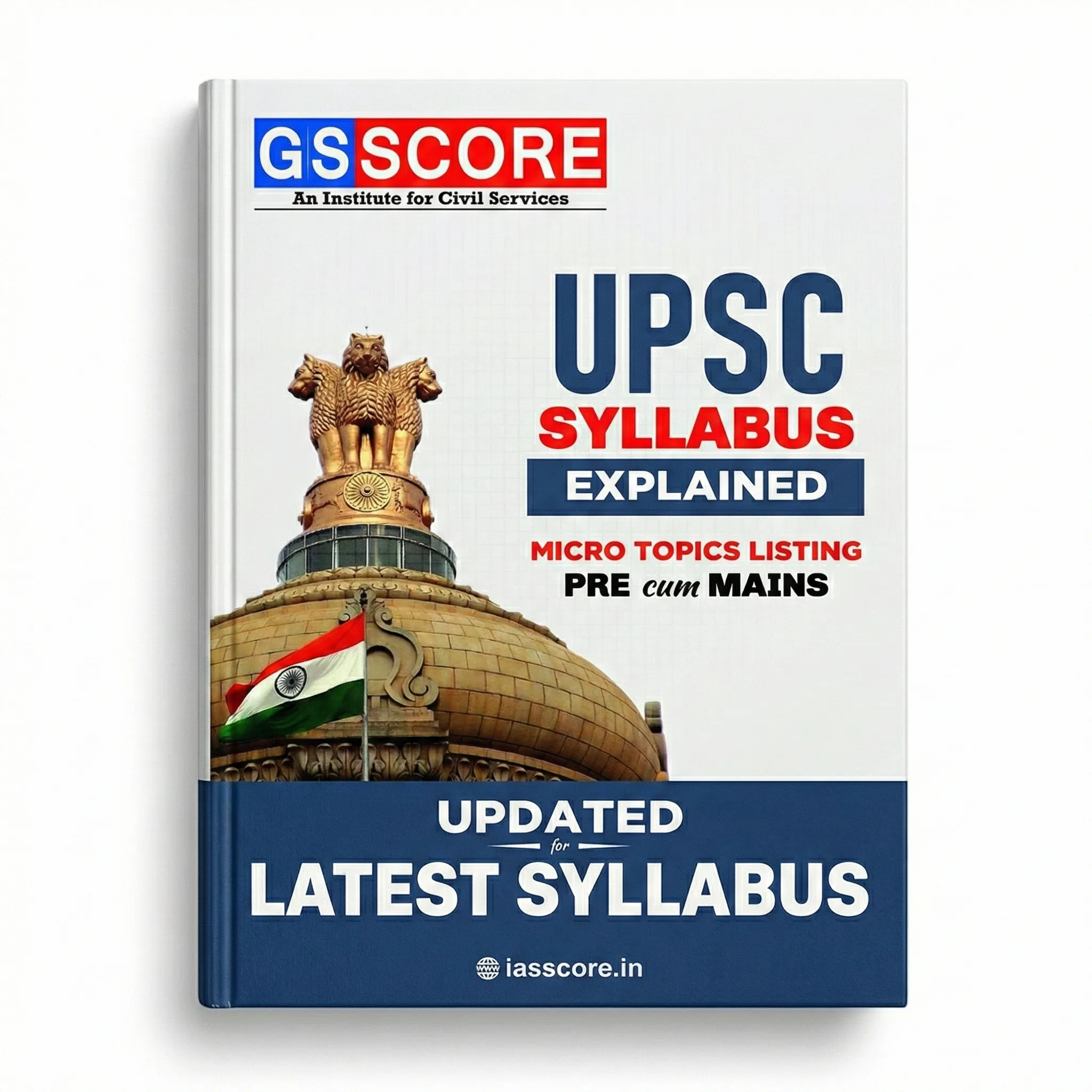
A syllabus is only as useful as the study material you pair it with. Because the SSC CGL General Awareness and Economics portions overlap heavily with standard competitive-exam content, structured printed notes save months of scattered reading. For polity, economy and current-affairs strength, many serious aspirants supplement their SSC prep with comprehensive GS booklets — the Vajiram GS Notes and the GS Score Syllabus Booklet are popular for building a clean, exam-oriented foundation across static subjects.
Previous year questions are the highest-signal practice you can do. A topic-wise PYQ compilation such as the Forum IAS Topic-Wise PYQ Toolkit trains you to recognise recurring question patterns in reasoning and general awareness — a skill that transfers directly to SSC CGL’s static portions. Pair your notes with a disciplined mock-test routine and you convert syllabus coverage into actual marks.
Preparation Tips & Strategy for SSC CGL 2025
Now that you have the complete ssc cgl syllabus 2025, here is how to turn it into a study plan:
- Prioritise Tier 2 from day one. Since Tier 1 is qualifying, master concepts to a Tier 2 depth — you’ll clear Tier 1 automatically.
- Make Quant and English your scoring engines. These two sections repeat across both tiers and reward compounding practice.
- Do 10 minutes of General Awareness daily. GK cannot be crammed — spaced daily reading beats last-week marathons.
- Solve at least one full-length mock every week, then spend twice as long analysing your mistakes as you did taking the test.
- Don’t neglect Computer Knowledge and DEST. Twenty easy marks plus a qualifying typing test are too important to skip.
- Practise with the calculator for Tier 2 so you’re fluent with it on exam day.
- Revise the priority table weekly and attack high-yield, low-effort topics first.
For a full month-by-month schedule, our detailed SSC CGL Preparation 2026: Strategy, Study Plan & Books guide pairs perfectly with this syllabus breakdown.
Common Mistakes SSC CGL Aspirants Make
- Over-preparing Tier 1 and running out of time for Tier 2’s decisive Paper 1.
- Ignoring the Computer Knowledge module until the last week.
- Studying random current affairs instead of the last 6–8 months systematically.
- Skipping mock analysis — solving 50 mocks without reviewing errors yields little.
- Neglecting DEST typing practice and risking disqualification despite good marks.
Related Resources for SSC CGL Aspirants
Aspirants who search the SSC CGL syllabus usually look next for cut-off trends, post preferences, salary details, previous year papers and mock tests. Build your plan around all five: syllabus (this page) → PYQs → mocks → cut-off analysis → post/salary preference. Keeping these in one workflow prevents the scattered preparation that derails most first-time candidates.
Frequently Asked Questions
What is the syllabus of SSC CGL?
The SSC CGL syllabus covers two tiers. Tier 1 has four sections — General Intelligence & Reasoning, General Awareness, Quantitative Aptitude and English Comprehension. Tier 2 Paper 1 covers Maths, Reasoning, English, General Awareness, Computer Knowledge and a Data Entry Speed Test, while Paper 2 (Statistics) and Paper 3 (General Studies – Finance & Economics) apply only to JSO and AAO posts respectively.
Is there negative marking in SSC CGL Tier 1 and Tier 2?
Yes. Tier 1 has a negative marking of 0.50 marks per wrong answer. In Tier 2, Paper 1 deducts 1 mark for each wrong answer, while Papers 2 and 3 deduct 0.50 marks per wrong answer. There is no penalty for unattempted questions, so avoid blind guessing.
How many tiers are there in the SSC CGL exam?
There are two tiers in the current SSC CGL exam — Tier 1 and Tier 2, both computer-based. The earlier descriptive Tier 3 and skill-based Tier 4 were removed after the 2022 restructuring. Selection is followed by Document Verification.
Is SSC CGL Tier 1 qualifying in nature?
Yes. Since the 2022–23 cycle, SSC CGL Tier 1 is qualifying only — its marks are not added to the final merit list. You simply need to clear the category-wise cut-off to advance to Tier 2, which alone decides your final rank and post.
Which subjects carry the highest weightage in SSC CGL?
In Tier 1, General Awareness and English typically offer the fastest scoring, while Quantitative Aptitude carries the most long-term value because it repeats in Tier 2. In Tier 2 Paper 1, the 45-question English module and the Maths module together form the largest share of merit marks.
What is the difference between the Tier 1 and Tier 2 syllabus?
Tier 1 is a single 100-question screening paper covering four sections at a moderate level, and it is only qualifying. Tier 2 keeps the same core subjects in Paper 1 but tests them in greater depth, adds a merit-counting Computer Knowledge module and a qualifying Data Entry Speed Test, allows a scientific calculator, and — through Papers 2 and 3 — adds specialised Statistics (JSO) and Finance & Economics (AAO) portions. In short, Tier 1 screens; Tier 2 decides your rank and post.
Where can I download the official SSC CGL syllabus PDF?
The official ssc cgl syllabus pdf download is available inside the SSC CGL notification on the Staff Selection Commission website, ssc.gov.in. Open the latest notification under “Latest Notifications,” scroll to the Annexure containing the Tier 1 and Tier 2 scheme, and save the PDF. Because coaching blogs sometimes carry outdated pattern details, treat the SSC notification as the final authority.
Is a calculator allowed in SSC CGL Tier 2?
Yes. A scientific calculator is permitted in the papers of SSC CGL Tier 2, while calculators are not allowed in Tier 1. Rules can change between cycles, so confirm this in the current notification and practise with the calculator before the exam so you can use it efficiently on test day. The official syllabus PDF is available on the SSC website, ssc.gov.in.
Recommended Study Material

Continue Reading
Best Books for UPSC Prelims 2026: Subject-Wise List (GS + CSAT)
The best books for UPSC Prelims 2026 are a tight, topper-tested set: NCERTs (Classes 6–12) as the base,…
SSC CGL Syllabus 2026: Tier 1 & Tier 2 Topics + PDF
The SSC CGL syllabus for 2026 is split across two computer-based stages. Tier 1 (100 questions, 200 marks,…
JPSC Syllabus 2026: Prelims, Mains Pattern + PDF
The JPSC syllabus for the Combined Civil Services Examination is prescribed by the Jharkhand Public Service Commission (JPSC,…