Best Books for UPSC Prelims 2026: Subject-Wise List (NCERT + 15 Standard Books)
Best books for UPSC Prelims 2026 — a subject-wise booklist of NCERTs + 15 standard books with prices, reading order, editions, weightage and buy links. Updated for 2026.

Last updated: 1 July 2026. Written for first-attempt and self-study aspirants who want a tight, no-nonsense library — not a 50-book pile.
The best books for UPSC Prelims are a short, fixed list: the NCERTs (Class 6–12) for your foundation, plus one standard reference book per subject — Laxmikanth for Polity, Spectrum for Modern History, GC Leong for Geography, Ramesh Singh for Economy, Shankar IAS for Environment and Nitin Singhania for Art & Culture. You do not need 50 books; you need roughly 15 standard titles, revised three times each, supported by daily current affairs and Previous Year Questions (PYQs). This guide gives you the complete subject-wise UPSC Prelims booklist 2026, with prices, the correct reading order, which editions to buy, which chapters to prioritise, subject-wise weightage and Hindi-medium alternatives — so a first-attempt aspirant can build a winning library in one afternoon.
Below you will find an answer-first summary, a subject-wise weightage table, a 12-month reading timeline, an NCERT-vs-standard-book comparison, a total-cost budget breakdown, and a printable checklist. Whether you self-study or join coaching, this is the definitive standard books for IAS Prelims preparation reference.
TL;DR — The Best Books for UPSC Prelims, in One Line Each
- Polity — Indian Polity by M. Laxmikanth (latest edition).
- Modern History — Spectrum, A Brief History of Modern India.
- Ancient & Medieval — Old NCERTs (RS Sharma, Satish Chandra).
- Geography — NCERTs + GC Leong + an atlas.
- Economy — Indian Economy by Ramesh Singh (latest edition).
- Environment — Environment by Shankar IAS Academy.
- Art & Culture — Indian Art and Culture by Nitin Singhania.
- CSAT — A CSAT manual + RS Aggarwal (aptitude & reasoning).
- Glue — NCERTs (Class 6–12), 10–year PYQs, and one monthly current-affairs magazine.
Best Books for UPSC Prelims: The Essential List at a Glance
The UPSC Civil Services Preliminary Examination has two papers — General Studies Paper I (100 questions, 200 marks, merit-deciding) and CSAT Paper II (80 questions, 200 marks, qualifying at 33%). To clear GS Paper I you must cover seven broad areas: Polity, History, Geography, Economy, Environment & Ecology, Science & Technology and Current Affairs. The table below is the core “Essential” booklist — the minimum standard books every topper recommends.
| Subject | Best Book (Author/Publisher) | Approx. Price (₹) | Approx. Pages |
|---|---|---|---|
| Indian Polity | Indian Polity – M. Laxmikanth | 750–850 | 900 |
| Modern History | A Brief History of Modern India – Spectrum | 500–600 | 650 |
| Ancient & Medieval History | NCERT (Themes) + RS Sharma / Satish Chandra (Old NCERT) | 400–700 | 500 |
| Geography | Certificate Physical & Human Geography – GC Leong | 350–450 | 450 |
| Indian Economy | Indian Economy – Ramesh Singh | 800–900 | 900 |
| Environment & Ecology | Environment – Shankar IAS Academy | 500–600 | 500 |
| Art & Culture | Indian Art and Culture – Nitin Singhania | 500–600 | 500 |
| CSAT (Paper II) | CSAT Manual – Tata McGraw Hill / RS Aggarwal | 700–900 | 900 |
That is eight purchases. Add the NCERT set and three workbooks (PYQs, an atlas and a current-affairs source) and your complete UPSC Prelims booklist 2026 still fits in around 15 titles. We will price the whole thing later in the budget section.
Subject-Wise Weightage: Where Your Marks Actually Come From
Buy in proportion to what is tested. The figures below are approximate ranges in GS Paper I (100 questions) based on the trend of recent papers — they explain why Polity, Economy, Environment and Current Affairs deserve the deepest reading and the most revisions.
| Area | Approx. Questions (of 100) | Primary Book(s) |
|---|---|---|
| Current Affairs (cuts across all subjects) | 25–30 | Newspaper + monthly magazine |
| Polity & Governance | 15–18 | Laxmikanth |
| History & Art/Culture (Ancient+Medieval+Modern) | 15–18 | Spectrum, Old NCERTs, Nitin Singhania |
| Economy | 14–17 | Ramesh Singh |
| Geography | 12–15 | NCERT + GC Leong + atlas |
| Environment & Ecology | 12–15 | Shankar IAS |
| Science & Technology | 7–10 | NCERT (6–10) + current affairs |
The lesson: Environment is the highest return-on-effort static subject relative to its small size, and current affairs quietly decides a quarter of the paper — so neither can be left for the last month.
Importance of Choosing the Right IAS Books
With lakhs of aspirants chasing roughly 1,000 vacancies, the difference between a selected candidate and the rest is rarely “more books” — it is the same standard books read more times. UPSC questions are increasingly conceptual and inter-linked, so a fragmented library of 40 random guides actively hurts you: you spend the year reading instead of revising. The right books do three things — they map exactly to the syllabus, they have stood the test of past papers, and they are thin enough to revise. A common rule from toppers sums it up: one book revised three times beats three books read once. Choosing a tight, standard list is therefore the single most important strategic decision a beginner makes.
Understanding the UPSC Syllabus: Your Roadmap to Success
Before buying anything, anchor every book to the official syllabus. GS Paper I covers: current events of national and international importance; History of India and the Indian National Movement; Indian and World Geography (physical, social, economic); Indian Polity and Governance; Economic and Social Development; environmental ecology, biodiversity and climate change; and general science. CSAT Paper II covers comprehension, interpersonal/communication skills, logical reasoning, analytical ability, decision-making, basic numeracy (Class X level) and data interpretation.
Map each book to a syllabus line and you instantly see why the list is short — there is exactly one strong reference per area. To keep the official syllabus and the latest exam notification details handy, a printed syllabus booklet such as the GS Score Latest Syllabus Booklet 2026-27 is a cheap, useful companion. For the full breakdown, see our detailed UPSC Prelims Syllabus 2026 guide and the UPSC Exam Pattern 2026 article.
NCERT Books for UPSC Prelims: The Non-Negotiable Foundation
Every successful aspirant starts with NCERTs (Class 6–12) before touching a single standard reference book. They build vocabulary, clarify base concepts, and are directly quoted in Prelims questions every year. Skipping NCERTs to “save time” is the most common beginner mistake — standard books assume you already know the basics that only NCERTs teach. Read them first, make crisp notes, then graduate to the reference book for that subject.
| Subject | NCERT Classes to Read | Why It Matters |
|---|---|---|
| History | Class 6–12 (Our Pasts, Themes in Indian History I–III) | Base for Ancient, Medieval, Modern + Art & Culture |
| Geography | Class 6–12 (Fundamentals, Physical, India: People & Economy) | Foundation before GC Leong; map skills |
| Polity | Class 9–12 (Political Science / Indian Constitution at Work) | Eases the jump to Laxmikanth |
| Economy | Class 9–12 (Economics, Indian Economic Development, Macro) | Concepts before Ramesh Singh |
| Science & Technology | Class 6–10 (Science textbooks) | Covers most static Sci-Tech questions directly |
| Environment | Class 12 Biology (Ecology chapters) | Base before Shankar IAS |
For a complete chapter-wise NCERT list with free PDFs, read our dedicated NCERT Books for UPSC: Subject-Wise List (Class 6–12) guide. The short version: NCERTs are essential but not sufficient on their own — they are the floor, not the ceiling.
NCERT vs Standard Books: Side-by-Side Comparison
Aspirants constantly ask whether NCERTs alone are enough. The honest answer is no — NCERTs give you 30–40% of Prelims; standard books and current affairs deliver the rest. The table below shows exactly how they divide the work.
| Aspect | NCERT Books | Standard Reference Books |
|---|---|---|
| Purpose | Build concepts & vocabulary | Exam-depth coverage & retention |
| When to read | First 2–3 months | Months 2–8, layered on NCERTs |
| Depth | Basic to moderate | Exam-level, with PYQ linkage |
| Coverage of Prelims | ~30–40% | ~50–60% (rest is current affairs) |
| Example | NCERT Class 11 Polity | Laxmikanth, Indian Polity |
| Revision time per round | 3–4 weeks (whole set) | 1–2 weeks per subject |
Best UPSC Prelims Books: Subject-Wise Deep Dive
Here is the detailed, subject-wise breakdown — the heart of any best books for UPSC Prelims subject wise search — including which specific chapters to prioritise and which edition to buy.
Which is the Best Book for UPSC Prelims Polity? (Laxmikanth)
The best polity book for UPSC Prelims is, without dispute, Indian Polity by M. Laxmikanth. It maps the syllabus almost line-by-line and yields 15–18 marks in Prelims most years. Prioritise: Preamble, Fundamental Rights & DPSP, Union & State Executive, Parliament, Judiciary, Centre-State Relations, Constitutional & Non-Constitutional Bodies, and Amendments. Buy the latest edition (7th edition onwards) so recent constitutional amendments are included. If you prefer pre-digested coaching booklets alongside it, the Vajiram Polity Notes (2 booklets) condense the same content into a faster revision format.
Is Laxmikanth Enough for UPSC Prelims?
For Prelims Polity, Laxmikanth plus current affairs (new bills, Supreme Court judgments, government schemes) is genuinely enough — you do not need a second polity book. Revise it three times and solve polity PYQs; that combination clears the polity portion comfortably. The only addition is governance-related current affairs, which your monthly magazine covers.
Best Books for Modern, Ancient & Medieval History
For Modern History, Spectrum’s A Brief History of Modern India is the go-to; many also use Bipan Chandra’s India’s Struggle for Independence for depth. Prioritise 1857 Revolt, socio-religious reform movements, Moderates vs Extremists, Gandhian phase and post-independence consolidation. For Ancient History use NCERT plus RS Sharma (Old NCERT); for Medieval, Satish Chandra (Old NCERT). Pair these with Nitin Singhania for Art & Culture, which overlaps heavily with Ancient/Medieval.
Which Book is Best for UPSC Prelims Geography?
The best book for UPSC Prelims Geography is NCERTs (Class 11–12) plus GC Leong’s Certificate Physical and Human Geography. GC Leong is unbeatable for physical geography — climatology, geomorphology, oceanography. Add an Oxford or Orient BlackSwan atlas for map-based questions (countries, rivers, mountain ranges), which appear every year. Prioritise climatology, Indian physiography, rivers, soils and monsoon mechanics.
Best Book for Indian Economy
For Economy, Indian Economy by Ramesh Singh is the standard; Sanjeev Verma is a popular lighter alternative. Buy the latest edition — Economy data (GDP, schemes, Budget figures) changes yearly, so an outdated edition is a real liability. Prioritise National Income, Banking & Monetary Policy, Fiscal Policy & Budget, Inflation, External Sector and recent government schemes. For a concise coaching set, the Vision IAS Economics Notes (2025–26) are a strong revision-friendly companion.
Best Book for Environment & Ecology
Environment by Shankar IAS Academy dominates this section, which alone contributes 15–20 questions to Prelims. Buy the latest edition for updated conventions, summits and species data. Prioritise biodiversity, protected areas, climate-change conventions (UNFCCC, CBD, Ramsar), pollution and key environmental organisations. Environment is the highest return-on-investment subject in Prelims relative to its size.
Best Book for Science & Technology
For static Science, NCERTs (Class 6–10) are sufficient. For Sci-Tech current affairs (space, defence, biotech, IT), rely on your monthly current-affairs magazine and PIB rather than a fat reference book. There is no single “must-buy” Sci-Tech book — current affairs does the heavy lifting here.
UPSC Prelims CSAT Books (Paper II)
CSAT Paper II is qualifying (33%), but failing it cancels your entire attempt — so never ignore it. After 2023’s tougher CSAT, comprehension and reasoning need real practice. Which is the best book for CSAT Paper 2? Use a comprehensive CSAT manual plus RS Aggarwal’s Quantitative Aptitude and Verbal & Non-Verbal Reasoning for numeracy and reasoning drills.
| CSAT Area | Recommended Resource | Focus |
|---|---|---|
| Comprehension | CSAT Manual (TMH) + daily passage practice | Highest weightage — practice daily |
| Quantitative Aptitude | RS Aggarwal – Quantitative Aptitude | Class X maths, speed |
| Reasoning | RS Aggarwal – Verbal & Non-Verbal Reasoning | Syllogism, series, puzzles |
| Data Interpretation | CSAT Manual practice sets | Tables, graphs, accuracy |
For structured CSAT practice, the Vajiram CSAT Complete Booklet Set with Practice Questions pairs theory with exam-style drills, and a dedicated CSAT test series sharpens time management before the exam.
Current Affairs Sources for UPSC Prelims
What is the best book for current affairs for UPSC Prelims? There is no single book — current affairs is a daily habit built from a newspaper plus one consolidated monthly source. Around 25–30% of Prelims questions are current-affairs-driven, and they bridge static subjects with the news cycle.
| Source | Type | How to Use |
|---|---|---|
| The Hindu / Indian Express | Daily newspaper | 30–45 min daily; note govt schemes, bills, reports |
| Monthly CA magazine | Consolidated monthly | Primary revision source for 12–18 months pre-exam |
| PIB / PRS | Official releases | Schemes, policies, factual accuracy |
| Yojana / Kurukshetra | Government monthly | Schemes, social-sector themes |
A consolidated monthly magazine prevents information overload. The Vision IAS Current Affairs Magazine (January 2026, English) is a widely used monthly that compresses the month’s news into Prelims-ready points; Hindi-medium aspirants can use the corresponding Hindi edition. For a complete strategy, see our Current Affairs for UPSC 2026 guide.
Previous Year Questions (PYQs) and Mock Tests: Core Resources
PYQs and mock tests are not optional extras — they are core resources, arguably as important as any reference book. Solving 10 years of PYQs reveals UPSC’s pattern, eliminates over-reading, and tells you exactly how deep to study each subject. Mock tests build the exam temperament needed to attempt 100 questions in 120 minutes with smart elimination.
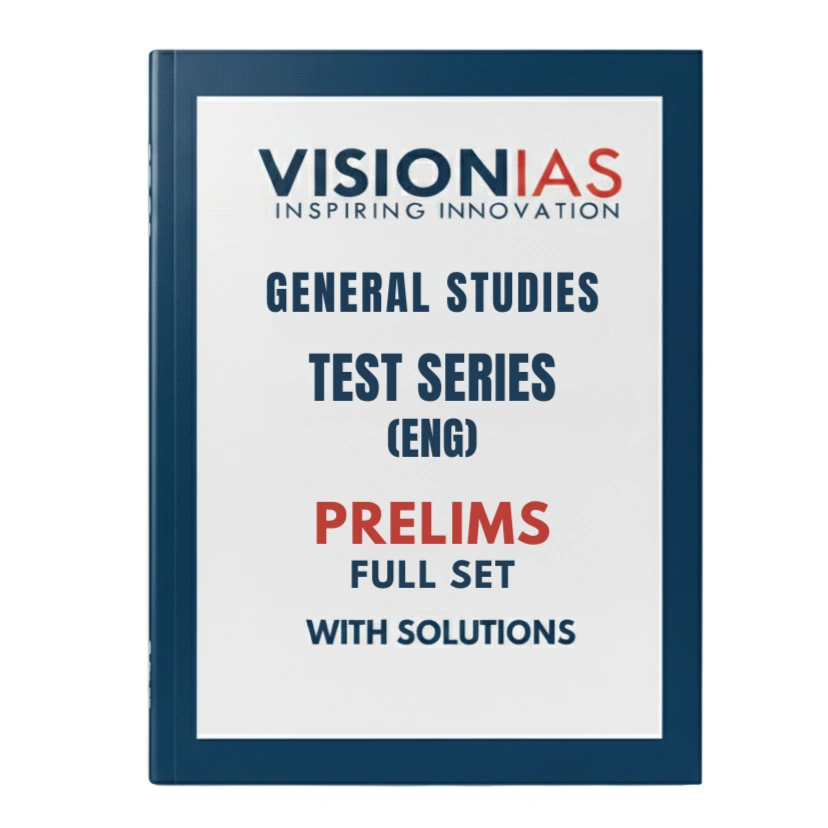
A topic-wise PYQ compilation is the most efficient way to study past papers; the Forum IAS UPSC Prelims Toolkit — Topic-Wise PYQ (1992–2025) organises three decades of questions subject-by-subject, so you see how each topic has actually been tested. Pair it with a quality test series such as the Vision IAS Prelims Test Series 2026 and take 25–30 full mocks before the exam. For free practice, download our UPSC Previous Year Question Papers (2014–2024) with answers.
Total Cost of the UPSC Prelims Booklist: Budget Breakdown
No competing page tells you what the booklist actually costs — so here it is. Buying the complete standard set new costs roughly ₹6,500–₹8,500 depending on editions and the atlas/test-series you add. Below is a transparent budget.
| Item | Approx. Cost (₹) |
|---|---|
| NCERT set (Class 6–12, selected subjects) | 1,500–2,000 |
| Laxmikanth (Polity) | 800 |
| Spectrum (Modern History) | 550 |
| GC Leong + Atlas (Geography) | 800 |
| Ramesh Singh (Economy) | 850 |
| Shankar IAS (Environment) | 550 |
| Nitin Singhania (Art & Culture) | 550 |
| CSAT Manual + RS Aggarwal | 900 |
| PYQ compilation + monthly CA (annual) | 1,200–1,800 |
| Total (approx.) | 7,700–8,800 |
Budget tips: second-hand standard books are fine for static subjects (Polity, History, Geography) where content rarely changes, but always buy the latest edition new for Economy and Environment, where yearly updates matter. Digital PDFs save money but reduce retention for most aspirants — physical books with margin notes win for deep reading; keep digital for current affairs. Prices above are indicative ranges and shift with edition and seller, so treat them as a planning estimate rather than a fixed quote.
Hindi-Medium and Regional-Language Editions
A huge share of UPSC aspirants prepare in Hindi, yet most booklists ignore them. The good news: every standard book has a reliable Hindi edition. Laxmikanth (भारत की राजव्यवस्था), Spectrum, Ramesh Singh and the NCERTs are all available in Hindi, and coaching note-sets exist in Hindi medium too. The Drishti IAS Hindi Study Material (18 booklets) is one of the most trusted Hindi-medium GS resources, and Hindi-medium current affairs magazines are published monthly alongside the English editions. Read in the language you think in — comprehension speed matters more than the medium.
Coaching Notes vs Standard Books: Where Do Booklets Fit?
Standard books build understanding; coaching note-sets (Vision IAS, Drishti, Vajiram, Next IAS) compress that understanding for fast revision and add current-affairs value. Beginners should read the standard book first for concepts, then use compact notes for the third and fourth revisions when time is short. A self-study aspirant can clear Prelims with standard books alone — note-sets are an accelerator, not a replacement. If you do want a full GS note-set as a revision backbone, options like the Vision IAS or Vajiram GS booklets cover Prelims and Mains together.
Best Books for UPSC Prelims and Mains (Overlap)
Smart aspirants choose books that serve both stages. Laxmikanth, Ramesh Singh, Shankar IAS, Spectrum and Nitin Singhania are all best books for UPSC Prelims and Mains — the same foundation, read at greater depth, powers GS Mains answers. The difference is approach: for Prelims you read for facts and elimination; for Mains you read for analysis, examples and inter-linkages. Build the Prelims library first; it is 70% of your Mains static preparation too. (For a full GS Mains and Optional list, see our Best Books for UPSC 2026 guide.)
Topper-Recommended Reading Order & 12-Month Timeline
Buying the books is half the battle; reading them in the right sequence is the other half. Here is a proven 12-month plan for a first-attempt aspirant.
| Phase | Months | What to Read |
|---|---|---|
| Foundation | 1–3 | NCERTs (all subjects) + start daily newspaper |
| Core build-up | 3–6 | Laxmikanth, Spectrum, GC Leong, Ramesh Singh; monthly CA |
| Completion | 6–8 | Shankar IAS, Nitin Singhania, Sci-Tech CA; start CSAT |
| Revision 1 + PYQs | 8–10 | Revise all subjects; solve 10 years PYQs topic-wise |
| Test series | 10–11 | 25–30 full mocks (GS + CSAT); analyse every test |
| Final revision | 11–12 | 3rd revision of notes + CA; last 6 months’ current affairs |
The golden rule across all phases: revise the same books repeatedly. A topper’s library and a failed aspirant’s library often look identical — the difference is the number of revisions and PYQ practice.
How to Choose the Right Books for UPSC Preparation
When in doubt, apply five filters: (1) Does it map to the official syllabus? (2) Is it the standard, widely-recommended title for that subject? (3) Is it the latest edition (critical for Economy/Environment)? (4) Is it thin enough to revise three times? (5) Does it have PYQ relevance? If a book fails these, skip it. Resist the temptation to buy multiple books per subject — depth through revision beats breadth through accumulation every single time.
Common Mistakes to Avoid
- Skipping NCERTs to jump straight to standard books — you lose the conceptual base.
- Hoarding books — buying 4 polity books instead of mastering one Laxmikanth.
- Ignoring PYQs until the last month — they should guide your reading from month 6.
- Buying outdated editions of Economy and Environment.
- Neglecting CSAT until it is too late, then failing the 33% cut-off.
- Reading without revising — one revision is never enough; aim for three.
- Treating current affairs casually — it is 25–30% of the paper.
Your Printable UPSC Prelims Booklist Checklist
Use this as a quick checklist (copy it into your notes or print it):
- ☐ NCERTs Class 6–12 (History, Geography, Polity, Economy, Science)
- ☐ Laxmikanth – Indian Polity (latest edition)
- ☐ Spectrum – Modern India + Old NCERTs (Ancient/Medieval)
- ☐ GC Leong + Atlas (Geography)
- ☐ Ramesh Singh – Indian Economy (latest edition)
- ☐ Shankar IAS – Environment (latest edition)
- ☐ Nitin Singhania – Art & Culture
- ☐ CSAT Manual + RS Aggarwal (Aptitude & Reasoning)
- ☐ Topic-wise PYQ compilation (10+ years)
- ☐ One monthly current-affairs magazine + daily newspaper
- ☐ A Prelims test series (GS + CSAT)
Conclusion
The best books for UPSC Prelims are not a secret list — they are a short, standard, time-tested set: NCERTs first, then one reference book per subject, supported by relentless PYQ practice and a single consolidated current-affairs source. Around 15 books, revised three times each, will take you further than 50 books read once. Build this library now, follow the 12-month sequence, and protect your CSAT — that is the entire formula for clearing Prelims on your first attempt. You can source the coaching note-sets, PYQ toolkits, current-affairs magazines and test series referenced above on Competer, and assemble your complete Prelims kit in one place.
Frequently Asked Questions
Which is the best book for UPSC Prelims polity?
Indian Polity by M. Laxmikanth is the best polity book for UPSC Prelims. It maps the syllabus almost line-by-line, contributes 15–18 marks most years, and combined with governance-related current affairs is sufficient for the polity section. Always buy the latest edition for updated amendments.
Are NCERT books enough to crack UPSC Prelims?
No. NCERTs are the non-negotiable foundation and cover about 30–40% of Prelims, but they are not sufficient alone. You must add standard reference books (Laxmikanth, Spectrum, Shankar IAS, etc.) plus daily current affairs and PYQ practice to clear the exam.
How many books are required for UPSC Prelims?
Around 15 books in total — the NCERT set plus roughly eight standard reference books, a PYQ compilation, an atlas and one current-affairs magazine. You do not need 50 books; you need a tight list revised three times each.
Which book is best for UPSC Prelims Geography?
NCERTs (Class 11–12) combined with GC Leong’s Certificate Physical and Human Geography, plus a good atlas for map-based questions. GC Leong is especially strong for physical geography like climatology and geomorphology.
Is Laxmikanth enough for UPSC Prelims polity?
Yes, for the Prelims polity section Laxmikanth plus governance-related current affairs is enough — you do not need a second polity book. Revise it three times and solve polity PYQs, and add new bills, key Supreme Court judgments and schemes from your monthly magazine.
What is the best book for current affairs for UPSC Prelims?
There is no single book. The best approach is a daily newspaper (The Hindu or Indian Express) plus one consolidated monthly current-affairs magazine used as your revision source, supported by PIB for scheme accuracy. Current affairs drives roughly 25–30% of Prelims questions, so consistency matters more than the specific magazine.
Which is the best book for CSAT Paper 2?
A comprehensive CSAT manual (Tata McGraw Hill) for comprehension and data interpretation, plus RS Aggarwal’s Quantitative Aptitude and Reasoning books for numeracy practice. Since 2023’s tougher CSAT, daily comprehension practice is essential to clear the 33% cut-off.
Can I clear UPSC Prelims with self-study and these books in one year?
Yes. Many candidates clear Prelims through self-study in 10–12 months using exactly this standard booklist, provided they follow a disciplined reading sequence, revise each book three times, solve PYQs from month six, and take 25–30 mock tests before the exam.
Recommended Study Material

Continue Reading
Sociology Optional Syllabus 2026: Paper 1 & 2 + PDF
The sociology optional syllabus for UPSC 2026 is divided into two papers of 250 marks each (500 marks…
NEET Syllabus 2026: Chapter-Wise Weightage, Deleted Topics + PDF
The NEET syllabus for 2026 is the official, NCERT-based list of Physics, Chemistry and Biology topics from Class…
WBCS Syllabus 2026: Prelims, Mains, Optional + PDF
The WBCS syllabus for 2026 is set by the West Bengal Public Service Commission (WBPSC) and runs across…