NEET Syllabus 2026: Chapter-Wise Weightage, Deleted Topics + PDF
Complete NEET syllabus 2026: subject & chapter-wise topics, weightage tables, deleted topics, exam pattern and a free no-login PDF download for Physics, Chemistry, Biology.

The NEET syllabus for 2026 is the official, NCERT-based list of Physics, Chemistry and Biology topics from Class 11 and Class 12 that the NEET-UG exam tests. It was finalised and released on 8 January 2026 by the National Testing Agency (NTA) in line with the National Medical Commission (NMC), and it covers roughly 97 chapters across three subjects — with Biology carrying 50% weightage and Physics and Chemistry 25% each. In short: study only NCERT, prioritise Biology, and use the deleted-topics list to avoid wasted hours. This guide gives you the complete subject- and chapter-wise syllabus, a clean weightage table, the definitive list of deleted topics, the exam pattern, a chapter checklist, and a free no-login PDF download so you can plan exactly what to study.
Quick answers, up front:
- Basis: NCERT Class 11 & 12 only (rationalised) — no content outside the official NTA syllabus is asked.
- Chapters: ~97 total — Physics ~30, Chemistry ~30, Biology ~37.
- Highest weightage: Biology, with 90 questions and 360 of 720 marks.
- Exam: 200 questions, attempt 180, 720 marks, 3 hours 20 minutes.
NEET Syllabus 2026 Overview: Key Facts at a Glance
NEET-UG 2026 is conducted by the NTA for admission to MBBS, BDS, AYUSH, BVSc and allied medical courses across India. The syllabus is rationalised NCERT content — the same Class 11 and 12 textbook foundation that the CBSE follows, with certain topics removed to align with revised NCERT books. Understanding the structure first makes the rest of the syllabus far easier to navigate.
| Particular | Detail (NEET 2026) |
|---|---|
| Exam name | NEET-UG 2026 (National Eligibility cum Entrance Test) |
| Conducting body | National Testing Agency (NTA) |
| Syllabus released | 8 January 2026 (NTA / NMC) |
| Basis | NCERT Class 11 & 12 (rationalised) |
| Subjects | Physics, Chemistry, Biology (Botany + Zoology) |
| Total chapters | ~97 (Physics ~30, Chemistry ~30, Biology ~37) |
| Total questions | 180 (200 given, 180 to be attempted) |
| Total marks | 720 |
| Marking | +4 correct, −1 incorrect, 0 unattempted |
| Duration | 3 hours 20 minutes (200 minutes) |
| Mode | Pen-and-paper (OMR), single shift |
| Language | 13 languages including English & Hindi |
What Is the Syllabus for NEET 2026?
The NEET 2026 syllabus is built entirely on NCERT Physics, Chemistry and Biology of Classes 11 and 12. There are three subjects but four content streams, because Biology is split into Botany and Zoology. Each subject is organised into units, and each unit into chapters. The exam draws questions only from the prescribed topics — nothing is asked outside the official NTA syllabus, which is precisely why mastering the syllabus document is the single highest-return preparation step.
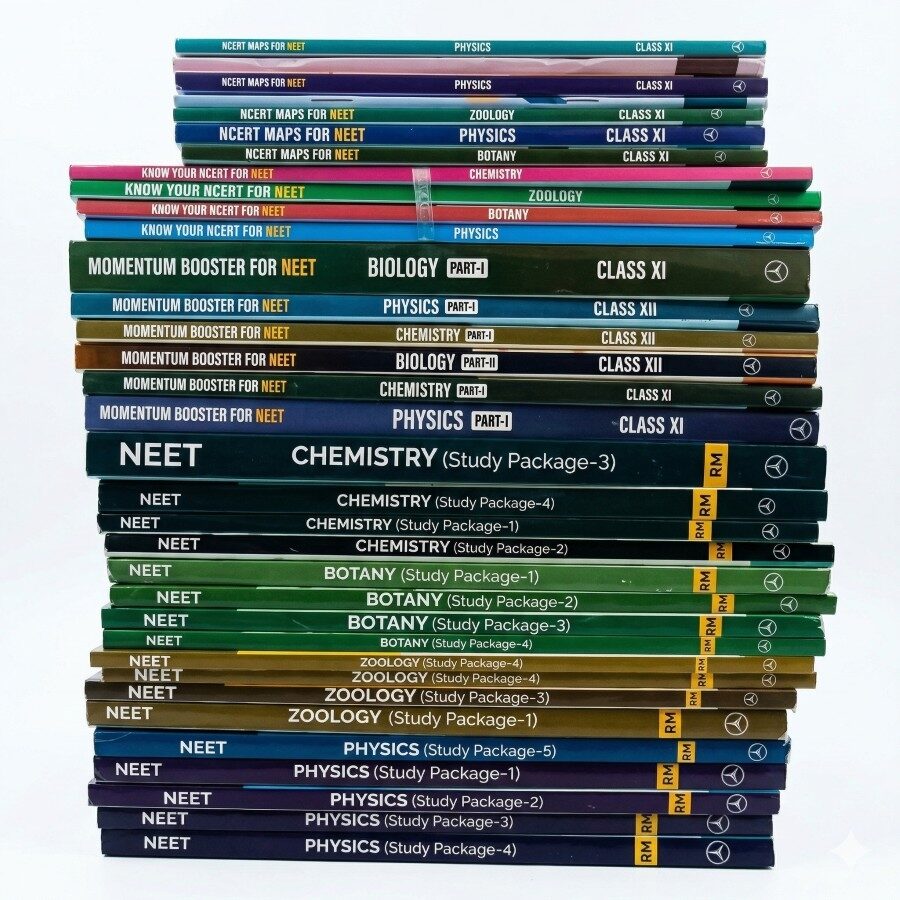
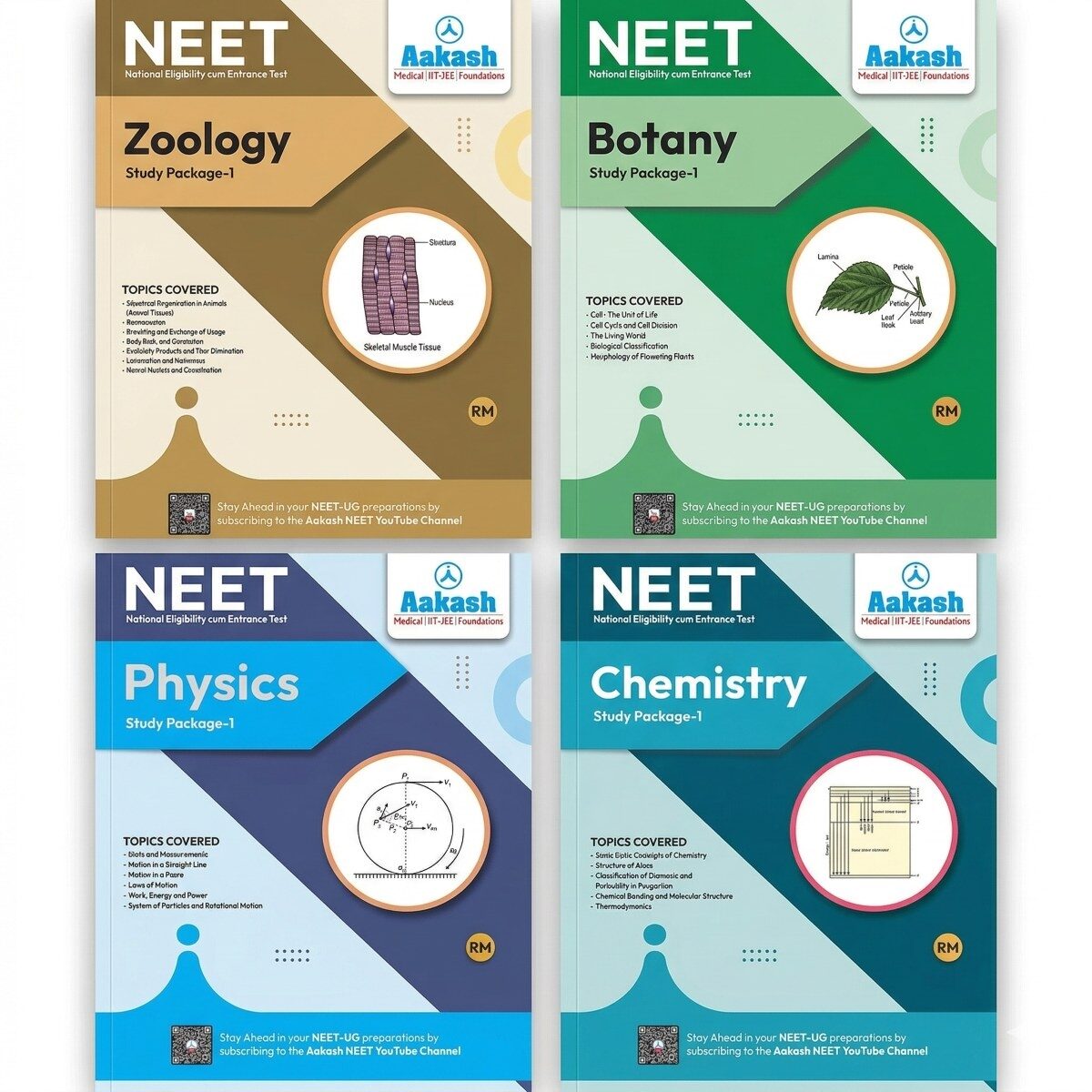
For 2026 the NTA retained the structure introduced in the previous cycle, and there is no major addition of new chapters for this year — the content is stable year-on-year. Each subject paper has a Section A (35 compulsory questions) and a Section B (15 questions of which 10 must be attempted). Because the syllabus content is stable, well-organised notes and chapter-aligned books remain valid across attempts. Many serious aspirants pair the official syllabus with a structured printed set such as the Aakash NEET Medical Complete Package (35 booklets, 2026 edition), which maps booklet-by-booklet to these NCERT units.
NEET 2026 Subject-Wise Weightage
The most important number to internalise is that Biology alone decides half your score. With 90 of the 180 questions, it carries 360 of 720 marks. Physics and Chemistry contribute 45 questions (180 marks) each. This is why the subject with the highest weightage in NEET is Biology, and why droppers and low-time aspirants are usually advised to lock in Biology and Chemistry first.
| Subject | Questions (attempt) | Marks | Weightage |
|---|---|---|---|
| Biology (Botany + Zoology) | 90 | 360 | 50% |
| Physics | 45 | 180 | 25% |
| Chemistry | 45 | 180 | 25% |
| Total | 180 | 720 | 100% |
NEET Physics Syllabus 2026: Chapter-Wise Topics
The NEET Physics syllabus spans roughly 30 chapters across Class 11 and 12. It is the most feared section because it is calculation- and concept-heavy, but the topic list is finite and predictable. Class 11 contributes mechanics, thermodynamics and oscillations; Class 12 contributes electrodynamics, optics and modern physics — the latter being the higher-scoring half in recent papers.
| Class 11 Physics | Class 12 Physics |
|---|---|
| Physical World & Measurement; Units and Dimensions | Electrostatics |
| Kinematics (Motion in a Straight Line & Plane) | Current Electricity |
| Laws of Motion | Magnetic Effects of Current & Magnetism |
| Work, Energy and Power | Electromagnetic Induction & Alternating Current |
| Motion of System of Particles & Rigid Body (Rotational Motion) | Electromagnetic Waves |
| Gravitation | Optics (Ray + Wave Optics) |
| Properties of Bulk Matter (Elasticity, Fluids, Thermal) | Dual Nature of Matter and Radiation |
| Thermodynamics | Atoms and Nuclei |
| Behaviour of Perfect Gas & Kinetic Theory | Electronic Devices (Semiconductors) |
| Oscillations and Waves | — |
NEET Chemistry Syllabus 2026: Physical, Organic & Inorganic
The NEET Chemistry syllabus is the most scoring of the three for most students because it is balanced and largely NCERT-line. It divides into three branches — Physical Chemistry (numerical), Organic Chemistry (mechanism and reaction-based) and Inorganic Chemistry (memory- and NCERT-text-based). All three branches are drawn from about 30 chapters across Class 11 and 12.
| Branch | Key Chapters / Topics |
|---|---|
| Physical Chemistry | Some Basic Concepts of Chemistry; Structure of Atom; States of Matter; Thermodynamics; Equilibrium; Solutions; Electrochemistry; Chemical Kinetics |
| Inorganic Chemistry | Classification of Elements & Periodicity; Chemical Bonding & Molecular Structure; p-Block; d- and f-Block Elements; Coordination Compounds; Hydrogen; s-Block |
| Organic Chemistry | Basic Principles & Techniques; Hydrocarbons; Haloalkanes & Haloarenes; Alcohols, Phenols & Ethers; Aldehydes, Ketones & Carboxylic Acids; Amines; Biomolecules |
NEET Biology Syllabus 2026: Botany & Zoology
Biology is the heart of NEET, with about 37 chapters split between Botany and Zoology. Because it carries 90 questions, even a single weak unit costs more here than in any other subject. Genetics, Human Physiology, Ecology and Plant Physiology are repeatedly the highest-yielding clusters, while NCERT line-by-line reading remains non-negotiable for the diagram and exception-based questions.
| Botany Units | Zoology Units |
|---|---|
| Diversity in Living World (Living World, Biological Classification, Plant Kingdom) | Animal Kingdom |
| Structural Organisation in Plants (Morphology, Anatomy) | Structural Organisation in Animals |
| Cell Structure & Function; Cell Cycle and Cell Division | Biomolecules |
| Plant Physiology (Photosynthesis, Respiration, Transport, Growth) | Human Physiology (Digestion, Breathing, Circulation, Excretion, Locomotion, Neural & Chemical Coordination) |
| Sexual Reproduction in Flowering Plants | Human Reproduction & Reproductive Health |
| Genetics & Evolution (Principles of Inheritance, Molecular Basis, Evolution) | Biology in Human Welfare (Health & Disease, Microbes) |
| Ecology & Environment (Organisms & Populations, Ecosystem, Biodiversity) | Biotechnology (Principles & Applications) |
NEET Chapter-Wise Weightage 2026
The chapter-wise weightage in NEET is trend-based, derived from the average number of questions per chapter across recent NEET papers. While exact counts shift slightly each year, the high-priority chapters below have remained consistent. Use this single table to decide where your revision hours go — it is far more useful than studying every chapter equally.
| Subject | High-Weightage Chapters | Approx. Questions |
|---|---|---|
| Physics | Mechanics (Laws of Motion, Work-Energy, Rotation) | 9–11 |
| Physics | Electrodynamics (Current Electricity, Magnetism, EMI) | 8–10 |
| Physics | Modern Physics & Electronics | 6–8 |
| Chemistry | Organic Chemistry (full block) | 14–16 |
| Chemistry | Coordination Compounds + p/d-Block | 7–9 |
| Chemistry | Chemical Bonding, Equilibrium, Thermodynamics | 6–8 |
| Biology | Human Physiology | 13–15 |
| Biology | Genetics & Evolution | 13–15 |
| Biology | Plant Physiology + Cell Biology | 10–12 |
| Biology | Ecology & Environment | 9–11 |
Read this table as a priority map, not a guarantee: a chapter that averaged 14 questions can dip to 10 in a given year, and a low-weightage chapter can spike. The practical takeaway is to secure full marks in the consistently heavy clusters above first, then extend coverage outward once they are airtight.
Deleted Topics in the NEET 2026 Syllabus
One of the most-searched and least-clearly-answered questions is which topics have been deleted from the NEET 2026 syllabus. Following the NCERT rationalisation, several chapters and sub-topics were dropped to align with the revised textbooks. Studying these wastes time — here is a clear, definitive removed-topics table.
| Subject | Deleted / Reduced Topics (vs older syllabus) |
|---|---|
| Physics | Scalars and Vectors as a standalone unit; some legacy semiconductor device communication content; portions of Electronic Devices and Communication Systems |
| Chemistry | States of Matter (Gaseous & Liquid) trimmed; Surface Chemistry; General Principles & Processes of Isolation of Elements (Metallurgy); Polymers; Chemistry in Everyday Life; Hydrogen reduced |
| Biology | Reproduction in Organisms (merged/trimmed); Strategies for Enhancement in Food Production; Environmental Issues partly reduced; some Microbes in Human Welfare content |
Important caveat: “deleted” means the topic is no longer in the NCERT-aligned NEET syllabus, but the NTA reserves the right to ask conceptual basics. The deletions for 2026 are essentially the same set as the previous cycle — there was no fresh round of cuts this year. Always confirm against the official PDF before skipping anything entirely.
NEET 2026 Exam Pattern
Knowing the syllabus is half the job; knowing how it is tested is the other half. The NEET 2026 paper has 200 questions, of which you attempt 180, within 3 hours 20 minutes. Each subject is divided into Section A and Section B as shown below.
| Subject | Section A | Section B (attempt 10 of 15) | Marks |
|---|---|---|---|
| Physics | 35 | 15 | 180 |
| Chemistry | 35 | 15 | 180 |
| Botany | 35 | 15 | 180 |
| Zoology | 35 | 15 | 180 |
| Total | 140 | 60 (attempt 40) | 720 |
Note the negative marking: every wrong answer costs −1, so in Section B you choose your best 10 of 15 — do not attempt questions you are genuinely unsure of just to fill the sheet.
Is the NEET Syllabus Based on NCERT Only?
Effectively, yes. The NEET syllabus is derived from NCERT Class 11 and 12, and roughly 80–90% of questions can be traced directly to NCERT lines, diagrams and tables — especially in Biology and Inorganic Chemistry. However, Physics numericals and some Physical Chemistry problems are pitched slightly above plain NCERT, which is why aspirants supplement NCERT with topic-wise practice modules such as the Aakash NEET 11th + 12th Complete 17-book set (2026 edition). The rule of thumb: finish NCERT to the last line first, then add practice material for application-level questions.
Is the NEET Syllabus the Same as CBSE Class 11 and 12?
They overlap heavily but are not identical. The NEET syllabus is a subset of the combined CBSE Class 11 + 12 Science syllabus — every NEET topic appears in CBSE, but CBSE also includes board-only content (and a different exam style with descriptive answers, internal choice and practicals). After the NCERT rationalisation, the deleted topics are largely common to both, so a CBSE student is well-aligned, but a NEET aspirant must focus on the MCQ-tested core and ignore purely board-oriented practical and project components.
Chapter-Wise Preparation Strategy for NEET 2026
Because the syllabus is large but weightage is uneven, a smart plan matters more than raw hours. The strategy below differs by student type so you can prioritise correctly.
| Student Type | Priority Order | Approach |
|---|---|---|
| First-attempt (1+ year) | Biology → Chemistry → Physics | Build full NCERT depth; cover all chapters; weekly tests from month 3 |
| Dropper / repeater | Weak subject first, then high-weightage chapters | Error log from previous attempt; full-length mocks twice weekly |
| Low-time (<6 months) | Biology + Organic/Inorganic Chemistry + Physics high-weightage only | Skip low-yield chapters last; PYQ-driven revision |
Subject-Specific Tips
- Biology: Read NCERT line-by-line at least thrice; make one-page summaries of Genetics, Human Physiology and Ecology; master diagrams and exceptions.
- Chemistry: Memorise Inorganic from NCERT, practise Organic mechanisms daily, and treat Physical Chemistry like Physics with formula sheets.
- Physics: Do not over-read theory — solve numericals daily, build a formula register, and prioritise Mechanics, Electrodynamics and Modern Physics.
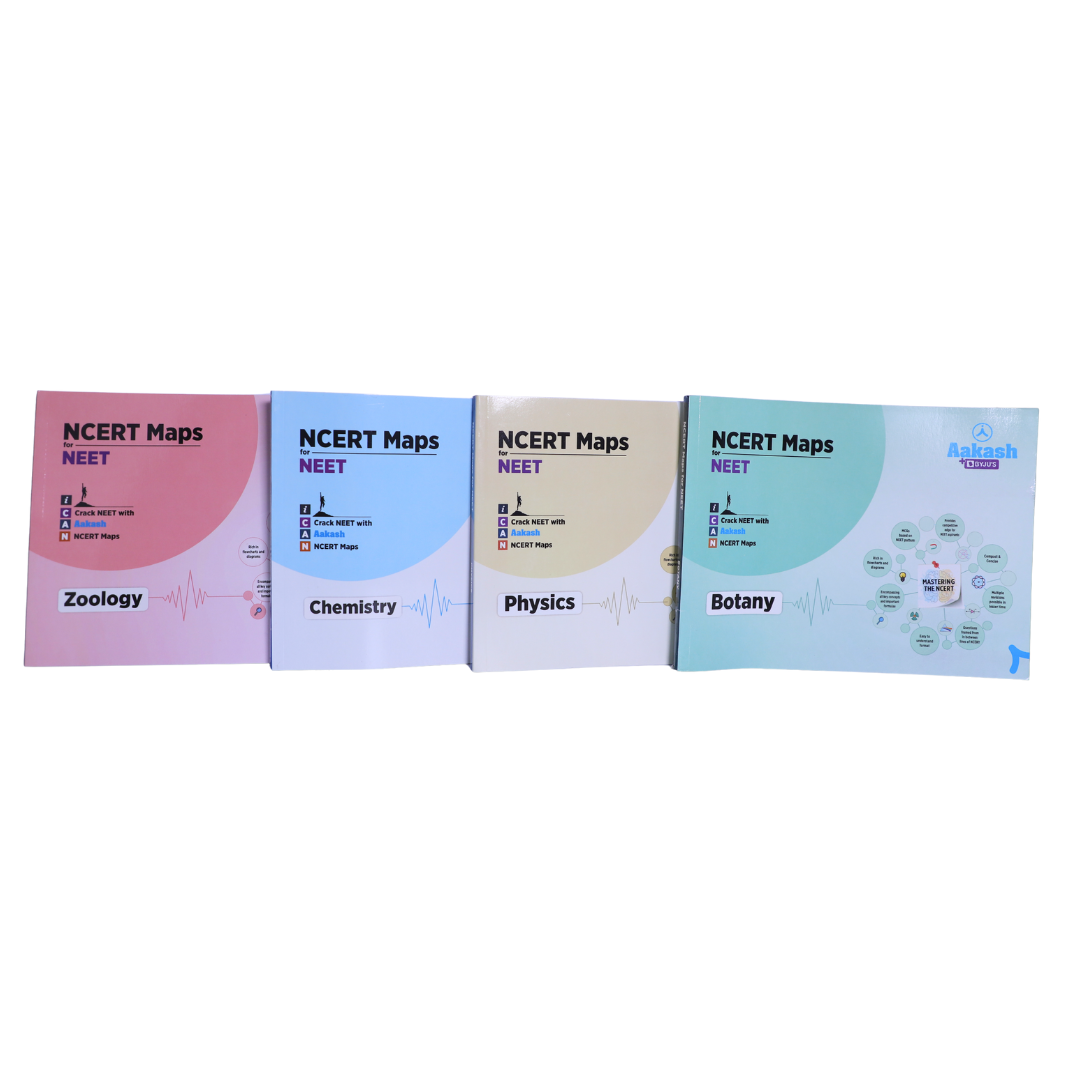
- Maps & diagrams: For NCERT-based map and labelled-diagram questions, a dedicated resource like the Aakash NCERT Maps for NEET (4-book set) closes an often-ignored scoring gap.
High-Yield Quick Wins Across the Syllabus
If you have limited time before the exam, these clusters give the best marks-per-hour return and should be revised last so they stay fresh:
- Biology: Human Physiology and Genetics together can supply 25–30 questions — revise diagrams, hormone tables and inheritance crosses repeatedly.
- Chemistry: Coordination Compounds, p-Block and the named reactions of Organic Chemistry are dense, predictable and NCERT-traceable.
- Physics: Modern Physics, Ray Optics and Current Electricity are formula-light relative to their question count — ideal late-stage focus areas.
- Cross-subject: Biomolecules appears in both Chemistry and Zoology — one focused session covers two papers.
Common NEET Syllabus Misconceptions
Several avoidable errors cost students marks every year. First, do not skip “low-weightage” chapters entirely — chapters like Biomolecules or Electronic Devices may carry only 1–2 questions, but in a tie-break those are the marks that decide your rank. Second, do not assume a deleted board topic is automatically out of NEET; verify against the official NTA PDF. Third, many students wrongly skip Class 11 Physics thinking Class 12 is enough — Mechanics alone is worth nearly a quarter of the Physics paper. Finally, do not rely on coaching shortcut sheets without finishing NCERT; the exam rewards the textbook reader.
Printable NEET 2026 Chapter Checklist (Revision Tracker)
Use this clean one-page tracker to tick off chapters as you complete the first read, the revision and the test. Print it and stick it on your wall — it converts the abstract “NEET syllabus” into a finite, satisfying to-do list.
| Subject | Total Chapters | 1st Read ☐ | Revision ☐ | PYQ/Test ☐ |
|---|---|---|---|---|
| Physics (Class 11 + 12) | ~30 | ☐ | ☐ | ☐ |
| Chemistry (Phy/Org/Inorg) | ~30 | ☐ | ☐ | ☐ |
| Botany | ~18 | ☐ | ☐ | ☐ |
| Zoology | ~19 | ☐ | ☐ | ☐ |
How to Download the NEET 2026 Syllabus PDF
The official NEET 2026 syllabus PDF is published by the NTA and the NMC and can be downloaded free, without any login. Follow these steps:
- Visit the official NTA NEET portal (neet.nta.nic.in) or the NMC website (nmc.org.in).
- Open the “Syllabus” or “Information Bulletin” section on the homepage.
- Click the “NEET-UG 2026 Syllabus” PDF link.
- Download and save the subject-wise document; it lists every unit and topic for Physics, Chemistry and Biology.
Keep the PDF as your master reference and cross-check your notes against it. If you prefer a ready-organised printed companion that already follows this syllabus chapter-by-chapter, the full Aakash NEET Medical 35-booklet package covers Physics, Chemistry and Biology end-to-end so you spend time studying rather than compiling.
Best Study Material Matched to the NEET Syllabus
Since the syllabus is fixed and NCERT-based, the right move is to pair each high-weightage area with material that drills it. NCERT remains the spine; structured modules add the practice layer. For full-coverage preparation, the Aakash NEET 11th + 12th 17-book set aligns with the Class 11 and 12 chapter split, while the NCERT Maps for NEET target the diagram- and map-based questions that aspirants routinely lose marks on. Choose depth (35-booklet package) or class-wise modules based on how much time you have, and always study with the official syllabus PDF open beside you.
Frequently Asked Questions
What is the syllabus for NEET 2026?
The NEET 2026 syllabus covers NCERT Class 11 and 12 Physics, Chemistry and Biology, spanning about 97 chapters. It was released by the NTA on 8 January 2026 and forms the basis of the 720-mark, 180-question exam.
Is the NEET syllabus based on NCERT only?
Yes, the NEET syllabus is derived entirely from NCERT Class 11 and 12. Around 80–90% of questions trace directly to NCERT text, though Physics numericals require extra application-level practice beyond the textbook.
How many chapters are there in the NEET syllabus?
There are approximately 97 chapters in total — about 30 in Physics, 30 in Chemistry and 37 in Biology (Botany plus Zoology) across Class 11 and Class 12.
Which topics have been deleted from the NEET 2026 syllabus?
Deleted or trimmed topics include parts of Surface Chemistry, Metallurgy, Polymers and Chemistry in Everyday Life in Chemistry; some Communication Systems and Electronic Devices content in Physics; and reduced Reproduction in Organisms and food-production content in Biology. Always confirm against the official NTA PDF.
What is the chapter-wise weightage in NEET?
Weightage is trend-based. The heaviest clusters are Organic Chemistry (14–16 questions), Human Physiology and Genetics & Evolution (13–15 each), Mechanics in Physics (9–11), and Ecology (9–11). Securing these high-frequency chapters first gives the best marks-per-hour return.
Is the NEET syllabus the same as the CBSE Class 11 and 12 syllabus?
It overlaps heavily but is not identical. The NEET syllabus is a subset of the combined CBSE Class 11 + 12 Science syllabus; every NEET topic is in CBSE, but CBSE adds board-only content, practicals and a descriptive exam style that NEET does not test.
Which subject has the highest weightage in NEET?
Biology has the highest weightage, with 90 questions and 360 marks — 50% of the paper. Physics and Chemistry carry 45 questions and 180 marks each (25% each).
How can I download the NEET 2026 syllabus PDF?
Visit the official NTA portal (neet.nta.nic.in) or NMC website (nmc.org.in), open the Syllabus section, and download the NEET-UG 2026 syllabus PDF free without any login. It lists every subject-wise unit and topic.
Recommended Study Material
Continue Reading
RBI Grade B Syllabus 2026: Phase 1, Phase 2 & Interview + PDF
The RBI Grade B syllabus is a three-stage structure: Phase 1 (Prelims) covers General Awareness, English, Quantitative Aptitude…
UPSC Mains Syllabus 2026: All 9 Papers + PDF Download
The upsc mains syllabus for the Civil Services Examination 2026 consists of 9 descriptive papers — one Essay…
CTET Paper 2 Syllabus 2026: Subject-Wise Topics + PDF
The CTET Paper 2 syllabus covers five sections for aspiring Classes 6–8 teachers: Child Development & Pedagogy (30…