WBCS Syllabus 2026: Prelims, Mains, Optional + PDF
Complete WBCS syllabus 2026: Prelims, Mains (8 papers), 37 optional subjects, exam pattern, marks, best books & official PDF download guide.

The WBCS syllabus for 2026 is set by the West Bengal Public Service Commission (WBPSC) and runs across three stages — a 200-mark objective Preliminary exam, a Mains exam of six compulsory papers plus two optional papers, and a Personality Test (interview). Prelims tests eight subjects (200 MCQs) with negative marking, while Mains carries a heavier weight of West Bengal history, geography and governance than a generic Indian GS paper. This guide gives you the complete, topic-wise WBCS syllabus for Prelims and Mains, the full list of ~37 optional subjects, the latest exam pattern, group-wise marks, a booklist, and a downloadable PDF checklist so you know exactly what to study.
Last reviewed: July 2026. Always cross-check the current cycle against the official WBPSC notification at wbpsc.gov.in before finalising your plan.
WBCS syllabus 2026 — the quick answer:
- Stages: Prelims (screening) → Mains (written, counts) → Personality Test (counts).
- Prelims: one 200-mark GS paper, 8 subjects × 25 marks, 200 MCQs, negative marking (1/3).
- Mains: Group A/B write 8 papers (1600 marks); Group C/D write 6 compulsory papers (1200 marks).
- Optional: Group A/B pick one optional (2 papers × 200) from ~37 subjects.
- Interview: 200 (A/B), 150 (C), 100 (D) marks — added to the final merit.
- Final rank: Mains written total + interview only. Prelims marks are not counted.
WBCS 2026 Overview: The WBPSC Three-Tier Structure
The West Bengal Civil Service Examination (WBCSE) is conducted by WBPSC to recruit officers for Group A, B, C and D posts — including WBCS (Exe.), WB Police Service, and other state-cadre services. The selection is a single, integrated process where you cannot skip a stage: you must clear Prelims to sit for Mains, and clear Mains to be called for the interview. Understanding this structure is the first step to decoding the WBCS syllabus 2026.
| Stage | Nature | Total Marks | Purpose |
|---|---|---|---|
| Preliminary Examination | Objective (MCQ) | 200 | Screening test — marks NOT counted in final merit |
| Main Examination | Objective + Conventional (written) | 1600 (Group A/B) | Marks counted in final merit list |
| Personality Test / Interview | Oral | 200 / 150 / 100 (by Group) | Marks counted in final merit list |
The single most important fact aspirants miss: Prelims marks are only for qualifying. Your final rank is built purely from Mains written papers plus the interview. So while Prelims decides whether you stay in the race, Mains and the Personality Test decide your service and cadre.
WBCS Exam Pattern 2026 at a Glance
Before diving into topics, here is the full WBCS exam pattern 2026 across all three stages, so you can map marks to effort.
| Stage | Papers | Marks per Paper | Duration | Question Type |
|---|---|---|---|---|
| Prelims | 1 (General Studies) | 200 (8 subjects × 25) | 2.5 hours | 200 MCQs |
| Mains — Compulsory | 6 papers | 200 each | 3 hours each | Paper I & II conventional; III–VI objective |
| Mains — Optional | 2 papers (Group A & B only) | 200 each | 3 hours each | Conventional (descriptive) |
| Interview | — | 200 / 150 / 100 | — | Personality Test |
Negative marking: Prelims and the objective-type Mains papers (III–VI) carry a penalty of 1/3 mark deducted for each wrong answer. This makes accuracy — not just coverage of the WBCS syllabus — a scoring skill in its own right.
WBCS Prelims Syllabus 2026: Topic-Wise Breakdown
The WBCS prelims syllabus is a single General Studies paper of 200 marks split evenly across eight subjects, each worth 25 marks. This equal weightage is a gift for planners: no single subject can be ignored, but none can sink you alone either.
| Subject (25 marks each) | What to Study |
|---|---|
| English Composition | Synonyms & antonyms, idioms & phrases, sentence correction, fill in the blanks, comprehension |
| General Science | Everyday science — Physics, Chemistry, Biology of general appreciation not requiring specialised study |
| Current Events of National & International Importance | Scientific, political, economic and sporting events of the last 12–18 months |
| History of India | Ancient, Medieval & Modern India — social, economic and political aspects |
| Geography of India (with special reference to West Bengal) | Physical, economic and social geography; WB rivers, soil, agriculture, industries |
| Indian Polity & Economy | Constitution, Panchayati Raj, Community Development, Five-Year Plans, national income |
| Indian National Movement | Nature and character of the 19th-century resurgence, growth of nationalism, freedom struggle |
| General Mental Ability | Logical reasoning, analytical ability, series, coding-decoding, basic numeracy |
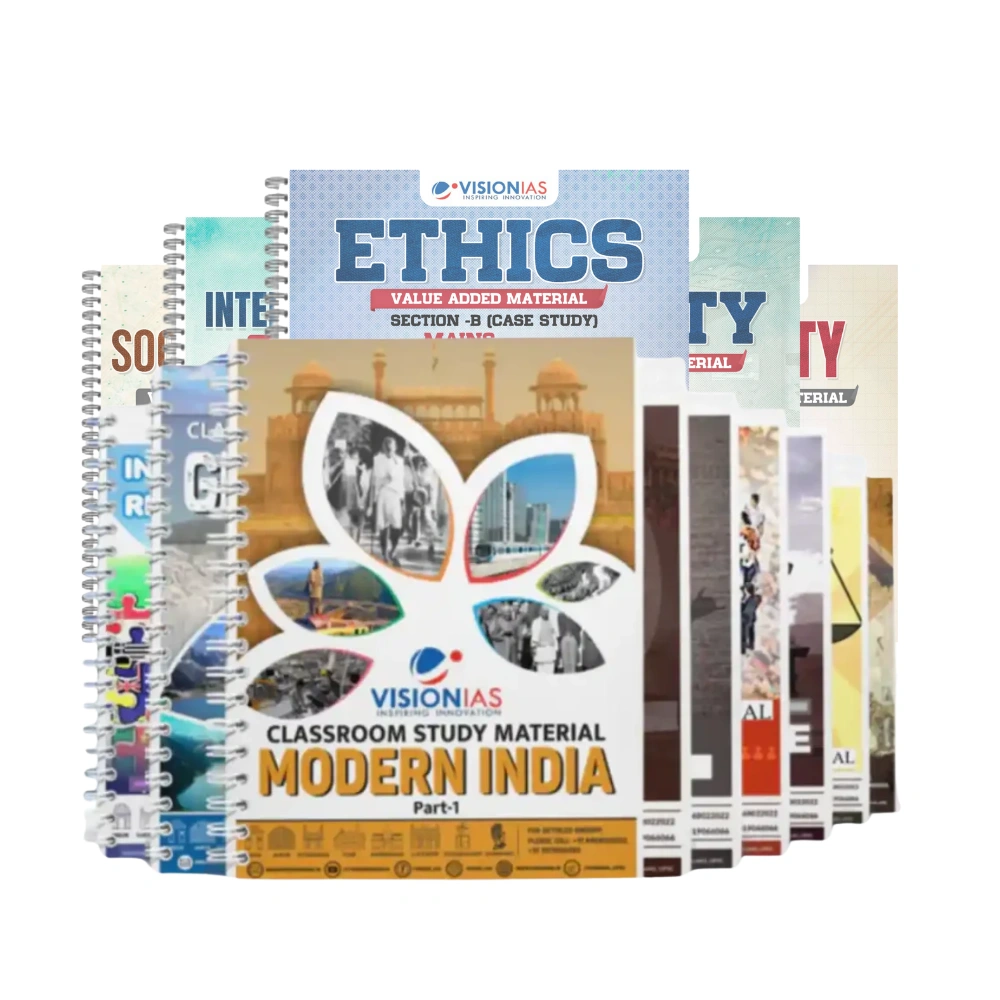
Notice how heavily West Bengal geography is flagged even in Prelims — questions on the Damodar, Teesta and Hooghly river systems, the Duars, laterite soil of Rarh Bengal, and the state’s tea and jute belts appear almost every year. Standard NCERTs cover the national frame, but WB-specific facts need targeted notes. A structured GS foundation such as the Vision IAS GS 2026-27 booklets covers the History, Polity, Geography and Science base efficiently, and you then layer a slim WB-focused supplement on top.
Is There Negative Marking in WBCS Prelims?
Yes. For every incorrect MCQ, 1/3 (0.33) of the mark allotted to that question is deducted. With 200 questions of 1 mark each, wild guessing quickly erodes your score. The proven approach is to attempt questions where you can eliminate at least two options, and to solve full-length papers under a timer. Practising with a graded set of tests — the same discipline used for UPSC via a topic-wise PYQ toolkit — trains you to judge when a calculated attempt is worth the risk.
WBCS Mains Syllabus 2026: All 8 Papers Explained
The WBCS mains syllabus is where ranks are made. Group A and B candidates write eight papers (six compulsory + two optional); Group C and D candidates write only the six compulsory papers. Every paper is 200 marks and three hours.
| Paper | Subject | Marks | Type |
|---|---|---|---|
| Paper I | Bengali / Hindi / Urdu / Nepali / Santali (compulsory language) | 200 | Conventional |
| Paper II | English | 200 | Conventional |
| Paper III | General Studies-I | 200 | Objective (MCQ) |
| Paper IV | General Studies-II | 200 | Objective (MCQ) |
| Paper V | The Constitution of India & Indian Economy (incl. role & functions of RBI) | 200 | Objective (MCQ) |
| Paper VI | Arithmetic & Test of Reasoning | 200 | Objective (MCQ) |
| Paper VII | Optional Subject — Paper 1 (Group A & B only) | 200 | Conventional |
| Paper VIII | Optional Subject — Paper 2 (Group A & B only) | 200 | Conventional |
Compulsory Language Paper (Paper I) & Its Qualifying Standard
Paper I tests one Indian language you choose — Bengali, Hindi, Urdu, Nepali or Santali. Its structure is practical, not literary: letter writing (~150 words), drafting of a report, précis writing, composition/essay, and translation from English into the chosen language. This is a matriculation-level proficiency test. Crucially, it is completely different from Bengali as an optional literature subject (Papers VII–VIII), which demands study of prescribed texts, literary history and criticism. Do not confuse the compulsory Bengali qualifying standard with optional Bengali literature — they test different skills entirely.
Compulsory English (Paper II)
Paper II mirrors Paper I in English — letter writing, report drafting, précis, composition and translation from the vernacular into English. Both language papers reward clean, error-free writing and time management more than vocabulary heroics.
General Studies I & II (Papers III & IV)
GS-I covers Indian History (with emphasis on the national movement and West Bengal) and the Geography of India with special reference to West Bengal. GS-II covers Science & Scientific Method, environment & ecology, and General Knowledge & Current Affairs. Because these are objective papers with negative marking, month-on-month current affairs revision is non-negotiable — a monthly compilation such as the Vision IAS Current Affairs Magazine (January 2026) keeps your GS-II and Prelims current-events base sharp without drowning you in newspapers.
Constitution & Indian Economy (Paper V) and Arithmetic & Reasoning (Paper VI)
Paper V blends the Indian Constitution (fundamental rights, DPSP, federal structure, Panchayati Raj) with the Indian Economy including the role and functions of the RBI, planning, and public finance. Paper VI is a scoring paper for the well-drilled — arithmetic (percentage, ratio, time-work, mensuration) and logical reasoning (series, syllogisms, coding). Since both are objective, targeted practice sets convert directly into marks.
WBCS Optional Subjects List 2026 (~37 Subjects)
Group A and B aspirants pick one optional subject with two papers (Paper VII & VIII), each 200 marks — 400 marks that can decide your entire rank. WBPSC offers roughly 37 optionals spanning languages, sciences, engineering and humanities.
| Category | Optional Subjects |
|---|---|
| Language & Literature | Bengali, Hindi, Sanskrit, English, Pali, Arabic, Persian, Urdu, French, Nepali, Santali |
| Humanities & Social Science | History, Geography, Political Science, Sociology, Philosophy, Psychology, Anthropology, Economics, Commerce & Accountancy, Law, Comparative Literature |
| Science | Physics, Chemistry, Mathematics, Statistics, Botany, Zoology, Geology, Physiology, Medical Science |
| Agriculture & Veterinary | Agriculture, Animal Husbandry & Veterinary Science |
| Engineering & Technology | Civil Engineering, Electrical Engineering, Mechanical Engineering, Computer Science, Management |
Choose your optional on three tests: your academic background, availability of quality study material, and overlap with the GS papers. Geography, Political Science, Sociology and Economics are perennial favourites because they reinforce GS and have deep material support.
Paper-by-Paper Breakup of Popular WBCS Optionals
Most syllabus pages only list optional names. Here is what actually sits inside the two papers of the most-chosen optionals — the detail that lets you decide before you commit.
| Optional | Paper 1 Core | Paper 2 Core |
|---|---|---|
| Geography | Geomorphology, climatology, oceanography, biogeography, environmental geography, geographic thought | Geography of India & West Bengal — resources, agriculture, industry, population, regional planning |
| Political Science | Political theory, Western & Indian political thought, key concepts (sovereignty, justice, rights) | Indian Government & Politics, comparative politics, international relations |
| Sociology | Sociological thought, research methods, social institutions, stratification, change | Indian society — structure, caste, kinship, rural-urban, social movements & problems |
| Economics | Micro & macro theory, quantitative methods, money & banking, public finance | Indian & West Bengal economy — agriculture, industry, planning, poverty, development |
| History | Ancient & Medieval India, art & culture, historiography | Modern India, national movement, world history & post-independence India |
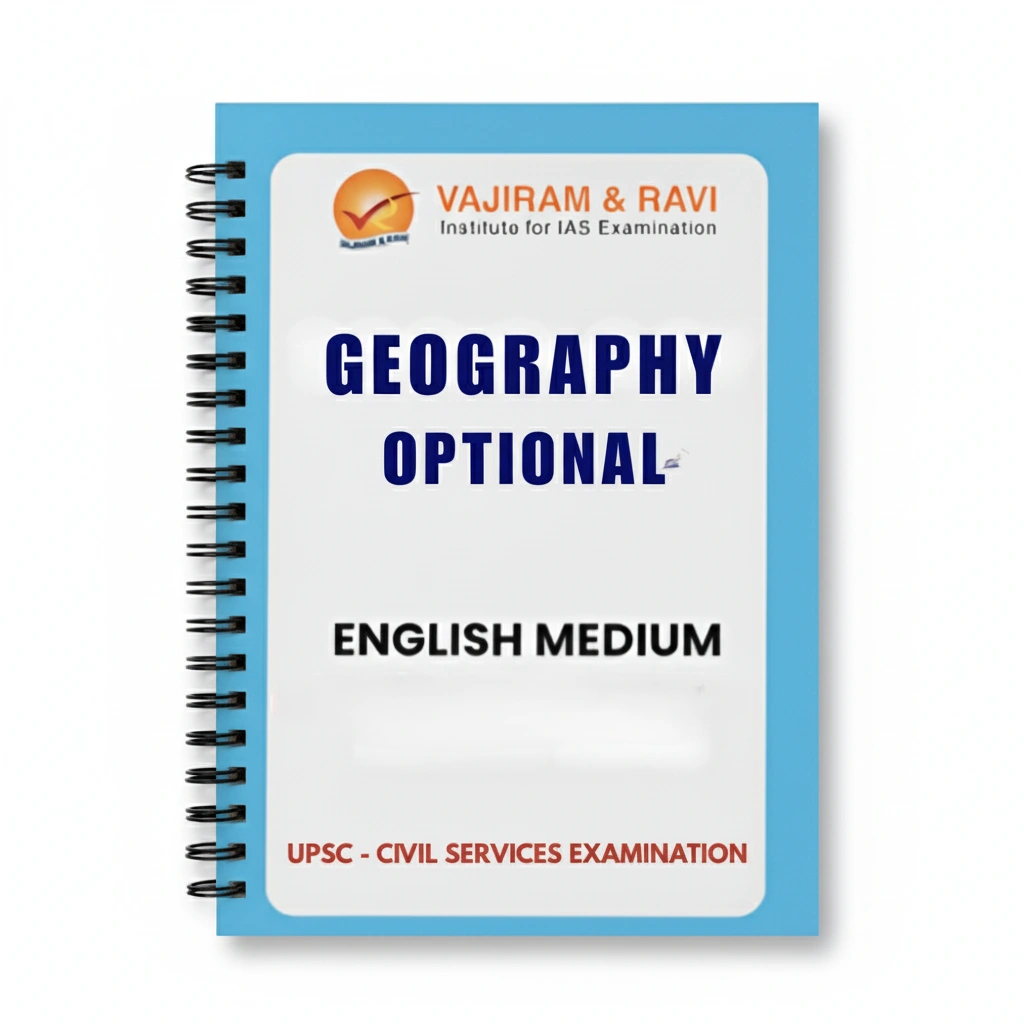
For a WB-cadre exam, Geography is especially strategic because Paper 2 explicitly rewards West Bengal regional knowledge that also feeds GS-I. Aspirants who pick it lean on a dedicated optional set such as the Vajiram Geography Optional notes to cover both papers systematically.
How Many Papers Are in WBCS Mains — and Group-Wise Marks
The answer depends on the Group you are targeting. Group A and B write 8 papers (1600 marks); Group C and D write 6 compulsory papers (1200 marks) and no optional. Interview marks also vary by Group.
| Group | Mains Papers | Mains Marks | Interview Marks |
|---|---|---|---|
| Group A | 8 (6 compulsory + 2 optional) | 1600 | 200 |
| Group B | 8 (6 compulsory + 2 optional) | 1600 | 200 |
| Group C | 6 compulsory | 1200 | 150 |
| Group D | 6 compulsory | 1200 | 100 |
This is why Group A/B aspirants must invest in an optional early — 400 optional marks plus a 200-mark interview form a decisive block of the final merit. Candidates targeting only Group C/D can skip optionals and double down on the six compulsory papers.
How WBCS Marks Feed the Final Merit List
Here is the merit logic in plain terms:
- Prelims (200 marks): qualifying only — decides who advances to Mains. Not added to the final score.
- Mains written papers: fully counted. For Group A/B that is 1600 marks; for Group C/D, 1200 marks.
- Personality Test: fully counted (200/150/100 by Group).
- Final merit = Mains written total + Interview.
The takeaway: never over-invest in Prelims at the cost of Mains answer-writing and your optional. Clear Prelims comfortably, then let Mains and the interview build your rank. And because Papers III–VI are objective with negative marking, precision in those papers quietly separates the top few hundred candidates.
West Bengal–Specific Content That Dominates the Exam
The biggest scoring edge in the WBCS syllabus is the state-specific layer that generic Indian GS books skip. Build a dedicated WB notebook covering:
- WB History: Bengal Renaissance, Brahmo Samaj, Young Bengal, the Partition of Bengal (1905), Swadeshi Movement, revolutionary nationalism (Anushilan, Jugantar), Tebhaga movement.
- WB Geography: river systems (Ganga-Hooghly, Damodar, Teesta), the Duars & Terai, Rarh Bengal laterite region, Sundarbans delta, tea, jute and rice belts, major industries.
- WB Polity & Governance: the three-tier Panchayati Raj system in Bengal, municipalities, Community Development blocks, and state government schemes.
- WB Economy: agriculture-led rural economy, small-scale & cottage industries, state planning and finance.
These themes recur in Prelims, GS-I, GS-II and the language/essay papers — a single well-organised WB section pays off across the whole exam.
A Smart Study Plan for the WBCS Syllabus 2026
Knowing the syllabus is half the battle; sequencing it well is the other half. A workable order of attack for a first-time aspirant looks like this:
- Months 1–3 — Build the base: finish NCERTs (Class VI–XII) and a consolidated GS notes set for History, Polity, Geography and Economy. This single base serves Prelims, GS-I, GS-II and Paper V simultaneously.
- Months 2–6 — Add the WB layer and the optional: start your West Bengal notebook and, if you are targeting Group A/B, lock in your optional subject and cover both its papers alongside GS. Early optional selection is the most common differentiator between rank-holders and repeaters.
- Throughout — Keep current affairs running: one monthly magazine, revised every month, feeds both Prelims current events and Mains GS-II.
- Last 3 months — Test and refine: full-length Prelims mocks with negative marking, objective practice for Papers III–VI, and answer-writing drills for the conventional and optional papers.
Because Prelims marks do not count toward the final rank, treat Prelims as a gate to clear efficiently and channel your best hours into Mains answer quality and your optional — that is where the merit list is actually decided.
Best Books & Study Material for the WBCS Syllabus
Mapping each part of the syllabus to the right resource prevents both under-preparation and wasteful over-buying. Since WBCS GS overlaps heavily with the UPSC frame, standard IAS material covers the bulk, and you supplement with WB-specific notes.
| Syllabus Area | Recommended Resource Type |
|---|---|
| Foundation (History, Polity, Geography, Economy) | NCERTs (Class VI–XII) + a consolidated GS notes set |
| General Studies I & II (Mains + Prelims) | Comprehensive printed GS booklets covering the full syllabus |
| Current Affairs (Prelims + GS-II) | Monthly current-affairs magazine, revised regularly |
| Arithmetic & Reasoning (Paper VI) | Quantitative aptitude & reasoning practice books + timed sets |
| Optional Paper VII & VIII | Subject-specific optional notes (Geography, Pol. Science, Sociology, Economics) |
| WB-specific History & Geography | Dedicated West Bengal reference / handwritten notes |
For candidates who want an all-in-one GS backbone, a full 2026-27 booklet set like the Vision IAS GS notes covers History, Polity, Geography, Economy, Science and Environment in one place, and pairs well with a running current-affairs subscription for the objective papers.
WBCS Syllabus PDF Download & Printable Checklist
The official, authoritative WBCS syllabus PDF is published by WBPSC in its examination notification. Always download the Prelims and Mains syllabus straight from the official portal — wbpsc.gov.in — to confirm the current cycle’s pattern before you finalise your plan, since the Commission periodically revises paper structure and optional lists through fresh notifications.
To make revision measurable, use the printable topic-wise checklist below. Tick each item as you complete first reading, revision, and PYQ practice — three passes per topic is the target.
| Stage | Checklist Items to Track |
|---|---|
| Prelims | English ▢ · General Science ▢ · Current Events ▢ · History ▢ · Geography (WB) ▢ · Polity & Economy ▢ · National Movement ▢ · Mental Ability ▢ |
| Mains Compulsory | Language Paper I ▢ · English II ▢ · GS-I ▢ · GS-II ▢ · Constitution & Economy ▢ · Arithmetic & Reasoning ▢ |
| Mains Optional | Optional Paper 1 syllabus ▢ · Optional Paper 2 syllabus ▢ · PYQ solved ▢ · Answer-writing practice ▢ |
| Interview | DAF/bio-data prep ▢ · WB current affairs ▢ · Optional-subject viva ▢ · Mock interviews ▢ |
Frequently Asked Questions
What is the syllabus of WBCS 2026?
The WBCS syllabus 2026 has three stages. Prelims is one 200-mark GS paper covering eight subjects — English, General Science, Current Events, Indian History, Indian Geography (with West Bengal focus), Polity & Economy, National Movement and Mental Ability. Mains has six compulsory papers (two language, two GS, one Constitution & Economy, one Arithmetic & Reasoning) plus two optional papers for Group A and B, followed by a Personality Test.
How many papers are there in WBCS Mains?
Group A and B candidates write eight papers — six compulsory and two optional-subject papers — each worth 200 marks. Group C and D candidates write only the six compulsory papers. Papers I and II (language) and the optional papers are conventional/descriptive, while Papers III to VI are objective with negative marking.
Is WBCS syllabus same as UPSC?
They overlap heavily in the General Studies core — History, Polity, Geography, Economy and Current Affairs — but they are not identical. WBCS places far more weight on West Bengal history, geography and governance, includes objective-type Mains papers with negative marking, and has a compulsory regional language paper. UPSC Mains, by contrast, is fully descriptive. Much UPSC GS material works for WBCS, supplemented with WB-specific notes.
Is Bengali compulsory for WBCS?
Not strictly Bengali — Paper I requires one Indian language chosen from Bengali, Hindi, Urdu, Nepali or Santali at a matriculation-standard qualifying level (letter writing, précis, composition, translation). It is different from Bengali literature taken as an optional subject. So you must attempt one regional language paper, but you can choose the one you are comfortable with.
What are the optional subjects in WBCS?
WBPSC offers around 37 optional subjects for Group A and B, spanning languages (Bengali, Hindi, Sanskrit, English, Urdu, Nepali, Santali and more), humanities (History, Geography, Political Science, Sociology, Economics, Law, Philosophy, Psychology, Anthropology), sciences (Physics, Chemistry, Mathematics, Statistics, Botany, Zoology, Geology), engineering (Civil, Electrical, Mechanical, Computer Science) and Agriculture/Veterinary Science. You choose one optional with two papers of 200 marks each.
Is there negative marking in WBCS Prelims?
Yes. WBCS Prelims deducts 1/3 (0.33) of a question’s mark for every wrong answer, and the same penalty applies to the objective Mains papers (III–VI). With 200 one-mark MCQs in Prelims, unchecked guessing can pull your score down fast, so accuracy and smart option-elimination matter as much as knowing the syllabus.
How many marks is the WBCS interview?
The Personality Test carries 200 marks for Group A and B, 150 marks for Group C, and 100 marks for Group D. Unlike Prelims, interview marks are added to your Mains written total to form the final merit list, so it is a decisive stage — especially for Group A and B aspirants.
Which books are best for WBCS syllabus preparation?
Start with NCERTs (Class VI–XII) for the foundation, then use a consolidated GS notes set covering History, Polity, Geography, Economy, Science and Environment for Prelims and Mains GS. Add a monthly current-affairs magazine for the objective papers, quantitative-aptitude and reasoning practice books for Paper VI, subject-specific notes for your optional, and a dedicated West Bengal reference for the state-focused history and geography that generic Indian GS books do not cover.
Recommended Study Material


Continue Reading
Best Study Material for UPSC 2026: Subject-Wise Buying Guide
The best study material for UPSC is a four-layer stack: NCERT textbooks (Class 6–12), one standard reference book…
IBPS Clerk Syllabus 2026: Prelims, Mains + PDF Download
The IBPS Clerk syllabus covers three sections in Prelims — English Language, Numerical Ability and Reasoning Ability (100…
Public Administration Optional Syllabus 2026: Paper 1 & 2 + PDF
The public administration optional syllabus for UPSC Mains is split into two papers of 250 marks each (500…