Current Affairs for UPSC 2026: Free Daily + Monthly PDF Guide
Current affairs for UPSC 2026 made exam-first: daily analysis, subject-wise notes, prelims MCQ quizzes, monthly PDF magazines and a 1-year revision plan — free workflow included.

Current affairs for UPSC means reading and revising roughly 12–18 months of exam-relevant national and international events, filtering them through the Prelims and Mains syllabus, and converting them into crisp, revisable notes. The most reliable free workflow is simple: one newspaper (The Hindu or Indian Express) plus PIB daily, one consolidated monthly current affairs magazine PDF, and a daily MCQ quiz — then a PT 365 / Mains 365-style year-end compilation before the exam. On average, 15–20 of the 100 Prelims GS Paper-1 questions are directly current-affairs driven, and current affairs silently shapes another 20–25 questions across Polity, Economy, Environment and Science & Tech.
This guide gives you a complete, exam-first system for current affairs for UPSC 2026 — daily analysis by subject, separate Prelims and Mains angles, daily quizzes and answer-writing, downloadable monthly PDFs, and a beginner-to-advanced revision plan. It is built to answer exactly what aspirants ask: how far back to read, which sources actually matter, how many questions to expect, and how to make notes you will revise more than once.
Quick Answer: Current Affairs for UPSC in 60 Seconds
- Window: Cover the last 12–18 months before Prelims — not five years, not three months.
- Daily stack: One newspaper + PIB + one daily analysis + a 5–10 question current affairs quiz (60–90 minutes total).
- Consolidation: One monthly current affairs magazine PDF, revised 3+ times.
- Final phase: PT 365-style compilation for Prelims, Mains 365-style for Mains, plus Budget and Economic Survey.
- Golden rule: Fewer sources, more revision. Collection is not preparation.
The rest of this article expands each of these into a repeatable daily-to-yearly routine, with tables you can act on today.
Why Current Affairs for UPSC Decides Your Selection
No other single input touches all three stages of the exam. In Prelims, current affairs is often the difference between clearing the cut-off and missing it by two marks. In Mains, every GS paper — governance, economy, environment, IR, disaster management, ethics case studies — reads better when you can quote a recent scheme, judgment, index or report. In the Personality Test, the board expects you to hold an informed opinion on what happened this year.
The mistake beginners make is treating current affairs as “reading the news.” UPSC does not test news; it tests your ability to link events to the static syllabus. A metro-city flood is not a headline — it is urban planning, wetland regulation, the National Disaster Management Authority, climate adaptation and the 74th Amendment, all at once. That linking skill is what this system builds.
How Many Marks and Questions Come From Current Affairs?
Here is a realistic breakdown of where current affairs shows up. Treat these as informed estimates drawn from recent question papers, not official figures — UPSC never publishes a weightage, so any exact number you see online is an estimate too.
| Stage / Paper | Direct CA Load | Indirect CA Influence | Practical Takeaway |
|---|---|---|---|
| Prelims GS Paper 1 (100 Qs) | 15–20 questions | 20–25 questions (Polity, Economy, Environment, S&T) | Nearly one-third of the paper rewards current affairs |
| Prelims CSAT Paper 2 | Minimal | Reading-comprehension passages are often topical | Qualifying only; low priority for CA |
| Mains GS 1–4 (250 marks each) | Almost every answer benefits | Examples, data, schemes, judgments | CA is the “value addition” that lifts scores |
| Essay (250 marks) | High | Recent facts and quotes strengthen every essay | Use 2–3 current data points per essay |
| Interview (275 marks) | High | Opinion questions on the year’s events | Last 6–12 months matter most |
Current Affairs for UPSC 2026: What to Read and How Far Back
For the 2026 cycle, your effective window is roughly the 12–18 months before Prelims. In practice that means covering events from about January 2025 through the exam for Prelims, and stretching selected themes back further for Mains where a policy or issue has been evolving — for example, a scheme launched in 2023 that saw a major update in 2025.
You do not need to memorise dates. You need to know what happened, why it matters, which part of the syllabus it maps to, and the two or three facts UPSC could convert into a question. Below is the subject-wise segmentation that mirrors how toppers organise their notes.
Subject-Wise Segmentation of Daily Current Affairs
| Subject | What to Track | Prelims Angle (facts/pointers) | Mains Angle (analysis) |
|---|---|---|---|
| Polity & Governance | Bills, Acts, SC judgments, constitutional bodies | Article numbers, who appoints, tenure, powers | Federalism, separation of powers, rights vs duties |
| Economy | RBI policy, Budget, schemes, indices, reports | Full forms, launching ministry, targets, data | Growth vs inflation, fiscal-monetary balance |
| Environment & Ecology | Species, protected areas, COP outcomes, laws | IUCN status, location, convention parties | Climate policy, conservation vs development |
| Science & Technology | ISRO, biotech, AI, defence tech, health | Mission names, agencies, applications | Ethics of tech, indigenisation, digital public goods |
| International Relations | Summits, groupings, treaties, bilateral visits | Members, headquarters, host country | India’s strategy, multi-alignment, neighbourhood |
| Society & Social Justice | Census/survey data, welfare schemes, SDGs | Scheme beneficiaries, coverage, ministry | Inequality, gender, health, education outcomes |
| Internal Security | Forces, cyber, borders, Left-wing extremism | Agency names, operations, laws | Terror financing, cyber governance, border management |
| Geography | Places in news, disasters, resources | Location on map, river/pass/strait facts | Disaster management, resource geopolitics |
| Art & Culture | GI tags, heritage sites, awards, festivals | State of origin, UNESCO status, art form | Cultural diplomacy, preservation debates |
How to Prepare Current Affairs for UPSC (Step by Step)
Preparation is a daily loop, not a one-time effort. The workflow below takes 60–90 minutes a day once you settle into it, and it is deliberately source-light so you never drown in information.
- Step 1 — Read one newspaper (30–40 min): The Hindu or Indian Express, front page to editorials. Skip crime, sports and page-3; underline anything that maps to the syllabus.
- Step 2 — Scan PIB and a daily analysis (15 min): PIB gives you the official scheme and government-side facts. A reputed daily news analysis (video or PDF) tells you what is exam-relevant and what to ignore.
- Step 3 — Make one-line notes by subject (15 min): Add each point to your Polity/Economy/Environment note under the correct heading. One event, one or two lines, one fact.
- Step 4 — Attempt a daily current affairs quiz (10 min): 5–10 MCQs on the day’s news lock in retention and show you the Prelims angle instantly.
- Step 5 — Consolidate monthly: Replace scattered daily notes with a single monthly current affairs magazine PDF so revision stays manageable.
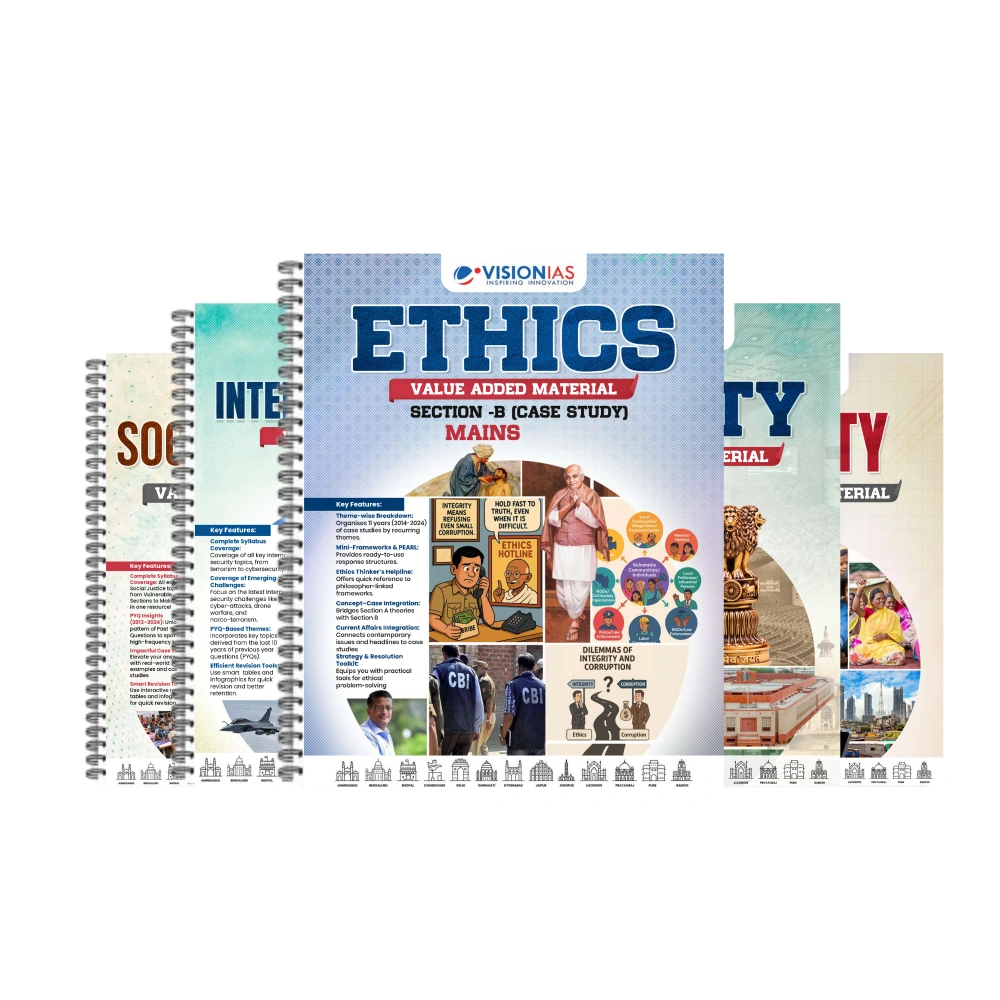
If you are pairing current affairs with static preparation, structured GS notes make the linking far easier. Aspirants building their core from scratch often use a ready set like the Vision IAS English Study Material so that when a current event breaks, they already have the static chapter to attach it to.
How Should a Beginner Start Current Affairs vs an Experienced Aspirant?
A fresher and a second-attempt aspirant should not follow the same routine — this is where most generic guides fail you.
| Aspect | Beginner (first 3 months) | Experienced Aspirant |
|---|---|---|
| Newspaper time | 60–75 min (still learning to filter) | 25–35 min (fast, syllabus-trained eye) |
| Note-making | Start with monthly magazine, minimal own notes | Own crisp notes + magazine as backup |
| Focus | Understand terms, build the habit | Answer-writing and inter-linking |
| Quiz | Weekly, to check understanding | Daily, timed, for accuracy |
| Static link | Read the static chapter alongside | Instant recall, revise only weak areas |
Beginners should not attempt to make original notes for the first few weeks — you do not yet know what matters. Lean on a compiled monthly magazine, and shift to your own notes only once you can predict which line UPSC will pick.
Daily Current Affairs for UPSC: The Prelims vs Mains Split
Every event has two faces. The same news item is stored twice in a good aspirant’s system — once as a Prelims fact and once as a Mains argument. This is the core habit behind effective daily current affairs for UPSC.
Prelims angle: Convert news into testable facts. If a new tiger reserve is notified, your Prelims note is the state, the river system, whether it was carved from an existing sanctuary, and its IUCN-relevant species. Pointed, factual, memorisable.
Mains angle: Convert the same news into an argument. The tiger reserve becomes material for a conservation-vs-livelihood answer, a discussion of Project Tiger’s evolution, or tribal rights under the Forest Rights Act. Analytical, linked, quotable.
Practise this split daily and you get double value from a single reading. To structure the Mains side well, many aspirants supplement with value-added material — the Vision IAS GS Value Added Materials compile schemes, reports and data points in the exact form Mains answers demand.
Current Affairs Quiz for UPSC Prelims and MCQ Practice
Reading without testing is the most common way aspirants waste months. A daily current affairs MCQ quiz for UPSC prelims does three things: it converts passive reading into active recall, it reveals the exact fact UPSC could ask, and it builds elimination skills for the two-statement and “how many of the above” formats that now dominate Prelims.
Attempt 5–10 current affairs MCQs for UPSC every day and a weekly 20–30 question round. When you take a full Prelims test series, current affairs questions are folded into the GS paper exactly as in the real exam — a good reason to practise under timed conditions with the Forum IAS UPSC Prelims Toolkit topic-wise PYQ pack, which shows you how past current-affairs questions were actually framed from 1992 to 2025.
Monthly Current Affairs for UPSC PDF and Magazines
Daily notes are for capture; monthly compilations are for revision. A monthly current affairs for UPSC PDF collapses 30 days of scattered reading into one organised, subject-wise document you can revise in two or three hours. This is non-negotiable — you cannot revise a month of newspapers, but you can revise a 120-page compilation four or five times before Prelims.
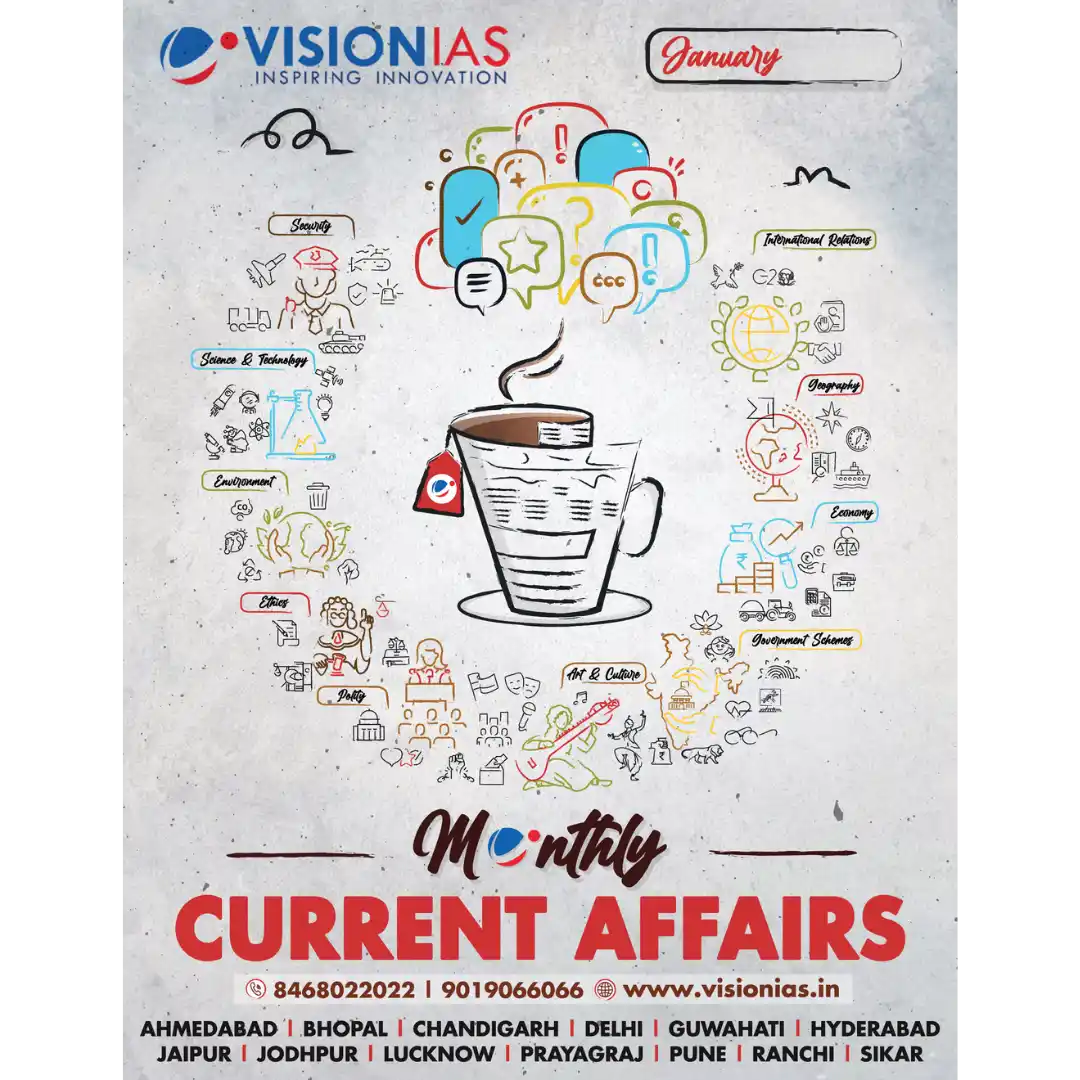
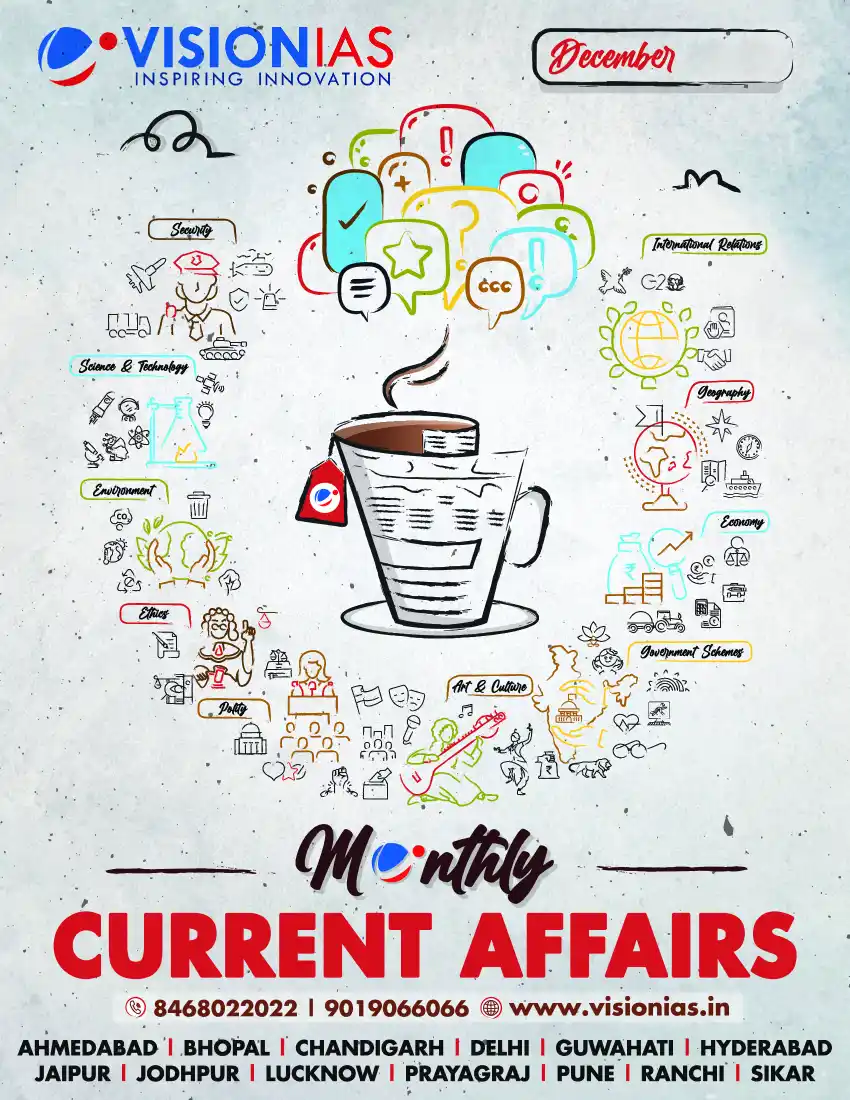
A widely trusted choice over the last decade has been the Vision IAS monthly magazine, valued for its clean subject segmentation, prelims-facts boxes and mains-ready analysis. Building a month-by-month set gives you a continuous, gap-free record of the exam year.
| Monthly Magazine | Medium | Price | Best For |
|---|---|---|---|
| Vision IAS January 2026 (English) | English | ₹299 | Latest month, start of 2026 cycle |
| Vision IAS December 2025 (English) | English | ₹199 | Year-end round-up, December events |
| Vision IAS December 2025 (Hindi) | Hindi | ₹225 | Hindi-medium aspirants |
| Vision IAS November 2025 (English) | English | ₹199 | Building a continuous archive |
| Vision IAS November 2025 (Hindi) | Hindi | ₹225 | Hindi-medium November coverage |
Collect these month on month and, by exam time, you hold a bound, exam-year current affairs library rather than a folder of forgotten PDFs.
Which Monthly Magazine Is Best for UPSC Current Affairs?
For most aspirants, one primary magazine is enough — reading three of them is a classic time trap. Choose based on your medium and how much analysis you want. Among the options, the Vision IAS monthly is a safe default for its balance of prelims facts and mains analysis; treat one magazine as your single monthly source and do not add a second unless you have a specific, identified gap. That is how you settle the “best current affairs magazine for UPSC” debate in your own favour: the best magazine is the one you actually revise.
Year-Long Consolidations: PT 365, Mains 365, Budget and Survey
Two to three months before Prelims, monthly magazines are replaced by year-end consolidations. These strip out the noise and give you only what remained exam-relevant across the whole year.
| Consolidation | Purpose | When to Use |
|---|---|---|
| PT 365-style compilation | All prelims-relevant CA of the year, subject-wise | 60–75 days before Prelims |
| Mains 365-style compilation | Analytical, answer-ready CA for Mains | After Prelims, before Mains |
| Union Budget summary | Allocations, new schemes, tax changes | Feb–March, then revise before exam |
| Economic Survey highlights | Themes, data, policy direction | Alongside Budget |
| Government schemes compilation | Ministry, objective, beneficiaries, features | Ongoing; revise before both stages |
| Year-end review / reports & indices | India’s rank, key data points | Final month before Prelims |
The Budget and Economic Survey deserve special attention because they generate high-yield, factual Prelims questions and rich Mains data every single year. Do not skip them.
Authentic Sources for Current Affairs and How to Use Them
The list of trustworthy sources is short by design. More sources means less depth and no revision. Here is a reliable set and the precise job each one does.
| Source | What It Gives You | How to Use It |
|---|---|---|
| The Hindu | Balanced news, strong editorials | Daily; front page + editorial + national |
| Indian Express | Explained section, governance focus | Daily alternative; read “Explained” |
| PIB | Official scheme and government facts | Daily scan for scheme details |
| Yojana | In-depth monthly on one theme | Monthly; for Mains depth on a topic |
| Kurukshetra | Rural development focus | Monthly; agriculture, rural schemes |
| Monthly CA magazine | Consolidated, filtered, subject-wise | Primary revision document |
| Sansad TV / RSTV debates | Multi-dimensional analysis | Selective; for tough Mains issues |
Is The Hindu Newspaper Enough for UPSC Current Affairs?
The Hindu is sufficient as your newspaper, but it is not your entire current affairs preparation. It gives you daily events and editorial depth, but it will not hand you scheme details, indices or the prelims-facts version of a story. Pair it with PIB for official data and a monthly magazine for consolidation, and it becomes more than enough. Reading two newspapers, on the other hand, is usually wasted effort.
Which Is the Best Source for Current Affairs for UPSC?
There is no single best source — there is a best combination: one newspaper + PIB (daily) → one monthly magazine (consolidation) → one year-end compilation (final revision). This three-layer stack covers capture, consolidation and revision without overlap, which is exactly what UPSC rewards.
How to Make Current Affairs Notes for UPSC
Good notes are short, subject-wise, and built for revision — not a diary of everything you read. Follow these rules and your notes will actually get revised, which is the entire point.
- One event, one entry: Two to four lines maximum. If you cannot compress it, you have not understood it.
- Organise by static heading, not by date: A new labour code goes under “Polity → Labour Laws,” not under “15 March.” This is how you revise and link.
- Separate prelims facts from mains points: Use a small box or a different colour for the hard fact (rank, article, agency) versus the argument.
- Update, do not duplicate: When a scheme is revised, edit the existing entry rather than creating a new one.
- Digital or physical, but only one system: Notion, a single notebook, or the margins of your magazine — pick one and stay there.
A powerful shortcut for beginners is to annotate a printed monthly magazine instead of writing notes from scratch. The magazine is already organised by subject with prelims and mains sections; you simply add the two or three extra points you found. This saves hours every week.
Retention and Spaced Revision Workflow
Reading current affairs once is close to useless — you will forget most of it within a month. Retention comes from spaced revision. Revise each monthly magazine at least three times before Prelims: once when it releases, once a month later, and once during final revision. Attach current affairs to the static syllabus so it has “hooks” to hang on — a scheme linked to a Polity chapter is remembered far longer than a floating fact.
Can You Prepare Current Affairs for UPSC Without Coaching?
Yes — current affairs is the most self-study-friendly part of the whole exam. The primary inputs (newspaper, PIB, daily analysis, free daily quizzes) cost nothing, and the only paid layers worth buying are consolidation and testing. What coaching genuinely adds is filtering and structure; you can replicate both with a good monthly magazine and a test series, without sitting in a classroom.
A workable self-study rhythm is: newspaper and PIB each morning, one daily analysis to confirm relevance, one-line notes by subject, a short daily quiz, and a monthly magazine for consolidation. Layer in a test series two to three months before Prelims. If you are self-studying, be extra disciplined about the source list — without a mentor telling you to stop, it is easy to keep adding YouTube channels and Telegram PDFs until you have no time left to revise any of them.
Free vs Paid Current Affairs Sources: What to Actually Buy
Most of what you need is free — newspapers, PIB, and daily analysis cost nothing. What you should pay for is consolidation and testing, because that is where free resources are scattered and unreliable.
| Resource | Free Option | Worth Paying For? |
|---|---|---|
| Daily news | The Hindu / Indian Express, PIB | No — free is enough |
| Daily analysis | Free YouTube daily analysis | No — free is enough |
| Monthly compilation | Patchy free PDFs | Yes — a paid magazine saves time and gaps |
| MCQ / test practice | Free daily quizzes | Yes — a structured test series for exam realism |
| Static GS notes | Scattered free material | Yes — one coherent set beats ten free ones |
In short: spend on the monthly magazine, a test series and one solid set of static notes; keep everything else free. That is the leanest possible budget that still covers current affairs for UPSC 2026 properly.
A Realistic 12-Month Current Affairs Timeline
| Phase | Focus | Daily Time |
|---|---|---|
| Months 12–7 before Prelims | Daily newspaper + monthly magazine + weekly quiz | 60–90 min |
| Months 6–4 | Continue daily; start revising older magazines | 60–75 min |
| Months 3–2 | Shift to PT 365-style compilation; daily quizzes | 90 min |
| Final month | Only compilations + Budget/Survey + full CA tests | 2 hours revision |
| Prelims to Mains gap | Mains 365-style; answer-writing with CA examples | As per Mains plan |
Common Current Affairs Mistakes to Avoid
- Reading too many sources: Three magazines and two newspapers is a recipe for zero revision. Stay lean.
- Hoarding without revising: A folder of 300 PDFs you never open helps no one. Revision beats collection.
- Ignoring the static link: Current affairs floating free of the syllabus is quickly forgotten and rarely scores.
- Skipping MCQ practice: Passive reading feels productive but does not survive the exam hall.
- Starting too late or going back too far: Twelve to eighteen months is the sweet spot — not five years, not three months.
Frequently Asked Questions
How to prepare current affairs for UPSC?
Read one newspaper (The Hindu or Indian Express) plus PIB daily, make short subject-wise notes, attempt a daily current affairs MCQ quiz, and consolidate every month with one current affairs magazine. In the final two to three months, switch to PT 365-style year-end compilations and revise them three or more times. Keep the source list short and revise relentlessly.
Which is the best source for current affairs for UPSC?
There is no single best source — the best approach is a combination: one newspaper plus PIB daily for capture, one monthly magazine for consolidation, and one year-end compilation for final revision. This three-layer stack covers everything UPSC asks without overlap, which is why it consistently works better than chasing many sources.
How many months of current affairs are needed for UPSC? Is 1 year enough?
Roughly 12–18 months before Prelims is the standard window. One year is broadly enough for Prelims if you cover it thoroughly and revise, but stretching to about 15–18 months is safer for slow-evolving policy issues and for Mains. Going back three or more years is unnecessary and counterproductive.
How many questions come from current affairs in UPSC Prelims?
Directly, about 15–20 of the 100 GS Paper-1 questions are current-affairs based, and current affairs indirectly influences another 20–25 questions across Polity, Economy, Environment and Science & Technology. In effect, nearly a third of the paper rewards strong current affairs preparation. UPSC does not publish official weightage, so these are estimates from recent papers.
Which monthly magazine is best for UPSC current affairs?
For most aspirants the Vision IAS monthly current affairs magazine is a strong single choice, thanks to its clean subject-wise segmentation, prelims-facts boxes and mains-ready analysis. Pick one magazine and stick with it — reading multiple magazines wastes time and leaves you no room to revise.
Is The Hindu newspaper enough for UPSC current affairs?
The Hindu is enough as your daily newspaper, but not as your complete current affairs preparation. Pair it with PIB for official scheme facts and a monthly magazine for consolidation, and it becomes more than sufficient. Reading a second newspaper alongside is usually redundant.
How do I make current affairs notes for UPSC?
Keep each entry to two to four lines, organise notes by static syllabus heading rather than by date, separate hard prelims facts from mains arguments, and update existing entries instead of duplicating them. The fastest method for beginners is to annotate a printed monthly magazine with a few extra points rather than writing notes from scratch.
Recommended Study Material

Continue Reading
SSC CGL Exam Pattern 2026: Tier 1 & 2, Marks, Timing
The SSC CGL exam pattern is a two-tier, fully computer-based (CBT) selection process: Tier 1 is a 100-question,…
IBPS Clerk Syllabus 2026: Prelims, Mains + Free PDF
The IBPS Clerk syllabus covers three sections in Prelims — English Language, Numerical Ability and Reasoning Ability (100…
NEET Exam Pattern 2026: Marks, Questions & Marking Scheme
The NEET exam pattern for 2026 is a single 3-hour (180-minute) pen-and-paper test of 180 compulsory questions carrying…