UPTET Syllabus 2026: Paper 1 & 2 Topic-Wise + Free PDF
Complete UPTET syllabus 2026 for Paper 1 & Paper 2 — subject-wise topics, marks weightage table, exam pattern, NCERT mapping, best books and free Hindi & English PDF.

The UPTET syllabus for 2026 is divided into two papers — Paper 1 for those who want to teach Classes 1 to 5, and Paper 2 for Classes 6 to 8. Each paper carries 150 marks across 150 multiple-choice questions in 2 hours 30 minutes, with 1 mark per question and no negative marking. Paper 1 covers Child Development & Pedagogy, Language I (Hindi), Language II (English/Urdu/Sanskrit), Mathematics and Environmental Studies, while Paper 2 covers Child Development & Pedagogy, Language I, Language II and either Mathematics & Science or Social Studies. To qualify you need 60% (General) or 55% (SC/ST/OBC/PwD).
This guide gives you the complete, subject-wise UPTET syllabus 2026 for both papers, a topic-wise marks weightage table (which most competitor pages miss), the full exam pattern, NCERT chapter mapping, a realistic study plan, book recommendations and clear steps to get a free bilingual (Hindi + English) UPTET syllabus PDF. Whether you are a first-time aspirant or a repeater, this is the single reference you can plan your entire preparation around.
Last reviewed for the 2026 cycle. Every figure below reflects the NCTE-aligned pattern UPTET has followed consistently; because dates and minor rules can change, always cross-check against the latest official UPBEB notification before you finalise your plan.
What Is UPTET? A Quick Overview
The Uttar Pradesh Teacher Eligibility Test (UPTET) is a state-level qualifying examination conducted by the Uttar Pradesh Basic Education Board (UPBEB) on behalf of the Examination Regulatory Authority, Uttar Pradesh. Clearing UPTET is a mandatory eligibility condition for anyone who wants to be appointed as a teacher for Classes 1 to 8 in government, government-aided and recognised private schools across Uttar Pradesh.
Understanding the uptet syllabus is the first and most important step of preparation, because the exam does not test general knowledge in a vague way — it tests a fixed, well-defined body of content drawn largely from the NCERT curriculum of Classes 1 to 8 plus teaching pedagogy. UPTET is a qualifying test: passing it makes you eligible to apply in UP teacher recruitment drives (such as the Assistant Teacher / Super TET recruitment), and the UPTET certificate itself is now valid for a lifetime, as per revised NCTE norms.
Here is a snapshot of the exam before we go deeper:
| Feature | Detail |
|---|---|
| Exam name | Uttar Pradesh Teacher Eligibility Test (UPTET) |
| Conducting body | UP Basic Education Board (UPBEB) / ERA UP |
| Purpose | Eligibility for teaching Classes 1–8 in UP |
| Papers | Paper 1 (Classes 1–5), Paper 2 (Classes 6–8) |
| Mode | Offline (OMR-based, pen & paper) |
| Total questions | 150 per paper |
| Total marks | 150 per paper |
| Duration | 2 hours 30 minutes (150 minutes) |
| Negative marking | None |
| Qualifying marks | 60% (General), 55% (SC/ST/OBC/PwD) |
| Certificate validity | Lifetime |
| Medium | Hindi & English |
UPTET Syllabus 2026 Overview: Two Papers Explained
The most common confusion for new aspirants is which paper to appear for. The rule is simple and depends on the level you want to teach:
- UPTET Paper 1: For candidates who want to become a teacher for the primary level, i.e. Classes 1 to 5.
- UPTET Paper 2: For candidates who want to become a teacher for the upper primary level, i.e. Classes 6 to 8.
- Both Papers: If you want to be eligible to teach across Classes 1 to 8, you must appear for and clear both Paper 1 and Paper 2 separately.
Both papers test the same broad skill set — child psychology, language proficiency and subject knowledge — but the depth and the subject combination differ. Paper 2 goes one level deeper and asks you to specialise in either the Mathematics & Science stream or the Social Studies stream, depending on your graduation background and the post you are targeting.
Paper 1 vs Paper 2: Quick Comparison Table
This side-by-side comparison is exactly what most competitor pages leave out. Use it to instantly decide your paper and what to prioritise.
| Parameter | UPTET Paper 1 | UPTET Paper 2 |
|---|---|---|
| Target level | Primary (Classes 1–5) | Upper Primary (Classes 6–8) |
| Eligibility (basic) | Senior Secondary (50%) + D.El.Ed / equivalent | Graduation (50%) + B.Ed / D.El.Ed as applicable |
| Total questions | 150 | 150 |
| Total marks | 150 | 150 |
| Compulsory subjects | CDP, Language I, Language II, Maths, EVS | CDP, Language I, Language II |
| Optional stream | None (all fixed) | Maths & Science OR Social Studies |
| Difficulty of content | Up to Class 5 NCERT level | Up to Class 8 NCERT level (deeper) |
| Duration | 150 minutes | 150 minutes |
UPTET Exam Pattern 2026: Structure and Marking Scheme
Before memorising topics, internalise the structure, because it dictates how you allocate time in the exam hall. The UPTET exam pattern 2026 is uniform for both papers in terms of total questions, marks and time — only the subject split changes.
- The paper contains 150 objective-type multiple-choice questions (MCQs).
- Each question carries 1 mark, for a total of 150 marks.
- The total time allowed is 2 hours 30 minutes (150 minutes).
- There is no negative marking — so you should attempt all 150 questions.
- All questions carry equal weight; there is no sectional cut-off, only an overall qualifying percentage.
UPTET Paper 1 Exam Pattern (Primary Level)
Paper 1 divides its 150 marks equally across five compulsory subjects, 30 marks each:
| Section | Subject | No. of Questions | Marks |
|---|---|---|---|
| I | Child Development & Pedagogy | 30 | 30 |
| II | Language I (Hindi) | 30 | 30 |
| III | Language II (English/Urdu/Sanskrit) | 30 | 30 |
| IV | Mathematics | 30 | 30 |
| V | Environmental Studies (EVS) | 30 | 30 |
| — | Total | 150 | 150 |
UPTET Paper 2 Exam Pattern (Upper Primary Level)
Paper 2 keeps CDP and both languages compulsory (30 marks each) and then gives 60 marks to one optional stream:
| Section | Subject | No. of Questions | Marks |
|---|---|---|---|
| I | Child Development & Pedagogy | 30 | 30 |
| II | Language I (Hindi) | 30 | 30 |
| III | Language II (English/Urdu/Sanskrit) | 30 | 30 |
| IV | Mathematics & Science OR Social Studies | 60 | 60 |
| — | Total | 150 | 150 |
UPTET Marking Scheme 2026 and Qualifying Marks
Because there is no negative marking, your strategy should be to attempt every single question — never leave a blank OMR bubble. To qualify, you must score:
| Category | Qualifying % | Marks (out of 150) |
|---|---|---|
| General / Unreserved | 60% | 90 |
| OBC / SC / ST | 55% | 83 |
| PwD / Ex-servicemen (as notified) | 55% | 83 |
UPTET Syllabus Paper 1 2026 (Primary Level): Subject-Wise Breakdown
Now to the heart of this guide — the complete uptet paper 1 syllabus. Paper 1 is pitched at the difficulty level of the subjects a Class 5 child studies, but the pedagogy component tests you as a future teacher, not as a student. Below is the full topic list for each of the five sections.
1) Child Development and Pedagogy (30 Marks)
This is the highest-yield and most scoring section if you prepare it well, and it is under-explained on most competitor pages. It focuses on the psychology of children aged 6–11 and the teaching-learning process. Key topics include:
- Concept of development and its relationship with learning
- Principles of the development of children
- Influence of heredity and environment
- Socialisation processes: society and children (teacher, parents, peers)
- Piaget, Kohlberg and Vygotsky — constructs and critical perspectives
- Concepts of child-centred and progressive education
- Critical perspective on the construct of intelligence; multi-dimensional intelligence
- Language and thought; gender as a social construct; gender roles and bias
- Individual differences among learners; distinction between assessment for learning and assessment of learning
- Formulating appropriate questions for assessing learning readiness
- Concept of inclusive education; understanding children with special needs
- Addressing learners from diverse backgrounds, including disadvantaged and deprived groups
- Addressing the needs of children with learning difficulties
- Learning and pedagogy: how children think and learn, factors contributing to learning
- Basic processes of teaching and learning; child as a problem solver and a scientific investigator
- Alternative conceptions of learning in children; cognition and emotions; motivation
Because roughly half the CDP marks come from developmental psychology (Piaget, Vygotsky, Kohlberg) and inclusive/special education, treat these as your high-yield anchors.
2) Language I – Hindi (30 Marks)
Language I tests your proficiency in the medium of instruction and the pedagogy of language. It has two parts — unseen comprehension passages and language-development pedagogy. Topics include:
- अपठित गद्यांश एवं पद्यांश (unseen prose and verse) — comprehension, inference and meaning
- व्याकरण (grammar): संज्ञा, सर्वनाम, विशेषण, क्रिया, काल, वाच्य, समास, संधि, अलंकार, रस, छंद
- वर्तनी, विराम-चिह्न, पर्यायवाची, विलोम, मुहावरे एवं लोकोक्तियाँ
- Learning and acquisition; principles of language teaching
- Role of listening and speaking; function of language and how children use it
- Critical perspective on the role of grammar in learning a language
- Challenges of teaching language in a diverse classroom; language difficulties, errors and disorders
- Language skills; evaluating language comprehension and proficiency: speaking, listening, reading and writing
- Teaching-learning materials: textbook, multimedia, multilingual resources of the classroom; remedial teaching
3) Language II – English / Urdu / Sanskrit (30 Marks)
Language II must be different from Language I and tests your command over a second language. Most candidates pick English, but Urdu and Sanskrit are valid options — important for aspirants from madrasa or Sanskrit-medium backgrounds. The pedagogy portion mirrors Language I.
English topics: unseen prose/poem comprehension, parts of speech, tenses, articles, active-passive voice, narration, prepositions, modals, synonyms/antonyms, vocabulary and language-development pedagogy.
Urdu topics: اردو کے قواعد (grammar), تلفظ, اسم/فعل/حرف, واحد-جمع, comprehension of unseen passages, and language pedagogy.
Sanskrit topics: संधि, समास, कारक, शब्द-रूप, धातु-रूप, उपसर्ग, प्रत्यय, अव्यय, वाच्य, comprehension of अपठित गद्यांश, plus language-development pedagogy.
4) Mathematics Syllabus for Paper 1 (30 Marks)
Mathematics is content up to Class 5 level plus its pedagogy. Content topics include:
- Number system, place value, addition, subtraction, multiplication, division
- Geometry: shapes and spatial understanding, solids around us
- Measurement: length, weight, time, volume/capacity
- Money, data handling, patterns
- Fractions and basic operations
Pedagogical issues: nature of mathematics/logical thinking; place of mathematics in the curriculum; language of mathematics; community mathematics; evaluation through formal and informal methods; problems of teaching; error analysis and related aspects of learning and teaching; diagnostic and remedial teaching.
5) Environmental Studies (EVS) Syllabus (30 Marks)
EVS integrates science and social science at the primary level. Content topics:
- Family and friends: relationships, work and play, animals, plants
- Food, shelter, water, travel
- Things we make and do
- Concept and scope of Environmental Studies; significance of EVS, integrated EVS
- Environmental studies and environmental education
Pedagogical issues: learning principles; scope and relation to Science and Social Science; approaches to presenting concepts; activities; experimentation/practical work; discussion; continuous and comprehensive evaluation; teaching material/aids; problems.
UPTET Syllabus Paper 2 2026 (Upper Primary Level): Subject-Wise Breakdown
The uptet paper 2 syllabus keeps Child Development & Pedagogy, Language I and Language II identical in structure to Paper 1 (only the difficulty rises to Class 8 level). The defining feature of Paper 2 is the 60-mark optional stream. You choose ONE of the following based on your subject background.
Child Development & Pedagogy, Language I & Language II (Paper 2)
These three sections carry 30 marks each and mirror the Paper 1 topic lists above — the same developmental psychology, inclusive education, learning theories, comprehension and language pedagogy — but questions are framed around the 11–14 year age group (adolescence) and Class 6–8 texts. Do not prepare these twice; prepare once, deeply.
Option A — Mathematics & Science (60 Marks)
For candidates with a science/maths background. Split roughly as Mathematics (30 marks) and Science (30 marks).
Mathematics content: Number system, algebra, integers, rational numbers, exponents, ratio and proportion, geometry (constructions, lines and angles, triangles, circles, quadrilaterals), mensuration (area, perimeter, volume, surface area), data handling, symmetry, and pedagogical issues of teaching maths.
Science content: Food (sources, components, cleaning), materials (materials of daily use), the world of the living, moving things (people and ideas), how things work (electric current, magnets), natural phenomena, natural resources, and the pedagogy of science (nature of science, aims, understanding and appreciating science, evaluation, problems, remedial teaching, innovation).
Option B — Social Studies / Social Science (60 Marks)
For candidates from an arts/humanities background. Covers History, Geography and Civics/Political Science, plus pedagogy.
History: When, where and how; the earliest societies; the first farmers and herders; the first cities; early states; new ideas; the first empire; contacts with distant lands; political developments; culture and science; new kings and kingdoms; Sultans of Delhi; architecture; creation of an empire; social change; regional cultures; the establishment of company power; rural life and society; colonialism and tribal societies; the revolt of 1857–58; women and reform; challenging the caste system; the nationalist movement; India after independence.
Geography: Geography as a social study and as a science; planet Earth in the solar system; globe; environment in its totality (natural and human environment); air, water, human environment (settlement, transport, communication); resources (types — natural and human); agriculture.
Civics/Social & Political Life: Diversity; government; local government; making a living; democracy; state government; understanding media; unpacking gender; the Constitution; the parliamentary government; the judiciary; social justice and the marginalised.
Pedagogical issues: concept and nature of Social Science; class-room processes, activities and discourse; developing critical thinking; enquiry/empirical evidence; problems of teaching Social Science; sources; projects work; evaluation.
UPTET Topic-Wise Marks Weightage 2026 (The Chart Competitors Miss)
Almost every competing page lists topics but never tells you how many questions to expect from each area. Based on previous year UPTET trends, here is an indicative weightage you can use to prioritise. Actual numbers vary slightly year to year, but the pattern is stable.
| Subject / Area (Paper 1) | Approx. Questions | High-Yield Sub-Topics |
|---|---|---|
| Child Development & Pedagogy | 30 | Piaget/Vygotsky/Kohlberg, learning theories, inclusive education, assessment |
| Language I – Hindi | 30 | व्याकरण (10–12), comprehension (6–8), language pedagogy (8–10) |
| Language II – English | 30 | Grammar (10–12), comprehension (6–8), pedagogy (8–10) |
| Mathematics | 30 | Arithmetic (12–14), geometry/measurement (8–10), pedagogy (6–8) |
| EVS | 30 | Science-based EVS (12–14), social EVS (8–10), pedagogy (6–8) |
| Subject / Area (Paper 2 – Science stream) | Approx. Questions | High-Yield Sub-Topics |
|---|---|---|
| Child Development & Pedagogy | 30 | Adolescent psychology, learning theories, inclusive education |
| Language I & II | 60 | Grammar, comprehension, language pedagogy |
| Mathematics | 30 | Algebra, geometry, mensuration, arithmetic |
| Science | 30 | Physics phenomena, biology (living world), chemistry (materials) |
Key takeaway: Child Development & Pedagogy plus the two language pedagogy portions together account for nearly 90 of 150 marks in both papers — that is 60% of the exam. Aspirants who over-invest in maths/science and neglect pedagogy usually fall just short of the 90-mark line. Pedagogy is the real difference-maker.
UPTET vs CTET: Does the Syllabus Differ?
Aspirants frequently ask whether preparing for UPTET also covers CTET. The two are structurally almost identical — both follow the NCTE framework, both have Paper 1 (Classes 1–5) and Paper 2 (Classes 6–8), both use 150 MCQs for 150 marks with no negative marking, and both draw content from NCERT Classes 1–8 plus pedagogy. The core differences are practical:
- Conducting body & scope: UPTET is conducted by UPBEB and is used for teacher recruitment within Uttar Pradesh; CTET is conducted by CBSE and is accepted by central schools (KVS, NVS) and many states.
- Language options: UPTET’s Language I is centred on Hindi with English/Urdu/Sanskrit as Language II, reflecting the UP classroom.
- Question flavour: UPTET tends to include more direct, fact-based questions, while CTET leans slightly more application-based — a gap that is narrowing as UPTET adopts NEP-style competency questions.
Bottom line: if you prepare thoroughly for the UPTET syllabus, you are already about 90% ready for CTET, and vice versa. Practising CTET previous-year papers is therefore a legitimate part of UPTET prep.
NCERT Chapter Mapping: What to Actually Study
The single most practical thing missing from other syllabus pages is a link between each syllabus topic and the exact NCERT classes/books to read. Here is your mapping:
| UPTET Section | Study From (NCERT) |
|---|---|
| Maths (Paper 1) | NCERT Maths Classes 1–5 (Math-Magic) |
| EVS (Paper 1) | NCERT EVS Classes 3–5 (Looking Around) |
| Maths & Science (Paper 2) | NCERT Maths & Science Classes 6–8 |
| Social Studies (Paper 2) | NCERT History/Geography/Civics Classes 6–8 |
| Hindi (Language I) | NCERT Hindi Classes 6–8 + a standard व्याकरण book |
| English (Language II) | NCERT English Classes 6–8 + Wren & Martin (grammar) |
| Child Development & Pedagogy | Dedicated CDP/pedagogy books (not in NCERT) |
Is NCERT enough for UPTET? For Mathematics, Science, EVS and Social Studies, NCERT is your primary and sufficient source — read it cover to cover. For CDP and language pedagogy, NCERT alone is not enough; you need a dedicated pedagogy book because that content is not part of any school textbook.
UPTET Syllabus PDF Download 2026 (Hindi & English)
Many pages gate the syllabus PDF behind a sign-up or a coaching funnel. Here is how to get a clean, free, bilingual copy for both papers:
- Visit the official UPBEB / Examination Regulatory Authority website (updeled.gov.in) and open the latest UPTET notification.
- Scroll to the “Syllabus” or “Pathyakram” annexure — the official document lists Paper 1 and Paper 2 syllabi in both Hindi (uptet syllabus in hindi pdf) and English.
- Download the annexure and save both paper syllabi; the official PDF is the only authoritative version, so always cross-check any coaching PDF against it.
Prefer a ready reference while you wait for the fresh notification? You can build your own printable syllabus sheet from the topic lists in this article — they mirror the official NCTE-aligned structure that UPTET has followed consistently. For a professionally printed, distraction-free syllabus copy to annotate, aspirants who like working from paper often keep a booklet such as the GS Score Latest Syllabus Booklet on their desk.
Best Books for UPTET Preparation 2026
Which books are best for UPTET? A focused, minimal booklist beats a shelf of overlapping guides. Here is a proven combination:
| Subject | Recommended Resource |
|---|---|
| Child Development & Pedagogy | A standard CDP guide (Arihant/Disha) + previous year MCQs |
| Mathematics | NCERT Classes 1–8 + R.S. Aggarwal (for practice) |
| EVS / Science | NCERT (EVS 3–5, Science 6–8) — read thoroughly |
| Hindi | NCERT + Lucent/standard हिंदी व्याकरण |
| English | NCERT + Wren & Martin (High School English Grammar) |
| Social Studies | NCERT History/Geography/Civics 6–8 |
| Current context / GK | A monthly current affairs magazine |
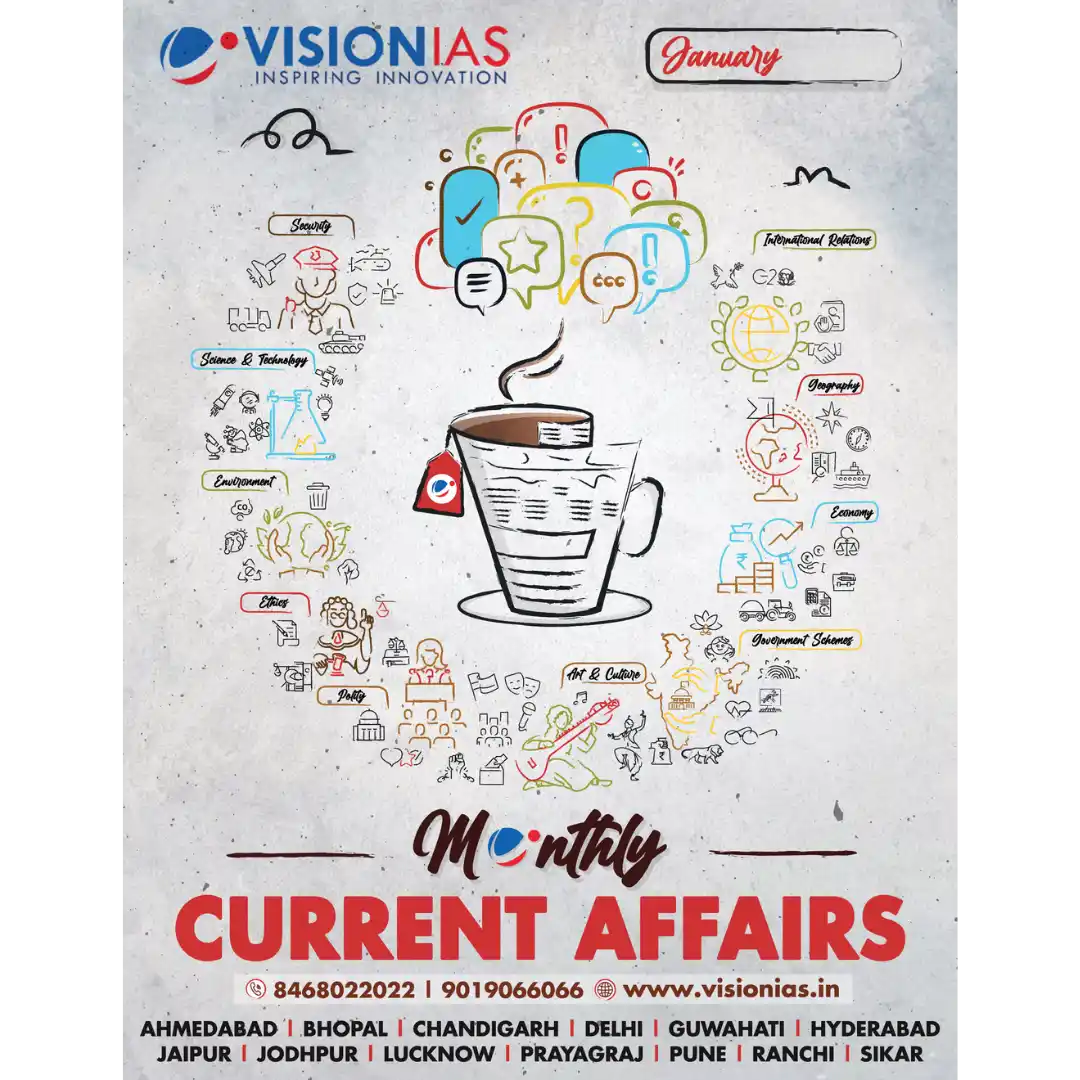
A monthly current-affairs habit sharpens the general-awareness edge that helps in the interview and in later teacher-recruitment stages. Aspirants often keep a single magazine like the Vision IAS Current Affairs Magazine (January 2026) or its Hindi edition to stay updated without drowning in news apps. For rigorous MCQ practice and past-question familiarity, a topic-wise PYQ compilation such as the Forum IAS Prelims Toolkit (Topic-Wise PYQ) teaches you how examiners frame objective questions — a transferable skill for any TET.
UPTET Subject-Wise Study Plan & Timetable
A realistic plan — the practical roadmap most syllabus pages skip — for an aspirant with roughly 90–100 days before the exam:
| Phase | Duration | Focus |
|---|---|---|
| Phase 1 — Foundation | Weeks 1–4 | Read NCERT for Maths, EVS/Science, SST; start CDP theory |
| Phase 2 — Pedagogy & Language | Weeks 5–8 | Deep-dive CDP, language pedagogy, grammar drilling (Hindi + English) |
| Phase 3 — Practice | Weeks 9–11 | Previous year papers, sectional tests, weightage-based revision |
| Phase 4 — Full Mocks | Weeks 12–13 | Full-length 150-mark mocks under timed conditions + error log |
Daily template: 2 hours pedagogy/CDP (highest weightage), 1.5 hours one content subject, 1 hour language grammar, 30 minutes revision of the previous day. Because there is no negative marking, your mock strategy should be to attempt all 150 and track accuracy, not just attempts.
High-Yield vs Low-Yield Topics (Based on Trends)
To convert the syllabus into marks efficiently, weight your revision:
- High-yield (revise 3+ times): Piaget/Vygotsky/Kohlberg, learning & motivation, inclusive education, Hindi व्याकरण, English tenses/parts of speech, arithmetic, NCERT-based EVS/Science facts.
- Medium-yield: comprehension passages, geometry & mensuration, SST current-map-based questions, assessment concepts.
- Low-yield (cover once, don’t over-invest): obscure अलंकार/छंद, rare Sanskrit/Urdu grammar edge cases (unless it is your Language II), niche historical dates.
Changes Expected in UPTET Exam Pattern & Syllabus 2026
Over the past year there has been active discussion about UP moving towards a single, integrated teacher eligibility framework and aligning TET more closely with the National Education Policy (NEP) 2020 competency-based approach. Aspirants should watch for:
- Possible integration/harmonisation of UPTET with CTET-style competency questions (more application-based, fewer rote questions).
- Greater emphasis on pedagogy and child psychology in line with NEP’s focus on foundational literacy and numeracy (FLN).
- Reaffirmation of the lifetime validity of the certificate.
Until an official notification revises the pattern, the structure detailed above (150 MCQs, 150 marks, five/four sections) remains the operative one. Always treat the official UPBEB notification as the final word.
Common Mistakes UPTET Aspirants Make
- Neglecting pedagogy: Nearly 60% of marks are pedagogy/CDP-linked; skipping them is the top reason for missing the 90-mark cut-off.
- Skipping NCERT: Chasing thick guides while ignoring the exact NCERT chapters UPTET is drawn from.
- Leaving questions blank: With zero negative marking, an unattempted question is a guaranteed lost mark.
- Weak Language II choice: Picking Sanskrit or Urdu without adequate grammar preparation; choose the language you are strongest in.
- No timed mocks: Knowing the syllabus but never simulating the 150-minute pressure.
How the UPTET Syllabus Connects to UP Teacher Recruitment
UPTET is an eligibility gate, not a final selection. After qualifying (lifetime-valid certificate), you become eligible to apply in UP’s teacher recruitment notifications for primary and upper-primary posts. The syllabus you master here — child pedagogy, language, and subject content — is the same foundation that carries into those recruitment exams, so thorough UPTET preparation is a direct investment in your final selection, not a one-off hurdle.
Frequently Asked Questions
What is the syllabus of UPTET 2026?
The UPTET 2026 syllabus is split into Paper 1 (Classes 1–5) and Paper 2 (Classes 6–8). Paper 1 covers Child Development & Pedagogy, Language I (Hindi), Language II (English/Urdu/Sanskrit), Mathematics and Environmental Studies — 30 marks each. Paper 2 covers Child Development & Pedagogy, Language I, Language II (30 marks each) plus a 60-mark optional stream of either Mathematics & Science or Social Studies.
How many papers are there in UPTET and what is the difference between Paper 1 and Paper 2?
There are two papers. Paper 1 is for candidates who want to teach primary classes (1–5), while Paper 2 is for upper primary classes (6–8). The main difference is that Paper 2 requires you to specialise in either Mathematics & Science or Social Studies for 60 marks, and its content is pitched at the higher Class 6–8 level. To teach across Classes 1–8 you must clear both papers.
Is there negative marking in UPTET?
No. UPTET has no negative marking, so you should attempt all 150 questions. Every correct answer gives 1 mark and wrong answers do not deduct anything, which makes intelligent guessing worthwhile on questions you are unsure about.
How many questions are asked in UPTET and what is the total marks?
Each UPTET paper has 150 multiple-choice questions carrying 1 mark each, for a total of 150 marks. The time allotted is 2 hours 30 minutes (150 minutes), giving you roughly one minute per question.
What are the qualifying marks for UPTET?
General category candidates must score at least 60% (90 out of 150 marks), while OBC, SC, ST and PwD candidates need 55% (83 out of 150 marks) to qualify. There is no sectional cut-off — only the overall percentage matters, and the resulting certificate is valid for a lifetime.
Which books are best for UPTET preparation?
Keep the list short: NCERT (Classes 1–8) for Maths, Science, EVS and Social Studies; a dedicated Child Development & Pedagogy guide (Arihant or Disha) plus previous-year MCQs; Lucent or a standard हिंदी व्याकरण for Hindi; and Wren & Martin for English grammar. Add previous-year UPTET/CTET papers for practice. A focused combination like this beats owning a dozen overlapping guides.
Is NCERT enough for UPTET?
For Mathematics, Science, EVS and Social Studies, NCERT Classes 1–8 is your primary and largely sufficient source — read it cover to cover. However, for Child Development & Pedagogy and language pedagogy, NCERT is not enough, because that content is not part of any school textbook; you must add a dedicated pedagogy book and practise pedagogy MCQs.
Is the UPTET syllabus available in Hindi PDF?
Yes — the official UPBEB notification publishes the UPTET syllabus in both Hindi and English, so you can download the uptet syllabus in Hindi PDF directly from the official portal (updeled.gov.in). Look for the “Syllabus / Pathyakram” annexure in the latest notification, and treat that official document as the authoritative version to cross-check any coaching PDF against.
Recommended Study Material

Continue Reading
UPSC Ethics Syllabus 2026: GS Paper 4 Topic-Wise + PDF
The upsc ethics syllabus is the official syllabus for General Studies Paper 4 — Ethics, Integrity and Aptitude…
SSC Stenographer Syllabus 2025: Grade C & D Pattern + PDF
The ssc stenographer syllabus covers three CBT sections — General Intelligence & Reasoning (50 marks), General Awareness (50…
UPSC Exam Pattern 2026: Prelims, Mains, Marks & Merit
The UPSC exam pattern for the Civil Services Examination (CSE) has three stages — Prelims (objective, screening only),…