UPSC Exam Pattern 2026: Prelims, Mains, Marks & Merit
Complete UPSC exam pattern 2026: Prelims (400), Mains (1750) & Interview (275) marks, negative marking, papers, merit math out of 2025 + strategy.

The UPSC exam pattern for the Civil Services Examination (CSE) has three stages — Prelims (objective, screening only), Mains (9 descriptive papers worth 1750 marks) and the Interview / Personality Test (275 marks). Your final rank is decided out of 2025 marks (1750 Mains + 275 Interview) — Prelims marks do not count. Below is the complete, exam-ready breakdown of papers, questions, duration, negative marking and the merit math, followed by what each rule means for your preparation.
UPSC Exam Pattern 2026 at a Glance
The Union Public Service Commission conducts the UPSC CSE in three successive stages. Each stage is elimination-based: you must clear Prelims to write Mains, and clear Mains to be called for the Interview. Understanding the upsc exam pattern and syllabus together is the single most important planning step for any aspirant, because it tells you exactly where marks are won and lost.
| Stage | Nature | Papers | Total Marks | Counts in Final Merit? |
|---|---|---|---|---|
| Stage 1 – Preliminary Exam | Objective (MCQ) | 2 (GS + CSAT) | 400 | No (screening only) |
| Stage 2 – Main Exam | Descriptive (written) | 9 (7 counted + 2 qualifying) | 1750 | Yes |
| Stage 3 – Personality Test | Interview | 1 (board interview) | 275 | Yes |
| Final Merit | Mains + Interview | — | 2025 | — |
This is the table you should memorise first. Notice the asymmetry: Prelims has 400 marks but contributes zero to your rank, while the Interview has only 275 marks but every one of them counts. That single fact reshapes how a smart aspirant allocates study time.
What Is the UPSC Exam Pattern? The Merit Math Explained
Most competitor pages give you fragmented tables but never connect them. Here is the one mental model that ties the whole upsc exam pattern together — how each stage feeds into the next:
- Prelims (400 marks) → purely a filter. Clear the cut-off and your marks are wiped clean. Only a list of qualified candidates moves forward (roughly 12–13 times the number of vacancies).
- Mains (1750 marks) → the real foundation of your rank. Candidates scoring above the Mains cut-off are shortlisted for the Interview in roughly a 1:2 ratio (about twice the vacancies).
- Interview (275 marks) → added to your Mains score.
- Final Merit = 1750 + 275 = 2025 marks.
So the simple equation every aspirant should tattoo on their brain is:
| Component | Marks | Share of Final Merit |
|---|---|---|
| Mains – Essay | 250 | 12.3% |
| Mains – GS I, II, III, IV (4 × 250) | 1000 | 49.4% |
| Mains – Optional Paper I + II (2 × 250) | 500 | 24.7% |
| Personality Test (Interview) | 275 | 13.6% |
| Total Merit | 2025 | 100% |
Read that share column carefully. GS papers and your Optional together decide nearly three-quarters of your rank. This is why investing in structured, well-organised Vision IAS GS notes for the full GS spread pays off far more than chasing a perfect Prelims score that the Commission then throws away.
UPSC Prelims Exam Pattern 2026
The Preliminary Examination is held on a single day in two sessions. It consists of two objective-type papers, each carrying 200 marks and a duration of two hours. The upsc prelims exam pattern 2026 is identical to recent cycles — there have been no structural changes announced in the latest official notification.
| Paper | Subject | Questions | Marks | Duration | Status |
|---|---|---|---|---|---|
| Paper I | General Studies (GS) | 100 | 200 | 2 hours | Merit-ranking (decides Prelims cut-off) |
| Paper II | CSAT (Aptitude) | 80 | 200 | 2 hours | Qualifying (33% minimum) |
| Total | 180 | 400 | 4 hours | — | |
Blind and benchmark-disability candidates are given an extra 20 minutes (compensatory time) per paper. Both papers carry English and Hindi versions of the questions, and the Prelims is held in a single day across two sessions (morning GS, afternoon CSAT).
Is CSAT Counted in the UPSC Prelims Merit?
No. CSAT (Paper II) is qualifying only — you must score at least 33% (66 out of 200 marks) to stay in the race, but those marks are not used to rank you. Only your GS Paper I score determines whether you clear the Prelims cut-off. This is the most misunderstood part of the upsc cse exam pattern marking scheme, and it has a direct strategy implication: spend just enough time on CSAT to comfortably clear 33%, and pour the bulk of your Prelims energy into GS Paper I, which actually decides who advances.
UPSC Negative Marking in Prelims
Yes, there is upsc negative marking prelims for every wrong answer in both objective papers — but never in Mains. The deduction is one-third (1/3) of the marks assigned to that question.
| Paper | Marks per Correct Answer | Negative Marking (Wrong Answer) | Unattempted |
|---|---|---|---|
| GS Paper I (100 Q / 200 marks) | +2.0 | −0.66 | 0 |
| CSAT Paper II (80 Q / 200 marks) | +2.5 | −0.83 | 0 |
Note one exception: in the CSAT decision-making questions (a small set), there is traditionally no negative marking. Unattempted questions carry no penalty, so reckless guessing is mathematically punishing — but intelligent elimination (narrowing four options to two) tilts the odds in your favour. A disciplined attempt strategy, sharpened through a full-length Vision IAS Prelims Test Series, is often worth 8–10 extra marks on the day — frequently the difference between clearing and missing the cut-off.
UPSC Mains Exam Pattern and Marks 2026
The Main Examination is where your rank is built. The upsc mains exam pattern and marks comprise nine descriptive papers written over five to seven days. Two are qualifying language papers; the other seven count toward your merit total of 1750 marks. Each paper is three hours long, and there is no negative marking anywhere in Mains.
| Paper | Subject | Marks | Duration | Type |
|---|---|---|---|---|
| Paper A | Indian Language (one of 22 scheduled) | 300 | 3 hours | Qualifying (25% min) |
| Paper B | English | 300 | 3 hours | Qualifying (25% min) |
| Paper I | Essay | 250 | 3 hours | Merit |
| Paper II | General Studies I | 250 | 3 hours | Merit |
| Paper III | General Studies II | 250 | 3 hours | Merit |
| Paper IV | General Studies III | 250 | 3 hours | Merit |
| Paper V | General Studies IV (Ethics) | 250 | 3 hours | Merit |
| Paper VI | Optional Paper I | 250 | 3 hours | Merit |
| Paper VII | Optional Paper II | 250 | 3 hours | Merit |
| Merit Total | 1750 | — | — | |
How Many Marks Are Required to Qualify the Language Papers?
Papers A and B are qualifying: you must score a minimum of 25% in each (i.e., 75 out of 300). Crucially, if you fail to clear these minimum marks, the Commission does not even evaluate your other seven papers — your entire Mains performance is voided. Yet the marks you score above 25% in these two papers do not add to your merit. They are a pass/fail gate, nothing more. (Candidates from certain states like Sikkim, Mizoram, Nagaland, Arunachal Pradesh and Meghalaya, and persons with hearing impairment, may be exempt from Paper A.)
The Seven Merit Papers
The Essay (250), four General Studies papers (1000 combined) and two Optional papers (500 combined) make up the 1750 merit marks. The four GS papers map roughly to: GS I – Heritage, History, Geography and Society; GS II – Polity, Governance and International Relations; GS III – Economy, Environment, Science & Tech, Security; GS IV – Ethics, Integrity and Aptitude. The Essay paper demands two essays of about 1000–1200 words each. A reliable set of curated frameworks such as Vajiram Essay Notes can lift a borderline 110/250 essay into a 130+ score — a swing that has decided service allocation for many candidates.
How Many Optional Subjects Can You Choose?
You choose one Optional subject, which is examined across two papers (Paper I + Paper II) totalling 500 marks. UPSC offers a list of roughly 48 optional subjects, including the literature of various Indian and foreign languages. You pick a single subject — not two — and write both its papers.
| Optional Choice Factor | What to Weigh |
|---|---|
| Overlap with GS | Subjects like Political Science (PSIR), Geography, History, Sociology and Public Administration overlap with GS papers, saving prep time. |
| Scoring trend | Some optionals reward analytical clarity over volume; check recent toppers’ marks before committing. |
| Your background | Real interest and prior academic comfort beat “trend” choices for the long haul. |
| Material availability | An optional with strong, organised notes is easier to revise in the final weeks. |
For example, PSIR overlaps heavily with GS II (Polity and International Relations), which is why it remains popular. If you lean that way, a structured set like the Shubhra Ranjan PSIR Notes covers both Optional papers and feeds directly into your GS preparation — an efficient two-for-one in the upsc exam pattern.
UPSC Interview / Personality Test Pattern
The final stage is the upsc interview personality test marks round, worth 275 marks. There is no syllabus and no minimum qualifying mark. A board of UPSC members assesses your mental alertness, balance of judgement, depth of interest, social cohesion, leadership and intellectual integrity. Questions typically draw from your Detailed Application Form (DAF) — your home state, graduation subject, hobbies, work experience and current affairs.
| Feature | Detail |
|---|---|
| Total marks | 275 |
| Qualifying minimum | None |
| Duration | ~20–30 minutes |
| Based on | DAF, current affairs, situational judgement |
| Shortlist ratio | ~1:2 of vacancies (from Mains) |
Because 275 marks ride on a half-hour conversation, the Interview has one of the highest marks-per-hour densities in the entire process. Top scorers routinely gain 30–40 marks here over average candidates — enough to jump dozens of ranks.
Prelims vs Mains: The Side-by-Side Difference
One of the most common People-Also-Ask queries is the difference between the two stages. Here is the clean comparison most pages bury:
| Parameter | Prelims | Mains |
|---|---|---|
| Type | Objective (MCQ) | Descriptive (written) |
| Papers | 2 | 9 |
| Total marks | 400 | 1750 (merit) |
| Negative marking | Yes (1/3) | No |
| Counts in final merit | No | Yes |
| Purpose | Screening filter | Rank-deciding |
| Duration per paper | 2 hours | 3 hours |
In short: Prelims tests recognition (can you pick the right option?), while Mains tests articulation (can you write a structured, argued answer under time pressure?). Many candidates clear Prelims for years yet stall at Mains precisely because they never make this transition from passive recall to active writing.
Is UPSC Prelims or Mains Harder?
Both are hard for different reasons, and aspirants ask this constantly. Prelims is harder to clear because the funnel is brutal — roughly 1 in 50 candidates who sit the exam make it past Prelims, and a single bad guessing decision under negative marking can cost you the cut-off. Mains is harder to master because it tests sustained writing stamina across nine three-hour papers, demands structured analysis rather than recall, and is where your actual rank is forged.
| Difficulty Lens | Prelims | Mains |
|---|---|---|
| Hardest part | Surviving the elimination cut-off | Converting knowledge into written marks |
| Core skill | Speed, accuracy, elimination | Writing, structure, time management |
| Failure mode | Negative marking from over-guessing | Running out of time / shallow answers |
| Stakes | Pass/fail only | Decides ~86% of your final rank |
The practical answer: respect Prelims enough to clear it decisively, but invest the bulk of your year in Mains, because that is where the merit list is actually written.
Understanding Cut-offs: Prelims vs Mains
The Prelims cut-off is the minimum GS Paper I score (after negative marking) needed to qualify for Mains — it typically hovers in the 85–100 range out of 200 for the general category, varying yearly with paper difficulty. The Mains cut-off is the aggregate written score (out of 1750) needed to be called for the Interview, in roughly a 1:2 ratio to vacancies. The final cut-off is computed on 2025 marks after the Interview. Note that all UPSC cut-offs are relative — there is no fixed pass mark; they are set each year by category, vacancies and paper difficulty, and there is no sectional cut-off within the GS Mains papers.
| Cut-off Stage | Computed On | Approx. Shortlist Ratio |
|---|---|---|
| Prelims cut-off | GS Paper I only (out of 200) | ~12–13× vacancies |
| Mains cut-off | Written total (out of 1750) | ~2× vacancies |
| Final cut-off | Mains + Interview (out of 2025) | = vacancies |
The takeaway: the funnel narrows brutally. Roughly 13 lakh apply, about 13,000 clear Prelims, around 2,500 are called for the Interview, and roughly 1,000 finally make the list in a typical cycle.
What the Pattern Means for Your Preparation Strategy
Knowing the upsc exam pattern and syllabus is useless unless you translate it into how you spend your hours. Here is the strategy that flows directly from the marks distribution:
- Don’t over-invest in CSAT. Since it’s qualifying at 33%, target a comfortable buffer (say 80–90/200) and stop. A focused Vision IAS CSAT Test Series is usually enough to neutralise this paper without it eating your GS time.
- Build GS once, use it twice. The Prelims GS and the four Mains GS papers share a syllabus spine. Prepare for Mains depth, and Prelims breadth largely takes care of itself.
- Pick your Optional early. 500 merit marks demand a full year of attention; switching optionals mid-stream is the single most common cause of a wasted attempt.
- Treat the Essay as a scoring paper, not an afterthought. 250 marks for two essays is a high-leverage, low-syllabus opportunity.
- Practise writing, not just reading. Mains is won on the answer sheet. Daily answer-writing and a Vision IAS Mains Test Series convert knowledge into marks.
The 7-5-3 Rule in UPSC Mains
The popular “7-5-3 rule” is a writing heuristic for the 250-word, ~10–15-mark Mains questions: aim to finish each answer in about 7 minutes, structure it in roughly 5 parts (introduction, ~3 body dimensions, conclusion), and enrich every point with about 3 supporting elements (a fact, an example and a keyword or diagram). It exists because Mains is as much a test of time management as of knowledge — you must attempt every question to maximise marks.
What Is the 80/20 Rule for UPSC?
The 80/20 (Pareto) principle in UPSC prep means roughly 80% of your marks come from 20% of high-yield topics — core NCERT-rooted areas, static portions with heavy PYQ repetition, and current affairs tied to the syllabus. Instead of reading everything once, you identify the high-frequency 20% (Polity, Economy basics, Environment, Modern History, Geography fundamentals) and revise it repeatedly. Pairing static notes with a monthly current-affairs habit operationalises this rule efficiently.
UPSC Eligibility, Age and Attempts (Quick Reference)
While not strictly part of the marking scheme, eligibility shapes who can sit the exam under this pattern.
| Category | Upper Age Limit | Number of Attempts |
|---|---|---|
| General | 32 years | 6 |
| OBC | 35 years | 9 |
| SC / ST | 37 years | Unlimited (till age limit) |
| PwBD (Gen/OBC) | 42 years | 9 |
The minimum age is 21 years and the minimum qualification is a graduate degree from a recognised university. The age is calculated as on 1st August of the examination year.
Your Printable UPSC Pattern Cheat-Sheet
Save this one-page summary for quick revision — it captures the entire upsc exam pattern in a single saveable block:
| Quick Fact | Answer |
|---|---|
| Number of stages | 3 (Prelims, Mains, Interview) |
| Prelims papers / marks | 2 papers / 400 marks |
| Prelims negative marking | 1/3 (−0.66 GS, −0.83 CSAT) |
| CSAT qualifying % | 33% (counts in merit? No) |
| Mains papers / merit marks | 9 papers / 1750 merit |
| Language qualifying % | 25% (Papers A & B, 300 each) |
| Optional subjects | 1 subject, 2 papers, 500 marks |
| Interview marks | 275 |
| Final merit total | 2025 (1750 + 275) |
| Mains negative marking | None |
Print it, stick it on your wall, and let it anchor every study decision. When you are unsure whether a task is worth your time, ask: “Does this move my 2025-mark merit total?”
Common Mistakes Aspirants Make With the Pattern
- Treating Prelims marks as if they matter for rank. They don’t — clear the cut-off and move on.
- Neglecting CSAT until it suddenly disqualifies them. Since the 2023 cycle, CSAT has turned tougher; a casual approach has eliminated thousands of strong GS candidates.
- Forgetting the language papers are gatekeepers. Failing Paper A or B voids the entire Mains.
- Starting answer-writing too late. Mains is a writing exam; recognition-level knowledge does not convert to marks.
- Choosing an Optional by “trend” rather than fit. 500 marks demand sustained interest.
Avoiding these five errors alone puts you ahead of a large share of the applicant pool.
Conclusion: Plan Backwards From the Merit List
The smartest way to use the upsc exam pattern is to plan backwards. Your rank lives in the 2025-mark merit list, so build your timetable around Mains depth and Interview readiness, treat Prelims as a filter to be cleared decisively, and keep CSAT and the language papers as boxes to be ticked — not battles to be over-fought. Pair this structural clarity with disciplined, well-organised study material and consistent test practice, and the pattern stops being a hurdle and becomes your roadmap. Start with a strong GS foundation, lock your Optional early, write daily, and revise relentlessly. That is how rank-holders are made.
Frequently Asked Questions
What is the exam pattern of UPSC Prelims and Mains?
UPSC Prelims has two objective papers — GS Paper I (100 questions, 200 marks) and CSAT Paper II (80 questions, 200 marks), two hours each, with 1/3 negative marking. Mains has nine descriptive papers totalling 1750 merit marks (Essay, four GS papers and two Optional papers at 250 each, plus two qualifying language papers), three hours each, with no negative marking.
How many papers are there in the UPSC exam?
There are 2 papers in Prelims and 9 papers in Mains, followed by one Personality Test (Interview). Of the nine Mains papers, seven count toward merit and two (the language papers) are only qualifying.
Is there negative marking in the UPSC exam?
Yes, but only in the Prelims objective papers. One-third of the marks for a question is deducted for each wrong answer — 0.66 marks in GS Paper I and 0.83 marks in CSAT Paper II. There is no negative marking in the Mains descriptive papers or the Interview.
What is the total marks of the UPSC exam (Mains + Interview)?
The final merit is calculated out of 2025 marks — 1750 from the Mains written examination plus 275 from the Personality Test (Interview). Prelims marks (400) are not added to the final total.
Is CSAT counted in the UPSC Prelims merit?
No. CSAT (Paper II) is qualifying in nature — you only need 33% (66 of 200 marks) to pass. Your Prelims cut-off and selection for Mains are decided solely by your GS Paper I score.
How many optional subjects can you choose in UPSC Mains?
You choose just one Optional subject from a list of around 48 options. That subject is examined in two papers (Paper I and Paper II), together worth 500 marks in the merit total.
How many marks are required to qualify the language papers in Mains?
You must score at least 25% in each language paper — 75 out of 300 in Paper A (an Indian language) and Paper B (English). These are pass/fail gates: if you miss the 25% minimum, your other seven Mains papers are not evaluated, and marks above 25% do not add to your merit.
What is the difference between UPSC Prelims and Mains?
Prelims is objective (MCQ), 2 papers / 400 marks, has 1/3 negative marking, and is screening only — it does not count toward your rank. Mains is descriptive (written), 9 papers / 1750 merit marks, has no negative marking, and decides your rank along with the Interview.
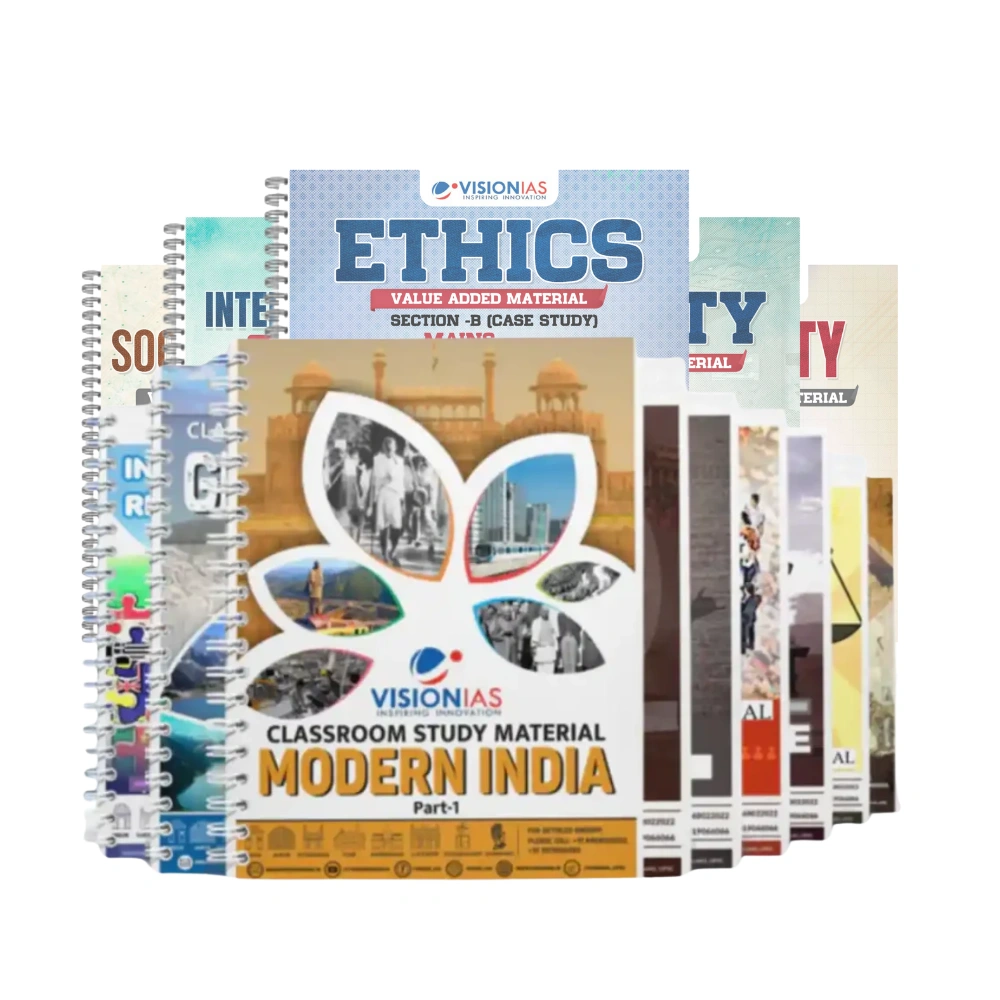
Recommended Study Material
Continue Reading
RRB NTPC Syllabus 2025: CBT 1 & CBT 2 Subjects, Pattern + PDF
The rrb ntpc syllabus covers three sections in both CBT 1 and CBT 2 — Mathematics, General Intelligence…
UKPSC Syllabus 2026: Prelims, Mains, Exam Pattern + PDF (Hindi & English)
The UKPSC syllabus for the Uttarakhand Combined State Civil Services (Upper PCS) exam is a three-stage syllabus spread…
JPSC Syllabus 2025: Prelims, Mains Pattern + PDF Download
The JPSC syllabus for 2025 covers the Combined Civil Services Examination (CCSE) across three stages: a Preliminary exam…