SSC GD Syllabus 2026: Subject-Wise Topics, Exam Pattern + PDF
Complete SSC GD syllabus 2026 — subject-wise topics, exam pattern, marking scheme, negative marking, cut-offs, PET/PST standards, Hindi table & PDF download.

The SSC GD syllabus for 2026 covers four subjects in a single Computer Based Test (CBT): General Intelligence & Reasoning, General Knowledge & General Awareness, Elementary Mathematics, and English/Hindi. The exam has 80 objective questions worth 160 marks, solved in 60 minutes, with 2 marks per correct answer and 0.25 negative marking for every wrong answer. Difficulty is pegged at Class 10 (matriculation) level, and there is no interview — you must clear the CBT, then the Physical Efficiency Test (PET), Physical Standard Test (PST), Detailed Medical Examination (DME), and Document Verification.
This guide gives you the complete, up-to-date ssc gd syllabus 2026 in one place: subject-wise topics, topic-wise weightage, the full exam pattern, marking scheme, qualifying cut-offs, PET/PST physical standards, DME medical details, a bilingual Hindi table, a printable checklist, and a realistic 30/60/90-day study plan. You can also save the syllabus PDF in both English and Hindi from the section near the end.
SSC GD Syllabus 2026 at a Glance (Quick Answer)
If you want the essentials before the detailed breakdown, here is the whole ssc gd syllabus 2026 summarised in one box:
- Subjects: Reasoning, GK & GA, Elementary Maths, English/Hindi (4 sections).
- Questions / Marks: 80 questions, 160 marks (20 questions & 40 marks per section).
- Duration: 60 minutes (single paper, no sectional timing).
- Marking: +2 per correct answer, –0.25 per wrong answer, 0 for unattempted.
- Level: Class 10 (matriculation).
- Selection: CBT → PET → PST → DME → Document Verification. No interview.
SSC GD Constable 2026: Exam Overview
The Staff Selection Commission (SSC) conducts the General Duty (GD) Constable examination to recruit constables into the Central Armed Police Forces (CAPFs) — BSF, CISF, CRPF, ITBP, SSB — along with Rifleman in Assam Rifles, Constable in SSF, and Sepoy in the Narcotics Control Bureau (NCB). The notification is typically released between August and September, with the CBT held in the following January–February window. For the 2026 cycle, track the official portal ssc.gov.in for the exact notification date, vacancy count, and application timeline.
| Particular | Detail |
|---|---|
| Exam Name | SSC GD Constable 2026 |
| Conducting Body | Staff Selection Commission (SSC) |
| Post | Constable (General Duty) in CAPFs, Rifleman (Assam Rifles), Sepoy (NCB) |
| Exam Level | National (matriculation / Class 10 standard) |
| Selection Stages | CBT → PET → PST → DME → Document Verification |
| CBT Questions / Marks | 80 questions / 160 marks |
| Duration | 60 minutes (80 minutes for scribe-eligible candidates) |
| Negative Marking | 0.25 marks per wrong answer |
| Question Medium | English, Hindi + 13 regional languages |
| Official Website | ssc.gov.in |
SSC GD Selection Process 2026: All 5 Stages
Understanding the full selection funnel helps you allocate preparation time correctly. The written CBT is only the first gate — the physical and medical stages are strictly qualifying and reject a large share of candidates. Here is the stage-by-stage flow:
| Stage | Name | Nature | What It Tests |
|---|---|---|---|
| 1 | Computer Based Test (CBT) | Merit-deciding | Reasoning, GK/GA, Maths, English/Hindi |
| 2 | Physical Efficiency Test (PET) | Qualifying | Race (running) within time limit |
| 3 | Physical Standard Test (PST) | Qualifying | Height, chest, weight measurement |
| 4 | Detailed Medical Examination (DME) | Qualifying | Vision, hearing, physical fitness, tattoo/flat-foot checks |
| 5 | Document Verification (DV) | Qualifying | Age, education, category, domicile proof |
There is no interview in the SSC GD selection process — final merit is based purely on your CBT score, provided you clear PET, PST, DME and DV. This makes the written exam the single most important battleground, so topic-wise mastery of the syllabus is decisive.
SSC GD Exam Pattern 2026 and Marking Scheme
The ssc gd exam pattern 2026 is a single-paper CBT with four equally weighted sections. Each section carries 20 questions and 40 marks, and all questions are objective multiple-choice. Note the negative marking: with 0.25 deducted per wrong answer, blind guessing is costly.
| Section | Subject | Questions | Marks |
|---|---|---|---|
| Part A | General Intelligence & Reasoning | 20 | 40 |
| Part B | General Knowledge & General Awareness | 20 | 40 |
| Part C | Elementary Mathematics | 20 | 40 |
| Part D | English / Hindi | 20 | 40 |
| Total | — | 80 | 160 |
Key marking rules:
- Each correct answer = +2 marks.
- Each wrong answer = –0.25 marks (negative marking applies).
- Unattempted questions = 0 marks (no penalty).
- Total duration = 60 minutes (45 seconds per question on average).
- The question paper is set in English, Hindi and 13 regional languages (through NCPUL-aligned language options): Assamese, Bengali, Gujarati, Kannada, Konkani, Malayalam, Manipuri, Marathi, Odia, Punjabi, Tamil, Telugu and Urdu.
SSC GD Qualifying Marks and Cut-Off by Category
To be considered for the next stage, candidates must score at least the minimum qualifying percentage in the CBT. These are the category-wise minimum marks required:
| Category | Minimum Qualifying % | Approx. Marks (out of 160) |
|---|---|---|
| General / EWS | 30% | 48 |
| OBC | 25% | 40 |
| SC / ST | 20% | 32 |
Clearing the qualifying percentage only makes you eligible; the actual selection cut-off (the marks needed to progress) is usually far higher and varies by state, category and force. In recent cycles, competitive candidates targeted 130+ out of 160 to stay safely above the final cut-off in high-competition states. Treat the qualifying percentage as a floor, not a goal.
SSC GD Syllabus Subject-Wise (Complete Topic List)
Below is the detailed ssc gd constable syllabus subject wise, broken down topic by topic for all four sections. The four subjects included in the SSC GD written exam are General Intelligence & Reasoning, General Knowledge & General Awareness, Elementary Mathematics, and English/Hindi. Use this as your master checklist and tick off topics as you cover them.
1. General Intelligence & Reasoning Syllabus (40 marks)
This section tests non-verbal and verbal reasoning through both abstract and figural problems. It is scoring and speed-friendly once patterns are practised. Core topics in the ssc gd reasoning syllabus:
- Analogies (verbal & figural)
- Similarities and differences
- Spatial visualisation and spatial orientation
- Visual memory and observation
- Discrimination and relationship concepts
- Arithmetical reasoning and figural classification
- Coding and decoding
- Number series and figure series
- Non-verbal series and pattern completion
- Analytical functions, blood relations, direction sense
2. General Knowledge & General Awareness Syllabus (40 marks)
This section rewards consistent current-affairs reading and static GK. The ssc gd gk syllabus spans:
- Current events (national and international) — sports, awards, appointments, schemes
- Indian History and freedom struggle
- Indian Polity and Constitution
- Geography (India and world)
- Economy (basic concepts, budget, banking)
- General Science (Physics, Chemistry, Biology basics)
- Culture, art, books & authors
- Scientific research and important days
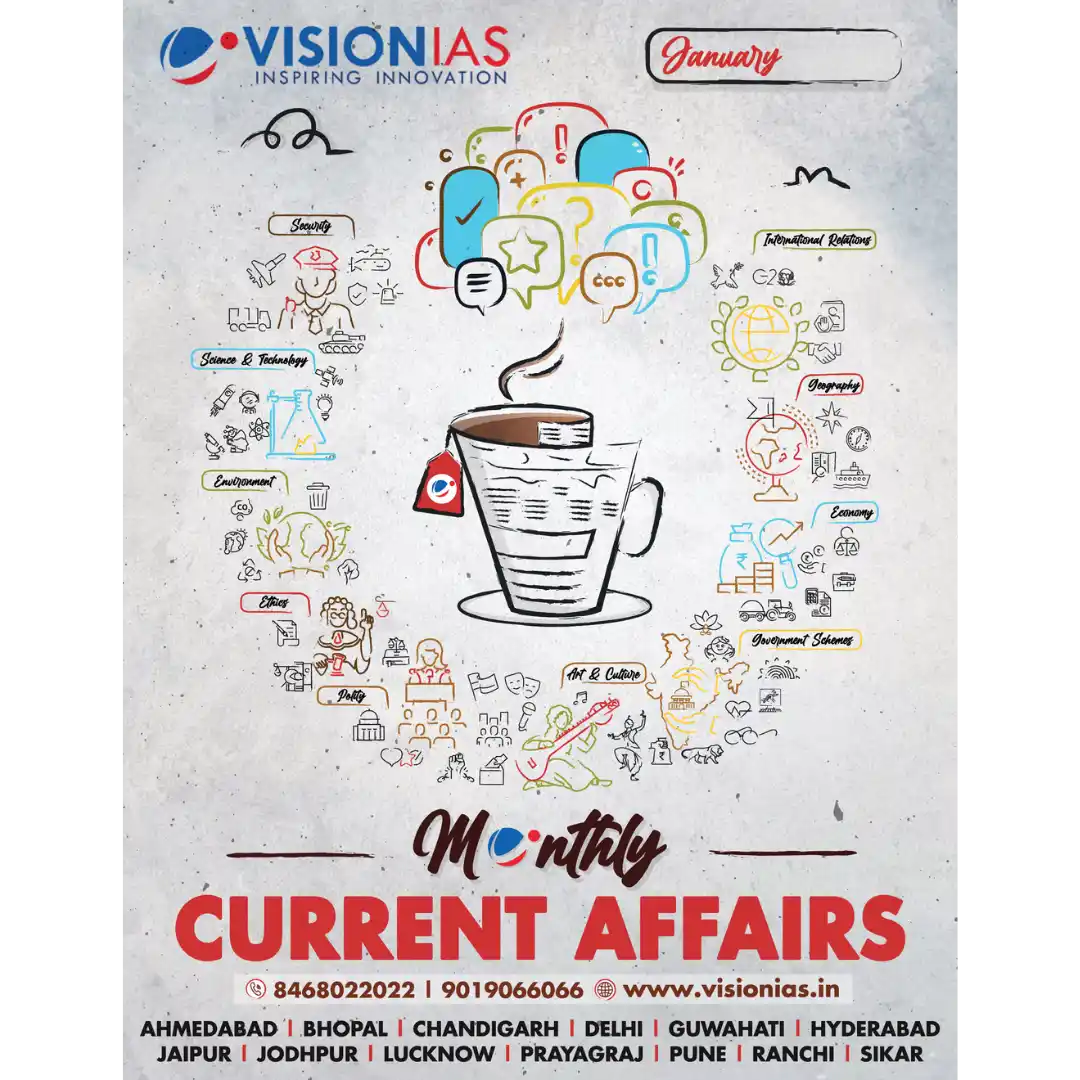
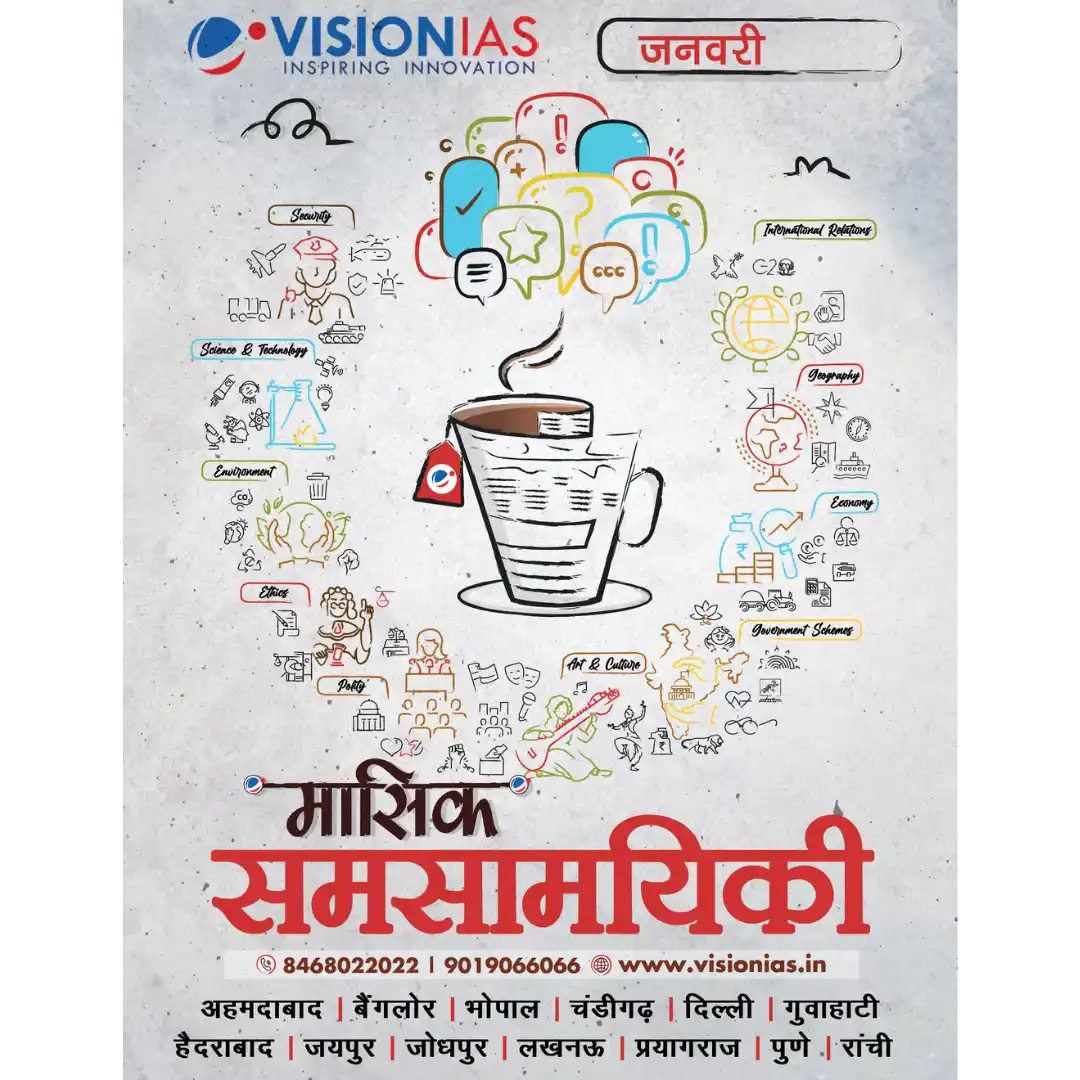
Because current affairs shift monthly, a structured monthly magazine habit pays off. Many serious aspirants supplement static GK with a reliable current-affairs compilation — resources like the Vision IAS Current Affairs Magazine (January 2026, English) or the Hindi-medium January 2026 edition help keep national and international events organised month by month, which is exactly the kind of material the GA section rewards.
3. Elementary Mathematics Syllabus (40 marks)
Maths is fully at Class 10 arithmetic level — no advanced algebra or trigonometry beyond basics. Master the fundamentals and this becomes your highest-accuracy section. The ssc gd maths syllabus includes:
- Number Systems & whole numbers
- Computation of whole numbers, decimals and fractions
- Relationship between numbers
- Fundamental arithmetical operations
- Percentage, Ratio and Proportion
- Average, Interest (Simple & Compound)
- Profit and Loss, Discount
- Mensuration (area, volume, perimeter)
- Time and Distance, Time and Work
- Number Series
4. English / Hindi Syllabus (40 marks)
Candidates choose either English or Hindi for the language section. Both test comprehension and basic grammar at matriculation level.
| English Topics | Hindi Topics (हिंदी) |
|---|---|
| Spot the Error, Fill in the Blanks | संधि और संधि विच्छेद, उपसर्ग-प्रत्यय |
| Synonyms & Antonyms | पर्यायवाची, विलोम शब्द |
| Spellings / detecting misspelt words | वाक्यांश के लिए एक शब्द |
| Idioms & Phrases | मुहावरे और लोकोक्तियाँ |
| One-word substitution | अशुद्ध वाक्यों का शुद्धिकरण |
| Sentence improvement, Active/Passive | वचन, कारक, लिंग |
| Cloze passage & Comprehension | गद्यांश आधारित प्रश्न |
SSC GD Syllabus in Hindi (Bilingual Subject Table)
For Hindi-medium aspirants, here is a clean side-by-side view of the ssc gd syllabus in hindi so you can revise in your preferred language without hunting for a separate translation.
| Subject (English) | विषय (हिंदी) | Marks / अंक |
|---|---|---|
| General Intelligence & Reasoning | सामान्य बुद्धि एवं तर्कशक्ति | 40 |
| General Knowledge & Awareness | सामान्य ज्ञान एवं सामान्य जागरूकता | 40 |
| Elementary Mathematics | प्रारंभिक गणित | 40 |
| English / Hindi | अंग्रेज़ी / हिंदी | 40 |
SSC GD Topic-Wise Weightage (Expected Questions)
Based on previous year paper (PYQ) trends, here is the approximate topic-wise distribution. Use it to prioritise high-yield topics — these numbers vary slightly across shifts but the pattern is stable.
| Subject | High-Weightage Topics | Approx. Questions |
|---|---|---|
| Reasoning | Analogy, Series, Coding-Decoding, Non-verbal | 12–14 of 20 |
| GK & GA | Current Affairs, Science, Polity, History | 13–15 of 20 |
| Maths | Percentage, Ratio, SI/CI, Time & Work, Average | 12–14 of 20 |
| English/Hindi | Comprehension, Grammar, Vocabulary | 13–15 of 20 |
Solving topic-wise PYQs is the fastest way to internalise this weightage. A structured PYQ workbook that maps questions to topics — the same philosophy behind resources like the Forum IAS Topic-Wise PYQ Toolkit — trains you to recognise recurring question patterns, a skill that transfers directly to SSC-style objective tests.
SSC GD PET and PST Physical Standards 2026
After the CBT, shortlisted candidates face the Physical Efficiency Test (PET) and Physical Standard Test (PST). Both are qualifying — you either meet the standard or you don’t.
PET — Race Standards
| Gender | Race Distance | Time Limit |
|---|---|---|
| Male | 5 km | 24 minutes |
| Female | 1.6 km | 8 minutes 30 seconds |
Relaxed timings apply for candidates from Ladakh and certain hilly/tribal regions. Start your running practice early — the race trips up many candidates who focus only on the written test.
PST — Height, Chest and Weight
| Parameter | Male | Female |
|---|---|---|
| Height (General) | 170 cm | 157 cm |
| Chest (unexpanded / expanded) | 80 cm / 85 cm | Not applicable |
| Weight | Proportionate to height & age | Proportionate to height & age |
Relaxations in height and chest are provided for candidates belonging to Scheduled Tribes, and to those from specified hilly and North-Eastern states, as per the official notification.
SSC GD Detailed Medical Examination (DME) Standards
The DME is where many otherwise-eligible candidates are surprised, because most syllabus pages gloss over it. Know these standards in advance:
- Eyesight: Minimum distant vision 6/6 in the better eye and 6/9 in the worse eye without correction (no spectacles/lenses for correction to meet the standard). No colour blindness.
- Flat foot / knock knee / bow legs: Candidates with knock knees, flat foot, or bow legs are typically declared unfit.
- Tattoo policy: Permanent body tattoos are only permitted on the inner face of the forearm (inside of elbow to wrist) or the reverse (dorsal) side of the hand, and on limited body area. Tattoos elsewhere, or depicting objectionable content, lead to rejection.
- Chest/hernia/varicose veins: Checked; conditions affecting duty fitness disqualify.
- Hearing: Must be normal in both ears.
Always cross-check the exact medical clauses in the year’s official notification, as forces occasionally revise vision and tattoo criteria.
SSC GD Study Plan: 30 / 60 / 90-Day Timetable
A syllabus without a plan is just a list. Here is a realistic, weightage-tied schedule you can adapt to your timeline. The principle: build concepts first, then shift to PYQ + mock-test mode.
| Phase | Focus | Daily Hours | Outcome |
|---|---|---|---|
| Days 1–30 (Foundation) | Maths concepts + Reasoning patterns + static GK | 4–5 hrs | Full syllabus covered once |
| Days 31–60 (Application) | Topic-wise PYQs + daily current affairs + grammar | 5–6 hrs | Weak areas identified & drilled |
| Days 61–90 (Test Mode) | Full-length mocks + revision + speed accuracy | 6 hrs | Exam temperament & time management |
Sample Daily Timetable
| Time Slot | Activity |
|---|---|
| Morning (1 hr) | PET running practice / physical training |
| Mid-morning (1.5 hrs) | Elementary Maths — concept + practice |
| Afternoon (1.5 hrs) | Reasoning — 2 topics + 30 questions |
| Evening (1 hr) | Current affairs + static GK notes |
| Night (1 hr) | English/Hindi grammar + previous day revision |
Printable SSC GD Syllabus Checklist (Tick-as-You-Cover)
Print this one-page tracker and tick each topic as you complete it. It converts the abstract syllabus into a visible progress bar.
| Subject | Must-Cover Topics | Status |
|---|---|---|
| Reasoning | Analogy, Series, Coding, Non-verbal, Blood Relations, Direction | ☐ |
| GK & GA | Current Affairs, History, Polity, Geography, Science, Economy | ☐ |
| Maths | Percentage, Ratio, SI/CI, Profit-Loss, Time-Work, Mensuration, Average | ☐ |
| English/Hindi | Grammar, Vocabulary, Comprehension, Error Spotting | ☐ |
| PET/PST | Running practice, height/chest awareness | ☐ |
What Changed in the SSC GD Syllabus 2026
The core ssc gd syllabus 2026 — four subjects, 80 questions, 160 marks, 60 minutes and 0.25 negative marking — remains consistent with recent cycles; the Commission has kept the CBT structure stable. The main year-on-year variations aspirants should watch are: (1) the regional-language list under the NCPUL framework (currently 13 languages plus English and Hindi), (2) periodic revision of medical/tattoo criteria in the notification, and (3) category-wise vacancy distribution. Always treat the official 2026 notification as the final word over any coaching summary.
SSC GD Syllabus PDF Download (English + Hindi)
Want the full syllabus offline? You can capture this entire ssc gd syllabus pdf download in both languages by saving/printing this page, or by downloading the official syllabus annexure attached to the SSC GD 2026 notification at ssc.gov.in. Keep the printed one-page checklist above pinned to your study desk and update it weekly.
Best Books & Study Material Strategy for SSC GD
SSC GD success comes from three material types working together: (1) a concept book per subject, (2) a topic-wise PYQ workbook, and (3) a monthly current-affairs magazine for the GA section. For general awareness and current events — the least predictable section — building a disciplined monthly reading habit with structured compilations gives you an edge over candidates relying only on scattered notes. Pair that static-plus-current-affairs approach with daily mock tests in the final month to lock in speed and accuracy under the 60-minute clock.
Frequently Asked Questions
What is the syllabus of SSC GD Constable 2026?
The SSC GD Constable 2026 syllabus covers four subjects — General Intelligence & Reasoning, General Knowledge & General Awareness, Elementary Mathematics, and English/Hindi — each worth 40 marks. All topics are at Class 10 (matriculation) difficulty level, tested through 80 objective questions in a single 60-minute Computer Based Test.
What is the exam pattern and marking scheme for SSC GD?
The SSC GD CBT has 80 questions and 160 marks across four sections of 20 questions each. Every correct answer earns 2 marks, and every wrong answer carries a penalty of 0.25 marks. The exam duration is 60 minutes, and there is no sectional time limit.
How many questions and marks are there in the SSC GD exam?
There are 80 questions carrying a total of 160 marks in the SSC GD CBT. The four sections — Reasoning, GK/GA, Maths and English/Hindi — each contain 20 questions worth 40 marks, with 2 marks awarded per correct answer.
Is there negative marking in the SSC GD exam?
Yes. The SSC GD exam has negative marking of 0.25 marks for each incorrect answer. Unattempted questions carry no penalty, so it is wiser to skip questions you cannot reason out rather than guess randomly.
What is the qualifying / cut-off percentage for SSC GD?
The minimum qualifying marks are 30% for General/EWS, 25% for OBC, and 20% for SC/ST candidates. This is only the eligibility floor — the actual final selection cut-off is usually much higher and varies by state, category and force, with competitive candidates often aiming for 130+ out of 160.
Which subjects are included in the SSC GD written exam?
The SSC GD written CBT includes four subjects: General Intelligence & Reasoning, General Knowledge & General Awareness, Elementary Mathematics, and English/Hindi. Each subject has 20 questions worth 40 marks, for a total of 80 questions and 160 marks.
What are the PET and PST physical standards for SSC GD?
In the PET, male candidates run 5 km in 24 minutes and female candidates run 1.6 km in 8 minutes 30 seconds. In the PST, the general height standard is 170 cm for males and 157 cm for females, with a male chest of 80 cm unexpanded and 85 cm expanded. Relaxations apply for ST candidates and those from specified hilly and North-Eastern regions.
Is there an interview in the SSC GD selection process?
No, there is no interview in SSC GD selection. The process is CBT → PET → PST → Detailed Medical Examination → Document Verification, and final merit depends solely on the written CBT score of candidates who clear the qualifying physical and medical stages.
Recommended Study Material

Continue Reading
PSIR Optional Syllabus 2026: Paper 1 & 2 + PDF
The psir optional syllabus for UPSC has two papers of 250 marks each (500 total out of the…
Geography Optional Syllabus 2026: Paper 1 & 2 + PDF
Quick answer: The geography optional syllabus for UPSC Civil Services Mains has two papers of 250 marks each…
MPSC Syllabus 2026: Prelims, Mains, Pattern + PDF (Marathi)
The MPSC syllabus for the Maharashtra State Services (Rajyaseva) exam is divided across three stages — Prelims (2…