Geography Optional Syllabus (UPSC 2026): Paper 1 & 2, Booklist + PDF
The complete geography optional syllabus for UPSC 2026 — full Paper 1 & Paper 2 topics, marks, PYQ weightage, GS overlap, best booklist, strategy and a free PDF download.

The geography optional syllabus for UPSC has two papers — Paper I (Principles of Geography) and Paper II (Geography of India) — each carrying 250 marks for a combined 500 marks, with a 3-hour duration per paper. Paper I is theoretical and covers Physical and Human Geography; Paper II is India-specific, covering physical setting, resources, agriculture, industry, settlements and contemporary issues. This guide gives you the exact, topic-wise, printer-friendly syllabus, a topic-to-book-to-GS-overlap map, PYQ weightage, a booklist and a free downloadable PDF so you can plan Mains 2026 preparation with zero guesswork.
Geography Optional Syllabus at a Glance (Quick Answer)
- Papers: Two — Paper I (Principles of Geography) and Paper II (Geography of India).
- Marks: 250 + 250 = 500, part of the 1750-mark Mains total.
- Paper I: Physical Geography (geomorphology, climatology, oceanography, biogeography, environment) + Human Geography (perspectives, economic, population, settlement, regional planning, models & theories).
- Paper II: Indian physical setting, resources, agriculture, industry, transport, settlements, regional planning, political and contemporary issues, plus a compulsory ~60-mark map question.
- Latest update: The official UPSC geography optional syllabus for mains 2026 is unchanged from previous cycles — the topics below are current.
Geography is one of the most popular UPSC optionals because of its scientific, logical structure and heavy overlap with the General Studies papers. The optional consists of two conventional (descriptive) papers written in the Mains examination, and both together contribute 500 of the 1750 marks that decide your Mains total.
| Component | Paper I | Paper II |
|---|---|---|
| Theme | Principles of Geography | Geography of India |
| Marks | 250 | 250 |
| Duration | 3 hours | 3 hours |
| Nature | Conceptual / theoretical | India-applied |
| Total contribution | 500 marks (out of 1750 Mains marks) | |
Each paper is divided into two sections (Section A and Section B), and candidates answer questions across both. The map-based question in Paper II (worth roughly 60 marks) is a unique, scoring feature you will not find in most other optionals — more on that below.
UPSC Geography Optional Paper 1 Syllabus (Principles of Geography)
Paper I is split into Physical Geography and Human Geography. It is conceptual and rewards clarity of fundamentals, diagrams and the ability to link theory with real-world examples. Below is the official-verbatim UPSC geography optional Paper 1 syllabus, cleaned up for copy-paste accuracy.
Part A — Physical Geography
| Sub-discipline | Topics covered |
|---|---|
| Geomorphology | Factors controlling landform development; endogenetic and exogenetic forces; origin and evolution of the earth’s crust; Fundamentals of geomagnetism; physical conditions of the earth’s interior; geosynclines; continental drift; isostasy; plate tectonics; recent views on mountain building; volcanicity; earthquakes and tsunamis; concepts of geomorphic cycles and landscape development; denudation chronology; channel morphology; erosion surfaces; slope development; applied geomorphology — geohydrology, economic geology and environment. |
| Climatology | Temperature and pressure belts of the world; heat budget of the earth; atmospheric circulation; atmospheric stability and instability; planetary and local winds; monsoons and jet streams; air masses and fronto-genesis; temperate and tropical cyclones; types and distribution of precipitation; weather and climate; Koppen’s, Thornthwaite’s and Trewartha’s classification of world climates; hydrological cycle; global climatic change; role and response of man in climatic changes. |
| Oceanography | Bottom topography of the Atlantic, Indian and Pacific Oceans; temperature and salinity of the oceans; heat and salt budgets; ocean deposits; waves, currents and tides; marine resources — biotic, mineral and energy resources; coral reefs, coral bleaching; sea-level changes; law of the sea and marine pollution. |
| Biogeography | Genesis of soils; classification and distribution of soils; soil profile; soil erosion, degradation and conservation; factors influencing world distribution of plants and animals; problems of deforestation and conservation measures; social forestry; agro-forestry; wildlife; major gene pool centres. |
| Environmental Geography | Principle of ecology; human ecological adaptations; influence of man on ecology and environment; global and regional ecological changes and imbalances; ecosystem and its management; global ecological imbalances — problems of pollution, global warming, reducing forest cover, environmental degradation; environmental policy; environmental hazards and remedial measures; sustainable development. |
Part B — Human Geography
| Sub-discipline | Topics covered |
|---|---|
| Perspectives in Human Geography | Areal differentiation; regional synthesis; dichotomy and dualism; environmentalism; quantitative revolution and locational analysis; radical, behavioural, human and welfare approaches; languages, religions and secularisation; cultural regions of the world; human development index. |
| Economic Geography | World economic development — measurement and problems; world resources and their distribution; energy crisis; the limits to growth; world agriculture — typology of agricultural regions; agricultural inputs and productivity; food and nutrition problems; food security; famine — causes, effects and remedies; world industries — locational patterns and problems; patterns of world trade. |
| Population and Settlement Geography | Growth and distribution of world population; demographic attributes; causes and consequences of migration; concepts of over-, under- and optimum population; population theories; world population problems and policies; social well-being and quality of life; population as social capital. Types and patterns of rural settlements; environmental issues in rural settlements; hierarchy of urban settlements; urban morphology; concept of primate city and rank-size rule; functional classification of towns; sphere of urban influence; rural-urban fringe; satellite towns; problems and remedies of urbanisation; sustainable development of cities. |
| Regional Planning | Concept of a region; types of regions and methods of regionalisation; growth centres and growth poles; regional imbalances; regional development strategies; environmental issues in regional planning; planning for sustainable development. |
| Models, Theories and Laws in Human Geography | Systems analysis in human geography; Malthusian, Marxian and demographic transition models; central place theories of Christaller and Losch; Perroux and Boudeville; Von Thunen’s model of agricultural location; Weber’s model of industrial location; Ostov’s model of stages of growth; heartland and rimland theories; laws of international boundaries and frontiers. |
UPSC Geography Optional Paper 2 Syllabus (Geography of India)
Paper II applies the principles from Paper I to the Indian subcontinent. It is more static and factual, making it easier to revise, and it overlaps heavily with GS Paper I (Indian geography) and GS Paper III (economy, agriculture, environment, disaster management). Here is the full UPSC geography optional Paper 2 syllabus.
| Theme | Topics covered |
|---|---|
| Physical Setting | Space relationship of India with neighbouring countries; structure and relief; drainage system and watersheds; physiographic regions; mechanism of Indian monsoons and rainfall patterns; tropical cyclones and western disturbances; floods and droughts; climatic regions; natural vegetation; soil types and their distributions. |
| Resources | Land, surface and ground water, energy, minerals, biotic and marine resources; forest and wildlife resources and their conservation; energy crisis. |
| Agriculture | Infrastructure — irrigation, seeds, fertilisers, power; institutional factors — landholdings, land tenure and land reforms; cropping pattern; agricultural productivity; agricultural regionalisation; agro and social forestry; green revolution and its socio-economic and ecological implications; sustainable agriculture; livestock resources and white revolution; aquaculture; blue revolution; agricultural and food-processing industries and their distribution. |
| Industry | Evolution of industries; locational factors of cotton, jute, textile, iron and steel, aluminium, fertiliser, paper, chemical and pharmaceutical, automobile, cottage and agro-based industries; industrial houses and complexes including public sector undertakings; industrial regionalisation; new industrial policy; multinationals and liberalisation; SEZ; tourism including eco-tourism. |
| Transport, Communication & Trade | Road, railway, waterway, airway and pipeline networks and their complementary roles in regional development; growing importance of ports on national and foreign trade; trade balance; trade policy; export processing zones; developments in communication and IT and their impacts on economy and society; indigenous, foreign and multinational corporations. |
| Cultural Setting | Historical perspective of Indian society; racial, linguistic and ethnic diversities; religious minorities; major tribes, tribal areas and their problems; cultural regions; growth, distribution and density of population; demographic attributes — sex-ratio, age structure, literacy rate, work-force, dependency ratio, longevity; migration and associated problems; population problems and policies; health indicators. |
| Settlements | Types, patterns and morphology of rural settlements; urban developments; morphology of Indian cities; functional classification of Indian towns; conurbations and metropolitan regions; urban sprawl; slums and associated problems; town planning; problems of urbanisation and remedies. |
| Regional Development & Planning | Experience of regional planning in India; Five Year Plans; integrated rural development programmes; Panchayati Raj and decentralised planning; command area development; watershed management; planning for backward, drought-prone, desert, tribal and hill areas; multi-level planning; regional planning and development of island territories. |
| Political Aspects | Geographical basis of Indian federalism; state reorganisation; emergence of new states; regional consciousness and inter-state issues; international boundary of India and related issues; cross-border terrorism; India’s role in world affairs; geopolitics of South Asia and the Indian Ocean realm. |
| Contemporary Issues | Ecological issues — environmental hazards, landslides, earthquakes, tsunamis, floods and droughts, epidemics; issues related to environmental pollution; changes in patterns of land use; principles of environmental impact assessment and environmental management; population explosion and food security; environmental degradation; deforestation, desertification and soil erosion; problems of agrarian and industrial unrest; regional disparities in economic development; concept of sustainable growth and development; environmental awareness; linkage of rivers; globalisation and its impact. |
Download the Geography Optional Syllabus PDF
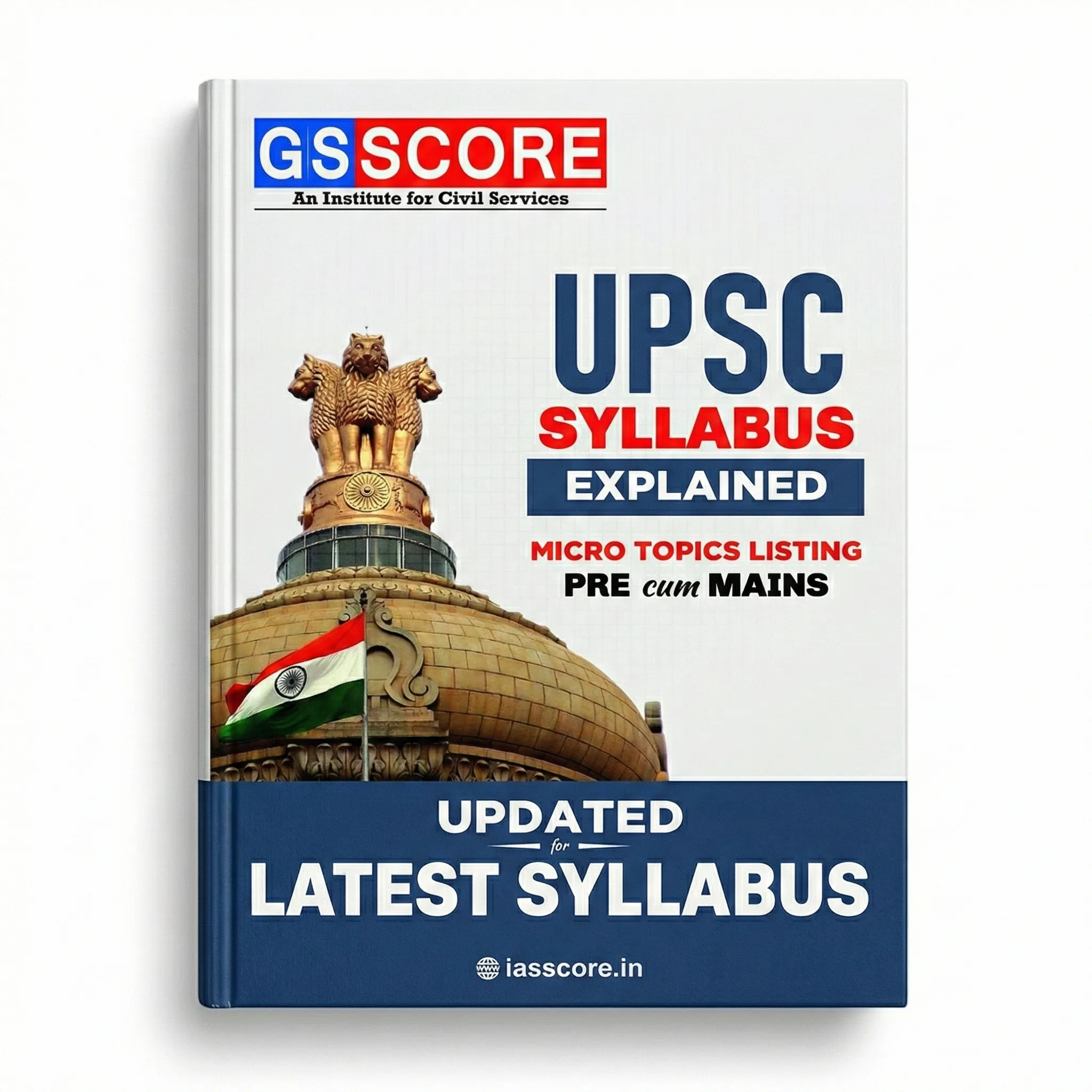
Yes — you can complete a free geography optional syllabus PDF download that reproduces the official UPSC text for both papers exactly as above. Save it, print it, and tick topics off as you finish them. If you prefer a professionally compiled, exam-ready booklet that also lists the latest GS and optional syllabi together, the GS Score Latest Syllabus Booklet 2026-27 is a low-cost, well-organised option many aspirants keep on their desk. A physical, always-visible syllabus tracker is one of the simplest ways to avoid leaving topics uncovered before Mains 2026.
Topic → Book → GS Overlap Map (The Table Most Pages Skip)
This is the mapping almost every competing page misses: which book and chapter to read for each syllabus block, and which GS paper it feeds into. Use it to read once and score in three places.
| Syllabus block | Primary book / source | GS overlap |
|---|---|---|
| Geomorphology, Climatology, Oceanography | Savindra Singh (Physical Geography); Strahler & Strahler | GS-I (Geography), Prelims |
| Biogeography & Environmental Geography | Savindra Singh; Shankar IAS Environment | GS-III (Environment), Prelims |
| Human Geography (perspectives, models, theories) | Majid Husain (Human Geography); Models & Theories | Essay, GS-I (Society) |
| Economic & Population Geography | Majid Husain; Leong & Morgan | GS-I, GS-III |
| India physical setting & drainage | D.R. Khullar (India: A Comprehensive Geography); NCERT Class 11 | GS-I, Prelims |
| Agriculture, Industry, Resources (India) | D.R. Khullar; NCERT Class 12 (India: People & Economy) | GS-III (Economy, Agriculture) |
| Regional planning, political & contemporary issues | D.R. Khullar; current affairs magazines; EPW/Down To Earth | GS-I, GS-II, GS-III, Essay |
| Map work (Paper II) | Oxford School Atlas; Savindra Singh (practical geography) | Prelims map-based questions |
For the GS side of this overlap, a strong general-studies set keeps your optional and GS revision in sync. Aspirants often pair their geography reading with a consolidated GS package like the Vision IAS GS 2026-27 Booklets, so the environment, economy and Indian-geography portions reinforce Paper II.
PYQ Weightage: High-Yield vs Rarely Asked Topics
Analysing the previous year question papers (2013–2024) reveals clear patterns. Quantifying weightage lets you allocate hours intelligently instead of reading every topic with equal depth. The table below shows the approximate share of marks by theme, based on trend analysis of past Mains papers.
| Topic cluster | Paper | Approx. weightage | Priority |
|---|---|---|---|
| Geomorphology (plate tectonics, geomorphic cycles, applied) | I | High (18-22%) | Must master |
| Climatology (monsoon, cyclones, climate change) | I | High (15-18%) | Must master |
| Human Geography models & theories | I | Medium-High (12-15%) | High-yield, scoring |
| Oceanography & Biogeography | I | Medium (8-10%) | Selective depth |
| Perspectives in Human Geography | I | Low-Medium (5-7%) | Read, don’t over-invest |
| India agriculture, resources, industry | II | High (20-25%) | Must master |
| India regional planning & contemporary issues | II | High (15-20%) | Link to current affairs |
| Map-based question (locations & significance) | II | Fixed (~60 marks) | Guaranteed scoring |
| Political & cultural geography of India | II | Medium (8-10%) | Moderate focus |
The single biggest takeaway: the map question in Paper II is a fixed, predictable ~60 marks. Aspirants who practise it daily convert it into near-full marks, which alone can lift a total optional score into the 300+ range.
The Map-Work and Diagram Component
Geography is the only optional with a dedicated, high-weight map component, and it is where the syllabus quietly demands the most practice. In Paper II, you are given about 20 locations to mark on an outline map of India and write two or three lines on the geographical significance of each. Locations span rivers, peaks, passes, national parks, dams, ports, industrial hubs, soil/climatic regions, tribal areas and sites of contemporary relevance.
Beyond the map, examiners reward diagrams throughout both papers — a labelled block diagram of a fold mountain, a Koppen classification sketch, a Von Thunen ring diagram or a central place hexagon can earn marks that pure text cannot. Build a personal diagram bank of 60-80 sketches and practise reproducing each in under two minutes. Handwritten, diagram-rich preparation is exactly why many candidates prefer resources like the Shabbir Sir Geography Handwritten Booklets (Edukemy), which model the diagram-and-map answer format examiners expect.
Why Choose Geography Optional? The GS Overlap Advantage
Geography optional is popular precisely because so much of its syllabus does double duty. Here is where it feeds directly into other stages of the exam:
- Prelims: Physical geography, Indian geography, environment and map-based questions appear every year — a large slice of Prelims GS is pure geography.
- GS Paper I (Mains): World physical geography, distribution of resources, factors for industrial location, geophysical phenomena, and Indian geography come straight from the optional syllabus.
- GS Paper III (Mains): Agriculture, food security, land reforms, environment, disaster management and infrastructure overlap with Paper II.
- GS Paper II (Mains): Federalism, inter-state issues and international boundaries connect to Paper II’s political geography.
- Essay: Themes like sustainable development, urbanisation, climate change and regional disparity give ready-made, data-backed essay material.
Realistically, 25-30% of the total GS + Prelims content is reinforced by preparing Geography — a return on investment few optionals match.
Is the Geography Optional Syllabus Lengthy or Tough?
Honestly, the geography optional syllabus is moderately lengthy but conceptually manageable. It is longer than PSIR’s Paper II but far more structured and less abstract than Sociology’s theory-heavy portions. The physical geography half is scientific and logical — if you understand a concept once, you rarely forget it — while the India-specific Paper II is largely static and revision-friendly. The main challenge is not difficulty but breadth: you must cover map work, diagrams and current-affairs-linked contemporary issues alongside the core theory.
| Optional | Syllabus length | Conceptual difficulty | GS overlap | Scoring predictability |
|---|---|---|---|---|
| Geography | Moderate-High | Moderate (logical) | Very High | High (map + diagrams) |
| PSIR | Moderate | Moderate | High (GS-II) | Moderate |
| Sociology | Short-Moderate | Moderate (abstract) | Medium (Essay, GS-I) | Moderate |
| Anthropology | Short | Moderate-High (technical) | Low-Medium | High (diagrams) |
If you have a science or engineering background, or simply enjoy maps and diagrams, Geography’s logical nature usually makes it feel less like rote learning than the humanities optionals.
Recommended Booklist for the Geography Optional Syllabus
You do not need to buy everything — a tight, standard booklist covers the entire syllabus. Below is the geography optional syllabus and booklist most successful candidates rely on.
| Book | Author | Covers |
|---|---|---|
| Physical Geography | Savindra Singh | Geomorphology, climatology, oceanography, biogeography (Paper I-A) |
| Models, Theories & Laws in Geography | Majid Husain | Paper I-B human geography models |
| Human Geography | Majid Husain | Economic, population, settlement, perspectives (Paper I-B) |
| India: A Comprehensive Geography | D.R. Khullar | Entire Paper II |
| Geography of India | Majid Husain | Supplementary Paper II |
| Certificate Physical & Human Geography | G.C. Leong | Fundamentals / bridge from NCERT |
| NCERTs (Class 11 & 12) | NCERT | Foundation for both papers |
| Oxford School Atlas | Oxford | Map work for Paper II |
For coaching-style consolidated coverage that compresses these standard books into exam-ready booklets, the Vajiram Geography Optional Notes (Set of 11) map cleanly onto the two-paper structure and are a practical companion to the standard texts above.
How to Approach the Syllabus: A Preparation Strategy
The most reliable sequence for covering the geography optional syllabus for Mains 2026 is a four-layer approach: build foundations, add depth, integrate maps and diagrams, then convert everything into answers.
Step 1 — Foundation (NCERTs)
Read NCERT Class 11 (Fundamentals of Physical Geography, India Physical Environment) and Class 12 (Fundamentals of Human Geography, India People & Economy). This clears basics and doubles as GS/Prelims prep. Budget 3-4 weeks.
Step 2 — Standard Books
Move to Savindra Singh, Majid Husain and D.R. Khullar, making concise self-notes topic-wise against the official syllabus. Budget 8-10 weeks for a first pass.
Step 3 — Maps, Diagrams and Current Affairs
Practise the Paper II map daily, build a diagram bank, and link Paper II contemporary issues to current affairs. A monthly magazine such as the Vision IAS Current Affairs Magazine (January 2026) is ideal for sourcing recent examples on climate change, river-linking, disasters and regional development to enrich answers.
Step 4 — Answer Writing and PYQ Practice
Solve at least the last 10 years’ previous year question papers, write full-length answers, and get them evaluated. Topic-wise PYQ compilations such as the Forum IAS Topic-Wise PYQ Toolkit help you map recurring themes and calibrate the depth examiners expect.
How Long Does It Take to Complete the Geography Optional Syllabus?
A dedicated aspirant typically completes the full geography optional syllabus in 5-6 months of focused study (roughly 4-5 hours a day), including one revision cycle. A working professional studying part-time should plan for 8-9 months. Beyond the first completion, you need at least two more revisions plus continuous answer-writing and map practice before the Mains exam. The static nature of Paper II means later revisions get progressively faster.
| Stage | Full-time aspirant | Working professional |
|---|---|---|
| First reading (both papers) | 4-5 months | 6-7 months |
| Map & diagram practice | Ongoing (daily) | Ongoing (daily) |
| First revision + answer writing | 1-1.5 months | 2 months |
| Total to exam-ready | 6-7 months | 9-10 months |
Common Mistakes to Avoid
- Ignoring map practice until the end — the map question is guaranteed marks; start it in month one.
- Reading passively without making syllabus-linked notes — you cannot revise 8 books in the final month.
- Neglecting diagrams — text-only answers cap your score; examiners reward visuals.
- Skipping contemporary issues — Paper II’s dynamic portion needs current-affairs integration.
- Over-reading Paper I theory while under-preparing Paper II — India-specific Paper II is often more scoring.
- Not solving PYQs — question patterns repeat; PYQ practice is non-negotiable.
Toppers Who Chose Geography Optional
Geography has a strong track record among top rankers. Kanishak Kataria (AIR 1, 2018) took Mathematics, but Geography has produced consistent toppers such as Pradeep Singh, and many candidates in the top 100 each year opt for it because of its logical structure and GS synergy. Aspirants like Athar Aamir Khan and several others have historically used Geography to secure high optional scores in the 290-320 range. The common thread in topper strategies is the same: master the standard books, practise maps and diagrams daily, integrate current affairs into Paper II, and write timed answers relentlessly.
Frequently Asked Questions
What is the syllabus of Geography optional in UPSC?
The UPSC Geography optional syllabus has two papers of 250 marks each. Paper I covers Principles of Geography — Physical Geography (Geomorphology, Climatology, Oceanography, Biogeography, Environmental Geography) and Human Geography (perspectives, economic, population, settlement, regional planning, and models and theories). Paper II covers Geography of India — physical setting, resources, agriculture, industry, transport, settlements, regional development, political aspects and contemporary issues.
What are the topics in Geography optional Paper 1 and Paper 2?
Paper 1 is theoretical and covers world physical and human geography, including plate tectonics, monsoons, ocean currents, soils, ecology, and location and population models. Paper 2 is India-specific and covers Indian physiography, drainage, monsoon, resources, agriculture, industries, transport, settlements, population, regional planning, political geography and contemporary environmental and developmental issues, plus a compulsory map-based question.
Is the Geography optional syllabus lengthy or tough?
It is moderately lengthy but conceptually manageable rather than tough. Physical geography (Paper I) is logical and concept-driven, so it stays memorable once understood, while Geography of India (Paper II) is largely static and revision-friendly. The real demand is breadth — you must handle theory, daily map practice, diagrams and current-affairs-linked contemporary issues together.
How much of the Geography optional syllabus overlaps with GS?
Roughly 25-30% of the Prelims and GS Mains content overlaps with Geography. Paper I strengthens GS-I world and physical geography, Paper II reinforces GS-I Indian geography and GS-III agriculture, environment and disaster management, and both provide rich material for the Essay paper and Prelims map-based questions.
Which are the best books to cover the Geography optional syllabus?
The core booklist is Savindra Singh for physical geography, Majid Husain for human geography and models, and D.R. Khullar for Geography of India (Paper II). Supplement with G.C. Leong for fundamentals, NCERT Class 11 and 12 for foundation, and the Oxford School Atlas for map work.
How many marks is the Geography optional in UPSC?
Geography optional carries 500 marks in total — Paper I is 250 marks and Paper II is 250 marks, with each paper being three hours long. Both are descriptive (conventional) papers written during the Mains examination and together contribute to the 1750-mark Mains total.
How long does it take to complete the Geography optional syllabus?
A full-time aspirant usually completes the syllabus in 5-6 months of focused study (4-5 hours a day) with one revision, while a working professional should plan 8-9 months. You then need at least two more revisions plus ongoing map, diagram and answer-writing practice to be exam-ready for Mains 2026.
Has the Geography optional syllabus changed for 2026?
No. The official UPSC geography optional syllabus for mains 2026 is the same as previous years — Paper I (Principles of Geography) and Paper II (Geography of India) as reproduced above. Only the dynamic, current-affairs-linked portion of Paper II changes year to year, so keep your contemporary-issues notes updated.
Can I download the UPSC Geography optional syllabus PDF?
Yes. A free, printer-friendly geography optional syllabus PDF download reproducing the official UPSC text for Paper I and Paper II is available, and you can also use a compiled syllabus booklet to keep the latest optional and GS syllabi handy on your study desk while planning Mains 2026.
Recommended Study Material

Continue Reading
Vision IAS vs Drishti IAS 2026: Study Material, Notes & Verdict
Vision IAS vs Drishti IAS comes down to two decisions: your medium and your stage. For English-medium aspirants…

Best Book for SSC GK 2026: Lucent vs Blackbook + Booklist
The best book for SSC GK is Lucent's General Knowledge for static General Awareness, paired with the Blackbook…
KPSC Syllabus 2026: KAS Prelims, Mains & Exam Pattern (+ PDF)
The KPSC syllabus for the KAS (Gazetted Probationers) exam is built around three stages: an objective Prelims (two…