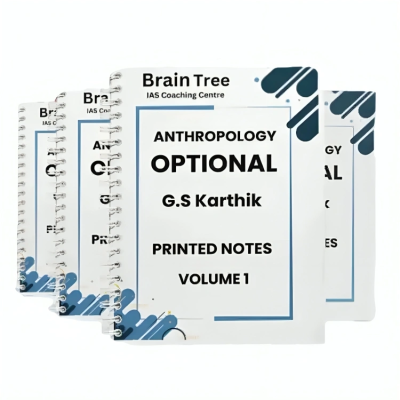
If you have chosen anthropology as your optional for the UPSC Civil Services Mains, you need one coherent set of notes from which to start. Brain Tree, a coaching institute, split its optional material into parts, and this is the first: 350 pages in English, the larger of the two volumes in this series.
Starting point for the optional
The first part is where a newcomer builds vocabulary. Anthropology uses many terms from biology, archaeology and sociology, and the early chapters explain them before the later chapters apply them. Reading in order matters here.
How to approach 350 pages
- Spend the first two weeks only reading and underlining, with no answer writing.
- In the next phase, write one answer a day from a section you finished.
- Draw a diagram for any topic where the book includes one, as figures add marks.
- Keep a vocabulary sheet of terms and the thinkers linked to them.
| Month | Goal |
|---|---|
| 1 | Read the whole file once, mark unclear sections |
| 2 | Second reading with textbook support, begin writing |
| 3 | Full answers, previous year optional questions |
| 4 | Revision and mock papers |
Syllabus relation
The anthropology optional has two papers. This material is intended to carry you through the early part of that syllabus, and the second volume continues it. Always keep the official syllabus open next to the notes and tick each line as you cover it.
Complementary reading
Standard textbooks fill in where institute notes are brief, and recent articles on tribal issues give living examples. Previous year question papers show how topics are phrased, and writing from them is the best test of your notes.
A caveat
These are coaching notes from one teacher, so verify claims with a standard source where you can, and make sure the content matches the syllabus as it currently stands.
Terms to master early
The first chapters introduce vocabulary on which everything later depends. Prepare a glossary of concepts from physical, social and cultural branches, write each in your own sentence and attach one example. Revising this glossary for ten minutes every morning in the first month pays off during later chapters, when the terms appear without explanation. Candidates who skip this step often struggle with the more theoretical sections, even though the text itself is clear.
On paper
Competer offers printed anthropology optional material for UPSC candidates who want a physical set.