MPPSC Syllabus 2026: Prelims, Mains, Pattern + PDF (Hindi)
Complete MPPSC syllabus 2026 — Prelims & Mains stage-wise topics, full exam pattern, marks, topic-wise weightage, MP GK checklist and syllabus PDF in Hindi.

The MPPSC syllabus for the State Service Examination spans three stages: Prelims (2 objective papers, 200 marks each), Mains (6 descriptive papers totalling 1,400 marks) and a Personality Test/Interview of 175 marks — with a deliberate, heavy focus on Madhya Pradesh history, geography, economy, polity and culture. That single sentence is the whole exam in miniature; everything below is detail.
For 2026 the structure is unchanged from the revised pattern: Prelims Paper II (Aptitude/CSAT) is qualifying at 33%, there is no negative marking in Prelims, and the Mains is conducted largely in Hindi. This guide gives you the complete stage-wise syllabus, exam-pattern tables, topic-wise weightage, an MP static-GK checklist, a booklist mapped to each unit, and how to get the official MPPSC syllabus PDF in Hindi and English.
- Stages: Prelims → Mains → Interview
- Papers: 2 in Prelims + 6 in Mains = 8 written papers
- Merit marks: Mains 1,400 + Interview 175 = 1,575 (Prelims is screening only)
- Negative marking: None in Prelims
- Medium: Predominantly Hindi
MPPSC Syllabus 2026 at a Glance
The Madhya Pradesh Public Service Commission (MPPSC) conducts the State Service Examination (Rajya Seva Pariksha) to recruit Deputy Collectors, DSPs, Naib Tehsildars, Block Development Officers and other Class-I and Class-II gazetted posts. Before diving into the detailed mppsc syllabus 2026, understand the three stages that filter lakhs of aspirants down to the final merit list.
| Stage | Nature | Papers | Total Marks | Purpose |
|---|---|---|---|---|
| Prelims (Preliminary Exam) | Objective / MCQ | 2 (GS + Aptitude) | 400 | Screening only — marks not counted in final merit |
| Mains (Main Exam) | Descriptive / Written | 6 | 1,400 | Counted in final merit |
| Interview (Personality Test) | Personality assessment | — | 175 | Counted in final merit |
Final selection is based on the combined score of Mains (1,400) + Interview (175) = 1,575 marks. Prelims is purely a qualifying gateway. This structure closely mirrors the UPSC pattern, but the content is deeply Madhya Pradesh–centric — which is exactly where most well-prepared UPSC aspirants lose easy marks. The topics, marks and rules described here are drawn from the Commission’s official State Service notification and the pattern followed in recent exam cycles; always treat the latest gazette as final.
MPPSC Exam Pattern 2026 (Prelims + Mains + Interview)
Understanding the mppsc exam pattern is the first step to a realistic study plan, because it tells you how marks, time and negative marking are distributed across each paper. Here is the complete pattern for 2026.
MPPSC Prelims Exam Pattern
| Paper | Subject | Questions | Marks | Duration | Nature |
|---|---|---|---|---|---|
| Paper I | General Studies | 100 | 200 | 2 hours | Merit-based (qualifying cut-off) |
| Paper II | General Aptitude Test (CSAT) | 100 | 200 | 2 hours | Qualifying (33% needed) |
Key rules for MPPSC Prelims 2026: both papers are objective (MCQ) and held on the same day in two sessions. There is no negative marking in MPPSC Prelims, so you should attempt every question. Paper II is only qualifying — you need 33% (roughly 66/200) to have your Paper I score counted, but Paper II marks themselves do not decide the Prelims cut-off. The cut-off is drawn purely on Paper I performance.
MPPSC Mains Exam Pattern
| Paper | Subject | Marks | Duration |
|---|---|---|---|
| Paper I | General Studies I (History & Geography) | 300 | 3 hours |
| Paper II | General Studies II (Polity, Economy & Sociology) | 300 | 3 hours |
| Paper III | General Studies III (Science, Technology & Public Health) | 300 | 3 hours |
| Paper IV | General Studies IV (Philosophy, Psychology, Public Administration & Ethics) | 200 | 3 hours |
| Paper V | General Hindi (हिंदी व्याकरण) | 200 | 3 hours |
| Paper VI | Hindi Essay & Draft Writing (निबंध) | 100 | 2 hours |
| Total | 1,400 | — | |
MPPSC Mains is conducted predominantly in Hindi, which makes it a high-opportunity exam for Hindi-medium aspirants who are often under-served in the UPSC ecosystem. The Personality Test/Interview that follows carries 175 marks and assesses mental alertness, decision-making, leadership, and awareness of Madhya Pradesh affairs.
MPPSC Prelims Syllabus 2026 (Paper I & Paper II)
The mppsc prelims syllabus is split between General Studies (Paper I) and a CSAT-style General Aptitude Test (Paper II). Paper I is where your Prelims fate is decided, so master it first.
Paper I — General Studies (200 Marks)
| Unit | Topics Covered |
|---|---|
| History of India | Ancient, Medieval and Modern India; Indian National Movement; socio-religious reforms |
| History & Culture of Madhya Pradesh | MP dynasties, freedom struggle in MP, tribal movements, art, architecture, festivals, folk dance, music, literature |
| Geography of India | Physical, social and economic geography; monsoon, rivers, agriculture, minerals |
| Geography of Madhya Pradesh | Forests, rivers (Narmada, Chambal, Betwa), climate, minerals, national parks, tribes, demography |
| Indian Polity & Governance | Constitution, Parliament, judiciary, Panchayati Raj, public policy, rights |
| Polity & Economy of MP | State legislature, local self-government, MP-specific schemes and administration |
| Economy & Sustainable Development | Indian economy, planning, budgeting, MP economy, agriculture, industries, poverty |
| Science & Technology | General science, everyday science, IT, space, biotech, health |
| Current Affairs | National, international and Madhya Pradesh current events, sports, awards, schemes |
| Environment & Ecology | Biodiversity, climate change, conservation, MP wildlife and forests |
Paper II — General Aptitude Test / CSAT (200 Marks, Qualifying)
Paper II mirrors the UPSC CSAT paper and is qualifying at 33%. Do not over-invest here, but do not ignore it either — every year candidates with strong GS scores fail Prelims solely because they missed the 33% aptitude cut-off. The syllabus covers:
- Comprehension (reading passages and interpretation)
- Interpersonal skills including communication
- Logical reasoning and analytical ability
- Decision-making and problem-solving
- General mental ability
- Basic numeracy (numbers, orders of magnitude — Class X level)
- Data interpretation (charts, graphs, tables — Class X level)
- Hindi language comprehension skills (Class X level)
Two to three timed CSAT mocks a week are enough for most aspirants. If reasoning or maths is a weak area, a structured CSAT practice booklet set will help you clear the qualifying bar comfortably without eating into GS time.
MPPSC Mains Syllabus 2026 (All Six Papers)
The mppsc mains syllabus spans six papers, four of which are General Studies and two of which test Hindi language and essay writing. This is the merit-deciding stage, so depth and MP-specific content matter enormously. In short, the subjects included in MPPSC Mains are History, Geography, Polity, Economy, Sociology, Science & Technology, Public Health, Philosophy, Psychology, Public Administration, Ethics, General Hindi and Hindi Essay.
Paper I — General Studies I: History & Geography (300 Marks)
- History of India and the world — cultural heritage, freedom movement, post-independence consolidation
- History and culture of Madhya Pradesh in detail
- Physical, social and economic geography of India and the world
- Geography of Madhya Pradesh — resources, rivers, climate, disaster management
Paper II — General Studies II: Polity, Economy & Sociology (300 Marks)
- Indian Constitution, political system, governance, Panchayati Raj
- Political and administrative structure of Madhya Pradesh
- Indian and MP economy, planning, resource mobilisation, inclusive growth
- Sociological concepts, social justice, social issues, welfare schemes
Paper III — General Studies III: Science, Technology & Public Health (300 Marks)
- Science and technology developments and their applications
- Information and communication technology, space, defence, energy
- Environmental science, ecology and biodiversity
- Public health, nutrition, health policy and health schemes in MP and India
Paper IV — GS IV: Philosophy, Psychology, Public Administration & Ethics (200 Marks)
- Philosophy and thoughts of thinkers
- Psychology, emotional intelligence and behaviour
- Public administration concepts and governance
- Ethics, integrity, aptitude and case studies (application-based)
The case-study component here rewards the same skills UPSC tests in GS-4. Aspirants who already own structured ethics material — such as Drishti Ethics notes in Hindi — can reuse it directly for MPPSC Paper IV with minimal adaptation.
Paper V — General Hindi (200 Marks)
Tests Hindi grammar (व्याकरण), comprehension, precis writing, official/administrative letter drafting, idioms, and translation. This is a scoring paper for native Hindi speakers and is often underestimated by English-medium aspirants.
Paper VI — Hindi Essay & Draft Writing (100 Marks)
Requires writing essays (निबंध) on current, social, and philosophical topics plus draft/report writing. Regular writing practice on MP-centric and national themes is the single fastest way to add marks here.
| Mains Paper | Core Focus | MP-Specific Load | Best Scoring Lever |
|---|---|---|---|
| GS I | History + Geography | High | MP static facts + map work |
| GS II | Polity + Economy + Sociology | High | MP schemes & constitution |
| GS III | Science + Tech + Health | Medium | Current science & health data |
| GS IV | Ethics + Psychology + Admin | Low | Case-study structure |
| Hindi | Grammar + Precis | Low | Grammar accuracy |
| Essay | Nibandh + Drafting | Medium | Weekly writing practice |
MPPSC Topic-Wise Weightage & Previous-Year Trends
Most top-ranking pages list the syllabus but never tell you which topics actually carry marks. Based on the trend in previous-year MPPSC Prelims and Mains papers, here is where the marks concentrate — these figures are indicative, not official, so use them to prioritise hours rather than as a guarantee.
| Subject Area | Approx. Prelims Weightage | Priority | Why It Matters |
|---|---|---|---|
| Madhya Pradesh GK (history, geography, polity, economy, culture) | 25–30% | Very High | Highest ROI; least competition-friendly if ignored |
| Current Affairs (national + MP) | 15–20% | High | Overlaps with static topics |
| Indian Polity & Governance | 12–15% | High | Predictable, NCERT + Laxmikanth based |
| Geography (India + MP) | 10–12% | High | Map + resource questions repeat |
| History of India | 10–12% | Medium | Modern India dominates |
| Economy & Sustainable Development | 8–10% | Medium | MP economy + schemes |
| Science, Tech & Environment | 8–10% | Medium | Everyday science + ecology |
The takeaway is clear: Madhya Pradesh–specific static GK is the single biggest scoring block, yet it is where generic UPSC study material lets you down. Treat MP GK as a dedicated subject, not an afterthought.
Madhya Pradesh Static-GK Checklist (Your Scoring Edge)
Use this ready study tracker to make sure no high-yield MP topic slips through. Tick each area as you complete it — this is the checklist the top pages under-serve.
| MP Subject | Must-Cover Topics |
|---|---|
| MP History | Paramaras, Chandelas, Tomars, Bundela & Gond dynasties, 1857 in MP, tribal revolts, freedom fighters (Tantya Bhil, Rani Durgavati, Chandrashekhar Azad) |
| MP Geography | Rivers (Narmada, Tapti, Chambal, Betwa, Son), Satpura & Vindhya ranges, national parks (Kanha, Bandhavgarh, Pench, Panna), minerals (diamond, coal, manganese), climate zones |
| MP Polity & Administration | Vidhan Sabha, districts & divisions, Panchayati Raj in MP, state symbols, Lokayukta, State Commissions |
| MP Economy | Agriculture (soybean, wheat), industries, power projects, budget highlights, flagship schemes (Ladli Behna, etc.) |
| MP Art & Culture | Folk dances (Rai, Matki), tribes (Bhil, Gond, Baiga), fairs & festivals, UNESCO sites (Khajuraho, Bhimbetka, Sanchi), Tansen & Kalidas awards |
| MP Current Affairs | Recent schemes, appointments, sports events, new districts, awards, welfare launches |
For the state-PCS depth this checklist demands, many aspirants pair a solid GS foundation with a dedicated state-exam book set like the Drishti state-PCS Hindi book set and then layer MP-specific notes on top — a proven approach for regional PCS exams.
Old vs Revised MPPSC Syllabus & Pattern: What Changed
Returning aspirants often study from outdated notes. Here is a side-by-side comparison so you know exactly what the current 2025–26 structure looks like versus older cycles.
| Element | Older Pattern | Revised / 2026 Pattern |
|---|---|---|
| Prelims papers | 2 papers (GS + Aptitude) | Unchanged — 2 papers, 200 marks each |
| Paper II (CSAT) | Merit-counting in some cycles | Qualifying only (33%) |
| Negative marking (Prelims) | Varied / debated | No negative marking |
| Mains papers | 6 papers | 6 papers, 1,400 marks total |
| MP-specific weightage | Moderate | Increased emphasis across all papers |
| Interview marks | 175 | 175 (unchanged) |
Always cross-verify the latest notification on the official portal mppsc.mp.gov.in before finalising your plan, as the Commission periodically updates the detailed unit-wise syllabus in its official gazette.
Booklist & Study Material Mapped to the MPPSC Syllabus
The right material tied to each syllabus unit saves months of scattered preparation. Because MPPSC is Hindi-medium heavy, prioritise Hindi-medium sources for GS and MP topics.
| Syllabus Area | Recommended Resource Type | Notes |
|---|---|---|
| Core GS (History, Geography, Polity, Economy) | Standard IAS GS notes (Hindi) | Covers the national portion of every Prelims & Mains paper |
| Polity & Governance | Dedicated polity notes | High-yield, predictable, overlaps with GS II |
| MP Static GK | State-focused GK book | Non-negotiable scoring area |
| Ethics & Case Studies (GS IV) | Ethics notes (Hindi) | Reusable from UPSC ecosystem |
| Current Affairs | Monthly magazine (Hindi) | Feed national + MP events into every paper |
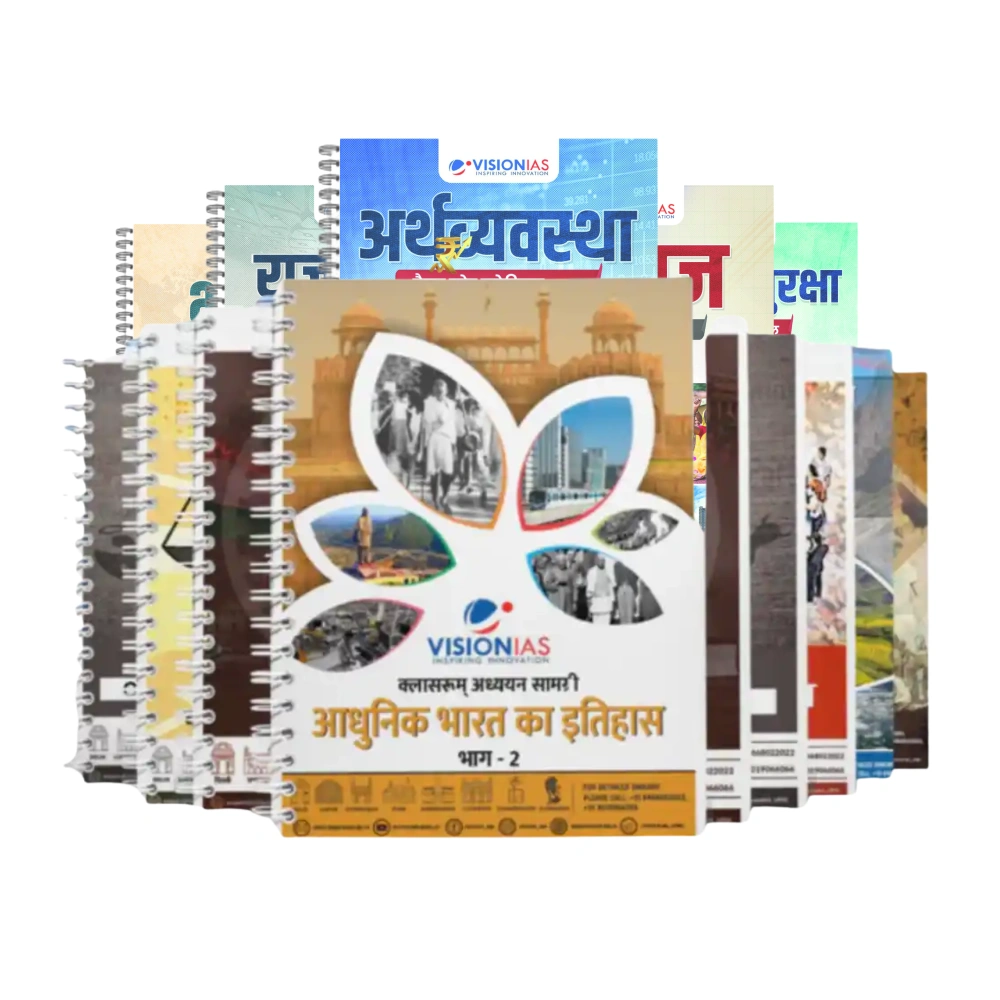
For the national GS backbone in Hindi, aspirants frequently use the Vision IAS Hindi GS notes or the more compact Drishti Hindi study material. For the polity portion that spans both Prelims and Mains GS II, a focused set like Vajiram polity notes is efficient. Keep current affairs fresh with a monthly Hindi current-affairs magazine and feed relevant MP events into your notes.
MPPSC Preparation Strategy & Subject-Wise Timeline
A syllabus is only useful with a plan attached. Here is a realistic timeline to cover the full mppsc syllabus 2026 from scratch.
| Phase | Duration | Focus |
|---|---|---|
| Foundation | Months 1–3 | NCERT + core GS (Polity, History, Geography, Economy) + start MP GK |
| MP Specialisation | Months 4–5 | Deep MP history, geography, polity, economy, culture + current affairs |
| Prelims Sprint | Months 6–7 | Full-length Prelims mocks + CSAT practice + revision |
| Mains Build-up | Months 8–10 | Answer writing, Hindi grammar, essay practice, GS IV case studies |
| Final Revision & Interview | Months 11–12 | Revision, mock interviews, MP current affairs consolidation |
Common Mistakes to Avoid
- Treating MPPSC like UPSC and skipping MP-specific static GK — the costliest error.
- Ignoring Paper II (CSAT) and missing the 33% qualifying cut-off.
- Neglecting General Hindi and Essay papers, which are easy 100–200 mark boosters.
- Studying only in English when the exam and evaluators favour Hindi answers.
- Relying on outdated notes that reflect an older exam pattern.
How to Download the MPPSC Syllabus PDF (Hindi & English)
You can get the official mppsc syllabus pdf download directly from the Commission and use a consolidated version for daily tracking. Here is the step-by-step process to obtain the mppsc syllabus in hindi and English:
- Visit the official website mppsc.mp.gov.in.
- Open the latest State Service Examination notification (Rajya Seva).
- Download the attached detailed syllabus PDF — it is published in Hindi, with an English version alongside.
- Save both the Prelims and Mains syllabus sections and print your MP static-GK checklist for revision.
Keep the official PDF as your single source of truth and align every book, note and mock test against it so nothing in the mppsc syllabus is left uncovered.
Is the MPPSC Syllabus Same as UPSC?
The structure is similar — both follow a Prelims, Mains and Interview format with GS-heavy papers — but the content differs in two decisive ways. First, MPPSC devotes a large share of every paper to Madhya Pradesh–specific topics that never appear in UPSC. Second, MPPSC Mains is written primarily in Hindi and includes dedicated General Hindi and Hindi Essay papers, whereas UPSC uses a qualifying language paper plus an optional subject. So while your UPSC GS preparation gives you a strong 60–70% head start, the winning margin in MPPSC comes from mastering MP static GK, current affairs, and Hindi answer writing.
Frequently Asked Questions
What is the syllabus of MPPSC?
The MPPSC syllabus covers three stages: Prelims (Paper I General Studies and Paper II General Aptitude/CSAT, 200 marks each), Mains (six descriptive papers totalling 1,400 marks across History, Geography, Polity, Economy, Sociology, Science, Ethics, General Hindi and Essay), and a 175-mark Interview. A large portion is devoted to Madhya Pradesh–specific history, geography, polity, economy and culture.
How many papers are there in MPPSC exam?
MPPSC has 2 papers in Prelims and 6 papers in Mains, followed by an interview. So an aspirant writes 8 papers in total across the two written stages before the Personality Test.
Is there negative marking in MPPSC prelims?
No, there is currently no negative marking in the MPPSC Prelims examination. You should therefore attempt all 100 questions in each paper, as unattempted questions carry zero benefit and there is no penalty for wrong answers.
What is the exam pattern of MPPSC 2026?
MPPSC 2026 follows a three-stage pattern: Prelims (2 objective papers of 200 marks each, 2 hours each, Paper II qualifying at 33%), Mains (6 descriptive papers totalling 1,400 marks), and an Interview of 175 marks. Final merit is based on Mains plus Interview (1,575 marks); Prelims is only a screening test.
How many attempts are allowed for MPPSC?
MPPSC does not impose a fixed cap on the number of attempts. Eligibility is instead governed by the upper age limit (generally 21–40 years, with relaxations for reserved categories and MP domicile candidates), so you can appear as many times as your age permits.
Which subjects are included in MPPSC Mains?
MPPSC Mains has six papers covering History and Geography (GS I); Polity, Economy and Sociology (GS II); Science, Technology and Public Health (GS III); Philosophy, Psychology, Public Administration and Ethics (GS IV); General Hindi; and Hindi Essay and Draft Writing. The four GS papers carry 300+300+300+200 marks and the two Hindi papers carry 200+100 marks, totalling 1,400 marks.
Is MPPSC syllabus same as UPSC?
No. The exam structure is similar — Prelims, Mains and Interview with GS-heavy papers — but MPPSC dedicates a large share of every paper to Madhya Pradesh–specific topics and is conducted mainly in Hindi with separate General Hindi and Hindi Essay papers. UPSC GS preparation gives a strong head start, but MP static GK and Hindi answer writing decide the MPPSC merit.
How to download the MPPSC syllabus PDF in Hindi?
Visit the official website mppsc.mp.gov.in, open the latest State Service Examination notification, and download the attached syllabus PDF, which is published in Hindi alongside an English version. Save both the Prelims and Mains sections for offline revision and print the MP static-GK checklist to track your preparation.
Recommended Study Material
Continue Reading
BPSC Syllabus 2026: Prelims, Mains, Optional + PDF (Hindi)
The BPSC syllabus for the 71st Combined Competitive Examination (CCE) 2026 is split across three stages — a…
UPSC Prelims Syllabus 2026: Subject-Wise GS + CSAT + PDF
The UPSC Prelims syllabus covers two objective papers — General Studies Paper 1 (100 questions, 200 marks) and…
UPSC Mains Syllabus 2026: All 9 Papers, Pattern & PDF
The UPSC Mains syllabus covers 9 descriptive papers — 2 qualifying papers (one Indian Language and English, 300…