BPSC Syllabus 2026: Prelims, Mains, Optional + PDF
Complete BPSC syllabus 2026 for Prelims, Mains & Interview — exam pattern, 34 optional subjects, Bihar-specific topics, qualifying marks and free PDF download.

The BPSC syllabus covers a three-stage Combined Competitive Examination (CCE): a single 150-mark objective Prelims (General Studies), a descriptive Mains of four compulsory papers plus one optional, and a 120-mark Interview/Personality Test. Prelims tests History, Geography, Polity, Economy, General Science, Current Affairs and Bihar-specific topics; Mains adds a qualifying General Hindi paper, two General Studies papers, an Essay paper and one optional subject chosen from 34 options. The pattern is broadly UPSC-style but with heavier Bihar weightage, no negative marking in Prelims, and Hindi now only qualifying in Mains.
This dated, version-agnostic guide compiles the full bpsc syllabus 2026 for the 71st, 72nd and subsequent CCE editions, maps every subject to ready-made study material, and ends with a free PDF download and a printable tracker so you can plan your preparation stage by stage.
BPSC syllabus 2026 — quick facts
- Exam name: Bihar Public Service Commission Combined Competitive Examination (CCE / Bihar PCS).
- Stages: Prelims (screening) → Mains (merit) → Interview (merit).
- Prelims: 1 General Studies paper, 150 marks, 2 hours, no negative marking.
- Mains: 5 papers (General Hindi qualifying + GS I + GS II + Essay + 1 Optional).
- Optional subjects: choose 1 from 34.
- Interview: 120 marks, counts fully in the final merit.
- Medium: Hindi and English.
- Official source: bpsc.bihar.gov.in (always verify against the latest CCE advertisement).
Last reviewed: September 2026. Figures below reflect recent CCE notifications; because BPSC periodically revises the marks split, cross-check every number against the specific advertisement you are applying under.
BPSC CCE Overview and Selection Process
The Bihar Public Service Commission (BPSC) conducts the Combined Competitive Examination (CCE) — often called Bihar PCS — to recruit officers such as SDM, Deputy Collector, DSP, Bihar Administrative Service, State Tax Officer and other Group A and Group B posts. The selection runs in three sequential stages, and marks from only two of them count towards the final merit.
| Stage | Nature | Marks | Counts in Merit? |
|---|---|---|---|
| Preliminary Exam | Objective (1 GS paper) | 150 | No — qualifying only |
| Main Exam | Descriptive (5 papers) | ~900 (merit) + 300 qualifying | Yes |
| Interview / Personality Test | Viva-voce | 120 | Yes |
Prelims is purely a screening filter — your score does not carry into the final list. Merit is decided by Mains (merit-counting papers) plus the Interview. Understanding this early tells you where to invest effort: clear Prelims comfortably, then treat Mains and Interview as the real battleground.
Which BPSC edition applies — 71st, 72nd or 73rd?
Aspirants often panic over the exam “number”. In practice the bpsc 71st syllabus is identical in structure to the 72nd and 73rd CCE syllabi — BPSC has kept the same three-stage design and topic list for years. The edition number only reflects the recruitment cycle and vacancy notification, not a change in what you study. So a single syllabus prepared today works across the 71st, 72nd and 73rd CCE unless BPSC issues a fresh notification. Always cross-check the marks and post list against the specific official advertisement you are applying under.
BPSC Exam Pattern 2026 at a Glance
Before the topic lists, fix the structure in your head. The bpsc exam pattern 2026 combines an objective screening stage with a lengthy descriptive Mains, so your answer-writing practice matters as much as your factual recall.
| Feature | Prelims | Mains |
|---|---|---|
| Question type | Objective (MCQ) | Descriptive (written) |
| Papers | 1 (General Studies) | 5 (4 compulsory + 1 optional) |
| Total marks | 150 | ~1200 (incl. qualifying) |
| Duration per paper | 2 hours | 3 hours each |
| Negative marking | No | Not applicable |
| Language | Hindi & English | Hindi/English (except language papers) |
BPSC Prelims Syllabus and Exam Pattern
The bpsc prelims syllabus is delivered through one General Studies paper of 150 objective questions carrying 150 marks, to be attempted in 2 hours. There is no negative marking in BPSC Prelims — a rare advantage that means you should attempt every question. The paper is qualifying: you only need to cross the category-wise cut-off to reach Mains.
| Component | Detail |
|---|---|
| Paper | General Studies |
| Questions | 150 |
| Marks | 150 |
| Time | 2 hours |
| Marking | +1 correct, 0 wrong (no negative) |
Subject-wise Prelims GS topics
The Prelims General Studies paper spans the following areas, with strong overlap into Bihar-specific content:
- History of India and Bihar — ancient, medieval and modern India; Bihar’s role in the freedom struggle (Champaran Satyagraha, Quit India), and Bihar’s ancient heritage (Magadha, Nalanda, Vikramshila).
- Geography — India and Bihar geography: rivers, agriculture, climate, minerals, and physical/economic features of Bihar.
- Indian Polity and Governance — Constitution, Panchayati Raj, public policy, rights issues.
- Economy — Indian and Bihar economy, planning, and sustainable development.
- General Science — everyday science, scientific developments and their applications.
- Current Events — national and international current affairs, plus a strong Bihar current-affairs component (schemes, appointments, awards, sports).
- General Mental Ability — basic reasoning and numeracy.
A dependable current-affairs source is non-negotiable here. Aspirants who supplement their notes with a monthly compilation like the Vision IAS Current Affairs Magazine (January 2026, English) tend to score better on the volatile current-events questions that decide Prelims cut-offs.
BPSC Mains Syllabus and Exam Pattern
The bpsc mains syllabus is the merit-deciding stage. It comprises five papers written over three hours each. Following the recent reform, the General Hindi paper is now qualifying only (you need 30% to pass, but the marks don’t count towards merit), while General Studies Paper I, General Studies Paper II, the Essay paper and the Optional subject contribute to your rank.
| Paper | Subject | Marks | Type |
|---|---|---|---|
| Paper I | General Hindi | 100 | Qualifying (30% needed) |
| Paper II | General Studies Paper I | 300 | Merit |
| Paper III | General Studies Paper II | 300 | Merit |
| Paper IV | Essay (Nibandh) | 300 | Merit |
| Paper V | Optional Subject | 100 | Merit |
Note that BPSC has revised the Mains structure in recent cycles — earlier a single optional carried 300 marks, while newer notifications restructure marks and add an Essay paper. Always confirm the exact marks split in your CCE notification, but the topic coverage below remains stable.
General Hindi (qualifying) syllabus
Paper I tests basic Hindi language proficiency — essay writing, grammar, syntax, precis and sentence construction. You only need 30% (30/100) to qualify. Do not over-invest, but do not ignore it either: failing this paper disqualifies you regardless of your other scores.
GS Paper I syllabus (Modern History, Bihar & Statistics)
General Studies Paper I focuses heavily on history and society, with a distinct Bihar lens:
- Modern History of India and Bihar — mid-18th century onwards: the freedom movement, and Bihar’s contribution (the Santhal uprising, Birsa Munda movement, Champaran, 1942 movement).
- Indian culture — art, architecture, literature and cultural heritage.
- Statistics and Graphs — the current affairs of Bihar and India, and a dedicated section on statistical analysis, diagrams, graphs and their interpretation.
The Statistics & Graphs portion — where candidates lose easy marks
Many aspirants under-prepare the statistics component of GS Paper I, yet it is one of the most predictable scoring areas because it tests skills, not memory. Expect questions requiring you to: draw and interpret bar diagrams, pie charts and line graphs; compute mean, median and mode; read frequency tables; and convert data between tabular and graphical form. Practise 15-20 past data sets under timed conditions — a candidate who nails this section can bank 30-40 near-guaranteed marks while others leave them on the table.
GS Paper II syllabus (Polity, Economy, Science & Tech)
General Studies Paper II is the contemporary-affairs and governance paper:
- Indian Polity — Constitution, political system, Panchayati Raj, public policy, rights and governance issues.
- Indian and Bihar Economy — economic development, planning, agriculture, industry, and Bihar’s economic profile and reforms.
- Geography of India and Bihar — physical, economic and social geography with a Bihar focus.
- Science & Technology and its role in development — recent developments, applications and India’s science policy.
- Effects of globalisation on Indian society and the economy.
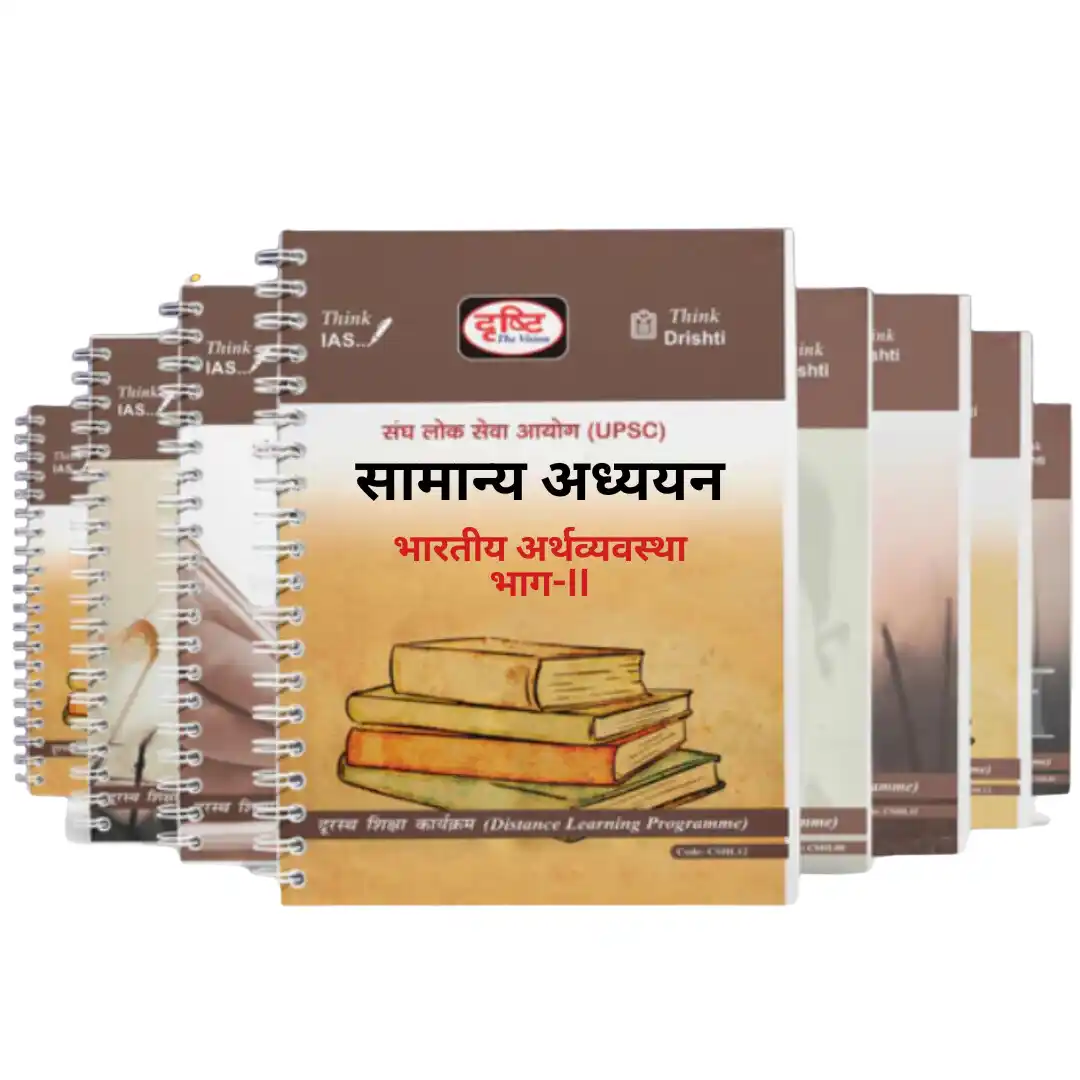
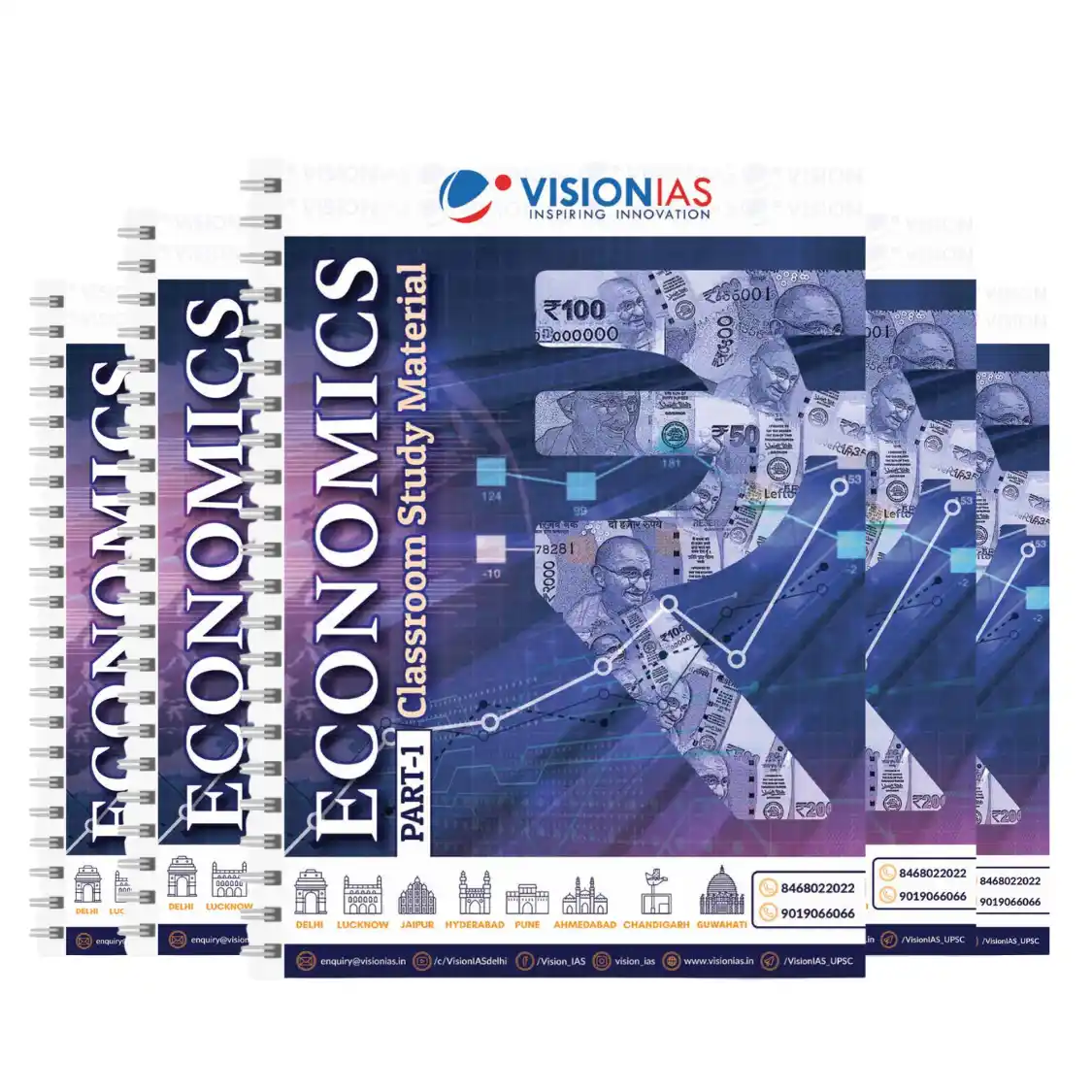
Strong Polity and Economy notes cover a large share of both GS papers. Ready-made booklets such as Vision IAS Economics Notes for the economy portion and structured GS material like the Drishti IAS GS Notes (Hindi) let you skip building notes from scratch and go straight to revision — a decisive time-saver for working aspirants.
Essay (Nibandh) paper
The Essay paper rewards structure, balance and Bihar-linked examples. You will typically write essays on social issues, Bihar development themes, philosophical quotes and current national topics. Practise a full essay every week and build a stock of Bihar-specific data (literacy, agriculture, migration, flood management) you can deploy across topics.
BPSC Mains Optional Subjects List (34 Options)
Candidates choose one optional subject for Mains from the official bpsc optional subjects list of 34 subjects. The optional carries merit marks, so choose one you can score in — usually a subject with a familiar syllabus, available material, and manageable overlap with GS.
| # | Optional Subjects (Group A) | Optional Subjects (Group B) |
|---|---|---|
| 1-6 | Agriculture, Animal Husbandry & Veterinary Science, Botany, Chemistry, Civil Engineering, Commerce & Accountancy | Labour & Social Welfare, Law, Management, Mathematics, Mechanical Engineering, Philosophy |
| 7-12 | Economics, Electrical Engineering, Geography, Geology, History, Statistics | Physics, Political Science & International Relations, Psychology, Public Administration, Sociology, Zoology |
| 13-17 | Hindi Language & Literature, Urdu, English, Sanskrit, Persian, Arabic, Maithili, Bangla | Pali, Anthropology, and other regional-language literatures |
The list above is indicative of the 34-subject pool; verify the exact spellings and any newly added literature options against your notification. BPSC’s optional list closely mirrors UPSC’s, so most UPSC optional material is directly usable.
How to choose a BPSC optional subject
Three practical filters help you pick:
- GS overlap — Political Science & IR, Public Administration, History, Geography and Sociology overlap heavily with the GS papers, so studying them does double duty.
- Scoring reliability — subjects with definite, static syllabi (like Public Administration or Sociology) are easier to complete and revise than sprawling ones.
- Material availability — pick a subject with proven notes and PYQs. For example, PSIR aspirants can rely on established optional booklet sets, and the same applies to Sociology and Public Administration.
BPSC Interview / Personality Test (120 Marks)
After clearing Mains, candidates are called for the Interview or Personality Test, which carries 120 marks and counts fully towards the final merit. The board assesses your general awareness, clarity of thought, decision-making, leadership, and knowledge of Bihar’s socio-economic and cultural profile. Expect questions on your home district, your optional subject, current Bihar and national affairs, and your Detailed Application Form (DAF) hobbies and background. With Prelims non-counting, your final rank is essentially Mains merit marks + 120 interview marks.
Marks Distribution, Cut-offs and Qualifying Marks
Understanding how marks combine tells you where to focus. Below is the merit-counting breakdown for a typical CCE cycle.
| Component | Marks Counting in Merit |
|---|---|
| GS Paper I | 300 |
| GS Paper II | 300 |
| Essay | 300 |
| Optional | 100 |
| Interview | 120 |
| Total merit marks | ~1120 |
On qualifying marks: the General Hindi paper needs 30%. Overall Mains and interview qualifying thresholds are set category-wise (General 40%, BC 36.5%, EBC 34%, SC/ST/Women/Disabled 32%). Prelims has no fixed cut-off — it floats with vacancies and difficulty, typically clearing roughly the top candidates at 10-15 times the number of vacancies.
| Category | Minimum qualifying % |
|---|---|
| General | 40% |
| Backward Class (BC) | 36.5% |
| Extremely Backward Class (EBC) | 34% |
| SC / ST / Women / Persons with Disability | 32% |
Treat these percentages as the floor, not the target. Because Prelims does not count and the merit list is compact, even a few marks above the category threshold in Mains and the Interview can decide your final rank and service allocation.
Bihar-Specific Topics: Your Biggest Scoring Differentiator
What separates BPSC from a generic PCS exam is the sheer weight of Bihar-specific content — and it is the single most under-prepared area. Bihar topics appear across both Prelims and Mains, and command a large chunk of GS marks. Cover these systematically:
| Domain | Bihar-specific focus areas |
|---|---|
| History | Magadha, Nalanda & Vikramshila, Mauryan & Gupta Bihar, Champaran Satyagraha, 1857 & Santhal/Birsa Munda movements, 1942 Quit India in Bihar |
| Geography | Ganga & tributaries, flood-prone regions, agro-climatic zones, minerals, Bihar’s districts and divisions |
| Economy | Agriculture, migration, sugar & food processing industry, state budget, poverty & HDI indicators, recent Bihar schemes |
| Polity & Governance | Bihar Panchayati Raj, state administration, prohibition policy, land reforms |
| Current Affairs | Bihar government schemes, appointments, awards, sports persons, welfare programmes |
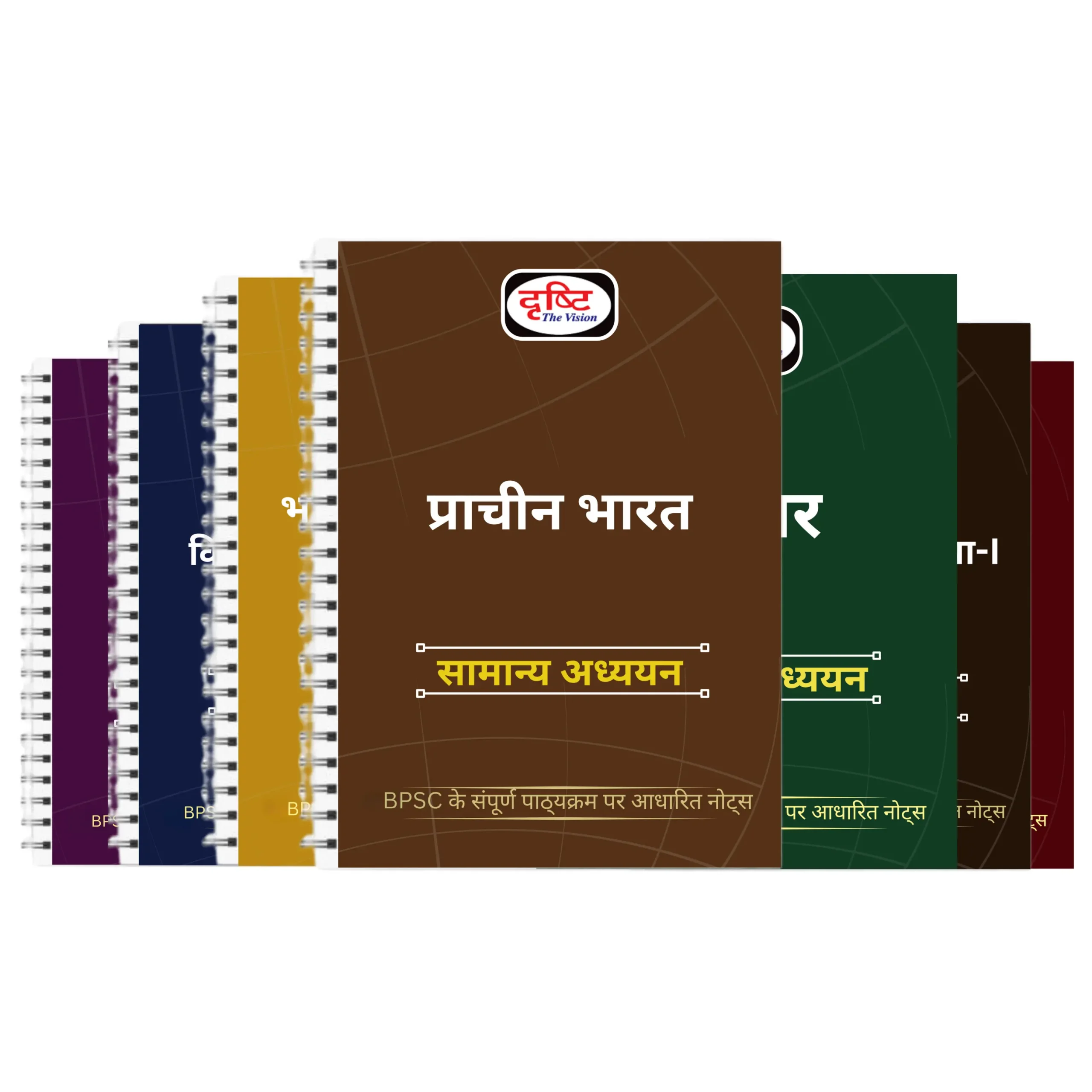
A dedicated Bihar-focused resource pays for itself here. The Drishti BPSC Books (Hindi Medium, Set of 24) are built specifically around this Bihar weightage and cover the full CCE syllabus in the medium most BPSC aspirants prefer — filling the exact gap that generic UPSC notes leave.
Is the UPSC and BPSC Syllabus the Same?
They are similar but not identical. Both test History, Geography, Polity, Economy, Science and Current Affairs, and BPSC’s optional list mirrors UPSC’s — so UPSC standard material is highly reusable. The key differences: BPSC has one GS Prelims paper (UPSC has GS + CSAT), BPSC devotes heavy weightage to Bihar-specific topics, BPSC’s Mains is shorter with one optional, and BPSC includes a statistics/graphs component in GS Paper I. Bottom line: use UPSC notes for core GS, but add a Bihar layer and statistics practice that UPSC material does not cover.
Because of this overlap, UPSC GS booklets are efficient for BPSC too. Comprehensive sets such as the Vision IAS GS Notes in Hindi (54 Booklets) cover the shared History-Polity-Economy-Geography core, letting you focus your remaining time purely on Bihar and statistics.
Best Books and Study Material for BPSC 2026
A focused booklist beats scattered PDFs. Here is a proven combination mapped to the syllabus:
| Area | Recommended resource |
|---|---|
| Bihar-specific full coverage | Drishti BPSC Books (Hindi, Set of 24) |
| Core GS (History/Polity/Geo/Sci) | Vision IAS or Drishti IAS GS notes |
| Economy | Vision IAS Economics Notes |
| Current Affairs | Monthly Vision IAS magazine + a Bihar CA source |
| NCERTs | Class 6-12 History, Geography, Polity, Economy |
| Answer writing & essay | Weekly self-practice + previous-year papers |
Hindi-medium aspirants — the majority for BPSC — benefit from complete Hindi sets like the Drishti IAS GS Notes in Hindi (18 Booklets) for the GS core, paired with the Bihar-specific Drishti BPSC set.
BPSC Preparation Strategy and Recent Pattern Changes
Plan backwards from the exam. A workable timeline for a first-time aspirant:
| Phase | Focus | Duration |
|---|---|---|
| Foundation | NCERTs + standard GS notes + Bihar basics | Months 1-3 |
| Core building | Full syllabus coverage + optional + daily current affairs | Months 4-7 |
| Prelims sprint | MCQ practice, PYQs, revision, mock tests | 1-2 months before Prelims |
| Mains focus | Answer writing, essay, statistics, Bihar depth | Post-Prelims |
| Interview | DAF, current affairs, mock interviews | Post-Mains |
Recent pattern changes to note: General Hindi in Mains is now qualifying (not merit); the GS Prelims paper follows a clear objective format with no negative marking; and BPSC has been restructuring Mains marks and adding an Essay paper in recent notifications. Common mistakes to avoid: neglecting Bihar-specific current affairs, skipping the statistics/graphs section, choosing an optional with no available material, and treating the qualifying Hindi paper as ignorable.
Download BPSC Syllabus PDF (English & Hindi) + Printable Tracker
You can compile this bpsc syllabus pdf download directly from the tables above into a single printable document in both English and Hindi. The official, authoritative syllabus is published in the BPSC CCE notification on bpsc.bihar.gov.in — always match your printed copy against the latest advertisement.
To pull the official syllabus PDF yourself:
- Open bpsc.bihar.gov.in and go to the “Advertisement” or “Examination” section.
- Find the latest CCE notification (e.g., 71st/72nd CCE) and open the PDF.
- Scroll to the “Scheme and Syllabus of Examination” annexure — it lists Prelims, Mains and optional topics in full.
- Save that PDF and cross-check its marks table against the quick-facts and tables in this guide.
Below is a printable subject-wise checklist you can tick off as you complete each block.
| Stage / Paper | Topic block | Status (tick) |
|---|---|---|
| Prelims GS | History (India + Bihar) | ☐ |
| Prelims GS | Geography, Polity, Economy | ☐ |
| Prelims GS | Science + Current Affairs (Bihar) | ☐ |
| Mains GS I | Modern History + Culture | ☐ |
| Mains GS I | Statistics & Graphs | ☐ |
| Mains GS II | Polity, Economy, Sci & Tech | ☐ |
| Mains | Essay practice (weekly) | ☐ |
| Mains | Optional subject completion | ☐ |
| Mains | General Hindi (qualifying) | ☐ |
| Interview | DAF + Bihar current affairs | ☐ |
Frequently Asked Questions
What is the syllabus for BPSC?
The BPSC syllabus has three stages. Prelims is one General Studies objective paper covering History, Geography, Polity, Economy, General Science, Current Affairs and Bihar-specific topics. Mains has five descriptive papers — qualifying General Hindi, GS Paper I, GS Paper II, Essay and one Optional subject. The final stage is a 120-mark Interview/Personality Test.
Is there negative marking in the BPSC Prelims exam?
No. There is no negative marking in the BPSC Prelims General Studies paper. Each correct answer earns one mark and wrong answers carry no penalty, so you should attempt all 150 questions.
How many papers are there in the BPSC Mains exam?
BPSC Mains has five papers: General Hindi (100 marks, qualifying), General Studies Paper I (300), General Studies Paper II (300), Essay (300) and one Optional subject (100). Only the last four count towards the final merit.
Is the UPSC and BPSC syllabus the same?
They overlap heavily but are not the same. Both cover core GS subjects and share a near-identical optional list, so UPSC material is reusable. However, BPSC has only one GS Prelims paper, gives strong weightage to Bihar-specific topics, includes a statistics/graphs section, and has a shorter Mains with one optional.
Does BPSC have Maths?
There is no separate compulsory maths paper. However, GS Paper I in Mains includes a Statistics and Graphs section requiring basic data interpretation, diagrams and elementary calculations. Mathematics is also available as one of the 34 optional subjects if you choose it.
What are the passing / qualifying marks in BPSC?
The General Hindi paper in Mains requires 30% to pass. Overall Mains and interview qualifying marks are set category-wise: General 40%, Backward Class 36.5%, Extremely Backward Class 34%, and SC/ST/Women/Persons with Disability 32%. Prelims has no fixed passing mark — the cut-off floats with vacancies and difficulty, usually shortlisting candidates at about 10-15 times the number of vacancies.
How many optional subjects are there in BPSC Mains, and is the syllabus in Hindi?
BPSC Mains offers 34 optional subjects, from which you select one. Yes — the entire BPSC syllabus and question papers are available in both Hindi and English, and most aspirants prepare in Hindi medium using Hindi study material.
Is the BPSC syllabus available in Hindi?
Yes. BPSC publishes its notification, syllabus and question papers in both Hindi and English, and answers may be written in either language (except the language-specific papers). Because Hindi medium is the preferred choice for most BPSC aspirants, complete Hindi-medium note sets and Bihar-specific books are widely used for preparation.
Recommended Study Material

Continue Reading

SSC Selection Post Syllabus 2026: Level-Wise Topics, Pattern & PDF
The SSC Selection Post syllabus covers four sections — General Intelligence & Reasoning, General Awareness, Quantitative Aptitude and…
SSC JE Syllabus 2025: Paper 1 & 2 Pattern + PDF
The SSC JE syllabus is a two-paper structure: Paper 1 (Computer-Based Test) carries 200 marks across General Intelligence…
UPSC Prelims Syllabus 2026: GS & CSAT Topics, Pattern + PDF
Short answer: the upsc prelims syllabus has two papers — General Studies Paper I (100 questions, 200 marks)…