SSC JE Syllabus 2025: Paper 1 & 2 Pattern + PDF
Complete SSC JE syllabus 2025 for Civil, Electrical & Mechanical — Paper 1 & 2 topics, exam pattern, negative marking, weightage and a free branch-wise PDF.

The SSC JE syllabus is a two-paper structure: Paper 1 (Computer-Based Test) carries 200 marks across General Intelligence & Reasoning (50 marks), General Awareness (50 marks) and your discipline-specific General Engineering (100 marks), while Paper 2 is a 300-mark technical paper testing only your branch — Civil & Structural, Electrical or Mechanical. Both papers draw from the same diploma-level engineering topics; the difference is depth, not subject. This guide gives you the complete branch-wise syllabus, the exam pattern with negative marking, previous-year weightage tables and a clean, one-click downloadable PDF so you can start planning today.
SSC conducts the Junior Engineer examination to recruit engineers for departments like CPWD, CWC, MES, Border Roads Organisation, Central Water Commission, Farakka Barrage and the Department of Posts. The topics below are mapped to the syllabus published in the official SSC JE notification; always cross-check the exact section list against the notification PDF for the cycle you are applying in, since SSC reserves the right to revise it. Below you will find every topic the top-ranking pages cover — plus the weightage, PYQ and study-material mapping that most of them miss.
SSC JE Syllabus 2025 at a Glance
The SSC JE syllabus 2025 has stayed consistent with recent cycles — there has been no major change in the prescribed topics between the last few SSC JE notifications. The exam is conducted in two stages, and both must be attempted by every candidate. Paper 1 is an objective screening test; Paper 2 is the technical merit-decider. Here is the top-level picture before we go section by section.
| Component | Details |
|---|---|
| Exam Name | SSC Junior Engineer (JE) |
| Conducting Body | Staff Selection Commission |
| Disciplines | Civil, Electrical, Mechanical (and Quantity Surveying & Contract for some posts) |
| Stages | Paper 1 (CBT) & Paper 2 (CBT) |
| Paper 1 Marks | 200 |
| Paper 2 Marks | 300 |
| Total Marks | 500 |
| Mode | Online (Computer-Based Test) |
| Negative Marking | 0.25 (Paper 1) / 1.0 (Paper 2) |
| Eligibility | Diploma or Degree in relevant engineering branch |
SSC JE Exam Pattern: Paper 1 and Paper 2
Understanding the SSC JE exam pattern is the first step in reading the syllabus correctly, because it tells you exactly how many questions come from each section and how negative marking can erode your score. Both papers are now conducted in Computer-Based mode, and both count toward your final merit.
SSC JE Paper 1 (Tier 1) Exam Pattern
Paper 1 is a 2-hour objective test with 200 questions of 1 mark each. There is a negative marking of 0.25 marks for every wrong answer. Candidates from Civil, Electrical and Mechanical streams attempt a common Reasoning and General Awareness section but a different General Engineering section based on their discipline.
| Section | No. of Questions | Marks | Duration |
|---|---|---|---|
| General Intelligence & Reasoning | 50 | 50 | 2 Hours (2 hours 40 min for PwD) |
| General Awareness | 50 | 50 | |
| General Engineering (Civil / Electrical / Mechanical) | 100 | 100 | |
| Total | 200 | 200 |
Negative marking: 0.25 marks deducted per wrong answer in Paper 1.
SSC JE Paper 2 (Tier 2) Exam Pattern
Paper 2 is entirely discipline-specific and tests only the General Engineering portion of your branch in far greater depth. It carries 100 questions for 300 marks (each question is worth 3 marks) and has a heavier penalty for wrong answers.
| Section | No. of Questions | Marks | Duration |
|---|---|---|---|
| General Engineering (Civil & Structural / Electrical / Mechanical) | 100 | 300 | 2 Hours |
Negative marking: 1 mark deducted per wrong answer in Paper 2. Because each question carries 3 marks and the penalty is a full mark, blind guessing in Paper 2 is far riskier than in Paper 1.
How SSC JE Marks Contribute to the Final Merit
A point most pages gloss over: the final merit list is prepared on the combined score of Paper 1 and Paper 2 (200 + 300 = 500 marks). Paper 1 acts as a screening/qualifying filter to shortlist candidates for Paper 2, but its marks are added to the final total. After Paper 2, shortlisted candidates go through Document Verification. Note that SSC JE does not have a typing/DEST test for engineering posts — DEST applies to clerical exams, not JE — so your merit depends purely on written performance and clearing document verification. Because both papers add up, treating Paper 1 as “just qualifying” is a costly misconception; every mark you leave in Paper 1 is a mark you cannot recover later.
SSC JE Paper 1 vs Paper 2 Syllabus: The Difference
The core question — what is the difference between SSC JE Paper 1 and Paper 2 syllabus — has a simple answer: the topic list is the same, but Paper 2 demands conceptual depth, numerical application and problem-solving, whereas Paper 1 tests broader recall across more topics plus non-technical sections. In other words, if you master the branch syllabus for Paper 2, you have already covered the technical half of Paper 1; what remains for Paper 1 is Reasoning and General Awareness.
| Aspect | Paper 1 | Paper 2 |
|---|---|---|
| Sections | Reasoning + GA + General Engineering | General Engineering only |
| Total Marks | 200 | 300 |
| Marks per Question | 1 | 3 |
| Negative Marking | 0.25 | 1.0 |
| Difficulty of Technical Portion | Moderate, factual | Deeper, numerical, application-based |
| Role in Selection | Screening + counts in merit | Decides final rank |
General Intelligence & Reasoning Syllabus (Paper 1)
This 50-mark section is common to all three branches and is one of the most scoring parts of Paper 1 with the right practice. It includes both verbal and non-verbal reasoning.
- Analogies, similarities and differences
- Coding-decoding and number series
- Spatial visualization and spatial orientation
- Problem-solving and analysis
- Visual memory, discrimination and observation
- Relationship concepts and blood relations
- Arithmetical reasoning and figural classification
- Non-verbal series, statement conclusion and syllogistic reasoning
General Awareness Syllabus (Paper 1)
The General Awareness section (50 marks) tests current affairs and static GK relating to India and its neighbouring countries. Questions rarely require specialist study and are highly scoring for candidates who read a monthly current-affairs magazine consistently.
- Current events of national and international importance
- History, culture and geography (India and world)
- Indian Polity and Constitution
- Economy and general economic scene
- General Science (Physics, Chemistry, Biology basics)
- Sports, awards, books and static GK
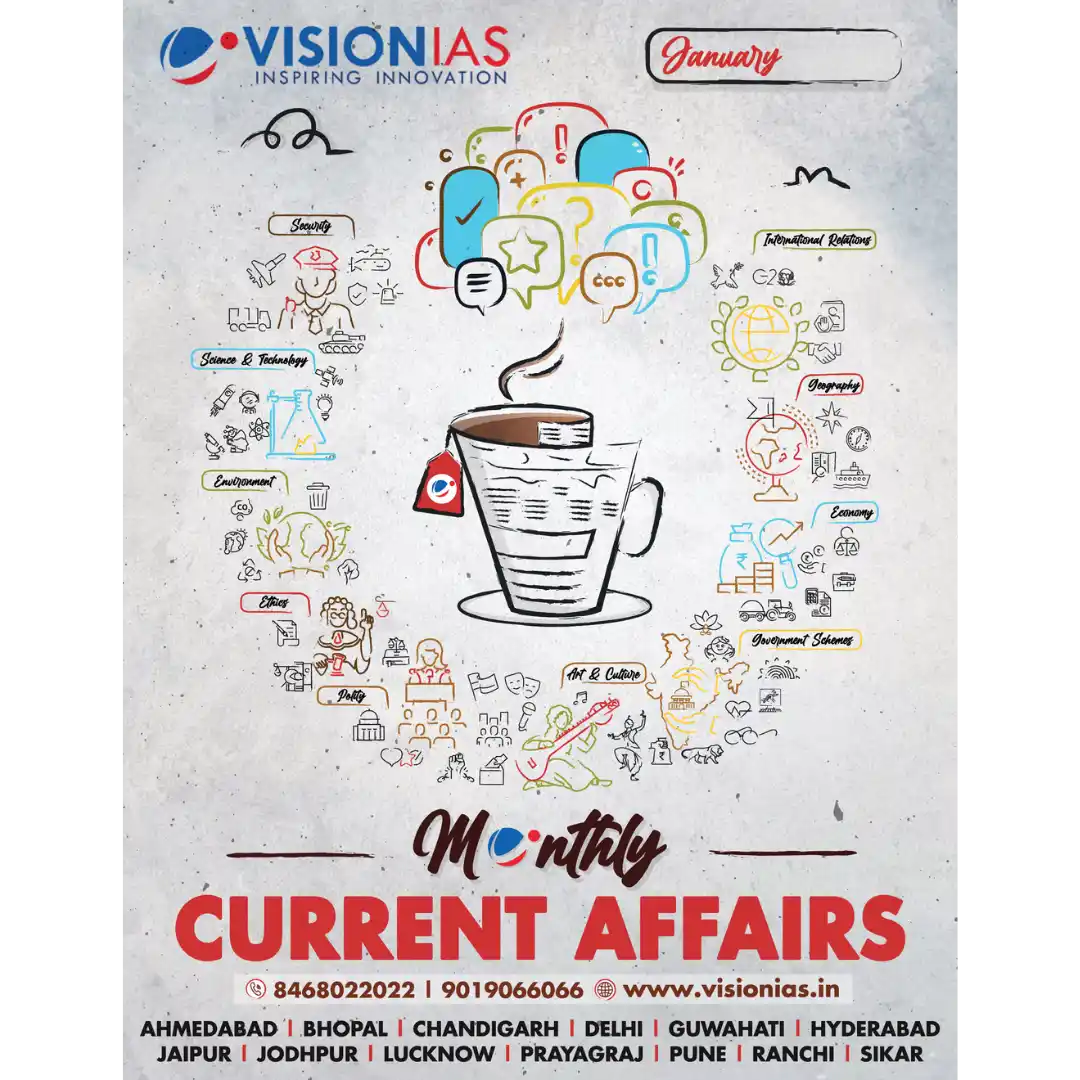
For this section, a disciplined current-affairs habit pays off more than any single book. Candidates preparing across UPSC/SSC/state exams often use a monthly digest like the Vision IAS Current Affairs Magazine (January 2026) to cover national and international events in one place, and topic-wise PYQ compilations such as the Forum IAS Prelims Toolkit (Topic-Wise PYQ) to drill static GK and polity questions that overlap heavily with SSC’s syllabus.
SSC JE Civil & Structural Engineering Syllabus
The SSC JE civil syllabus is the largest and most numerically dense of the three streams. It is split into two broad heads — Civil Engineering and Structural Engineering — and is identical in scope for Paper 1 and Paper 2 (Paper 2 simply goes deeper). Here is the complete topic list.
| Sub-Subject | Key Topics |
|---|---|
| Building Materials | Physical & chemical properties of stones, bricks, cement, lime, timber, mortar, concrete |
| Estimating, Costing & Valuation | Estimate, quantities of materials, rate analysis, methods of measurement, valuation |
| Surveying | Levelling, theodolite, chain surveying, contouring, curves, tacheometry |
| Soil Mechanics | Void ratio, moisture content, permeability, consolidation, bearing capacity, compaction |
| Hydraulics | Fluid properties, hydrostatics, flow measurement, pipe flow, open channel flow, pumps, turbines |
| Irrigation Engineering | Water requirement of crops, canals, headworks, dams, weirs, hydrology, water logging |
| Transportation Engineering | Highway alignment, pavement design, road materials, traffic engineering, railways, bridges |
| Environmental Engineering | Water supply, sanitation, sewage, treatment, solid waste, air & noise pollution |
| Theory of Structures | Bending moment, shear force, columns, struts, moment of inertia, deflection |
| Concrete Technology (RCC) | Properties of concrete, mix design, limit state & working stress method, beams, slabs, columns |
| Steel Design | Riveted & welded connections, tension/compression members, beams, columns |
SSC JE Electrical Engineering Syllabus
The SSC JE electrical syllabus focuses on core circuit theory, machines and power systems. Numerical problems from AC fundamentals, machines and measurements dominate, so formula command and unit-conversion accuracy matter here.
| Sub-Subject | Key Topics |
|---|---|
| Basic Concepts & Circuit Laws | Ohm’s law, Kirchhoff’s laws, resistance, network theorems, DC circuits |
| Magnetic Circuits | MMF, flux, reluctance, B-H curve, self & mutual inductance |
| AC Fundamentals | Instantaneous & RMS values, phasors, power factor, series/parallel resonance, three-phase systems |
| Electrical Machines | DC generators & motors, transformers, single/three-phase induction motors, synchronous machines |
| Generation, Transmission & Distribution | Power factor improvement, transmission lines, cables, distribution systems, switchgear & protection |
| Measurement & Instruments | Measurement of current, voltage, power, energy; meters, potentiometers, CT/PT |
| Estimation & Costing | Wiring, earthing, illumination, estimation of electrical installations |
| Utilization & Electrical Energy | Illumination, electric heating, welding, electroplating, electric drives, traction |
| Basic Electronics | Semiconductors, diodes, transistors, rectifiers, basic electronic devices |
SSC JE Mechanical Engineering Syllabus
The SSC JE mechanical syllabus is heavy on thermal sciences and applied mechanics. Thermodynamics, fluid mechanics and strength of materials together account for a large share of questions in both papers.
| Sub-Subject | Key Topics |
|---|---|
| Theory of Machines & Machine Design | Kinematics, cams, gears, flywheels, governors, belts, bearings |
| Engineering Mechanics & Strength of Materials | Force systems, friction, stress-strain, bending, torsion, shear force & bending moment |
| Thermal Engineering (Thermodynamics) | Laws of thermodynamics, entropy, cycles, properties of steam, air standard cycles |
| IC Engines | Two/four-stroke engines, combustion, performance, fuels, efficiency |
| Fluid Mechanics & Machinery | Properties of fluids, hydrostatics, Bernoulli’s theorem, flow through pipes, pumps |
| Turbines & Boilers | Hydraulic turbines, steam turbines, boilers, nozzles, classification & performance |
| Air Compressors | Reciprocating & rotary compressors, work done, efficiency |
| Refrigeration & Air Conditioning | Refrigeration cycles, refrigerants, psychrometry, RAC systems |
| Production & Industrial Engineering | Casting, welding, machining, forming; classification, inventory, planning |
Is the SSC JE Syllabus the Same for Civil, Electrical and Mechanical?
The non-technical sections — General Intelligence & Reasoning and General Awareness — are identical for all three streams. The General Engineering portion is different for each branch: a Civil candidate answers only Civil questions, an Electrical candidate only Electrical, and a Mechanical candidate only Mechanical. You choose your discipline at the application stage based on your diploma/degree, and both Paper 1’s technical section and the whole of Paper 2 are drawn from that single branch. You cannot mix branches or switch after applying, so pick the discipline that matches your qualification and comfort.
SSC JE Topic-Wise Weightage (Based on Previous Year Trends)
Most pages label topics vaguely as “high weightage.” Below is an approximate marks distribution drawn from previous-year SSC JE question trends. Treat these as planning estimates — exact counts vary year to year and SSC does not publish an official per-topic split — but they reliably point you to where the marks concentrate.
Civil Engineering — Approximate Weightage
| Topic | Approx. Questions (Paper 1) | Priority |
|---|---|---|
| Building Materials | 8-12 | High |
| Estimating, Costing & Valuation | 8-10 | High |
| Surveying | 8-10 | High |
| Soil Mechanics | 6-8 | Medium |
| Hydraulics | 6-9 | Medium |
| Theory of Structures & RCC | 12-15 | Very High |
| Transportation & Environmental | 10-12 | High |
| Irrigation | 5-7 | Medium |
Electrical Engineering — Approximate Weightage
| Topic | Approx. Questions (Paper 1) | Priority |
|---|---|---|
| Electrical Machines | 14-18 | Very High |
| AC Fundamentals & Circuits | 12-15 | Very High |
| Generation, Transmission & Distribution | 10-12 | High |
| Measurement & Instruments | 8-10 | High |
| Utilization & Basic Electronics | 8-10 | Medium |
| Magnetic Circuits | 4-6 | Medium |
Mechanical Engineering — Approximate Weightage
| Topic | Approx. Questions (Paper 1) | Priority |
|---|---|---|
| Thermodynamics & Thermal Engineering | 14-18 | Very High |
| Strength of Materials & Mechanics | 12-15 | Very High |
| Fluid Mechanics & Machinery | 10-12 | High |
| Theory of Machines | 8-10 | High |
| Production & Industrial Engineering | 8-10 | Medium |
| IC Engines, Turbines, RAC, Compressors | 10-14 | High |
What PYQ Analysis Tells You About SSC JE
Solving previous-year papers is the single highest-return activity for SSC JE. PYQ analysis consistently shows that: (1) the technical portion repeats concepts, so a topic that appeared last year is likely to reappear; (2) numerical questions cluster around a fixed set of standard formulas rather than exotic derivations; and (3) the General Awareness section leans heavily on static GK (polity, geography, science) that overlaps with mainstream competitive-exam question banks. Reserve the final 4-6 weeks of preparation for solving at least 10 full previous-year papers under timed conditions, then revise every wrong answer’s underlying concept.
Best Books & Study Material Mapped to the SSC JE Syllabus
The right book for SSC JE depends on your branch. The widely used technical references are branch-specific, and they should be paired with a general-studies and current-affairs source for the non-technical sections. There is no single “best” book for everyone — choose one standard reference per subject and stick with it rather than juggling many.
| Section | Commonly Recommended Resource |
|---|---|
| Civil Engineering | Made Easy / R. Agor SSC JE Civil, plus a diploma-level textbook per sub-subject |
| Electrical Engineering | Made Easy Electrical, J.B. Gupta Objective Electrical Engineering |
| Mechanical Engineering | Made Easy Mechanical, R.K. Bansal SOM/Fluid Mechanics for concepts |
| General Awareness | Lucent GK + a monthly current-affairs magazine |
| Reasoning | R.S. Aggarwal Verbal & Non-Verbal Reasoning |
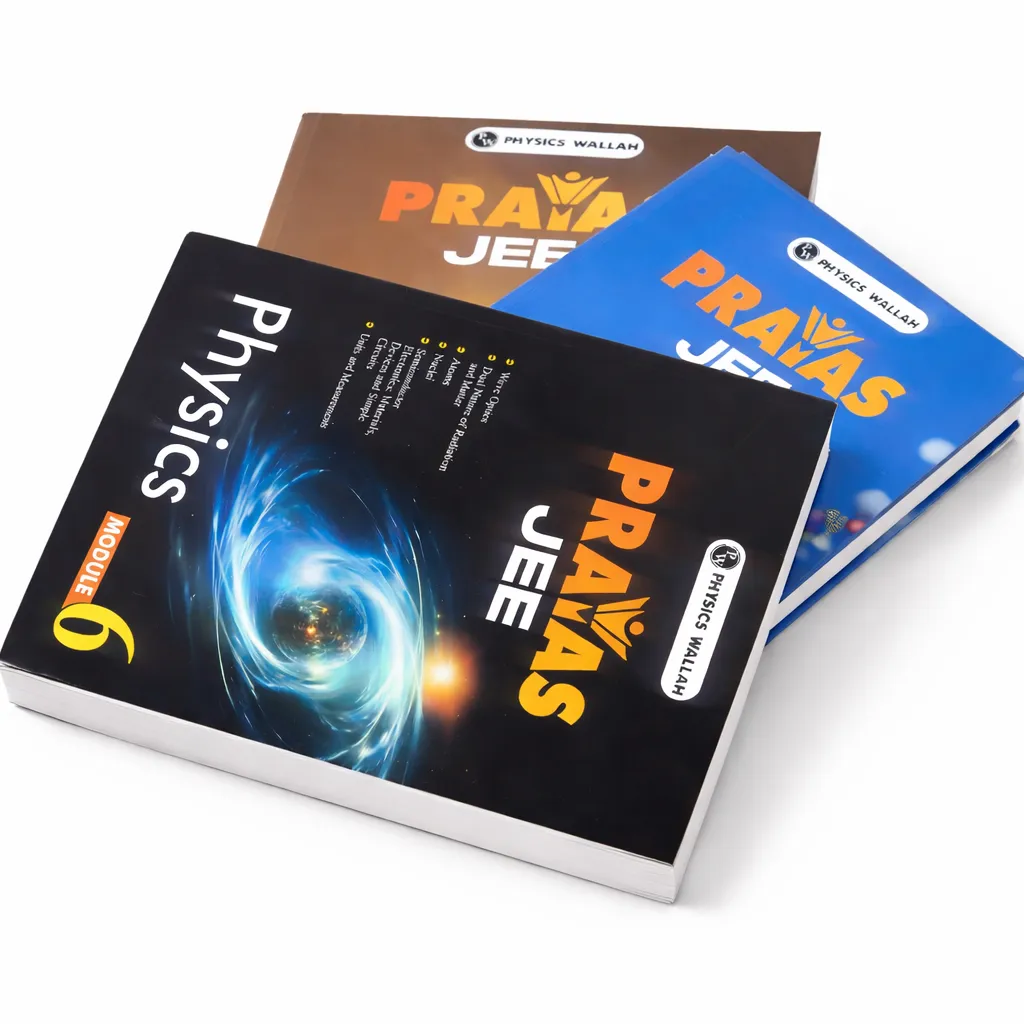
For strengthening the core physics and mechanics that underpin the Mechanical and Electrical technical sections, structured foundation modules like the PW Prayas JEE Modules or eSaral IIT JEE Modules are useful for candidates who want to rebuild concepts from the ground up before moving to SSC JE–specific practice. For the General Awareness section, keep a running current-affairs source such as the Vision IAS Current Affairs Magazine going month after month.
Can You Clear SSC JE in 3 Months? A Study Plan
Yes — a focused 3 to 4 month schedule is enough to clear SSC JE if you already hold an engineering diploma or degree, because the technical syllabus is diploma-level and you have prior exposure. The key is disciplined coverage of the high-weightage technical topics plus daily reasoning and current-affairs practice. Here is a workable timeline.
| Phase | Duration | Focus |
|---|---|---|
| Month 1 | Weeks 1-4 | Finish 50% of the technical syllabus (high-weightage topics first); start daily reasoning + 30 min current affairs |
| Month 2 | Weeks 5-8 | Complete remaining technical syllabus; begin topic-wise question practice; static GK |
| Month 3 | Weeks 9-12 | Full technical revision; solve 8-10 previous-year papers; sectional mock tests |
| Month 4 (buffer) | Weeks 13-16 | Full-length timed mocks, error analysis, formula revision, weak-area repair |
Common Mistakes SSC JE Aspirants Make
- Ignoring Reasoning and General Awareness — together they are 100 marks in Paper 1 and are easier to score than technical.
- Guessing blindly in Paper 2, where a wrong answer costs a full mark against 3-mark questions.
- Studying from too many books instead of one standard reference per subject plus PYQs.
- Postponing previous-year papers to the last week instead of solving them throughout.
- Neglecting estimation, costing and measurement in Civil, which are scoring and formula-light.
- Treating Paper 1 as merely qualifying and under-preparing its technical section, even though its 200 marks count in the final merit.
Download the SSC JE Syllabus PDF (Branch-Wise)
You can save this full page as a clean, ad-free PDF for offline planning: open your browser menu and choose Print → Save as PDF. Because every branch’s syllabus, exam pattern and weightage table is on this single page, the exported file gives you a usable one-click, branch-wise SSC JE syllabus PDF — no sign-up, no app install, no gated download. Keep it beside your study desk and tick off topics as you finish them. For the official, notification-verified section list, also download the SSC JE syllabus annexure from the SSC notification PDF on the Commission’s website.
Frequently Asked Questions
What is the syllabus of SSC JE?
The SSC JE syllabus has two parts. Paper 1 covers General Intelligence & Reasoning (50 marks), General Awareness (50 marks) and branch-wise General Engineering (100 marks) for Civil, Electrical or Mechanical. Paper 2 is a 300-mark technical paper that tests only your chosen engineering discipline in greater depth.
How many papers are there in SSC JE and what is the exam pattern?
There are two papers. Paper 1 is a 2-hour CBT with 200 objective questions for 200 marks and 0.25 negative marking. Paper 2 is a 2-hour CBT with 100 questions for 300 marks (3 marks each) and 1 mark negative marking, restricted to your engineering branch. Both papers count toward the final merit of 500 marks.
Is there negative marking in SSC JE Paper 1 and Paper 2?
Yes. Paper 1 deducts 0.25 marks for each wrong answer, while Paper 2 deducts 1 full mark for each wrong answer. Because Paper 2 questions carry 3 marks each, careless guessing there is far more costly than in Paper 1.
What subjects are asked in the SSC JE General Engineering section?
The General Engineering section is discipline-specific. Civil covers building materials, surveying, soil mechanics, hydraulics, irrigation, transportation, environmental engineering, theory of structures, RCC and estimation. Electrical covers circuits, AC fundamentals, machines, transmission and measurement. Mechanical covers thermodynamics, fluid mechanics, SOM, theory of machines, IC engines and RAC.
Can I clear SSC JE in 3 months of preparation?
Yes, three to four months is realistic for an engineering diploma or degree holder. Cover high-weightage technical topics first, practise reasoning and current affairs daily, and dedicate the final month to solving 8-10 previous-year papers and full-length mocks with error analysis.
Which is the best book for SSC JE Civil, Electrical or Mechanical?
There is no single best book, but widely used branch references are Made Easy or R. Agor for Civil, Made Easy plus J.B. Gupta’s Objective Electrical Engineering for Electrical, and Made Easy plus R.K. Bansal (SOM and Fluid Mechanics) for Mechanical. Pair one standard technical book per subject with Lucent GK, a current-affairs magazine and previous-year papers rather than collecting many titles.
What is the difference between SSC JE Paper 1 and Paper 2 syllabus?
The technical topic list is the same, but the depth differs. Paper 1 tests broader factual recall across your branch plus Reasoning and General Awareness, while Paper 2 tests only your branch’s engineering in far greater depth with numerical, application-based problems. Master the Paper 2 branch syllabus and you have already covered Paper 1’s technical section.
Is the SSC JE syllabus the same for Civil, Electrical and Mechanical?
The Reasoning and General Awareness sections are identical for all branches. The General Engineering portion differs — you answer only your chosen discipline in both Paper 1’s technical section and the entire Paper 2. So the pattern is common, but the technical syllabus is branch-specific.
Recommended Study Material

Continue Reading
Best Books for NEET 2026: Subject-Wise List (Bio, Phy, Chem)
The best books for NEET are the NCERT Class 11 and Class 12 textbooks for Physics, Chemistry and…
RRB JE Syllabus 2026: CBT 1 & CBT 2 Topics + PDF Download
The RRB JE syllabus is built around two computer-based stages: CBT 1 (100 marks — Mathematics, General Intelligence…
CTET Syllabus 2026: Paper 1 & 2 Topics, Pattern + PDF
The CTET syllabus covers five sections for Paper 1 (Classes 1-5) and four sections for Paper 2 (Classes…