NEET 2026 Preparation: Study Plan, Timeline & Best Books
NEET 2026 preparation guide with a month-by-month study plan, subject-wise strategy, chapter weightage, best books, daily timetable and a mock-test method to rank higher.


NEET 2026 preparation works best when you follow one proven sequence: finish the NCERT-based syllabus by December 2025, revise from January to March 2026, and dedicate April to full-length mock tests before the exam on the expected date of Sunday, 3 May 2026. Aim for 6-8 focused study hours daily, treat NCERT (especially Biology) as your primary text, attempt at least one full mock every week, and keep an error log that converts mistakes into marks. This guide gives you a dated timeline, subject-wise tips, chapter weightage tables, the best books, a daily timetable and a no-coaching self-study plan you can start today.
NEET (National Eligibility cum Entrance Test) is the single gateway to MBBS, BDS, AYUSH, veterinary and allied medical courses in India. With over 22-24 lakh candidates competing for roughly 1.1 lakh MBBS seats, the difference between a top rank and a missed cut-off is rarely raw intelligence — it is structure. The roadmap below is built to be that structure.
NEET 2026 Exam Overview: Date, Pattern & Marking
Before building any NEET 2026 preparation strategy, lock the target into memory. NEET 2026 is conducted by the National Testing Agency (NTA) in a single-shift, pen-and-paper (OMR) format across ~550 cities in India and abroad. From 2025 onward the paper reverted to 180 compulsory questions (the optional Section B introduced during COVID years was removed), and this pattern is expected to continue for 2026.
| Particular | Detail (NEET 2026) |
|---|---|
| Exam date | Expected Sunday, 3 May 2026 (to be confirmed by NTA) |
| Mode | Offline — pen & paper (OMR sheet) |
| Duration | 3 hours (180 minutes); revised down from 3 hr 20 min in 2025 |
| Total questions | 180 (all compulsory — no optional section) |
| Total marks | 720 |
| Marking scheme | +4 for a correct answer, −1 for a wrong answer, 0 for unattempted |
| Subjects | Physics, Chemistry, Botany, Zoology |
| Medium | 13 languages incl. English, Hindi, and regional languages |
| Question type | Single-correct MCQs (NCERT-aligned syllabus) |
Subject-wise, the marks are split as follows. Biology carries half the paper, which is exactly why a strong Biology score is the fastest route to a competitive rank.
| Subject | Questions | Marks | Share of paper |
|---|---|---|---|
| Physics | 45 | 180 | 25% |
| Chemistry | 45 | 180 | 25% |
| Biology (Botany 45 + Zoology 45) | 90 | 360 | 50% |
| Total | 180 | 720 | 100% |
NEET 2026 application & key dates (expected)
Plan backwards from the calendar. Based on NTA’s usual cycle, the NEET 2026 information bulletin and online registration are expected around February–March 2026, the admit card about 3-4 days before the exam, and the result in June 2026. These windows are indicative — always confirm the official dates on the NTA information bulletin before you finalise anything, and keep your Class 10/12 documents, photograph, signature and category certificate ready so a form deadline never disrupts your study rhythm.
What changed from NEET 2025 to 2026?
Two updates matter for planning. First, the optional questions are gone — all 180 questions are mandatory, so no chapter can be safely skipped. Second, the time cushion is tighter at 3 hours, which raises the premium on speed and accuracy in Physics numericals. Your NEET 2026 preparation strategy must therefore include timed practice from day one, not just concept-building.
NEET 2026 Preparation: The Core Strategy
Every high-scorer’s plan reduces to six non-negotiable pillars. Get these right and the details fall into place.
- Master the syllabus, not the internet. NEET is drawn almost entirely from the NCERT Class 11 and 12 syllabus. Print the official syllabus, and tick each chapter as you complete concept + questions + revision.
- NCERT-first, always. For Biology and Inorganic Chemistry, NCERT line-by-line is your scripture. Reference books add depth for Physics and Physical/Organic Chemistry, but they never replace NCERT.
- Build a written study plan. A NEET 2026 study plan on paper — weekly targets, daily hours, revision slots — removes decision fatigue and keeps you accountable.
- Revise on a cycle. Use spaced revision: revisit a topic after 1 day, 7 days and 30 days. Without revision, you forget ~70% of what you learn within a week.
- Test weekly, then daily. Start with chapter tests, graduate to subject tests, and finish with full 720-mark mocks. Add 13-15 years of previous-year questions (PYQs) — many patterns repeat.
- Analyse every test. A mock you don’t analyse is a wasted mock. The error log (covered below) is where ranks are actually built.
If you are wondering how to prepare for NEET 2026 from Class 11, the answer is to build these habits early: 70% of the NEET paper comes from Class 12 and 30% from Class 11, so a Class 11 student who keeps a rolling revision of old chapters enters the final year with almost no backlog — a massive advantage.
Month-by-Month NEET 2026 Study Plan (Countdown to 3 May)
This is the piece most guides skip — a dated calendar instead of vague advice. Below is a ~9-month countdown assuming you begin in earnest by September 2025. Droppers and early starters simply front-load the syllabus phase and add extra full-length mocks.
| Phase | Timeline | Primary focus | Mock frequency |
|---|---|---|---|
| Foundation | Sep – Oct 2025 | Complete ~50% of Class 12 syllabus + parallel Class 11 revision; NCERT + concept clarity | 1 chapter test/week |
| Build-up | Nov – Dec 2025 | Finish remaining Class 12 + close all major backlogs; start Organic mechanisms & Physics numericals | 1 subject test/week |
| Consolidation | Jan – Feb 2026 | Full syllabus revision (Round 1); 13-year PYQ chapterwise; high-weightage chapters first | 1–2 full mocks/week |
| Peak testing | March 2026 | Revision Round 2 (fast, notes-based); focused mock analysis; fix recurring errors | 2–3 full mocks/week |
| Final sprint | 1 Apr – 30 Apr 2026 | NCERT re-reading, formula/diagram revision, exam-temperament mocks at 2 PM | Alternate-day full mocks |
| Exam week | 27 Apr – 2 May 2026 | Light revision only, sleep discipline, no new topics; keep confidence high | 1 relaxed mock, then rest |
Map this calendar onto your wall. The single biggest reason students under-perform is finishing the syllabus too late and leaving no room for the consolidation and peak-testing phases where scores actually climb.
Subject-Wise NEET 2026 Preparation Tips
Here are practical, exam-tested NEET 2026 preparation tips subject wise, along with chapter weightage tables so you can prioritise high-ROI chapters instead of studying blindly. (Weightage figures are indicative averages based on recent NEET papers and can vary year to year.)
Physics — the score-differentiator
Physics decides ranks because it is where most droppers lose marks. Treat it as a problem-solving subject: for every concept, solve numericals daily. Maintain a formula sheet per chapter, memorise derivations for mechanics and electrodynamics, and drill 20-30 numericals a day. Speed matters — practice with a timer.
| High-weightage Physics chapter | Approx. marks |
|---|---|
| Mechanics (Laws of Motion, Work-Energy, Rotational) | ~90–100 |
| Electrodynamics (Current, Magnetism, EMI, AC) | ~90–95 |
| Modern Physics & Semiconductors | ~35–40 |
| Optics (Ray + Wave) | ~25–30 |
| Thermodynamics & Kinetic Theory | ~20–25 |
Chemistry — the highest-scoring subject
Chemistry is the most scoring of the three because it splits into three predictable parts. For Physical Chemistry, master formulae and practice numericals (mole concept, equilibrium, thermodynamics, electrochemistry). For Organic Chemistry, focus on reaction mechanisms, named reactions and GOC — understand the logic, don’t rote-learn. For Inorganic Chemistry, read NCERT line-by-line and build charts for the p-block, coordination compounds and periodic trends.
| High-weightage Chemistry area | Approx. marks |
|---|---|
| Organic Chemistry (GOC, Hydrocarbons, Oxygen/Nitrogen compounds, Biomolecules) | ~110–120 |
| Physical Chemistry (Equilibrium, Thermodynamics, Solutions, Electrochemistry) | ~90–100 |
| Inorganic Chemistry (p-block, Coordination, Periodic Table, Chemical Bonding) | ~90–100 |
Biology — the 360-mark backbone
Biology is half the paper and the fastest way to a high score. NCERT is non-negotiable — read every line, caption, table and diagram, because NEET routinely lifts questions directly from NCERT statements. Learn diagrams by drawing them, and solve at least 100 Biology MCQs daily once your basics are set. Human Physiology and Genetics alone can fetch 100+ marks.
| High-weightage Biology unit | Approx. marks |
|---|---|
| Human Physiology | ~90–100 |
| Genetics & Evolution | ~70–80 |
| Ecology & Environment | ~50–60 |
| Cell Biology & Cell Division | ~40–50 |
| Plant Physiology | ~40–50 |
| Biotechnology & Reproduction | ~40–50 |
Which subject should you focus on most? Start with Biology for volume of marks, secure Chemistry as your reliable scorer, and invest disciplined daily effort in Physics to stop it from dragging your rank. A well-structured module set such as the Careerwill NEET Study Module Set — 23 modules, 4200+ pages with mind-maps aligned to the latest NTA pattern — lets you cover all three subjects in one consistent format.
Daily Study Hours & Sample Timetable
How many hours should you study daily for NEET 2026? For a school-going Class 11/12 student, 6 hours of focused self-study (beyond school/coaching) is a strong target; droppers should aim for 8-10 quality hours. Quality beats quantity — six deeply focused hours beat ten distracted ones. Use the Pomodoro method (50 minutes study + 10 minutes break) and take one longer break to avoid burnout.
| Time slot | Activity |
|---|---|
| 6:00 – 7:00 AM | Biology NCERT reading (fresh-mind, high-retention slot) |
| 9:00 – 11:00 AM | Physics — concept + timed numericals |
| 11:30 – 1:00 PM | Chemistry — Organic mechanisms / Physical numericals |
| 2:00 – 3:30 PM | Full/subject mock or PYQ practice |
| 4:00 – 5:00 PM | Mock analysis + error-log entry |
| 6:00 – 7:30 PM | Biology — 100 MCQs + diagram practice |
| 8:30 – 9:30 PM | Revision of the day + next-day plan |
Notice the 2 PM mock slot — it mirrors the actual NEET exam window, training your brain to peak at the right time. Adjust the timetable to your energy rhythm, but keep three anchors fixed: a morning Biology slot, a daily mock/PYQ block, and a nightly revision.
Best Books for NEET 2026 Preparation
You do not need a shelf of books — you need the right few, read repeatedly. Here are the best books for NEET 2026 preparation, subject by subject.
| Subject | Core (must-have) | Reference / practice |
|---|---|---|
| Physics | NCERT Class 11 & 12 | HC Verma (concepts), DC Pandey / coaching modules (numericals) |
| Chemistry | NCERT Class 11 & 12 (esp. Inorganic) | MS Chouhan (Organic), N. Awasthi (Physical), coaching modules |
| Biology | NCERT Class 11 & 12 (line-by-line) | Trueman’s / MTG NCERT at Your Fingertips, PYQ MCQ books |
| All subjects | 13/15-year NEET PYQ book | Full-length mock/test series |
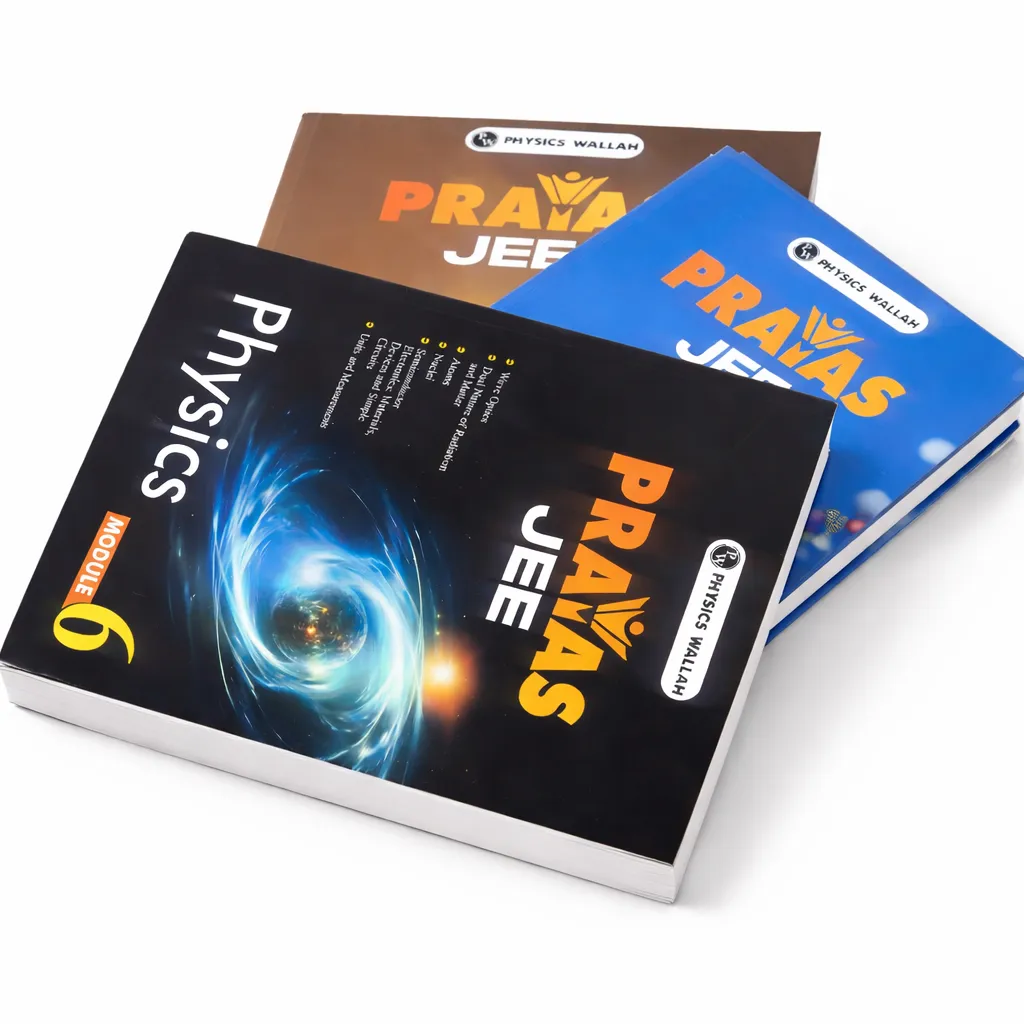
Printed coaching modules bridge the gap between NCERT theory and NEET-level questions. The Careerwill NEET module set, designed by Kota faculties with the updated NTA pattern, covers the complete syllabus with mind-maps for fast revision. If you are also weighing an engineering backup and preparing for JEE alongside, module sets like the eSaral IIT JEE Modules or the PW Prayas JEE Modules keep your Physics and Chemistry sharp for both exams.
Is NCERT enough for NEET 2026 preparation?
For Biology and Inorganic Chemistry, NCERT is close to sufficient — master it and you can score 320+ in Biology alone. For Physics and Physical/Organic Chemistry, NCERT builds the base but you need extra numerical and mechanism practice from reference books and modules. So the honest answer: NCERT is the foundation of everything, but not the whole house.
How to Analyse Mocks & Build an Error Log
Taking mocks is common advice; knowing how to analyse them is the actual edge. After every full-length test, spend at least as long analysing it as you spent taking it. For each wrong or guessed question, log it under one of four categories.
| Error type | What it means | Fix |
|---|---|---|
| Concept gap | You didn’t know the concept | Re-study the topic from NCERT/notes the same day |
| Silly mistake | Knew it, misread or miscalculated | Slow down; re-read the question; recheck units |
| Application error | Knew concept, couldn’t apply it | Solve 10 similar problems until the pattern clicks |
| Time pressure | Rushed or ran out of time | Improve speed on easy questions; better section order |
Keep a physical error notebook and revise it before every new mock. Over 8-10 mocks you will notice your errors cluster in 3-4 chapters — those become your targeted revision list. Track three numbers each mock: score, accuracy %, and attempted count. Rising accuracy at a steady attempt rate is the real signal you are improving.
Score vs Rank: Setting a Realistic NEET 2026 Target
Set a target score, not a vague “do well.” The table below gives an indicative score-to-rank map based on recent NEET trends (exact figures shift with paper difficulty and candidate numbers, so treat these as planning guides).
| Score (out of 720) | Indicative All-India Rank | Realistic outcome |
|---|---|---|
| 700+ | Under ~200 | Top government MBBS colleges |
| 670–699 | ~200 – 2,000 | Strong government MBBS chances |
| 640–669 | ~2,000 – 7,000 | Good state-quota government seats |
| 600–639 | ~7,000 – 20,000 | Government/private MBBS depending on category & state |
| 550–599 | ~20,000 – 45,000 | Private/deemed colleges, some state seats |
| ~145–160 (UR cut-off) | Qualifying only | Meets 50th-percentile qualifying mark (indicative) |
The qualifying cut-off is the 50th percentile for the General category and the 40th percentile for SC/ST/OBC (roughly the low-150s and low-120s respectively in recent years). But qualifying and getting a government MBBS seat are very different targets — aim for 640+ if a government seat is the goal, and reverse-engineer your daily plan from there.
NEET 2026 Preparation Without Coaching at Home
Yes, you can crack NEET 2026 with self-study. Every year thousands qualify through disciplined NEET 2026 preparation without coaching at home. The trade-off you must consciously fill is the structure and testing that coaching provides — replace it deliberately.
- Structure: Follow the month-by-month plan above as your syllabus schedule; a printed module set gives you coaching-grade sequencing at home.
- Doubt-solving: Use free lecture playlists, doubt apps and study communities; never let a doubt sit for more than 48 hours.
- Testing: This is the biggest gap for self-studiers — subscribe to a good test series and take mocks in strict exam conditions.
- Accountability: Track daily hours and weekly mock scores in a diary; review every Sunday.
When should you consider coaching (offline or online)? If you repeatedly fail to stay disciplined, have deep conceptual gaps, or need live doubt-solving, structured online coaching can help — ideally joined at the start of the cycle, not in the final two months, when new material only adds panic.
Droppers vs First-Attempt: Two Different Plans
Your NEET 2026 preparation strategy should differ based on where you stand.
| Factor | First attempt (Class 11/12) | Dropper / repeater |
|---|---|---|
| Daily hours | 5–6 focused hours + school | 8–10 focused hours |
| Biggest risk | Board-NEET balance, backlog build-up | Complacency, repeating old mistakes |
| Priority | Build strong NCERT base + parallel revision | Diagnose weak areas, then targeted depth + heavy mocks |
| Mock load | Ramp up from Jan 2026 | Start full mocks by Nov–Dec 2025 |
Droppers already know the syllabus — their gains come almost entirely from ruthless mock analysis and fixing the exact chapters that cost them marks last year, not from re-reading everything at the same shallow depth.
Common Mistakes to Avoid + Exam-Day Strategy
Most NEET aspirants lose marks to avoidable errors, not lack of ability. Avoid these:
- Skipping chapters — with no optional section, every chapter is fair game.
- Delaying doubts — unresolved doubts compound into concept gaps.
- Chasing too many books — depth over breadth; revise fewer sources more times.
- Getting discouraged by low mock scores — early mocks are diagnostic tools, not verdicts.
- Ignoring revision — studying new topics while forgetting old ones is a losing loop.
- Distractions — keep the phone in another room during study blocks; protect sleep.
Exam-day & OMR strategy
Reach the centre early and stay calm. Attempt Biology first to bank marks and build confidence, then Chemistry, then Physics. Read each question fully before answering — negative marking punishes hasty guesses. Mark OMR bubbles carefully with the official pen, and fill them in batches (e.g., after every 5-10 questions) to save time while avoiding misalignment. Never leave OMR filling for the last 10 minutes. Skip a genuinely tough question and return to it — do not let one problem eat five minutes.
Mental health & burnout
A nine-month race needs a sustainable pace. Sleep 6-7 hours, exercise or walk daily, eat well, and take one lighter half-day each week. Burnout in March costs more than a missed study hour in September. Consistency beats intensity every single time.
Frequently Asked Questions
When will NEET 2026 be conducted?
NEET 2026 is expected to be held on Sunday, 3 May 2026, in a single offline shift, following the NTA’s usual first-Sunday-of-May schedule. The exact date, application dates and city intimation will be confirmed on the official NTA information bulletin, so verify there before finalising your plan.
Is NCERT enough for NEET 2026 preparation?
NCERT is the single most important resource and is nearly sufficient for Biology and Inorganic Chemistry, where questions are lifted almost directly from the text. For Physics and Physical/Organic Chemistry you also need extra numerical and mechanism practice from reference books, modules and previous-year papers. Master NCERT fully first, then add depth.
How many hours should I study daily for NEET 2026?
Aim for 6 focused self-study hours if you are in Class 11/12 alongside school, and 8-10 hours if you are a dropper. Focus and consistency matter more than raw hours — use timed study blocks with short breaks, and protect 6-7 hours of sleep to keep retention high.
Can I crack NEET 2026 with self-study without coaching?
Yes. Many students qualify NEET through self-study by following a structured plan, using printed modules and NCERT, resolving doubts within 48 hours, and taking regular full-length mocks under exam conditions. The key gap to fill is disciplined testing and accountability, which you must build deliberately at home.
Can I crack NEET 2026 in one year?
Yes, a focused one-year attempt is realistic if you start with strong Class 11 fundamentals or are willing to close gaps fast. Finish the syllabus by December 2025, keep Biology and Chemistry as scoring anchors, and give the January–April window to revision and full-length mocks. A first-timer with heavy backlog should be honest about pace and front-load the foundation phase rather than rushing to mocks unprepared.
Is 75% required in Class 12 for NEET 2026?
No. NEET has no 75% requirement (that condition applies to some JEE/NIT admissions). For NEET eligibility you need to pass Class 12 with Physics, Chemistry, Biology/Biotechnology and English, and score at least 50% aggregate in PCB for the General category (40% for SC/ST/OBC, 45% for PwD).
What is the age limit for NEET 2026?
The minimum age is 17 years as on 31 December of the admission year. As of now there is no upper age limit for appearing in NEET, so droppers and repeaters can attempt it — always confirm the latest eligibility in the official NEET 2026 information bulletin.
Which subject should I focus on most for NEET 2026?
Give Biology the most attention because it carries 360 of 720 marks and is the fastest route to a high score, then lock in Chemistry as your most reliable scorer. Physics needs steady daily numerical practice so it does not drag your rank — it is usually the make-or-break subject for top ranks. In short: Biology for volume, Chemistry for reliability, Physics for rank protection.
What are the best books for NEET 2026 preparation?
NCERT Class 11 and 12 are the core for all three subjects. Add HC Verma or DC Pandey for Physics numericals, MS Chouhan (Organic) and N. Awasthi (Physical) for Chemistry, and MTG NCERT at Your Fingertips or Trueman’s plus PYQ MCQ books for Biology. Finish with a 13/15-year previous-year question book and a full-length test series, and use printed coaching modules to bridge NCERT theory and NEET-level questions.
Has the NEET 2026 syllabus or pattern changed?
The paper has 180 compulsory questions with no optional section, and the duration is 3 hours. The syllabus remains NCERT-aligned across Physics, Chemistry, Botany and Zoology. Because nothing is optional, no chapter can be safely skipped — always cross-check the final syllabus and pattern in the official NTA bulletin when it is released.
Recommended Study Material


Continue Reading
CGPSC Syllabus 2025: Prelims, Mains + PDF Download
The CGPSC syllabus spans three stages: an objective Prelims (Paper 1 General Studies + Paper 2 Aptitude Test,…

UPSC Exam Pattern 2026: Prelims, Mains, Marks & Merit
The UPSC exam pattern follows a three-stage selection process: the Preliminary examination (objective, screening), the Main examination (descriptive,…

KVS Syllabus 2025: PRT, TGT, PGT Pattern + PDF
The KVS syllabus for 2025 is built around a two-tier selection process: Tier 1 is a screening test…