NEET Exam Pattern 2026: Marks, Questions & Marking Scheme
NEET exam pattern 2026: 180 questions, 720 marks, subject-wise split, +4/-1 marking, 3-hour duration, 13 languages, OMR rules & score calculation.

The NEET exam pattern for 2026 is a single 3-hour (180-minute) pen-and-paper test of 180 compulsory questions carrying 720 marks, split across Physics (45 questions), Chemistry (45 questions) and Biology (90 questions — 45 Botany + 45 Zoology). Every correct answer earns +4 marks, every wrong answer loses 1 mark, and unattempted questions score 0. There is no sectional timing and no optional-question choice, so all 180 questions are attempted on an OMR sheet.
That summary is what most aspirants come searching for — but the numbers are only half the job. This guide breaks down the complete NEET-UG paper structure the way you actually need it for planning: subject-wise weightage, a worked score-calculation example, an attempt strategy built around negative marking, high-yield chapters, exam-day logistics, and how the pattern has changed over the years. The exact particulars are confirmed each year in the official NTA Information Bulletin; the structure below reflects the current, stable pattern. Whether you are a Class 11 beginner, a Class 12 student, or a dropper, this is the exam-ready blueprint.
NEET Exam Pattern 2026 at a Glance
Conducted by the National Testing Agency (NTA), NEET-UG is the single national entrance test for MBBS, BDS, AYUSH, BVSc & AH, and other undergraduate medical courses in India. Here is the quick-reference highlights table every aspirant should memorise.
| Feature | Details |
|---|---|
| Conducting body | National Testing Agency (NTA) |
| Exam mode | Offline — pen-and-paper (OMR based) |
| Total questions | 180 (all compulsory) |
| Total marks | 720 |
| Subjects | Physics, Chemistry, Biology (Botany + Zoology) |
| Duration | 3 hours (180 minutes) |
| Marking scheme | +4 correct, -1 wrong, 0 unattempted |
| Type of questions | Multiple Choice Questions (MCQs), single correct |
| Number of languages | 13 |
| Sectional timing | None |
In one line: 180 MCQs, 720 marks, 3 hours, +4/-1 marking, 13 languages, no sectional timing. Keep that as your anchor and everything below simply adds the detail.
NEET Total Marks and Questions
The NEET total marks and questions equation is straightforward: 180 questions × 4 marks = 720 maximum marks. Each subject contributes a fixed number of questions, and because every question is now compulsory, there is no room for cherry-picking. This differs from the transitional 2021–2023 pattern (more on that below), where you had a limited choice of questions.
The paper is a straight run of single-correct MCQs — no assertion-reason novelty, no multi-select, no numerical-entry questions. Four options, one right answer, one bubble to darken. Simplicity in format is exactly why speed and accuracy matter so much.
NEET Exam Pattern Subject Wise: Distribution & Weightage
Understanding the NEET exam pattern subject wise is the foundation of any smart study plan. Biology alone accounts for half the paper, which is why toppers treat it as the non-negotiable scoring engine while using Physics and Chemistry to build separation at the top.
| Subject | Questions | Maximum Marks | Weightage |
|---|---|---|---|
| Physics | 45 | 180 | 25% |
| Chemistry | 45 | 180 | 25% |
| Botany | 45 | 180 | 25% |
| Zoology | 45 | 180 | 25% |
| Biology (Botany + Zoology) | 90 | 360 | 50% |
| Total | 180 | 720 | 100% |
The takeaway is stark: Biology carries a 50% weight, equal to Physics and Chemistry combined. A candidate who is strong in Biology and merely competent in the other two subjects is already positioned for a competitive score. Structured, NTA-aligned modules such as the Careerwill NEET Study Module Set — 23 modules covering the full syllabus with mind-maps — are built precisely around this subject weighting so you spend effort where the marks are.
How many questions come from Physics, Chemistry and Biology?
Physics contributes 45 questions, Chemistry 45 questions, and Biology 90 questions (Botany 45 + Zoology 45). That 45-45-90 split is fixed and has been stable in the current pattern. Physics is typically rated the toughest for accuracy, Chemistry rewards memory plus application, and Biology rewards thorough NCERT-level command.
NEET Marking Scheme Explained
The NEET marking scheme is the single most important rule for attempt strategy. It works like this for every one of the 180 questions:
| Response | Marks Awarded |
|---|---|
| Correct answer | +4 |
| Incorrect answer | -1 |
| Unattempted / left blank | 0 |
| More than one option marked | -1 (treated as wrong) |
Notice the asymmetry: a correct answer is worth +4, but a wrong answer only costs -1. That five-mark swing between a right and wrong attempt (from +4 to -1) is what makes NEET a game of calculated risk, not blind guessing. If NTA later drops a flawed question, full marks are usually awarded to all candidates as per that year’s official notice.
What is NEET negative marking, and does it apply to unattempted questions?
NEET negative marking means one mark is deducted for each incorrect answer. Crucially, there is no negative marking for questions you leave unattempted — a blank question is simply zero, neither penalised nor rewarded. This is the mechanism that makes selective skipping a legitimate strategy: if you have no idea and cannot eliminate options, leaving it blank protects your score better than a random guess.
How to Calculate Your NEET Score (Worked Example)
The official formula is refreshingly simple:
NEET Score = (Correct answers × 4) − (Wrong answers × 1)
Here are three realistic scenarios so you can see how attempts translate into marks and how negative marking eats into a careless paper.
| Scenario | Correct | Wrong | Unattempted | Calculation | Final Score |
|---|---|---|---|---|---|
| Strong attempt | 160 | 10 | 10 | (160×4) − (10×1) = 640 − 10 | 630 |
| Aggressive guessing | 150 | 30 | 0 | (150×4) − (30×1) = 600 − 30 | 570 |
| Cautious, high accuracy | 140 | 5 | 35 | (140×4) − (5×1) = 560 − 5 | 555 |
The worked example every searcher wants: 160 correct and 10 wrong gives you 630. Compare the aggressive-guessing row — 150 correct feels close to 160, yet 30 wrong answers drag the score down to 570, a 60-mark gap. This is the clearest proof that in NEET, protecting accuracy usually beats maximising attempts.
Ideal NEET Marks vs Rank & Percentile
Raw marks only mean something in the context of rank. Cut-offs shift year to year with difficulty and the number of candidates, so treat the table below as an indicative planning benchmark, not a guarantee.
| NEET Score (out of 720) | Approx. Percentile | Indicative Outcome |
|---|---|---|
| 680+ | 99.9+ | Top government MBBS colleges, AIIMS/top ranks in reach |
| 640–680 | 99.5–99.9 | Strong shot at government MBBS seats |
| 600–640 | 99–99.5 | Competitive for many state government seats |
| 550–600 | 97–99 | Deemed/private + some state quota possibilities |
| Qualifying (UR ~50th percentile) | ~50 | Eligible for counselling; seat depends on category & state |
Use this to reverse-engineer your target: if you want 640+, the worked example shows you need roughly 160 correct with minimal errors — which is an accuracy problem, not just a syllabus-coverage problem.
How Many Questions Should You Attempt to Hit Your Target?
Because each question is +4 and every mistake is -1, your target score maps to a rough attempt-and-accuracy combination rather than a fixed “attempt everything” rule. The table below back-solves common goals from the same formula used above.
| Target Score | Approx. Correct Needed | Wrong You Can Afford | What It Demands |
|---|---|---|---|
| 720 (perfect) | 180 | 0 | All attempted, zero errors — extremely rare |
| 650+ | ~166 | ~4 | High coverage with near-flawless accuracy |
| 600+ | ~154 | ~6 | Attempt ~160, skip the truly unknown few |
| 550+ | ~142 | ~7 | Strong Biology base plus disciplined skipping |
The pattern here is consistent: chasing a higher score is far more about cutting wrong answers than about attempting extra questions. Two careless -1s cost you the same as one un-earned +4 — so accuracy compounds. This is why timed mock analysis, not just syllabus coverage, is the real lever above 600.
NEET 2026 Paper Pattern and Duration
The NEET 2026 paper pattern and duration is fixed at three hours (180 minutes) for a single sitting covering all three subjects. There is no sectional time limit — you are free to move between Physics, Chemistry, Botany and Zoology in whatever order suits you and allocate time as you wish across the full three hours.
With 180 questions in 180 minutes, the arithmetic gives you an average of exactly one minute per question. In practice you will bank time on Biology and Chemistry (where recall is fast) to fund the extra seconds Physics numericals demand.
Is there sectional timing in NEET?
No. Unlike some engineering entrance tests, NEET does not lock you into a section for a set duration. The entire 3-hour window is yours to distribute, which is precisely why an internalised time plan matters.
Exam Mode, Languages & OMR Rules
NEET is conducted in offline (pen-and-paper) mode. You receive a test booklet and a specially designed machine-readable OMR (Optical Mark Recognition) sheet on which you darken your chosen option with a ballpoint pen provided at the centre.
In which languages is the NEET question paper available?
The NEET question paper is offered in 13 languages: English, Hindi, Assamese, Bengali, Gujarati, Kannada, Malayalam, Marathi, Odia, Punjabi, Tamil, Telugu and Urdu. Key rules on medium:
- You choose your medium at the time of filling the online application form.
- The choice, once submitted, generally cannot be changed later — decide carefully.
- Candidates opting for a regional language get a bilingual paper (that regional language + English). If there is any ambiguity in translation, the English version is treated as final.
- Urdu is available across all centres nationally, while other regional languages are tied to specific states/centres.
OMR sheet filling instructions
- Use only the official ballpoint pen provided at the exam centre.
- Completely darken a single bubble per question — no ticks, dots or partial marks.
- Do not use whitener, blade or eraser on the OMR; a smudged or double-marked answer is read as wrong (-1).
- Fill your roll number, test booklet code and personal details exactly, and sign where required.
- Marking two options for one question is penalised, so never leave a half-erased second bubble.
NEET Exam Pattern History: What Has Changed
A recurring point of confusion online is the Section A / Section B optional-questions format. Here is the clarity: during 2021–2023, each subject had a Section A of 35 compulsory questions and a Section B of 15 questions from which you attempted any 10 — giving 200 total questions with 180 to be answered.
That optional-question format has since been removed. The current NEET exam pattern is back to 180 fully compulsory questions with no internal choice. If you are studying from older material or watching dated videos, ignore any reference to “attempt any 10 of 15” — it no longer applies.
| Element | 2021–2023 Pattern | Current Pattern (2026) |
|---|---|---|
| Questions displayed | 200 (with choice) | 180 |
| Questions to answer | 180 | 180 |
| Section B optional choice | Yes (any 10 of 15) | No — all compulsory |
| Total marks | 720 | 720 |
| Duration | 200 minutes | 180 minutes |
Attempt Strategy Built Around the Pattern
This is where most template pages stop short. The NEET pattern is not just information to memorise — it dictates how you should attack the paper. Here is a practical, pattern-driven strategy.
Recommended section order and time split
| Order | Subject | Suggested Time | Rationale |
|---|---|---|---|
| 1st | Biology (Botany + Zoology) | 45–50 min | Highest weight, fastest recall — bank marks and confidence early |
| 2nd | Chemistry | 35–40 min | Mix of recall and application; secure the theory-based marks |
| 3rd | Physics | 50–55 min | Most calculation-heavy; tackle with a fresh clock buffer |
| — | Review & OMR check | 10–15 min | Transfer, verify bubbles, revisit flagged questions |
The skip-or-guess decision rule
Because a wrong answer costs -1 and a blank costs 0, use this simple filter on every uncertain question:
- Can eliminate 2+ options? Attempt it — the odds now favour you against the -1 penalty.
- Can eliminate only 1 option? Borderline; attempt only if the topic is one of your strengths.
- Cannot eliminate anything? Leave it blank. A pure random guess across four options is not worth the risk over a full paper.
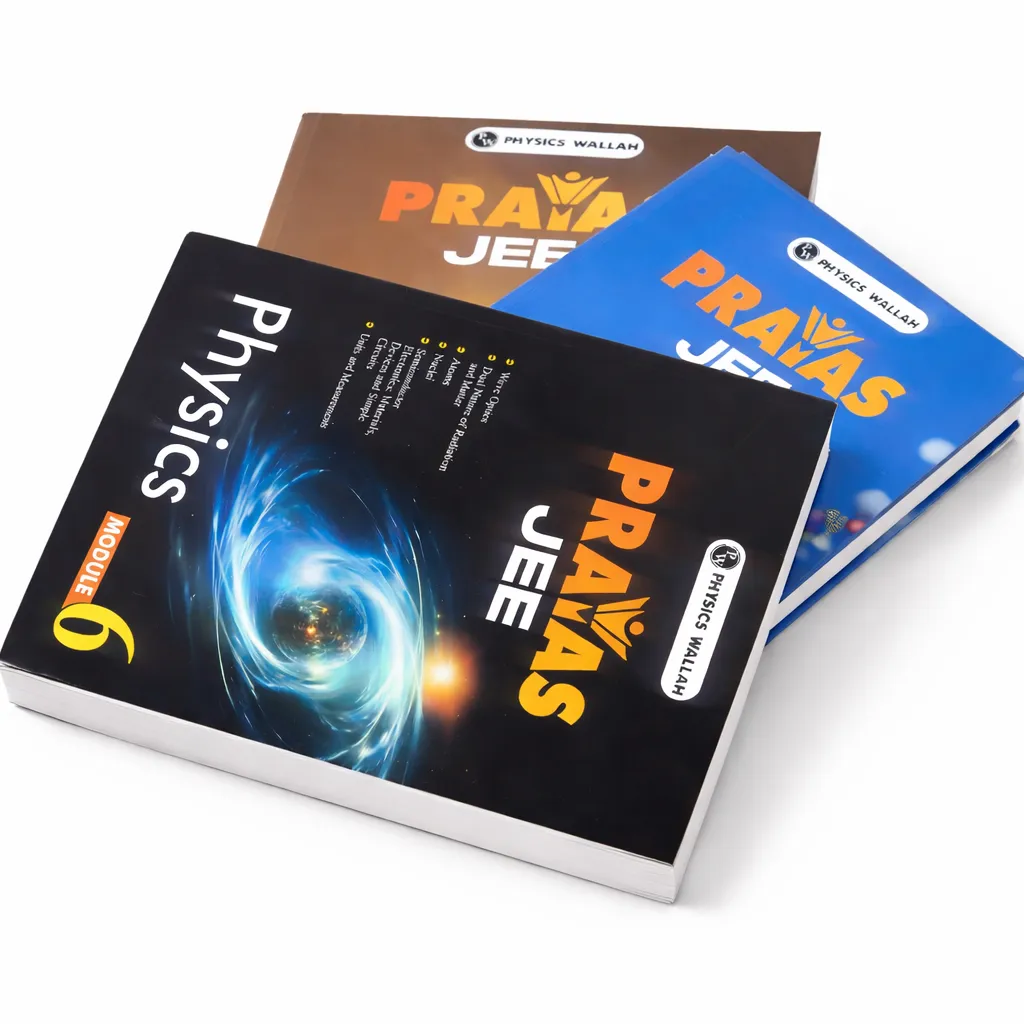
Toppers rarely attempt all 180 blindly — they attempt what they can defend and skip a handful with discipline. Simulating this under timed conditions with mock tests and PYQs is the only way to make the rule automatic. Aspirants who also prepare for JEE-style problem solving to sharpen Physics can draw on structured problem banks like the eSaral IIT JEE Modules and the PW Prayas JEE Modules for extra numerical practice on shared Physics and Physical-Chemistry concepts.
Subject-Wise High-Weightage Topics
Past-year trends show marks cluster in a predictable set of chapters. Prioritising these high-yield areas gives you the best return per hour of study.
| Subject | Consistently High-Weightage Topics |
|---|---|
| Physics | Mechanics (Laws of Motion, Work-Energy), Electrodynamics (Current Electricity, Magnetism), Optics, Modern Physics, Thermodynamics |
| Chemistry | Chemical Bonding, Coordination Compounds, Equilibrium, Thermodynamics, Organic (GOC, Hydrocarbons, Biomolecules), p-block |
| Botany | Plant Physiology, Genetics & Molecular Basis, Cell Biology, Plant Kingdom, Ecology |
| Zoology | Human Physiology, Reproduction, Biomolecules, Animal Kingdom, Evolution, Biotechnology |
Since Biology drives 360 of 720 marks, near-total command of NCERT Biology plus these focus areas is the highest-leverage move any candidate can make.
Exam-Day Logistics Tied to the Pattern
The pattern determines not just how you study but how you should show up. A 3-hour offline OMR exam has strict centre discipline, and small logistics slips can cost you the paper.
- Reporting time: Reach the centre well before the reporting deadline printed on your admit card; late entry is generally not permitted.
- Carry: Printed admit card, a passport-size photograph (as instructed), and a valid photo ID.
- Dress code: Light, simple clothing with half sleeves; avoid items with metal, big buttons or elaborate embroidery, and closed footwear like heels/thick-soled shoes may be restricted — follow the year’s official notice.
- Not allowed: Calculators, smart watches, mobile phones, electronic devices, and your own stationery. The pen for the OMR is provided at the centre.
How the Pattern Should Shape Your Study Plan
Different candidates need different responses to the same pattern:
- Class 11 students: Build NCERT-deep foundations subject by subject; the 50% Biology weight means starting Botany and Zoology early pays off compounding dividends.
- Class 12 students: Balance board syllabus with full-length NEET mocks; begin timed 180-question papers to internalise the one-minute-per-question rhythm.
- Droppers/repeaters: Your gain is almost always in accuracy and Physics — analyse last attempt’s wrong-to-correct ratio and use the skip-or-guess rule to cut needless -1 losses.
Whichever bucket you fall in, aligning your material to the current 180-question, all-compulsory pattern matters. A complete, latest-pattern resource such as the Careerwill NEET Study Module Set (23 modules, 4200+ pages with mind-maps) keeps your preparation mapped to exactly what the paper tests, so no effort leaks into outdated formats.
Common Mistakes Candidates Make with the Pattern
- Studying from 2021-era material and expecting a Section B optional-questions choice that no longer exists.
- Guessing recklessly and bleeding marks to -1 penalties — the 630-vs-570 gap in our example is entirely avoidable.
- Over-investing in Physics while under-preparing Biology, despite Biology being double the weight.
- Ignoring OMR discipline — double-bubbling and smudges are silently marked wrong.
- Practising untimed, then freezing under the real one-minute-per-question pressure.
Frequently Asked Questions
What is the NEET exam pattern for 2026?
NEET 2026 is a single 3-hour offline pen-and-paper exam of 180 compulsory MCQs worth 720 marks, split as Physics 45, Chemistry 45 and Biology 90 (Botany 45 + Zoology 45). Marking is +4 for correct, -1 for wrong and 0 for unattempted, with no sectional timing.
How many questions are there in NEET and what are the total marks?
There are 180 questions in NEET, all compulsory, and the total marks are 720 (180 questions × 4 marks each). Biology contributes 90 questions/360 marks, while Physics and Chemistry contribute 45 questions/180 marks each.
What is the marking scheme of NEET and is there negative marking?
Yes, NEET has negative marking. You get +4 for every correct answer and lose 1 mark for every wrong answer. There is no penalty for unattempted questions, so leaving a question you cannot reason through is safer than a blind guess.
Is there negative marking in NEET for unattempted questions?
No. Unattempted questions score exactly 0 — there is no deduction for leaving a question blank. Negative marking (-1) applies only to incorrectly answered questions and to questions where more than one option is marked.
What is the duration of NEET and is there sectional timing?
NEET has a duration of 3 hours (180 minutes) for the entire paper, with no sectional timing. You are free to move between Physics, Chemistry, Botany and Zoology and allocate your time across all 180 questions as you wish.
How is the NEET score calculated out of 720?
Use the formula: Score = (Correct × 4) − (Wrong × 1). For example, 160 correct and 10 wrong gives (160×4) − (10×1) = 640 − 10 = 630 out of 720. Unattempted questions do not affect the total.
Is NEET 2026 conducted online or offline?
NEET 2026 is conducted in offline (pen-and-paper) mode. You mark answers by darkening bubbles on an OMR sheet using the ballpoint pen provided at the centre — it is not a computer-based test.
How many questions should I attempt to score 600+ in NEET?
Roughly 154 correct answers with about 6 or fewer wrong will put you above 600. In practice that means attempting around 160 questions confidently and skipping only those you cannot eliminate any option on, so negative marking does not erode your total.
Has the NEET exam pattern changed for 2026?
The core structure — 180 compulsory questions, 720 marks, +4/-1 marking and 3-hour duration — matches recent years, with the earlier Section B optional-question choice removed. Always confirm the final details in the official NTA Information Bulletin for 2026 before your exam.
Recommended Study Material


Continue Reading
Best Optional Subject for UPSC 2026: Scoring Guide
The best optional subject for UPSC is the one where your interest, scoring potential and syllabus overlap with…
CTET Paper 1 Syllabus 2026: Topics, Pattern + PDF
The CTET Paper 1 syllabus covers five compulsory sections — Child Development & Pedagogy, Language I, Language II,…

NCERT Books for NEET 2026: Subject-Wise List + PDF
The NCERT books for NEET are the 6 core NCERT science textbooks — Biology, Physics and Chemistry for…