OJAS GPSC Syllabus 2026: Class 1-2 Pattern + PDF Download
Complete OJAS GPSC syllabus 2026 for Class 1-2 — Prelims & Mains exam pattern, paper-wise subjects, weightage, English & Gujarati PDF download steps and strategy.

The OJAS GPSC syllabus for the Class 1-2 (Gujarat Administrative Service / Gujarat Civil Service) exam covers a three-stage selection process: a Prelims of two objective General Studies papers (200 marks each, 400 total), a descriptive Mains of six papers, and a 100-mark Personality Test (interview). The syllabus and exam pattern are notified by the Gujarat Public Service Commission (GPSC), while the application is submitted through the OJAS portal (ojas.gujarat.gov.in). You can download the official GPSC syllabus 2026 PDF in both English and Gujarati directly from the GPSC website. This guide breaks down every paper, subject, mark, weightage and download step so you know exactly what to study.
OJAS GPSC Syllabus 2026 at a Glance
- Exam: GPSC Class 1-2 Combined Competitive Examination.
- Stages: Prelims (screening) → Mains (descriptive, merit) → Personality Test (interview, merit).
- Prelims: 2 objective GS papers, 200 marks / 200 MCQs each, 3 hours each, 1/3 negative marking.
- Mains: 6 descriptive papers (Gujarati, English, Essay, GS 1, GS 2, GS 3); 2 language papers are qualifying only.
- Interview: 100 marks Personality Test.
- Medium: Available in English and Gujarati; download both PDFs from gpsc.gujarat.gov.in.
What Is OJAS and GPSC? Understanding the Portal and the Exam
GPSC (Gujarat Public Service Commission) is the constitutional body that recruits candidates for Class 1 and Class 2 gazetted posts in the Gujarat state government. OJAS (Online Job Application System) — hosted at ojas.gujarat.gov.in — is the single online application system used across almost every Gujarat government recruitment, including GPSC. In short: GPSC sets the syllabus and conducts the exam, while OJAS is the portal where you register, apply, pay the fee, download your admit card and later check results.
The flagship GPSC Class 1-2 examination (officially the “Combined Competitive Examination”) selects officers for posts such as Deputy Collector, Deputy Superintendent of Police (DySP), District Registrar, Taluka Development Officer, Assistant Commissioner (State Tax), Mamlatdar and District Inspector of Land Records. Beyond this flagship exam, OJAS also hosts many other GPSC and Gujarat recruitments — a point most syllabus pages ignore, so we cover it in a dedicated section below.
OJAS GPSC Syllabus 2026: The Three-Stage Selection Process
The GPSC Class 1-2 recruitment follows three sequential stages. You must clear each stage to advance to the next, and only the final Mains marks plus the interview decide selection.
| Stage | Type | Total Marks | Nature | Counts for Merit? |
|---|---|---|---|---|
| Stage 1 — Prelims | Objective (MCQ) | 400 | Screening / Qualifying | No (only shortlists) |
| Stage 2 — Mains | Descriptive (written) | 900 (merit) + 2 qualifying papers | Merit-deciding | Yes (Papers 3-6) |
| Stage 3 — Personality Test | Interview | 100 | Merit-deciding | Yes |
Roughly 15 times the number of vacancies are shortlisted from Prelims for the Mains, and about 3 times the vacancies are called for the interview based on Mains performance. The final merit list is prepared from Mains (merit papers) + Personality Test marks combined.
GPSC Prelims Syllabus and Exam Pattern 2026
The Preliminary examination is purely a screening test — your Prelims marks are not added to the final merit. It consists of two General Studies papers, both objective and both compulsory.
| Paper | Subject | Marks | Questions | Duration | Medium |
|---|---|---|---|---|---|
| Paper 1 | General Studies 1 | 200 | 200 MCQs | 3 hours | English & Gujarati |
| Paper 2 | General Studies 2 | 200 | 200 MCQs | 3 hours | English & Gujarati |
| Total | 400 | 400 MCQs | 6 hours | Bilingual paper | |
Negative marking: Yes — 1/3 mark (0.33) is deducted for every wrong answer. A blank/unattempted question and questions where the “Not Attempted” option is marked carry no penalty, so guess only when you can eliminate at least two options.
Which Subjects Are Covered in the GPSC Prelims General Studies Papers?
The two GS papers together test a wide, UPSC-style range of subjects. Here is the subject-wise breakdown you should map your preparation against.
| Paper | Subjects Covered |
|---|---|
| General Studies 1 | History & Cultural Heritage of India and Gujarat; Indian & Gujarat Geography; Indian Polity & Constitution; Indian Economy & Planning; and Current Affairs (regional, national & international). |
| General Studies 2 | Indian & World Geography (physical, economic, environmental); Science & Technology; General Mental Ability & Reasoning; Statistics & Data Interpretation; Regional, National & International current events; and Sport, sports personalities and awards. |
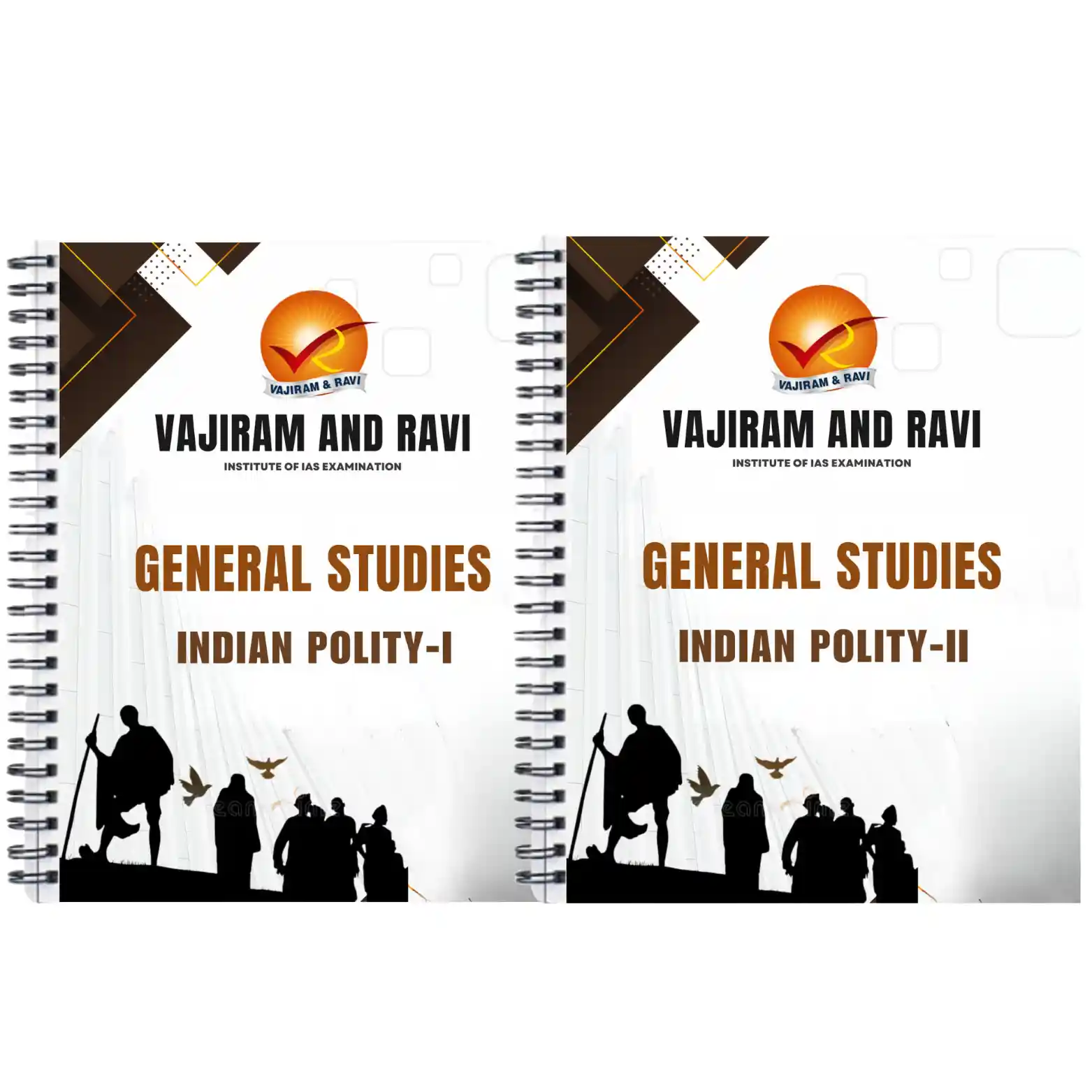
Topic-wise, the highest-yield areas across both papers are Polity & Constitution, Gujarat + Indian History and Culture, Geography, and Current Affairs — together these typically account for well over half of the questions. Because the polity and economy portions overlap heavily with the UPSC syllabus, standard national GS resources work well; a focused resource like the Vajiram Polity Notes covers the Constitution, governance and polity topics that recur every year.
Prelims Topic-Wise Weightage (Indicative Trend)
GPSC does not publish exact per-topic weightage, but previous-year analysis gives a reliable indicative distribution. Use this to prioritise your revision time.
| Subject Area | Approx. Questions (GS-1 + GS-2) | Priority |
|---|---|---|
| Current Affairs (Gujarat + National + International) | 60-80 | Very High |
| Polity & Constitution | 40-50 | High |
| History & Culture (India + Gujarat) | 40-50 | High |
| Geography (India + Gujarat + World) | 40-50 | High |
| Economy & Planning | 30-40 | Medium-High |
| Science & Technology | 30-40 | Medium |
| Reasoning, Mental Ability & Statistics | 25-35 | Medium |
GPSC Mains Syllabus Paper-Wise 2026
The GPSC Mains is fully descriptive and consists of six papers. Two of them — the Gujarati and English language papers — are only qualifying (you must score at least 25% in each), and their marks are not added to the merit list. The remaining four papers (Essay + three General Studies papers) decide your rank.
| Paper | Subject | Marks | Duration | Nature |
|---|---|---|---|---|
| Paper 1 | Gujarati | 150 | 3 hours | Qualifying (25%) |
| Paper 2 | English | 150 | 3 hours | Qualifying (25%) |
| Paper 3 | Essay | 150 | 3 hours | Merit |
| Paper 4 | General Studies 1 | 150 | 3 hours | Merit |
| Paper 5 | General Studies 2 | 150 | 3 hours | Merit |
| Paper 6 | General Studies 3 | 150 | 3 hours | Merit |
Note on marks: The two qualifying language papers (300 marks) do not add to merit; the four merit papers total 600 marks, and together with the 100-mark Personality Test the final selection is decided out of 700 marks. Some notifications structure the language papers as 100 marks each — always confirm the exact marks in the current-year advertisement on OJAS.
Mains GS Paper-Wise Syllabus Breakdown
Here is what each descriptive paper covers. The three GS papers are the heart of your merit score.
| Paper | Core Syllabus Themes |
|---|---|
| Paper 1 — Gujarati | Grammar, comprehension, précis writing, letter/report writing, translation, essay in Gujarati — tests language proficiency only. |
| Paper 2 — English | Grammar, comprehension, précis, letter/report writing, translation, short essay — tests English proficiency only. |
| Paper 3 — Essay | Two essays (approx. 1000 words each) on socio-economic, political, cultural, environmental, administrative and contemporary themes. |
| Paper 4 — GS 1 | History & Cultural Heritage of India and Gujarat; Indian & World Geography; Disaster Management. (Society, culture, freedom struggle, Gujarat’s history.) |
| Paper 5 — GS 2 | Indian Constitution, Polity, Public Administration & Governance; Ethics & Human Interface; Social Justice & International Relations. |
| Paper 6 — GS 3 | Indian & Gujarat Economy; Science & Technology; Environment & Ecology; Agriculture; Internal Security & role of technology in development. |
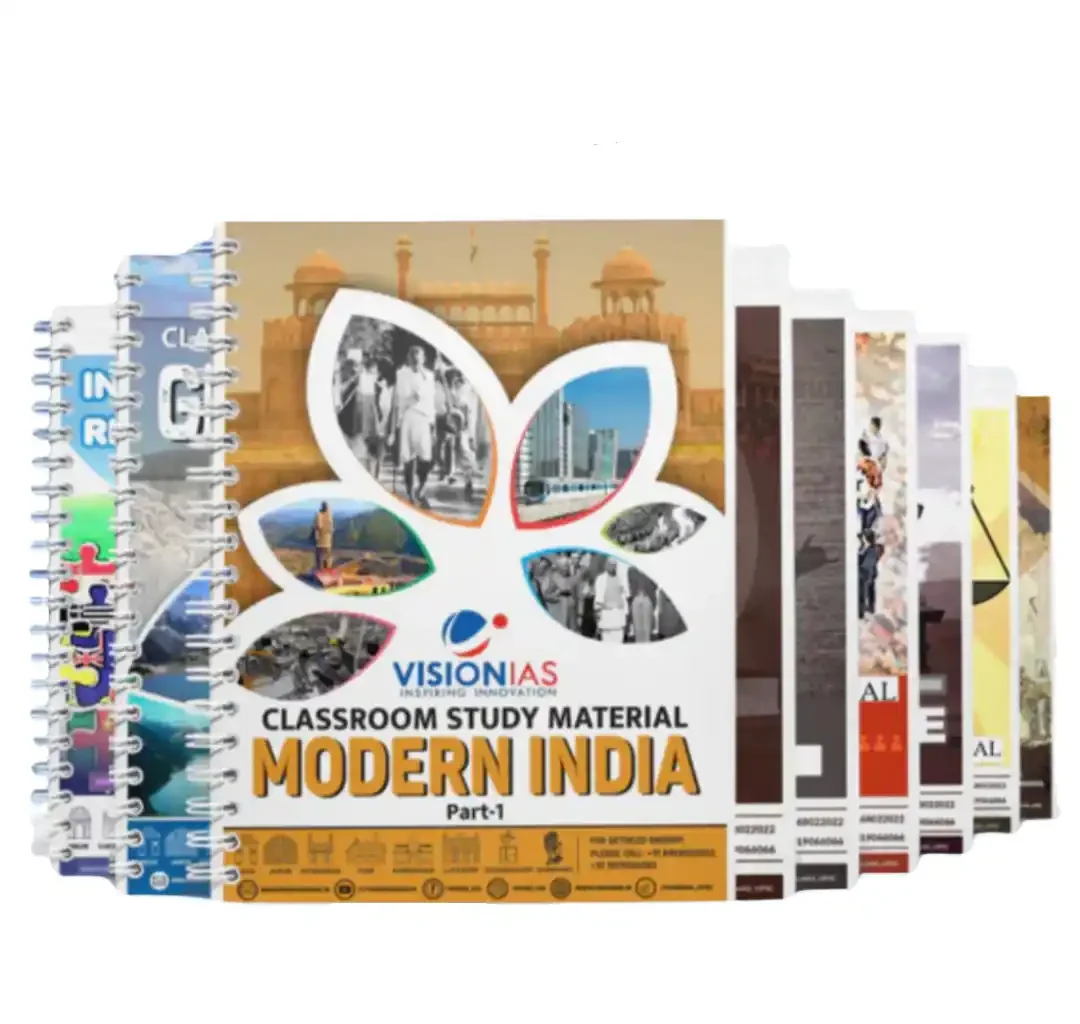
Because the GPSC Mains GS syllabus mirrors the UPSC GS papers closely, comprehensive national GS material is the most efficient foundation. A full booklet set such as the Vision IAS GS Notes (46 booklets) maps neatly onto GS-1, GS-2 and GS-3 themes, so you can adapt UPSC-grade notes to the Gujarat-specific portions with add-on state material.
GPSC Interview / Personality Test (Stage 3)
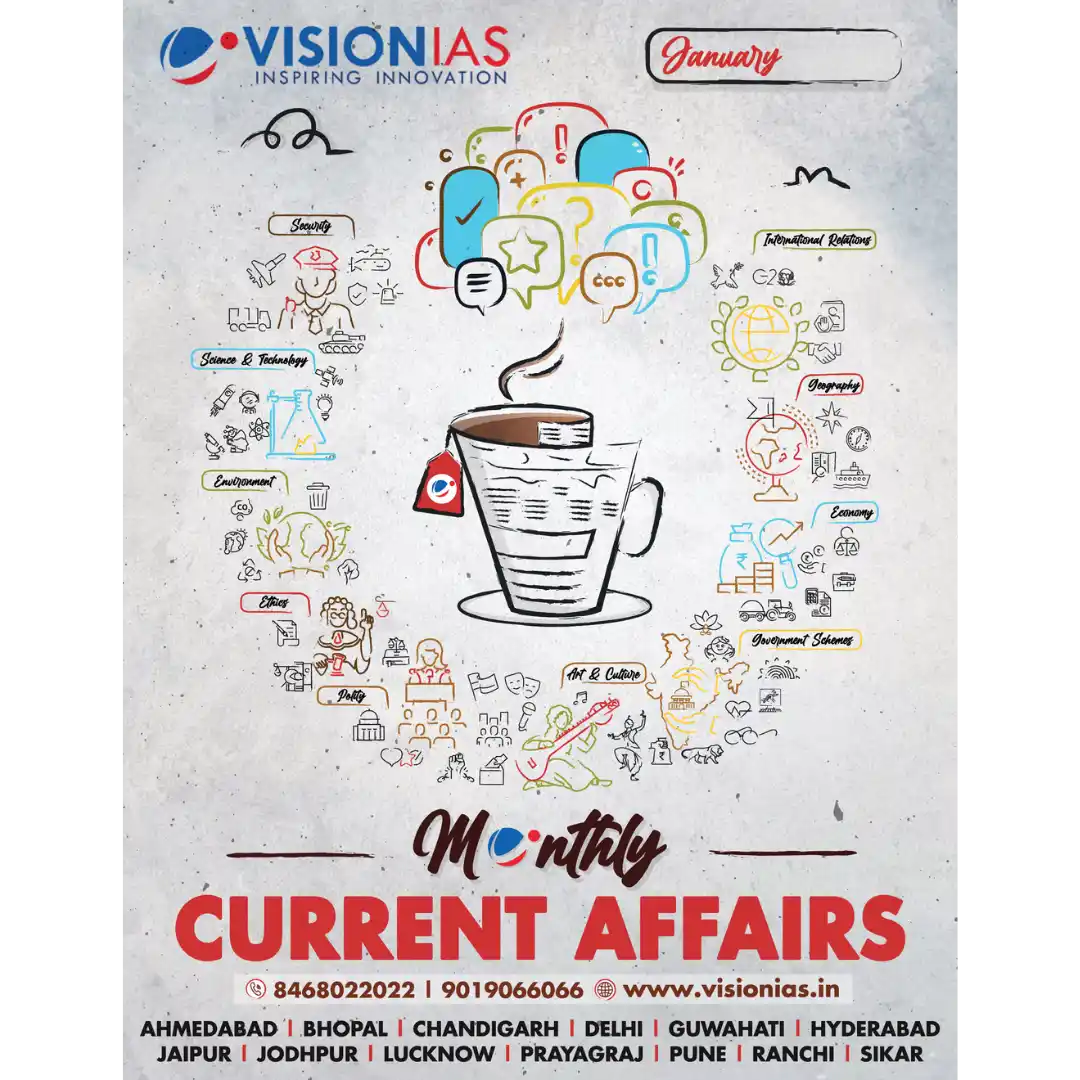
Candidates who clear the Mains cut-off are called for the Personality Test in a ratio of roughly 3:1 against vacancies. The interview carries 100 marks (some cycles use 150) and assesses mental alertness, clarity of thought, balance of judgement, leadership, awareness of Gujarat and national affairs, and general suitability for administrative service. There is no separate syllabus — it draws on your background, optional interests, current affairs and your Detailed Application Form (DAF). Consistent current-affairs reading, using resources like the Vision IAS Current Affairs Magazine (January 2026), keeps you interview-ready right through the cycle.
How to Download the GPSC Syllabus PDF from the OJAS Portal (Step-by-Step)
The syllabus PDF is published on the official GPSC website (gpsc.gujarat.gov.in), and recruitment advertisements linking to it appear on the OJAS portal. Follow these steps to get the official 2026 syllabus.
| Step | Action |
|---|---|
| 1 | Visit the OJAS portal at ojas.gujarat.gov.in or the GPSC site at gpsc.gujarat.gov.in. |
| 2 | On GPSC, open the “Syllabus” or “Advertisement” section from the top menu. |
| 3 | Select the relevant post — e.g. “Class 1-2 (Combined Competitive Examination)”. |
| 4 | Choose the syllabus for the stage you need — Prelims (Preliminary) or Mains. |
| 5 | Click the PDF link; the document opens in your browser. |
| 6 | Download and save both the English and Gujarati versions for reference. |
Always download the syllabus attached to the current advertisement, because GPSC occasionally revises topics between cycles. Bookmark the GPSC syllabus page so you can re-check before the exam, and note the release date printed on the PDF to confirm you have the latest version.
Is the GPSC Syllabus Available in Gujarati?
Yes. GPSC publishes the complete ojas GPSC syllabus in Gujarati PDF alongside the English version, and both Prelims papers and all Mains papers (except the English language paper) can be attempted in the Gujarati medium. This bilingual availability is crucial for Gujarat’s large Gujarati-medium aspirant base. If you study in Gujarati, download the Gujarati syllabus PDF and pair it with English standard notes where Gujarati material is thin — many core polity, economy and science concepts are identical across both mediums.
Other GPSC Exams on OJAS (Syllabus by Post)
The OJAS portal is used for far more than the Class 1-2 exam. If you are exploring Gujarat government jobs, these are the major recruitments that share the same portal — each has its own GPSC-notified syllabus and exam pattern.
| Exam / Post | Class | Broad Syllabus Focus |
|---|---|---|
| Class 1-2 (GAS/GCS) | 1 & 2 | General Studies (Prelims) + descriptive Mains + interview |
| Assistant Engineer (AE) | 2 | General Studies + core engineering (Civil/Mechanical/Electrical) |
| DySO / Nayab Mamlatdar | 3 (GSSSB) | General Studies, Gujarati, English, current affairs |
| Accounts Officer / State Tax | 1 & 2 | General Studies + Accountancy, Economics, Commerce |
| Police Inspector (PI) | 2 | General Studies, reasoning, Gujarat-specific GK, law |
| Lecturer / Medical Officer posts | 1 & 2 | General Studies + subject-specific technical syllabus |
For most of these, the General Studies foundation overlaps with the Class 1-2 GS syllabus, so building strong GS fundamentals first pays off across multiple OJAS exams.
GPSC Class 1 vs Class 2: What Is the Difference?
Both Class 1 and Class 2 officers are selected through the same combined examination and the same syllabus — the difference lies in seniority, post allocation and pay. Class 1 (Group A) posts are more senior with higher pay bands and greater administrative responsibility, while Class 2 (Group B) posts are gazetted but junior in the hierarchy.
| Aspect | Class 1 | Class 2 |
|---|---|---|
| Group | Group A (senior) | Group B (gazetted) |
| Example Posts | Deputy Collector, DySP, District Registrar | Mamlatdar, Section Officer, Taluka Development Officer |
| Pay Level (7th CPC) | Approx. Level 9-10 (₹56,100 onwards basic) | Approx. Level 7-8 (₹44,900 onwards basic) |
| Gross Monthly (approx.) | ₹75,000 – ₹1,05,000+ | ₹60,000 – ₹85,000 |
| Selection Exam | Same combined GPSC exam | Same combined GPSC exam |
Your final merit rank plus post preference determines whether you get a Class 1 or Class 2 posting. Salaries above are indicative and include usual allowances (DA, HRA); actual figures depend on posting and current pay-commission rates.
GPSC Preparation Strategy Mapped to the Syllabus
A syllabus is only useful if your study plan mirrors it. Here is a practical, subject-wise strategy for the 2026 cycle.
| Subject | Strategy & Resource Approach |
|---|---|
| Polity & Constitution | Build from NCERTs + a standard polity notes set; add Gujarat-specific governance topics. |
| History & Culture | Cover Indian modern history + a dedicated Gujarat history/culture source; revise with timelines. |
| Geography | NCERT base + India & Gujarat physical/economic geography; use maps actively. |
| Economy | Concepts + Gujarat economic survey + current economic affairs. |
| Science & Tech / Environment | Focus on current-affairs-linked topics and application-based questions. |
| Current Affairs | Read monthly compilations covering Gujarat + national events for 12-15 months before the exam. |
| Answer Writing (Mains) | Practise structured descriptive answers and two essays weekly; time-bound tests. |
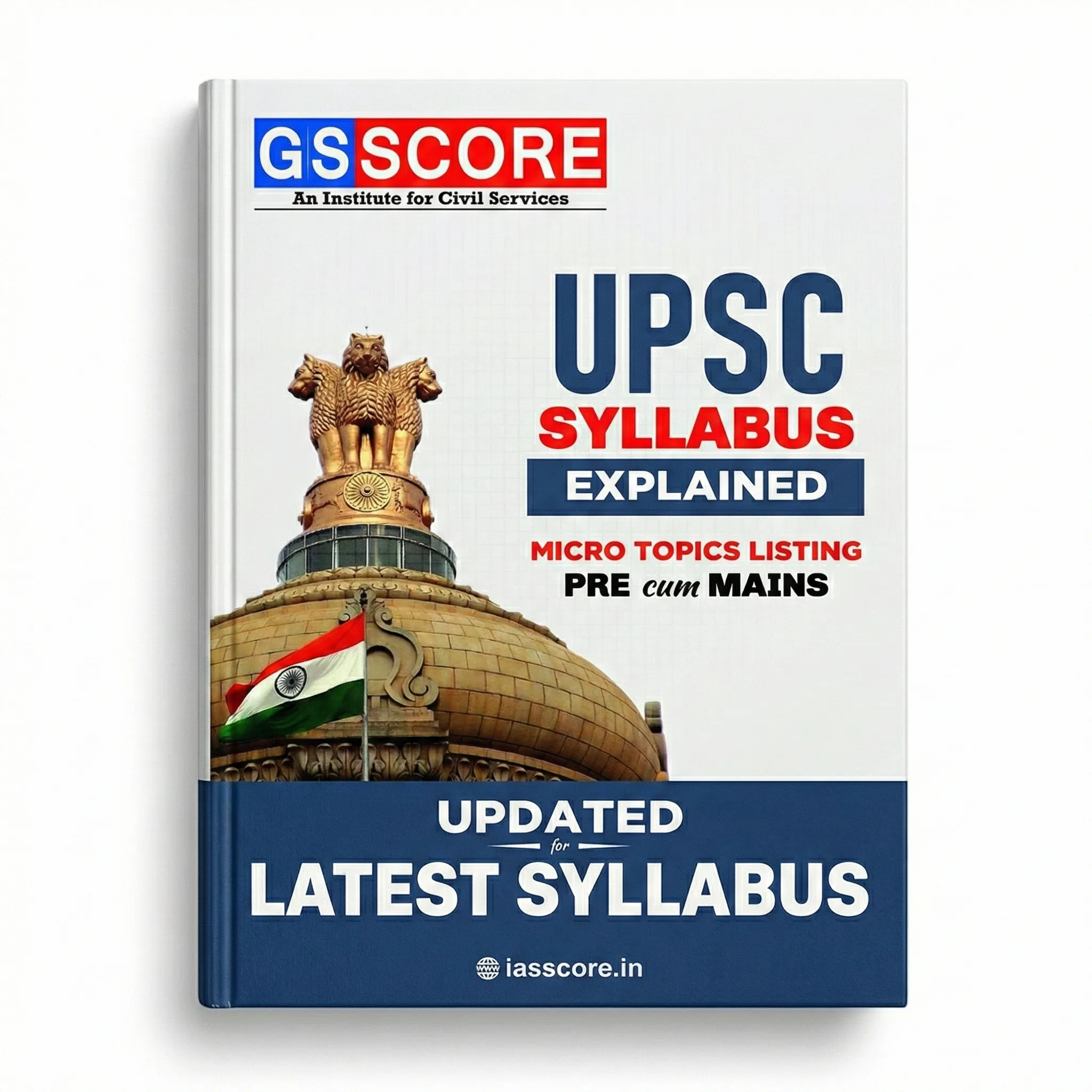
Three habits separate selected candidates: (1) revising the official syllabus PDF weekly so nothing is missed, (2) writing timed mock tests for both Prelims (MCQ) and Mains (descriptive), and (3) building a Gujarat-specific layer on top of national GS notes. A structured syllabus reference like the GS Score Latest Syllabus Booklet helps you track topic coverage and avoid blind spots as you progress.
Common Mistakes GPSC Aspirants Make
- Studying only the national GS syllabus and ignoring the Gujarat-specific history, geography and current affairs — a major source of easy marks.
- Neglecting the qualifying language papers and failing the 25% cut-off despite good GS scores.
- Skipping answer-writing practice for Mains and the two compulsory essays.
- Relying on outdated syllabus PDFs instead of the current advertisement on OJAS.
- Ignoring negative marking in Prelims and guessing recklessly.
Important Links and Documents Checklist
Keep this quick-reference checklist handy through your preparation and application cycle.
| Resource | Where to Find It |
|---|---|
| Official syllabus PDF (English & Gujarati) | gpsc.gujarat.gov.in → Syllabus |
| Application / registration | ojas.gujarat.gov.in |
| Eligibility & age limits | Current advertisement PDF on OJAS/GPSC |
| Previous year question papers | GPSC website → Old Question Papers |
| Provisional answer keys | GPSC website → after each exam |
| Results & cut-offs | GPSC website / OJAS results section |
Eligibility broadly requires a bachelor’s degree from a recognised university, with the standard age window of 20-35 years (relaxations apply for reserved categories, women and ex-servicemen as per the notification). Always confirm exact eligibility in the year’s advertisement.
Frequently Asked Questions
What is the syllabus of GPSC Class 1-2?
The GPSC Class 1-2 syllabus spans three stages: a Prelims of two objective General Studies papers (400 marks) covering history, polity, geography, economy, science, reasoning and current affairs; a descriptive Mains of six papers (Gujarati, English, Essay and GS 1-3); and a 100-mark Personality Test. The official syllabus PDF is published by GPSC in English and Gujarati.
How to download GPSC syllabus PDF from the OJAS portal?
Go to gpsc.gujarat.gov.in (linked from ojas.gujarat.gov.in), open the Syllabus or Advertisement section, select “Class 1-2 Combined Competitive Examination”, choose the Prelims or Mains syllabus, and click the PDF link to download. Save both the English and Gujarati versions attached to the current advertisement.
Is the GPSC syllabus available in Gujarati?
Yes. GPSC releases the complete syllabus in both Gujarati and English, and candidates can attempt the Prelims and most Mains papers in the Gujarati medium (except the English language paper). Download the ojas GPSC syllabus in Gujarati PDF from the official GPSC website.
What is the exam pattern for GPSC Prelims and Mains?
Prelims has two objective GS papers of 200 marks each (400 total, 200 MCQs per paper, 3 hours each) with 1/3 negative marking and is only a screening test. Mains has six descriptive papers of 150 marks each — two qualifying language papers and four merit papers (Essay + GS 1-3) — followed by a Personality Test.
How many papers are there in GPSC Mains?
There are six papers in the GPSC Mains: Gujarati and English (both qualifying at 25%), Essay, and General Studies 1, 2 and 3. Only the Essay and the three GS papers count towards the final merit list.
Which subjects are covered in the GPSC Prelims General Studies papers?
General Studies 1 covers History & Cultural Heritage of India and Gujarat, Indian & Gujarat Geography, Indian Polity & Constitution, Economy & Planning, and current affairs. General Studies 2 covers Indian & World Geography, Science & Technology, reasoning and mental ability, statistics and data interpretation, current events, and sports. Together they test a broad, UPSC-style range.
What is the difference between GPSC Class 1 and Class 2?
Both are selected through the same exam and syllabus. Class 1 (Group A) posts — such as Deputy Collector and DySP — are more senior with higher pay (roughly 7th CPC Level 9-10), while Class 2 (Group B) posts like Mamlatdar and Taluka Development Officer are gazetted but junior (roughly Level 7-8). Your merit rank and post preference decide which you get.
Is the GPSC syllabus the same as UPSC?
It is similar but not identical. The GPSC Prelims and Mains GS syllabus overlaps heavily with UPSC on polity, economy, geography, history and science, so national GS material is a strong foundation. The key differences are the added Gujarat-specific history, geography, culture and current affairs, and separate qualifying Gujarati and English language papers in the Mains.
Is there negative marking in the GPSC exam?
Yes, in the Prelims (objective) stage. GPSC deducts 1/3 (0.33) mark for every wrong answer. There is no penalty for unattempted questions, so avoid blind guessing. The descriptive Mains papers have no negative marking.
What is the eligibility and age limit for GPSC Class 1-2?
You generally need a bachelor’s degree from a recognised university, with an age window of about 20-35 years. Age relaxations apply for reserved categories, women and ex-servicemen as per the notification. Always confirm the exact eligibility, age and relaxation rules in the current-year advertisement on OJAS.
Recommended Study Material
Continue Reading
Vision IAS vs Drishti IAS: Which Is Best for UPSC 2026?
Vision IAS and Drishti IAS are the two most widely used coaching study materials for UPSC CSE preparation…
Best Sociology Optional Notes for UPSC 2026: Faculty-Wise Comparison
Sociology Optional Notes for UPSC: An Honest Buying Guide (2026) Choosing the right sociology optional notes can quietly…
Best Books for Banking Exams 2026: Subject-Wise List (IBPS & SBI PO/Clerk)
The best books for banking exams in 2026 are a lean set of 4–6 titles: R.S. Aggarwal's Quantitative…