SSC CGL Preparation 2026: Strategy, Study Plan & Books
SSC CGL preparation 2026 guide: exam pattern, subject-wise strategy, 60-day & 3-month study plans, best books, mock-test analysis and cut-off trends.

SSC CGL preparation in 2026 comes down to three things done consistently: master the exam pattern and topic-wise weightage, build a time-bound study plan (5–6 months for beginners, 3 months or 60 days for revision), and prioritise Quantitative Aptitude and English because they decide both Tier 1 and the high-weightage Tier 2. With 4–6 hours of focused study daily, daily previous-year-question (PYQ) practice, and one analysed full-length mock every 2–3 days, a first-attempt selection through self-study at home — without coaching — is realistic.
This guide is built to be the most complete, example-rich roadmap for cracking SSC CGL 2026 in your first attempt. It covers the exact 2026 exam structure, eligibility and salary, subject-wise strategy with high-scoring topics, day-wise plans (60-day, 30-day, 3-month, and beginner 5–6 month), a working-professional timetable, accuracy and negative-marking drills, a step-by-step method to analyse mock tests, the standard booklist, Tier-2 paper-specific prep, cut-off trends, and the mistakes that quietly cost selections. Wherever a phase needs material, we map it to specific study resources so you are not left guessing what to buy.
SSC CGL Preparation at a Glance (Quick Answers)
If you only read one block, read this. These are the most-asked questions answered in one line each.
- How to start as a beginner? Learn the exam pattern, pick one standard book per subject, start Quant + English from Day 1, and begin PYQs by Week 3.
- Daily hours? 6–8 hours for full-time aspirants; 3–4 quality weekday hours + 6–7 weekend hours for working professionals.
- Months to crack? 5–6 months from zero; 60–90 days if you already have a base.
- Without coaching? Yes — most selected candidates self-study with standard books, PYQs, and a test series.
- Which subject first? Quantitative Aptitude (steepest curve, highest Tier-2 weight), with English running alongside daily.
- How many mocks? 40–60 full-length mocks + 100+ sectionals, each fully analysed.
- Tier 1 and Tier 2? Prepared together in concept, separately in practice.
SSC CGL Preparation 2026: What Actually Decides Selection
Most aspirants believe selection is decided by how much syllabus you cover. It is not. SSC CGL selection is decided by your Tier-2 score, because Tier 1 is only a qualifying-cum-screening stage and the final merit is built almost entirely on Tier 2. Within Tier 2, Quantitative Aptitude (Section 1, Module 1) and the application-heavy reasoning and English modules separate the selected from the rejected.
Three levers genuinely move your rank:
- Accuracy over attempts. With negative marking, a 92% accuracy aspirant attempting 80 questions usually beats a 75% accuracy aspirant attempting 95.
- Speed in Maths. Tier 2 Quant has 30 questions in 60 minutes for that module; calculation speed and shortcut command directly convert into marks.
- Mock-test analysis. Aspirants who spend as much time analysing a mock as taking it improve 2–3x faster than those who only chase mock numbers.
Internalise this early: you are not preparing to “finish the syllabus.” You are preparing to maximise accuracy and speed on a predictable, repeating set of question types. That single shift is the difference between a coaching-dependent aspirant and a confident self-study topper.
SSC CGL 2026 Exam Structure & Pattern
The SSC CGL 2026 exam is conducted in two stages: Tier 1 (qualifying screening) and Tier 2 (merit-deciding). Tier 1 is common to all posts. Tier 2 contains Paper 1 (for all posts) plus Paper 2 (Statistics, for JSO/SSO) and Paper 3 (General Studies–Finance & Economics, for AAO/Assistant Accounts Officer). Understanding this structure is the foundation of all SSC CGL preparation.
SSC CGL Tier 1 Exam Pattern
| Section | Questions | Marks | Negative Marking |
|---|---|---|---|
| General Intelligence & Reasoning | 25 | 50 | -0.50 |
| General Awareness | 25 | 50 | -0.50 |
| Quantitative Aptitude | 25 | 50 | -0.50 |
| English Comprehension | 25 | 50 | -0.50 |
| Total | 100 | 200 | 60 minutes (80 min for PwD) |
Tier 1 marks are not added to the final merit; the tier only screens you for Tier 2. The goal in Tier 1 is to clear the cut-off comfortably (typically 135–160 for general category) and qualify in your weaker sections without sacrificing accuracy.
SSC CGL Tier 2 Exam Pattern (Paper 1)
| Section / Module | Subject | Questions | Marks | Time |
|---|---|---|---|---|
| Section 1, Module 1 | Mathematical Abilities | 30 | 90 | 1 hour |
| Section 1, Module 2 | Reasoning & General Intelligence | 30 | 90 | |
| Section 2, Module 1 | English Language & Comprehension | 45 | 135 | 1 hour |
| Section 2, Module 2 | General Awareness | 25 | 75 | |
| Section 3, Module 1 | Computer Knowledge (qualifying) | 20 | 60 | 15 minutes |
| Section 3, Module 2 | Data Entry Speed Test (DEST) | One passage | Qualifying | 15 minutes |
Each correct answer in Tier 2 Paper 1 carries 3 marks, with negative marking of 1 mark for Maths/Reasoning/GA modules and 0.5 marks for the English module — making accuracy non-negotiable. The Computer Knowledge module is qualifying in nature, and DEST is a typing test. Notice the weight: English (135) + Maths (90) together carry 225 of the heavy marks — this is why Maths and English are the backbone of SSC CGL preparation.
SSC CGL Eligibility, Posts & Salary (Why It Is Worth the Effort)
Before you commit months of preparation, it helps to know what you are working toward and whether you qualify. SSC CGL recruits graduates into Group B and Group C posts across central government ministries and departments.
SSC CGL 2026 Eligibility (Quick Check)
- Qualification: A bachelor’s degree in any discipline from a recognised university (final-year students can often apply). Specific posts — like Junior Statistical Officer — need Maths/Statistics as a subject.
- Age: Broadly 18–32 years depending on the post, with standard category relaxations (OBC +3, SC/ST +5, PwD and others as per rules).
- Nationality: Indian citizen (and other categories as specified by SSC).
Always confirm exact age and qualification limits against the official SSC CGL 2026 notification for your target post, since post-wise criteria differ.
Popular SSC CGL Posts & Indicative Pay Levels
| Post | Department | Pay Level |
|---|---|---|
| Assistant Audit/Accounts Officer (AAO) | CAG / Finance | Level 8 |
| Income Tax Inspector | CBDT | Level 7 |
| Inspector (Central Excise / Preventive Officer) | CBIC | Level 7 |
| Assistant Section Officer (ASO) | CSS / Ministries | Level 7 |
| Junior Statistical Officer (JSO) | M/o Statistics | Level 6 |
| Auditor / Accountant / Tax Assistant | Various | Level 4–5 |
In-hand salary typically ranges from roughly ₹30,000 to ₹55,000+ per month depending on post, level, and city (HRA), apart from job security and growth. Knowing the post you want also tells you whether you need Tier-2 Paper 2 (Statistics) or Paper 3 (Finance/AAO) — a decision that shapes your study plan.
SSC CGL Topic-Wise Weightage (Where the Marks Hide)
Smart SSC CGL preparation is data-driven. Instead of studying every topic equally, allocate time to topics that repeat year after year. The table below shows the approximate per-exam weightage of high-yield topics based on recent PYQ trends.
| Subject | High-Weightage Topics | Approx. Questions (Tier 1) |
|---|---|---|
| Quantitative Aptitude | Geometry, Trigonometry, Algebra, Mensuration, Percentage, Ratio, DI | 14–17 |
| Reasoning | Analogy, Series, Coding-Decoding, Syllogism, Matrix, Paper folding | 15–18 |
| English | Error Spotting, Fill in the Blanks, Synonyms/Antonyms, Idioms, Cloze test | 16–19 |
| General Awareness | History, Polity, Geography, Static GK, Science, Current Affairs | 18–20 |
The lesson: in Quant, geometry + trigonometry + algebra + mensuration regularly account for nearly half the section. In English, vocabulary and grammar-based questions dominate. In GA, static GK and science out-number current affairs. Master these clusters first and you secure the bulk of the paper before touching low-frequency topics.
SSC CGL Subject Priority Order & Order of Attempt
For a first-attempt aspirant, the question “which subject should I prepare first?” matters as much as how. Prepare in this priority order:
- Quantitative Aptitude — highest learning curve, highest Tier-2 weight. Start here so you have maximum time.
- English — vocabulary and grammar compound slowly; start early, study daily.
- Reasoning — fastest to score in; can be built in 6–8 weeks of practice.
- General Awareness — heavy memory load; layer it in continuously and revise in short cycles.
SSC CGL Order of Attempt in the Exam
Inside the exam hall, the recommended order is General Awareness → Reasoning → English → Quantitative Aptitude. The logic: GA is instant recall (3–4 minutes), Reasoning is fast (10–12 minutes), English is moderate (10–12 minutes), leaving the maximum cushion (30+ minutes) for the calculation-heavy Quant section. This sequence protects your mind from getting stuck on Quant early and burning the clock. Practise this exact order in every mock so it becomes automatic.
SSC CGL Subject-Wise Preparation Strategy
This is the heart of SSC CGL preparation. Each subject rewards a different approach — apply the right method to each.
SSC CGL Preparation Strategy: Quantitative Aptitude
Quant is the highest-return subject because of its Tier-2 weight. Build it in three layers: concept → shortcut → speed.
- Concept layer: Cover NCERT-level basics of arithmetic, then advanced topics (geometry, trigonometry, algebra, mensuration). Use R.S. Aggarwal for foundation drills.
- Shortcut layer: Learn Vedic/short tricks for squares, cubes, percentages, and approximation. Build a personal one-page formula sheet for trigonometry and geometry identities.
- Speed layer: Do 50 calculation drills daily and timed sectional tests. Target 25 Tier-1 Quant questions in under 18 minutes at 90%+ accuracy.
Worked example (high-frequency type): If a number is increased by 20% and then decreased by 20%, the net change is a 4% decrease (1.20 × 0.80 = 0.96). SSC repeats successive-percentage questions almost every year — memorising the net-effect formula (a + b + ab/100) saves 40 seconds per question. Multiply that across 6–7 percentage questions and you win the time you need for geometry.
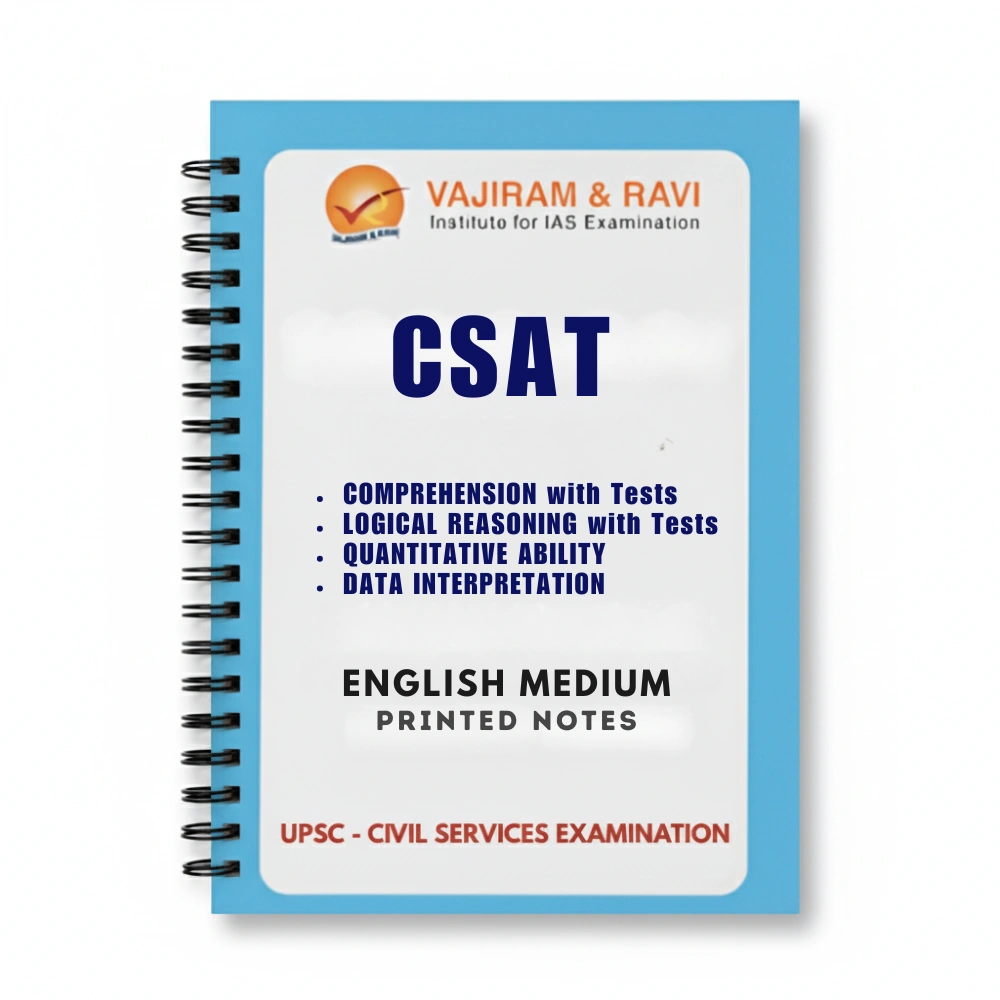
High-scoring Quant topics to master first: Percentage, Profit & Loss, Ratio & Proportion, Time-Speed-Distance, Time & Work, Geometry, Trigonometry, Mensuration, Algebra, and Data Interpretation. For disciplined aptitude drilling, a structured aptitude resource like the Vajiram CSAT complete booklet set with practice questions doubles as excellent arithmetic-and-reasoning practice material for SSC aspirants.
SSC CGL Preparation Strategy: English Language
English is the highest-weight Tier-2 module (135 marks) and the most scalable — vocabulary and grammar improve with daily exposure. Split your effort:
- Grammar (40%): Master rules for error spotting, sentence improvement, and fill-in-the-blanks using Wren & Martin. SSC tests a finite set of rules — subject-verb agreement, tense, prepositions, articles, modifiers.
- Vocabulary (35%): Learn 15–20 words daily with root words, plus idioms, one-word substitutions, synonyms, and antonyms. Maintain a vocabulary diary.
- Reading & Cloze (25%): Read one editorial daily to build cloze-test and comprehension speed.
High-scoring English topics: Error Spotting, Sentence Improvement, Fill in the Blanks, Synonyms/Antonyms, One-word Substitution, Idioms & Phrases, Cloze Test, Reading Comprehension, Para Jumbles, and Active/Passive & Narration.
SSC CGL Preparation Strategy: General Intelligence & Reasoning
Reasoning offers the fastest accuracy gains — most types are pattern-based and improve dramatically with practice. There is little to “learn”; there is a lot to “drill.”
- Practise 30–40 reasoning questions daily across analogy, classification, series, coding-decoding, and matrix.
- For non-verbal types (paper folding, mirror images, embedded figures), build visual speed through repetition.
- Syllogism and blood relations have fixed methods (Venn diagrams, family trees) — learn the method once, then drill.
High-scoring Reasoning topics: Analogy, Classification/Odd-one-out, Series (number & alphabet), Coding-Decoding, Syllogism, Blood Relations, Direction Sense, Matrix, Paper Folding/Cutting, and Mathematical Operations.
SSC CGL Preparation Strategy: General Awareness & Current Affairs
GA is the most time-efficient section in the exam (answers take seconds) but the most memory-heavy to prepare. Split it into Static GK (History, Polity, Geography, Economics, Science) and Current Affairs (last 6–8 months).
- Static GK: SSC heavily favours Science (Physics, Chemistry, Biology basics), Polity (Constitution, articles, governance), History (Ancient/Medieval/Modern milestones), and Geography. Build mind-maps and one-page notes per topic.
- Current Affairs: Cover the last 6–8 months in short revision cycles — schemes, appointments, awards, sports, books & authors, summits. Revise monthly capsules rather than reading daily news for hours.
A monthly current-affairs compilation makes GA revision far faster than scattered note-making. The Vision IAS Current Affairs Magazine (January 2026, English) is a clean, exam-oriented monthly capsule you can use to revise national and international affairs in short cycles — pair successive months to cover the full 6–8 month window SSC tests.
How to Start SSC CGL Preparation From Zero (Beginner Kickstart)
If you are starting SSC CGL preparation for beginners and feel overwhelmed, do not start by buying ten books. Start with this seven-step kickstart and you will have momentum within a week:
- Read the official syllabus and pattern once — know the four sections, marks, and negative marking before anything else.
- Solve one Tier-1 PYQ paper untimed — not to score, but to feel the question style and difficulty.
- Pick one standard book per subject (see the booklist below) — resist the urge to collect more.
- Begin with Quant + English from Day 1 — the two slow-compounding, high-weight subjects.
- Set a fixed daily routine — even 4–5 honest hours beats 10 erratic ones.
- Start an error notebook immediately — every mistake you log is a mark saved later.
- Add PYQs from Week 3 — do not wait to “finish” the syllabus first.
This removes the biggest beginner trap — spending weeks deciding how to start instead of starting. Pick the plan below that matches your timeline and begin today.
SSC CGL Study Plan 2026: 5–6 Month Beginner Plan
If you are starting SSC CGL preparation for beginners from zero, a 5–6 month runway is ideal. It gives you time to build concepts before switching to test mode. Allocate 5–6 hours daily (more on weekends).
| Phase | Duration | Focus | Daily Output |
|---|---|---|---|
| Phase 1 – Foundation | Month 1–2 | Quant concepts + English grammar + Reasoning basics + NCERT GK | 2 chapters + 30 questions |
| Phase 2 – Building | Month 3–4 | Advanced Quant, vocabulary, GA layering, daily PYQs | 1 topic + 1 sectional test |
| Phase 3 – Test Mode | Month 5 | Full-length mocks + analysis + weak-area repair | 1 mock every 2 days |
| Phase 4 – Peak | Month 6 | Revision, formula sheets, current-affairs capsules | Daily mock + revision |
The non-negotiable rule across all phases: start daily PYQ practice from Week 3, even before the syllabus is complete. PYQs teach you what SSC actually asks and prevent over-studying low-yield topics.
SSC CGL Study Plan 2026: 3-Month (90-Day) Plan
The 3-month plan suits aspirants with some prior base who want a structured revision-and-test sprint. Target 6–7 hours daily.
| Weeks | Primary Focus | Tests |
|---|---|---|
| Week 1–4 | Concept revision: all four subjects, topic by topic | 3 sectional tests/week |
| Week 5–8 | PYQ-driven practice + GA intensive + speed building | 2 full mocks/week + sectionals |
| Week 9–12 | Full mocks + deep analysis + revision of error log | 1 mock every 2 days |
SSC CGL 60-Day Study Plan to Crack in First Attempt
The 60-day plan is the most popular revision sprint for serious aspirants. It runs in three tight phases. Maintain 7–8 hours daily.
Phase 1: Days 1–20 — Concept Consolidation
- Revise all high-weightage Quant topics (geometry, trigonometry, algebra, mensuration, arithmetic) — 2.5 hrs/day.
- Daily English grammar rules + 20 vocabulary words — 1.5 hrs/day.
- Reasoning drilling — 1 hr/day. GA notes + current affairs — 1.5 hrs/day.
- One sectional test daily, alternating subjects.
Phase 2: Days 21–40 — PYQ + Sectional Test Phase
- Solve 5–7 years of PYQs subject by subject; log every error.
- Two sectional tests + one half-length mock daily.
- Convert recurring mistakes into a personal “error notebook” you revise every night.
- Begin timed practice in the exam order of attempt.
This is the phase where curated PYQ material pays off. A topic-wise previous-year-question resource such as the Forum IAS Topic-Wise PYQ toolkit demonstrates the gold-standard format of PYQ-driven prep — organising questions topic-by-topic so you can attack weak areas surgically rather than randomly.
Phase 3: Days 41–60 — Full Mock + Revision Phase
- One full-length mock every alternate day, followed by 90 minutes of analysis.
- Revise formula sheets, vocabulary diary, and GA mind-maps daily.
- Run 6–8 months of current-affairs capsules in final week.
- Last 5 days: no new topics — only revision, light mocks, and sleep discipline.
SSC CGL 30-Day Plan to Crack in First Attempt
A 30-day plan is pure revision-and-test mode for aspirants who have already studied the syllabus. It is not a learning plan — it is a peaking plan.
| Days | Action |
|---|---|
| Day 1–10 | Rapid topic revision + 1 sectional test/subject daily + PYQ solving |
| Day 11–22 | 1 full mock daily + 1 hr analysis + error-log revision + GA capsules |
| Day 23–30 | Alternate-day mocks, formula/vocabulary revision, current-affairs final pass, rest |
SSC CGL Daily Timetable (Full-Time Aspirant)
A concrete timetable removes decision fatigue. Here is a balanced 7-hour schedule for a full-time aspirant.
| Time Slot | Activity |
|---|---|
| 7:00–9:00 AM | Quantitative Aptitude (concept + practice) |
| 9:30–11:00 AM | English (grammar + vocabulary) |
| 11:30 AM–12:30 PM | Reasoning drilling |
| 2:00–3:30 PM | General Awareness + current affairs |
| 4:00–5:00 PM | Sectional test / PYQ practice |
| 8:00–9:00 PM | Mock analysis + error-log revision |
Working Aspirant SSC CGL Daily Timetable
Working professionals can absolutely crack SSC CGL — the key is consistency on 3–4 high-quality hours plus heavy weekend loading. Quality beats quantity.
| Time Slot | Activity |
|---|---|
| 6:00–7:00 AM | Quant (toughest subject, freshest mind) |
| Commute / breaks | Vocabulary, current-affairs capsules, GA flashcards |
| 9:00–10:00 PM | English / Reasoning practice |
| 10:00–10:30 PM | PYQ solving + error log |
| Weekends | 2 full mocks + deep analysis + week’s revision (6–7 hrs/day) |
For working aspirants, the differentiator is the weekend mock-and-analysis block — that is where the bulk of learning happens when weekdays are short.
How to Take & Analyse SSC CGL Mock Tests (Step-by-Step)
Mock tests are not for scoring — they are for diagnosis. The aspirants who plateau are the ones who take 50 mocks but never analyse them. Spend equal time analysing as taking.
How many mock tests should I take for SSC CGL?
Aim for 40–60 full-length mocks plus 100+ sectional tests over your preparation. In the final 6 weeks, do at least one full mock every alternate day. But raw numbers are useless without the analysis loop below.
The 5-Step Mock Analysis Method
- Categorise every question into four buckets: correct-and-fast, correct-but-slow, wrong (silly mistake), wrong (concept gap).
- Attack concept gaps — revise the underlying topic the same day and re-solve 5 similar questions.
- Fix silly mistakes by writing them in an error log (misread question, calculation slip, wrong option marked). Patterns will emerge.
- Optimise slow-but-correct questions by learning shortcuts; speed is where Tier-2 rank is won.
- Review skipped questions — were they genuinely tough, or did fear make you skip easy marks?
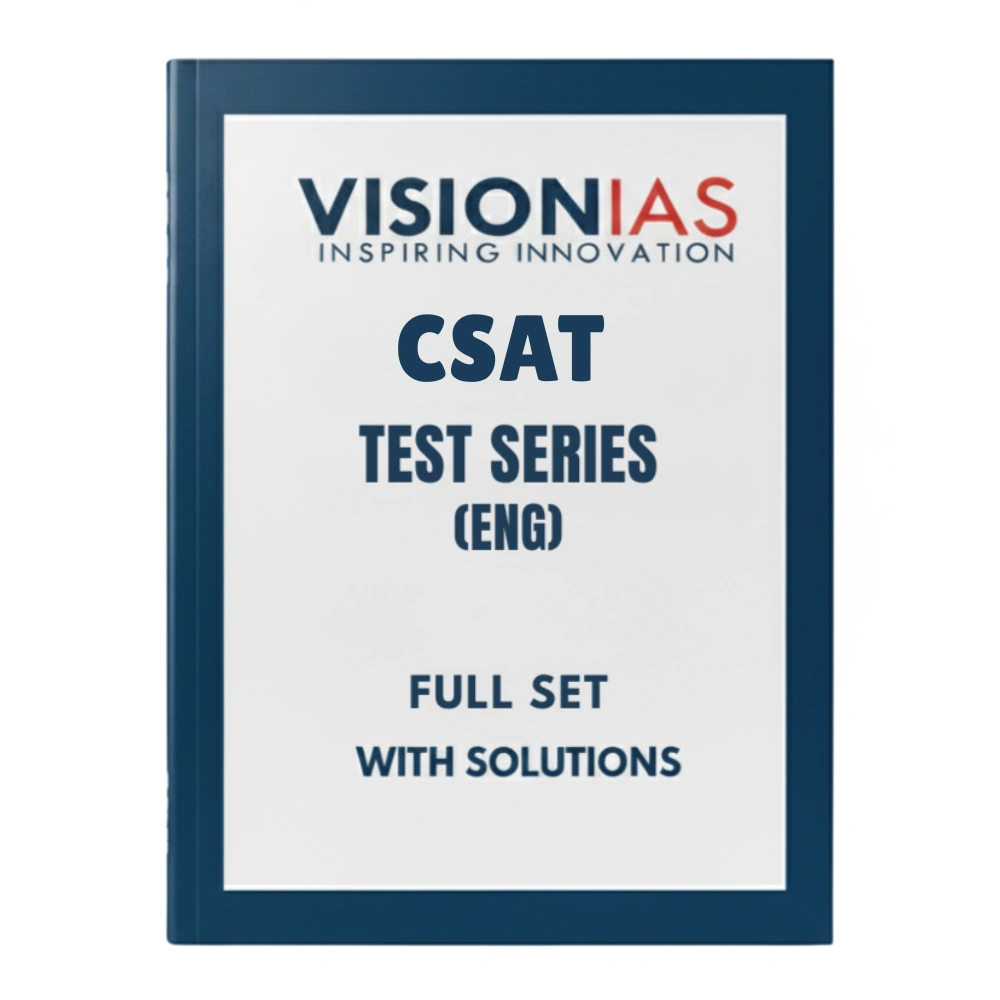
Track your accuracy and attempt count per section across mocks. Your goal is a rising accuracy line, not just a rising score. A structured online test environment like the Vision IAS CSAT test series is useful aptitude-and-comprehension practice that mirrors the timed, analysis-driven format SSC rewards.
SSC CGL Accuracy & Negative-Marking Strategy
Negative marking (-0.50 in Tier 1, up to -1 in Tier 2) is the silent rank-killer. A disciplined attempt strategy protects your score more than extra knowledge.
- The 2-in-1 rule: Only guess when you can confidently eliminate two of four options. Pure random guessing has negative expected value.
- Sectional time-boxing: Allocate fixed minutes per section and never overshoot — leaving Quant under-attempted is better than leaving GA marks (instant wins) on the table.
- Two-pass attempt: First pass — solve all easy/known questions fast. Second pass — return to medium ones. Never get stuck on one hard question for 3 minutes.
- Accuracy target: Maintain 90%+ accuracy in mocks. If accuracy drops below 80%, you are over-attempting — pull back.
Safe-score math: In Tier 1, attempting 85 questions at 92% accuracy nets roughly 78 correct, ≈ 156 marks before negatives — comfortably above most general cut-offs. Chasing 95+ attempts at 78% accuracy nets fewer net marks. Internalise: accuracy is the score.
Best Books for SSC CGL Preparation 2026
You do not need a shelf of books — you need a few standard titles mastered cover to cover, plus PYQ collections and a test series.
| Subject | Recommended Books |
|---|---|
| Quantitative Aptitude | R.S. Aggarwal – Quantitative Aptitude; Rakesh Yadav Class Notes; Kiran SSC Maths PYQ |
| English | Wren & Martin – High School Grammar; Plinth to Paramount (Neetu Singh); Word Power Made Easy |
| Reasoning | R.S. Aggarwal – Verbal & Non-Verbal Reasoning; Kiran SSC Reasoning PYQ |
| General Awareness | Lucent’s General Knowledge; NCERTs (6–12); monthly current-affairs capsules |
| Practice | Kiran SSC CGL Tier 1 & 2 PYQ (chapter-wise); a reliable online test series |
For the General Awareness and current-affairs portion specifically, a monthly magazine plus Lucent covers both static and dynamic GK efficiently — keep your current-affairs reading to compiled capsules rather than daily newspapers consuming hours.
Can You Crack SSC CGL Without Coaching? (Self-Study at Home)
Yes — the majority of selected candidates prepare through self-study. Coaching is optional; what is non-negotiable is structure, standard books, PYQs, and analysed mocks. Here is how to replicate coaching at home:
- Structure: Follow one of the day-wise plans above religiously — your timetable is your “coaching schedule.”
- Concepts: Free/affordable YouTube lectures + standard books replace classroom teaching for every SSC topic.
- Doubt-solving: Use Telegram/Discord aspirant communities and topic forums.
- Testing: A paid test series is the one investment worth making — it is your mock-exam engine and benchmark.
- Discipline: Track daily targets, maintain an error log, and review weekly. Accountability is what coaching really sells.
Low-budget / no-internet prep: If data is a constraint, rely on printed standard books, downloaded PYQ PDFs, and printed test booklets you can solve offline. A printed PYQ-and-practice kit lets you prepare fully without continuous internet — solve on paper, then check answers in one batch.
SSC CGL Preparation for Freshers, Repeaters & Working Professionals
One plan does not fit everyone. Tailor your approach to your starting point.
| Profile | Timeline | Strategy Focus |
|---|---|---|
| Fresher / Beginner | 5–6 months | Concept-first, build foundation, start PYQs from Week 3 |
| Repeater | 2–3 months | Error-log driven; fix weak sections; mock-heavy |
| Working Professional | 4–6 months | 3–4 weekday hrs + weekend mock blocks; capsule-based GA |
| College student | 6–8 months | Slow concept building alongside academics; weekend tests |
Freshers should resist jumping to mocks too early — build the base first. Repeaters should do the opposite: skip re-learning everything and let your previous error log and mock analysis dictate exactly what to fix. Working professionals win on consistency and weekend intensity, not weekday hours.
SSC CGL Tier 2 Preparation Plan (The Merit-Decider)
Since Tier 2 builds your final merit, serious rank-seekers must prepare it from day one — not after Tier 1. Tier 1 and Tier 2 share the same subjects; the difference is depth, speed, and the advanced Tier-2-only modules.
Is Tier 1 and Tier 2 prepared together or separately?
Prepare them together in concept, separately in practice. The syllabus overlaps almost entirely for Paper 1, so studying a topic once serves both. Closer to the exam, add Tier-2-specific drills: harder Quant, longer English passages, and the qualifying Computer Knowledge + DEST modules.
Tier 2 Paper 2 (Statistics) & Paper 3 (Finance/AAO)
- Paper 2 – Statistics (for JSO/SSO): Covers collection & presentation of data, measures of central tendency & dispersion, probability, sampling, correlation & regression, index numbers, and time series. Use a standard 11th-12th statistics text plus Tier-2 statistics PYQs.
- Paper 3 – General Studies (Finance & Economics, for AAO): Covers fundamentals of accounting, finance & financial management (40 marks) and economics & governance (60 marks). Build it from NCERT economics + accounting basics + current economic affairs.
Only opt for Paper 2/3 prep if you are targeting JSO or AAO posts — otherwise focus entirely on Paper 1.
SSC CGL Cut-Off Trends (What Score to Target)
Knowing past cut-offs lets you set a concrete target. The table below shows approximate Tier-1 qualifying-cum-cut-off ranges (out of 200) by category in recent cycles — treat them as directional, since cut-offs vary by year and normalization.
| Category | Approx. Tier 1 Cut-off (of 200) | Safe Target |
|---|---|---|
| General (UR) | 135–158 | 165+ |
| OBC | 130–150 | 160+ |
| EWS | 128–150 | 158+ |
| SC | 110–135 | 145+ |
| ST | 105–130 | 140+ |
SSC uses normalization across shifts, so your raw score is adjusted for shift difficulty — another reason accuracy matters more than chasing attempts. Target comfortably above the cut-off in Tier 1, but remember: real selection is decided in Tier 2, so aim for 380+ of 450 in Tier 2 Paper 1 for a strong post.
Common SSC CGL Preparation Mistakes to Avoid
- Studying without PYQs. You end up over-preparing low-yield topics and under-preparing high-frequency ones.
- Hoarding resources. Five books for one subject means none is finished. Pick one, master it.
- Mocks without analysis. Taking 60 mocks and analysing none is the single biggest waste of time in SSC CGL preparation.
- Ignoring GA till the end. GA is memory-heavy; cramming it in the last month fails. Layer it continuously.
- Over-attempting in the exam. Negative marking punishes the trigger-happy. Accuracy first.
- Neglecting Tier 2 early. Treating Tier 1 as the whole game leaves you scrambling when Tier 2 — the actual merit stage — arrives.
- No revision system. Without spaced revision of formulas, vocabulary, and GA, retention collapses.
SSC CGL Last-Minute Preparation Tips 2026
- Stop learning new topics in the final 7 days — consolidate what you know.
- Revise formula sheets, vocabulary diary, and GA mind-maps daily.
- Do light mocks (not exhausting back-to-backs) to stay sharp without burning out.
- Run a final 6–8 month current-affairs pass.
- Lock your order of attempt and sectional time-boxes — no experiments on exam day.
- Sleep 7+ hours the last three nights; an alert mind out-scores a tired, over-studied one.
Map Your SSC CGL Study Plan to the Right Material
The fastest way to stall is to study without the right resources for each phase. Use this mapping as your buying checklist:
- Concept phase → standard books (R.S. Aggarwal, Wren & Martin, Lucent).
- Aptitude drilling → a structured practice booklet such as the Vajiram CSAT complete set with practice questions for arithmetic and reasoning.
- PYQ phase → topic-wise PYQ collections; the format modelled by the Forum IAS topic-wise PYQ toolkit is exactly the surgical, topic-by-topic practice SSC rewards.
- Test phase → a timed test series like the Vision IAS CSAT test series for exam-condition practice.
- GA & current affairs → monthly capsules such as the Vision IAS Current Affairs Magazine to revise in short cycles.
Bundle the four phases — concept, practice, PYQ, test — and you have a complete, low-friction SSC CGL preparation kit you can work through without coaching.
Frequently Asked Questions
How can I start SSC CGL preparation from zero as a beginner?
Read the official syllabus and pattern first, solve one untimed PYQ paper to feel the question style, then pick one standard book per subject. Begin with Quantitative Aptitude and English from Day 1, fix a daily routine of 4–6 honest hours, start an error notebook, and add PYQ practice from Week 3 — do not wait to finish the syllabus before practising.
How many months are required to crack SSC CGL?
Beginners typically need 5–6 months of consistent 5–6 hour daily study; aspirants with a base can crack it in a focused 3-month or 60-day sprint. The exact duration depends on your starting level, but consistency and analysed mock practice matter more than raw months.
How many hours should I study daily for SSC CGL?
Full-time aspirants should target 6–8 focused hours daily, while working professionals can succeed on 3–4 high-quality weekday hours plus 6–7 hours of mock-and-analysis on weekends. Quality and consistency beat long, unfocused sessions.
Can I crack SSC CGL without coaching by self-study at home?
Yes. Most selected candidates self-study using standard books, free or affordable video lectures, daily PYQ practice, and a paid test series. Coaching is optional; structure, discipline, and analysed mocks are the real requirements for cracking SSC CGL at home.
How many mock tests should I take for SSC CGL?
Target 40–60 full-length mocks plus 100+ sectional tests across your preparation, with at least one full mock every alternate day in the final six weeks. What matters more than the count is analysing each mock fully — categorise every question into correct-fast, correct-slow, silly-mistake, and concept-gap, then fix the gaps.
Which are the best books for SSC CGL preparation?
R.S. Aggarwal for Quant and Reasoning, Wren & Martin plus Plinth to Paramount for English, and Lucent’s General Knowledge for GA — supplemented with chapter-wise PYQ collections and a reliable test series. Master a few standard books fully rather than collecting many.
Which subject should I prepare first for SSC CGL?
Start with Quantitative Aptitude — it has the steepest learning curve and the highest Tier-2 weightage, so it needs the most time. Run English alongside from day one (vocabulary compounds slowly), then build Reasoning and General Awareness continuously.
Is SSC CGL Tier 1 and Tier 2 preparation done together or separately?
Prepare them together in concept and separately in practice. The Paper 1 syllabus overlaps almost entirely, so studying a topic serves both stages; closer to the exam, add Tier-2-specific depth, speed drills, and the qualifying Computer Knowledge and DEST modules.
Is SSC CGL hard to crack?
SSC CGL is competitive but predictable. The syllabus repeats year after year, so disciplined PYQ-driven preparation, high accuracy, and analysed mocks make it very crackable — including in the first attempt. It rewards consistency and strategy far more than raw intelligence.
Who is eligible for SSC CGL 2026?
You need a bachelor’s degree in any discipline from a recognised university, with age broadly between 18 and 32 years depending on the post and standard category relaxations. Some posts (like JSO) require Maths/Statistics at the qualifying level. Always confirm exact criteria against the official SSC CGL 2026 notification for your target post.
Recommended Study Material


Continue Reading
RBI Grade B Syllabus 2026: Phase 1, 2, Pattern + PDF
The RBI Grade B syllabus is spread across three phases: Phase 1 (Prelims) tests General Awareness, Reasoning, Quantitative…
UPSC Exam Pattern 2026: Prelims, Mains, Marks & Merit
The UPSC exam pattern follows a three-stage selection process: the Preliminary examination (objective, screening), the Main examination (descriptive,…
Anthropology Optional Syllabus 2026: Paper 1 & 2 + PDF
The anthropology optional syllabus for UPSC CSE Mains is divided into two papers of 250 marks each, totalling…